Tag: 3D lidar

  • Launchpad: Autonomy, GNSS receivers, handheld mapping

    Launchpad: Autonomy, GNSS receivers, handheld mapping

    A roundup of recent products in the GNSS and inertial positioning industry from the February 2023 issue of GPS World magazine.


    SURVEYING & MAPPING
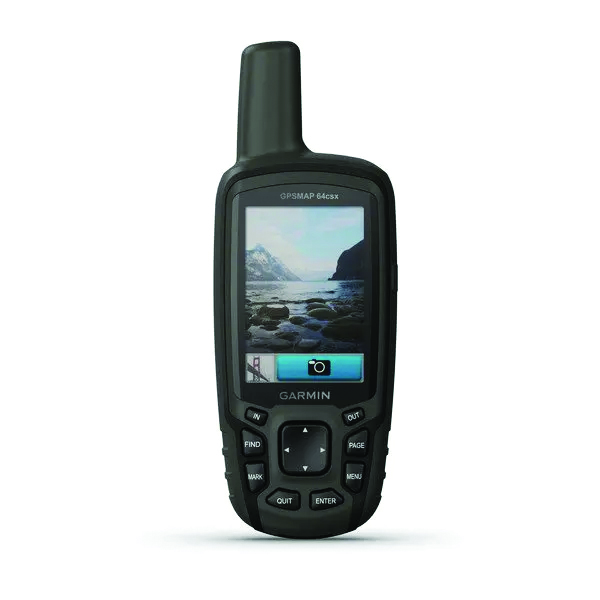
    GPSMAP 64csx handheld GPS receiver (Image: Gamin)
    GPSMAP 64csx handheld GPS receiver (Image: Gamin)

    Handheld GPS 
    With navigation sensors and camera

    The GPSMAP 64csx handheld GPS receiver comes with multi-GNSS support, TopoActive mapping, barometric altimeter, three-axis compass, and wireless connectivity via Bluetooth and ANT+ technology. It also has an 8 MP autofocus camera. The GPSMAP 64csx is built to withstand rugged terrain and is water-resistant. The highly sensitive receiver and quad helix antenna provide support from GPS, GLONASS and Galileo. Preloaded TopoActive maps include waterways, natural features, buildings and international boundaries. It is compatible with smartphones so users can receive email and text messages and share location data with others.
    Garmin, garmin.com
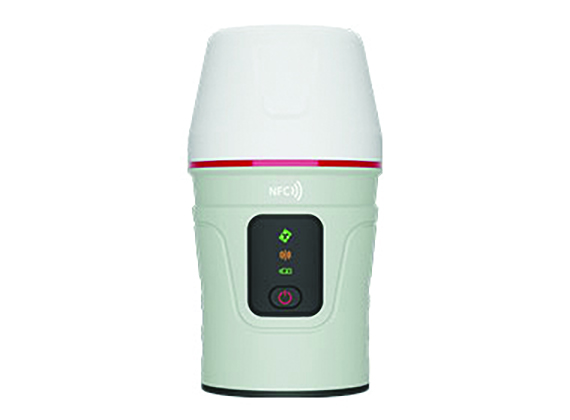
    Venus Laser RTK receiver (Image: ComNav)
    Venus Laser RTK receiver (Image: ComNav)

    GNSS Receiver
    Millimeter-level laser enables rodless surveying

    The Venus Laser RTK receiver comes with an inertial measurement unit. It can be used in its traditional mode with a range pole, or in laser mode without a pole, enabling GNSS surveying beyond typical limitations. In traditional mode, it has tilt compensation of up to 60° with an accuracy of 2.5 cm; in laser mode, it has the same tilt compensation but an accuracy of 5.5 cm. The receiver is powered by a SinoGNSS K8 high-precision module capable of up to 1,590 channels. It can survey using GPS, BDS-2, BDS-3, GLONASS, Galileo, QZSS and SBAS constellations. Other features include Bluetooth connectivity, more than 20 hours of battery life, and ruggedness (it is dust and waterproof and is designed to survive a two-meter drop).
    ComNav Technology Ltd., comnavtech.com
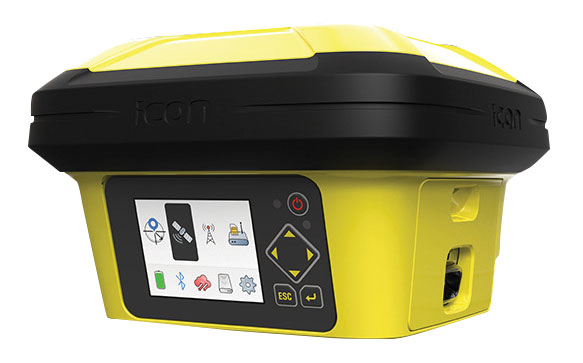
    Leica iCON gps 160 (Image: Leica Geosystems)
    Leica iCON gps 160 (Image: Leica Geosystems)

    Smart Antenna
    With features to increase productivity on the construction site

    The Leica iCON gps 160 is a next-generation construction smart antenna designed to increase productivity in stakeout and measurement applications on the jobsite. It features a large color display with clear navigation for quick and easy setup without additional hardware. It is optionally available with an inertial measurement unit (IMU) for tilt-compensation functionality up to 20°. It seamlessly integrates with all Leica iCON construction instruments and controllers as well as the iCON field software for precise, real-time verification.
    Leica Geosystems, leica-geosystems.com
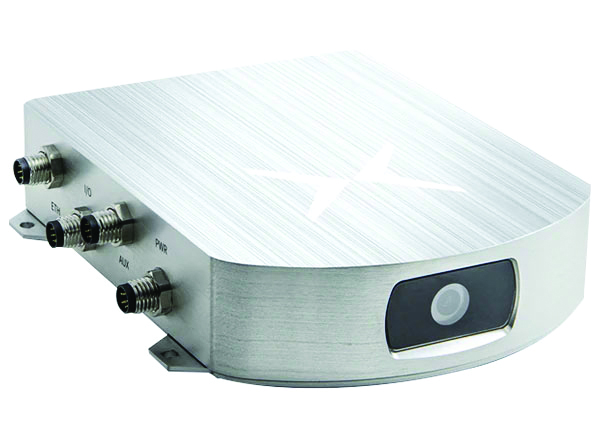
    The Xsens Vision Navigator (Image: Movella)
    The Xsens Vision Navigator (Image: Movella)

    GNSS inertial navigation
    Integrates position inputs from three high-accuracy sources

    The Xsens Vision Navigator integrates position inputs from three high-accuracy sources including dual-antenna real-time kinematic (RTK) GNSS receivers; an inertial measurement unit (IMU) incorporating a three-axis accelerometer, a gyroscope and magnetometer; and a visual inertial odometry system. It can optionally accept input from an external wheel-speed sensor. The positioning sensor achieves centimeter-level accuracy when operating in GNSS mode with an RTK fix. When GNSS signals are not available, the product alone achieves accuracy of 2% of travel distance, or 0.75% when supplemented by wheel speed. Xsens Vision Navigator is suitable for outdoor positioning applications such as material handling equipment, commercial and specialist vehicles, last-mile delivery, inspection equipment and UAVs, agricultural equipment, mining equipment and utility robots.
    Movella, movella.com
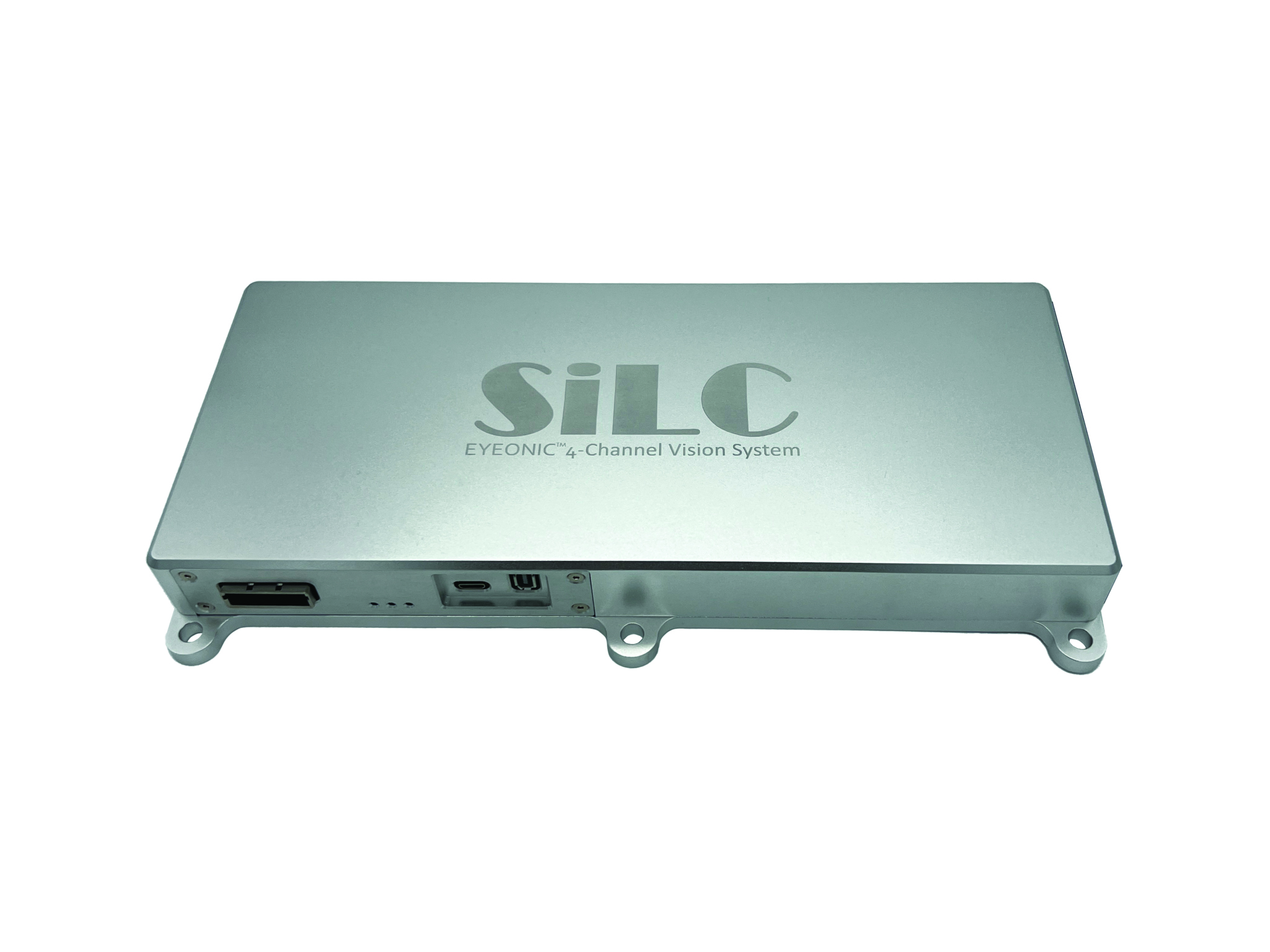
    SILC Eyeonic Vision System (Image: SiLC)
    SILC Eyeonic Vision System (Image: SiLC)

    Coherent Vision Solution
    Delivers high levels of vision perception

    The Eyeonic Vision System is a frequency-modulated continuous wave lidar solution, which delivers high levels of vision perception to identify and avoid objects with low latency. At the core of the Eyeonic Vision System is a fully integrated silicon photonics chip. It provides more definition and precision than legacy lidar solutions, with roughly 10 milli-degree of angular resolution coupled with millimeter-level precision. These features enable this solution to measure the shape and distance of objects with high-precision and at a large distance. The system combines the Eyeonic Vision Sensor and a digital processing solution based on a powerful field-programmable gate array. The flexible architecture enables synchronization of multiple vision sensors for unlimited points per second.
    SiLC, silc.com


    OEM
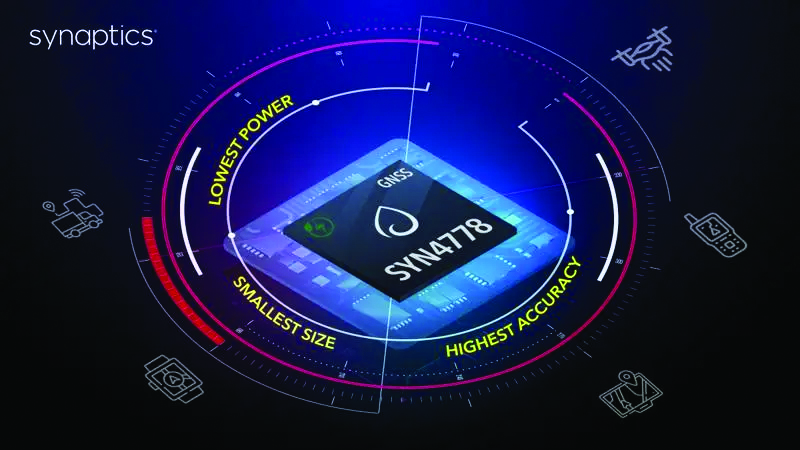
    The SYN4778 (Image: Synaptics)
    The SYN4778 (Image: Synaptics)

    Integrated Circuit
    Designed for the internet of things

    The SYN4778 is a small, low-power GNSS integrated circuit designed to extend battery life, reduce product size, and enhance performance of advanced location-based services for internet of things (IoT) devices — wearables, mobile accessories, asset trackers, UAVS and transportation devices. It includes advanced multipath interference mitigation using L5-band signals from GPS, Galileo, BeiDou, NAVIC, SBAS and QZSS. The chip also uses the L1 satellite band to reduce both the time to first fix, and the power consumed, improving the end-user experience and enabling product developers to add additional functionality and features to their IoT devices.
    Synaptics, synpatics.com
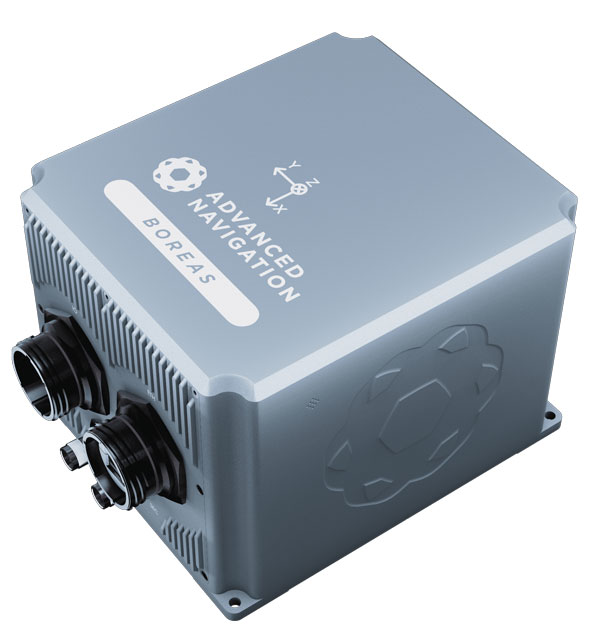
    Boreas D70 (Image: Advanced Navigation)
    Boreas D70 (Image: Advanced Navigation)

    Gyroscope
    Provides high-accuracy inertial navigation

    The Boreas D70 is a fiber-optic gyroscope (FOG) inertial navigation system (INS), part of the Boreas digital FOG series. The technology is suited to surveying, mapping and navigation across subsea, marine, land and air applications. It also could be adopted for vehicular applications, including autonomous vehicles and aircraft where weight and size are at a premium. The Boreas D70 combines closed-loop DFOG and accelerometer technologies with a dual-antenna real-time kinematic (RTK) GNSS receiver. These are coupled with an artificial-intelligence-based fusion algorithm to deliver accurate and precise navigation.
    Advanced Navigation, advancednavigation.com
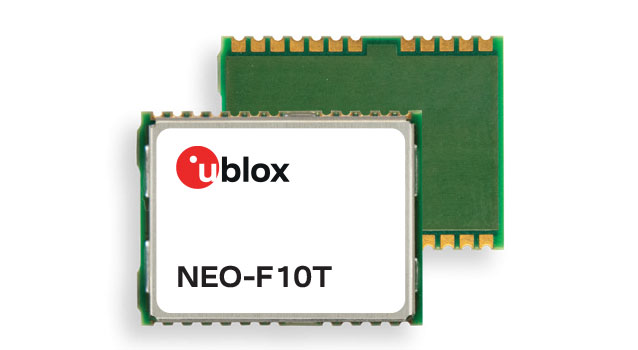
    The u-blox NEO-F10T (Image: u-blox)
    The u-blox NEO-F10T (Image: u-blox)

    Timing Module
    Dual-band and secure for 5G communications

    The u-blox NEO-F10T offers nanosecond-level timing accuracy, meeting the stringent timing requirements for 5G communications. It is compliant with the u-blox NEO form factor (12.2 mm x 16 mm), allowing space-constrained designs to be realized without the need to compromise on size. The NEO-F10T is the successor to the NEO-M8T module, providing an easy upgrade path to dual-band timing technology. This allows NEO-M8T users to access nanosecond-level timing accuracy and enhanced security. u-blox’s dual-band technology mitigates ionospheric errors and greatly reduces timing error, without the need for an external GNSS correction service.
    u-blox, u-blox.com


    TRANSPORTATION
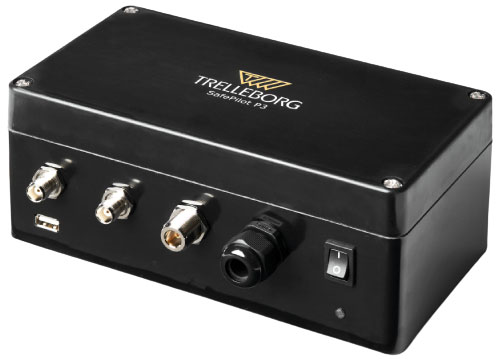
    SafePilot P3 (Image: Trelleborg)
    SafePilot P3 (Image: Trelleborg)

    Maritime Systems
    Provides data on vessel positioning

    The SafePilot P3 navigation system provides real-time data on vessel positioning and movement in tight waterways. It uses motion sensors and two GNSS antennas to measure the position and heading of vessels in three dimensions, minimizing time and difficulty associated with piloting procedures. SafePilot P3 has a backup battery to maintain functionality in the event of a power outage. This navigation system improves situational awareness while navigating waterways and ports globally, and also enhances communication between the captain, pilot, tug operators and canal personnel while vessels are transiting a canal and approaching a port.
    Trelleborg, trelleborg.com
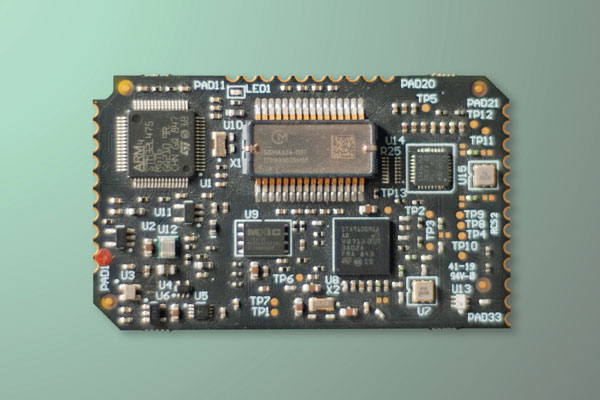
    FusionEngine software (Image: Point One Navigation)
    FusionEngine software (Image: Point One Navigation)

    Positioning Engine
    Assures functional safety of ASIL-B

    FusionEngine software, which is rated for automotive safety integrity level (ASIL), is now compatible with STMicroelectronics’ Teseo ASIL Precise Positioning GNSS chipset TeseoAPP. This assures functional safety of ASIL-B, a requirement for Level 3+ advanced driver assistance systems (ADAS). It can be integrated into several different host processors to enable high-level ADAS and autonomous driving systems. The combination of TeseoAPP’s receiver and the STA5365S external RF front-end provides dual-band measurement data for all visible GNSS satellites to the main host processor into which
    FusionEngine is integrated.
    Point One Navigation, pointonenav.com
    Ghost Autonomy Engine (Image: Ghost)
    Ghost Autonomy Engine (Image: Ghost)

    Autonomous driving software
    for level 4 driver assistance

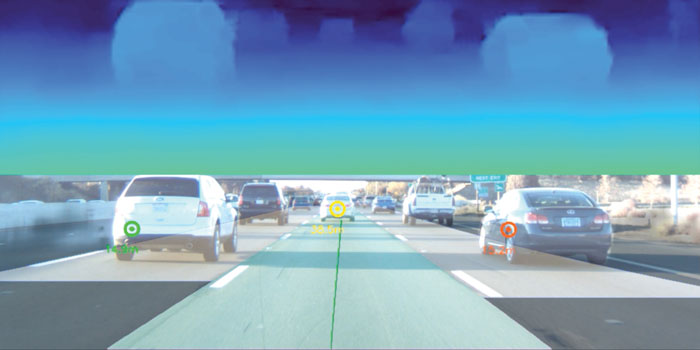
    The Ghost Autonomy Engine achieves the reliability required to bridge the gap between driver assistance capabilities L2 or L2+, and self-driving that does not rely on a human backup (L4). The software provides a stereo-vision neural network that delivers per-pixel depth in real time. It is capable of detecting and segmenting key features in a scene without needing to classify or recognize them. The physics-based perception system can handle the long tail of obstacles on the road, even those never seen before.
    Ghost, ghostautonomy.com
    Vista-X120 Plus (Image: Cepton)
    Vista-X120 Plus (Image: Cepton)

    Lidar
    Provides 3D perception

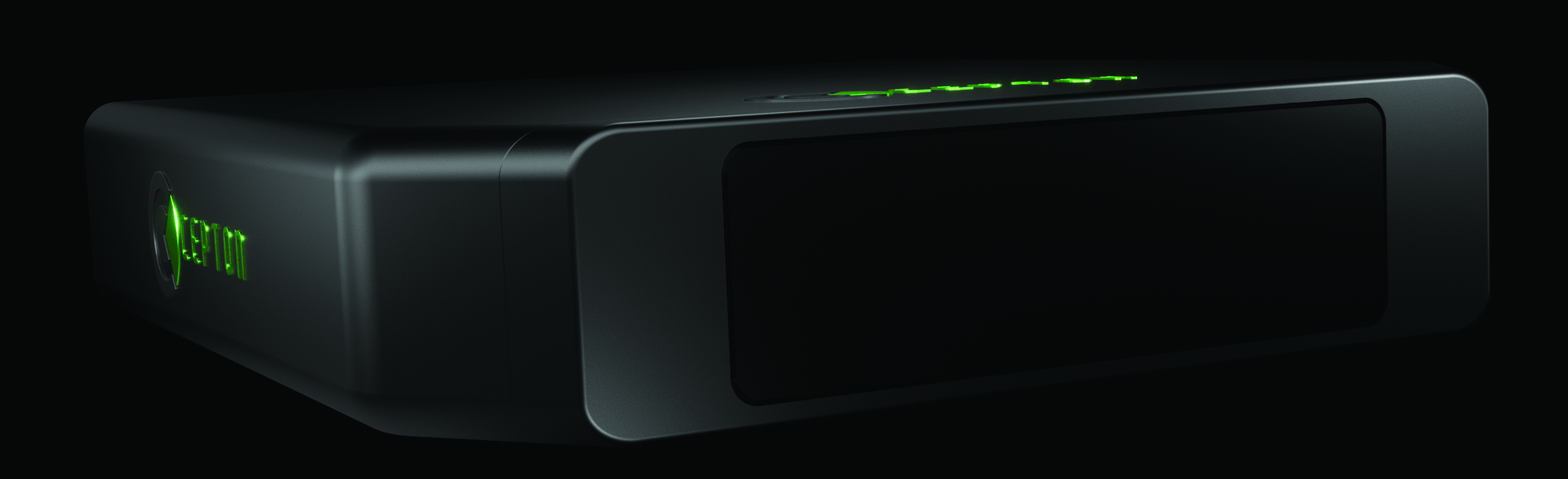
    The Vista-X120 Plus is a slim automotive lidar device for real-time adaptive 3D perception for advanced driver assistance. Its software-definable region of interest enables higher dynamic perception capabilities, while an adjustable central field of view with increased angular resolution improves accuracy in detection and classification of objects when driving. The region of interest is also configurable in real time in both horizontal and vertical directions. The Vista-X120 Plus is compact at 140 mm x 30 mm, improving OEM integration and placement options without disrupting vehicle appearance.
    Cepton, cepton.com
    IIM-42653 and IIM-42652-I sensor platforms (Image: TDK Corporation)
    IIM-42653 and IIM-42652-I sensor platforms (Image: TDK Corporation)

    Sensor Platforms
    Targets industrial and navigation applications

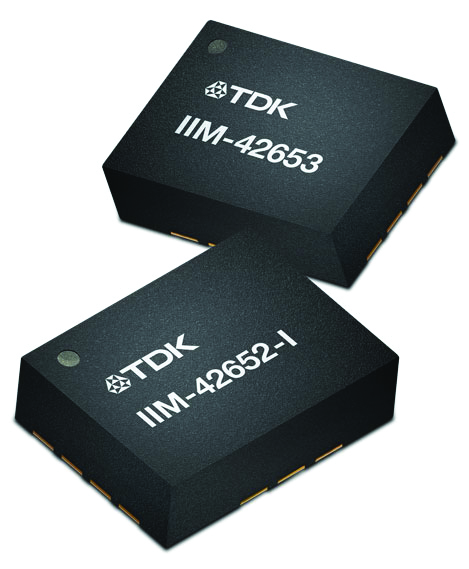
    The IIM-42653 and IIM-42652-I sensor platforms consist of 6-axis IMUs, which target industrial and navigation applications requiring high force sensitive resistor (FSR) performance or inertial navigation software. The IIM-42653 platform — a robust, low-noise, low-power, 6-axis IMU — is capable of a gyro-programmable output of 4,000 dps and an accelerometer-programmable output of 32 g. These features make the IIM-42653 suitable for industrial-grade or high-end automated guided vehicles, automated mobile robots and unmanned aerial vehicles. The IIM-42652-I platform offers hardware authentication and can be integrated with TRACK dead-reckoning software from Trusted Positioning. TRACK filters GNSS multipath errors and provides a continuous navigation solution when GNSS signals are unavailable.
    TDK Corporation, invensense.tdk.com
    VO Max 4T (Image: Autel Robotics)
    VO Max 4T (Image: Autel Robotics)

    Flight Platform
    For enterprise and professional applications

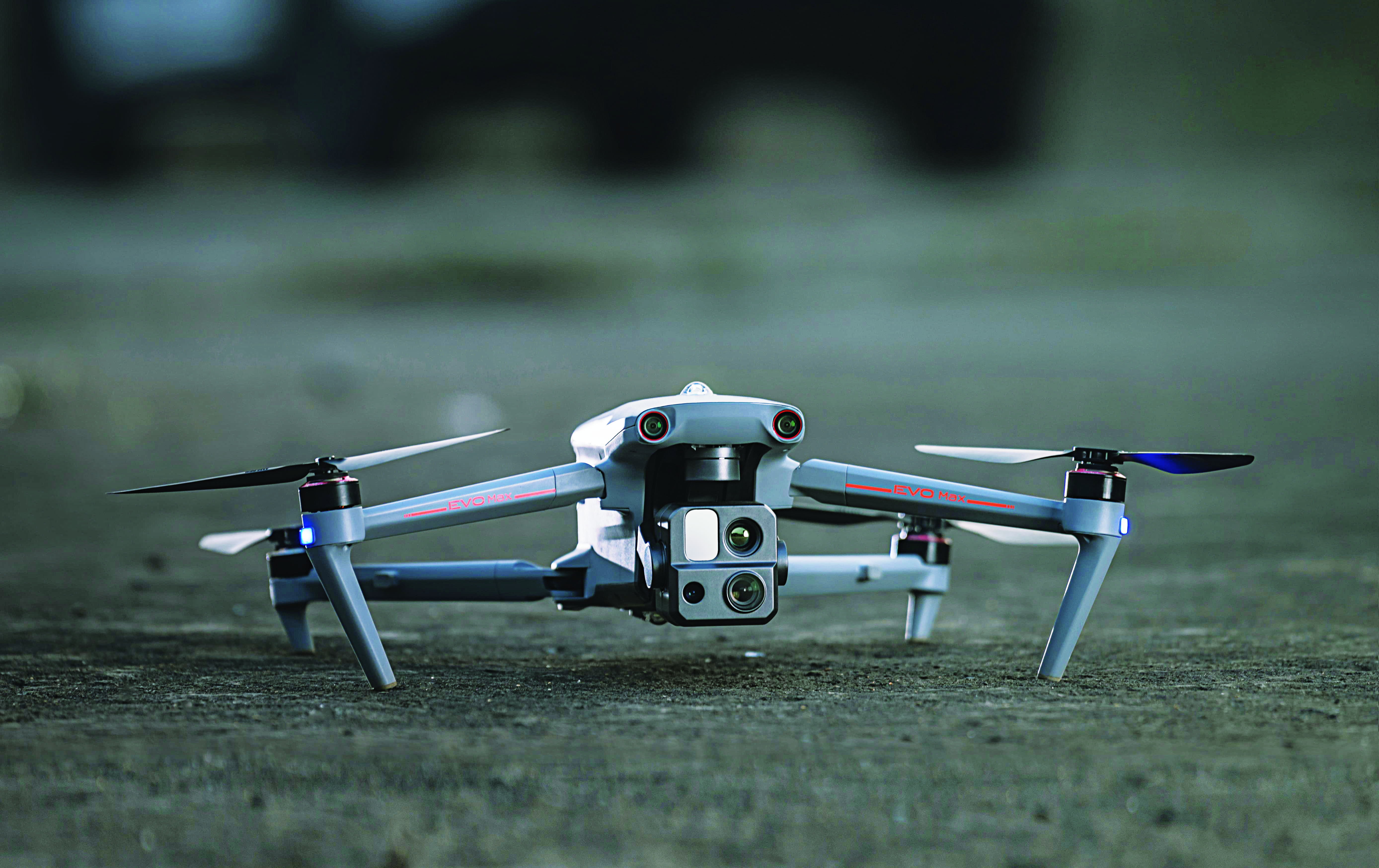
    The EVO Max 4T autonomous flight platform provides omnidirectional obstacle avoidance and tri-anti-interference capability to ensure flight safety and stability in high-interference environments. It is equipped with three high-quality cameras including a 48 MP telephoto camera, a 50 MP wide-angle camera and an infrared camera. The platform has a range of navigation and data-acquisition functions, including 3D flight routes, PinPoint Mode, Team Work, Polygon Mission, Waypoint Mission and Oblique Photography. EVO NEST is a base for automatic take-off, landing, charging and mission planning for EVO series UAVs. It is designed for all-weather operation and can be easily transported.
    Autel Robotics, autelrobotics.com
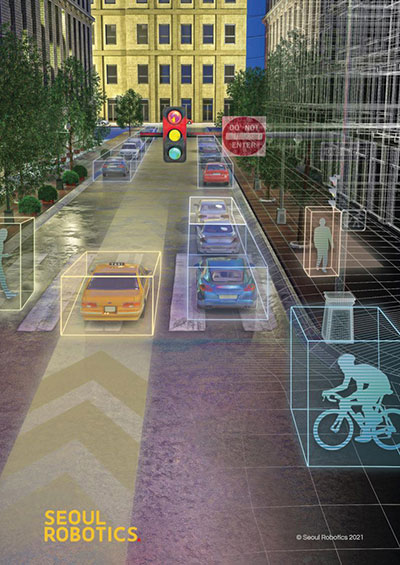
  • Bringing 3D perception beyond autonomous vehicles

    Bringing 3D perception beyond autonomous vehicles

    Predictions for the next big industries in lidar

    By HanBin Lee
    CEO, Seoul Robotics

    HanBin Lee
    HanBin Lee

    Lidar sensors that used to cost tens of thousands of dollars now cost only hundreds of dollars. With prices significantly decreasing, 3D sensors are more accessible than ever before. Now, what was once a niche technology exclusively for autonomous vehicles is being deployed globally to make places safer and smarter. Additionally, the industry is continuing to grow: market analysis firm Yolé estimates that the lidar industry will be worth nearly $4 billion by 2025, a 19% CAGR between 2020 and 2025.

    While decreasing sensor prices are a critical factor in the proliferation of lidar, an arguably more significant development is the development of robust perception software that can track, identify and monitor with far greater accuracy and efficiency than ever before.

    Effective 3D sensors, from lidar to radar and 3D cameras, require both hardware and software components. The hardware is critical to capturing data with high resolution and accuracy, while the software processes and comprehends the data, making them actionable. Essentially, software is the “brain” of sensors. Lidar, without equally strong perception software, is like an iPhone without iOS — inoperable and just a piece of machinery.

    Today, at the confluence of these factors, we are beginning to see a proliferation of 3D perception applications beyond autonomous driving. Cities, security and retail are a few key sectors where I predict we will continue to see advancements over the next few years.

    Making Cities Smarter

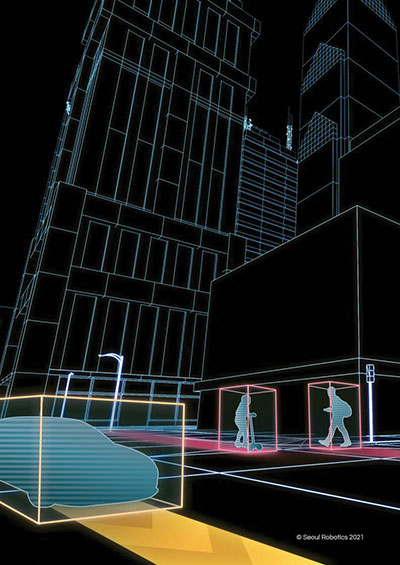
    The steep drop in the cost of lidar sensors has made 3D sensors more accessible than ever. (Image: Seoul Robotics)
    The steep drop in the cost of lidar sensors has made 3D sensors more accessible than ever. (Image: Seoul Robotics)

    Today’s cities have a variety of challenges to address, from decreasing traffic collisions to reducing congestion, and we are witnessing municipalities leveraging lidar to collect critical insights into city safety and efficiency.

    However, why are they turning to 3D solutions, specifically? Because they can capture the data necessary to make actionable changes. 3D sensors were developed to quickly track and analyze city surroundings for autonomous vehicles, so they are an effective way to ensure that vehicles are not veering into opposing lanes or traversing crosswalks already occupied by pedestrians.

    Cities also adopt 3D applications because they can often address multiple challenges with one system. For example, a city may install a lidar system on an intersection to detect traffic violations, but the system can also capture data about pedestrian safety and traffic flow. These multi-benefit solutions are ultimately more cost-effective for cities because they eliminate the need to install multiple different solutions to solve these problems.

    Creating Safer Spaces

    Companies are turning to 3D data to create safer and more secure environments. (Image: Seoul Robotics)
    Companies are turning to 3D data to create safer and more secure environments. (Image: Seoul Robotics)

    From airports to museums, from stadiums to music venues, the market for 3D-based security solutions is vast. While each of these environments is unique in how it operates, they all rely on technology to ensure that areas are secure, visitors do not enter prohibited areas, and crowds are seamlessly moving through the space.

    3D perception helps address these challenges by creating “zones” that can alert security systems if someone enters. Additionally, because 3D sensors can detect and track various objects, including humans, they are increasingly becoming a popular solution for crowd control. They can help venues monitor and address foot traffic, such as with security lines, and they can be valuable in the event of an emergency to ensure that an area is clear.

    Beyond the tangible benefits 3D sensors bring to different venues, companies are turning to 3D data to create safer and more secure environments because they are more accurate and anonymous. Unlike traditional camera-based systems such as CCTV, which are often prone to false positives, 3D data are incredibly accurate and precise, so they are less likely to set off alarms unnecessarily. Additionally, 3D data do not include biometric information, so they address privacy concerns while still ensuring that areas are secure.

    Building 3D Retail Environments

    By implementing 3D-based solutions into a physical retail environment, companies can better understand how shoppers are moving through and spending their time in stores. They can glean insights into key metrics, such as:

    • How long are people in line?
    • What areas of the store are receiving the most traffic?
    • With what products are people engaging most frequently?

    As one example, Mercedes-Benz has integrated 3D sensors into its showrooms in Korea, gaining fascinating insights into customer behavior. For example, they’ve discovered that nearly 60% of customers spend their time looking at the trunk space of SUVs, and that red is the most popular color.

    As these solutions continue to become more sophisticated and accessible, we should expect to see them in more areas of our everyday lives. The future of 3D perception is exciting, and it will ensure safer, smarter and more efficient spaces — improving the quality of life.


    HanBin Lee is CEO of Seoul Robotics, a 3D perception company specializing in lidar.

  • Hesai announces partnership with Lidar USA

    Hesai announces partnership with Lidar USA

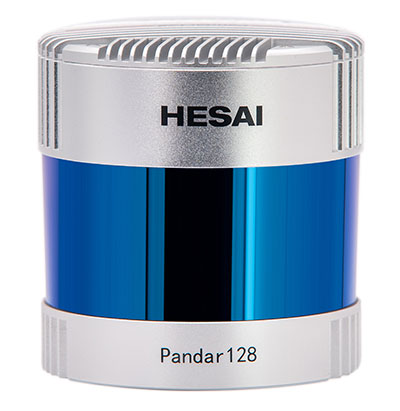
    Under a new agreement, Lidar USA — a developer of geomatics solutions — will include Hesai Technology Co. Ltd., 3D lidar sensors in its product lineup. Hesai Technology announced the agreement at the Commercial UAV Expo 2021 in Las Vegas, Sept. 7-9.

    The Pandar128 lidar unit. (Photo: Hesai)
    The Pandar128 lidar unit. (Photo: Hesai)

    Under the terms of the agreement, Lidar USA will leverage its marketing and sales expertise to distribute Hesai sensors across the United States, Canada and Mexico.

    “Hesai’s product portfolio has the sensors we have all long awaited — bridging the gap between sensors made for automotive navigation and those made for precision measurement,” said Lidar USA CEO Jeff Fagerman. “Users will enjoy the affordability of the former and results of the latter.”

    Hesai’s lidar units offer superior performance and reliability to ensure robust detection under different operating and environmental conditions, the company stated in a press release. Hesai’s XT sensors, embedded with proprietary lidar application-specific integrated circuits (ASICs), deliver performance advantages while maintaining a compact form factor and low cost.

    The XT sensors are lightweight and draw less power, enabling longer operation for airborne applications. The XT’s precision and accuracy allows for fine detail capture.

    PandarQT, a short-range sensor for blindspot detection, has a large vertical field-of-view of 104.2°. The Pandar series lidars — Pandar128, Pandar64 and Pandar40P — deliver long detection range, high resolution and high point density for optimized perception results.

    “Lidars are increasingly being adopted for different end markets and applications,” said David Li, Hesai’s CEO. “We’re excited to partner with an industry leader like Lidar USA, whose strong foothold in North America will help expand access to sensors across different segments.”

  • Inertial Labs explains lidar, GPS-aided INS and data management

    Inertial Labs explains lidar, GPS-aided INS and data management

    A new blog offered by Inertial Labs discusses the scope of work to turn lidar point-cloud data collection into actionable deliverables. The blog, “Providing Actionable LiDAR Point Cloud Deliverables and the Inertial Labs RESEPI” by Luke Wilson, is also available as a downloadable PDF.

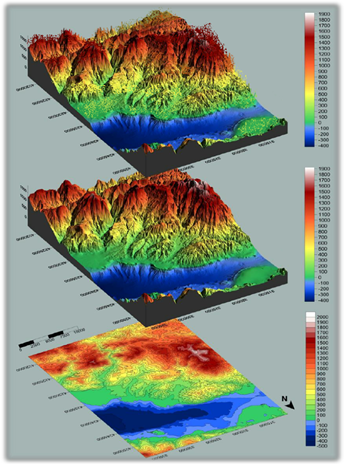
    A digital terrain model, a digital surface model, and a digital elevation model (from top). (Image: Inertial Labs)
    A digital terrain model, a digital surface model, and a digital elevation model (from top). (Image: Inertial Labs)

    The blog introduces lidar and creation of point clouds, then discusses the use of GPS-aided inertial navigation systems (INS). “A lidar point cloud is the product of sensor fusion across a GPS-aided INS and a lidar scanner. Each sensor plays a critical role in how a lidar payload functions and the applicability of its point cloud output,” explains Wilson.

    Wilson describes complications with converting datum reference frames, both traditional and reference ellipsoid such as WGS84. He also discusses projected coordinate systems. He concludes with analysis of the data using point classification — the foundation to create models including digital terrain, surface and elevation models (DTM, DSM and DEM respectively).

    Finally, Wilson explains how Inertial Labs’ RESEPI is a quick and efficient way to generate models of an environment, including in fields such as construction and utility management.

    RESEPI stands for REmote SEnsing Payload Instrument, Inertial Labs’ complete multiplatform, multisensor lidar and RGB payload solution for such remote sensing applications.

    Read the full blog.


  • Earth Archive project aims to create digital twin of entire planet

    Earth Archive project aims to create digital twin of entire planet

    Earth Archive event

    The Earth Archive Initiative is an unprecedented scientific effort to create a digital twin of the entire surface of the Earth – and everything on it.

    By scanning the planet’s land surface with very high-resolution lidar, the Earth Archive will create a true three-dimensional digital twin of our world — an open source, digital record of the Earth that will reflect the landscape exactly as it was at the time of scanning.

    The geospatial data captured will serve as the baseline for understanding and exploring our world.

    A virtual conference, billed as the “Chapter I : The Amazon,” takes place June 15-16, and will provide updates on the unique project from academics, non-government organizations, technology providers and the public. Registration is free.

    The Amazon Basin is the first region chosen for scanning and the focus of the conference. “While our scope is the entire planet, we’ve tasked ourselves with first scanning areas that are not only most susceptible to change, but also deep in value for understanding our past,” a project spokesperson explained.

    “The 2021 inaugural Earth Archive Congress is centered on our initial campaign to scan the entire Amazon Basin. The Amazon rainforest plays a monumental role in the Earth’s climate, has an incredibly rich Indigenous history, and boasts a remarkable level of ecological diversity — but is vanishing before our eyes.

    “With the ability to digitally preserve landscapes at any moment in time, very high resolution lidar can enhance archaeological, anthropological, and conservation studies and provide needed information to help advance sustainable development, as well as provide us with more groundbreaking revelations of the Amazon’s astounding past.”

    Registration at the Earth Archive Virtual Congress is complimentary.

  • Robosense offers 125-beam solid-state lidar

    Robosense offers 125-beam solid-state lidar

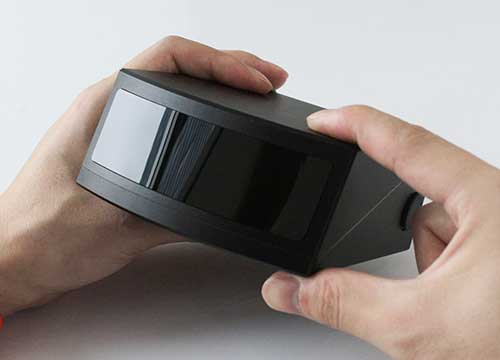
    The RS-Lidar-M1. (Photo: Robosense)
    The RS-Lidar-M1. (Photo: Robosense)

    RoboSense is offering the solid-state lidar RS-LiDAR-M1Simple (Simple Sensor Version), which is less than half the size of the previous version at 4.3  x 1.9 x 4.7 inches (110 x 50 x 120 millimeters).

    It is equipped with enhanced hardware performance virtually equal to the serial production version provided to OEMs. The main body design of this automotive-grade solid-state lidar is finalized and ready for shipment.

    The RS-LiDAR-M1Smart main body is embedded with an artificial intelligence (AI) perception algorithm that takes advantage of lidar’s potential to transform conventional 3D lidar sensors to a full data analysis and comprehension system, outputting semantic-level structured environment information in real time to be used directly for autonomous vehicle decision making.

    The RS-LiDAR-M1 family has the performance advantages of traditional mechanical lidar, simultaneously taking into consideration requirements for the mass production of vehicles.

    The RS-LiDAR-M1Smart Features

    • Adapts to complex traffic conditions.
    • Supports multiple driving scenarios.
    • Supports dense traffic flow, such as mixing pedestrians and vehicles in intersections during peak hours.
    • Comprehensive perception of a wide range of dynamic, static and background objects.
    • Achieves semantic-level prediction for 3D point clouds.
    • Handles the challenges caused by two-wheel vehicles (motorcycles, bicycles, etc.) and pedestrians who do not follow traffic rules.
    • Over-segmentation and under-segmentation are fixed based on the clustering algorithm. The robustness against sparse point clouds ensures the integrity of object detection.
    • Outputs two redundant channels of data: the original point cloud and the object list. The two channels of data are redundant to provide vehicles with a wide range of sensing results, including dynamic and static and inside and outside the road.
  • Autonomous vehicles can reduce road fatalities

    Autonomous vehicles can reduce road fatalities

    Mothers Against Drunk Driving (MADD) has partnered with Velodyne Lidar, a provider of real-time 3D perception systems for a range of commercial applications, including autonomous vehicles. The initiative includes a website on the safety benefits of autonomous vehicle technology (see velodynelidar.com/madd-partnership.html) and an October conference on autonomous safety.

    “We have learned that technology is essential to getting us to our goal of zero deaths caused by drunk driving,” said MADD President Helen Witty. “Autonomous vehicle technology holds the incredible promise of helping us eliminate drunk driving.”


    World Safety Summit on Autonomous Technology
    Levi’s Stadium in Santa Clara, California | October 2, 2019

    The summit is designed to advance understanding of the safety benefits that can be achieved with autonomous vehicle technology. It is designed for business, government, public safety and community leaders. Attendees will have the opportunity to ride in autonomous vehicles.


    Marta Hall, Velodyne Lidar’s president and chief business development officer, added, “Our goal is to design, develop and mass-produce lower cost lidar sold for every model of car and truck.”

    The two organizations partnered in 2018 to create the website with information on how autonomous vehicles can help prevent roadway collisions. The site explains the basics of autonomous driving in easy-to-understand language for all audiences. Content modules include “Lidar 101,” explaining how lidar sensor technology is an essential component of self-driving vehicles.

    A 3D lidar sensor such as the Velodyne Alpha Puck can deliver information to help enable vehicle autonomy and advanced driver-assistance systems. (Image: Velodyne)
    A 3D lidar sensor such as the Velodyne Alpha Puck can deliver information to help enable vehicle autonomy and advanced driver-assistance systems. (Image: Velodyne)

    “The promise of safe, self-driving cars is very exciting, particularly for those of us who have seen the devastation that impaired driving and human error can bring,” said former MADD President Colleen Sheehey-Church.

    Puck Sensor.
    The Velodyne Alpha Puck is a lidar sensor specifically made for autonomous driving and advanced vehicle safety at highway speeds. In a session at July’s Automated Vehicle Symposium, company speakers presented “High-Definition 3D Lidars: An Integral Part of Future Autonomous Driving,” including use cases that have proven elusive for solutions based on camera and radar; and “State of Solid-State 3D Lidar,” a technical presentation on application-specific integrated circuits (ASICs).

    “Core lidar electronics are moving from a printed circuit board to an ASIC, which provides advantages such as higher density, lower cost and improved reliability,” said UAV and Robotics Business Manager Frank Bertini. “The trend roughly follows Moore’s Law, leading to dramatic decreases in size, weight and cost over relatively short time periods.”

  • Velodyne features VLP-16 Puck mobile mapping system at AUVSI’s Xponential 2016

    Velodyne‘s Frank Bertini talks about the company’s new 3D lidar VLP-16 Puck at the Association for Unmanned Vehicle Systems International‘s Xpontential show, held May 3-5 in New Orleans.

    The sensor offers real-time data, 360-degree scanning, 3D distance and calibrated reflectivity measurements for the mapping, automotive, UAV, security and robotics markets.