Category: Defense

  • Timing matters: The critical role of GNSS-resilient systems in modern infrastructure

    Timing matters: The critical role of GNSS-resilient systems in modern infrastructure

    When a GNSS signal is lost, plenty of people think about navigation first. An aircraft may find itself deprived of precise position data, vessels may have difficulty determining their location, and vehicles may be forced to use alternative navigation methods.

    However, positioning is only part of the story. There is always something much more fundamental behind each navigation signal: time.

    As a matter of fact, there exists a whole invisible network of synchronization, without which the functioning of telecommunications networks, power distribution grids, transportation, aviation, and many others would become impossible.

    At this very moment, billions of devices around the planet are coordinated through the use of highly accurate timing signals provided by GNSS. This has been one of the most successful inventions of the modern era, though it also remains one of the most overlooked ones.

    However, with a growing number of jamming cases and increasing interconnectivity of critical infrastructures, times are changing. Today, the question is not whether companies need highly accurate timing, but how long they can operate without it.

    The World’s Most Invisible Dependency

    Timing rarely receives the same attention as positioning, yet it underpins many of the systems society depends upon daily.

    A mobile phone call connects because cellular networks remain synchronized. A financial transaction gets verified based on the system’s agreement on the accurate sequence of events. Electrical power can flow effectively from one country to another due to the shared timing reference point among substation and control centers.

    Aviation technology cannot ignore this either. Today, this field requires synchronized surveillance, communications, navigation, and operation systems. There are millions of interconnected processes at the airport, and they require timing for safety reasons.

    Emerging technologies, such as digital towers and more advanced air mobility systems, are becoming more reliant on the synchronization process. In most cases, for instance, GPS is used for its unmatched accuracy and accessibility.

    The challenge now is that dependence often breeds complacency.

    When Time Stops

    Contrary to a total breakdown, timing disruptions tend to be more subtle.

    A network can function while synchronization slowly becomes poor. A communication system can be working without issues while performance slowly declines. Timing disruption goes unnoticed by critical infrastructure operators until they discover that the common reference connecting various systems is no longer effective.

    It is because of this that timing disruption poses such a serious threat. Any small timing issue may rapidly spread across connected systems. Milliseconds can turn into seconds, whereas localized disturbances may quickly become network-wide issues. Depending on which industry sector is being considered, consequences may include reduced performance or even total disruption.

    As GNSS interference increases, this trend will only accelerate.

    Various instances of increased GNSS jamming and spoofing have already been recorded within aviation in Europe, the Middle East, and other parts of the world. Although all focus has been on navigation issues, the bottom line remains the same: if GPS signals are jammed or spoofed, so can timing signals be.

    Resilience Is the New Accuracy

    While accuracy has always been the main priority in the past several decades, nowadays, it starts being accompanied by resilience. Even the best timing solution in the world means nothing when it proves unreliable in case of any disruptions.

    As a result, today’s operators of critical infrastructure are changing their approach to timing, no longer focusing solely on accuracy. The target is to maintain reliable timing under any circumstances, including the presence of adversarial attacks or other forms of interference.

    Such an approach affects the design of the timing architecture itself, which in the future will likely become more complex and rely on multiple timing sources. GNSS systems will remain integral, while other elements, such as atomic clocks or resilient PNT technologies, will complement them.

    In other words, the future is no longer entirely about redundancy but about reliability.

    The Rise of Assured Timing

    Assured PNT is a term that has received considerable attention in recent years, especially among companies working in aviation, military, telecommunication, and energy fields. Its essence is clear and straightforward: companies should not depend completely on one source of time signal.

    On the contrary, robust systems need to continuously verify received data, identify irregularities, and continue functioning without the presence of any reliable time references. In other words, the system is intelligent enough to distinguish between correct and incorrect information.

    The matter is crucial given the current trend toward automation in different industries.

    Automation implies autonomous vehicles, sophisticated air traffic management systems, digital communications infrastructure, and energy distribution networks, all depending on precise timekeeping. Automation, however, doesn’t tolerate uncertainties. 

    In high-speed decision-making processes, synchronization becomes highly important. Otherwise, the notion of autonomy remains just a fiction.

    Building the Next Generation of Resilient Infrastructure

    The silver lining in this is the fact that the industry has responded to this challenge.

    Investments in robust timing solutions are increasing across the aerospace and critical infrastructure industry. Firms working on developing navigation, timing, and inertial system solutions are now developing technology-based solutions that are capable of ensuring accuracy irrespective of whether the GNSS solution is available or not.

    These include solutions around advanced atomic clocks, robust PNT solutions, and signal authentication and monitoring solutions that are capable of detecting any form of interference even before it affects the process.

    Organizations such as Safran have played an active role in this journey by backing the development of technology that enables infrastructure operators to maintain accurate PNT capability.

    The objective is not to replace GNSS. Rather, it is to ensure that critical systems remain operational when GNSS alone is no longer enough.

    The Strategic Importance of Time

    The importance of timing will only increase in the years ahead.

    5G and future communications networks require tighter synchronization. Autonomous transportation systems depend on coordinated decision-making. Smart grids must balance increasingly dynamic energy flows. Aviation continues its journey toward more connected and digitally integrated operations.

    Every one of these developments places greater value on resilient timing. For decades, timing has quietly powered the systems behind modern life. It has been so reliable that many organizations have treated it as a given. That assumption is beginning to change.

    The future of critical infrastructure will not be defined solely by how accurately systems can determine their position. It will be defined by how effectively they maintain trust when their primary sources of information are challenged.

    Because in a world built on synchronization, timing is more than a technical requirement. It is a strategic asset. And when it is lost, the consequences can be felt far beyond the systems that depend on it.

  • Honeywell launches UAS navigation system

    Honeywell launches UAS navigation system

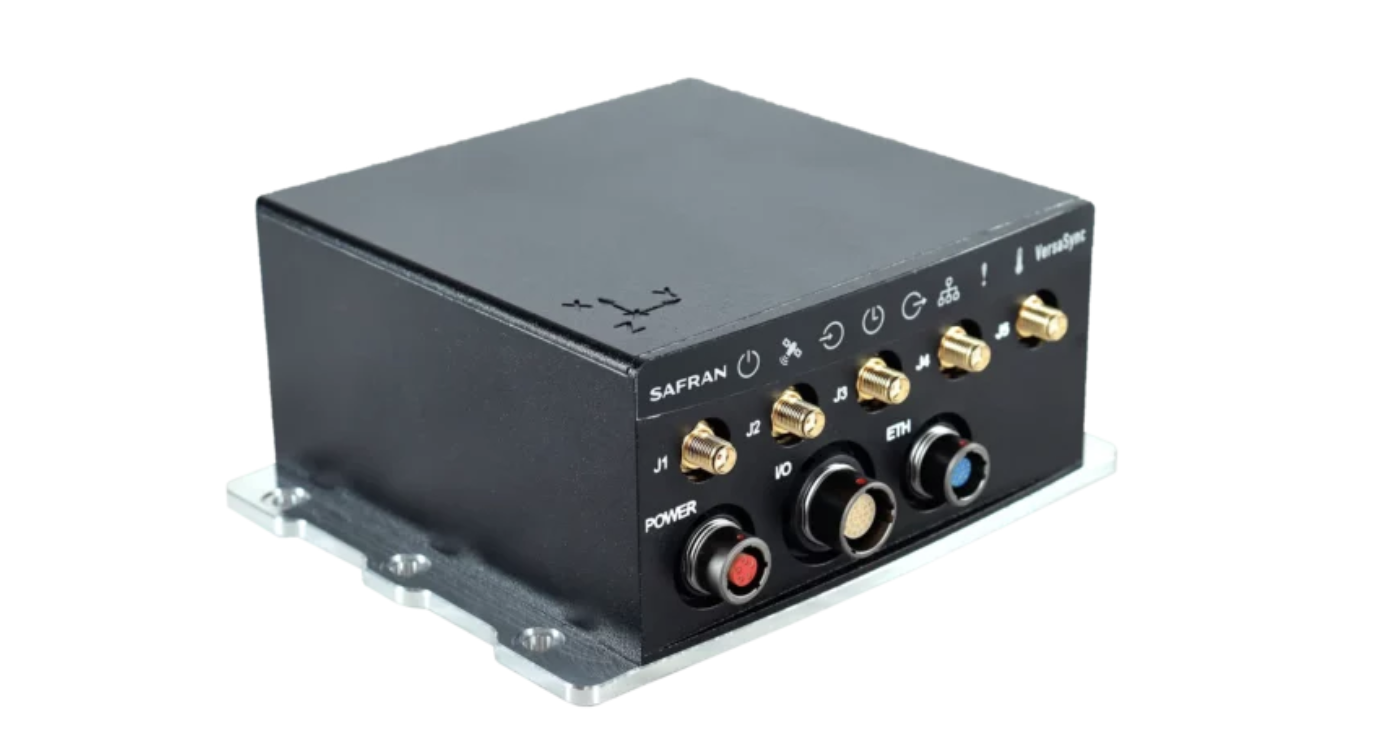
    Honeywell has launched Kestrel, a compact navigation solution designed to help uncrewed aerial systems (UAS) operate reliably in contested environments where GPS signals may be degraded, jammed or spoofed.

    Built to support the growing demand for smaller, more affordable and highly efficient platforms, Kestrel combines Honeywell Aerospace’s HG3900 MEMS inertial measurement unit with an M-code receiver and a multi-GNSS receiver. The platform is intended to meet the specific needs of Group 2 and 3 collaborative combat aircraft and loitering munitions platforms. It is also suitable for crewed aircraft where size, weight, power and cost are important considerations.

    “Kestrel reflects the evolving needs of today’s uncrewed operations, where operators are looking for resilient navigation technology that is smaller, lighter and more cost-effective,” said Matt Picchetti, vice president and general manager of Navigation & Sensors at Honeywell Aerospace. “This system helps operators maintain mission objectives in environments where legacy GPS systems are lagging behind.”

    Kestrel is an Embedded GNSS/INS (EGI) system for global defense and commercial operators in need of advanced inertial navigation technology with secure positioning capabilities in a smaller footprint. The system is 40 percent smaller and lighter than similar navigation products while delivering up to an 80 percent improvement in navigation accuracy for uncrewed platforms. It also reduces costs by as much as 50 percent, helping operators efficiently scale deployment across high-volume drone operations. Kestrel’s resiliency reduces UAS attrition by 60 percent, while more than doubling the capacity for mission distances.

    The ability to operate without assured GNSS access is a distinct advantage for any military aircraft operating in contested or GNSS-denied environments because it provides continuous, self-contained position, velocity and attitude estimates independent of external signals.

    Kestrel is designed to support a broad range of defense and commercial applications and will be available in configurations that support international and non-ITAR deployments.

    Honeywell pioneered EGI technology and has produced more than 60,000 units since the mid-1990s to meet customers’ most challenging navigation, pointing, stabilization and flight-control applications.

  • Space Force awards Lockheed Martin new GPS IIIF contract

    Space Force awards Lockheed Martin new GPS IIIF contract

    Total GPS IIIF commitment now at 14 satellites

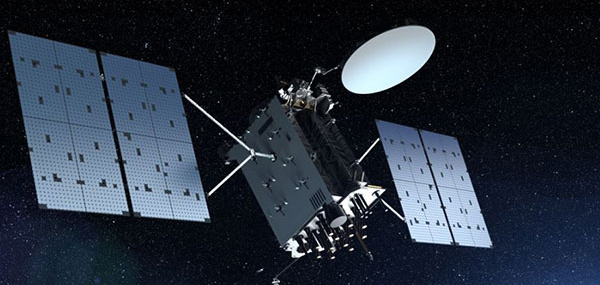
    The U.S. Space Force has awarded Lockheed Martin a $514 million contract to build GPS IIIF Space Vehicles 23 and 24, bringing its total GPS IIIF commitment to 14 spacecraft.

    With legacy spacecraft past their intended design life, the award marks a vital step in continued modernization of the constellation. The 14 upcoming GPS IIIF satellites will deliver advanced, reliable positioning, navigation and timing (PNT) capabilities for both military and civilian users.

    IIIF capabilities include: 

    • The Regional Military Protection capability that provides a 63-fold increase in anti-jam capabilities, allowing warfighters to access strong GPS signals in contested environments
    • Additional M-code-enabled satellites, allowing for secure GPS connection for warfighters
    • A digital navigation payload, increasing accuracy and reliability of IIIF spacecraft.

    “Modernizing the constellation with highly resilient, next-generation space vehicles ensures warfighters have access to the GPS capabilities they require for their missions,” said Christina Mancinelli, vice president of global communications and navigation at Lockheed Martin. “We continue to invest in advanced technology, facilities and the people who are the driving force in the production of this spacecraft that help our military secure peace.”

    Earlier this year, all Lockheed Martin-made GPS III satellites reached orbit. GPS III SV09 and SV10 each launched on accelerated timelines, bringing unprecedented levels of resiliency to the constellation.

    The GPS constellation provides critical positioning, navigation and timing capabilities to key warfighter platforms made by Lockheed Martin. For example, the F‑35 uses GPS to determine its exact location, keep its systems perfectly synchronized, and share real‑time position data with other assets, enabling autonomous navigation and pinpoint strike capabilities.

    Similarly, the UH-60 Black Hawk employs GPS to navigate accurately, deconflict with ground and air forces, and deliver cargo or weapons with high precision, enhancing mission safety and effectiveness.

    For civilians, the GPS constellation underpins banking transactions, telecommunications networks, emergency‑response services, and everyday navigation. The new GPS IIIF satellites broadcast all civil signals — including the interoperable L1C and L5 — at greater accuracy and reliability.

    Advanced design features speed and resiliency

    GPS IIIF satellites are engineered for resiliency. Starting with SV13, these spacecraft are built on the evolved LM2100 Combat Bus, providing increased cyber-hardening, improved spacecraft power, propulsion and electronics. The LM2100 Combat Bus is also outfitted with additional size, weight and power to accommodate future capability insertions.

    The company has already completed the core mate milestone — marking the official “birth” of a satellite — for three GPS IIIF satellites, with all other IIIF satellites in different phases of production. The company was also recently awarded a $105 million contract to continue modernization of the GPS ground segment. With these contracts, Lockheed Martin reaffirms its long-term commitment to a resilient, high-performance GPS constellation that supports billions of users worldwide.

    Lockheed Martin continues to advance GPS IIIF production at its Denver area facilities, employing emerging technologies such as augmented reality and digital twins to accelerate build rates and ensure capabilities are delivered to the warfighter quickly.

  • Hensoldt unveils mobile GNSS jammer

    Hensoldt unveils mobile GNSS jammer

    At the defense and security show Eurosatory 2026 in Paris, Hensoldt is presenting SkyBarrier, a mobile jammer for satellite-based navigation signals.

    The system is designed as an electronic countermeasure. It is aimed at armed forces and government agencies that need to protect critical infrastructure and personnel from the use of enemy navigation-based systems.

    The SkyBarrier is capable of simultaneously jamming all GNSS signals. The jamming effect extends to both civilian and military variants of these systems, as well as encrypted signal variants. The system thus covers the entire range of currently relevant frequency and coding variants.

    A key feature of the system is its mobility and operational speed. Two people can set up SkyBarrier, including mast assembly and cabling, and have it ready for operation within a few minutes. Activation then takes place via a mechanical switch on the front panel in a matter of seconds — no software-based configuration is required. The complete system consists of a single portable electronic unit, an extendable telescopic mast and the associated accessories.

    The system is designed for future expansion: new signal types can be retrofitted by replacing individual components without having to replace the entire system. In terms of security and cybersecurity, the SkyBarrier offers a high level of protection; the electronics have only three physical interfaces, which do not allow any external data communication.

  • Exail introduces inertial navigation system for amphibious operations

    Exail introduces inertial navigation system for amphibious operations

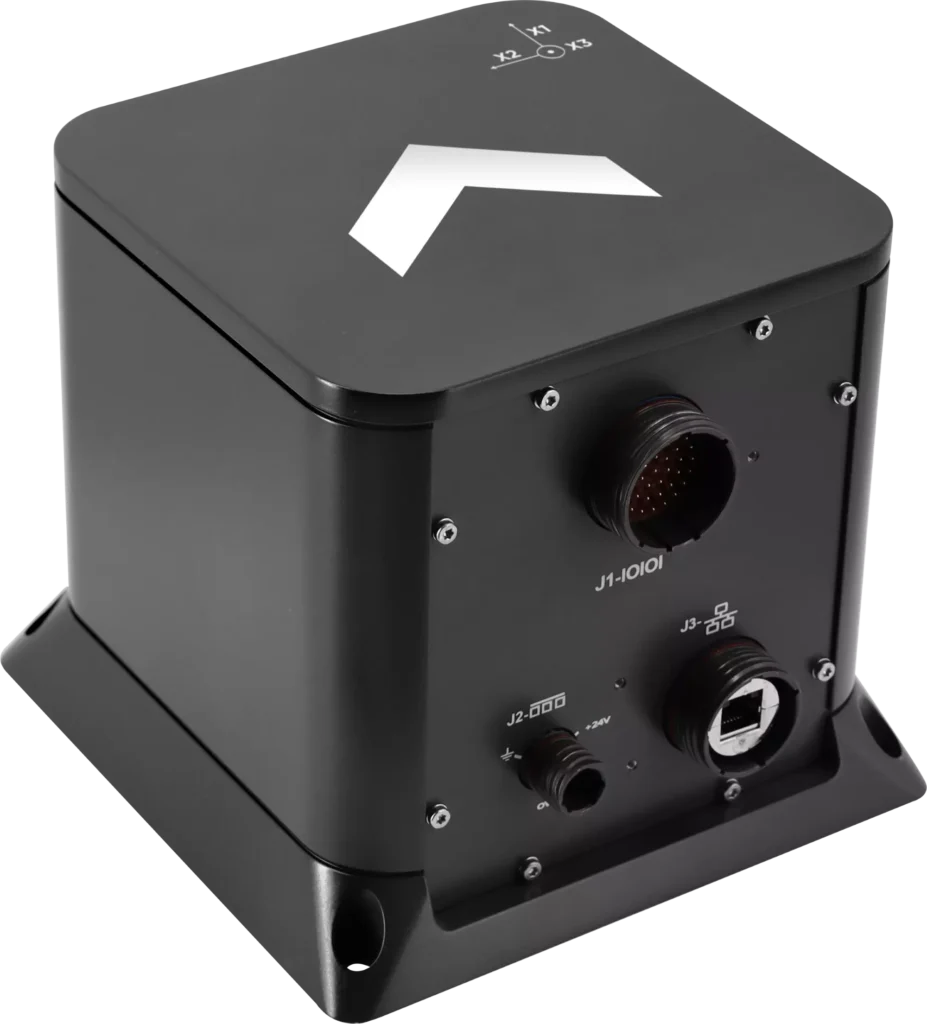
    Exail has unveiled the Advans Vega SL, a new high-precision inertial navigation system that maintains navigation continuity across amphibious operations.

    In contested littoral environments, maintaining reliable navigation across the sea-to-land transition remains a persistent challenge for amphibious forces. In the event of GNSS jamming, spoofing or signal unavailability, the Advans Vega SL operates independently of any external signal from vessel departure to shore, ensuring forces maintain continuous positioning and fire control readiness without reconfiguration at any stage.

    The Advans Vega SL INS. (Credit: Exail)
    The Advans Vega SL INS. (Credit: Exail)

    As a single, self-contained solution covering both maritime and land phases, it also removes the integration constraints associated with multi-system architectures, which typically require reconfiguration or handover at the water-to-land transition.

    With 0.05° RMS heading accuracy in the maritime phase and 0.5 mils RMS on land, the Advans Vega SL system maintains positioning continuity in GNSS-denied environments without reconfiguration.

    “GNSS signal denial is now an operational assumption in any amphibious and littoral combat planning,” said Yann Le Balc’h, business development manager for land defense, Exail. “The Advans Vega SL removes satellite dependency at the most exposed phase of an amphibious operation, giving forces the autonomy to project ashore on their own terms.”

    Drawing on Exail’s fiber-optic gyroscope technology, the Advans Vega SL delivers 0.05° RMS heading accuracy in the maritime phase and 0.5 mils RMS on land — the highest navigation precision achieved to date in a system designed for the full sea-to-land transition. This performance level is rooted in decades of navigation expertise across land and naval operations, now brought to bear on a capability requirement that has become increasingly critical in modern amphibious warfare.

    With navigation systems in service with more than 70 navies and land forces worldwide, Exail is a recognized supplier for defense forces requiring sovereign, signal-independent positioning capability across all operational domains.

  • Roke launches low-cost anti-jam system for contested environments

    Roke launches low-cost anti-jam system for contested environments

    Roke has launched Nav-Sync Armour, a controlled reception pattern antenna (CRPA) system enabling resilient GNSS navigation in globally contested environments. In Ukraine, the Baltics and the Middle East, ships, aircraft and critical infrastructure are regularly disrupted by low-cost, ground-based interference that degrades or denies navigation.

    Nav-Sync Armour is designed to counter such jamming threats and support the growth of autonomous platforms. It is a multi-element CRPA that actively protects GNSS signals in contested environments.

    Unlike conventional antennas, which receive signals uniformly from all directions, Nav-Sync Armour uses multiple receiver channels and advanced digital processing to distinguish between genuine satellite signals and interference. Meaning it suppresses jamming sources in real time while maintaining the integrity of authentic signals.

    The system can mitigate multiple concurrent in-band jammers across L1 or L2 frequencies, delivering a stable and trusted GNSS output that enables continued operation under active interference, the company said.

    “CRPAs have long been the gold standard for resilient navigation, but not always a cost-effective offering for some platforms,” explained Marc Overton, managing director, Roke. “As a result, a large proportion of assets have been left either exposed to attack or reliant on solutions that struggle to perform in contested environments. For decades, effective GNSS protection has been concentrated on high-cost platforms, with many systems operating without meaningful resilience. Nav-Sync Armour addresses that imbalance by delivering the performance of high-end CRPA systems in a compact, low-SWaP solution that is affordable for all platforms.”

    Mission success increasingly depends on autonomy. These air, maritime or ground platforms require the persistence and scale that modern operations demand, yet they are often the least protected. Nav-Sync Armour enables resilient navigation where it has previously been impractical or unaffordable.

    In today’s battlespace, resilience means ensuring enough systems can continue to operate to deliver mission success, Roke said.

    Nav-Sync Armour shifts the balance back in favour of the platform, removing traditional barriers of cost, complexity and restriction to make high-performance protection available at the scale modern operations require.

    Designed as a direct replacement for existing GNSS antennas, Nav-Sync Armour connects directly to existing GNSS receivers via standard RF interfaces, simplifying integration and retrofit. It provides a straightforward route to upgrading resilience without significant platform redesign.

    Its compact form factor and low power consumption make it suitable for a wide range of installations, while its UK sovereign design ensures it is free from ITAR constraints, reducing supply chain friction and enabling broader adoption.  Roke has worked with other UK partners to create an onshore supply chain capable of manufacturing in the thousands.

  • Indian Defense signs deal for indigenous Navy GNSS jammers

    The system is designed to degrade an adversary’s satellite signal acquisition and tracking capabilities

    The Indian Ministry of Defense (MoD) has signed a ₹449-crore contract with Bengaluru-based Accord Software and Systems Private Limited (ASSPL) for the procurement of 20 enhanced capability GNSS (ECGNSS) jammers for the Indian Navy.  

    The system’s capabilities include degrading the satellite signal acquisition and tracking performance of the adversary GNSS receiver and signal spoofing or deceptive jamming, paving the way for safe operations by the Indian Navy in a multi-threat environment.

    The deal has been signed under the Buy (Indian-Indigenously Designed, Developed and Manufactured) category and includes a minimum of 75 percent indigenous content. 

  • Chipmakers demonstrate European-only manufacture of security-critical GNSS chip

    Chipmakers demonstrate European-only manufacture of security-critical GNSS chip

    A sophisticated GNSS system-on-chip design for secure positioning, navigation and timing (PNT) applications is the first fully European-based, end-to-end semiconductor manufacturing flow.

    Its manufacture demonstrates that security-critical chips for aerospace, defense and critical infrastructure can be designed, manufactured and delivered entirely within Europe.

    The QLX3xx design targets sovereign GNSS-based PNT solutions for aerospace, defense and critical infrastructures — such as resilient timing and synchronization networks and highly integrated, ultra-low-power GNSS receivers at the connected edge.

    In a partnership co-funded by the European Chips Act, GlobalFoundries’ Dresden site is establishing its European sovereign manufacturing flow, consolidating every step of the production process — from design intake and mask services to wafer manufacturing — within the European Union. No sensitive design data or physical materials leave Europe, meeting the strict regulatory and security requirements of European governments, defense agencies, system integrators and critical infrastructure operators. Qualinx served as the launch customer.

    The tape‑out realized with Qualinx represents the first operational milestone on the path toward a fully automated, trusted European flow, which GlobalFoundries aims to establish in Dresden by the end of 2026.

    Starting in 2027, aerospace and defense, as well as critical infrastructure customers, will be able to use this automated flow as part of regular foundry engagements, including the integration of European IP partners, mask houses and OSAT service providers to ensure a consistent, European-anchored value chain.

    A number of European system and module manufacturers from aerospace and defense, as well as operators of critical infrastructure, are in discussions with GlobalFoundries to map upcoming product generations onto GlobalFoundries’s sovereign manufacturing flow. The successful start with Qualinx serves as a strong proof point and reduces both technical and regulatory risks for subsequent programs.

    GlobalFoundries is also working with European connectivity and cloud providers to secure data flows across the entire semiconductor value chain. In a joint project with Deutsche Telekom, GlobalFoundries is assessing how production-related data from design and tape-out through manufacturing, test and quality can be processed, transported and stored entirely within Europe on European networks, cloud infrastructures and data centers.

    The resulting practices in secure data routing, encryption and access management for highly sensitive A&D and critical infrastructure workloads will feed directly into the scaling of GlobalFoundries’ European sovereign manufacturing model.

  • SyncIoT introduces GNSS module family for IoT, defense and critical infrastructure

    SyncIoT introduces GNSS module family for IoT, defense and critical infrastructure

    SyncIoT, a division of SyncWise Inc., has introduced its G1 and G5 families of GNSS receiver modules for applications in the Internet of Things (IoT), defense and critical infrastructure sectors.

    According to the company, the modules are designed and manufactured outside China and contain no Chinese hardware or software components. The products are intended for organizations seeking secure supply chains and compliance with U.S. procurement requirements, including those related to the National Defense Authorization Act (NDAA).

    The G1 family is designed for applications requiring a balance of positioning performance, power consumption and cost. The L1 receivers support concurrent tracking of up to four GNSS constellations, enabling access to more satellites and improving positioning availability in challenging environments. A low-power version, the G1LP, is aimed at battery-powered applications.

    The G5 module supports both L1 and L5 GNSS signals and is designed for higher-precision positioning applications. SyncIoT said the module can provide sub-meter accuracy while tracking up to four satellite constellations simultaneously. The use of L5 signals can help mitigate multipath effects, which can degrade positioning accuracy in urban and other signal-challenged environments.

    Additional features of the G5 include raw carrier-phase measurements, a one-pulse-per-second (1PPS) timing output, anti-jamming and anti-spoofing capabilities, inertial measurement unit (IMU) data pass-through and an integrated surface acoustic wave (SAW) filter and low-noise amplifier (LNA).

    “The release of the G1 and G5 families was initiated at the request of our top customers, who require U.S.-based solutions and greater security across their supply chains,” said Mark Murray, Head of IoT Modules at SyncWise. “The G1 and G5 families are only the beginning. Stay tuned for announcements regarding future products and partnerships.”

    Samples and development kits for both product families are currently available here.

  • RoGO partners with AugSense on edge AI analytics for first responders and military

    RoGO partners with AugSense on edge AI analytics for first responders and military

    RoGO Communications, the creator of the DropBlock satellite communications platform for cellular-denied environments, is partnering with Augmented Sense Technologies (AugSense) to integrate artificial intelligence capabilities into RoGO’s communications infrastructure.

    RoGO was founded to develop lifesaving technology for wildland firefighters and first responders. It’s product DropBlock is a ruggedized, portable satellite communications platform that provides real-time GPS tracking, weather telemetry, IoT sensor data, and tactical messaging in cellular-denied and remote environments.

    The partnership will develop edge AI-powered sensor fusion, Team Awareness Kit (TAK) ecosystem development, and predictive analytics to firefighters, disaster recovery, military and other first responders and remote operators, including All Hazards emergencies such as hurricanes, earthquakes and floods. Last month, RoGO and AugSense presented the combined capabilities at the annual convention for Special Operation Forces (SOF Week) in Tampa.

    Wildland firefighters, search-and-rescue teams, and military personnel routinely operate in remote terrain where conventional communications infrastructure does not exist. RoGO’s DropBlock technology has proven its ability to deliver real-time GPS tracking, weather data, IoT sensor telemetry, and tactical messaging over satellite links in these environments—deployed today by wildland fire agencies. As missions grow more complex and sensor-rich, operators increasingly need more than raw data. AI can deliver intelligence at the edge, delivered in real time, without dependence on connectivity.

    Through this partnership, RoGO will enhance its platform with AugSense’s edge AI engine, a modular, platform-agnostic system that processes and fuses multi-modal sensor data directly on devices, without requiring a cloud connection. The AI-enriched intelligence products will  transform raw sensor feeds into actionable decisions, such as predictions for the spread of a wildfire or other threats to safety.

    Edge AI Capabilities

    Edge AI Processing: AugSense’s engine runs AI workloads directly on edge devices using neuromorphic and spiking neural network architectures, achieving greater energy efficiency than conventional approaches. This means intelligence processing in power-constrained environments — no cloud, no data center, no latency.

    Multi-Modal Sensor Fusion: AugSense’s fusion engine synthesizes data from diverse sensors (RF, weather, geospatial, physiological, and chemical/biological) into a single actionable intelligence picture at the edge.

    TAK Integration & Development: Purpose-built plugins for the Android Team Awareness Kit (ATAK) and broader TAK ecosystem that overlay AI-fused intelligence onto the common operating picture, enhancing coordination across distributed teams connected through RoGO’s DropBlock network.

    Predictive Analytics: Machine learning models that transform raw sensor telemetry into forward-looking predictions such as anticipating weather shifts, equipment failures, threat patterns, and fire behavior.

    Immediate Applications

    The combined solution targets several high-impact use cases.

    • In wildland firefighting, the integration enables AI-predicted wind shifts and fire behavior models to reach incident commanders via RoGO’s satellite network—critical for crew safety decisions.
    • For search-and-rescue operations, fused sensor data and intelligent mapping overlays allow distributed teams to coordinate effectively through the DropBlock network without relying on cellular infrastructure.
    • In defense and special operations, the partnership delivers fused multi-sensor intelligence and TAK-integrated common operating pictures over satellite backhaul in contested and communications-degraded environments.

    A new RoGO mobile phone app coming in the third quarter enables point-to-point communications among DropBlocks and firefighter crews and displays the location of firefighting assets along with fire weather data.

  • Todd Humphreys: Russian satellites a cause of GNSS jamming across Europe

    Todd Humphreys: Russian satellites a cause of GNSS jamming across Europe

    Russian satellites have caused GPS outages of as long as 10 seconds across Europe, according to a new research paper, authored in part by GNSS expert Todd Humphreys.

    Humphreys is head of the Radionavigation Laboratory at the University of Texas at Austin. Separate research by Richard Bowden at Spanish company GMV supports the findings, according to The New York Times.

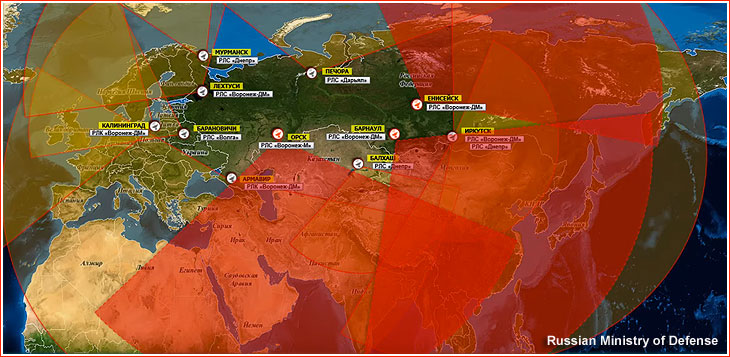
    In at least three of 75 instances identified since 2019, the interference originated from as many as three Russian satellites. The other cases implicate the same Russian early-warning network; though data is insufficient to pinpoint the source, the same type of signal was identified.

    Whether Russia knows of the interference — and its motives — is unknown, but the signals disrupt GPS, Galileo and BeiDou, and not Russia’s own GLONASS. The press office for the Russian Embassy in Washington, D.C. told The Times it had no comment.

    The paper, “Chasing Lightning: Detecting, Characterizing, and Identifying a Powerful Space-Based GNSS Interference Source” by Zachary L. Clements, Argyris Kriezis and Todd E. Humphreys, can be accessed here.

    The paper provides a comprehensive analysis of the GNSS interference phenomenon: wide-area transient interference from a space-based source causing up to 10-dB GNSS degradation across Europe since 2019 in the L1 band. The interference’s spatial, temporal and spectral properties are detailed. The researchers designed a framework to detect events using 1-Hz carrier-to-noise ratio observables from a network of 165 reference stations.

    The three satellites implicated in the interference are part of Russia’s Edinaya Kosmicheskaya Sistema (EKS) constellation, which detects missile launches and nuclear explosions around the world. The first instance of this widespread jamming was recorded in October 2019, a month after the first EKS satellite was launched.

    These cases are among the first known examples of GPS interference originating from space. Two historic cases of satellite interference were caused by technical glitches.

  • Broadcasters launch company to advance Broadcast Positioning System

    Broadcasters launch company to advance Broadcast Positioning System

    The National Association of Broadcasters (NAB) has launched Merkhet Solutions, an independent company focused on the commercial deployment of the Broadcast Positioning System (BPS).

    BPS, first conceived by the technology team at NAB in 2021, is a patented terrestrial, GPS-independent timing and positioning technology that leverages the high-power, geographically diverse broadcast infrastructure already covering the United States.

    BPS has been designed to address the more than $1 billion-per-day economic and national security risk posed by overreliance on GPS. Merkhet Solutions is engaging across critical infrastructure sectors, including energy, data centers, telecommunications and financial services – where a loss of precision time can trigger grid instability, outages and lost trades.

    “BPS represents a powerful intersection of innovation, public safety and opportunity for broadcasters,” said NAB President and CEO Curtis LeGeyt. “Launching Merkhet Solutions is the next step in commercializing this technology and ensuring it reaches the critical-infrastructure operators who need it most, while continuing to create meaningful long-term opportunities for local stations.”

    “BPS solves a problem we can no longer afford to ignore: an entire economy and national security posture resting on a single, contested signal from space,” said Merkhet Solutions CEO Sam Matheny. “We built BPS at NAB because broadcast infrastructure is uniquely suited to deliver assured terrestrial timing at scale. We’re launching Merkhet Solutions because the time to operationalize this technology is now.”

    Under Matheny’s leadership at NAB, BPS has advanced rapidly from research concept to real-world deployment. NAB demonstrated the first BPS prototype to the U.S. Department of Transportation (DOT) in 2022, followed by the first live broadcast demonstration in 2023.

    In 2024, NAB entered into a Cooperative Research and Development Agreement (CRADA) with the National Institute of Standards and Technology (NIST) and Nexstar Media Group. In 2025, NIST concluded in a peer-reviewed paper presented at the Institute of Navigation International Technical Meeting that BPS was “comparable to or better than GNSS” for time transfer stability and a “viable complementary PNT solution.”

    Later that year, the U.S. DOT awarded NAB a contract to deploy a BPS field trial with critical-infrastructure partner Dominion Energy.

    BPS is designed as a terrestrial complement to GPS, providing operators with an additional resilient source of timing and positioning that can be used alongside GPS or relied upon when satellite-based services are disrupted by jamming, spoofing, cyberattacks or natural events. The need for terrestrial complements to GPS has been recognized by the U.S. government through the National Timing Resilience and Security Act and Executive Order 13905.