
Tag: ASIC

  • EnSilica receives funding from UK Space Agency for satellite broadband terminal chips

    EnSilica receives funding from UK Space Agency for satellite broadband terminal chips

    Logo: EnSilica
    Logo: EnSilica

    EnSilica, a chip maker of mixed-signal application-specific integrated circuits (ASICs), has been awarded funding from the UK Space Agency under its Connectivity in Low-Earth Orbit (C-LEO) program. Following a competitive selection process, EnSilica has been awarded £10.38 million ($12.8 million) throughout the next three years for a development project pioneered by EnSilica.

    “This is a great opportunity to accelerate our chipset development, enabling us to extend our portfolio of chips for the satellite broadband market with a focus on providing a complete solution for user terminals while reducing cost and power,“ said Paul Morris, EnSilica vice president of RF and communications business unit.

    EnSilica provided its application with supporting letters of interest from potential lead customers to develop a family of semiconductor chips to support future generations of mass market satellite broadband user terminals. According to the company, the terminals will be capable of connecting with various satellite constellations and will leverage advanced semiconductor technology. In addition, the project will provide a resilient source of chips, which will be independent and not tied to specific satellite service operators.

    The UK Space Agency’s C-LEO program was launched in 2024 and is designed to ensure that the UK space sector remains competitive in the rapidly evolving global market for low-earth orbit constellations. With a total funding pool of up to £160 million ($198 million) available over the next four years, the C-LEO program supports the development of smarter satellites, enhanced hardware, artificial intelligence-driven data delivery and improved inter-satellite connections.

    This new project builds on EnSilica’s long history of collaboration with the UK Space Agency and the European Space Agency, alongside other key satellite communications partnerships and the company’s own investment in the technology.

  • The transition to M-code begins

    The transition to M-code begins

    BAE Systems has produced more than one and a half million military GPS receivers. The company is transitioning receiver designs to use the modernized military code (M-code) signal for added resiliency in RF-challenged environments. We asked Luke Bishop, director and product line engineering lead for the company’s Navigation & Sensor Systems, a few questions.

    BAE Systems’ MPE-M provide the benefit of M-Code operation in a challenged RF environment. Image: BAE Systems
    BAE Systems’ MPE-M provides the benefit of M-Code operation in a challenged RF environment. Image: BAE Systems

    Why transition to M-code?

    There are three key reasons for users to transition to M-code as supported by Military GPS User Equipment (MGUE). First, MGUE provide U.S. forces and our allies with enhanced PNT capabilities while improving resistance to threats, such as accidental and intentional jamming. Compared to the current P(Y)-code signal specs, M-code signals are stronger. Second, MGUE provides improved resistance to spoofing. Third, MGUE is field programmable, enabling updates to accommodate future enhancements to the GPS enterprise, such as regional military protection (RMP).

    Which user equipment is transitioning to M-code?

    Successful MGUE Inc 1 prototype development is being leveraged into a full portfolio of weapons, ground and aviation/maritime M-code GPS receivers. Our first production M-code receiver, MPE-M, achieved production deliveries in CY2021, with more than 1,000 delivered. Additional M-code GPS form factors are under development.

    We are also underway with the Foreign Military Sales (FMS) M-code program with MPE-M.

    How is the transition to M-code proceeding?

    As indicated by the January 2021 GAO report (GAO-21-145), M-code-capable user equipment is in the initial stages of Department of Defense (DOD) fielding for select weapon systems. Also noted by the GAO report, the DOD has conducted bulk purchases of the Increment 1 ASICs [application-specific integrated circuits] to ensure that “sufficient supplies of [them] are on hand for future integration into M-code card …based on estimated need through 2028.” We are at the beginning of M-code (MGUE). Time and the market will tell what ultimately happens.

    Which of your receivers operate with an anti-jam (AJ) antenna?

    BAE Systems’ receivers support both stand-alone AJ and integrated AJ. Receivers with integrated AJ include the NavFire-M, NavStorm-M and SABR-M receivers supporting high-dynamic weapons applications. Receivers directly supporting external AJ via a digital beamforming interface include the MPE-M and AMR. Our external AJ DIGAR offering provides exceptional performance for many stakeholders.

    Do you use advanced signal simulation equipment?

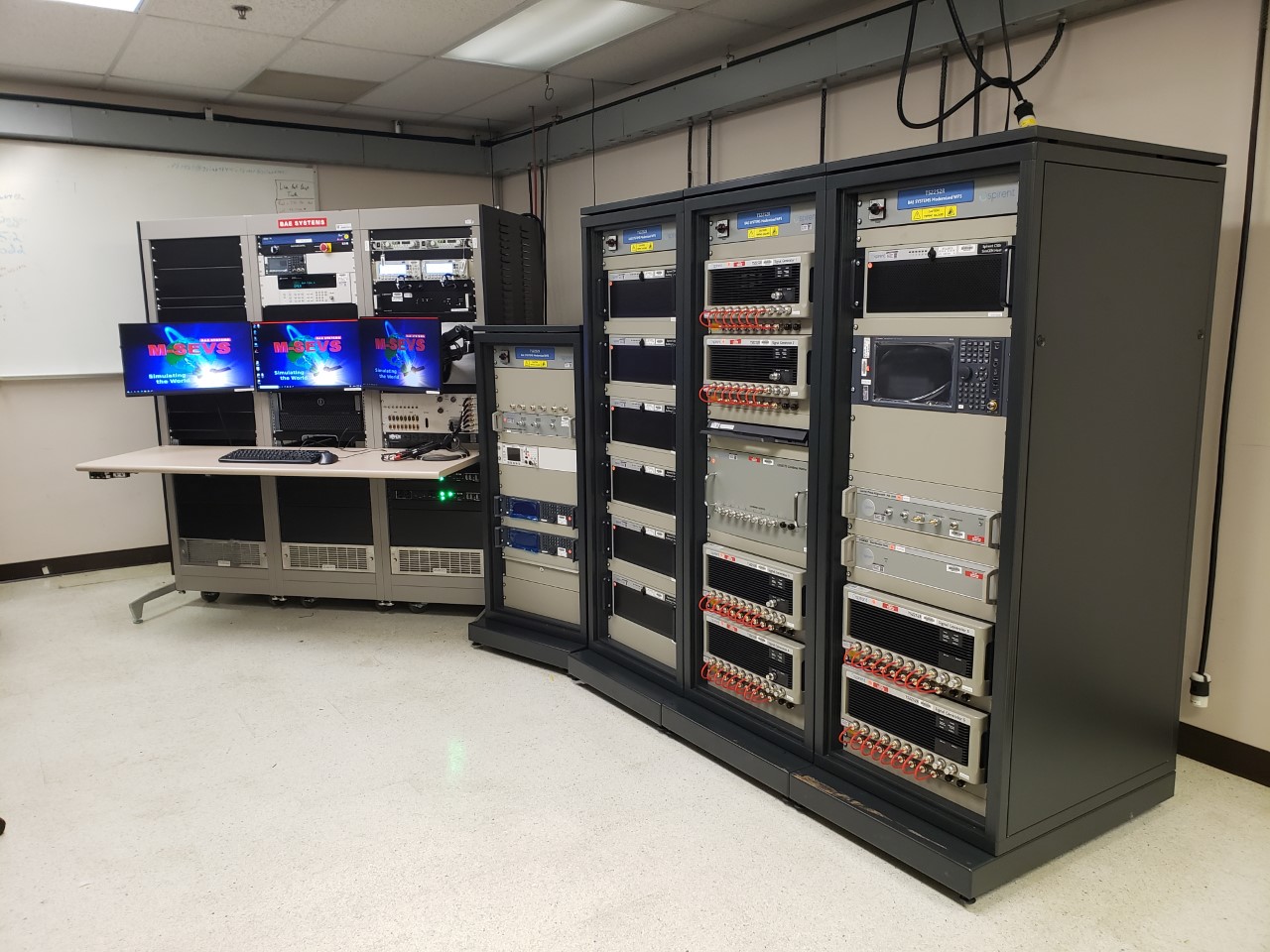
    We integrate Spirent Federal and other signal simulators in both our test and development environments, where modeled RF signals are coordinated with other sensor measurements and host vehicle messages for high-fidelity hardware-in-the-loop test cases. Our engineers create hundreds of test cases and scripted test procedures to exercise our products under all required conditions. These simulations allow us to run thousands of trials to qualify and validate performance of our products in extreme scenarios.

    Photo:
    BAE Systems’ hardware-in-the-loop simulation environments build upon Spirent Federal signal generators to test products under extreme dynamic and threat environments. (Photo: Spirent Federal)
  • Hemisphere GNSS launches Vega board with Lyra II, Aquila chipsets

    Hemisphere GNSS launches Vega board with Lyra II, Aquila chipsets

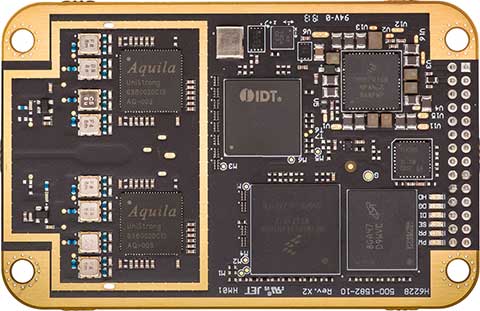
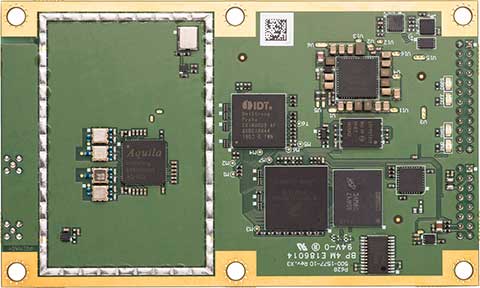
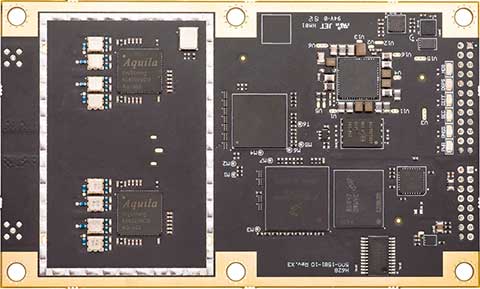
    Logo: Hemisphere GNSSHemisphere GNSS has announced another Vega heading and positioning OEM board using the Lyra II and Aquila chipsets.

    The Vega 60 GNSS board fits industry-standard 46 x 71 mm form factors with a 60-pin connector. It can be used to replace more expensive and lesser abled 60-pin boards with either single- or dual-antenna capabilities.

    Hemisphere’s Lyra II and Aquila application-specific integrated circuit (ASIC) designs provide the ability to simultaneously track and process more than 1,100 channels from all GNSS constellations and signals including GPS, GLONASS, Galileo, BeiDou, QZSS, NavIC, SBAS and L-band. The ASIC technology offers Vega 60 scalable access to every modern GNSS signal available.

    Cygnus interference mitigation technology is also a standard feature, providing built-in digital filtering capabilities and spectrum analysis. This provides enhanced anti-jamming as well as interference detection and mitigation.

    “We are excited for the opportunity to introduce our Vega 60 board,” said Miles Ware, director of marketing at Hemisphere. “Vega 60 brings our industry-leading heading and position solutions to an OEM board footprint with very few affordable upgrade paths.”

  • Raytheon M-code receiver deployment underway

    Logo: Raytheon Technologies

    In 2019, the U.S. Air Force certified the security architecture of Raytheon Intelligence & Space’s M-code modules and receivers as providers of secure and reliable access to modernized GPS. The resilient receivers are designed for high anti-jam performance.

    Raytheon’s M-code application-specific integrated circuit (ASIC) chip is either integrated into a ground-based receiver card optimized for low dynamic applications, or used as an avionics/naval receiver card to support multiple end users.

    “Our focus is on taking a comprehensive approach to resilient navigation,” explained Chad Pillsbury, director for Raytheon’s Secure Sensor Solutions. “We provide the complete family of PNT solutions. We start with the fundamental components, like the ASIC chip, and tailor our solution for the platform and mission requirements.”

    Open Architecture. Raytheon successfully completed testing of the first M-code receiver onboard the U.S. Air Force’s B-2 bomber in 2017. “Since then, we’ve undergone a number of tests internally and with third-parties. Our M-code receivers have standard interfaces and open architecture protocols, enabling them to work with both U.S. and allied systems. By pairing our M-code receiver with our anti-jam electronics and antenna, our systems enable warfighters to combat the most advanced threats seen in the world today,” Pilsbury said.

    The receiver is planned to be incorporated into many fighters, bombers and weapons systems across the U.S. Department of Defense. “We provide enhanced anti-jam, anti-spoof GPS capabilities, as well as alternate navigation and multi-constellation support that represent a significant improvement over the systems currently used by today’s warfighters,” Pillsbury said.

    Meeting Advancing Threats. “The hardest part is meeting a changing threat target,” Pillsbury explained. “The fact is the threat is advancing at a rapid rate. Because of that, challenges are constantly evolving.

    “That means we had to design solutions that were simultaneously robust and secure, but also flexible and open so we can continually upgrade them. That’s not an easy thing to do.

    “But, by taking a comprehensive approach that looked at the whole problem rather than just part of it, we’ve developed systems that address these challenges and have the flexibility to address future challenges.”

    Raytheon’s M-code products are now available to the U.S. military and its allies in accordance with International Traffic in Arms Regulations and the U.S. State Department.

  • Hemisphere’s all-new OEM boards with next-gen ASIC technology

    [SPONSORED CONTENT] Hemisphere GNSS, a leader in high-precision positioning and heading GNSS technology, discusses the rational for developing and bringing to market its all-new Phantom™ and Vega™ OEM boards, powered by next-generation digital and RF ASIC and interference mitigation technology.

    Users wanted a low-power, low-cost system in a smaller machine. Responding to customer needs, Hemisphere researched and developed for several years to create the new Phantom and Vega positioning technology that fits into customer applications to make day-to-day work easier.

    Hemisphere’s new (Lyra™ II) digital and (Aquila™) wideband RF ASIC designs optimize performance and provide the ability to track and process over 1,100 channels from all GNSS constellations and signals including GPS, GLONASS, Galileo, BeiDou, QZSS, IRNSS, SBAS, and L-Band (Atlas®). Signal support and tracking for AltBOC and BS-ACEBOC, BeiDou Phase 2 and 3, L5, and QZSS/L6 (L6-D and L6-E) are also available.

    This new ASIC technology offers scalable access to every modern GNSS signal available. Also, the Lyra II and Aquila ASIC technology provide the foundation for a new GNSS receiver chipset architecture that significantly reduces the number of board components required, thereby reducing complexity, improving reliability, and lowering power consumption.

    The powerful technology platform also includes Hemisphere’s new Cygnus™ interference mitigation technology with built-in digital filtering capabilities and spectrum analysis. The new Cygnus technology provides enhanced anti-jamming, interference detection, and mitigation.

  • Hemisphere GNSS showcases OEM boards with next-gen ASIC technology

    Hemisphere GNSS showcases OEM boards with next-gen ASIC technology

    Hemisphere GNSS showcased its next-generation digital ASIC and RF ASIC interference mitigation platforms, and five positioning and heading OEM boards — the first products incorporating these powerful technological advancements.


    Hemisphere is showcasing its new boards and technology at the Intergeo expo (hall 3, booth C3.030) and conference in Stuttgart, Germany, and the ION GNSS+ conference (booth 411) in Miami, Florida, both taking place this week.


    Hemisphere’s Lyra II digital ASIC and Aquila wideband RF ASIC designs optimize performance and provide the ability to track and process more than 800 channels for position-only (the Phantom series boards) and more than 1,100 channels for position and heading (the Vega series boards), the company said.

    Phantom 40. (Photo: Hemisphere GNSS)
    Phantom 40. (Photo: Hemisphere GNSS)

    This new ASIC technology offers flexible and scalable access to every modern and planned GNSS constellation and signal, including GPS, GLONASS, Galileo, BeiDou, QZSS, IRNSS, SBAS and Hemisphere’s Atlas L-band.

    Signal support and tracking for AltBOC and BS-ACEBOC, BeiDou phase 2 and phase 3, L5 and QZSS/L6 (L6-D and L6-E) are also available.

    The Lyra II and Aquila ASIC technology provides the foundation for a new GNSS receiver chipset architecture that significantly reduces the number of board components, thereby reducing complexity, improving reliability, and dramatically lowering power consumption.


    Cygnus interference mitigation. The powerful technology platform also includes Hemisphere’s new Cygnus interference mitigation technology with built-in digital filtering capabilities and spectrum analysis. The new Cygnus technology provides enhanced anti-jamming, interference detection, and mitigation.

    “This new technology platform and OEM boards represent significant improvements upon previous generation technology and hardware,” said Farlin Halsey, president and chief executive officer of Hemisphere. “With these outstanding advancements in our core technology and hardware, our customers and OEM partners are future-proofed and have flexibility and scalability with the highest-value access to all modern and planned signals.”

    Vega 28. (Photo: Hemisphere GNSS)
    Vega 28. (Photo: Hemisphere GNSS)

    The next-generation Lyra II, Aquila, and Cygnus technologies are available with the new Phantom 20, Phantom 34, Phantom 40, Vega 28, and Vega 40 OEM positioning and heading boards.

    The Phantom 20, 34, and 40 positioning boards are the first Lyra II-based offerings in a line of all-new, low-power, high-precision OEM boards. They are multi-frequency, multi-GNSS receivers that boast more than 800 channels including access to Hemisphere’s Atlas GNSS global corrections network and offer serial, USB, Ethernet (Phantom 40-only), and CAN connectivity for ease of use and integration.

    The Phantom 20 (41 x 72 mm module with 20-pin header), Phantom 34 (41 x 71 mm module with 34-pin header), and Phantom 40 (60 x 100 mm module with 24-pin and 16-pin headers) are significant upgrades for existing designs using these industry-standard form factors and offer power consumption of less than 1.8 W when tracking all signals, including L-band.

    The Vega 40 and 28 are the first introductions in a line of all-new, low-power, high-precision, positioning and heading OEM boards. The multi-frequency, multi-GNSS Vega 40 and 28 GNSS receivers offer access to more than 1,100 channels including Hemisphere’s Atlas GNSS global corrections network.

    The Vega 40 is a 60 x 100 mm module with 24-pin and 16-pin headers and is the ideal upgrade for existing designs using this industry-standard form factor. The Vega 28 is a 45 x 71 mm module with 28-pin header and is the smallest GNSS OEM heading module ever offered to the geospatial market by Hemisphere.


    More: Hemisphere GNSS launches GNSS receiver, smart antenna at Intergeo 2019

  • Hemisphere GNSS launches new positioning and heading boards

    Hemisphere GNSS launches new positioning and heading boards

    New OEM boards provide next-generation ASIC technology

    Phantom 40. (Photo: Hemisphere GNSS)
    Phantom 40. (Photo: Hemisphere GNSS)

    Hemisphere GNSS has released its next-generation digital and RF ASIC (application-specific integrated circuit) platforms, as well as three new positioning and heading OEM boards – the first products incorporating these technological advancements.

    Hemisphere’s new Lyra II digital ASIC and Aquila wideband RF ASIC designs optimize performance and provide the ability to track and process more than 700 channels from all GNSS constellations, the company said. Signals supported including GPS, GLONASS, Galileo, BeiDou, QZSS, SBAS and L-band signal support and tracking for AltBOC and BS-ACEBOC, BeiDou Phase 3, L5, and QZSS/LEX CLAS-D and CLAS-E.

    The new ASIC technology offers scalable access to every modern GNSS signal available.

    Vega 28. (Photo: Hemisphere GNSS)
    Vega 28. (Photo: Hemisphere GNSS)

    Also, the Lyra and Aquila ASIC technology provide the foundation for a new GNSS receiver chipset architecture that significantly reduces the number of board components required, thereby reducing complexity, improving reliability and lowering power consumption.

    The powerful technology platform also includes Hemisphere’s new Cygnus interference mitigation technology with built-in digital filtering capabilities and spectrum analysis. The Cygnus technology provides enhanced anti-jamming, interference detection, and mitigation.

    “The successful development of these new ASIC platforms is an important milestone on Hemisphere’s technology roadmap,” said Farlin Halsey, president and chief executive officer of Hemisphere. “Lyra, Aquila, and Cygnus-based technologies represent a significant investment and addition to our intellectual property portfolio — one that enables us to continue providing best-in-class GNSS performance and allows our customers and OEM partners to take their solutions to an even higher level.”

    Vega 40. (Photo: Hemisphere GNSS)
    Vega 40. (Photo: Hemisphere GNSS)

    The new Lyra, Aquila and Cygnus technologies will be made available with the new Phantom 40, Vega 28 and Vega 40 OEM positioning and heading boards.

    According to the company, the Phantom 40 positioning board is the first Lyra-based offering in a line of all-new, low-power, high-precision OEM boards. The Phantom 40 is a multi-frequency, multi-GNSS receiver that boasts 700 channels including access to Hemisphere’s Atlas GNSS global corrections network. The 60 mm x 100 mm module with 24-pin and 16-pin headers is a significant upgrade for existing designs using this industry standard form factor.

    The Vega 40 and Vega 28 are the first introductions in a new line of low-power, high-precision, positioning and heading OEM boards. The multi-frequency, multi-GNSS Vega 40 and Vega 28 GNSS receivers offer access to 1,100 channels including access to Hemisphere’s Atlas GNSS global corrections network.

    The Vega 40 is a 60 mm x 100 mm module with 24-pin and 16-pin headers and is an upgrade for existing designs using this industry-standard form factor. The Vega 28 is a 41 mm x 71 mm positioning and heading module, which represents the smallest GNSS OEM heading module Hemisphere has ever offered to the geospatial market.

    Hemisphere is integrating this new technology into other form factors and into many of its existing product portfolios and plans to introduce those products in the coming months.