Bluetooth network enables real-time asset tracking for enterprises worldwide
The new Hubble BLE Finding Network is a Bluetooth Low Energy (BLE) finding network built specifically for enterprise use. Hubble, based in Seattle, is a satellite startup enabling Bluetooth devices to connect directly to space.
While consumer platforms like Apple’s Find My and Google’s Find My Device brought BLE discovery to personal devices, Hubble now brings that same reach and simplicity to businesses, offering real-time visibility and full data ownership on a global scale.
“Consumer networks proved what’s possible, but businesses were left out,” said Alex Haro, co-founder of Hubble. “We’re giving them a powerful alternative with global visibility, zero infrastructure and full ownership of their data.”
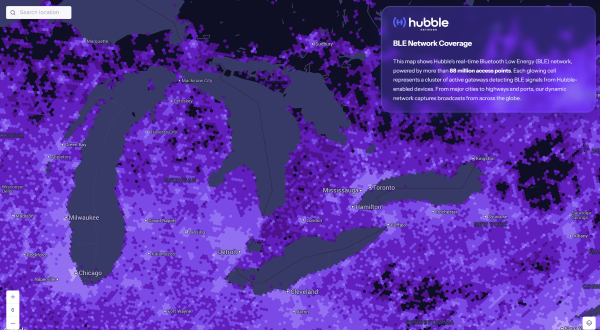
The Hubble BLE Finding Network leverages nearly 100 million passive scanners across gateways, smartphones and partner infrastructure, powered by low-cost BLE chips already embedded in billions of devices. This extensive network covers homes, cities, transit systems and industrial sites, enabling comprehensive global asset tracking for enterprises.
Key Features
- Global Reach: Real-time bluetooth discovery via 88+ million scanners worldwide.
- Data Ownership: Maintain full enterprise control with no closed systems or vendor lock-in.
- Infrastructure-Free: Activate tracking with existing BLE devices, no hardware required.
- Robust Security: Protect data with encryption, rotating IDs, and verified endpoints.
- Developer Friendly: Enable seamless integration with open SDKs and APIs.
Enterprise Use Cases
- Asset Tracking: Monitor tools, inventory, and equipment globally.
- Fleet Management: Track assets in transit, on job sites, or in the field.
- Temperature Monitoring: Instantly track temperature with BLE sensor tags.
- Workplace Safety: Locate badges and wearables in hazardous environments.
- Equipment Sharing: Gain visibility and usage insights across distributed teams.
The Hubble’s BLE Network is now live and available for commercial deployment, including developer tools and onboarding support. To learn more or apply for access, visit https://hubblenetwork.com.
In March 2024, Hubble made history with its Bluetooth connection to space. With a 96-satellite constellation planned by 2028, the company aims to connect one billion devices worldwide.