In 2013, Russia lost three GLONASS satellites when their launch aboard a Proton-M rocket went awry, sending the satellites crashing into the Baikonur Cosmodrome in Kazakhstan instead of aloft into space. Before that, in 2010, three other GLONASS satellites ended up in the Pacific Ocean aboard a Proton-M rocket.
This week, on May 15, another Proton-M satellite crashed, this time with the Ekspress-AM4R telecommunications satellite aboard.
Launch of the Proton-M rocket took place from Launch Pad 39 at the Baikonur Cosmodrome at 21:42 GMT. However, an unspecified failure was noted during third stage flight. The rocket and satellite are lost, according to a NASA Spaceflight article.
Ria Novosti reports that Russia will launch two GLONASS navigation satellites later this year to make up for the loss of three satellites in the recent Proton rocket explosion after launch from the Baikonur space center in Kazakhstan, according to a senior space industry official.
“We are planning to launch two satellites from the Plesetsk space center [in northern Russia] to replenish the GLONASS orbital grouping following the recent Proton-M accident,” said Nikolai Testoyedov, the head of the Information Satellite Systems (ISS) company, which manufactures satellites for the GLONASS project.
The first GLONASS is scheduled for launch in the beginning of September, and the second at the end of October, according to Testoyedov. The official added that both satellites will be launched on board the Soyuz carrier rockets, which has proven to be more reliable than ill-fated Protons.
A group of 29 GLONASS satellites is currently in orbit, with 24 spacecraft in operation, three spares, one in maintenance, and one in test flight phase, according to Russia’s space agency, Roscosmos.
A Russian Proton-M rocket carrying three GLONASS navigation satellites crashed soon after liftoff today from Kazakhstan’s Baikonur cosmodrome, reports rt.com (Russia Today).
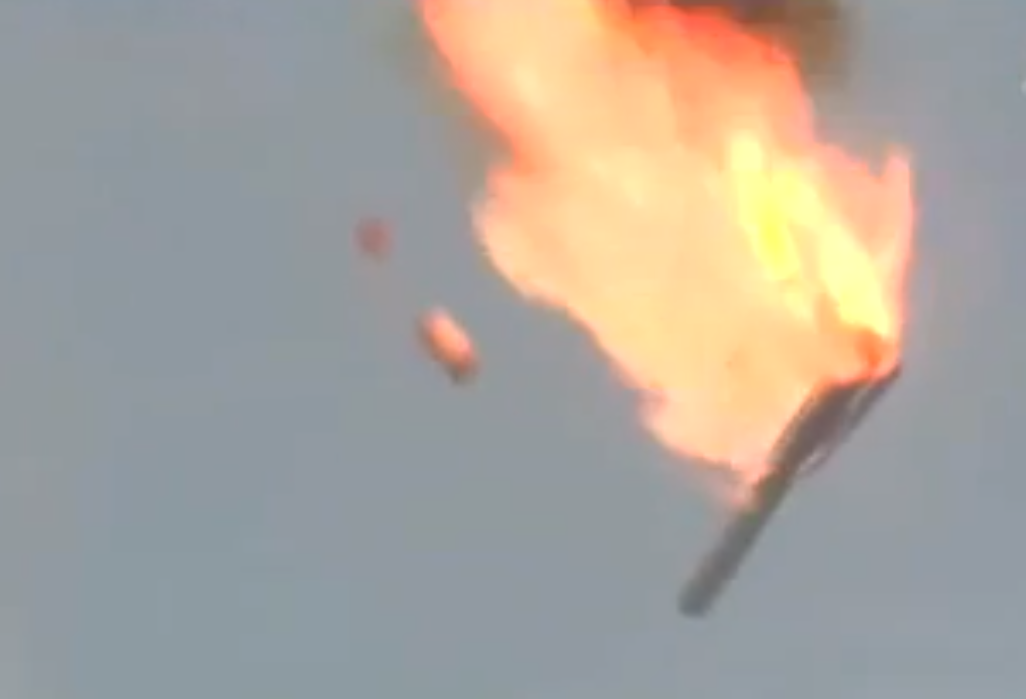
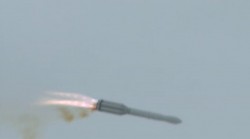
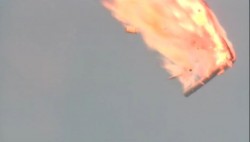
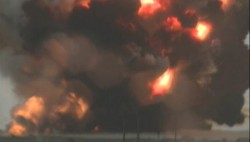
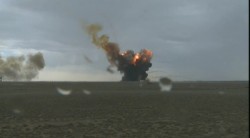
About 10 seconds after takeoff at 02:38 UTC, the rocket swerved, began to correct, but then veered in the opposite direction. It then flew horizontally and started to come apart with its engines in full thrust. Making an arc in the air, the rocket plummeted to Earth and exploded on impact close to another launch pad used for Proton commercial launches.
The crash was broadcast live across Russia. Fears of a possible toxic fuel leak immediately surfaced following the incident, but no such leak has been confirmed, rt.com reports. The rocket was initially carrying more than 600 tons of toxic propellants.
No casualties or damage to surroundings structures or the town of Baikonur have been reported.
As RT.com reports, the crashed Proton-M rocket employed a DM-03 booster, which was being used for the first time since December 2010, when another Proton-M rocket with the same booster failed to deliver another three GLONASS satellites into orbit, crashing into the Pacific Ocean 1,500 kilometers from Honolulu.
Photo: Russia Today
Photo: Russia Today
Photo: Russia Today
Photo: Russia Today
UPDATE: Russian Prime Minister Dmitry Medvedev has appointed a special government commission to investigate the causes of the crash and identify any officials who may have been responsible, reports the Christian Science Monitor. Medvedev also directed his government to prepare tougher oversight measures over the space industry to prevent such accidents in future, RIA-Novosti reported.
A LocataNet will provide the vitally important high-precision positioning required by the VRC to perform rigorous, consistent and repeatable scientific evaluation of the new vehicle crash avoidance systems, Locata said. VRC crash tests produce the “Top Safety Pick” ratings that have helped consumers make informed decisions about buying safer cars for years. Now research into new technology systems, which allows cars to avoid crashes in the first place, will elevate the value of the institute’s safety ratings, Locata said.
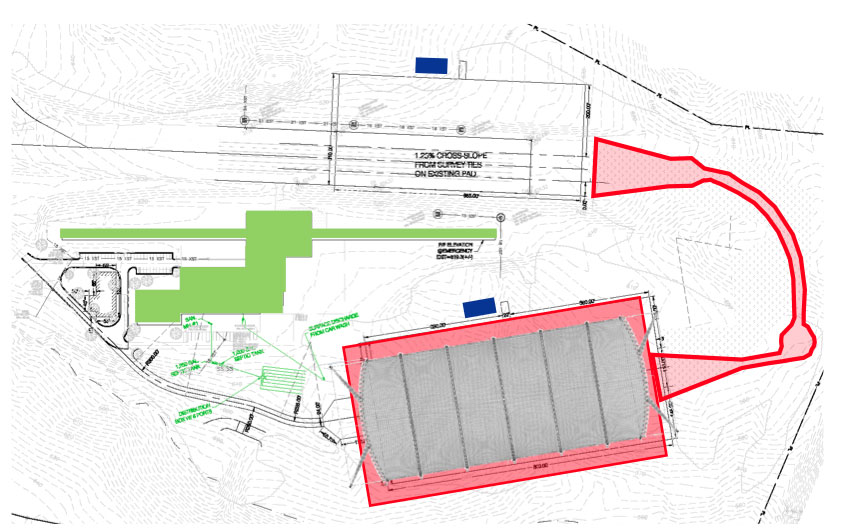
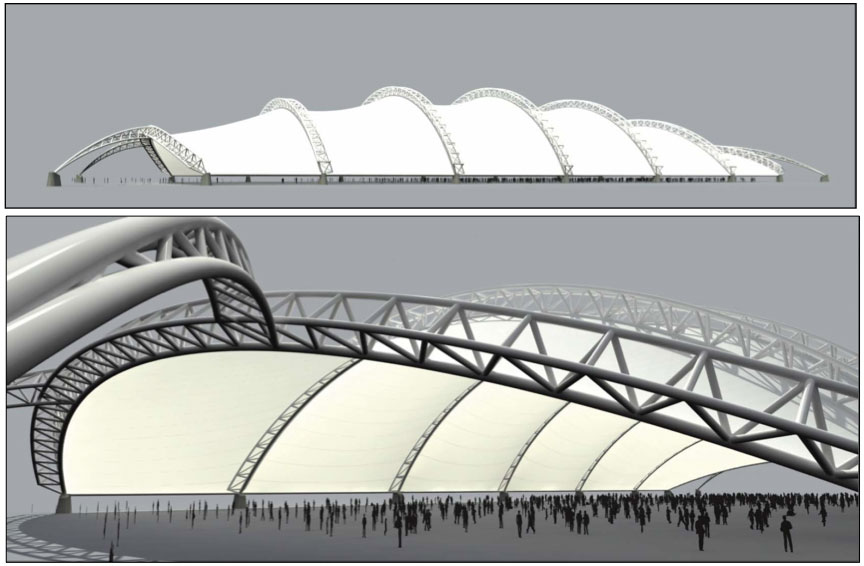
Carrying out these new tests is not a trivial exercise, Locata said. The VRC will have to research and install new robotic and positioning technology to enable the required level of precision. The LocataNet installation will furnish the IIHS with a locally controlled positioning system that is seamless over all of the VRC test areas, enabling extremely reliable automated positioning of vehicles. The newly expanded facility includes a continuous vehicle test track that traverses not only open-air roadway areas, but also a vast 300- by 700-foot fully covered testing area. Locata’s ability to provide centimeter-accurate, locally controlled positioning across both outdoor and indoor environments gives the IIHS flexibility to design a positioning system to meet their vital test requirements, while also allowing easy upgrade and expansion in the future, Locata said.
The dramatic video footage from IIHS crash tests draws extensive media coverage, which becomes a powerful public incentive for automakers to improve the safety of their vehicles. The media, auto industry and policymakers look to the IIHS as a leader in highway safety research, and the expanded VRC will enable the IIHS to play a major role in the emerging area of crash avoidance testing, Locata said. IHS’s YouTube channel shows crash tests and dicusses the ratings system.
“Crash tests and research conducted at the VRC have helped drive life-saving improvements in vehicle designs,” said Adrian Lund, IIHS president. “Our new state-of-the-art facility will allow us to also evaluate emerging vehicle-based systems intended to prevent crashes or lessen their severity, so that we can encourage the entire industry to adopt the most effective ones.”
To do this new research, it is essential to conduct tests under identical, controlled condition, Locata said. With Locata, IIHS researchers will be able to ensure precise positioning data is available in all of its test areas. In places where GPS signals would be unreliable or unavailable when tests are conducted under cover, Locata seamlessly delivers consistent, reliable and accurate positioning, available everywhere, the company said. It will help IIHS carry out automated, identical testing to allow “apples to apples” comparisons of motor vehicles. This is a critical advancement for testing systems that will save many lives in the future, Locata said.
The planned Locata-enabled covered test track.The Locata-enabled covered test track building (artist’s concept).
Here is a video tour of the VRC.
Locata technology provides GPS-style, ground-based positioning covering local areas ranging in size from a parking lot to thousands of square miles. It provides precise positioning either in combination with, or in the total absence of, GPS. It is the first technology that can replicate GPS’s precise positioning capability without using satellites.
Locata’s current devices have already delivered new positioning capabilities to professional applications in mining, aviation, warehousing, and as “GPS backup systems” for important strategic areas. Locata is being trialed by several government bodies in urban areas as a locally controlled positioning infrastructure in applications for transport, first responders, surveyors, and container port automation. As Locata devices are further miniaturized over the next few years, this technology promises to be a game changer for the positioning capabilities available to indoor, mobile and smartphone applications, Locata said.
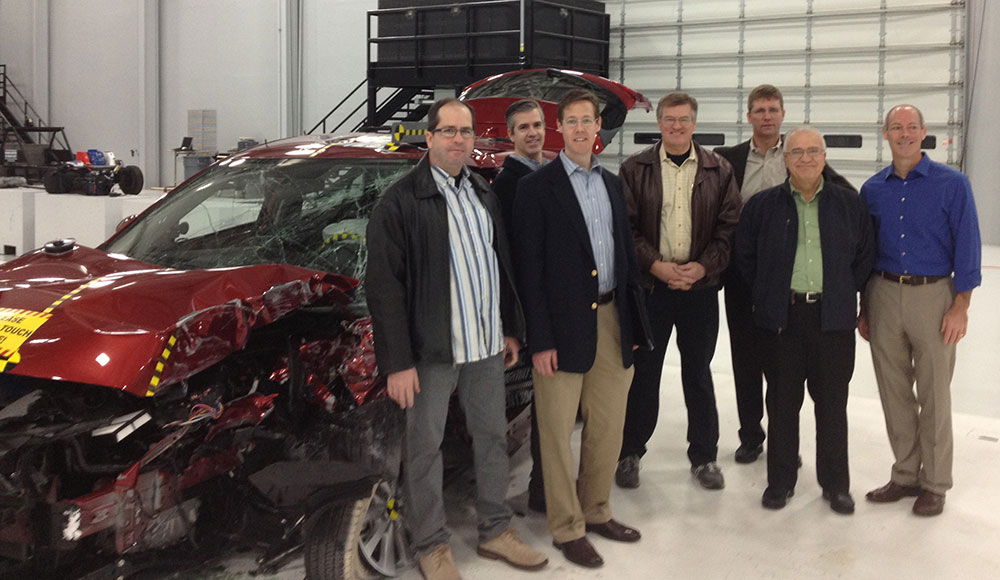
The partners met at the VRC on February 14 to plan out the Locata installation. From left are Robert “Bo” Jones, IIHS engineer; Paul Perrone, president, Perrone Robotics; Geoff Hoekstra, business development, Perrone Robotics; Adrian Lund, president, IIHS; David Zuby, chief research officer, IIHS; Nunzio Gambale, Locata CEO; Jimmy LaMance, Locata. The auto is the result of a crash test conducted that day.
“GPS satellites are in a constant state of motion,” said Nunzio Gambale, CEO of Locata Corporation. “In many environments, this makes it impossible to achieve the level of reliable positioning required for meaningful scientific testing. Locata readily steps into these environments to deliver an always-on, unfailing and superbly accurate positioning signal. We are honored to be chosen as the positioning technology that helps the IHS research, test and drive forward the development of life-saving automotive initiatives. This Locata installation at the legendary Vehicle Research Center will be the most publicly visible jewel in our crown to date. Relationships like this confirm the value of years of hard work we put in to invent this amazing and unique technology.”
“The Locata team is thrilled to see how rapidly our systems are being taken up by the creme-de-la-creme of the positioning industry,” continued Gambale. “We know this VRC testing is world-first, groundbreaking work that has enormous global and social value. It’s wonderful to think that our work may contribute to one day saving my life—or yours.”
Quoting industry sources, the Russian Federal Space Agency announced that the December 5 launch of three GLONASS-M satellites ended in failure when the Proton-M rocket’s Block DM upper stage and its three payloads crashed into the Pacific Ocean about 1,500 kilometers, or 932 miles, northwest of Honolulu. Although an investigation will look into the exact cause of the failure, early unconfirmed reports indicate a software error.
Apparently, the Proton carrier’s third stage deviated from its planned trajectory.
The three satellites were launched from the Baikonur cosmodrome in Kazakhstan. According to telemetry, the carrier rocket’s upper stage containing the satellites was launched into a “non-targeted orbit.” According to a BBC news report, the upper stage and GLONASS-M navigation satellite payload crashed into the Pacific Ocean near Hawaii. BBC news also reported that sources informed them that the launch rocket had deviated by eight degrees from its intended path after launch.
The Russian Federal Space Agency reported that a “special board has been established to find out the cause of the contingency and to define the next steps.”
According to the Russian News Agency RIA Novosti, incorrect calculations were loaded into the rocket’s onboard computer missiles. As a result, the rocket engine provided too much momentum, leading to the deviation of the vehicle from its planned trajectory.
RIA Novosti also reported that because of the accident, the pace of satellite launches will have to be accelerated. For example, the launch scheduled for September 2011 is likely to take place earlier.
The new generation GLONASS-K satellite is due to launch later this month from the northern Plesetsk cosmodrome.
Video of the pre-launch rocket delivery can be viewed here:
There are currently 20 operational GLONASS satellites, with another four undergoing maintenance and two reserved as spares.