Tag: Defense Information Systems Agency

  • Space Force enhances GPS ground communications for greater resiliency

    Space Force enhances GPS ground communications for greater resiliency

    Modernized communications lines were installed at seven locations worldwide in an overhaul of the global communications network that provides command and control of the GPS constellation.
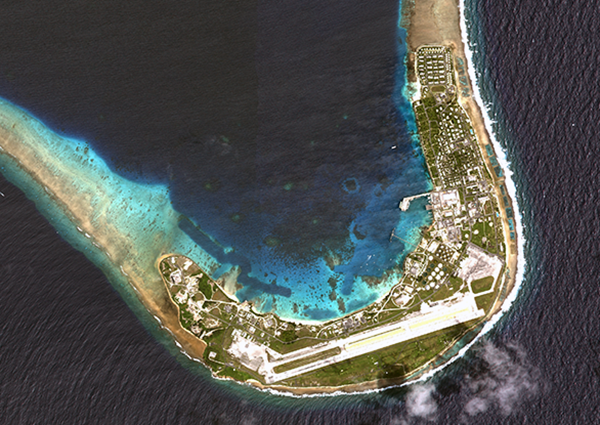
    Kwajalein Atoll in the Marshall Islands is one of seven locations that received a GPS communications network overhaul.(Photo: USGS)
    Kwajalein Atoll in the Marshall Islands is one of seven locations that received a GPS communications network overhaul.(Photo: USGS)

    From 2018 to 2022, GPS Product Support Delta — in conjunction with the Defense Information Systems Agency (DISA) — performed a complete overhaul of the global communications network required to provide command and control of the GPS satellite constellation. GPS Product Support Delta is under Space Systems Command of the U.S. Space Force.

    The project, called GPS Operations Network Enhancements (GONE), connected multi-protocol label switching internet protocol (IP)-based routers to modernized communications lines at seven key GPS facilities, replacing older serial lines.


    “With the GONE project completed, we are seeing a 75 percent reduction in communication line interruptions.”


    The GONE initiative “has significantly enhanced communications for GPS weapon systems,” said Brian Botka, Product Support Delta GPS program manager.

    “These upgrades not only increase communications speed and reduce overall down-time and adding a new paradigm in network resiliency with the networks capable of recovering in mere seconds from an outage or issue,” said Sean Foley, DISA technical project manager. “The system upgrades will continue to improve service to the warfighter as well as enable increased resiliency and network diversity for DISA.”

    The modernized communications lines were installed at

    • Schriever Space Force Base, Colorado
    • Vandenberg SFB, California
    • Cape Canaveral Space Force Station, Florida
    • Facilities in Hawaii, Ascension Island, Diego Garcia and Kwajalein Atoll.

    Throughout the COVID-19 pandemic, many of these locations were under strict lockdown or required long quarantine periods, making coordination and travel to remote locations more challenging.

    Lockheed Martin was the contractor who supported Product Support Delta GPS on the GONE project. “This was a collaborative effort with Product Support Delta GPS and DISA that required significant logistical efforts due to the COVID-19 pandemic,” said Christina Mancinelli, Lockheed Martin GPS Ground Programs director.

    “With the GONE project completed, we are seeing a 75 percent reduction in communication line interruptions, and we expect that metric to continue to improve,” Mancinelli said. “The migration of the GPS communication lines to the modern MPLS [multiprotocol label switching] routers and Ethernet-based connections continues the significant improvements in GPS ground capability, cybersecurity and reliability.”

    SSC is the USSF field command responsible for rapidly identifying, prototyping, and fielding resilient space capabilities for joint warfighters. It delivers sustainable joint space warfighting capabilities to defend the nation and its allies while disrupting adversaries in the contested space domain.

    SSC mission areas include launch acquisition and operations; space domain awareness; positioning, navigation, and timing; missile warning; satellite communication; and cross-mission ground, command and control and data.
  • DOD authorizes GPS signal processing for 5G shared spectrum

    DOD authorizes GPS signal processing for 5G shared spectrum

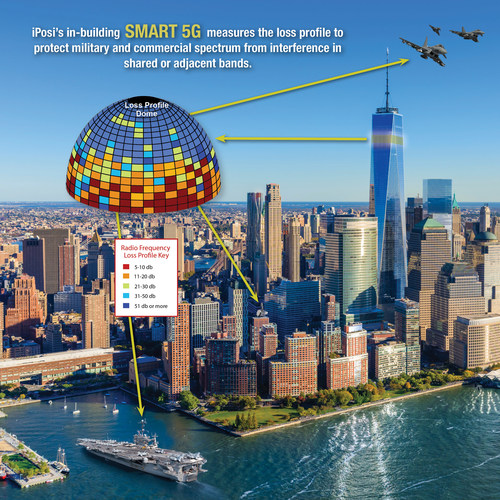
    iPosi’s in-building SMART 5G measures the loss profile to protect military and commercial spectrum from interference in shared or adjacent bands. (Image: iPosi)
    iPosi’s in-building SMART 5G measures the loss profile to protect military and commercial spectrum from interference in shared or adjacent bands. (Image: iPosi)

    The Defense Spectrum Office (DSO) of the U.S. Department of Defense (DOD) has contracted iPosi Inc. and Virginia Tech Applied Research Corporation (VT-ARC) to develop a GPS/GNSS system to measure radio frequency path loss that substantially increases shared spectrum without interference.

    The contract addresses the need for increased shared spectrum between DOD and wireless providers who require expanded access because of skyrocketing demand for broadband 5G spectrum.

    The iPosi loss-profile technology automates measurements of GPS/GNSS controlled satellite signal transmissions. Once compiled, these form precise intelligent arrays ultimately characterized as an intensity-based 3D loss-contour map.

    As satellites move across the sky, their signals illuminate radio path obstructions precisely. The 3D map is specific to each site sharing the channel. Each loss-map determines the extent of shared channel radio isolation with a low-error loss between wireless entities, and continuously updates to maintain interference-free channels.

    Though applied initially to sharing DOD ground-to-air systems with commercial wireless services, the technology has wide applications for other 5G services, iPosi said.

    “This relationship is an important foundation for DoD and commercial applications of our technology across a wide range of spectrum sharing initiatives,” said Richard Lee, CEO of iPosi. “We look forward to collaborating with our partners to enable greater spectrum sharing.”

    The agreement represents a collaboration among multiple academic and industry partners, one of several endeavors by the Defense Information Systems Agency and Defense Spectrum Organization under the Spectrum Sharing Test & Evaluation (SSTD) project as part of the DOD Advanced Wireless Systems–3 (AWS-3) spectrum transition program.

    The iPosi/VT-ARC technology would enable a substantial increase in protected, interference-free wireless service that operates in DoD or federal government bands. Once scaled, it could also support broader civilian and federal shared spectrum operations essential to both spectrum protection and growth of 5G.

    Lee cites iPosi’s three-year relationship with VT-ARC and DISA/DSO as an important foundation for commercial and government applications of iPosi’s GPS-based loss-profiling technology. The earlier collaboration led to field validation of new tomographic wireless propagation measurements that enable sharing between new 5G and DOD in common 1-10 GHz mid-band spectrum blocks.