Tag: Draganfly

  • Draganfly drones head to Ukraine to meet medical needs

    Draganfly drones head to Ukraine to meet medical needs

    The first Draganfly humanitarian drone shipped to Revived Soldiers Ukraine (RSU) has arrived in Europe and will soon deliver insulin to hard-to-reach hospitals in Ukraine. Draganfly is a North American drone manufacturer.

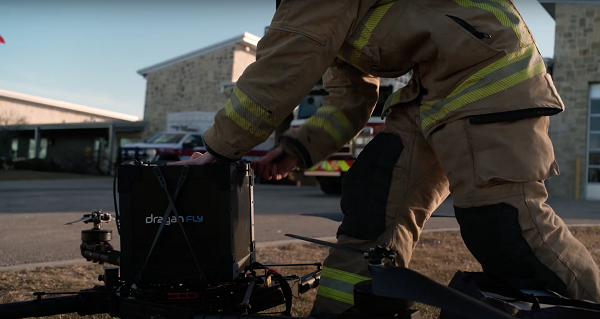
    RSU ordered 200 Draganfly medical response drones equipped with temperature-managed payload boxes that can transport up to 35 pounds of blood, pharmaceuticals, insulin/medicines, vaccines and wound-care kits. Because insulin is a temperature-sensitive product, quick and safe transportation of the hormone is a top priority.

    About 2.3 million people in Ukraine live with diabetes. Many are Type 1 diabetics who need multiple daily injections of insulin to survive. For those living in high-conflict areas of the country, access to life-saving insulin is limited or non-existent.

    NuGen Medical Devices donated the needle-free injection devices and 5,000 needle-free disposable syringes to be filled with insulin. Not only are life-saving medical supplies like insulin dwindling in Ukraine, but there is also an urgent need for many medicines across the country as hospitals have been under direct attack since Russia invaded on Feb. 24.

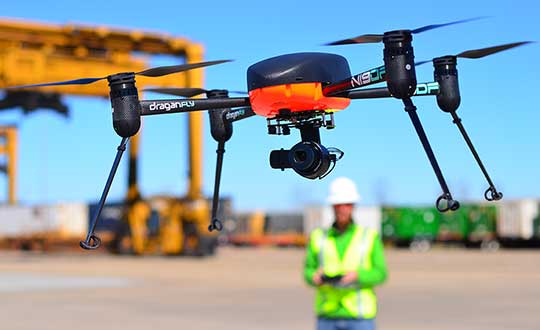
    Draganfly medical relief drone. (Photo: Draganfly)
    Draganfly medical relief drone. (Photo: Draganfly)
  • GNSS helps fight coronavirus while companies adapt

    GNSS helps fight coronavirus while companies adapt

    As part of the effort to combat the spread of COVID-19 in the United States, UAV company Draganfly has partnered with Australia’s Department of Defense (DOD), the University of South Australia (UniSA) and Vital Intelligence, a company that collects and analyzes healthcare data, to remotely detect and monitor people with infectious and respiratory conditions.

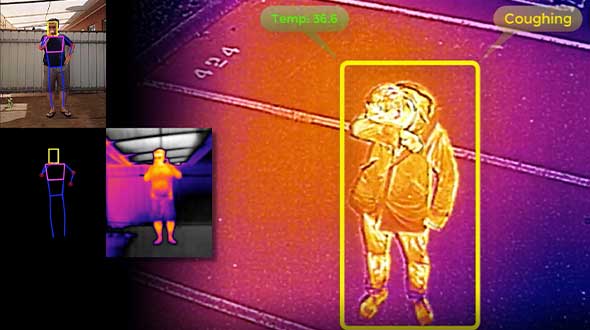
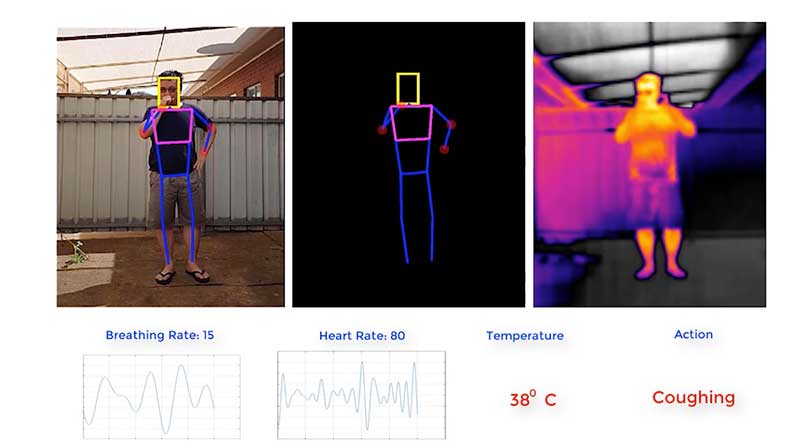
    Draganfly’s UAVs will be fitted with a specialized sensor and computer vision system that can monitor people’s temperature, heart rate, and respiratory rate, as well as detect people sneezing and coughing in crowds. The collaboration, called The Vital Intelligence Project, utilizes technology developed with help from the DOD’s Science and Technology Group. Draganfly was selected as the exclusive integration partner on March 25, with an initial budget of up to $1.5 million to commercialize and deploy the technology.

    The UAV uses u-blox LEA-M8S GNSS modules integrated into the company’s own interface printed circuit boards.

    In late January, recalled Draganfly’s CEO Cameron Chell, the company began to consider what kinds of health data it could collect and analyze that could help public officials and private-sector managers flatten the pandemic’s curve. It then contacted Javaan Chahl, a UniSA researcher who had been a customer for 20 years, to discuss the use of UAVs for this mission.

    The technology was originally designed to be deployed on helicopters in disaster relief operations, to measure the vital signs of survivors. It was then adapted to measure the health of wildlife populations, such as herds migrating or threatened by drought or fire, and in hospital neonatal wards to monitor the vital signs of newborns.

    To provide core temperature readings as well as measurements of heart rate and respiratory rate, the technology uses RGB and thermal cameras, both fixed and mounted on UAVs. “The public sector and the private sector are both interested in this technology, but are approaching it very differently,” Chell said.

    The system’s capabilities include detecting people who are coughing, not wearing masks, or clustering in violation of social-distancing rules. The objective is to provide population health information to public agencies to help them make better decisions by measuring the effectiveness of their COVID-19 policies in real time, rather than react to past information. The system, Chell stressed, does not record data on individuals but reports such figures as “84% of the people are socially distancing 24% of the time.”

    “Based on what I see unfolding with the measurement and data industry as it relates to health technology,” Chell said, “six or eight months from now you are likely to see health measurement reports the same way that you see weather reports. Eventually, it will be broadcast to the consumer. That is our objective.” People, he predicts, will use these reports to make decisions about where and when to travel.

    To obtain accurate core temperatures, Draganfly’s thermal sensor needs to be about 20 feet away from its subject, and uses software to zoom in on the tear ducts. To obtain heart and respiratory rates requires about 25 seconds of footage with at least a 4K camera, magnification to detect body micromovements, and machine vision to detect skin tone biometric measurements. The system also picks up movements — such as of the shoulders, lumbar area and upper torso — that indicate coughing, Chell points out. “The results certainly have been promising in terms of having real quantitative data,” he said.

    The scenario is somewhat different in the private sector, which typically relies more on fixed-based cameras for entranceways — for example, to monitor workers entering a warehouse, a factory or a shipyard to guard against people who are infectious or have a respiratory disease. “We have seen several announcements by companies that they are using thermal cameras to do this,” Chell said. People pass through the company’s fixed system, which uses both thermal and RGB cameras, in less than three seconds, according to Chell, which is good for such facilities as parks, office buildings and convention centers. Private organizations can then ask people who exhibit certain symptoms to consent to a secondary screening in exchange for access.

    Additionally, Draganfly will provide UAV services for disinfecting outdoor facilities.


    Find out how more companies are helping fight COVID-19.


    Featured photo: Draganfly
  • Draganfly, MicaSense partner on agriculture package for crop imaging, data

    Draganfly, MicaSense partner on agriculture package for crop imaging, data

    The Draganflyer Commander Ag-Pro Package. (Photo: Draganfly)
    The Draganflyer Commander Ag-Pro Package. (Photo: Draganfly)

    Draganfly has launched the Draganflyer Commander Ag-Pro Package, designed for the agricultural industry.

    According to Draganfly, its Draganflyer Commander Ag-Pro Package includes everything needed to perform crop health assessment, irrigation monitoring and yield optimization.

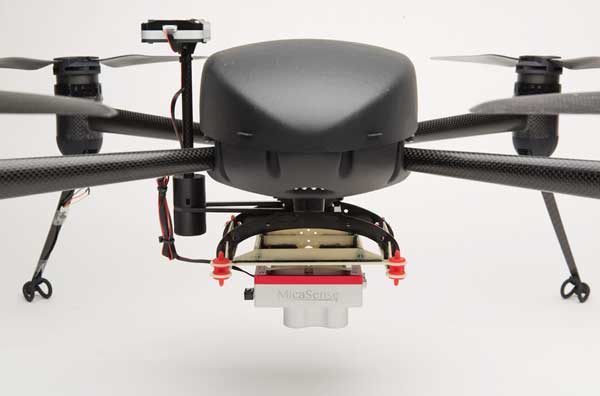
    The Ag-Pro Package, which combines the MicaSense RedEdge-MX multispectral sensor and the Draganflyer Commander UAV, is suitable for projects requiring long flight times, a high level of data resolution and accuracy and data security, the companies added.

    The Draganflyer Commander is an electric multirotor UAV built on Draganfly’s patented carbon fiber folding airframe. Its dual-battery system powers 35-minute flight times, and its automated flight planning tool allows users to quickly create coverage areas and flight plans.

    The MicaSense RedEdge-MX multispectral sensor features five narrowband imagers that capture high-quality images that can produce maps for a multitude of agricultural uses. In addition, the sensor boasts two calibration methods that produce accurate data that can be compared across time, allowing for temporal analysis throughout the season and from year to year.

    “We’re excited about bringing this affordable new multispectral option to market,” said Cory Baker, production manager at Draganfly. “We have been working with the MicaSense lineup of cameras for several years and have been very pleased with their seamless integration support and high-quality data outputs. Our skilled engineers can incorporate any of the powerful sensors from the MicaSense portfolio onto our UAVs.”

    The Draganflyer Commander Ag-Pro Package features a secure controller, as well as a lightweight yet durable air frame.

  • Draganfly conducts pandemic drone tests in US

    Draganfly conducts pandemic drone tests in US

    Draganfly conducted its first series of U.S. pandemic drone test flights in Westport, Connecticut.

    Draganfly’s pandemic drone technology is being tested by the Westport Police Department as a new “Flatten the Curve Pilot Program.” According to Draganfly, this initiative is a collaboration of technologies developed by Draganfly, Vital Intelligence, a healthcare data services and deep learning company, and the University of South Australia.

    Westport is located in Fairfield County, which has more than 17,550 confirmed cases of COVID-19. Fairfield County is adjacent to New York City, which has the most confirmed cases of coronavirus in the United States.

    Image: Draganfly
    Image: Draganfly

    Westport is deploying the technology and data tools to enhance town services, advance public safety, promote the efficient use of taxpayer dollars, engage residents and encourage growth in the local economy.

    The pandemic drone will be equipped with a specialized sensor and computer vision systems that can display fever/temperature, heart and respiratory rates, as well as detect people sneezing and coughing in crowds, and wherever groups of people may work or congregate. The technology can accurately detect infectious conditions from a distance of 190 feet, as well as measure social distancing for proactive public safety practices, Draganfly said.

    Westport specifically plans to use the drone technology to help protect potential at-risk groups, crowds gathering at the town and state-owned beaches, train stations, parks and recreation areas, shopping centers and other areas where people tend to gather.

    “One of the major problems for cities and towns like Westport in managing and responding to a pandemic like the COVID-19 virus, is finding out who could be infected and how widespread the disease has spread,” said Jim Marpe, Westport first selectman. “One way to do this is to look for underlying symptoms. By teaming up with Draganfly and the UniSA team, led by Defence Chair of Sensor Systems Professor Javaan Chahl, we are able to remotely look at valuable lifesaving data and better manage current and future health emergencies.”

    Draganfly‘s pandemic drone software uses biometric readings in its analysis process. The software can be used to understand patterns within a population to allow users to react quicker to ongoing events or new potential health threats, Draganfly added.

    Draganfly manufactures UAVs and UAS, serving the public safety, agriculture, industrial inspections and mapping and surveying markets.


    Check out more of GPS World’s coronavirus coverage here.

  • Draganfly tapped to detect dangerous unexploded landmines

    Draganfly tapped to detect dangerous unexploded landmines

    Photo: Gannet77/E+/Getty Images
    Photo: Gannet77/E+/Getty Images

    Draganfly Inc., a leading North American-based commercial drone company, is partnering with Windfall Geotek to develop drone-based solutions for landmine detection.

    Windfall Geotek is a Quebec-based technology services company and a leader in the use of artificial intelligence (AI) and advanced knowledge-extraction techniques in the mining sector.

    The companies will work to develop an artificial intelligence (AI) driven unmanned aerial systems solution for landmine detection in the defense, humanitarian and other sectors in which the companies have expertise.

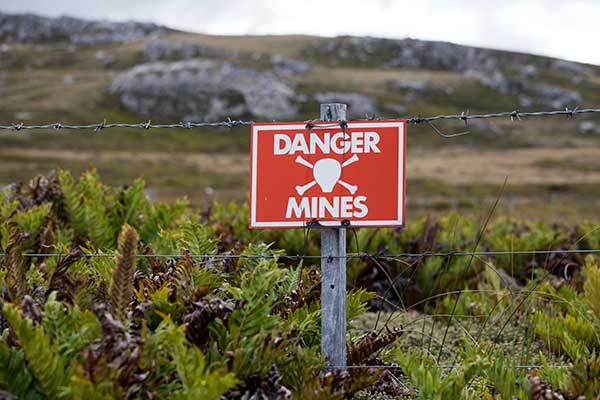
    While landmines have been used since World War I, their deployment proliferated from the 1960s onwards. To this day, many unexploded devices are killing and maiming people who step on or trigger the bombs unintentionally.

    About 60 countries and territories are still contaminated with anti-personnel mines, and more than 120,000 people were killed or injured by landmines between 1999-2017, according to research by Landmine Monitor.

    Terms of the agreement include joint research, development and engineering support, drones and equipment o further commercialize an AI driven drone solution for the detection and elimination of landmines, unexploded ordnance and.improvised explosive devices (IEDs).

    In 2018, governments and nonprofits allocated nearly US$700 million in combined international
    and national support for mine action in 2018. The economic impact of landmines is estimated at $100 billion.

    “We have been evaluating drone solutions for nearly a year, and after an exhaustive analysis of the market and providers, it is exciting to select Draganfly as our first drone systems partner for this worthwhile initiative,” said Dinesh Kandanchatha, chairman of Windfall Geotek.

    “Windfall Geotek is the industry leader in AI-based digital exploration for mining. When they approached us on this project, it seemed like a natural fit to partner our engineering and drone capabilities, with their proven software and AI expertise,” sid Cameron Chell, CEO, Draganfly. “The two companies share a mission of saving lives through technology. We expect this partnership to generate new and expanded revenue streams for both companies in the defense sector, public safety and other markets where both companies have expertise.”

  • Pandemic drones to monitor, detect those with COVID-19

    Pandemic drones to monitor, detect those with COVID-19

    Draganfly will integrate a breakthrough health diagnosis onto cameras and UAVs to combat coronavirus.

    In a rush to combat the global spread of the deadly coronavirus (COVID-19) in the U.S., Draganfly will deploy “pandemic drones” to remotely monitor and detect people with infectious and respiratory conditions to help stop the spread of the disease.

    The Draganfly drones will be fitted with a specialized sensor and computer vision system that can monitor temperature, heart and respiratory rates, as well as detect people sneezing and coughing in crowds and other places where groups of people may work or congregate.

    Draganfly will serve as the global systems integrator for the Vital Intelligence Project, a health and respiratory monitoring platform from Vital Intelligence Inc. The breakthrough technology was developed in a collaboration between the University of South Australia and the Science and Technology Group (DST), which is part of Australia’s Defence Department.

    Coughing detected

    The sensing system uses existing and new camera networks, UAVs and remotely piloted aircraft systems for health monitoring and detection of infectious and respiratory conditions — including monitoring temperatures, heart rates and respiratory rates.

    The drones can monitor people in public crowds, workforces, airlines, cruise ships, convention centers, border crossings or critical infrastructure facilities. The technology can also be used to monitor potential at-risk groups, such as seniors in care facilities.

    The Draganfly demonstration video below shows the camera detecting not only temperature, heart rate and respiration, but when a person is coughing.

    Draganfly Video


    Under the exclusive contract, initially budgeted at $1.5 million, Draganfly will use its engineering, integration and distribution expertise as well as its secure supply chain for immediate commercialization and deployment of the technology.

    “The university and Defence supported my team’s efforts to develop automation for use in epidemics and disasters,” said Javaan Chahl, Defence Science and Technology Chair at the University of South Australia. “We had imagined the technology being used in a future relief expedition to some far-away place. Now, shockingly, we see a need for its use in our everyday lives immediately. Draganfly’s industrial know-how is quickly helping us ensure our research can save lives.”

    The Draganflyer Commander UAV is a remotely operated miniature helicopter designed to carry wireless camera systems. (Photo: Draganfly)
    The Draganflyer Commander UAV is a remotely operated miniature helicopter designed to carry wireless camera systems. (Photo: Draganfly)

    “Draganfly has been selected because of its proven leadership in an industry so important to public safety at such a critical time. We look forward to working with global agencies and industry to rapidly deploy this important technology,” said Cameron Chell, Draganfly CEO.

    “Draganfly is honored to work on such an important project given the current pandemic facing the world with COVID-19,” said Andy Card, Draganfly director and former U.S. Secretary of Transportation and White House chief of staff. “Health and respiratory monitoring will be vital for not only detection, but also utilizing the data to understand health trends. As we move forward, drones and autonomous technology doing detection will be an important part of ensuring public safety.”

    “With fighting epidemics rising as a global priority, new versatile technologies, such as humanitarian mission UAVs, are immediately needed to detect and track outbreaks so that critical interventions can be deployed sooner and with greater effectiveness,” said Jack Chow, advisor to the Vital Intelligence Project. Chow is a former first assistant director-general on infectious diseases for the World Health Organization (WHO).

  • Draganfly debuts new products at Xponential 2017

    Draganfly Innovations’ Ben Miller discusses the company’s newest products, including the Tango2, DraganBot remotely operated vehicle and UCS common control system, at AUVSI’s Xponential 2017.