Tag: Earth observation data

  • EUSPA and EIOPA harness Copernicus data to guide disaster response

    EUSPA and EIOPA harness Copernicus data to guide disaster response

    Using data from satellites to predict and resond to climate-related disasters is considered in a new white paper.

    The EU Agency for the Space Programme (EUSPA) and the European Insurance and Occupational Pensions Authority (EIOPA) published the joint white paper

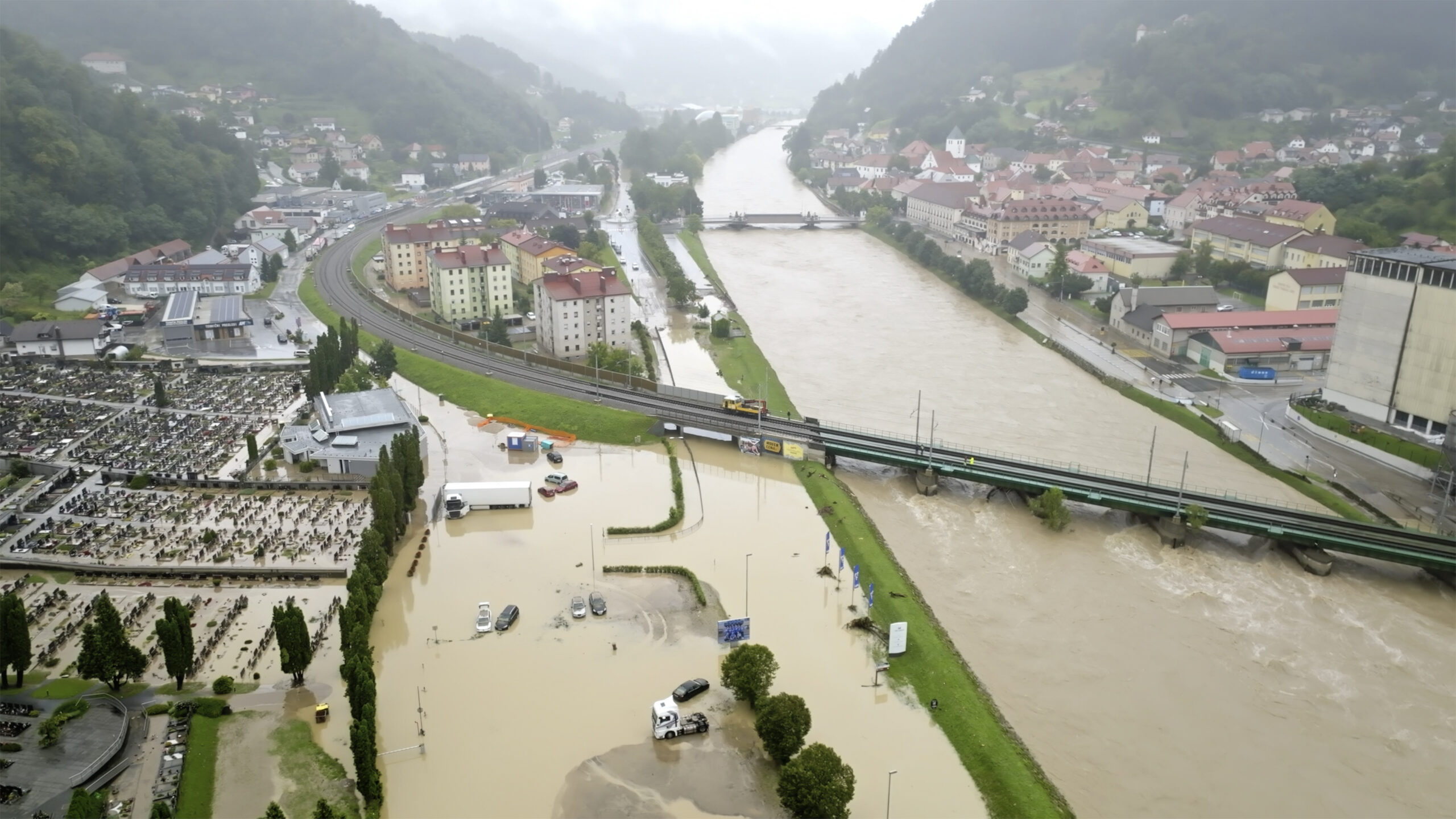
    It explores how Earth observation (EO) data could be harnessed to enhance the supervision of natural catastrophes and assess the impact of extreme weather events on Europe’s insurance sector.

    As Europe faces escalating climate-related disasters and rising economic losses related to them, the need for more effective risk management and greater resilience against natural catastrophes is paramount — not least through the deployment of innovative solutions.

    The white paper is the result of a joint pilot project between EIOPA and EUSPA — highlights the benefits of using open-access Earth observation data from Copernicus to improve the tracking and management of natural hazards.

    The project demonstrates that satellite-based EO data offers independent, objective and near real-time geospatial insights that can meaningfully improve risk assessment and risk management practices for insurers, communities and supervisors.

    Earth observation technology — especially the open, traceable data that Copernicus provides — can sharpen risk identification, reinforce scenario design and accelerate loss estimates in the aftermath of shocks. Financial supervisors can leverage the technology to:

    • rapidly identify affected areas and exposed insurance undertakings: Satellite imagery makes it possible to map disaster-affected areas (for example, the extent and trajectory of floods) as events unfold. This granular geospatial data can be matched with Solvency II regulatory reporting to estimate the potential impact of natural catastrophe events on individual insurers (micro-prudential perspective);
    • estimate overall loss-magnitudes early on by scaling up the micro-level analysis to the sector as a whole (macro-level perspective); and
    • improve benchmarking, model validation and scenario and stress test design by providing objective, data-driven reference points against which model outputs and reported or calculated losses can be compared.

    The collaboration between EIOPA and EUSPA showcases the value of innovation in addressing the challenges posed by climate-related disasters: when used effectively, Earth observation data can contribute to a more resilient and sustainable insurance sector — one that better protects European citizens and businesses from the damaging effects of a warming climate.

  • Copernicus Masters 2019 submissions now open

    The Copernicus Masters competition awards applications and solutions that use Copernicus data to tackle important challenges. Submissions for the 2019 awards opened on April 1.

    The demand for Earth observation (EO) data is exploding in order to find innovative solutions for today’s challenges such as climate change, food security or water supply.

    With more than 15 terabytes of free EO data generated by the Copernicus programme every day, the Copernicus services deliver near-real-time data on a global level — contributing towards the sustainable management of the environment.

    Simultaneously, the Earth observation industry is constantly growing. New data platforms are being developed to receive and process the huge amount of satellite data collected from the Sentinels — and other contributing commissions.

    These data platforms are established on the cloud and work with Artificial Intelligence (AI) and Machine Learning, enabling the development of new applications in the EO sector.

    The Copernicus Masters 2019 — Europe’s leading innovation competition for Earth observation (EO) — is searching for such outstanding applications, solutions, and business concepts from future-oriented SMEs, startups, universities and individuals in the fields of business, research and higher education.

    From April 1 to June 30, participants in the Copernicus Masters 2019 can submit their innovative EO solutions to eight challenges offered by the following world-class partners: European Space Agency (ESA), the German Aerospace Center (DLR), Astrosat, Planet, BayWa and Airbus together with sobloo and the German Federal Ministry of Transport and Digital Infrastructure (BMVI).

    “The Copernicus Masters is the innovative driver for future-oriented applications and business concepts using Earth observation data. This creates socio-economic benefits through public services all over Europe. Besides, it supports business ventures and high-tech jobs in Europe’s digital economy,” states Josef Aschbacher, director of ESA’s Earth Observation Programmes. ESA is an initiating partner of the Copernicus Masters and has set a challenge for participants every year since 2011.

    Participants can demonstrate their innovative use of Earth observation data across a wide variety of challenge topics, including the fields of future EO, Artificial Intelligence (AI), machine learning, energy, health, sustainable living, smart farming, and digital transportation, as well as maritime, defence & security.

    “Since 2011, the Copernicus Masters competition has evolved into the leading innovation platform for promoting user uptake of Earth observation data in a commercial, societal and sustainable context. Each year, it showcases new solutions and trends, serving as an integral part of an international EO innovation network,” adds Thorsten Rudolph, managing director of AZO, the competition organizer.

    Together with cash prizes, challenge winners will receive access to an international network of leading Earth observation organizations, substantial satellite data quotas, and business development support worth more than EUR 450,000 in total. The Overall Winner will receive an additional cash prize of EUR 10,000.

    For more details on this year’s challenges, prizes, and partners, visit www.copernicus-masters.com. For more information, see space-of-innovation.com. Additional information on the Copernicus programme is available at www.esa.int/copernicus and www.copernicus.eu.