Tag: electricity

  • Hexagon helps Ghana utility modernize electricity distribution

    Hexagon helps Ghana utility modernize electricity distribution

    Hexagon’s Safety, Infrastructure & Geospatial division successfully deployed an advanced utility geographic enterprise asset management (EAM) system for the Electricity Company of Ghana (ECG). The smart EAM, featuring Hexagon’s G/Technology, will allow ECG to plan, manage and efficiently operate its distribution network to meet the growing needs of 4.5 million customers.

    The enterprise system from Hexagon unifies data from a variety of geographic information systems (GIS), enabling bi-directional data flow with other systems based on the Common Information Model (CIM) standard. The system enhances ECG’s ability to geographically reference and manage assets with integrated tools for data surveying, capture and maintenance and network planning and calculation.

    Mobile capabilities enable efficient inspections and maintenance, while a web portal assists employees with locating assets, reviewing the network and more. Migrating to Hexagon’s system will increase process efficiency and reduce asset-management costs by harmonizing systems, validating existing data and capturing missing data.

    “The utility GIS is the critical component that fuels innovation in the utility,” said Keli Gadzekpo, board chairman of ECG. “This project is the foundation and the first step to modernizing ECG operations. It is the platform for digitization of electrical network assets, a prerequisite for bringing efficiency in the wire business.”
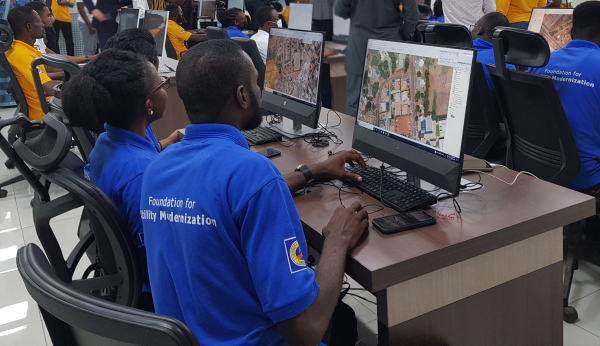
    Photo: Hexagon
    Photo: Hexagon

    Part of ECG’s Modernizing Utility Operations Activity, the project was commissioned by Millennium Development Authority (MiDA), Ghana, on behalf of the Government of Ghana’s Millennium Challenge Account Entity Program and funded by the U.S. government.

    “We are exceedingly grateful to Hexagon for working tirelessly to deliver this innovative product,” said Julius K. Kpekpena, Ag CEO and COO, Millennium Development Authority. “The technology sets Ghana’s biggest electric distribution utility on the path to modernizing its operations. The GIS is the foundation for modern tools to help ECG plan its networks, reduce losses, collect revenues and serve customers more efficiently.”

    The project included procurement and installation of system software, server hardware, mobile field units and services for data migration by Hexagon, field validation of assets by PDSA Ghana (part of Hexagon), and production of aerial imagery by ILV Wagner using Hexagon’s Leica Geosystems surveying and airborne imaging technologies.

    “Reliable electricity requires accurate data and tools to plan, design and manage networks, which can also reduce overall maintenance costs,” said Maximillian Weber, senior vice president, Global Utilities & Communications, Hexagon’s Safety, Infrastructure & Geospatial division. “We are proud to support Electricity Company of Ghana in delivering quality service to its customers.”
  • Bluesky Completes Aerial Mapping Project for UK Utilities

    Bluesky Completes Aerial Mapping Project for UK Utilities

    Photo: Bluesky

    Bluesky has completed a multi-million pound aerial mapping project to assess the impact of vegetation on the electricity network of East Anglia and the South East of England. Working on behalf of UK Power Networks, Bluesky undertook the largest ever combined laser mapping and aerial photography survey commissioned by an electricity distribution network operator in the UK — some 34,000 square kilometers.

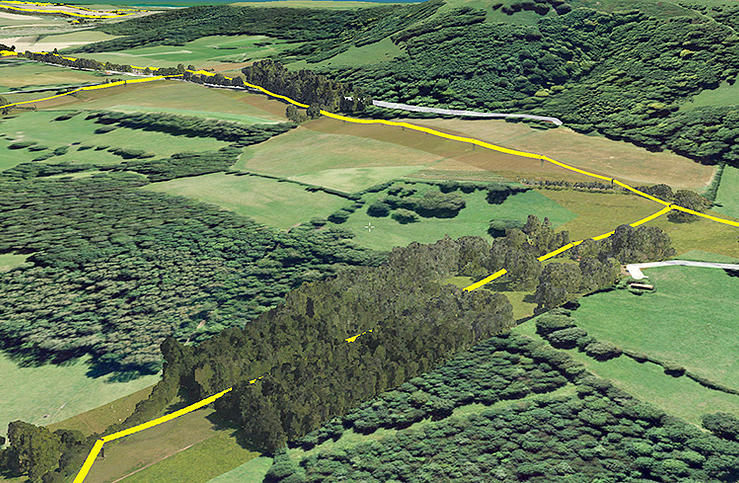
    The laser mapped (LiDAR) data and aerial photographs were then analyzed to assess the proximity of vegetation to the overhead power lines in order to create a proactive three-year vegetation management program. Bluesky worked in partnership with ADAS, an agricultural and environmental consultancy, to complete the project.

    Dedicated survey planes equipped with a lidar mapping system and aerial survey equipment flew the whole of the South East and East of England. Capturing millions of individual laser mapped height measurements and approximately 310,000 aerial images in just over three months, Bluesky successfully completed the unprecedented data capture element of the project within tight project deadlines, in challenging weather conditions and in adherence with strict Air Traffic Control restrictions.

    The 80 terabytes of raw data was then processed and analyzed to identify which overhead line spans had vegetation infringement; for example the length of vegetation infestation along each span and its location and distance from the overhead line.

    This information has now been incorporated into a 3D web portal that can be viewed from the desktop, enabling UK Power Networks employees to carry out virtual patrols of the network, saving time and reducing the risk of foot patrols, sometimes across difficult terrain including physical barriers such as rivers, ditches, livestock and numerous other potential hazards.

    “This innovative £2.5 million project is of immense benefit to our customers and to the company,” said Nigel Hall, head of service development at UK Power Networks. “The risk-based tree-cutting program will help reduce tree-related power cuts for customers, with the additional benefit that it could be carried out without any disturbance to local landowners because it was done from the air rather than on foot.

    “As a company it will help us get best value from our £19 million annual tree cutting budget, and the web portal will mean staff can carry out ‘virtual patrols’ from their desk, saving them time and reducing the potential hazards if they had had to walk the lines themselves.”

    “Prior to commissioning the LiDAR and aerial mapping project, UK Power Networks undertook regular manual surveys as part of its assessment of network resilience, but the capture of LiDAR and associated aerial photography for the entire catchment area allows for evidence based decision making and long term planning, and provides a proven solution for other network operators,” added Rachel Tidmarsh, managing director of Bluesky.

    Roy Dyer, Head of Arboriculture in ADAS and manager of the ADAS contribution to this contract said, “This has been a ground breaking contract. The combination of Bluesky’s technical ability and ADAS’ consultancy experience in managing vegetation near overhead lines enabled us to successfully deliver this challenging contract and improve the management and resilience of the overhead lines owned by UK Power Networks.”

  • Night-Time Satellite Images Show ISIS-Controlled Regions

    ISIS-remote-sensing-city-lights
    Figure 1. Suomi NPP/VIIRS night-time light images for Iraq: (a) May 2014, (b) December 2014.

    A new paper published in the academic journal International Journal of Remote Sensing analyzed city night lights in Northern Iraq during 2014, suggesting a major loss of electrical power supply within the Iraqi cities seized by ISIS.

    The territory controlled by the Islamic State of Iraq and Syria (ISIS) has grown rapidly since the start of the Syrian Civil War, and in 2014 ISIS expanded its control into Northern Iraq. While there are many media reports on violence and geopolitical issues surrounding the takeover of these areas, the impact on everyday life, such as access to electricity for people living in ISIS-controlled regions, is less clear.

    In the study, Xi Li and Deren Li (Wuhan University, China) and Rui Zhang and Chengquan Huang (University of Maryland) analyzed city lights as a proxy for the power supply in ISIS-controlled regions between May 2014 and December 2014. The city light data were acquired from the Visible Infrared Imaging Radiometer Suite (VIIRS) sensor on the NASA/NOAA Suomi National Polar-orbiting Partnership (NPP) satellite.

    The analysis indicates that most of the ISIS-controlled cities, including Mosul and Tikrit, experienced a decrease of more than 90 percent in city light after being seized by ISIS, while the loss of light in cities controlled by the Iraqi security forces (ISF) was very limited. However, the city lights in Ar Raqqa, Syria, ISIS’ de facto capital, did not show a decline after that region was seized by ISIS.

    These comparisons suggest that the conflict in Northern Iraq has resulted in a major loss of electrical power supply within the Iraqi cities seized by ISIS, and that this loss is most likely due to lack of access to the Iraqi power grid, rather than a deliberate ISIS strategy of limiting night-time light.

    The insurgency in Northern Iraq since 2014 has led to a severe humanitarian crisis, the study authors say. It is widely known that it is extremely dangerous to collect information from ISIS-controlled regions; therefore, the use of remotely sensed night-time light images such as these offer humanitarian agencies and NGOs a low-risk indicator of socioeconomic conditions in war-torn countries like Iraq.

    The paper is “Detecting 2014 Northern Iraq Insurgency using night-time light imagery,” by Xi Li, Rui Zhang, Chengquan Huang and Deren Li, International Journal of Remote Sensing, 2015, published by Taylor & Francis Group.