Tag: Epson

  • Taking GNSS receiver testing to new heights

    Taking GNSS receiver testing to new heights

    Photo: NovAtel
    Photo: NovAtel

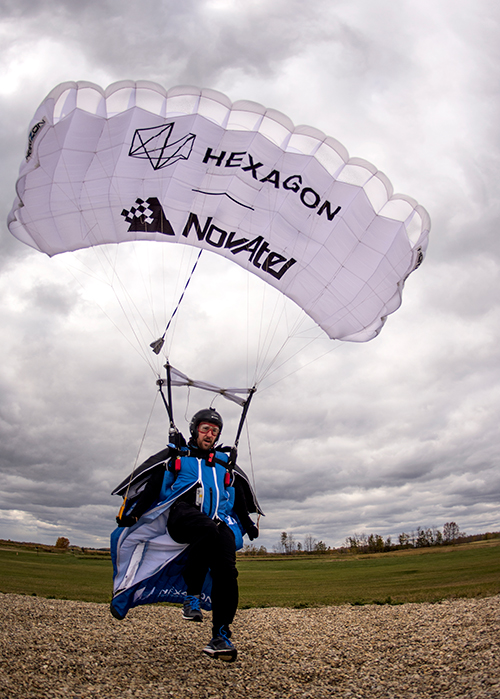
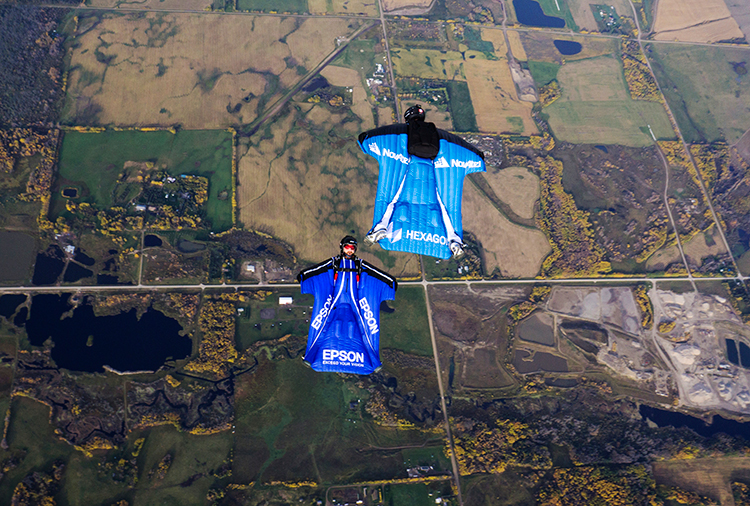
    An applications engineer and his sky-jumping bud don wingsuits to test a NovAtel GNSS receiver integrated with an Epson IMU.

    In September 2019, a specialized team assembled at an airstrip outside of Edmonton, Alberta, Canada. Their mission: Put the Hexagon | NovAtel PwrPak7D-E2 enclosed receiver through tricky test procedures that involved jumping out of an airplane at 10,000 feet.

    Taking the NovAtel SPAN receiver to the skies was the brainchild of Andrew Levson, who is both a NovAtel engineer and a skydiving aficionado. He proposed using a wingsuit to test the receiver’s positioning accuracy.

    The first wingsuit dive took place in 2011, with NovAtel’s OEM615 receiver and ALIGN heading technology.

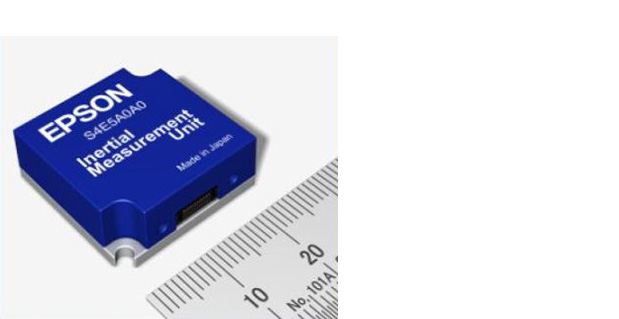
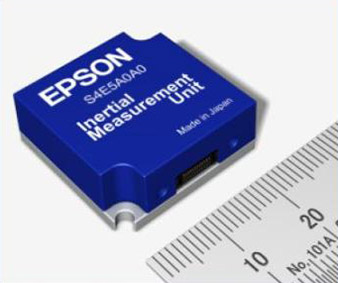
    This time, the engineers aimed to test both NovAtel’s GNSS receiver featuring SPAN tightly coupled GNSS+INS functionality and its new companion, the Epson G370 inertial measurement unit (IMU). Both are packed in the PwrPak7D-E2 to provide uninterrupted positioning even in GNSS-denied environments.
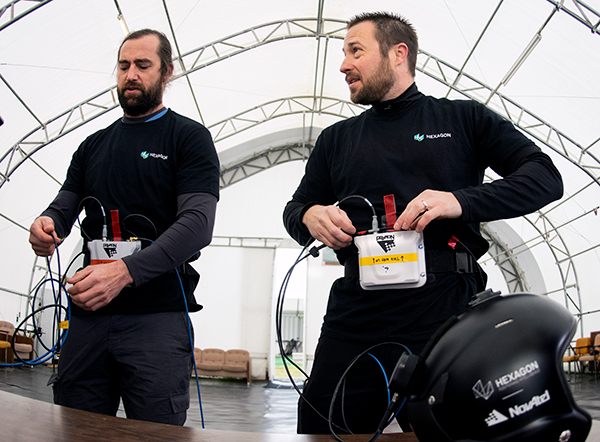
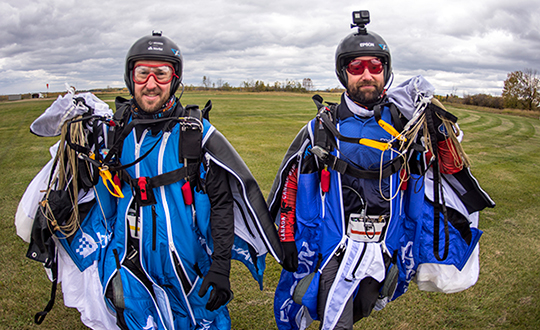
    Wingsuit jumpers Andrew Levson (right) and Blair Egan suit up for the NovAtel tests. (Photo: NovAtel)
    Wingsuit jumpers Andrew Levson (right) and Blair Egan suit up for the NovAtel tests. (Photo: NovAtel)

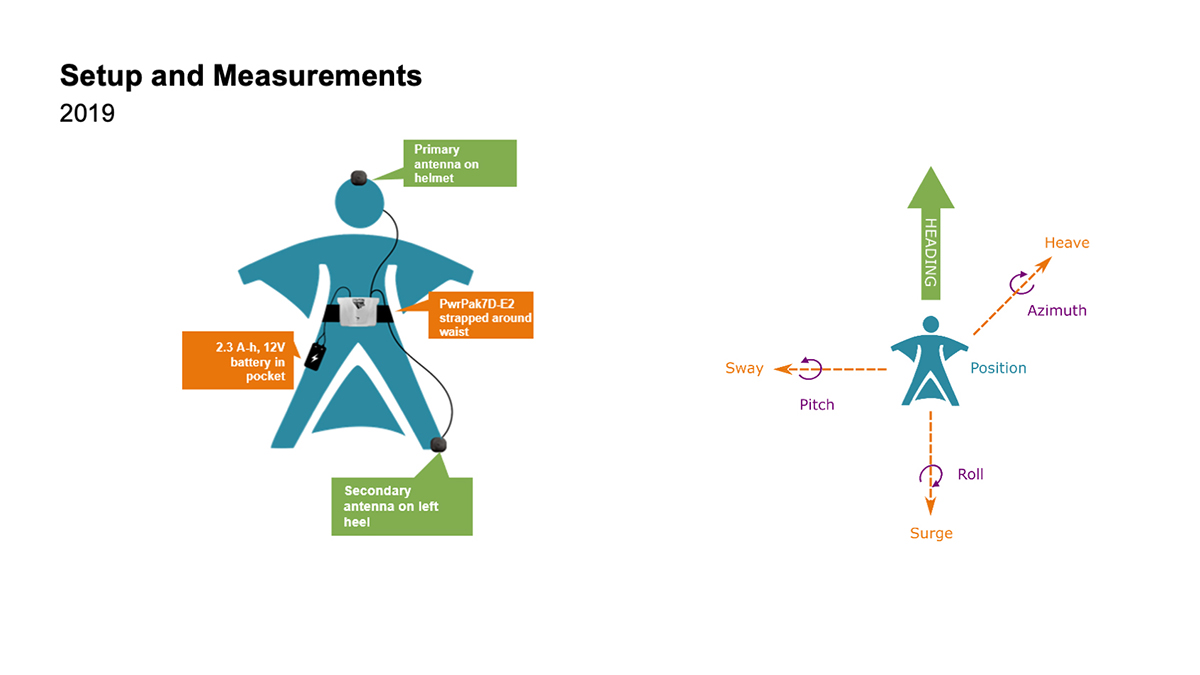
    “We chose to revive the project, given that equipment has evolved with more comprehensive capabilities,” said Patrick Casiano, manager of Product Management and Applied Technology, NovAtel. “Between 2011 and 2019, we could significantly reduce the payload while increasing value in the data.” In 2011, NovAtel was only able to monitor Levson’s heading. In 2019, the team captured heading, azimuth, pitch and roll measurements.

    “We wanted to prove that our equipment can work in a high-dynamic environment, which isn’t necessarily ideal conditions for collecting positioning data,” explained Kiera Fulton, associate product manager, Enclosures and Post-Processing Software, NovAtel. “By proving our products work in a less-than-ideal environment, we exemplify how robust our solutions are.”
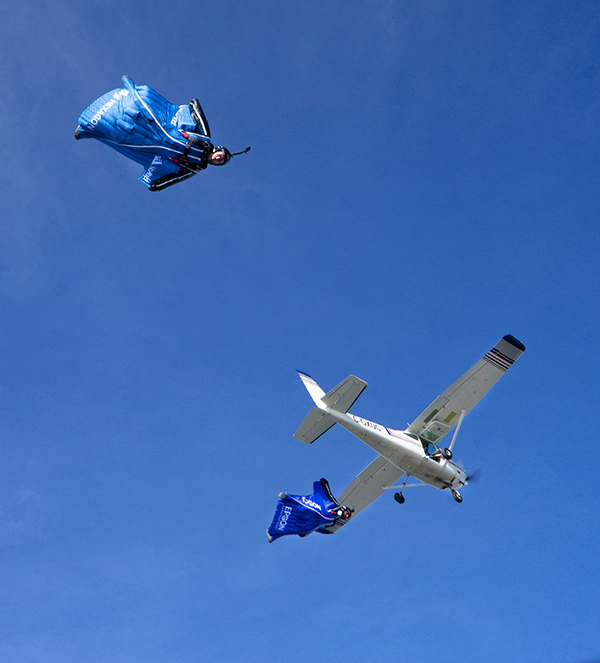
    Photo: NovAtel
    Photo: NovAtel

    Test Preparation

    For the 2019 test, the team chose to gather attitude data. The team also asked Levson to perform specific skydiving maneuvers to rigorously test the positioning solution. “Rather than performing just a simple flight to the ground, we wanted to challenge the solution to reveal more,” Casiano said.

    The test was not easy to implement. A lot of behind-the-scenes planning and preparation went into the project. Plus, unforeseen factors made the test more challenging, Fulton said, such as logistics and weather.

    “The skydivers require specific weather conditions in order to jump safely,” Fulton said. “Considering how quickly the weather can change here in Alberta, the time windows in which the skydivers could safely jump were few and far between. We pulled through regardless of these adversities.”

    When the day of the jump came, the skydivers jumped five times — as many jumps as the weather would permit. “Theoretically, one jump is enough,” Casiano explained. “But as engineers, we always want to have more data to work with.”
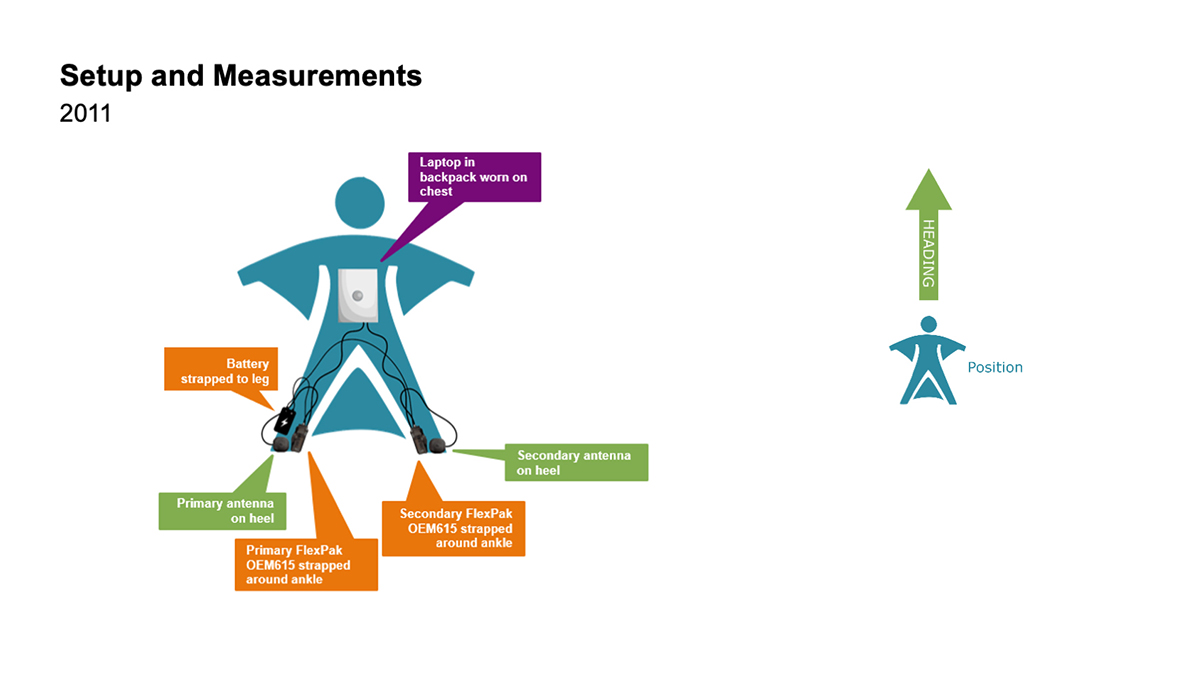
    2011 wingsuit jump setup. (Image: NovAtel)
    2011 wingsuit jump setup. (Image: NovAtel)
    2019 wingsuit jump setup. (Image: NovAtel)
    Wingsuit Jumps Compared: Because of the PwrPak7D-E2’s small size yet strong processing power, Levson required fewer devices in 2019 than in 2011, when he was equipped with two receivers, two antennas, a laptop and a battery. The amount of positioning data also increased. (Image: NovAtel)

    High-Flying Maneuvers

    The skydivers executed four maneuvers during their jumps.
    <strong>DART:</strong> This simple jump established a baseline for more complex maneuvers to follow. (Photo: NovAtel)
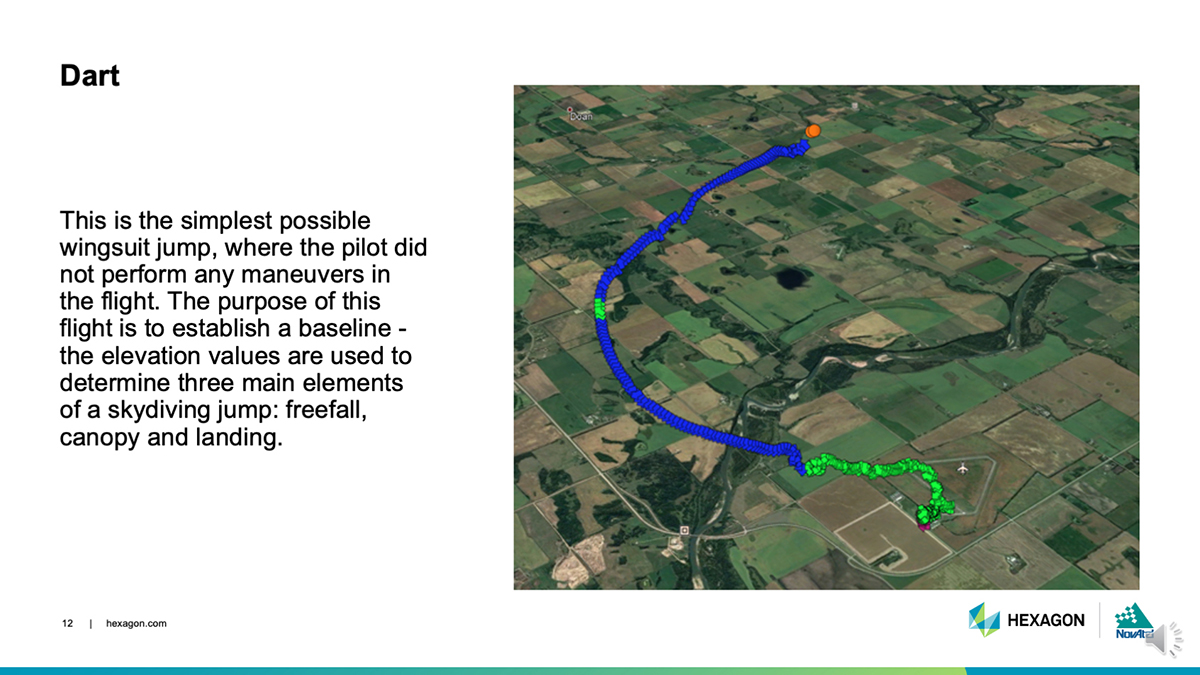
    DART: This simple jump established a baseline for more complex maneuvers to follow. (Photo: NovAtel)

    Dart. The skydivers first performed a straight jump, which the team called the Dart. The data from this jump provided a baseline for analyzing the positioning and attitude data.

    “This was more important for the attitude analysis, as we have never collected inertial data in a skydiving jump before,” Fulton said.
    S-Turn: One of three completed maneuvers. (Image: NovAtel)
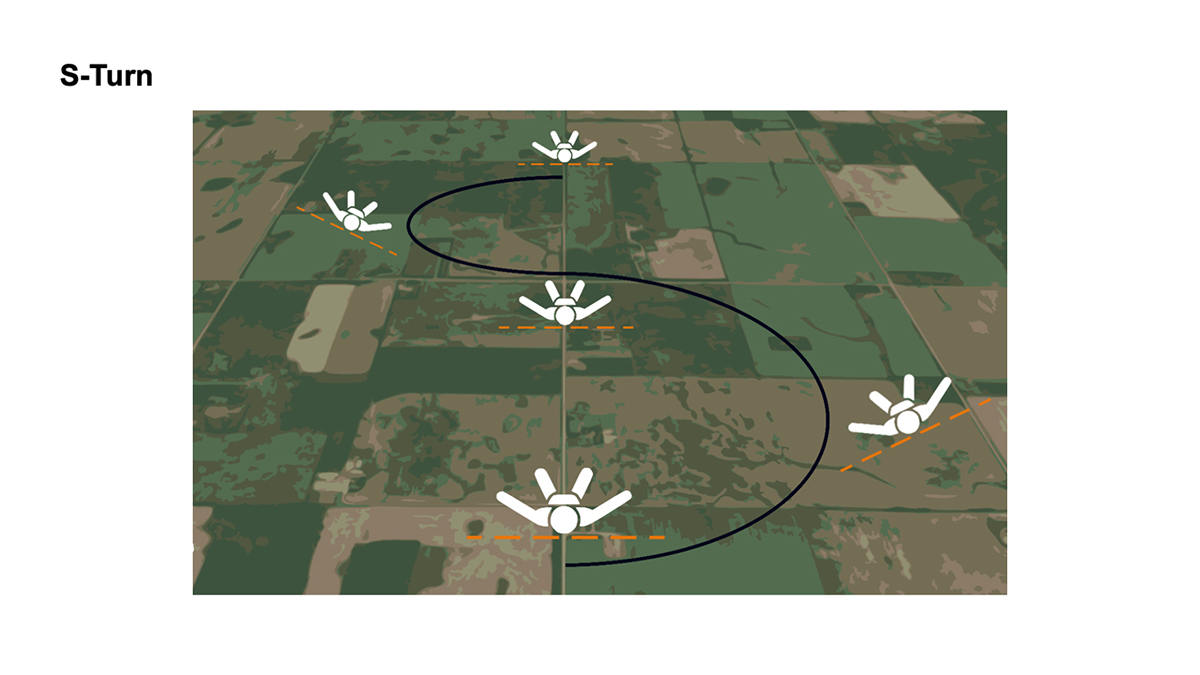
    S-Turn: One of three completed maneuvers. (Image: NovAtel)

    S-Turn. Next came the S-Turn. In this maneuver, Levson weaved from side-to-side to test how the equipment handles agile movements.

    For the S-Turn, the engineers anticipated seeing the biggest changes in roll. “We were pleasantly surprised to see that the S-Turn is detectable in the azimuth data as well, indicating high correlation between roll and azimuth in a skydiver’s movements,” Fulton said.

    The maneuver revealed that when Levson rolls, his body is using less surface area for wind resistance. As a result, he was falling to the ground faster, which then meant the dataset is shorter.

    “This became another challenge during data processing, as the free-fall portion of the datasets were now becoming less than 3 minutes in duration,” Fulton said.
    Data from the S-Turn also revealed the effect of crosswinds, which is detectable in the data.
    Reverse Immelmann: How the intricate maneuver works. (Image: NovAtel)
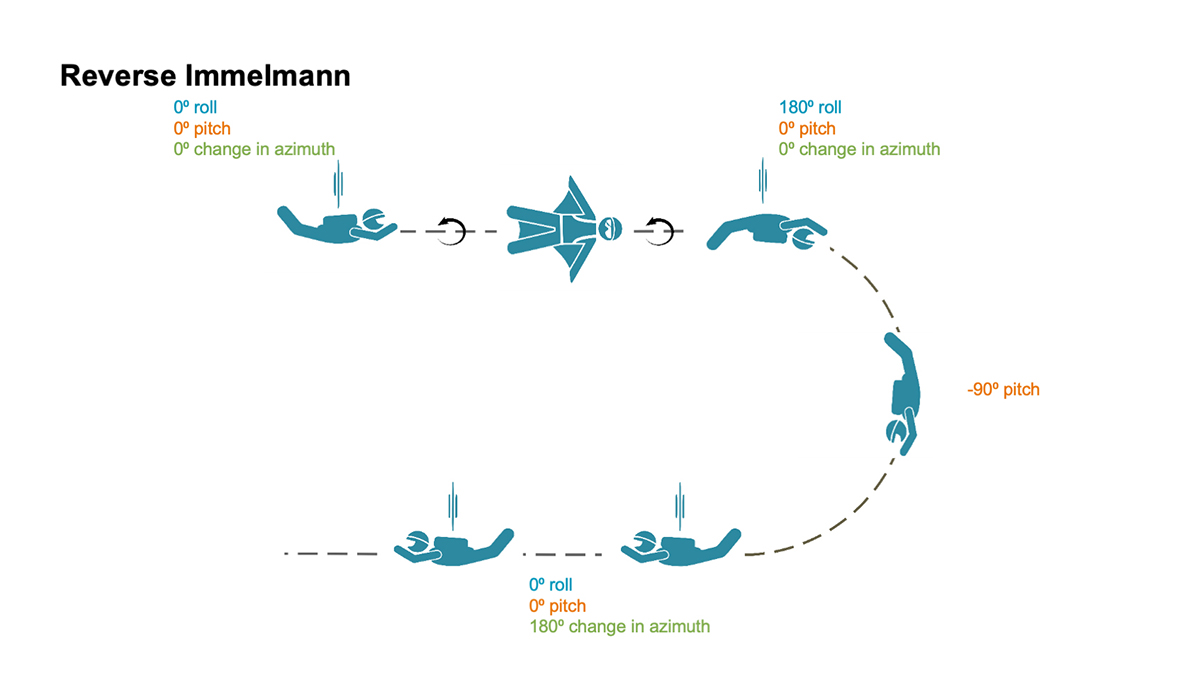
    Reverse Immelmann: How the intricate maneuver works. (Image: NovAtel)

    Reverse Immelmann. The third maneuver was the Reverse Immelmann. Levson flipped onto his back, began a downward turn until perpendicular to the ground, then leveled off, traveling in the opposite direction from where he began.

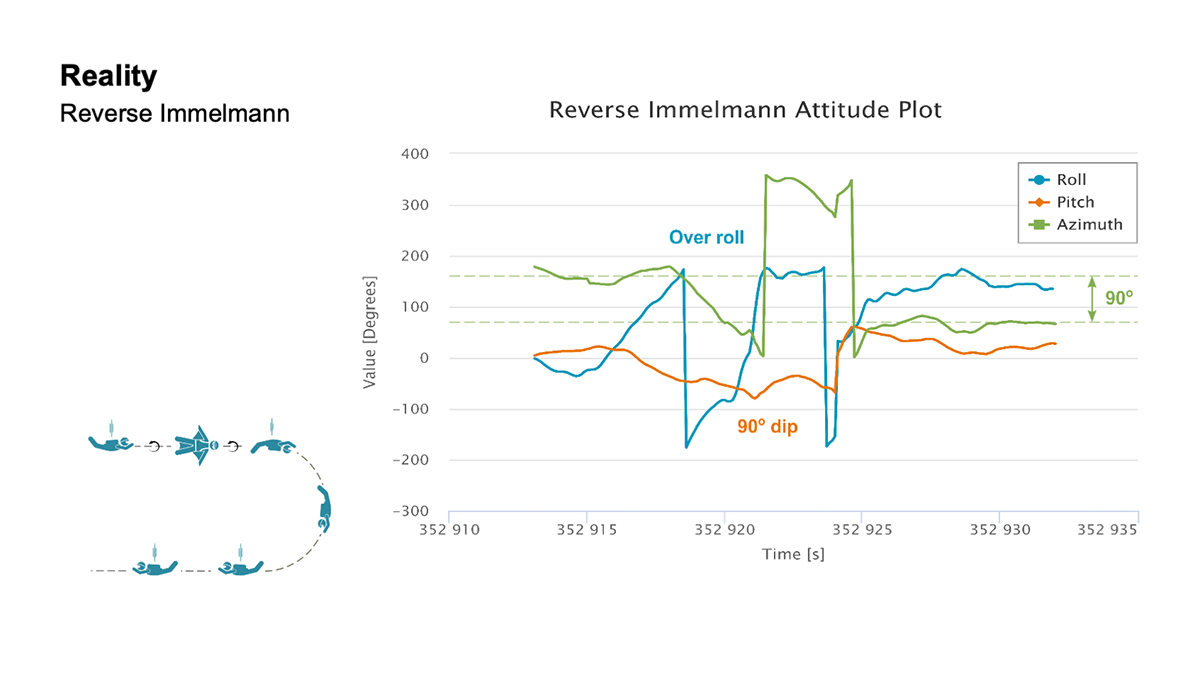
    This complicated exercise provided data for all aspects of an attitude solution — roll, pitch and azimuth. By comparing the expected and real data, the team found several places where the maneuver wasn’t performed perfectly.

    “There are many challenges once in the air that would have caused Levson to deviate from the trends in the data that we expected,” explained Fulton. “This is where we realized that our solution was working much more to evaluate the skydiver, rather than using the wingsuit to evaluate our product.”

    Casiano agreed. “As a whole, the PwrPak7D-E2 was telling a story about Andrew’s flight,” he said.

    The team also wanted to have the skydivers try a Cobra — a maneuver from aerobatics where an airplane momentarily lifts it nose and stalls — but time constraints prohibited it.
    “If we had gotten this [a Cobra] recorded, it would have been detectable in the pitch and horizontal velocity data,” Fulton said. “Who knows what other findings we would have come across in this data!”
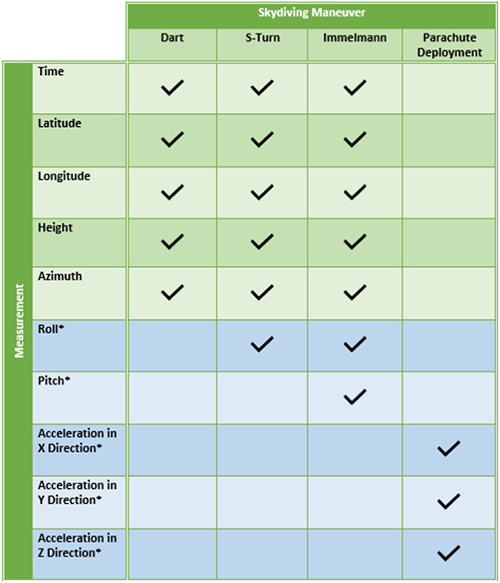
    Measurement matrix: The asterisks (*) denote data values that can only be measured with an IMU. (Chart: NovAtel)
    Measurement matrix: The asterisks (*) denote data values that can only be measured with an IMU. (Chart: NovAtel)

    Applications

    All these tests, of course, are designed to apply to real-world applications where the PwrPak7D-E2’s capabilities are used in dynamic environments.

    For instance, an unmanned aerial vehicle (UAV) needs a feedback mechanism that tells the user whether it is moving or hovering. “In the wingsuit project, we proved that crosswind can be detected,” said Casiano. “This is an important finding for UAV applications, since a feedback loop from the PwrPak7 and the SPAN system can help rectify movement from external forces with counter propulsion to stay still. The PwrPak7D-E2 enclosures allow a data rate of up to 200 Hz, meaning you can capture motion with more detail.”

    The PwrPak7D-E2 also works well for any black-box application where users want to record with the push of a button.


    Inside the PwrPak7D-E2
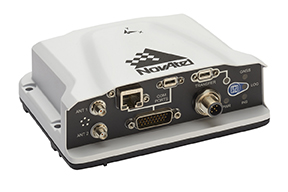
    Photo: NovAtel
    Photo: NovAtel

    The PwrPak7D-E2 is an all-in-one product. Its components are designed to work together seamlessly to provide positioning data, housed in NovAtel’s OEM7 firmware.

    • GNSS receiver card used to capture positioning data
    • Dual-antenna capability to provide accurate heading
    • Epson IMU to record attitude and motion
    • On-board logging to eliminate the need for constant monitoring on a PC

    Post-Processing

    Preparation enabled the team to process the data on site. The on-board logging feature on the PwrPak7D-E2 eliminated the need for constant monitoring during data collection. The unit is pre-configured so that at the time of the jump, Levson only needed to push a button for the unit to start collecting data.

    Once the pair of skydivers landed, the ground team offloaded the data for processing, similar to using a memory stick, and moved it to a laptop computer.

    “We pulled raw measurement data from the receiver and processed those measurements into position and attitude information,” Fulton said.

    It took about 30 minutes to determine whether the dataset was viable. Later processing back in the office generated the charts such as those below.
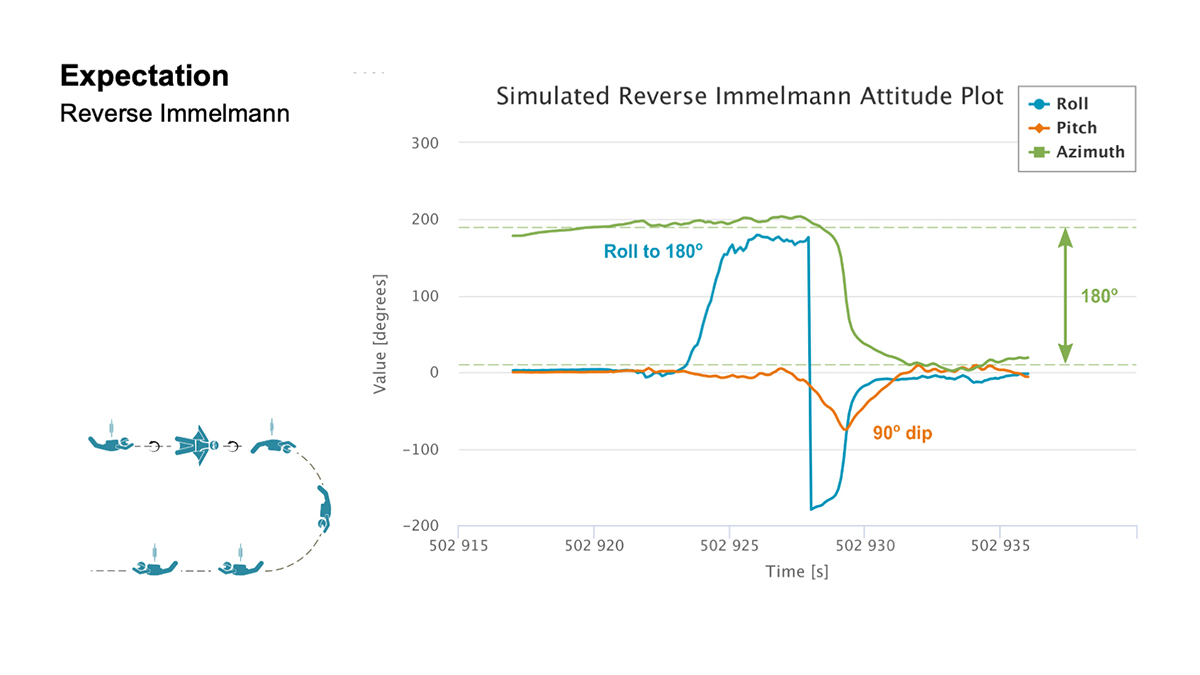
    <strong>Expectation </strong> For both the S-Turn and Reverse Immelman maneuvers, a simulated plot was generated at the office to better understand the inertial data produced from the actual wingsuit jumps. (Chart: NovAtel)
    Expectation: For both the S-Turn and Reverse Immelman maneuvers, a simulated plot was generated at the office to better understand the inertial data produced from the actual wingsuit jumps. (Chart: NovAtel)
    <strong>Reality:</strong> This chart shows the actual data. (Chart: NovAatel)
    Reality: This chart shows the actual data. (Chart: NovAatel)

    Dynamic Environments

    Photo: NovAtel
    Photo: NovAtel

    The PwrPak7 series can be used in many environments in the automotive, agriculture, marine, defense and UAV fields.

    “We are constantly trying to find ways to apply this product to other applications and industries,” Fulton said. “With more testing, we keep finding that the PwrPak7 can be used to solve more challenges.

    “We want to push the boundaries of our products. True innovation comes from challenging yourself and hovering outside your comfort zone,” Fulton said. “For this project, we are more than satisfied with the results we found. In order to further challenge ourselves and this product, we look forward to applying the PwrPak7 in more scenarios.”

    “The PwrPak7 is a robust unit that sets us up for more exploration,” Casiano said. “We are always looking for more challenges to put this unit through to see how the PwrPak7 can further help solve our customer’s problems.

    But will there be more skydiving for NovAtel in Levson’s future?

    “We could always revisit the skydiving project in another nine years,” Casiano said. “But who knows how the technology will evolve by then?”
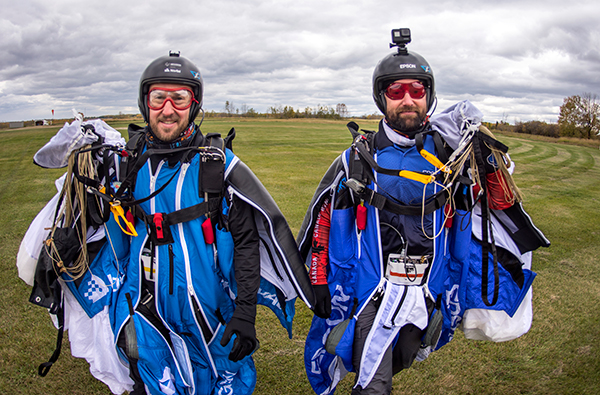

    Post flight: Blair Egan (right) and Andrew Levson back on Earth. (Photo: NovAtel)
    Post flight: Blair Egan (right) and Andrew Levson back on Earth. (Photo: NovAtel)

    What it feels like to take the plunge

    For those of us who have never jumped out of a plane, engineer and skydiver Andrew Levson provides insight.

    “It’s not as scary as people think. Because the plane is moving fast, it’s mostly just windy and loud. You don’t get that roller coaster type feeling; in fact you don’t feel like you are even falling — freefall feels more like floating than falling. You definitely wouldn’t know you are flying at speeds over 100 mph.

    “When you are climbing out of a plane, there is nothing else on your mind aside from the jump you are about to do. It is pure freedom, and there is often no stress, just a sense of peace and an intense focus on your plan for the jump. Once you get out of the aircraft, you get to fly your body in the way that you want to — most people only know of the position of falling with your body arched and belly toward the ground, but there are many different ways you can orient your body. Some of the lesser known ways to fly your body include your arms and legs spread out while flying a wingsuit (with your belly or back toward the earth) or flying with your head pointing straight at the ground.

    “When you skydive, you get to explore the sky with your friends, which is an amazing and unique experience. During a skydive, it is common to experience an ultra-focus during the jump — time slows down a bit and you can see and feel things that are seemingly beyond your typical capability.Many people are amazed at how much skydivers are able to do in the short period of time that a single skydive lasts — about a minute for regular skydives and about two or three minutes when flying a wingsuit.”

  • Epson releases 3 SureColor T-Series printers

    The Epson SureColor T2170 is designed for personal workspaces and home-based high-tech offices. (Photo: Epson)
    The Epson SureColor T2170 is designed for personal workspaces and home-based high-tech offices. (Photo: Epson)

    Epson has released three new SureColor T-Series printers: the SureColor T2170, SureColor T3475 and SureColor T5475. According to the company, these printers are ideal for the architecture, construction, engineering, graphic design and education industries.

    The SureColor T2170, designed for personal workspaces and home-based high-tech offices, is a 24-in. desktop printer. It produces accurate A1/D-size prints in 43 seconds, and delivers precise blueprints, line drawings and posters up to 24 inches. The SureColor T2170 features a 4.3-in. color touchscreen and uses UltraChrome XD2 pigment inks to produce durable, instant-dry prints. In addition, the printer is integrated with wireless and Wi-Fi Direct connectivity, which allows users to print from tablets and smartphones.

    The 24-in. SureColor T3475 and 36-in. SureColor T5475 printers are designed for small- to mid-sized workgroup settings.

    The SureColor T3475 is a wide-format wireless printer that’s ideal for high-production printing of blueprints, line drawings and posters up to 24 inches. It delivers accurate, 1/D-size prints in as fast as 25 seconds, Epson said. It features a 4.3-in. color touchscreen and offers advanced network security and encryption designed to safeguard sensitive information. It uses UltraChrome XD2 pigment inks and includes the company’s PrecisionCore MicroTFP printhead.

    Finally, the SureColor T5475 is a wide-format wireless printer that’s ideal for high-production printing of blueprints, line drawings and posters up to 36 inches. According to Epson, it delivers accurate, A1/D-size prints in as fast as 22 seconds. The SureColor T5475 boasts a 4.3-in. color touchscreen and offers advanced network security and encryption designed to safeguard sensitive information. This printer also uses UltraChrome XD2 pigment inks and includes the company’s PrecisionCore MicroTFP printhead.

  • Epson offers SureColor T3170x compact printer

    Photo: Epson
    Photo: Epson

    Epson has launched the Epson SureColor T3170x 24-inch wide-format wireless printer. Engineered to enhance workflow, the new model in the SureColor T-Series product line offers cartridge-free printing in a clean, space-saving design.

    The new, easy-to-fill, refillable ink tanks eliminate time spent purchasing and changing ink cartridges. Ideal for low-cost POP and education posters, as well as blueprints and line drawings up to 24 inches, the SureColor T3170x produces accurate, A1/D-size prints in 34 seconds.

    “This SureColor T3170x joins the popular T-Series line that delivers powerful printing solutions for many industries, including architecture, engineering, construction, creative professionals and graphic design,” said Matt Kochanowski, product manager, professional imaging, Epson America. “The new refillable ink tank design provides greater flexibility and productivity for workgroups — taking away the worry of changing ink cartridges and lowering running costs — while also delivering the advanced features and space-saving design our customers expect.”

    The SureColor T3170x leverages an Epson PrecisionCore MicroTFP printhead with Precision Droplet Control to produce output with crisp lines and outstanding clarity. Whether printing from a roll or the Auto Sheet Feeder, the 4.3-inch color LCD touchscreen makes tasks simple and intuitive, and integrated wireless and Wi-Fi Direct connectivity, allows users to easily print from virtually anywhere in the office using a tablet or smartphone.

    Additional product features include:

    • Cartridge-free printing – High-capacity ink bottles with auto-stop for easy, mess-free filling
    • Ultra-fast print speeds – A1/D-size prints in as fast as 34 seconds
    • Low running costs – Ink included in the box can print a substantial number of posters or technical drawings
    • Easy to operate – Large, intuitive 4.3-inch color LCD screen simplifies print tasks
    • Compact, clean design – Ultra-small footprint,4 and sleek, minimal design enhances workspaces; easily fits on a desktop or on its own with optional stand, sold separately
    • Print from virtually anywhere in the office – Easily print from tablets, smartphones and more with integrated wireless plus router-free Wi-Fi Direct printing
    • Outstanding image quality – PrecisionCore MicroTFP printhead with Precision Droplet Control for outstanding clarity, plus commercial-grade reliability with Nozzle Verification Technology
    • Versatile media handling – Accommodates rolls up to 24-inch wide and sheets up to 11”x17” through the auto sheet feeder
    • Precise, sharp details – Print posters, blueprints, line drawings, and more up to 2400 dpi
    • Easy setup – Get up and running out of the box in as quickly as 30 minutes

    Availability

    The SureColor T3170x 24-inch wireless printer will be available through authorized Epson Professional Imaging resellers in December 2019. The SureColor T3170x offers a standard Epson PreferredSM Limited Warranty, a one-year program that includes toll-free advanced telephone access Monday through Friday. The Epson SureColor T3170x is designed to work exclusively with Epson ink. For additional information, visit www.proimaging.epson.com.

  • Epson displays SureColor T5470M at Esri UC 2019

    Epson’s Matt Kochanowski offers an overview of the company’s SureColor T5470M printer and scanner at the 2019 Esri User Conference in San Diego. According to the company, the SureColor T5470M, which combines a 36-inch printer and integrated scanner, can produce accurate A1/D-size prints in as fast as 22 seconds.

  • Epson, DJI partner on AR smart glasses for piloting UAVs

    Epson, DJI partner on AR smart glasses for piloting UAVs

    epson-uav-smartglasses-pilot-wEpson, providers of the Moverio augmented reality (AR) smart eyewear platform, is partnering with DJI, maker of unmanned aerial vehicles (UAVs).

    The companies are creating new solutions for the Epson Moverio smart glasses and DJI’s suite of products and software development kit (SDK) that enhance the safety, productivity and capabilities of UAVs for both hobbyists and professionals.

    As one of the first initiatives of the partnership, DJI will optimize the DJI GO app for the Epson Moverio BT-300 AR smart glasses, shipping late Q4.

    With the app and the Moverio glasses, drone pilots will be able to see crystal clear, transparent first-person views (FPV) from the drone camera while simultaneously maintaining their line of sight with their aircraft. The DJI GO app works with the DJI Phantom, Inspire and Matrice series flying platforms as well as the Osmo handheld gimbal and camera.

    The two companies will co-market the Moverio BT-300 as a compatible DJI accessory. The Epson smart glasses will be available for purchase on DJI.com while the DJI GO app will be available for download from the Moverio Apps Market.

    https://www.youtube.com/watch?v=TJNJOw34p_o

    The Epson/DJI partnership arrives as newly streamlined FAA regulations for UAVs have taken effect, making it easier for businesses to expand the use of drones for a variety of aerial photography and videography purposes. Construction, real estate, insurance, agriculture, emergency response, conservation, academic research, film and video production and numerous other fields that benefit from UAVs have embraced the relaxed rules. However, the FAA has maintained the rule that UAVs must remain within the visual line-of-sight (VLOS) of the remote pilot, reinforcing the relevance of the Epson and DJI partnership.

    “The Moverio BT-300 marks an impressive advance in performance for the platform and will make flying and filming safer and help users stay in compliance with federal regulations,” said Michael Perry, director of strategic partnerships, DJI. “We are excited to see the incredible applications that can be built with the BT-300 and the recently relaunched DJI SDK — the possibilities truly are endless.”

    DJI maintains a 70 percent market share of the $2 billion consumer drone market, and its aerial platforms are used by two­-thirds of businesses approved by the FAA to operate commercially. More than 600,000 UAVs are expected to be in use in 2017.

    epson-uav-smartglasses-w“We believe this partnership with DJI will revolutionize how UAV pilots operate their aircraft in this fast-growing industry, now and into the future,” said Eric Mizufuka, product manager, New Ventures for Epson America. “In addition to validating Epson’s investment in its Moverio line, this is the first time AR smart glasses will be widely available for a mass-market consumer application, marking an historic milestone in the evolution of the category.”

    In addition to making drone piloting safer, the goals of the partnership include providing pilots and film-makers with new AR tools for enhanced productivity when using a UAV. Epson and DJI will also work together to create entirely new experiences for the fast-growing number of UAV hobbyists and businesses, as well as conduct joint sales and marketing efforts worldwide.

    Launching its first-generation smart glasses in 2011, the Epson Moverio BT-300 represent the world’s lightest binocular, transparent smart glasses with an OLED display. Combining breakthrough silicon-based OLED digital display technology and Android OS 5.1, the Moverio BT-300 enables truly transparent mobile AR experiences.

    The Epson Moverio BT-300 will be available in late Q4 and may be pre-ordered at Epson.com/Moverio. Epson will be demonstrating the DJI GO app on the Moverio BT-300 in booth No. 81 at InterDrone 2016, which is being held Sept. 7-9 in Las Vegas, Nevada.

  • Epson unveils new Pro G-Series large venue projector

    Epson--Pro-G7000-Series-ProjectorEpson recently announced in a news release the launch of its Pro G7000-Series large venue projectors for simulators, mapping, digital signage and command centers.

    New features include increased brightness and motorized lenses, uncompromising image quality, low total cost of ownership and $199 replacement lamps, Epson says. Eight models deliver up to 8,000 lumens of color brightness and 8,000 lumens of white brightness.

    The series also features the world’s first zero-offset ultra short-throw lens with 0.35 throw ratio for space constrained venues and digital signage applications. The Pro G-Series will be on display at ISE 2016 in Amsterdam from Feb. 9–12 at Epson’s booth, No. 1-H90.

    “The Epson Pro G-Series offers bright, brilliant images combined with advanced features, making them our best-selling large venue projectors,” said Phong Phanel, product manager of large venue projectors, Epson America Inc. “The new Pro G7000-Series raises the bar with higher brightness, 4K Enhancement resolution, new motorized lenses and advanced technology to captivate any audience, underscoring our commitment to delivering a broad portfolio of solutions to the large venue projector market.”

    Epson projectors offer three times higher color brightness than competitive 1-chip DLP models to ensure vivid colorful images. The Pro G Series 3-chip 3LCD projectors are ideal for large venues, including events staging, auditoriums and sanctuaries.

    The Epson Pro G7000-Series will be available in May starting at $3,799 MSRP. The projectors come with a three-year limited warranty with next business day replacement, including free shipping both ways7, and a 90-day limited lamp warranty.

    The color brightness specification — measuring red, green and blue — published by the Society for Information Display (SID) allows consumers to compare projector color performance without conducting a side-by-side shootout.

  • Epson Launches Next-Generation Large-Format Color Printers

    SureColor-T-Series-Family-W

    Epson America has introduced its next-generation family of large-format color printers — the Epson SureColor T3270, T5270, T7270, T5270D, and T7270D. Available in both single- and now dual-roll models, the SureColor T-Series features the Epson PrecisionCore TFP print head and Epson UltraChrome XD pigment ink to provide technical, corporate and marketing professionals an unprecedented combination of precision, performance and brilliance, the company said. The new line will be available in September.

    “The next-generation of SureColor T-Series printers were designed based on direct feedback from customers who demand cost-effective, versatile and scalable printing solutions,” said Timothy Check, product manager, Professional Imaging, Epson America, Inc. “The new SureColor T-Series printers not only meet the specific requirements of today’s engineering and scientific professionals, they incorporate the latest in printing technology to create accurate large-format prints well-suited for a variety of projects and applications, ranging from CAD drawings and GIS maps to corporate graphics and retail posters.”

    The Epson SureColor T-Series delivers extreme line accuracy with resolutions up to 2880 x 1440 dpi at incredibly fast speeds — producing a presentation quality D-size plot in as little as 25 seconds, the company said. For increased efficiency, the SureColor T-Series single-roll printers use a horizontal catch basket for enhanced output stacking, while the dual-roll printers feature a high-capacity catch basket for quick retrieval and reduced sorting time.

    In addition, the SureColor T-Series 36- and 44-inch printer models offer an optional multifunction (MFP) module, enabling PC-free full-color scan and copy capabilities — up to 36-inches wide — at best-in-class speeds for added convenience. In addition, ergonomic design with intuitive copy and scan-to-share capabilities ensures seamless integration to maximize workflow performance, Epson said.

    The SureColor T-Series is comprised of five printer models, offering varying performance and feature sets to accommodate a range of printing needs:

    SureColor-T-Series-table-W

    The SureColor T3270, T5270, T7270, T5270D, and T7270D offer a range of value-added features that help lower total cost of ownership and increase productivity, including:

    • Three printer widths: The SureColor T-Series features maximum print widths of 24, 36, and 44 inches, with minimal floor space requirements to fit virtually anywhere.
    • Optional multifunction MFP: An optional upgrade for 36- and 44-inch single- and dual-roll T-Series models, the PC-free MFP Scanner leverages Epson’s REALOID image processing engine to produce crisp color D-size copies in under 40 seconds, and best-in-class color scan speeds up to 6.0 inches per second — maximizing productivity.
    • Epson UltraChrome XD ink: Epson pigmented ink delivers brilliant color and crisp lines on virtually any paper type, as well as truly archival and extremely smudge and water-resistant output; the SureColor T-Series printers are designed to be used exclusively with these specially-formulated inks, and not with other brands of cartridges or inks.
    • Varied ink capacities: To maximize efficiency and keep printing costs low, each of the five ink colors — cyan, magenta, yellow, photo black, and matte black — are available in 110 ml, 350 ml and high-capacity 700 ml cartridge sizes, which can be used interchangeably to accommodate a range of printing needs; all cartridges are front-loading for easy access.
    • Epson PrecisionCore TFP print head: Offers high-performance and consistency for accurate plotting with high-precision line detail and minimum line widths as thin as 0.018 mm, along with variable size ink droplet technology for remarkable photographic print quality
    • Current and future-ready print language: Epson Precision XD printer language sets a new standard for high-performance, high-resolution printing, compatible with today’s latest applications and workflow software
    • Optional internal print server: An internal 320GB print server boosts workgroup productivity by quickly transferring print jobs to free-up workstations; adds print queue management, as well as print job save and reprint functionality.
    • Optional True Adobe Postscript 3 hardware engine: Fastest in-class postscript engine enables direct and hot-folder batch printing and support for secure PDF printing; includes the optional internal print server hardware.
    • Control panel: Full color LCD panel with simple button layout provides quick access to printer features and controls, as well as an intuitive help system for most frequent tasks
    • Professional media handling: Supports virtually any media type in roll or cut-sheet, from plain bond paper to 1.5 mm thick posterboard, for use with a wide variety of print applications.
  • Epson Teams with Geodetics for Inertial Navigation Systems

    Epson Teams with Geodetics for Inertial Navigation Systems

    EpsonIMUEpson Electronics America has announced a strategic partnership with Geodetics Incorporated of San Diego, California, for production of a new variant of its Geo-iNAV product.

    According to the announcement, Geo-iNAV is a fully-integrated GPS-aided inertial navigation system that provides real-time, high-precision positioning and navigation for manned and unmanned air, sea and ground vehicles. It combines GPS and proprietary sensor fusion technologies to achieve centimeter-level real-time positioning and navigation for dynamic platforms. Geodetics will offer Geo-iNAV integrated with Epson’s new G362 and G352 IMU modules. The G362 and G352 are the world’s highest performance IMUs on the market in their size, weight and power class, the company said.

    “Geodetics has the high-precision navigation expertise necessary to integrate IMU and GPS technologies, producing Inertial Navigation Systems (INS) that meet the performance requirements of very demanding applications,” said David Gaber, EEA’s IMU product line manager. “The combined solution, called Geo-iNAV Tactical, is a cost-effective, tactical-grade INS in a compact package with no EAR or ITAR export control restrictions.”

    Geodetics President and CEO Lydia Bock added, “Epson has established a new benchmark for MEMS IMU performance, enabling Geodetics’ products to reach new applications and customers by delivering high performance for a significantly lower cost than competing devices.”

    Epson says that with recent advances in unmanned vehicle technologies, the GNSS ecosystem has expanded to support mission-critical applications, which require more accurate navigation. Geo-iNAV Tactical delivers this capability with  features to support reliable and precise navigation with a low SWaP (size, weight and power) profile for autonomous vehicles and payloads on manned vehicles. Geo-iNAV Tactical is offered in several configurations designed to meet a wide range of requirements and is available in commercial as well as SAASM configurations.