Tag: exemption

  • FAA makes progress accommodating commercial UAS operations

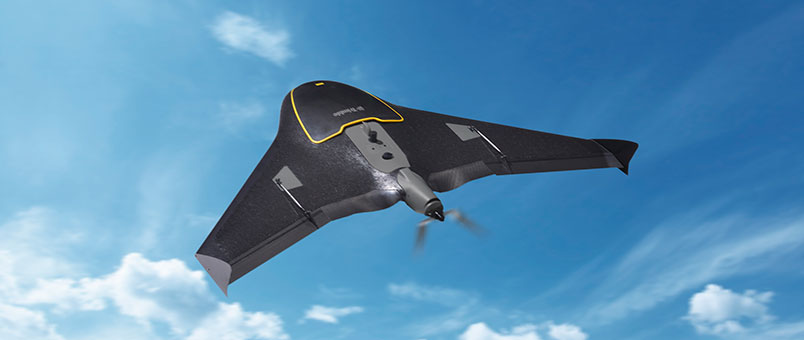
    The sensefly eXom UAV in flight.
    The sensefly eXom UAV in flight.

    The Federal Aviation Administration (FAA) took a major step forward in expanding commercial UAS/UAV operations in the U.S. airspace. It’s chief said April 19 that the FAA is preparing to take another major step forward in further opening up commercial UAS/UAV operations by eliminating the need for a 333 Exemption for operating small UAS/UAV.

    On March 29, the FAA announced it was doubling the altitude for blanket nationwide CoAs (Certificates of Waiver or Authorization) to 400 feet above ground level (AGL). The FAA has typically issued a blanket nationwide CoA with each 333 Exemption it has granted.

    Before the announcement, the maximum altitude allowed for commercial operations under the blanket CoA was 200 feet AGL. Now, it is 400 feet AGL. At the stroke of a pen, the 3,000+ 333 Exemption holders with blanket CoAs are now authorized to fly to 400 feet. This is significant because UAS operators can now fly higher and cover more area more efficiently, and still meet the precision and accuracy requirements of most clients.

    Another announcement, perhaps even more important, was made by FAA Administrator Michael Huerta, who spoke at the 2016 FAA UAS Symposium held April 19-20 in Daytona Beach, Florida. Huerta announced that the FAA is close to finalizing the FAA rules for small UAS.

    “In late spring we plan to finalize our small UAS rule to eliminate the need for most 333 exemptions,” Huerta said. He was referring to the Small UAS Notice of Proposed Rulemaking (NPRM) that was announced Feb. 15, 2015, and opened for public comment through April 24, 2015. There were 4,650 public comments made. You can read the comments about the proposed rule here.

    The proposed small UAS rule differs significantly from the current FAA requirements for operating UAS in the United States for commercial purposes. One of the major differences is that there will be a “UAS operator’s certificate” created so that commercial UAS pilots will no longer be required to have a FAA Pilot Certificate. Currently, the FAA requires commercial UAS pilots to have at least an FAA Sport Pilot certificate, which requires a substantial investment in money and time to achieve.

    To summarize, the general proposed small UAS rules are:

    UAS pilot

    • Must be at least 17 years old.
    • Must pass an aeronautical test at FAA-approved testing center, and renewed every 24 months.
    • Must be vetted by the Transportation Security Administration (TSA).
    • Must obtain an unmanned aircraft operator certificate with a small UAS rating

    UAS operation

    • UASmust weigh less than 55 pounds.
    • Pilot in Command or Visual Observer must maintain visual line of sight (VLOS).
    • Can’t operate over people who are not part of the UAS operation.
    • Daylight operations only.
    • Yield to manned aircraft.
    • May use Visual Observer (VO), but not required.
    • First-person view camera cannot satisfy “see-and-avoid” requirement but can be used as long as requirement is satisfied in other ways.
    • Maximum airspeed of 100 mph.
    • Maximum altitude of 500 feet AGL (above ground level).
    • Minimum weather visibility of 3 miles from control station.
    • Can’t operate more than one UAS at a time.
    • No careless or reckless operations.
    • Operations in Class B, C, D and E airspace are allowed with the required ATC permission.
    • Operations in Class G airspace are allowed without ATC permission.

    With these rules, neither a 333 Exemption nor a CoA is required, which would significantly ease the requirements for a surveying or geospatial company to begin offering UAS services.

    Phantom-4-Action-4-O
    The DJI Phantom 4 UAV.

    In addition, the small UAS rule includes a framework to adapt future rules such as Micro UAS (0.55 pounds and under) rules that are being actively discussed within the FAA as well as a discussion about commercial operation of UAS over people.

    In the meantime, consumer UAS are becoming more powerful with each new product introduction. DJI, the world’s largest UAS manufacturer (by far) introduced the Phantom 4. It’s a huge step forward due to one new feature: automatic collision avoidance. This feature will help operators avoid trees, buildings and potentially other UAS. I’m pretty sure this feature will eventually be included in all commercial UAS.

    Intel CEO Brian Krzanich demonstrated the broad capabilities UAV technology during his keynote presentation at the 2016 Consumer Electronics Show Jan. 5, in Las Vegas. Krzanich showcased the Yuneec Typhoon H with Intel RealSense Technology. (Photo: Intel)
    Intel CEO Brian Krzanich gives his keynote presentation at the 2016 Consumer Electronics Show Jan. 5, in Las Vegas, where he also announced the acquisition of Ascending Technologies for drone collision avoidance. (Photo: Intel)

    Automatic collision avoidance is such a hot subject that in January, Intel acquired Ascending Technologies, a UAS manufacturer that has incorporated automatic sense and avoid technology in their UAS. According to the announcement, Intel sees “incredible opportunity for innovation across a multitude of industries. As a result, Intel is positioning itself at the forefront of this opportunity to increasingly integrate the computing, communications, sensor and cloud technology required to make drones smarter and more connected.”

    Thanks, and see you next month.

    Follow me on Twitter at GPSGIS_Eric

  • FAA’s UAS Test Sites Receive Blanket Authorizations

    The nation’s six unmanned aircraft system test sites now have blanket authorizations to fly drones and no longer have to seek authorizations for each type of aircraft flown, according to new Federal Aviation Administration regulations.

    The new regulations streamline the approval process for UAS research by the test sites. They also allow those with only a recreational- or sport-pilot certificate to conduct test-site operations. Previously, the rules required operators to have a private pilot’s license. A third-class medical certificate also is no longer required. Now an operator only needs a valid driver’s license to satisfy the medical requirement.

    The FAA expects this improved access for the test sites will provide more opportunities for research that may help the agency integrate UAS into the nation’s airspace more quickly and easily.

    Under the new regulations, drones under 55 pounds operated by test sites may fly during the day up to 200 feet above ground level anywhere in the country, except in restricted airspace or near airports and heliports.

    The new Certificates of Waiver or Authorization (COAs) also let the test sites fly various types of UAS under a single COA, making it easier for them to conduct research missions. Previously, the FAA required authorization for each type of UAS the operators wanted to fly.

    Brian Wynne, president and CEO of the Association of Unmanned Vehicle Systems International (AUVSI), praised the FAA announcement. “This new policy will make it easier for the test sites to perform the research needed to safely integrate UAS into the national airspace system. It is an exciting time for the unmanned aircraft systems industry and policies like this help further advance UAS innovation.”

    When Wynne testified at the House Committee on Science, Space and Technology earlier in the year, he specifically called for a comprehensive industry-government UAS research plan, more resources for the federal government to coordinate UAS research and intellectual property protections for the companies that participate in UAS R&D.

    According to Wynne’s take on the new policy, things are heading in the right direction. “This new policy, the Center of Excellence designation and the Pathfinder Program announced earlier this month, along with ongoing industry and government research efforts, all point to a future where the possible will become reality,” he says.

    “Today’s FAA announcement is great news for the future of Nevada’s UAS Test Site effort,” says Tom Wilczek, aerospace and defense industry specialist for the Nevada Governor’s Office of Economic Development. “Nevada has been working diligently to get companies up and flying UAVs on our test sites, and the ability for us to implement public aircraft operations that fly under 200 feet … will significantly speed up the ability to test on our Nevada sites and move this emerging industry into commercial flights.”

    The expanded operational parameters for the test sites are similar to those the FAA implemented in March for civil UAS operations authorized under a Section 333 exemption.

    The six UAS test sites are the first public operators to receive this type of “blanket” airspace access across the United States, including Alaska and Hawaii. The sites may still fly outside the “blanket” COA parameters if they receive or retain separate COAs specific to the airspace requested for those operations.

  • FAA Grants UAS Exemption to Trimble Navigation

    FAA Grants UAS Exemption to Trimble Navigation

    The Trimble UX5. Photo: Trimble
    The Trimble UX5. Photo: Trimble

    The Federal Aviation Administration (FAA) today granted five regulatory exemptions for unmanned aircraft systems (UAS) operations to four companies representing several industries that promise to benefit from UAS technology, including Trimble Navigation Ltd.

    The four companies that received exemptions want to fly UAS to perform operations for aerial surveying, construction site monitoring and oil rig flare stack inspections.

    “Unmanned aircraft offer a tremendous opportunity to spur innovation and economic activity by enabling many businesses to develop better products and services for their customers and the American public,” Transportation Secretary Anthony Foxx said. “We want to foster commercial uses of this exciting technology while taking a responsible approach to the safety of America’s airspace.”

    The commercial entities that received exemptions today are Trimble Navigation, VDOS Global, Clayco, and Woolpert (two exemptions). The FAA earlier granted exemptions to seven film and video production companies. This is the first exemption granted to a leading GNSS firm.

    Secretary Foxx found that the UAS in the proposed operations do not need an FAA-issued certificate of airworthiness because they do not pose a threat to national airspace users or national security. Those findings are permitted under Section 333 of the FAA Modernization and Reform Act of 2012.

    The firms also asked the FAA to grant exemptions from regulations that address general flight rules, pilot certificate requirements, manuals, maintenance and equipment mandates. In their petitions, the firms said they will operate UAS weighing less than 55 pounds and keep the UAS within line of sight at all times.

    The exemption will allow Trimble to conduct commercial operation of its UX5 Aerial Imaging Solution. The UX5 is an unmanned fixed-wing aircraft targeted at the surveying, agriculture, oil and gas, mining, construction, environmental industries. The system autonomously captures a series of high-resolution images during flight, which is typically up to 50 minutes covering as much as 2.3 square kilometers (approximately 1 square mile) when flying 120 meters (approximately 400 feet) above the ground. Using Trimble Business Center Aerial Photogrammetry software, images are used to easily generate 2D and 3D deliverables such as orthomosaic images, three-dimensional point clouds and contour maps. The Trimble UX5 enables the collection of large amounts of data, often faster than traditional surveying or mapping technologies.

    The Trimble UX5 surveys a construction site. Photo: Trimble
    The Trimble UX5 surveys a construction site. Photo: Trimble

    “We are pleased to be among the first companies to receive an exemption from the FAA authorizing commercial operation of UAS,” said Erik Arvesen, vice president of Trimble’s Geospatial Division. “This decision reflects Trimble’s efforts to responsibly operate its UAS business in the U.S. while the FAA addresses air safety issues in opening the NAS for commercial UAS operations on a broader scale. Trimble will continue its efforts to support the FAA’s decision-making process and to provide opportunities for our customers to safely use the UX5 to capture accurate geospatial data for a wide range of applications such as surveying, oil and gas, mining, construction and many more.”

    “In the agriculture market, the FAA exemption moves Trimble one step further with the opportunity to provide a solution for safe and legal UAS operations that can benefit growers, ranchers, water management contractors, agronomists and other ag service providers,” said Joe Denniston, vice president of Trimble’s Agriculture Division. “High-speed aerial imaging is a powerful tool that can quickly and easily capture aerial images for scouting and monitoring crop health, locating cattle and their available forage over large areas, measuring crop height, and generating topographic maps and models for land leveling and drainage applications. As a result, the system can be a powerful data collection tool that can aid with recommendations to improve farming operations.”

    In granting the exemptions, the FAA considered the operating environments and required certain conditions and limitations to assure the safe operation of these UAS in the National Airspace System. The agency also will issue Certificates of Waiver or Authorization (COAs) that mandate flight rules and timely reports of any accident or incidents..

    “The FAA’s first priority is the safety of our nation’s aviation system,” said FAA Administrator Michael Huerta. “Today’s exemptions are a step toward integrating UAS operations safely.”

    As of today, the agency has received 167 requests for exemptions from commercial entities.

    You can view the FAA’s exemption grants here. Also, read more about the exemptions in Eric Gakstatter’s Geospatial Solutions column. Below is the Trimble exception document.

    Trimble_Navigation_Limited_11110.pdf