Tag: Formula 1 cars

  • Start your engines: How F1 drivers use GPS

    Start your engines: How F1 drivers use GPS

    Credit: vvectors/iStock/Getty Images Plus/Getty Images
    Credit: vvectors/iStock/Getty Images Plus/Getty Images

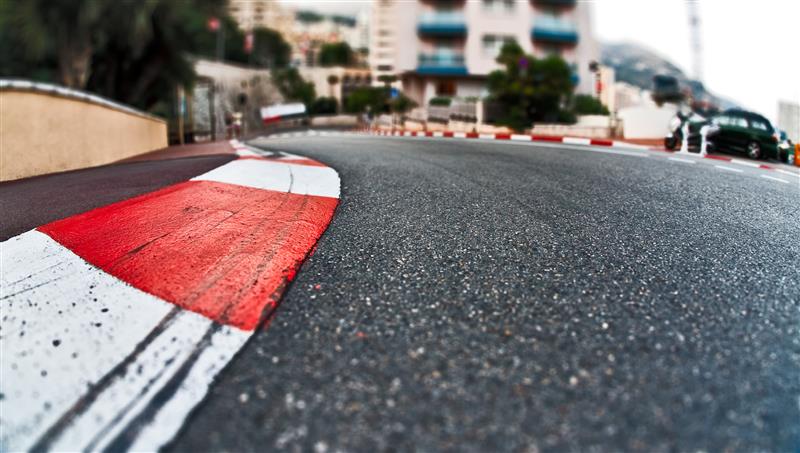
    GPS plays a quiet, but integral role in Formula 1 (F1) racing. In a sport where split-second reactions are vital, GPS helps drivers and their teams to improve race to race and navigate tracks safely.

    GPS is used to determine the speed of the car, which is beneficial for such things as straight line aerodynamic testing. It also provides data as to how fast F1 cars accelerate, enabling drivers and their teams to predict how much power their competitors are producing on the track.

    The streaming of location data can be converted to telemetry, such as what track maps viewers see on F1 broadcasts, that can determine which driver in a head-to-head scenario was faster on each sector of the track. This data is then used to work out strengths and weaknesses of cars relative to each other.

    In addition, GPS plays a large role in creating a safe racing space.

    If a driver is slowing down to recharge a battery, make space for a hot lap, or cool down tires between runs, and another car is entering the track at full racing speed, this creates safety concerns. GPS receivers on the cars and radio links to transmit their positions are used to show where cars are on the track at any moment. Teams use this information to manage traffic during sessions such as qualifying races to improve overall track safety.

    The impact of losing live location data was seen at the 2023 Australian Grand Prix FP1 in late March. At the opening practice session, a red flag was flown due to loss of location data triggered by a glitch in the distribution of live tire information. This caused several near-misses on the track because drivers no longer received traffic advisory calls from their team, reported AutoSport.

    For more on using GPS in F1, check out the video below by WTF1.
  • HxGN LIVE Global: Summit keynotes and Formula 1 cars

    HxGN LIVE Global: Summit keynotes and Formula 1 cars

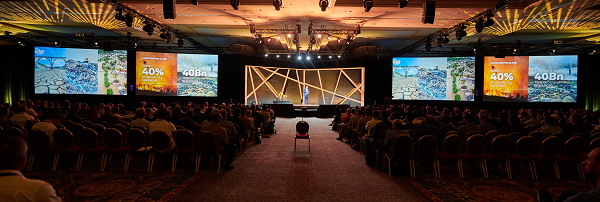
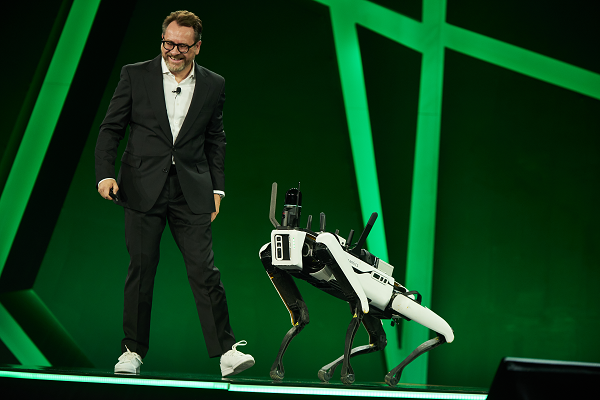
    Burkhard Boeckem and a Boston Dynamics robot dog share insights into smart digital realities. (Photo: Hexagon)
    Burkhard Boeckem and a Boston Dynamics robot dog share insights into smart digital realities. (Photo: Hexagon)

    At HxGN LIVE Global 2022, in-person attendees experienced the full breadth of what the flagship conference has to offer for the first time since 2019.  The conference is taking place this week at the Venetian hotel in Las Vegas.

    Tuesday began with a keynote address by Burkhard Boeckem, chief technology officer, who discussed the importance of smart digital realities and their role in the potential of the metaverse to impact and enhance the physical world. Hexagon’s technology platform Xalt enables intelligence at scale. By integrating sensors and data integration across systems and solutions, like the BLK series and HxDR, Xalt provides the next level of connectivity to harness and utilize data for autonomous systems.

    Summit-specific keynotes by speakers from Hexagon, its partners and sponsors provided expertise on  issues, solutions and innovations shaping and reimagining various industries.

    The Digital Innovation in Construction summit begins. (Photo: Hexagon)
    The Digital Innovation in Construction summit begins. (Photo: Hexagon)

    Tuesday was also the first day of breakouts for all summits, with more than 100 sessions throughout the day covering everything from training and tips for Hexagon products to project success stories, panel discussions of industry trends, and a look at the precision engineering of Formula 1 cars with Hexagon partner Oracle Red Bull Racing. Sessions continue through the close of the conference on Thursday.

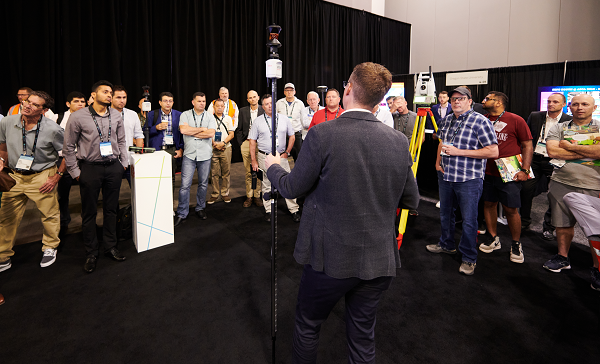
    The Zone, the massive technology expo floor, officially opened for the first time this morning, where attendees explored some of the latest advancements, products and solutions available across seven summit-specific “islands” offering hands-on demonstrations and an opportunity to ask the questions that will help them make the best use of autonomous technology in their field.

    Surveyors get the lay of the land at the Pure Surveying Island. (Photo: Hexagon)
    Surveyors get the lay of the land at the Pure Surveying Island. (Photo: Hexagon)
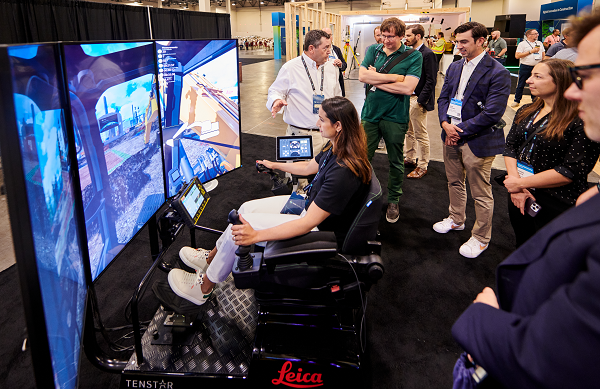
    Advances in digital construction were provided by Leica Geosystems. (Photo: Hexagon)
    Advances in digital construction were provided by Leica Geosystems. (Photo: Hexagon)

    In the evening, summit events took attendees around the grounds of the Venetian resort for various experiences.