Tag: Galileo receiver

  • SpacePNT to develop GPS/Galileo receiver for Lunar Pathfinder spacecraft

    SpacePNT to develop GPS/Galileo receiver for Lunar Pathfinder spacecraft

    Swiss company SpacePNT will develop an advanced spaceborne GPS/Galileo receiver to demonstrate for lunar navigation and positioning.
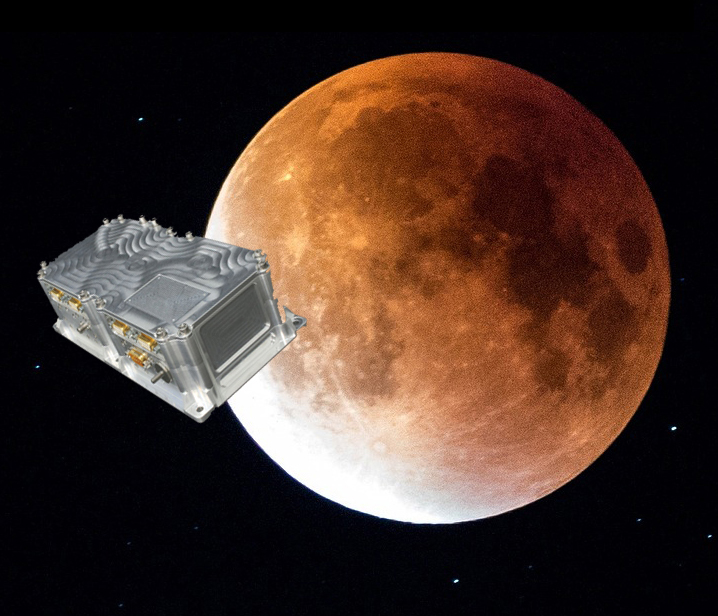
    A vision of the NAVIMOON receiver. (Image: SpacePNT)
    A vision of the NAVIMOON receiver. (Image: SpacePNT)

    The European Space Agency (ESA) has selected SpacePNT to develop an advanced spaceborne GPS/Galileo receiver to demonstrate the use of terrestrial satellite navigation signals or real-time and autonomous orbit determination and positioning, navigation and timing (PNT).

    The receiver will be carried aboard the ESA-SSTL Lunar Pathfinder spacecraft, which will be placed in orbit around the Moon.

    The contract includes the development, qualification and delivery of one proto-flight model (PFM) and two engineering models of the NAVIMOON receiver. NAVIMOON is the high-sensitivity version of SpacePNT’s NAVILEO high-performance GNSS spaceborne receiver.

    The NAVIMOON receiver implements high-sensitivity algorithms able to receive and process signals extremely attenuated coming from the spillover (side lobes) around the Earth of signals transmitted by satellite navigation systems. It combines these signals’ measurements with advanced on-board orbital filters to achieve onboard the spacecraft in real time an unprecedented target orbit determination accuracy of 100 meters root-mean-square (rms) at Moon altitude, which is well above the typical accuracy that can be achieved with terrestrial radio ranging that involves the use of costly deep-space-station ground infrastructures.

    Given the high interest in Moon exploration and colonization (more than 50 commercial and governmental missions have been announced between now and 2024), it is expected that this NAVIMOON receiver technology will play a significant role in the next decade not only on Earth-Moon transfer orbits, but also to provide enhanced PNT services for users on the Moon. Deployment of a lunar constellation will allow the provision of lunar navigation in Moon-obstructed areas.

    For this project, SpacePNT will partner with EECL from the UK. EECL will work as a subcontractor and bring significant space expertise to the electronics design, manufacturing and qualification of the receiver.
  • MyGalileoDrone competition seeks UAV innovations

    MyGalileoDrone competition seeks UAV innovations

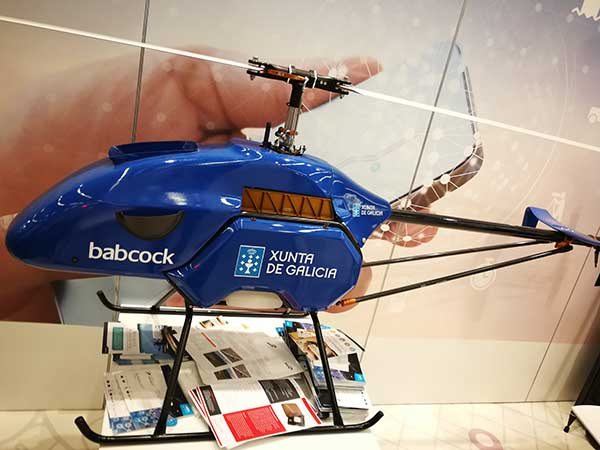
    The European GNSS Agency (GSA) has launched the MyGalileoDrone competition.

    The contest targets the design and development of drone-based applications or services, using a Galileo-enabled receiver, to address the European Union’s (EU’s) key priorities such as the Green Deal, and support the EU Recovery Plan for Europe.

    Initial ideas should be submitted by Aug. 31. Wide participation from all EU Member States is expected.

    According to ESA, the MyGalileoDrone competition seeks to tap into the EU’s innovative spirit to deliver applications and services to boost Europe’s competitiveness, resilience and sustainability. Applications should leverage and demonstrate Galileo’s added value, such as increased accuracy, availability and robustness of position, as well as integrity for a solution based on drone operations.

    Drones applications

    Photo: © GSA
    Photo: ©GSA

    The market related to drone applications and services is growing rapidly, and European drone service revenues are expected to reach EUR 250 million by 2025. The European demand is estimated to reach EUR 10 billion annually, in nominal terms, to 2035 and over EUR 15 billion annually to 2050, creating more than 100,000 jobs.

    With GNSS receivers implemented on almost all new commercial drones, Galileo’s and EGNOS’ added value is pivotal for the development and growth of drone services and applications.
    In addition to designing and developing the application, contestants should prepare their drone- based application or service for commercial launch.

    The solution should leverage Galileo to provide a position fix. The use of EGNSS is understood in the broad sense, and Galileo can be integrated in the flying platform, the ground control station, or in other devices supporting the operation, such as a smartphone or even in the frame of U-Space services.

    “GNSS is a key enabling technology in this segment, ensuring robust navigation and reliability for a wide range of applications. The MyGalileoDrone competition aims to bring oxygen to European SMEs and entrepreneurs driving innovation. It will create jobs and growth in this promising market,” said Pascal Claudel, acting executive director at the GSA.

    Focus on EU priorities

    In times of post-COVID recovery focus, submissions should target applications and services that support key EU priorities, but the sky’s the limit. The GSA is looking for trailblazing ideas in applications such as smart mobility, sustainable agriculture or environmental protection, or solutions that exploit synergies between 5G and space data, or support the internet of things, or whatever might be the next big thing.

    Deadlines and Prizes

    The first prize in the MyGalileoDrone competition amounts to EUR 100,000, with EUR 60,000 for second, EUR 40,000 for third, and a fourth prize of EUR 30,000.

    After Aug. 31, projects selected to advance to the development phase of the contest will be announced on Sept. 15. Participants will  have until Nov. 30 to develop a demo version of their proposed application or service.

    In the finals, the selected teams will perform a live demonstration and pitch their ideas to investors. During the development process, the applicants will receive mentoring and coaching from recognized experts in the drone market. These experts will accompany them as they build their application, develop tests and get ready from the business perspective to attract investors and move to market.

    To register or for more information, visit the competition page on the GSA website.

  • CubeSat finds its way in space with Galileo receiver

    CubeSat finds its way in space with Galileo receiver

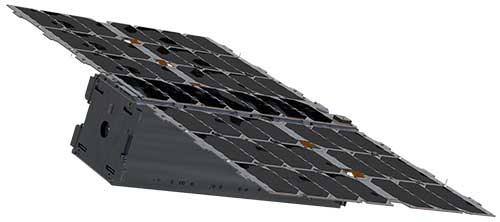
    A miniature CubeSat has become the first satellite to perform Galileo-based position fixes in orbit using a commercial satnav receiver.

    News from the European Space Agency

    Swiss start-up Astrocast launched successfully its first test satellite from Vandenberg Air Force Base, 4 December 2018. (Photo: ESA)
    Swiss start-up Astrocast launched successfully its first test satellite from Vandenberg Air Force Base, 4 December 2018. (Photo: ESA)

    CubeSats are nanosatellites based on standardised 10 cm-sized units. Originally devised for educational uses, they are nowadays being put to commercial and technology testing uses. The Swiss Astrocast company is assembling a constellation based on 3-unit CubeSats to serve the emerging internet of things (IoT).

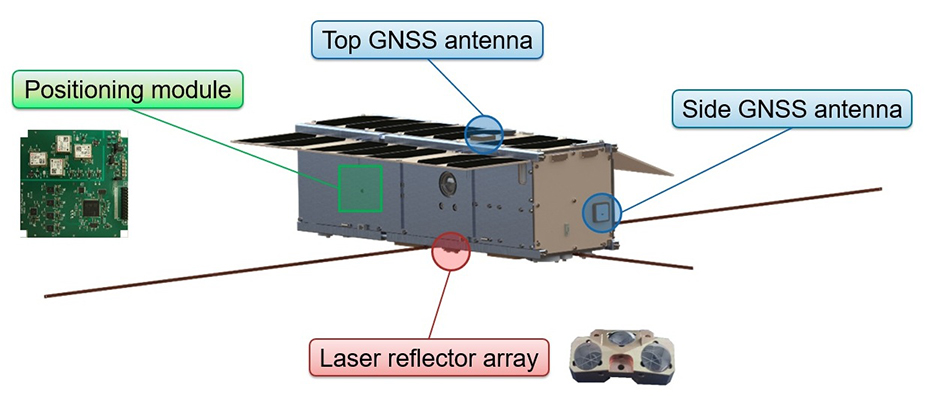
    Vigilant for new initiatives that foster innovation in the field of navigation, ESA navigation researchers supported Switzerland’s ETH Zurich technical university to fly a navigation payload — composed of four low-cost multi-constellation mass-market satnav receiver modules plus two antennas — aboard a test CubeSat.

    “This mission has demonstrated the first use of Galileo to perform positioning and timing in orbit supporting precise orbit determination using a commercial product developed for ground users,” explains ESA’s Global Navigation Satellite Systems (GNSS) R&D Principal Engineer Roberto Prieto Cerdeira.

    “The purpose of this initiative was to demonstrate the capabilities of Galileo in orbit with a small, low-cost, low-power European satnav receiver. This will pave the way for future navigation experimentation, scientific experiments and technology demonstrations of Galileo in orbit with CubeSats and low-cost receivers for scientific activities.

    This Astrocast CubeSat launched in December 2018 included a test satnav receiver. (Image: ESA)
    This Astrocast CubeSat launched in December 2018 included a test satnav receiver. (Image: ESA)

    “The navigation payload is also capable of performing position fixes by combining Galileo with the US GPS, Russian Glonass and Chinese BeiDou systems for increased performance.”

    ESA R&D navigation engineer Rok Dittrich adds, “The receiver itself was not specially developed and tested for space but is a modified version of a low-cost mass-market product from the Swiss u-blox company. It underwent ground testing emulating its use in space, along with firmware added to take into account the dynamics of low-Earth orbit.”

    This opportunity, funded through ESA’s European GNSS Evolution programme, was conceived together with ESA’s Galileo Science Advisory Committee, a group of scientists advising ESA on scientific matters related to Galileo and fostering its scientific exploitation.

    This first AstroCast CubeSat was launched in December 2018, and the first results confirming the use of Galileo satellites for positioning were reported at the recent Galileo Science Colloquium in Zurich, typically demonstrating orbital positioning precision down to less than 5 m.

    ESA’s Galileo Navigation Science Office and GNSS Evolution are looking into extending this pioneering experience to perform more CubeSat-based experiments in space to test ideas for evolutions of European satnav systems and scientific experiments with Galileo, in partnership with universities and research institutions.

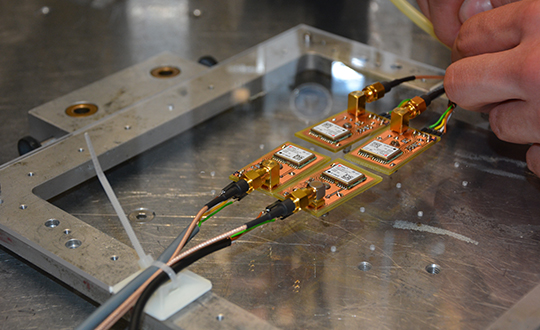
    The Astrocast CubeSat's four u-blox receiver modules mounted on an acrylic glass to be placed into a proton radiation beam at the Paul Scherrer Institute in Switzerland. (Photo: ESA)
    The Astrocast CubeSat’s four u-blox receiver modules mounted on an acrylic glass to be placed into a proton radiation beam at the Paul Scherrer Institute in Switzerland. (Photo: ESA)

    Satnav is already widely used by satellites in low-Earth orbit for guidance, navigation and control, relying on the satnav constellations flying above them in medium-Earth orbit. Some telecommunication and weather satellites in higher orbit also make use of the satnav signals flying at lower orbit, with very weak satnav signals from satellites located at the other side of the Earth.

    For the future, satnav is a key enabling technology for the safe operation of low-Earth orbit constellations, allowing individual satellites to maintain optimum formation relative to the other constellation members.

    ESA and NASA have previously demonstrated Galileo-only and Galileo-GPS fixes from the International Space Station, although using a space-qualified software-based receiver.

    ESA is developing dual Galileo-GPS receivers for the next generation of Earth-observing Copernicus Sentinel satellites. The more precise the orbit determination, the more accurate the environmental data that can be returned to Earth.

    Combined use of Galileo and GPS signals on an interoperable basis for positioning and precise orbit determination should bring significant advantages for space users in particular, set to provide a seamless navigation capability from low to high Earth orbits — and potentially beyond.

    The Astrocast CubeSat's navigation payload comprises four global navigation satellite system (GNSS) receiver modules plus two antennas. (Diagram: ESA)
    The Astrocast CubeSat’s navigation payload comprises four global navigation satellite system (GNSS) receiver modules plus two antennas. (Diagram: ESA)
  • GSA Launches Funding for Galileo Chipsets, Receivers

    The European GNSS Agency (GSA) has launched a new research and development funding mechanism supporting development of Galileo chipsets and receivers, intended to enable the adoption of Galileo and EGNOS-powered services across all market segments. The Fundamental Elements programme supports activities that will be carried out from 2015-2020 with a projected budget of EUR 100 million.

    Fundamental Elements is part of an overall strategy of market uptake initiatives led by the GSA and in accordance with EU regulation.

    “For the first time, EU regulation provides a financing tool for the market uptake of European GNSS chipsets and receivers,” said GSA Executive Director Carlo des Dorides. “The GSA will be instrumental in ensuring that the new Fundamental Elements programme contributes to the successful integration of Galileo and EGNOS.”

    Fundamental Elements complements the EU’s Horizon 2020 research programme. While Horizon 2020 aims to foster adoption of Galileo and EGNOS via content and application development, Fundamental Elements projects will focus on supporting the development of innovative chipset and receiver technologies.

    Fundamental Elements will provide two types of financing: grants and procurement. Grants will be provided with financing currently foreseen for up to 70 percent of the total value of the grant agreement. Intellectual property rights will stay with the beneficiary under the condition that the developed product is aimed at commercialization.

    In the case of grants, the GSA publishes two annual Grant Plans, one for EGNOS and another for Galileo. These plans indicate the envisaged grants to be awarded per year. The Fundamental Elements grants are included in these plans and can be consulted before the publication of the Call for Proposals. The annual Grant Plans include a brief description of the projects and the indicative budget and timings. Procurement will be used only in cases where keeping intellectual property rights allow for the better fulfillment of the programme’s objectives.