Tag: GLONASS constellation

  • Directions 2022: A new epoch for GLONASS

    Directions 2022: A new epoch for GLONASS

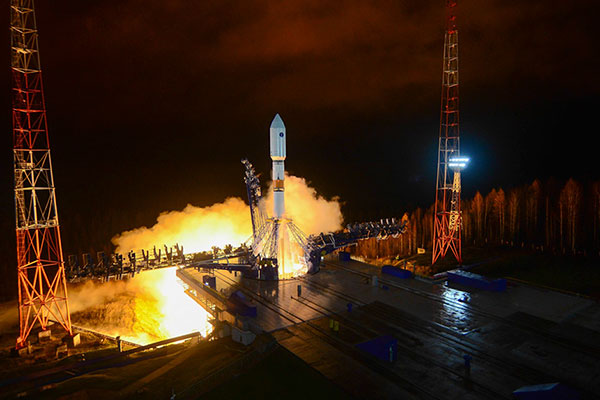
    Figure 1. GLONASS high inclined space complex. (Image: Institute of Navigation Technology JSC)
    Figure 1. GLONASS high inclined space complex. (Image: Institute of Navigation Technology JSC)

    The digital transformation of the global economy requires precise time synchronization and valid object position information. Global navigation satellite systems (GNSS) are the most accurate tool for such tasks.

    This year will be 40th anniversary of the launch of the first GLONASS satellite, and we see that the quality of navigation services is driven by the characteristics of today’s satellite navigation signals.

    The first fourth-generation Glonass-K2 #13L satellite is scheduled for launch in 2022. It will broadcast a full ensemble of navigation signals — both Frequency Division Multiple Access (FDMA) signals in the L1 and L2 bands and Code Division Multiple Access (CDMA) signals in the L1, L2 and L3 bands. This long-awaited launch will cap a 10-year effort and begin to provide a new platform by broadcasting all the CDMA signals through a single antenna array on the satellite’s geometric axis.

    The FDMA antenna array is displaced by 0.9 m from this axis, but this arrangement is done on only two satellites. The next Glonass-K2 satellites, which will be launched beginning in 2024, will have a single antenna array for all navigation signals.

    The final second-generation Glonass-M satellite, scheduled to be placed in orbit next year, will provide services by open FDMA signals in the traditional bands at 1.6 GHz and 1.25 GHz. This satellite will be the seventh Glonass-M vehicle able to broadcast GLONASS L3 CDMA signals. There are only two Glonass-K satellites broadcasting this signal now, but more satellites with such a signal will be activated by the end of testing of the GLONASS modernized ground control facility.

    We expect the number of satellites able to provide this service to increase by two per year as we replace Glonass-M satellites with Glonass-K and Glonass-K2 satellites.

    As of this writing, 15 satellites (62% of the constellation) are working past their guaranteed life times, limiting our ability to increase the system’s accuracy. For the last decade, the signal-in-space range error (SISRE) was 1.4 m, despite the fact that newly launched satellites provide a SISRE of about 0.8 m.

    Glonass-K satellites will be launched to maintain the orbit constellation within the next three years, and the accuracy of their signals will be the same or even better. These satellites have a single antenna array for all three bands and could broadcast either FDMA or CDMA signals.

    In 2022, the constellation orbits will increase to six satellites in three planes, as we aim to increase the navigation service accuracy and availability (FIGURE 1). See TABLE 1 for satellite orbit parameters. This constellation will make it possible to increase navigation accuracy in the Eastern Hemisphere by about 25% through decreasing the value of the geometric factor.
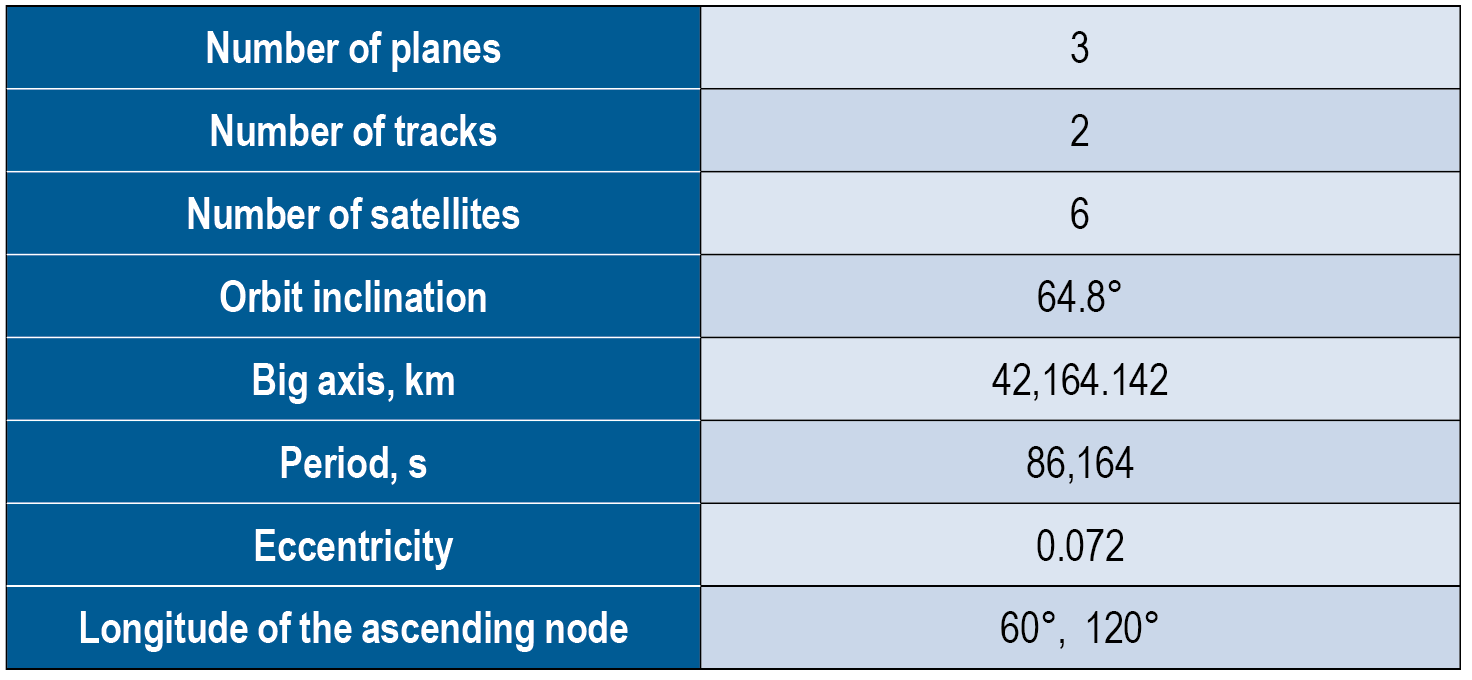
    Table 1. Augmented orbit constellation parameters.
    Table 1. Augmented orbit constellation parameters.

    Additionally, this will greatly improve the availability of the GLONASS navigation service in difficult conditions, such as locations where current users can only receive navigation signals from satellites at least 25° above the horizon. New constellation satellites will be based on the Glonass-K platform, which has passed in-orbit qualification and proved it can provide SISRE at 0.3 m. The preliminary design proved that satellites on this platform could provide an in-orbit SISRE below 0.4 m with standard cesium on-board clocks. This signal-in-space accuracy level with valid ionospheric and tropospheric model data from the navigation signal will allow users to receive a position determination error below 2 m in the plane. Navigation services from these satellites will be provided by the CDMA signal in three frequency bands.

    The new satellite will weigh about 1,000 kg and be launched into orbit from both Russian spaceports (northern Plesetsk and eastern Vostochny) by the highly reliable Soyuz-2 rocket. The first launch is scheduled for 2026.

    One of GLONASS’ important tasks is to transmit the UTC (SU) national time scale to consumers. Over the past few years, significant results have been achieved in this area.

    • A complex of high-precision measuring instruments to compare the national coordinate timescale UTC (SU) with the GLONASS timescale was put into operation. These instruments include a transported quantum clock that provides timescale storage with an uncertainty of no more than 1 ns at an observation interval of one day, and with a transportation time of no more than 12 hours. It also provides duplex comparisons of timescales, comparing objects with the permissible uncertainty of ±1.5 ns.
    • Timescale storage complexes of secondary and working standards of time and frequency VET1-5 (Irkutsk), VET 1–19 (Novosibirsk), VET 1–7 (Khabarovsk) and RET1-1 (Petropavlovsk-Kamchatsky) were modernized and put into operation, providing an overall uncertainty of 3 · 10-15 and with a maximum permissible shift of the timescale of the complex relative to the national timescale UTC (SU) of ± 10 ns.
    • An optical ground-based frequency reference on cold strontium atoms was developed with an uncertainty of reproduction of the frequency unit and time of no more than 1 · 10-17 .
    • A keeper of time and frequency units was developed on the basis of a “fountain” of rubidium atoms having a frequency instability of no more than 2 · 10-16 for equipping the standards of time and frequency units and subsequent transmission of more accurate time-frequency information to precision ground and onboard equipment and GLONASS systems.
    • A developmental prototype of the national timescale storage complex of the Russian Federation was developed on the basis of a new generation of hydrogen keepers.

    The application of the newly developed technical equipment made it possible to significantly reduce the maximum displacement of the national timescale relative to the International Coordinated Time Scale (UTC), which in 2020 was less than ± 3 ns (FIGURE 2). The UTC (SU) timescale ranks among the best national implementations of UTC, according to the International Bureau of Weights and Measures (BIMP).
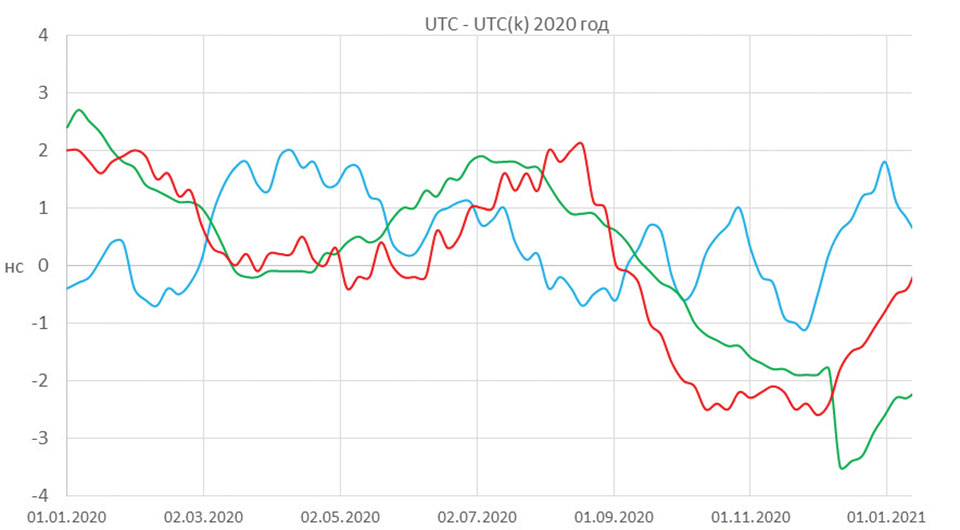
    Figure 2. Displacement of national timescales relative to Universal Coordinated Time (UTC). (Image: VNIIFTRI FSUE)
    Figure 2. Displacement of national timescales relative to Universal Coordinated Time (UTC). (Image: VNIIFTRI FSUE)

    Many important events are coming for GLONASS users in 2022. They will improve the user characteristics and lay the foundation for further development of the system.


    Sergey Karutin is general designer of the Russian GNSS program GLONASS.

    Nicolay Testoedov is CEO of JSC Information Satellite Systems Reshetnev (ISS JSC), a Russian satellite manufacturing company.

    Sergey Donchenko is general director of the Federal State Unitary Enterprise, Russian metrological institute of technical physics and radio engineering, VNIIFTRI FSUE.

  • Directions 2019: High-orbit GLONASS and CDMA signal

    Directions 2019: High-orbit GLONASS and CDMA signal

    Yury Urlichich, First Deputy Director General, Roscosmos. (Photo: Roscosmos)
    Yury Urlichich, First Deputy Director General, Roscosmos. (Photo: Roscosmos)

    By Yury Urlichich
    First Deputy Director General, Roscosmos State Space Corporation

    The year 2019 will bring GLONASS users many new opportunities. Improving navigation services specifically at the user level, primarily assessed in terms of signal accuracy and availability, is our primary goal. Improving navigation accuracy is based on space system development, including both the orbital constellation (space segment) and ground control segment.

    CDMA Signal

    A Glonass-K2 spacecraft (SC) launch followed by flight testing will be the most important event in space segment development. This SC will enable navigation not only using legacy FDMA signals available for users for more than 35 years, but simultaneously with a full row of CDMA signals in all GLONASS frequency bands: L1, L2 and L3.

    Currently the major navigation error contributors are the radio signal trajectory and the user terminal receiving environment. The new signals will allow lowering the hardware-dependent SC-user ranging error by an order of magnitude, reducing the influence of signal reflections from buildings, constructions and landscape (multipath effect), thus enabling their effective use for high-precision navigation with real-time errors below 0.1 m.

    We are also finalizing in 2019 the newest edition of the GLONASS Interface Control Document containing recommended models for evaluation of tropospheric and ionospheric delays. Our forecasts show two times navigation accuracy improvement for users of these models.

    High-Orbit GLONASS

    Improving signal availability is equally important. As large urban areas demonstrate growing use of navigation technologies, these users experience difficulties receiving signals from SC flying below the elevation angle of 25°. To provide a navigation solution in such environments, we will begin development of High-Orbit GLONASS in 2019.

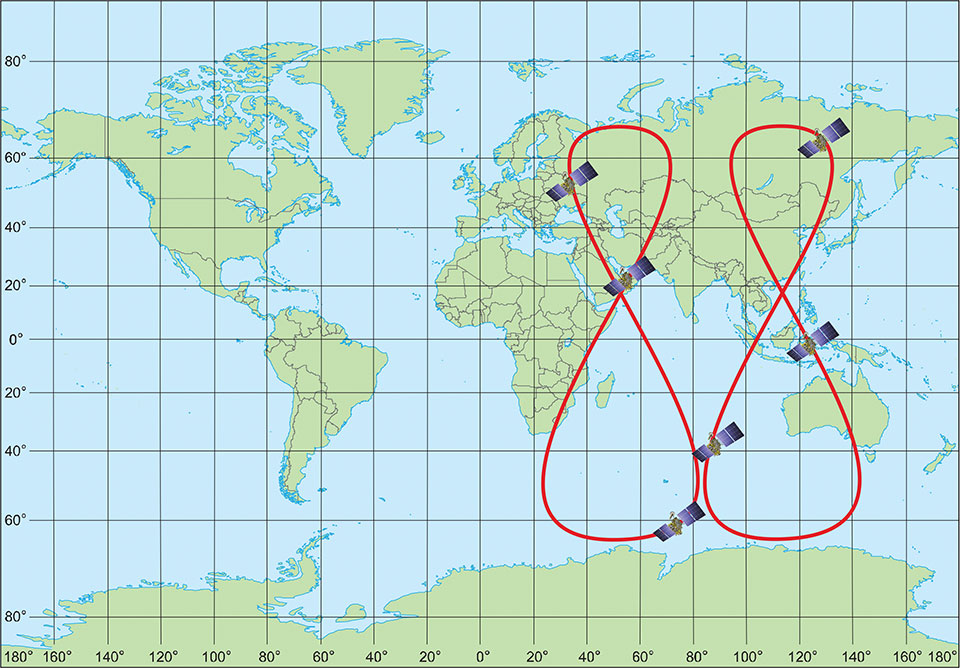
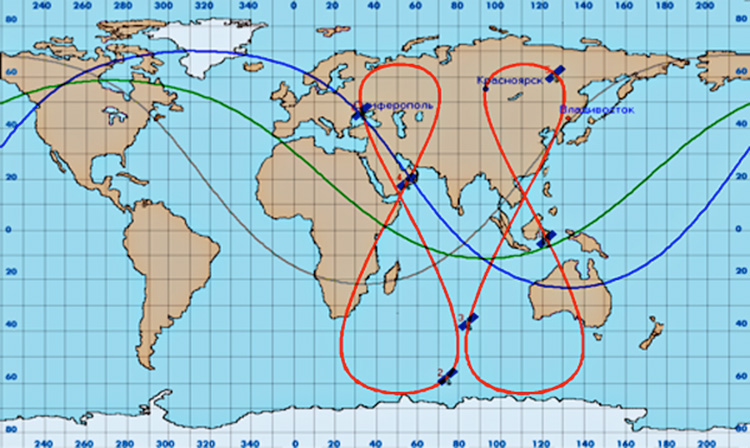
    High-Orbit GLONASS will consist of six SC distributed among the three orbital planes and forming two SC ground traces with 64.8° orbit inclination, eccentricity of 0.072, revolution period of 23.9 hours, geographical longitude of the ascendant angle – 60°, 120° (See figure below).

    High-Orbit GLONASS — ground track in red. (Image: Roscosmos)
    High-Orbit GLONASS — ground track in red. (Image: Roscosmos)

    The new generation space segment will be populated with Glonass-B satellites designed on the proven Glonass-K platform, successfully providing services since 2012. Users will be offered the full spectrum of new CDMA signals in all three GLONASS frequency bands.

    The first Glonass-B is planned for launch in 2023, with the full constellation of six SC to be deployed by the end of 2025, increasing by 25% the navigation accuracy in the Eastern hemisphere.

    The satellite mass below 1,000 kg allows Angara-A5, the new Russian heavy launch vehicle, to perform a dual launch from either Plesetsk or Vostochny launch sites.

    Much attention is being paid to the signal characteristics’ stability throughout the whole system lifecycle. For this purpose, ROSCOSMOS developed the GLONASS Monitoring and Performance Assessment System for civil users, including the distributed network of monitoring stations abroad, and dedicated radio telescopes capable of analyzing the navigation signal structure and power on the Earth’s surface.

    Currently the planned user range error (URE) for signal in space is 1.4 m. Feb. 26, with URE of 1.13 m, became the best day of the ten-month long monitoring in 2018. Moreover, this value tends to decrease as Glonass-M satellites operating beyond their guaranteed life period are being replaced. For instance, on Nov. 3, Glonass-M satellite No. 57 launched, replacing No. 16 after almost 12 years of operation in orbit.

    As already mentioned, the Glonass-K2 is planned for launch in 2019. Compared to Glonass-M and Glonass-K satellites, Mission Definition Requirements for Glonass-K2 define URE to be 0.3 m, qualitatively improving GLONASS user performance.

    The new on-board frequency standard based on passive hydrogen maser (PHM) will also contribute to better performance. This PHM is undergoing its ground tests and will be installed onboard the SC by the end of the year. Its relative 24-hour stability of better than 5×10-15 ensures the required URE.

  • GLONASS-M launched to replenish Russian navigation constellation

    GLONASS-M launched to replenish Russian navigation constellation

    A GLONASS-M was launched Nov. 3 from the Plesetsk cosmodrome. (Photo: Russian Ministry of Defense)
    A GLONASS-M was launched Nov. 3 from the Plesetsk cosmodrome. (Photo: Russian Ministry of Defense)

    A GLONASS-M satellite has safely entered its calculated orbit after a Nov. 3 launch, according to the Russian Ministry of Defense. The satellite is designated GLONASS-M 757.

    The launch of the Soyuz-2.1B medium-range rocket took place Saturday, Nov. 3, at 23:17 Moscow time from the Plesetsk cosmodrome.

    After separation from the third stage of the Soyuz-2 launch vehicle, the upper stage Frigate launched the navigation spacecraft into orbit.

    The satellite will replenish the GLONASS constellation, which includes 27 satellites. One satellite is the newest model, GLONASS-K, and is undergoing flight tests. Another GLONASS-M is under maintenance.

    A few minutes after launch, a steady telemetry connection was established and is being maintained with the satellite, which is functioning normally.


  • Directions 2016: GLONASS priorities — improved accuracy and reliability

    Directions 2016: GLONASS priorities — improved accuracy and reliability

    Sergey Karutin, GLONASS designer general (left); Nikolay Testoyedov, director general, SC Information Satellite Systems (center); and Andrey Tyulin, director general, SC Russian Space Systems.
    Sergey Karutin, GLONASS designer general (left); Nikolay Testoyedov, director general, SC Information Satellite Systems (center); and Andrey Tyulin, director general, SC Russian Space Systems.

    By Sergey Karutin, Nikolay Testoyedov and Andrey Tyulin

    Currently, Global Navigation Satellite Systems (GNSS) are widely used in transportation, power systems, agriculture, communication, banking and the service sector. Humankind has very rapidly realized the benefits of GNSS use and therefore its dependence on the “artificial navigation field” is constantly growing. That is why at the present stage of GLONASS development, the major research and development foci include not only activities aimed at enhanced accuracy, availability and integrity of navigation, but also theoretical and practical efforts focused at ensuring resilience of navigation (interference mitigation).

    These activities logically evolve from the changes GLONASS has experienced over the last decade, establishing the essential groundwork to boost the demand in its services. In 2011, the fully operational constellation of 24 GLONASS-M satellites was deployed. For the first time, civil users got the benefit of navigation signals in two frequency bands (L1 and L2) for positioning.

    The GLONASS-K satellite launched the same year transmits a new navigation signal in the L3 frequency band. Its onboard atomic clocks include two Cesium and two Rubidium frequency standards. Implementation of these onboard frequency standards with long-term relative stability less than 5×10-14 provides better accuracy without reliance on ground control. The program of onboard atomic frequency standards development also includes design of a hydrogen maser with relative daily stability of 5×10-15 and its in-orbit validation onboard GLONASS-K satellites in 2017–2018.

    Simultanesously, the high reliability of GLONASS-M satellites operating beyond their design lifetime, 1.5 times longer in some cases, led to a change in the constellation replenishment strategy. In 2012, the launch-on-demand approach was adopted for future satellites. Currently, nine GLONASS-M satellites are in ground stock, scheduled for launch in 2015–2017 timeframe.

    These factors caused a three-year delay in constellation modernization and launch of new GLONASS-K satellites.
    Nevertheless, in 2014 GLONASS-K No. 12 was put into orbit with the single phased antenna array for the L1/L2/L3 signals. GLONASS-M satellites No. 55–61 also have the enhanced functional capabilities due to additional L3 navigation payload. The string structure of navigation message digital information provides for a higher rate of data update in case of necessity.

    We contribute to the user navigation equipment interference mitigation capabilities by developing GLONASS signals at the frequency bands different from the common frequencies accepted for GPS, Galileo and BeiDou. It is common knowledge that, in some cases, low-end personal jammers made to jam the L1 band with the center frequency of 1575.42 MHz and installed in vehicles may cause severe problems to critical infrastructure. In similar situations, use of 1600.992 MHz and 1248.02 MHz center frequencies (new GLONASS CDMA signals) allows improving the reliability of navigation.

    Efforts on the global network of the radio and laser-ranging stations for precise orbit determination and time synchronization (ODTS) are also of note. Six GLONASS measuring stations have been established abroad so far. Further expansion of the network is scheduled for 2015–2016 to ensure ODTS accuracy of up to 0.1 meter in real time during the next few years.

    Global use of GLONASS is impossible without international cooperation, and we pay special attention to the recommendations of the UN International Committee on GNSS. In particular, we are finalizing the GLONASS Open Services Positioning Performance Standard and developing the national GNSS Performance Monitoring and Assessment System to be used to continuously monitor quality of the GLONASS services and its compliance with the standard.

  • Russia to Increase Number of Space Service Centers to 25

    The number of Russian centers providing services based on data received via GLONASS satellites will reach 25, Deputy Prime Minister Vladislav Surkov said  Tuesday, according to a RIA Novosti report. The space service centers are engaged in satellite monitoring of traffic safety, road planning and cargo transportation on federal highways as well as natural dangers such as landslides, avalanches, and mud flows.

    “Ten space service centers have already been established in Russia, the establishment of another 15 is planned,” Surkov said at a satellite navigation forum in Moscow. So far, there are centers in Moscow, Sochi, Kazan, Kaluga, Ryazan and five more Russian cities.

    Russia has 31 GLONASS satellites in orbit, with 24 operating to provide global coverage, four in reserve, two under maintenance, and one undergoing trials. According to Russia’s space agency Roscosmos, two Glonass satellites are under maintenance, one is on standby, and one recently launched satellite is being integrated into the grouping. The complete Glonass grouping needs 24 functioning and 2-3 reserve satellites to operate with global coverage.