Tag: GPS III satellite launch

  • Space Systems Command declares three GPS III space vehicles ‘Available for Launch’

    Space Systems Command declares three GPS III space vehicles ‘Available for Launch’

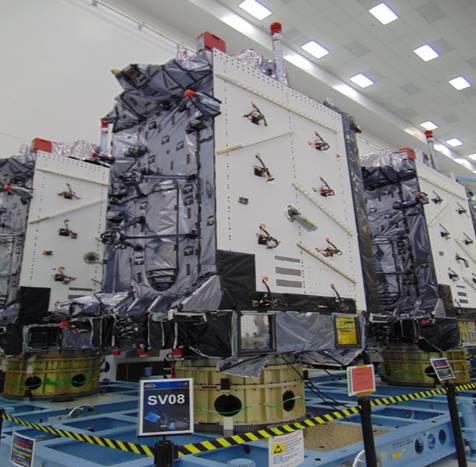
    The U.S. Space Force’s Space Systems Command recently declared GPS III SV06, SV07 and SV08 satellites “Available for Launch.” Here, the space vehicles await official call up for launch in Lockheed Martin’s GPS III Processing Facility in Waterton, Colorado. (Photo: Lockheed Martin)
    The U.S. Space Force’s Space Systems Command recently declared GPS III SV06, SV07 and SV08 satellites “Available for Launch.”
    Here, the space vehicles await official call up for launch in Lockheed Martin’s GPS III Processing Facility in Waterton, Colorado. (Photo: Lockheed Martin)

    The U.S. Space Force’s Space Systems Command recently declared the eighth GPS III satellite as “Available for Launch.” This significant accomplishment officially marks the third space vehicle within the GPS III program to be declared available for launch in the past three months.

    GPS III SV06, SV07, and SV08 are now awaiting official call up for launch in Lockheed Martin’s GPS III Processing Facility in Waterton, Colorado.

    “SV06, SV07, and SV08 AFL milestones in just three months prove that GPS III production continues to benefit from efficiencies with each satellite delivery,” said Col. Edward Byrne, chief of SSC’s Space Production Corps’ Medium Earth Orbit Space Systems Division.

    The first of the three recently completed satellites, SV06, is scheduled to launch in 2022 and will join the operational constellation of 31 GPS satellites.

    GPS III satellites deliver enhanced performance and accuracy through a variety of improvements, including increased signal protection and improved accuracy. GPS III also expands the civilian L5 signal, dubbed the “safety-of-life” signal, currently broadcast by the 12 GPS IIF satellites, but not yet operational, and delivers a new L1C signal designed to grant interoperability to similar international space-based positioning, navigation, and timing systems around the world.

    Space Systems Command, located at Los Angeles Air Force Base in El Segundo, California, is the U.S. Space Force’s Center of Excellence for acquiring and developing military space systems. SSC’s portfolio includes space launch, global navigation satellite systems, military satellite communications, a defense meteorological satellite control network, range systems, space-based infrared systems, and space domain awareness capabilities.
  • GPS III Space Vehicle 04 safely arrives in Florida

    GPS III Space Vehicle 04 safely arrives in Florida

    The U.S. Space Force Space and Missile Systems Center on July 14 delivered the fourth GPS III satellite to Cape Canaveral Air Force Station, Florida. The satellite is scheduled for launch on Sept. 30.

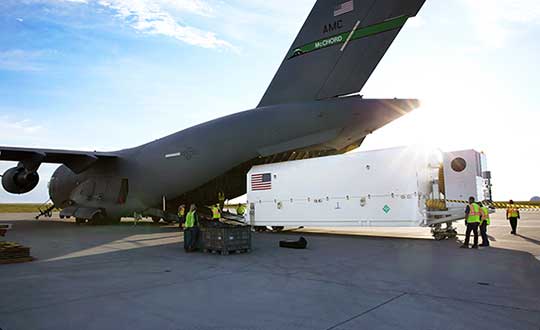
    GPS III Space Vehicle (SV) 04 was safely transported from the Lockheed Martin facility in Waterton, Colorado to Space Coast Regional Airport in Titusville, Florida. The satellite was carried aboard a C-17 Globemaster III originating from Joint Base Lewis-McChord, Washington.

    The fourth GPS III satellite arrived at Cape Canaveral July 14 for launch on Sept. 30. (Photo: USAF)
    The fourth GPS III satellite arrived at Cape Canaveral July 14 for launch on Sept. 30. (Photo: USAF)

    The delivery of GPS III SV04 starts the clock for final testing and checkout prior to launch. The satellite will be processed at the Astrotech Space Operations facility in Florida to ensure the full functionality of the satellite, prepare the satellite for propellant loading, and encapsulate the satellite in its protective fairing. At the completion of these activities, the satellite will be horizontally integrated with the SpaceX Falcon 9 launch vehicle.

    “The shipment of the fourth GPS III satellite was successfully conducted just two weeks after the launch of our GPS III-SV03 satellite. This operation is a remarkable achievement and testament to the hard work of the entire GPS team members from all across the country,” said Col. Edward Byrne, SMC’s Medium Earth Orbit Space Systems Division chief. “The delivery of SV04 marks the start of our third GPS III launch campaign on a SpaceX Falcon 9 rocket and brings us another step closer in advancing the GPS constellation with more capable satellites.”

    GPS III SV04 is slated to launch in September. Once on-orbit, it will join the operational constellation of 31 GPS satellites, delivering enhanced resiliency, better accuracy, and advanced anti-jam capabilities.


  • First GPS III satellite successfully launched

    First GPS III satellite successfully launched

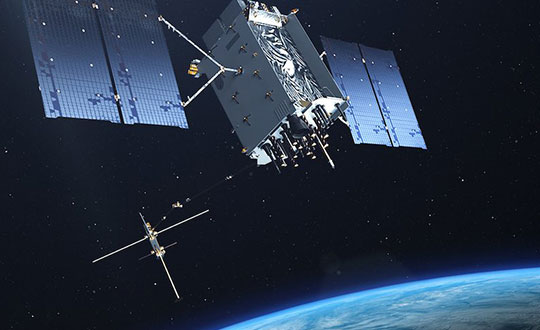
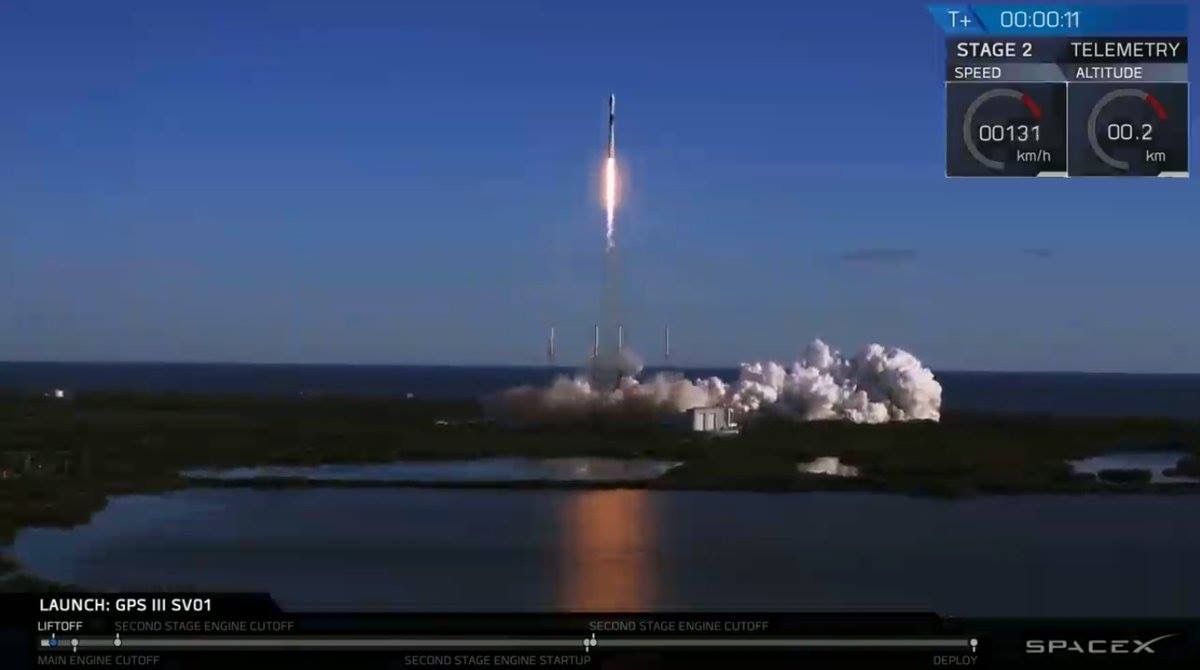
    After several delays, the first GPS III satellite has successfully deployed from the SpaceX Falcon 9 rocket, which launched from the Cape Canaveral Air Force Station in Florida at 8:51 a.m. EST on Dec. 23. The satellite, built by Lockheed Martin, will serve in space for 15 years.

    Ten days following the launch, the satellite will circularize its orbit at an altitude of 12,550 miles to begin a period of checkout and testing that could last up to 18 months, before entering service in the GPS constellation providing navigation and timing signals worldwide.

    The satellite, known as GPS III SV01 and nicknamed “Vespucci” after Italian explorer Amerigo Vespucci, is the first in a new generation of GPS navigation stations designed with improved services and longer lifetimes to ensure the U.S. military-run network remains available to troops, pilots, sailors and the public for decades to come.

    “Launch is always a monumental event, and especially so since this is the first GPS satellite of its generation launched on SpaceX’s first national security space mission,” said Lt. Gen. John Thompson, commander of the U.S. Air Force’s Space and Missile Systems Center and the Air Force’s program executive officer for space. “As more GPS III satellites join the constellation, it will bring better service at a lower cost to a technology that is now fully woven into the fabric of any modern civilization.”

    Ground System

    The U.S. Air Force used Raytheon Company’s GPS Next-Generation Operational Control System, known as GPS OCX, to support the launch. Following launch, GPS OCX will maneuver the GPS III satellite into its final orbit, a process that takes the ground control system 10 days to accomplish.

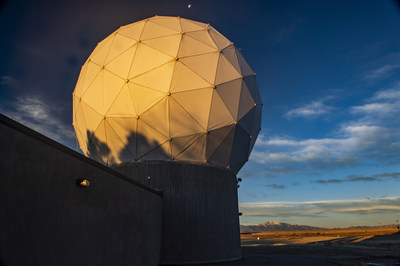
    Ground antenna at Schriever Air Force Base, home of the 50th Space Wing. (Photo: Raytheon)
    Ground antenna at Schriever Air Force Base, home of the 50th Space Wing. (Photo: Raytheon)

    “The GPS OCX Block 0 launch and checkout system is foundational to the improved precision, navigation and timing of the entire constellation,” said Dave Wajsgras, president of Raytheon Intelligence, Information and Services. “And we’ll all benefit from the system’s unprecedented level of cybersecurity protections.”

    The fully modernized GPS OCX Block 0 launch and checkout system will support the launch of future GPS III satellites, enabling the introduction of a new civil signal, enhanced military signals, and anti-jam capabilities.

    The ground system has achieved the highest level of cybersecurity protections of any Department of Defense space system, and its open architecture allows it to integrate new capabilities and signals as they become available, ensuring continued protection against future cyber threats.

    In addition to GPS OCX’s role, RGNext, a joint venture between Raytheon and General Dynamics IT, provided operational launch support to ensure the safe launch of the Falcon 9 rocket that was carrying the GPS III satellite. RGNext operates the launch range on behalf of the U.S. Air Force, providing maintenance, range safety, weather monitoring, communication and surveillance support for all launches conducted by defense, civil and commercial companies at the range.

    After several delays, the first GPS III satellite has successfully deployed from the SpaceX Falcon 9 rocket, which launched from Cape Canaveral Air Force Station in Florida at 8:51 a.m. EST on Dec. 23. (Photo: Lockheed Martin)
    After several delays, the first GPS III satellite has successfully deployed from the SpaceX Falcon 9 rocket, which launched from Cape Canaveral Air Force Station in Florida at 8:51 a.m. EST on Dec. 23. (Photo: Lockheed Martin)
    SpaceX’s Falcon 9 rocket orbited the first GPS III satellite on Dec. 23, 2018. (Photo: USAF)
    SpaceX’s Falcon 9 rocket orbited the first GPS III satellite on Dec. 23, 2018. (Photo: USAF)