Tag: ground station

  • Seen & Heard: Ingenuity’s PNT hiccup, Avengers assemble!

    Seen & Heard: Ingenuity’s PNT hiccup, Avengers assemble!

    “Seen & Heard” is a monthly feature of GPS World magazine, traveling the world to capture interesting and unusual news stories involving the GNSS/PNT industry.
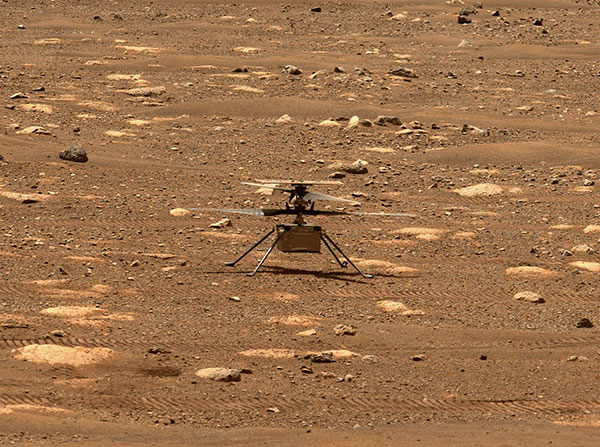

    Integrity sits safely on Mars following an in-flight anomaly. (Photo: NASA)
    Integrity sits safely on Mars following an in-flight anomaly. (Photo: NASA)

    PNT Issue Rocks Ingenuity

    The Mars drone Ingenuity uses an inertial measurement unit (IMU) to track position, velocity and attitude. The IMU works with the rotorcraft’s navigation camera, which feeds images into the system. About 54 seconds into Ingenuity’s sixth flight on May 22, a glitch in the pipeline of images delivered by the camera caused Ingenuity to buck. The glitch caused a single image to be lost, resulting in all later navigation images being delivered with inaccurate timestamps. Ingenuity’s navigation system attempted to correct itself due to “phantom errors,” but the copter still managed to land within 16 feet (5 meters) of its target location. The Perseverance rover snapped an image of its flying companion the next day. The timing vulnerability is being addressed.
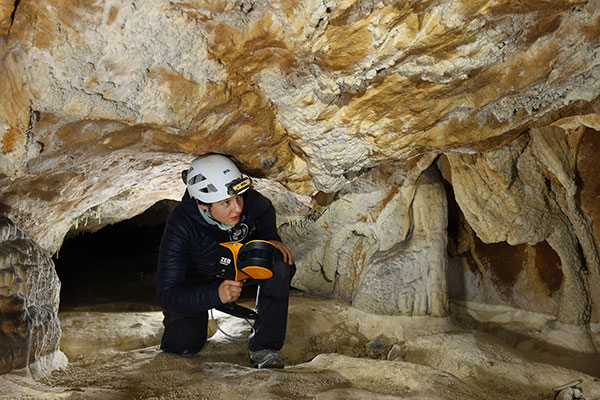

    The versatility of the ZEB-Horizon device enabled the Deep Time team to map the complex and challenging environment. (Photo: GeoSLAM)
    The versatility of the ZEB-Horizon device enabled the Deep Time team to map the complex and challenging environment. (Photo: GeoSLAM)

    Measuring Deep Time and Space

    Geospatial 3D mapping specialist GeoSLAM provided the technology to scan one of Europe’s largest caves as part of the Deep Time isolation study. For 40 days, 15 participants set up camp in the Lombrives cave in southwestern France with no clocks or sunlight, and zero contact with the outside world. Conducted by the Human Adaptation Institute, the experiment aimed to gain insight into human adaptability to isolation. For their first task, the “deeptimers” used the ZEB-Horizon to conduct a digital scan of the 3-km Lombrives cave — a system consisting of both narrow passages and expansive chambers up to 70 meters in height, formed more than 125 million years ago.
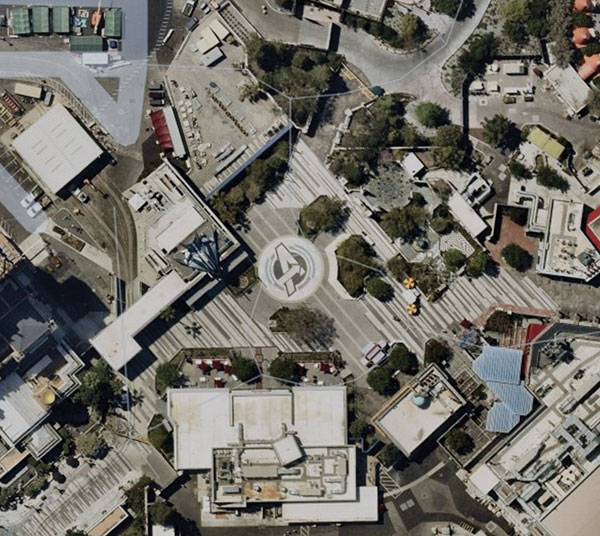

    Photo: Nearmap
    Photo: Nearmap

    Avengers Assemble!

    On June 4, Disney unveiled its Avengers Campus at its California Adventure park. Aerial image provider Nearmap, which has been flying over Disneyland and California Adventure twice a year since 2014, shared a bird’s-eye view of the park’s new area, which replaced “A Bug’s Life.” Nearmap also shared images comparing the crowd size in 2019 before COVID-19 to the reopening limit of 25% capacity in April.
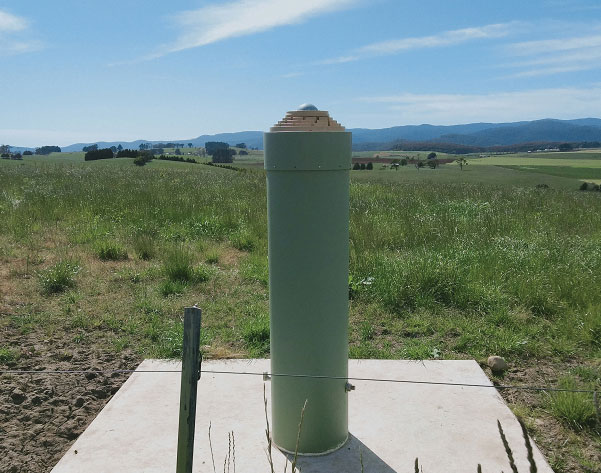

    Photo: Geoscience Australia
    Photo: Geoscience Australia

    Tasmania First

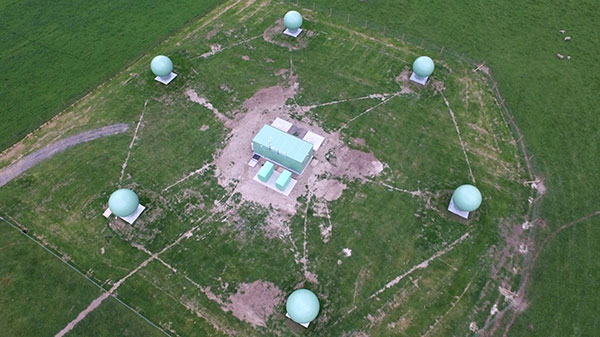
    As part of the Positioning Australia program, Geoscience Australia is building new GNSS ground stations. The first new station was recently completed outside the town of Derby, Tasmania. This new station joins 10 existing stations in Tasmania, providing widely available GNSS-based precise positioning signals. To access the service, users can connect to a service provider offering a fully supported service with system integration; users with specialized equipment and the technical expertise to integrate GNSS positioning can connect directly to the station via Geoscience Australia’s GNSS Data Centre.
  • China to lose access to Australia tracking station

    China to lose access to Australia tracking station

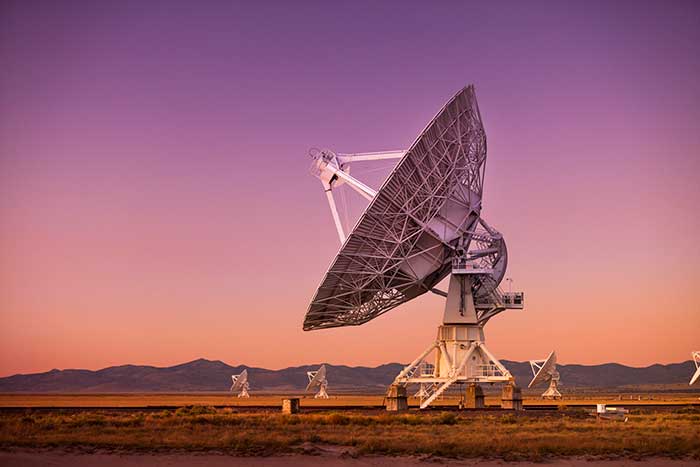
    China will lose access to a strategic space tracking station in Western Australia when its contract expires, a decision that could affect BeiDou constellation service in the Pacific region, according to a Reuters report.

    A contract between the Swedish Space Corp. (SSC) and China has given Beijing access to a station antenna since 2011, but the SSC satellite station is primarily used by the United States and its agencies.

    The Swedish state-owned company told Reuters it wouldn’t enter into any new contracts at the Australian site to support Chinese customers after its current contract expires, but did not disclose the exact date.

    Ground stations are a vital part of space programs given they create a telecommunications link with spacecraft. While stations have different capabilities, they can be equipped to coordinate satellites for civil-military GNSS such as Beidou, Russia’s GLONASS, the European Union’s Galileo system, and U.S.-owned GPS.

    China’s space program has been increasing its access to overseas ground stations in recent years in line with the expansion of its space exploration and navigational programs.

    “Generally speaking, anywhere you put a GNSS monitoring ground station will improve the accuracy of positioning for that region,” said Joon Wayn Cheong, a senior research associate at the University of New South Wales’ School of Electrical Engineering.

    China wants to remove its dependence on GPS as part of broader plans to expand its global influence, says Christopher Newman, professor of Space Law and Policy at Northumbria University in Newcastle, England. “GPS could be made unavailable to them in a military conflict. An independent secure system is crucial for the capabilities of the People’s Liberation Army [China’s military] with respect to targeting, weapons, navigation,” he told Reuters.

    Beijing last year reestablished diplomatic ties with the small Pacific island nation of Kiribati, where it has a mothballed ground station.


    Feature image: Pgiam/E+/Getty Images

  • India to host GLONASS ground station for Russia

    India to host GLONASS ground station for Russia

    ISRO Logo

    The Indian Space Research Organisation is getting ready to host a ground station for Russia’s GLONASS. The ground station will help the Russian navigation system become more efficient, reports the Times of India.

    The ground station will be built in Bengaluru, a city that is already home to the ISRO Telemetry, Tracking and Command Network (Istrac). Istrac will host the Russian ground station as well.

    A memorandum of understanding was signed between the two nations in October 2016. In return, Roscosmos will host ground-measurement gathering stations in Russia for India’s NavIC, which will boost the operations of the IRNSS satellites.

  • Russia commissions GLONASS station in Nicaragua

    On April 6, Russia commissioned a new GLONASS ground station in Managua, Nicaragua — its first in Central America.

    The station was created under a Jan. 26, 2012, agreement between the two countries to cooperate in the exploration and use of outer space for peaceful purposes.

    GLONASS consists of 24 satellites orbiting at a medium height of 19140 km in three planes with inclination of 64.8 degrees. Access to navigation signals of GLONASS is provided to consumers across the globe free of charge and without restriction.

    The station in Nicaragua is part of a global network that will monitor performance of all GNSS — GLONASS, GPS, Galileo and BeiDou.

    Monitoring stations help ensure interoperability of the GLONASS system with other navigation systems and improves accuracy and reliability. It will also contribute to a precise global coordinate system, which is a key element of many international scientific programs, such as a global Earth monitoring program implemented by the International Association of Geodesy.

    The information received by the station will be used for the Nicaraguan side of the self-control characteristics of navigation systems, refinement of its national system of coordinates, as well as for high-precision navigation services in order to improve the efficiency of agriculture, used in construction, aviation, navigation and scientific research.

    The opening ceremony of the station was attended by a delegation of the government space state corporation Roscosmos, headed by the general director Igor Komarov, Russian ambassador to Nicaragua Andrew Buda, representative of the president of Nicaragua Laureano Ortega, and other officials.

    “Our cooperation with Russia shows the kind of results we can achieve together in a short time, when there is the political will and technical capacity,” Ortega said. “This station is very important for Nicaragua and Central America as a whole. The use of the data will enrich all areas of industry and science of Nicaragua. ”

    “The history of our cooperation in space activities has wonderful traditions, but today what we are doing together is a serious new step, important for modern society,” Komarov said. “In Nicaragua, the ground station will start operating GLONASS global navigation system, which embodies the most advanced technologies in the creation of navigation systems that will significantly improve the navigation performance of work on a global scale. This is the first GLONASS station in Central America, and it starts to work in Managua, which indicates the level of understanding of Russia and Nicaragua. “

  • GLONASS ground station goes live in South Africa

    GLONASS ground station goes live in South Africa

    GLONASS-SouthAfrica

    A GLONASS ground station was officially commissioned in South Africa on Feb. 27.

    “Assembling and pre-commissioning work was completed on Nov. 25 to set up a measuring station on the premises of the Hartebeesthoek Radio Astronomy Observatory (HartRAO) as part of the agreement signed between Russia’s High-Precision Instrument Systems Company and South Africa’s HartRAO on Oct. 29, 2015,” said the station developer, Russia’s Precision Instrument Systems Corporation.

    Sazhen-TM-BIS station in South Africa is the second station of the overseas network segment created for the GLONASS system. The first station was installed and commissioned in 2014 in Brazil.

    The station will continuous monitor GLONASS and GPS satellites’ navigation signals, measurements of current navigation parameters of their travel, and receipt of navigation messages from the satellites.

  • McMurdo Completes MEOSAR Ground Station in New Zealand

    McMurdo Completes MEOSAR Ground Station in New Zealand

    MEOSAR ground station in New Zealand.
    MEOSAR ground station in New Zealand.

    Emergency readiness and response company McMurdo has completed the installation of a six-antenna next-generation Medium-Earth Orbit Search and Rescue (MEOSAR) satellite ground station system in New Zealand.

    The project, which is part of a joint initiative with Maritime New Zealand and the Australian Maritime Safety Authority, is expected to significantly boost search-and-rescue capability in the New Zealand and Australia search regions and marks the first implementation of MEOSAR in Asia Pacific.

    MEOSAR is the next-generation version of Cospas-Sarsat, the international search-and-rescue satellite system that has helped to save 37,000 lives since 1982. Cospas-Sarsat is in the process of upgrading its satellite system by placing search-and-rescue transponders on new GPS, GLONASS and Galileo satellites. Once qualified as operational, this system augmentation will dramatically improve both the speed and location-accuracy for detecting beacons.

    In a typical satellite-based search-and-rescue scenario, ships, aircraft or individuals transmit distress signals from an emergency location beacon via satellite to a fixed ground receiving station or local user terminal. The ground station receives and calculates the location of the distress signal and creates and sends an alert to the appropriate rescue authorities. Today, the beacon-to-alert process depends on a limited number of low Earth orbit (LEO) satellites and may take several hours before a position is confirmed. With MEOSAR, beacon signals will be received more quickly and beacon locations identified with greater accuracy thereby reducing this time to minutes.

    “Beacons can take the ‘search’ out of search and rescue, and the MEOSAR system will dramatically increase the global search-and-rescue capability,” said Maritime New Zealand Director Keith Manch. “Emergency distress beacons are key equipment for anyone operating at sea, on land and in the air – whether commercially or recreationally — but they can’t operate without sites like this.”

    “This key installation firmly establishes McMurdo as the premier MEOSAR infrastructure provider globally,” said Remi Julien, McMurdo president. “We are committed to partnering with both Maritime New Zealand and the Australia Maritime Safety Authority to ensure that they have the technology, training and long-term support in place to significantly reduce search-and-rescue times and, ultimately, save more lives today and in the future.”

    The New Zealand MEOSAR system, and another being installed in Western Australia, will cover one of the largest search-and-rescue areas in the world — from north of Australia/New Zealand to the Equator and south to the South Pole, east to half way across the Pacific, and west half way across the Indian Ocean. The systems will undergo rigorous testing before being officially brought online in late 2017 by Cospas-Sarsat.

    There are 58,000 emergency distress beacons registered in New Zealand which, without any changes or updates, will be immediately usable by the new systems. It is estimated, however, that an additional 25,000 beacons are unregistered. Due to the high responsiveness of the MEOSAR system, search-and-rescue authorities strongly recommend beacon registration. This will help the unnecessary deployment of search-and-rescue resources due to inadvertent beacon activations. The Rescue Co-ordination Centre New Zealand, part of Maritime New Zealand, responds to 550 beacon alerts a year.

  • U.S. Still Not Allowing GLONASS Stations

    Pravda is reporting that the United States refused to negotiate with Russia to deploy GLONASS ground on its territory, citing an interview with Russian Deputy Prime Minister Dmitry Rogozin.

    Rogozin stressed that no negotiations were taking place. “We have made a statement in the spring. I offered to initiate talks with the United States to deploy GLONASS infrastructure in their territory, as long as negotiations go, hang the existence of infrastructure GPS stations on the territory of the Russian Federation,” Rogozin said.

    Russian specialists are excluding use of the GPS stations on Russian territory for military purposes, he said, adding that he would not reveal how this was accomplished.

    “I will not expand on how we did it for obvious reasons, but we did it,” said Rogozin. “We do not want to cut off the nose to spite our face to deprive our users of the ability to work with GLONASS and GPS. Why should we create fewer opportunities for our own people? But we have completely destroyed any prospect, even an indirect one, for the use of the American navigation system for our high-precision guidance weapons,” said the official.

    At the same time, it was reported that Russia and China would discuss possible joint projects in the field of space exploration. According to Rogozin, the two countries cooperate in the field of space, working on “possible joint projects in the field of space exploration.” The official said that China and Russia were having a “pretty tumultuous relationship,” and “we would like to say a big thank you to Western countries for their active development.”

  • Roscosmos Chief Discusses Plans for GLONASS Stations in China

    The chief of Russia’s space agency Roscosmos has discussed plans for bilateral cooperation in space with his Chinese counterparts in Beijing, according to the ITAR-TASS news agency.

    “On Thursday, the chief of Roscosmos held a meeting with the head of China’s Satellite Navigation Office Ran Chengqi. The officials discussed Russian-Chinese cooperation on navigation satellite systems GLONASS and Beidou, in particular, the placement of Russian stations in China and Chinese stations in Russia,” the Roscosmos press service said.

    The two sides agreed to establish a sub-commission for cooperation in the sphere of satellite navigation under the bilateral commission in charge of preparing regular meetings of the two countries’ prime ministers.

    Earlier, Roscosmos deputy chief Sergei Savelyev said that Moscow this year would sign an agreement with Beijing on deploying GLONASS and Beidou stations in China and Russia respectively. Each country will accommodate three such facilities.

  • Russia Turns off Data from IGS GPS Tracking Stations

    As announced by Russian Deputy Prime Minister Dmitry Rogozin on May 13, 2014, GPS tracking stations co-sponsored by U.S. interests have stopped making their data available to scientists and others.

    The tap on the flow of data from 11 stations was turned off starting on May 31. The data flow included hourly and daily data files from the stations as well as the real-time flow of data over the Internet.

    In an item entitled “On Execution of the Instructions of the Government of the Russian Federation,” the website of Roscosmos, the Russian Space Agency, reported:

    “In accordance with the instructions of the Government of the Russian Federation, the Russian Space Agency in conjunction with the Federal Agency scientific organizations on June 1, 2014, implemented measures to avoid the use of information from the global seismographic network stations operating on the signals of the GPS system and located in the Russian Federation, for purposes not covered by existing agreements, including military uses.” (As translated by Google Translate.)

    It should be pointed out that none of the affected stations contribute to the day-to-day running of GPS; that is, they are not part of the GPS command and control network. They are stations participating in the work of the International GNSS Service, which provides data and products to scientists and other researchers for different purposes including geodesy, geodynamics, orbital mechanics, and atmospheric studies.


    It is believed that the Russian move is a tit-for-tat exercise in response to sanctions by western countries following recent events in Ukraine. However, the Russians say that the action was initiated by the refusal of the U.S. to enter into negotiations on the placement of Russian-operated GLONASS tracking stations on U.S. territory. Russia wishes to expand its global network of differential correction and monitoring stations, which could conceivably be also used to supply data for GLONASS command and control purposes.

    What isn’t widely known is that Roscosmos already uses sites on U.S. territory for monitoring the availability and health of the GLONASS satellites as the map below clearly shows.


  • Up to Seven GLONASS Ground Stations Planned outside Russia in 2014

    Russia will deploy up to seven ground monitoring and augmentation stations for GLONASS outside of Russia, reports The Voice of Russia radio. GLONASS/GNSS Forum Association Executive Director Vladimir Klimov explained the plans at a conference.

    “It is planned to deploy about six or seven stations on foreign territories this year,” Klimov said. Negotiations for the stations are now taking place with foreign nations, he said.

    About 50 GLONASS ground stations are planned for construction. The stations will significantly improve GLONASS performance and provide efficient applications for high-precision navigation services and smooth monitoring of systems of coordinates and Earth rotation parameters, he said.

    Currently, there are 46 GLONASS ground stations on Russian territory, eight in neighboring countries, three in Antarctica, and one in Brazil.

  • First GLONASS Station Outside Russia Opens in Brazil

    Brazilian_GLONASS_SDMC_stationNews courtesy of CANSPACE Listserv.

    The Moscow Times is reporting that the first overseas GLONASS ground station for differential correction and monitoring was launched in Brasilia, Brazil, on Tuesday, citing information from the Russian Federal Space Agency (Roscosmos). The station will become the first correction point in the Western Hemisphere and will significantly improve the accuracy of GLONASS navigation signals, the agency said.

    GLONASS stations will also be installed in the United States, according to Pravda.Ru. “GLONASS stations are to be installed in the U.S.. This will improve the accuracy of the system. In general, stations like these are planned to be located in more than 30 countries of the world. Most of the countries that received the offers for the installation of the stations responded positively.

    “However, the process is slow because of the need to conclude appropriate intergovernmental agreements. The documents with Brazil were signed in 2012. Agreements with Spain, Indonesia and Australia will be finalized soon,” Pravda.Ru said.

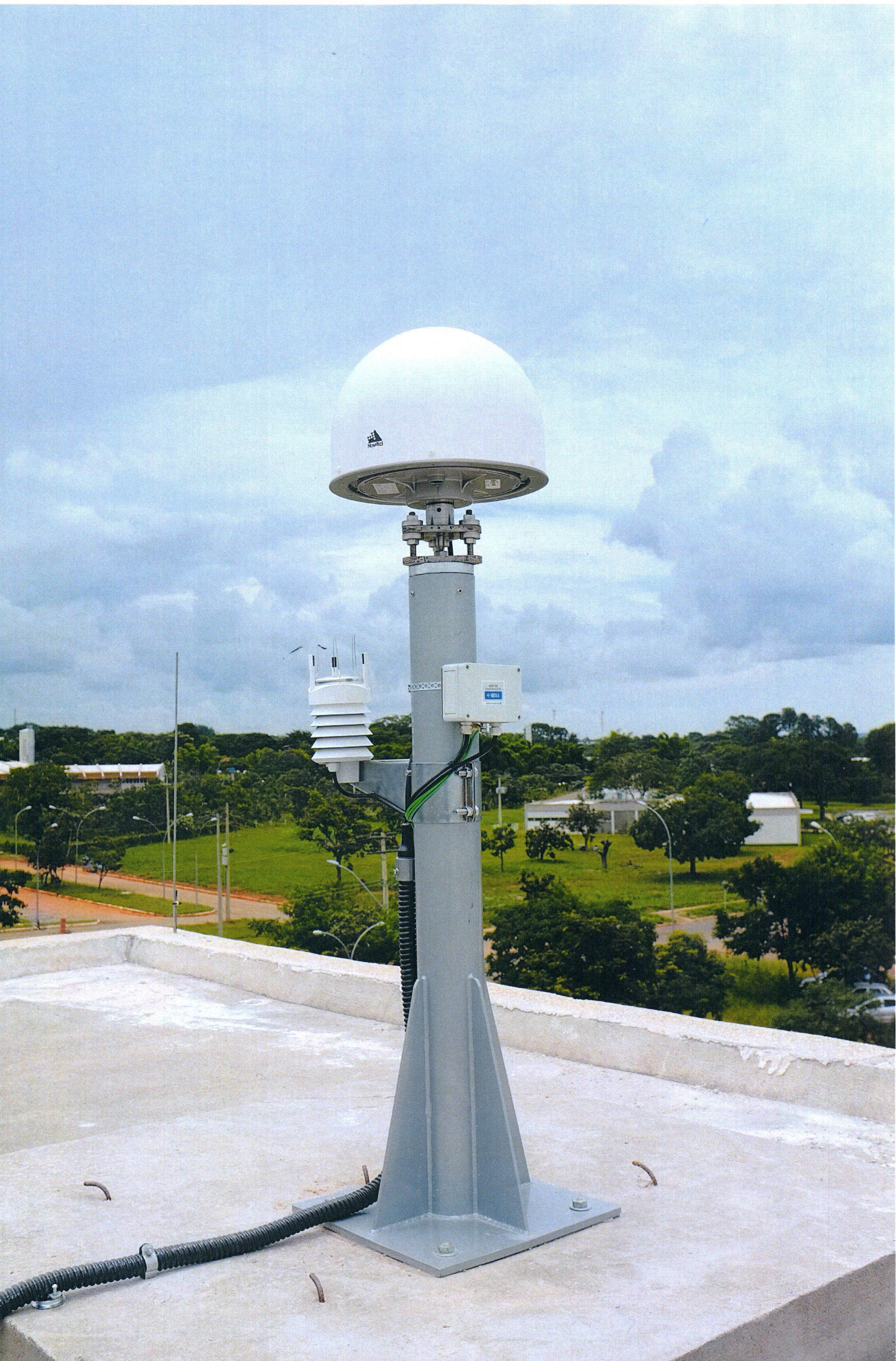
    The Brazilian SDCM station is located on the campus of the University of Brasilia.