Tag: hail

  • ESNC University Challenge Recognizes Hail Suppression Project

    ENSC-university-award-hail
    © Peter Zentgraf

    A hail suppression project dubbed RO-BERTA by the University of Applied Sciences, Rosenheim (Germany), has been selected the winner of the European Satellite Navigation Competition’s (ESNC) University Challenge. Judged by an international expert jury, the University Challenge is a special prize to reward innovative ideas emerging from Europe’s universities.

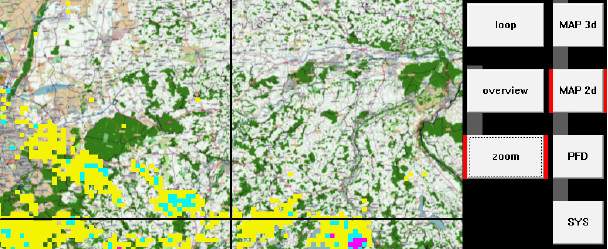
    The Hail Navigator system is designed to reduce damage caused by hail. Based on the premise of suppressing the formation of hail by injecting silver iodide into clouds, Hail Navigator combines navigation with a precipitation reporting system that can guide pilots to optimal locations for hail suppression missions.

    The system is complemented by weather observations (including precise times and locations) reported by local citizens via a smartphone app, which aids the validation of weather prediction models. These models constitute an important factor in deciding whether a hail suppression flight is necessary.

    The project team was awarded the prize on October 23 in Berlin at the ESNC Awards Ceremony. More than 300 guests attended, representing the top European players in the navigation sector. In addition to cash, the prize includes support through the GNSS Research & Applications Centre of Excellence (GRACE) and a free ticket to the Munich Satellite Navigation Summit 2015.

    “Winning this prize once again demonstrates that interdisciplinary cooperation is feasible and successful,” said Project Manager Peter Zentgraf. “The positive feedback the competition provides helps drive our many students to continue their dedicated work, which made it possible to reach our project goals.”

    Airbus Space & Defense won the regular ENSC competition.

  • CoreLogic Expands Insurance Offerings with Hail, Wind and Lightning Weather Forensics

    CoreLogic, a global property information, analytics and data-enabled services provider, has expanded its natural-hazard risk-management capabilities through the addition of Weather Fusion hail, wind and lightning weather forensics to provide near real-time property-specific weather event verification.

    The combination of proprietary CoreLogic data and analytics with Weather Fusion weather peril verification will enable the insurance and other industries to more reliably identify loss shortly after a weather event occurs through single-source access to multiple weather data sets and solutions.

    CoreLogic offers more than 30 weather peril verification and natural hazard risk reports nationwide, helping risk managers across all industries proactively manage risk and loss associated with extreme weather, natural hazard and catastrophe events. According to the Insurance Information Institute, insured losses due to hail and thunderstorms alone totaled $25 billion in 2011 and $14 billion in 2012. The new CoreLogic hail, wind and lightning reports will enable insurers, underwriters, property managers and owners to confidently verify the cause and date of damage and losses near real time, saving critical time and money. A product performance assessment completed by the top five Insurance Carrier’s Claims Department concluded that the Weather Fusion hail algorithm is four times more effective at identifying address-level hail fall than current hail detection algorithm-based hail data.

    CoreLogic analysis indicates that hail and wind claims are among the most significant categories of property damage expense. Insurance Information Institute data shows from 2007 to 2011, the average claim totaled $7,177, with $30 out of every $100 collected in a homeowner’s insurance premium typically going toward wind and hail claim payments. Credibly verifying damages caused by wind, hail and lightning at the property level has traditionally been a challenge for insurers. The addition of Weather Fusion science and weather forensic reports helps CoreLogic solve this challenge by delivering:

    • Historical address-level weather event insight for underwriter examination that ultimately results in smarter, more informed policy decisions.
    • The ability to accurately distinguish what areas were actually impacted and what size hail fell during a weather event.
    • Hail reports shortly after a severe weather event occurs, with maps updated as frequently as every hour.
    • Timely notifications of hail activity for custom addresses, as well as the previous day’s hail activity.
    • The ability to reduce fraudulent claims attributed to severe weather and accelerate the claims verification process by provisioning information directly after a weather event.
    • A Hail Risk Score, which compares address-specific historical hail events against historical claim experience for all relevant hail locations in the U.S., refreshed daily.
    • Digital plots of hail paths for impacted geographic areas and color-coded by quarter-inch increments illustrating hail from three-quarters of an inch to four inches in diameter.
    • Historical hailstorm data at a custom address-specific location, including hail claim verification with the dates and sizes of hail for each hailstorm, within one, three and ten miles of the address.
    • Address-specific lightning strike analysis, along with date and time (to the nearest millisecond), including count of individual lightning strokes, custom maps, latitude/longitude, polarity (negative or positive) and amplitude of a stroke.
    • Wind Risk Scores, designed to verify maximum wind gust and direction at an individual address level.

    “Traditionally, wind event verification has been considered an unsolvable problem and was based on public safety algorithms or relied on hand-drawn maps and single-point data observations collected from the nearest airport locations,” said Jay Kingsley, senior vice president for CoreLogic Insurance and Spatial Solutions. “Now, the unique weather science and data techniques behind our wind, hail and lightning solutions will provide insurance carriers with a more scientific approach to understanding individual property damage from storms,” continued Kingsley.  “Though billions of dollars are paid out every year for exterior damage to homes, up until now there has been no real way to credibly verify these losses. CoreLogic now provides a more powerful, data-driven approach to this problem through weather peril verification reports.”

  • CoreLogic Expands Insurance Offerings with Hail, Wind and Lightning Weather Forensics

    CoreLogic, a global property information, analytics and data-enabled services provider, has expanded its natural-hazard risk-management capabilities through the addition of Weather Fusion hail, wind and lightning weather forensics to provide near real-time property-specific weather event verification.

    The combination of proprietary CoreLogic data and analytics with Weather Fusion weather peril verification will enable the insurance and other industries to more reliably identify loss shortly after a weather event occurs through single-source access to multiple weather data sets and solutions.

    CoreLogic offers more than 30 weather peril verification and natural hazard risk reports nationwide, helping risk managers across all industries proactively manage risk and loss associated with extreme weather, natural hazard and catastrophe events. According to the Insurance Information Institute, insured losses due to hail and thunderstorms alone totaled $25 billion in 2011 and $14 billion in 2012. The new CoreLogic hail, wind and lightning reports will enable insurers, underwriters, property managers and owners to confidently verify the cause and date of damage and losses near real time, saving critical time and money. A product performance assessment completed by the top five Insurance Carrier’s Claims Department concluded that the Weather Fusion hail algorithm is four times more effective at identifying address-level hail fall than current hail detection algorithm-based hail data.

    CoreLogic analysis indicates that hail and wind claims are among the most significant categories of property damage expense. Insurance Information Institute data shows from 2007 to 2011, the average claim totaled $7,177, with $30 out of every $100 collected in a homeowner’s insurance premium typically going toward wind and hail claim payments. Credibly verifying damages caused by wind, hail and lightning at the property level has traditionally been a challenge for insurers. The addition of Weather Fusion science and weather forensic reports helps CoreLogic solve this challenge by delivering:

    • Historical address-level weather event insight for underwriter examination that ultimately results in smarter, more informed policy decisions.
    • The ability to accurately distinguish what areas were actually impacted and what size hail fell during a weather event.
    • Hail reports shortly after a severe weather event occurs, with maps updated as frequently as every hour.
    • Timely notifications of hail activity for custom addresses, as well as the previous day’s hail activity.
    • The ability to reduce fraudulent claims attributed to severe weather and accelerate the claims verification process by provisioning information directly after a weather event.
    • A Hail Risk Score, which compares address-specific historical hail events against historical claim experience for all relevant hail locations in the U.S., refreshed daily.
    • Digital plots of hail paths for impacted geographic areas and color-coded by quarter-inch increments illustrating hail from three-quarters of an inch to four inches in diameter.
    • Historical hailstorm data at a custom address-specific location, including hail claim verification with the dates and sizes of hail for each hailstorm, within one, three and ten miles of the address.
    • Address-specific lightning strike analysis, along with date and time (to the nearest millisecond), including count of individual lightning strokes, custom maps, latitude/longitude, polarity (negative or positive) and amplitude of a stroke.
    • Wind Risk Scores, designed to verify maximum wind gust and direction at an individual address level.

    “Traditionally, wind event verification has been considered an unsolvable problem and was based on public safety algorithms or relied on hand-drawn maps and single-point data observations collected from the nearest airport locations,” said Jay Kingsley, senior vice president for CoreLogic Insurance and Spatial Solutions. “Now, the unique weather science and data techniques behind our wind, hail and lightning solutions will provide insurance carriers with a more scientific approach to understanding individual property damage from storms,” continued Kingsley.  “Though billions of dollars are paid out every year for exterior damage to homes, up until now there has been no real way to credibly verify these losses. CoreLogic now provides a more powerful, data-driven approach to this problem through weather peril verification reports.”

  • CoreLogic Expands Insurance Offerings with Hail, Wind and Lightning Weather Forensics

    CoreLogic, a global property information, analytics and data-enabled services provider, has expanded its natural-hazard risk-management capabilities through the addition of Weather Fusion hail, wind and lightning weather forensics to provide near real-time property-specific weather event verification.

    The combination of proprietary CoreLogic data and analytics with Weather Fusion weather peril verification will enable the insurance and other industries to more reliably identify loss shortly after a weather event occurs through single-source access to multiple weather data sets and solutions.

    CoreLogic offers more than 30 weather peril verification and natural hazard risk reports nationwide, helping risk managers across all industries proactively manage risk and loss associated with extreme weather, natural hazard and catastrophe events. According to the Insurance Information Institute, insured losses due to hail and thunderstorms alone totaled $25 billion in 2011 and $14 billion in 2012. The new CoreLogic hail, wind and lightning reports will enable insurers, underwriters, property managers and owners to confidently verify the cause and date of damage and losses near real time, saving critical time and money. A product performance assessment completed by the top five Insurance Carrier’s Claims Department concluded that the Weather Fusion hail algorithm is four times more effective at identifying address-level hail fall than current hail detection algorithm-based hail data.

    CoreLogic analysis indicates that hail and wind claims are among the most significant categories of property damage expense. Insurance Information Institute data shows from 2007 to 2011, the average claim totaled $7,177, with $30 out of every $100 collected in a homeowner’s insurance premium typically going toward wind and hail claim payments. Credibly verifying damages caused by wind, hail and lightning at the property level has traditionally been a challenge for insurers. The addition of Weather Fusion science and weather forensic reports helps CoreLogic solve this challenge by delivering:

    • Historical address-level weather event insight for underwriter examination that ultimately results in smarter, more informed policy decisions.
    • The ability to accurately distinguish what areas were actually impacted and what size hail fell during a weather event.
    • Hail reports shortly after a severe weather event occurs, with maps updated as frequently as every hour.
    • Timely notifications of hail activity for custom addresses, as well as the previous day’s hail activity.
    • The ability to reduce fraudulent claims attributed to severe weather and accelerate the claims verification process by provisioning information directly after a weather event.
    • A Hail Risk Score, which compares address-specific historical hail events against historical claim experience for all relevant hail locations in the U.S., refreshed daily.
    • Digital plots of hail paths for impacted geographic areas and color-coded by quarter-inch increments illustrating hail from three-quarters of an inch to four inches in diameter.
    • Historical hailstorm data at a custom address-specific location, including hail claim verification with the dates and sizes of hail for each hailstorm, within one, three and ten miles of the address.
    • Address-specific lightning strike analysis, along with date and time (to the nearest millisecond), including count of individual lightning strokes, custom maps, latitude/longitude, polarity (negative or positive) and amplitude of a stroke.
    • Wind Risk Scores, designed to verify maximum wind gust and direction at an individual address level.

    “Traditionally, wind event verification has been considered an unsolvable problem and was based on public safety algorithms or relied on hand-drawn maps and single-point data observations collected from the nearest airport locations,” said Jay Kingsley, senior vice president for CoreLogic Insurance and Spatial Solutions. “Now, the unique weather science and data techniques behind our wind, hail and lightning solutions will provide insurance carriers with a more scientific approach to understanding individual property damage from storms,” continued Kingsley.  “Though billions of dollars are paid out every year for exterior damage to homes, up until now there has been no real way to credibly verify these losses. CoreLogic now provides a more powerful, data-driven approach to this problem through weather peril verification reports.”

  • New CoreLogic Report Shows Tornado and Hail Risk Extends Far Beyond Great Plains States

    CoreLogic announced the release of its Tornado and Hail Risk Beyond Tornado Alley report. The new research findings from CoreLogic, based on historical weather patterns, reveal that severe weather risk extends far outside the narrow eight-state corridor in the U.S. Midwest, commonly known as “Tornado Alley,” traditionally considered to be the area in which tornado and severe hail risk is highly concentrated.

    U.S Tornado Risk (Source: CoreLogic, 2012)

    According to CoreLogic, the report was developed to provide the insurance industry additional insight into the true extent of tornado and hail risk in the U.S. following a record-breaking year of weather related disasters in 2011 and has been released in tandem with the launch of two new CoreLogic risk assessment products, Wind Probability and Hail Probability. These data layers will provide insurers with a unique level of spatial and content granularity to assess property level wind and hail risk.

    “The extensive destruction wrought by convective storms in 2011, which produce hail, strong winds and tornados, captured the attention of the public and forced many insurance companies to rethink the way they assess natural hazard risk,” said Dr. Howard Botts, vice president and director of database development for CoreLogic Spatial Solutions. “The apparent increase in the number of incidents and shift in geographic distribution of losses that occurred last year in the U.S. called the long-held notion of risk concentration in Tornado Alley into question, and is leading to changes in risk management policy and procedure.”


    The Tornado and Hail Risk Beyond Tornado Alley report analyzes hazard risk at the state-level across the U.S using the new CoreLogic wind and hail data layers. Key findings include:

    • Tornado risk actually extends across most of the eastern half of the U.S. rather than being confined to the Midwest.
    • According to data from the National Oceanic and Atmospheric Association (NOAA), of the top ten states with the highest number of tornado touchdowns between 1980 and 2009, only three actually fell within Tornado Alley.
    • At least 26 states have some area facing extreme tornado risk.
    • At least 11 states have significant areas facing extreme hail risk, and almost every state east of the Rocky Mountains has some area facing a moderate or higher level of hail risk.
    • The area of highest hail risk extends outward from the central Great Plains to include states as far east as Georgia and the Carolinas.

    U.S. Damaging Hail Risk (Source: CoreLogic, 2012)

    CoreLogic reports that unlike most generalized wind and hail data, which provide a risk rating for large geographical areas, the new CoreLogic risk assessment products pinpoint and predict the probability of a wind or hail event using 10 x 10-meter property-level grid cells. Developed using highly scientific models, these new data layers are much more precise than the more traditional calculations based on ZIP codes or counties. Using a probabilistic rating in addition to a general risk rating allows users a more precise understanding of the risk of damaging winds and hail for properties in question. Individual addresses or a complete portfolio can be evaluated and the usual ranges of “high” or “medium” risk are now broken down into specific probability ranges.

    “Insurers cannot afford to rely on inprecise data,” said Botts. “Decision-making based on general risk rating over large geographic areas is little more than a best guess and can lead to common errors, such as incorrectly identifying properties or assigning risk to the wrong property. The additional precision of the products CoreLogic is introducing today provides insurers with the information necessary to better assess wind and hail risk, minimize loss and maximize underwriting profits.”

    According to the announcement, the new CoreLogic Wind Probability product predicts the likelihood of multiple damaging wind events including tornadoes, hurricanes, straight-line winds striking an individual property and takes into account special wind areas (isolated areas designated by the Federal Emergency Management Agency in which the magnitude of the local wind speeds is affected by local conditions). Additionally, the model used to derive both the wind and hail data layers also factors in short-run randomness of events. Used together, the wind and hail data layers offer an industry-leading level of accuracy and the most complete picture of the risk that is inherent in these weather related events. Both of the wind and hail products offer nationwide coverage and can be integrated directly into existing geospatial or underwriting systems, or can be accessed via the Xiance™ Desktop, a platform that CoreLogic recently introduced to provide insurers easy access to precise hazard risk and premium tax data.

    For a complete copy of the Tornado and Hail Risk Beyond Tornado Alley report, which includes charts, images and risk maps for the top 16 states outside of the traditional Tornado Alley corridor with the greatest exposure to tornado and hail disasters, visit www.corelogic.com/about-us/researchtrends/tornado-hail-research-report.aspx.  For more information regarding the CoreLogic Wind Probability and Hail Probability products visit www.corelogic.com/products/wind-and-hail-risk.aspx.