Tag: heavy-duty fleets

  • Hexagon: Mining safely with rock-solid technology

    Hexagon: Mining safely with rock-solid technology

    Photo:BeyondImages/iStock/Getty Images Plus/Getty Images
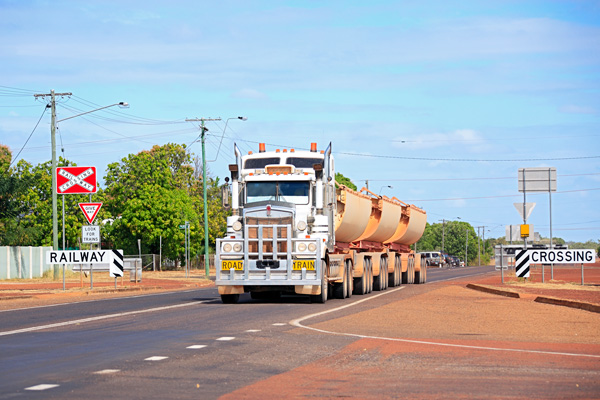
    A mining road-train loaded with ore passes through an outback town. A Hexagon system will guide autonomous movement of similar heavy vehicles. Photo: BeyondImages/iStock/Getty Images Plus/Getty Images

    Hexagon’s Autonomy & Positioning and Mining divisions recently partnered with Mineral Resources Limited (MRL), a mining services company, to develop an automated road-train solution for deployment on MRL’s haulage fleet over the next two years. The solution integrates drive-by-wire technology with an autonomous management system to orchestrate vehicle movement in road-train haulage to improve safety, productivity and sustainability. We asked Lee Baldwin, the director of Hexagon’s Autonomy & Positioning division, a few questions about the system.

    What does an automated road-train do?

    It is for haulage on roads hundreds of kilometers long. It first will be used to move ore from a mine processing facility in the Pilbara region of Western Australia, about 1,200 kilometers north of Perth, to Port Hedland, where it is loaded on ships bound for Asia for use in steel mills. Typically, this is done using either rail or a road train, which is a highway truck pulling multiple trailers. Today, a person drives a road train.

    What motivated this project?

    Mines have difficulty finding drivers for mining trucks and road trains because the mines are very far away from the nearest city, Perth, so they must fly workers in and out, which is very costly. Many of them are on 10-day shifts. Also, there are safety concerns.

    How does an automated road-train work?

    It requires three typical subsystems that you would have on any autonomous vehicle. The first one is positioning, including redundant GNSS receivers with our TerraStar correction services. The second is a perception system for collision avoidance, using our HxGN MineProtect Collision Avoidance System. The third one is route planning. We will start by platooning, with a driver in the first truck, which will be followed by three unmanned ones, each towing multiple trailers. Each truck will have the positioning, perception and route-planning systems. Later, we will achieve full autonomy by removing the driver from the lead vehicle.

    How will the transfer at the mine work?

    At a mine site, the road train will be commissioned in a sequestered area, then sent to a loading area where it will be loaded with ore, either automatically or by a manned wheel loader. Next, it will travel 200 kilometers to the port, where it will dump the ore. Finally, it will be decommissioned and queued up for the return journey.

    Which parts are already in place and which ones are still being developed?

    At Hexagon, we are already putting technology in manned mines. For example, we already have the collision-avoidance system, a fleet management system, and some sitewide planning systems. However, the trucks that the customers are choosing will have to be converted to be drive-by-wire to accommodate our autonomy system. They will use two PwrPak7 GNSS receivers and the TerraStar correction service.
  • Geotab’s Telematics Connect with Mobileye for Collision Prevention

    Geotab, a telematics engineering company, is announcing its J1939 integration launch with Mobileye’s Advanced Driver Assistance System — the Mobileye 560. In combining these two solutions, businesses with heavy-duty fleets will be able to use advanced warning alerts to reduce the likelihood of vehicle crashes from occurring.

    In addition to the reports provided by Mobileye and Geotab that target unsafe driving practices, the solution also provides lane departure warnings, forward collision warnings, pedestrian and bicyclist warnings, distance keeping (headway) warnings, and speeding alerts. The ultimate goal is to give drivers added visibility and insight in the unexpected moments they need it most.

    Edward Kulperger, VP of Business Development for Geotab, commented on the cooperation by explaining that “fleet management technology has evolved to include proactive and dynamic solutions that incorporate real time data in the vehicle and in a fleet’s operations to predict and alert both safety and efficiency elements of fleets.” Isaac Litman, Mobileye Inc.’s CEO, Mobileye Aftermarket, said, “With Geotab, we have provided businesses with an unbeatable driver monitoring and evaluation system. It is the one of the most effective risk management tools available in the marketplace today.” This enthusiasm was also mirrored by Neil Cawse, Geotab’s CEO, “The ease in which businesses can adopt this technology makes it possible for fleet managers to show real savings that make an impact on the bottom line.”

    According to Mobileye, fleets using this collision avoidance technology typically realize a return on their investment in about 6-8 months. The benefits are abundant: Safe driving habits are significantly improved, costs associated with accidents are reduced or completely avoided, smooth driving patterns are reinforced on a continuous basis, and fuel and maintenance costs are minimized. Geotab and Mobileye are working together to bring the solution to the global market.

  • Hyundai Heavy Industry to Track Equipment with Telit

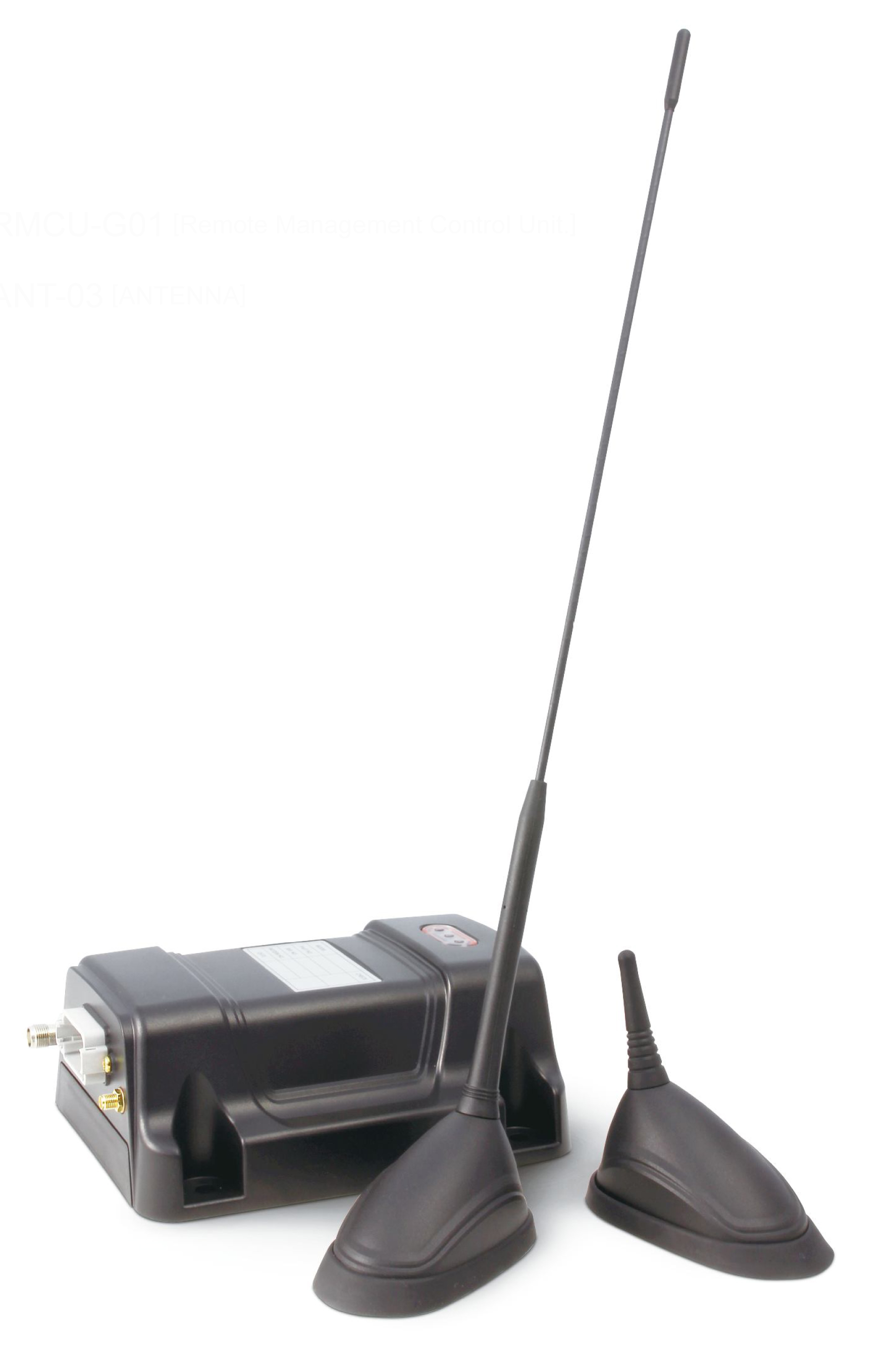
    3.20.13_Taeha_TH- RMCU_ ANTENNA-1.jpgTelit Wireless Solutions will provide the M2M communication module for the Taeha Mechatronics Remote Monitoring System (RMS). Taeha Mechatronics is a South Korean-based provider of electromagnetic control solutions for healthcare and industrial devices.

    The Taeha Mechatronics TH-RMCU, a remote management control unit, integrates Telit’s HE910, HSPA+ module, which delivers 14.4 Mbps downlink data rates. The solution has obtained SK Telecom certification, and will be used for tracking the location of Hyundai Heavy Industry’s global assets. This is the first such authorization by SK Telecom for a system to be used locally and globally. As a result the device can be used in other countries simply by roaming without need for additional regional variants, Telit said. This move is expected to allow more Korean companies to operate more easily abroad.

    The HE910 supports a large number of WCDMA frequency bands (850/900/1700/1900/2100 MHz), making it possible for it to be used in all countries with 3G networks via simple roaming, with no need for production of regional variants to address local frequency band availability, Telit said.

    Hyundai Heavy Industry installs an RMS device, composed of the control unit and antenna, into various types of heavy equipment in the field. It uses the solution to trace equipment location with the integrated GPS which transfers the related data to a server in real-time. With that the company looks to prevent theft and loss of its assets. Also, with the monitoring function, the company can effectively manage fuel consumption of their equipment, actively using it to reduce carbon emissions, Telit said.

    HE910 is a RoHS-compliant module that combines GSM, GPRS, EDGE and HSPA+ network compatibility with digital telecommunication service access. It is world’s smallest (28.2×28.2×2.6 mm) LGA form factor, and ideal for applications that process high-capacity multimedia data, such as e-readers, PDAs and real-time location tracing devices. The HE910 HSPA+ transmission speed is 14.4 Mbps on the downlink, and 5.7 Mbps on the uplink. It supports high-speed serial port, receive antenna diversity, with optional embedded high-sensitivity GPS; and simultaneous voice and data.

    “Solutions developed solely by Korean companies needed to go through many different testing processes to be able to be provided to global customers. By adapting Telit’s standard-based module, we were able to not only reduce cost, but also reduce time for development. We are planning to expand the usage of this solution from location tracing for asset management to other areas,” said Sang-hee Lim, CEO of Taeha Mechatronics.

    “As the interest grows in security and safety globally, tracking solutions are also becoming smarter, in particular for the manufacturing industry, which uses various types of equipment. Companies can dramatically improve management efficiency and productivity simply by deploying cutting-edge monitoring systems. We expect to see continued demand for M2M,” said Derick Tsang, APAC manager of Telit.