Tag: helical antenna

  • Launchpad: Mobile mapping, surveillance system, airborne lidar

    Launchpad: Mobile mapping, surveillance system, airborne lidar

    A roundup of recent products in the GNSS and inertial positioning industry from the June 2022 issue of GPS World magazine.


    SURVEYING & MAPPING

    Base/Rover

    For survey-grade GNSS accuracy anywhere
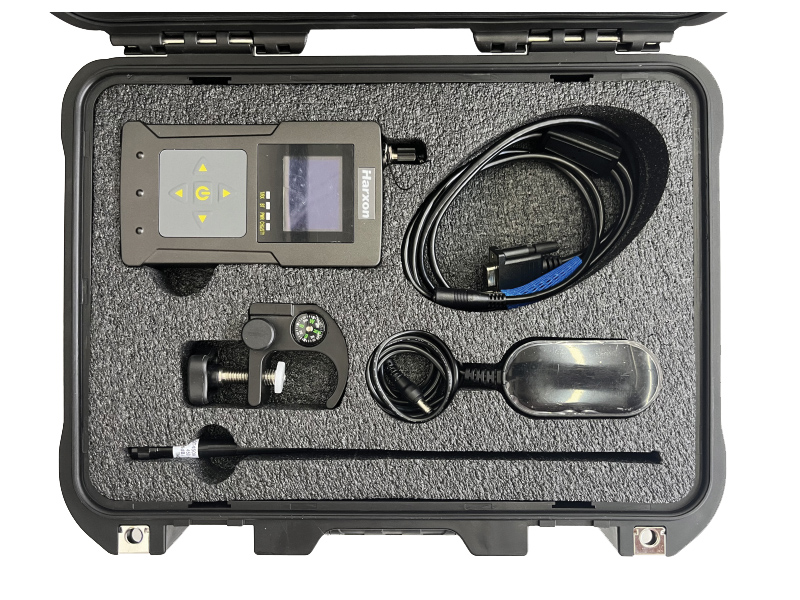
    Photo: Bad Elf
    Photo: Bad Elf

    A base/rover feature built upon the Flex GNSS receiver brings affordable centimeter-level accuracy to surveyors and geospatial professionals working anywhere in the world. The solution consists of two Flex GNSS receivers and two UHF radios, allowing customers to perform high-accuracy field data collection in areas where traditional real-time kinematic (RTK) corrections or cellular coverage is not available. Existing Flex customers can upgrade by adding Flex radio kits (pictured). The Bad Elf Flex enables data collection either as a standalone receiver or paired with apps on iOS or Android phones and tablets.

    Bad Elf, bad-elf.com

    Mobile Mapper

    Preserves privacy with artificial intelligence
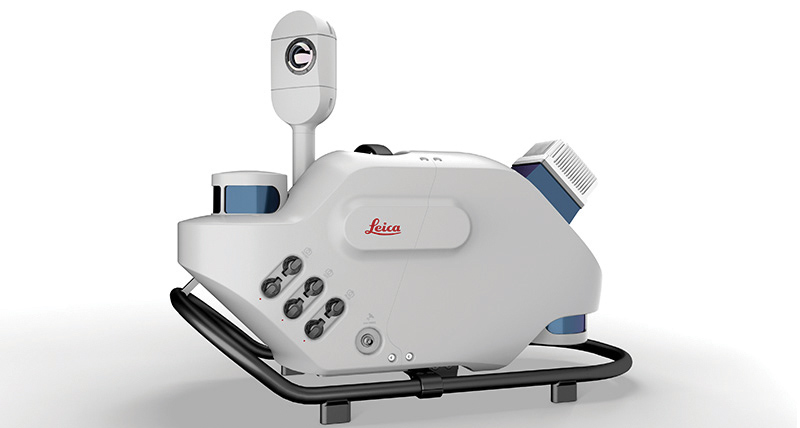
    Photo: Leica Geosystems
    Photo: Leica Geosystems

    The Leica Pegasus TRK reality-capture mobile-mapping system features artificial intelligence (AI), autonomous workflows and intuitive interfaces. To comply with privacy regulations, its AI can identify and blur identifiers, such as people and vehicles, in real time. Features include advanced dynamic laser scanning and an expandable imagery system for recording, measuring and visualizing. It enables long-range mobile mapping for asset management, road construction, rail, critical infrastructure, utilities and more. The system also can create high-definition basemaps for autonomous vehicles.

    Leica Geosystems, leica-geosystems.com

    Imaging System

    Delivers colorized products with high accuracy
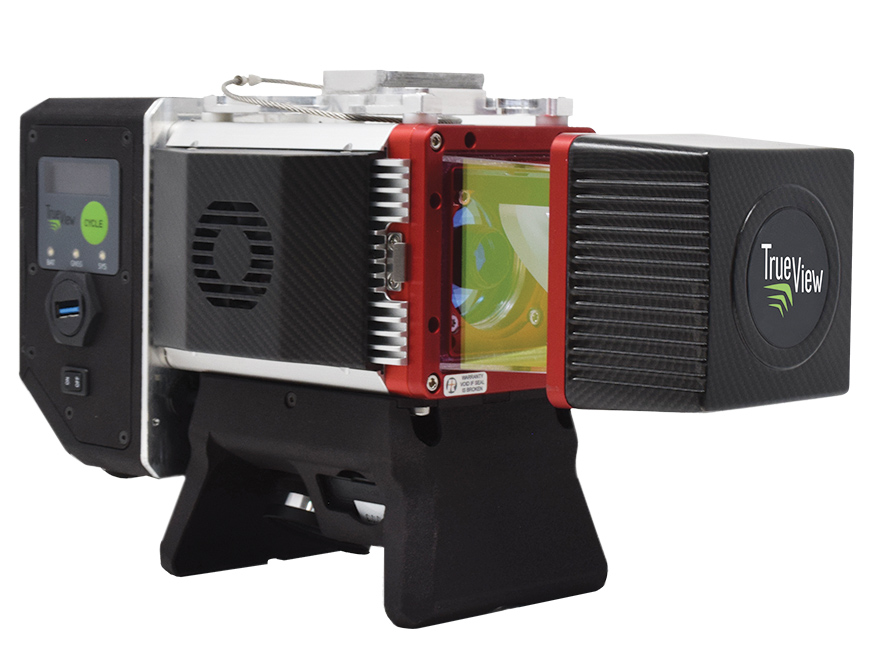
    Photo: GeoCue
    Photo: GeoCue

    The True View 645/650 is the latest 3D Imaging System (3DIS) from GeoCue. Combined with the True View EVO data-processing software suite, it includes the full post-processing software workflow and directly integrates with Applanix POSPac. EVO supports the creation of project deliverables including ground classified point clouds, surface models, contours, digital elevation models (DEMs), volumetric analysis and wire extraction. The system delivers colorized lidar deliverables with accuracy better than 3 cm root-mean-square-error (RMSE) for the True View 645, and better than 2 cm for the True View 650.

    GeoCue, geocue.com


    OEM

    Front-End Receiver

    Software-defined receiver front-end
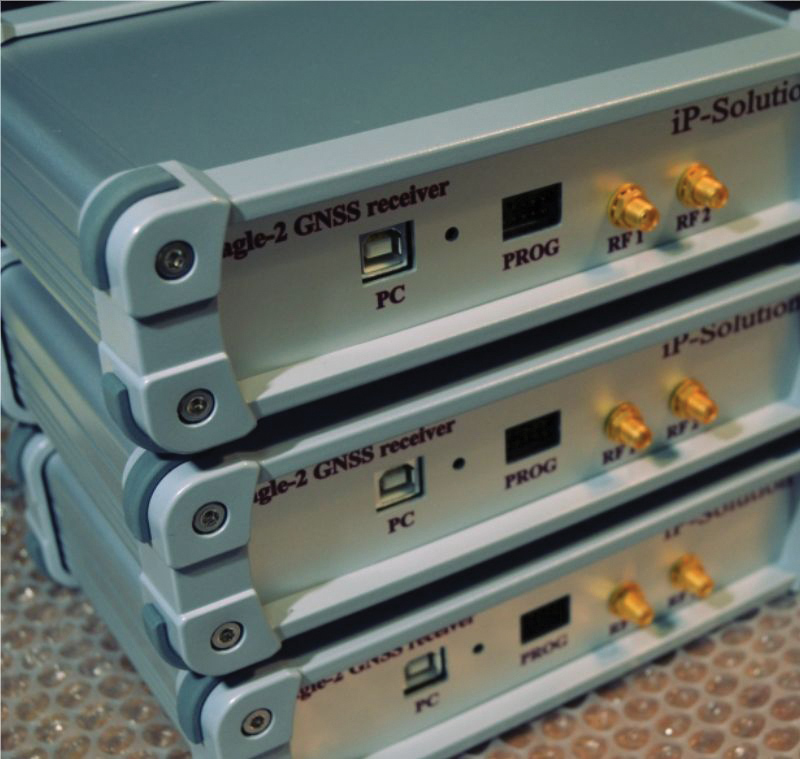
    Photo: IP-Solutions
    Photo: IP-Solutions

    The Eagle-2 works with software-defined receivers in real time or records GNSS signals for post-processing. For post-processing, Eagle-2 supports most third-party receivers, such as MATLAB and C/C++ receivers. The front end allows a user to work with two perfectly synchronized channels connected to two antennas. The Eagle-2 supports GPS, Galileo, GLONASS , BeiDou, QZSS and SBAS.

    IP-Solutions, www.ip-solutions.jp

    Helical Antennas

    Feature extended filtering of interference
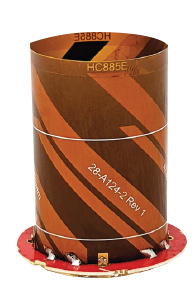
    Photo: Tallysman
    Photo: Tallysman

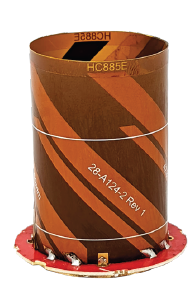
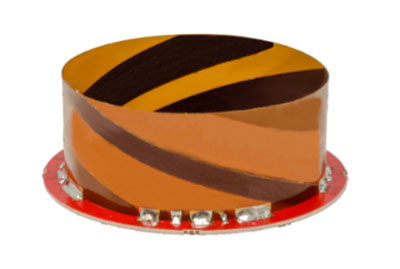
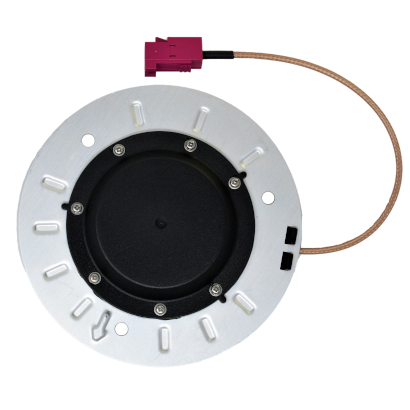
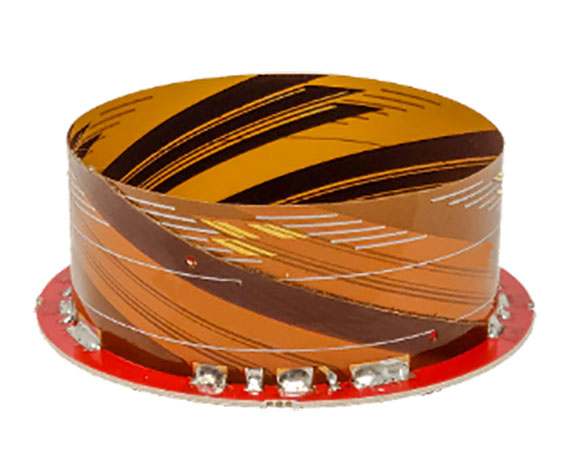
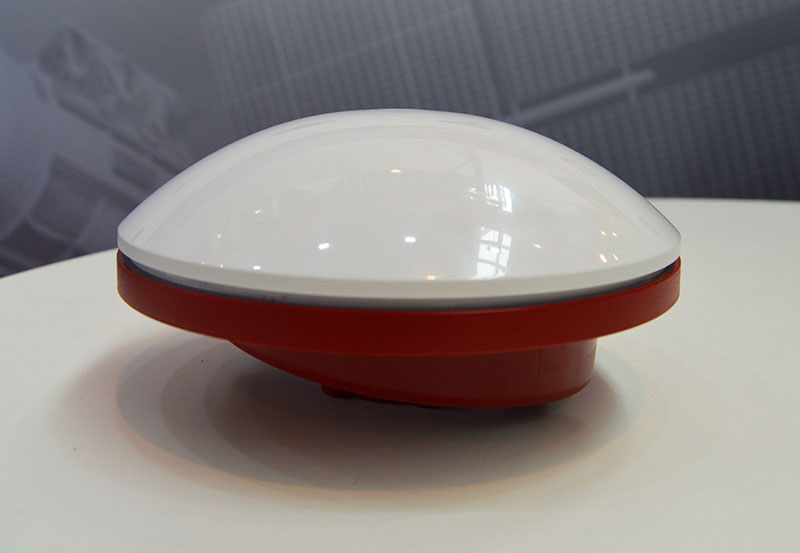
    The housed HC885XF and embedded HC885EXF dual-band eXtended Filtering (XF) antennas receive GPS/QZSS L1/L5, GLONASS G1/G3, Galileo E1/ E5a/b, BeiDou B1/B2/B2a and L-band corrections services. They have been tuned to provide optimal support for the entire L1/G1/E1/B1/L-band correction and L5/G3/E5/B2 bands. The housed version, HC885XF, weighs ~42 g and is enclosed in a robust, military-grade IP67 plastic enclosure. The embedded version, HC885EXF, weighs ~8 g and is easily mounted with an embedded helical mounting ring.

    Tallysman Wireless, tallysman.com

    Converter

    Sets performance benchmarks for harsh environments

    Photo: Analog Devices
    Photo: Analog Devices

    The AD9213S-CSH is a highly integrated RF analog-to-digital converter that handles 12-bit, 10.25-giga-samples per second. It is the company’s fastest ADC available for the space environment. The AD9213-CSH enables the next generation of software-defined systems for satellite communications, radar and remote sensing. The high sample rate and integrated post-processing enable further performance gains for narrow-band applications.

    Analog Devices, www.analog.com


    UAV

    Ebook

    Provides guidance to achieve corporate buy-in

    Photo: Skyward
    Photo: Skyward

    Skyward has published a free ebook, Adding Drones to the Enterprise, to provide guidance on establishing a corporate drone program. According to Skyward, the most efficient and effective drone programs are the lowest risk and most compliant. Topics covered include how to present the business value of a drone operation to corporate executives; how risk managers can optimize the workflow to ensure maximum safety; best practices for risk mitigation and regulatory compliance; tips for collaborating with legal and compliance teams on a general operating manual; and how to provide full transparency to corporate stakeholders.

    Skyward, https://go.skyward.io/adding-drones-to-the-enterprise-ebook.html

    Enterprise System

    Includes drone, fleet software and charging dock

    Photo: DJI
    Photo: DJI

    DJI’s all-in-one solution for professional drone operators includes the DJI Matrice 30 (M30) drone integrated with DJI FlightHub 2 fleet-management cloud software and DJI Dock for autonomous docking and recharging. The integrated solution is suitable for Enterprise drone users such as public safety agencies, infrastructure inspectors and energy operators. The M30 model is designed for rugged professional uses, while the fact that it fits in a backpack makes transportation and setup fast. The DJI Dock is an autonomous takeoff, landing and charging station allowing fully automatic, programmed flights with the DJI M30 Series (Dock Version). After setup, the fully charged M30 drone can take off from the dock through FlightHub 2 programmed automatic missions anywhere within a seven-kilometer radius.

    DJI, www.dji.com

    Airborne Lidar

    Easily installed on various UAV platforms

    Photo: CHC Navigation
    Photo: CHC Navigation

    The AlphaAir 1400 (AA1400) and AlphaAir 2400 (AA2400) lidar systems are lightweight, compact airborne scanners easily installed on various UAV platforms or small survey aircraft and helicopters. They are adapted to high-density point-corridor mapping applications, day or night, under leaf-on and leaf-off conditions or with dense vegetation to provide reliable results. Combined with industrial-grade GNSS receivers and high-precision inertial measurement units (IMUs), the AA1400 and AA2400 provide 2 cm to 5 cm survey-grade accuracy. They also integrate Riegl VUX lidars with waveform-lidar technology, allowing echo digitization and online waveform processing.

    CHC Navigation, chcnav.com

    Autopilot

    Provides built-in redundancies
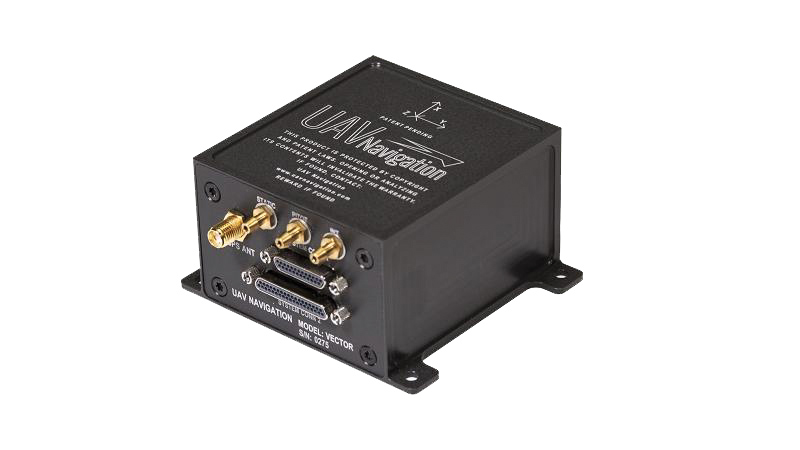
    Photo: UAV Navigation
    Photo: UAV Navigation

    The VECTOR-600 is a robust, dependable autopilot with built-in physical and logical redundancy, allowing it to survive all individual sensor failures while maintaining accurate estimates of attitude and position. It works for fixed-wing, rotary-wing and vertical-take-off-and-landing UAVs. It provides exceptional performance in GNSS-denied environments and when there is a jamming threat. The VECTOR-600 features high quality components and an electromagnetic-resistant design tested to MIL-STD 461.

    UAV Navigation, uavnavigation.com

    Surveillance System

    Ground-based solution enables safe operations
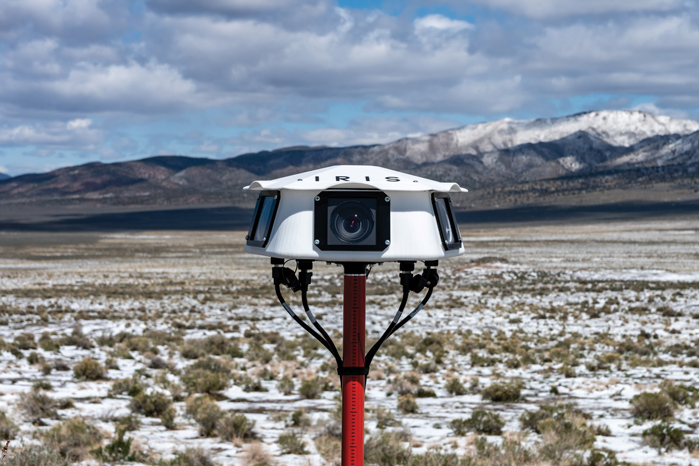
    Photo: Iris Automation
    Photo: Iris Automation

    Casia G is a ground-based detect-and-avoid surveillance solution that provides 360° optical detection with alerts. It enables operators to avoid both cooperative and non-cooperative aircraft for safe beyond-visual-line-of-sight (BVLOS) flight. Casia G creates a perimeter of monitored airspace for UAVs to perform work safely, without additional payload. It is suitable for operations in fixed or temporary locations, supporting drone-in-the-box operations and augmenting or replacing human visual observers. Casia G sees the entire sky, with uniform probability and resolution, 10 times per second, covering a majority of small UAS use cases.

    Iris Automation, irisonboard.com
  • Tallysman adds eXtended Filtering (XF) to dual-band GNSS antennas

    Tallysman adds eXtended Filtering (XF) to dual-band GNSS antennas

    Photo: Tallysman
    Photo: Tallysman

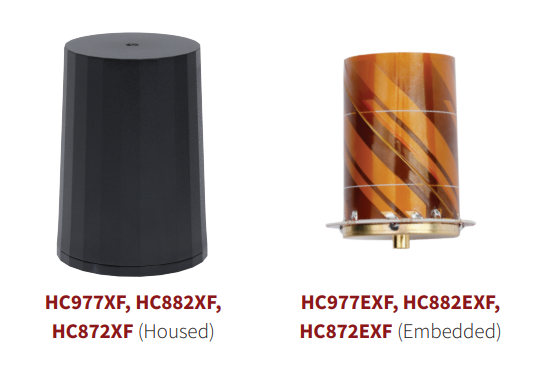
    Tallysman Wireless has added eXtended Filtering (XF) to the housed and embedded lightweight HC977XF (triple-band + L-band), HC882XF (dual band + L-band) and HC872XF (dual-band (GPS and GLONASS) + L-band) precision helical GNSS antennas.

    Tallysman has designed the XF feature to mitigate interference from all near-band signals and ensure that the antenna provides the purest GNSS signals.

    The radio-frequency spectrum has become congested worldwide as many new LTE bands have been activated, and their signals or harmonic frequencies can affect GNSS antennas and receivers. In North America, the planned Ligado service, which will broadcast in the frequency range of 1526–1536 MHz, can affect GNSS antennas that receive space-based L-band correction service signals (1539–1559 MHz). New LTE signals in Europe (band 32, 1452–1496 MHz) and Japan (bands 11 and 21, 1476–1511 MHz) have also affected GNSS signals.

    Tallysman’s housed helical antennas weigh ~42 g and are enclosed in a robust military-grade IP67 plastic enclosure. The antenna base has an integrated SMA connector, a waterproofing O-ring, and three screw holes to enable secure attachment. Tallysman’s embedded helical antennas weigh ~8 g and are easily mounted with an optional embedded helical mounting ring, which traps the outer edge of the antenna circuit board to the host circuit board or any flat surface.
    An MCX connector is installed in the base of the antenna.

    Tallysman helical antennas are suitable for a variety of applications, including lightweight unmanned autonomous vehicle navigation (land, sea and air), land survey devices, automotive positioning, timing and other precise-positioning applications.

  • Tallysman adds XF antennas to helical line

    Tallysman adds XF antennas to helical line

    The HC885EXF embedded helical antenna. (Photo: Tallysman)
    The HC885EXF embedded helical antenna. (Photo: Tallysman)

    Tallysman Wireless has added the housed HC885XF and embedded HC885EXF dual-band eXtended Filtering (XF) antennas to its line of helical antennas.

    The antennas receive GPS/QZSS L1/L5, GLONASS G1/G3, Galileo E1/ E5a/b, BeiDou B1/B2/B2a and L-band corrections services.

    Historically, dual-frequency antennas and receivers commonly supported GPS L1 and L2 and GLONASS G1 and G2. In recent years, GPS, GLONASS, Galileo, BeiDou and NavIC have added GNSS signals in the L5 frequency band (1160-1217 MHz).

    As a result, the new dual-frequency GNSS standard has become L1 and L5.

    Tallysman’s new HC885XF antenna has been tuned to provide optimal support for the entire L1/G1/E1/B1/L-band correction and L5/G3/E5/B2 bands.

    The radio frequency spectrum has become congested worldwide as many new LTE bands have been activated, and their signals or harmonic frequencies can affect GNSS antennas and receivers. In North America, the planned Ligado service, which will broadcast in the frequency range of 1526 to 1536 MHz, can affect GNSS antennas that receive space-based L-band correction service signals (1539-1559 MHz). New LTE signals in Europe [Band 32 (1452-1496 MHz)] and Japan [Bands 11 and 21 (1476-1511 MHz)] have also affected GNSS signals. Tallyman’s XF models mitigate the effects of these new signals.

    The Tallysman HC885XF housed helical antenna weighs ~42 g and is enclosed in a robust, military-grade IP67 plastic enclosure. The antenna base has an integrated SMA connector, a water-proofing O-ring, and three screw holes to enable secure attachment.

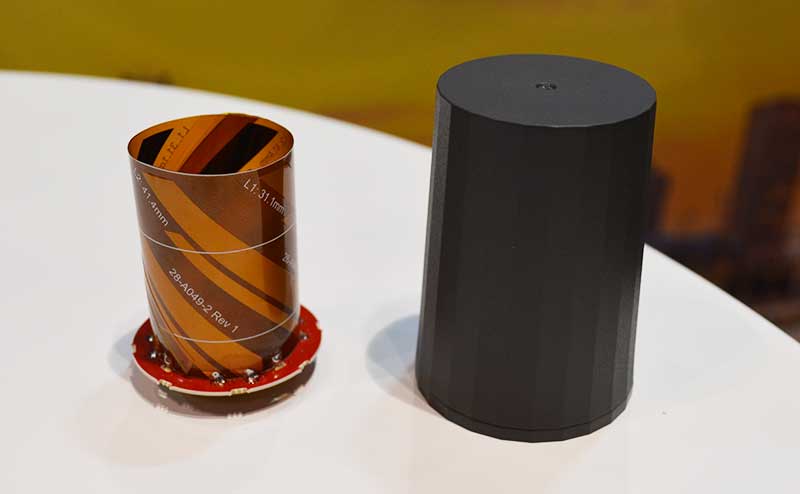
    Tallysman’s embedded HC885EXF helical antenna weighs ~8 g. It is easily mounted with an optional embedded helical mounting ring, which traps the outer edge of the antenna circuit board to the host circuit board or any flat surface. An MCX connector is installed in the base of the antenna.

    Tallysman HC885EXF and HC885XF antennas are suitable for a variety of applications, including lightweight unmanned autonomous vehicle navigation (land, sea, and air), land survey devices, automotive positioning, timing and other precise-positioning applications.

  • Launchpad: Mapping software, MEMS accelerometers

    Launchpad: Mapping software, MEMS accelerometers

    A roundup of recent products in the GNSS and inertial positioning industry from the February 2022 issue of GPS World magazine.


    OEM

    GNSS Receiver

    For tracking, telematics

    Photo: u-blox
    Photo: u-blox

    The LENA-R8 GNSS receiver is based on the u-blox M10 platform. The compact module balances cost and performance with a single antenna and primarily targets customer deployments in the Europe, Middle East, Africa, Asia, and South America regions. Designed for tracking and telematics, the module series was designed to minimize material costs and data charges. The LENA-R8 supports a broad range of frequency bands with 2G fallback, providing maximum roaming coverage for global tracking applications using a single stock keeping unit (SKU).

    U-blox, u-blox.com

    Helical Antenna

    For UAVs and other applications

    Photo: Tallysman
    Photo: Tallysman

    The low-profile triple-band HC997EXF embedded helical GNSS antenna features eXtended Filtering (XF). It is designed for precise positioning, covering the GPS/QZSS-L1/L2/L5, GLONASS-G1/G2/G3, Galileo-E1/E5a/E5b, BeiDou-B1/B2/B2a, and NavIC-L5 frequency bands. It also covers regional satellite-based augmentation systems (WAAS, EGNOS, MSAS, GAGAN) and L-band correction services. It is packaged in a light (11 g), compact form factor (60 x 25 mm). Its precision-tuned, high-accuracy helical element provides an excellent axial ratio and operates without a ground plane, making it suitable for lightweight unmanned aerial vehicle (UAV) navigation and a wide variety of precision applications.

    Tallysman Wireless, tallysman.com

    A-PNT Card

    High precision for defense

    Photo: Spectranetix
    Photo: Spectranetix

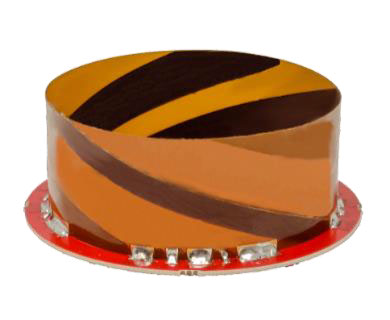
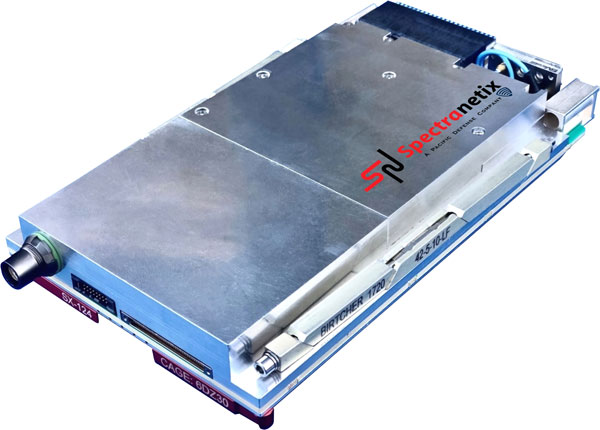
    The SX-124 ruggedized 3U OpenVPX high-performance positioning, navigation and timing (PNT) card can provide timing and positioning information in a GPS-denied environment through sensor fusion. It is designed for highly integrated systems with a requirement for the U.S. Army’s C5ISR Modular Open Suite of Standards (CMOSS) and alignment with the Open Group Sensor Open Systems Architecture (SOSA) technical standard. The SX-124 can accept external sources or use its onboard GNSS receivers as reference inputs for timing and positioning data. The positioning data can be fused with internal and external inertial measurement units.

    Spectranetix, spectranetix.com

    MEMS Accelerometers

    Radiation tested for space

    Photo: Silicon Designs
    Photo: Silicon Designs

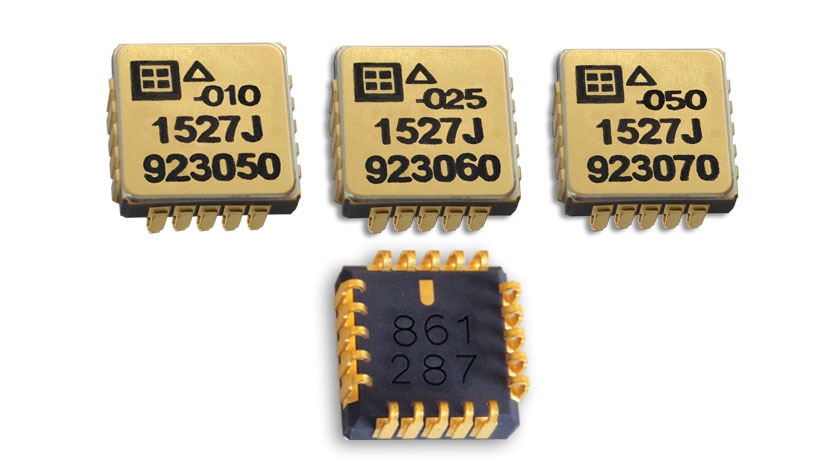
    The Model 1527 series is a family of miniature, radiation-tested, tactical-grade micro-electromechanical (MEMS) accelerometers. Offered in three full-scale acceleration ranges — ±10 g, ±25 g and ±50 g — the series is designed to support a variety of critical space electronics testing requirements, including those of spacecraft, satellites and CubeSats. Their small bias and scale-factor temperature coefficients, excellent in-run bias stability and zero cross-coupling make the Model 1527 series particularly well-suited for spacecraft electronics testing applications requiring low power consumption (+5 VDC, 6.5 mA), low noise, long-term measurement stability in –55° C to +125° C environments, and performance reliability under intermittent radiation exposures.

    Silicon Designs, silicondesigns.com

    Automotive Receiver

    Guidance for advanced driver assistance systems

    Photo: STMicroelectronics
    Photo: STMicroelectronics

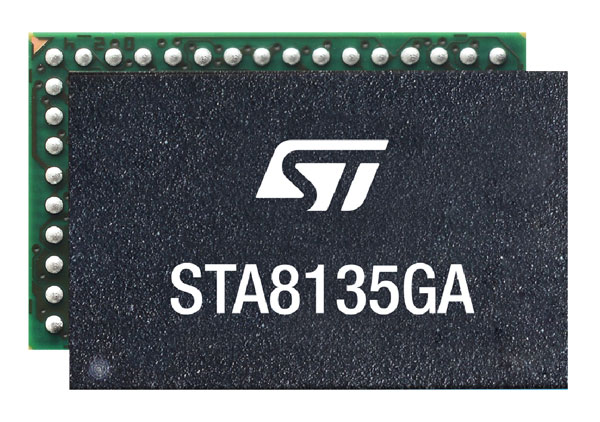
    The STA8135GA automotive-qualified GNSS receiver is designed to deliver the high-quality position data needed by advanced driving systems. Part of the Teseo V family, the STA8135GA integrates a triple-band positioning measurement engine. It also provides standard multi-band position-velocity-time (PVT) and dead reckoning. The multi-constellation receiver delivers raw information for the host system to run any precise-positioning algorithm, such as PPP/RTK (precise point positioning/real-time kinematic). The receiver can track satellites in the GPS, GLONASS, BeiDou, Galileo, QZSS and NAVIC/IRNSS constellations.

    STMicroelectronics, st.com


    Surveying & Mapping

    Software Upgrade

    Improvements support photos, 2.5D data capture

    Photo: 1Spatial
    Photo: 1Spatial

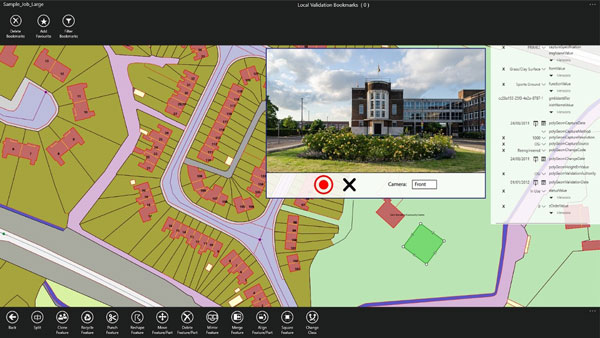
    Survey application 1Edit now has increased support for photos and 2.5D data. 1Edit 3.1 allows users to attach feature photos, including automated geotagging, which enables surveyors to visualize assets and fine tune observations. Also included are new validation functions and improved handling for heights (2.5D data), typically useful for detailed asset and land-management surveys. Enhanced styling, including bitmap fills and dashed lines, make it easier to identify and classify different asset types during surveys. Additional control of editable layers and fields provides protection for non-editable data and protects the data quality. Significant improvements to rendering of thematic mapping enhances the speed and fluidity of the intuitive user interface.

    1Spatial, 1spatial.com

    Mapping Software

    Map-making functionality improved

    Photo: Golden Software
    Photo: Golden Software

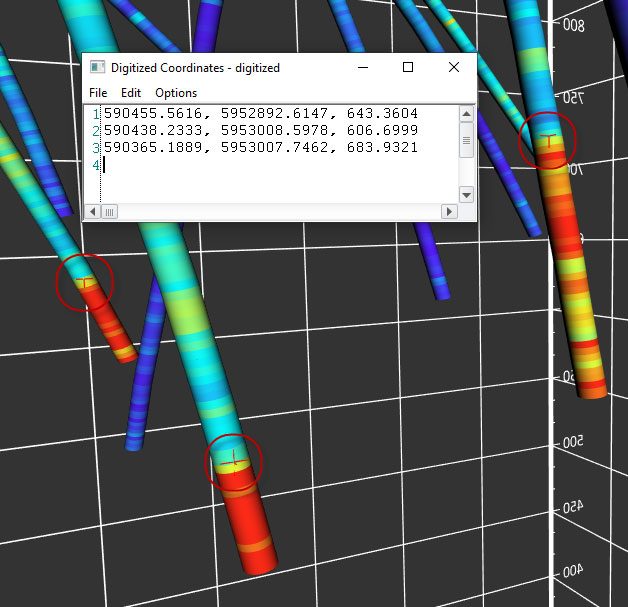
    The latest version of Surfer surface mapping software has improved map-making functionality and data exporting capabilities. Surfer is used by more than 100,000 people worldwide, many involved in oil and gas exploration, environmental consulting, mining, engineering and geospatial projects. It provides fast and powerful contouring algorithms, enabling users to model data sets, apply an array of advanced analytics tools, and graphically communicate the results. Frames now have outlines and background fill colors to make them easier to read when placed on top of maps and attribute data can now be exported as numeric data.

    Golden Software, goldensoftware.com

    RTK/PPP Device

    Multi-sensor fusion on a single board

    Photo: ANavS
    Photo: ANavS

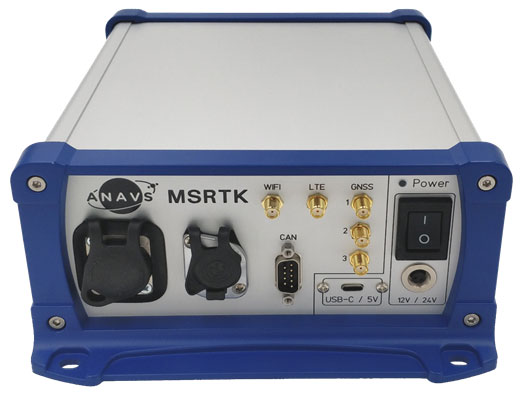
    The Multi-Sensor (MS-) RTK/PPP device is a turnkey system easily integrated into surveying applications. The module includes up to three multi-frequency, multi-GNSS (GPS + Galileo + Glonass + BeiDou) receivers, a MEMS IMU, a barometer, a CAN interface for reception of vehicle data (wheel odometry and steering angle), and an LTE module for reception of RTK/PPP corrections. ANavS sensor fusion performs tight coupling of all sensor data with an Extended Kalman Filter (EKF). Various interfaces can connect additional sensors (such as camera or lidar) or output position information.

    ANavS, anavs.com

    Auto Mapping

    Increases lane-level accuracy

    Photo: Asensing
    Photo: Asensing

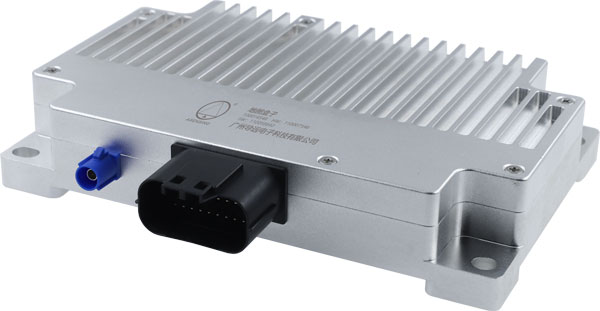
    The HD-MapBox integrates high-precision map data based on high-precision positioning. Fusing data from a GNSS receiver, IMU, ADAS camera, vehicle dynamics and HD maps, the HD-MapBox can achieve a lateral error of less than 8 inches (0.2 meters) and a longitudinal error of less than 6.5 feet (2 meters) with a 95% confidence interval, providing an accurate reference for highway pilots and automated valet parking. Even if both GNSS and lane line detection are not available, the HD-MapBox can still enable vehicles to keep inside the lane for at least a quarter mile (400 meters).

    Asensing, asensing.com

    Positioning System

    Adds location data inside buildings

    Photo: Esri
    Photo: Esri

    Esri ArcGIS IPS is an indoor positioning system that adds a blue dot to indoor maps, enabling users to locate their current position inside a building in the same way GPS enables outdoor location indicators. It uses an alternative technology to enable real-time positioning and navigation inside buildings. It also provides live location sharing and tracking, location data capture and analytical insights. ArcGIS IPS is available for users of ArcGIS Indoors, an indoor mapping system for smart building management, and ArcGIS Runtime SDKs, which enable the indoor positioning capability in custom-built apps.

    Esri, esri.com

  • Tallysman offers embedded triple-band GNSS antenna

    Tallysman offers embedded triple-band GNSS antenna

    Tallysman Wireless Inc. has added the low-profile triple-band HC997EXF to its line of embedded helical GNSS antennas, and the TWA928LXF to its AccuAuto line. Both feature the company’s eXtended Filtering (XF).

    Designed for UAVs and Other Applications

    Photo: Tallysman
    Photo: Tallysman

    The HC997EXF is designed for precise positioning, covering the GPS/QZSS-L1/L2/L5, GLONASS-G1/G2/G3, Galileo-E1/E5a/E5b, BeiDou-B1/B2/B2a, and NavIC-L5 frequency bands. It also covers the satellite-based augmentation system (SBAS) available in the region of operation — WAAS (North America), EGNOS (Europe), MSAS (Japan) or GAGAN(India) — as well as L-band correction services.

    The low-profile helical antenna is packaged in a light (11 g) and compact form factor (60 mm wide and 25 mm tall). Its precision-tuned, high-accuracy helical element provides an excellent axial ratio and operates without a ground plane. These features make the HC997EXF suitable for lightweight unmanned aerial vehicle (UAV) navigation and a wide variety of precision applications.

    The HC997EXF antenna base has a flying lead and a variety of connectors. To facilitate installation, Tallysman provides an optional embedded helical mounting ring that traps the outer edge of the antenna circuit board to the host circuit board or any flat surface. Tallysman provides support for installation and integration of its embedded helical antennas to ensure optimal performance.

    New Vehicle Antenna Launched

    Photo: Tallysman
    Photo: Tallysman

    Another new XF antenna, the TWA928LXF, is part of Tallysman’s  AccuAuto autonomous vehicle family of compact and rugged embedded antennas.

    The triple-band TWA928LXF supports GPS/QZSS-L1/L2/L5, GLONASS-G1/G2/G3, Galileo-E1/E5a/E5b, BeiDou-B1/B2/B2a, and NavIC-L5 signals and frequency bands, including L-band correction services.

    The TWA928LXF vehicle antenna features a patented Tallysman Accutenna technology antenna element, an integrated ground plane, radome and underside cover that provides mist and condensation protection. The bottom cover also supports the antenna cable and mitigates cable vibration to ensure that the antenna has a long service life, while the ground plane improves antenna performance.

    All AccuAuto antennas are built with Automotive Electronics Council (AEC) certified electronic components designed to perform under the most challenging environmental conditions, such as extreme temperatures, shock and vibration.

    XF Coming to All Lines

    eXtended Filtering enables the HC997EXF antenna to mitigate new and existing radio frequency bands that interfere with GNSS signals. The custom XF filtering has been tested to mitigate new (Europe and Japan) and existing LTE signals, enabling the XF antennas to produce clean and pure GNSS radio frequency data.

    For example, in North America, the planned Ligado service, which will broadcast in the frequency range of 1526 to 1536 MHz, could affect GNSS antennas that receive space-based L-band correction service signals (1539–1559 MHz).

    Similarly, LTE signals or their harmonics, such as the new LTE bands in Europe–Band 32 (1452–1496 MHz)–and Japan–Bands 11 and 21 (1476–1511 MHz)–have affected GNSS antennas and receivers.

    Lastly, the Inmarsat satellite communication uplink (1626.5–1660.5 MHz), commonly used on maritime vessels, can also affect nearby GNSS antennas.

    Tallysman Wireless also has added eXtended Filtering (XF) to its TW3800 series of Accutenna precision antennas, and will be rolled out to all of Tallysman’s product lines.

  • Tallysman provides full-band GNSS helical antenna

    Tallysman provides full-band GNSS helical antenna

    Photo: Tallysman Wireless
    Photo: Tallysman Wireless

    Tallysman Wireless Inc. has added its first full-band GNSS antenna to its line of helical antennas.

    The full-band GNSS HC990E embedded helical antenna is designed for precise positioning, covering the GPS/QZSS-L1/L2/L5, QZSS-L6, GLONASS-G1/G2/G3, Galileo-E1/E5a/E5b/E6, BeiDou-B1/B2/B2a/B3, and NavIC-L5 frequency bands, including the satellite-based augmentation system (SBAS) available in the region of operation [WAAS (North America), EGNOS (Europe), MSAS (Japan), or GAGAN(India)], as well as L-band correction services.

    The HC990E embedded helical antenna is designed and built for high-accuracy positioning. It is packaged in a very light and compact form factor, making it suitable for a wide variety of applications, especially lightweight unmanned aerial vehicle (UAV) navigation.

    The HC990E is 60-mm wide and 25-mm tall, weighing 12 grams. It features a precision-tuned helical element that provides an excellent axial ratio and operates without the requirement of a ground plane. The HC990E also features a low-current, low-noise amplifier (LNA) and pre-filter to prevent harmonic interference from high-amplitude signals, such as 700 MHz band LTE and other nearby in-band cellular signals.

    The HC990E antenna base has a flying lead with a UFL connector. To facilitate the installation, Tallysman provides an optional embedded helical mounting ring, which traps the outer edge of the antenna circuit board to the host circuit board or any flat surface. Tallysman also supports the installation and integration of embedded helical antennas to enable successful implementation and provide optimal antenna performance.

  • Tallysman adds 3 more to Helical antenna line

    Tallysman adds 3 more to Helical antenna line

    Photo: Tallysman
    Photo: Tallysman

    Tallysman GNSS has added three new antennas to its Helical antenna line.

    Released earlier this year, the helical antenna line provides unprecedented performance in a lightweight, compact form factor.

    The line now extends beyond dual-band GNSS and Iridium support to also include single and triple GNSS frequency bands.

    Tallysman helical antennas are designed for applications that require high performance and versatility, with an absolute minimum of weight, such as unmanned aerial vehicles (UAVs).

    In addition to the HC600, HC871 and HC872, the expanded helical antenna family now includes:

    • the single frequency HC771
    • the dual- frequency (plus L- band corrections) HC882
    • the triple band (plus L- Band corrections) HC975.

    The table below lists the complete Tallysman helical Family of antennas.

    Chart: Tallysman
    Chart: Tallysman
  • Tallysman debuts VeroStar precision antenna, helical antennas at Intergeo 2019

    Tallysman debuts VeroStar precision antenna, helical antennas at Intergeo 2019

    The VSP600L VeroStar supports the full GNSS spectrum, as well as L-band correction services. (Photo: Allison Barwacz)
    The VSP600L VeroStar supports the full GNSS spectrum, as well as L-band correction services. (Photo: Allison Barwacz)

    Tallysman has released its VSP600L VeroStar precision antenna at Intergeo 2019, which took place Sept. 17-19 in Stuttgart, Germany.

    The VeroStar supports the full GNSS spectrum, as well as L-band correction services. The antenna provides low elevation satellite tracking with a high efficiency radiating element, the company said.

    Its performance is suitable for real-time kinematic (RTK) and precise point positioning (PPP) applications. It features a light, compact and robust design. The antenna also has a low axial ratio through all elevation angles providing strong multipath rejection.

    According to Tallysman, the VSP600L VeroStar also provides high receive gain over the full GNSS spectrum from low GNSS band (1164MHz to 1300MHz) L-band correction services (1539MHz to 1559MHz) to high GNSS band (1559MHz to 1610 MHz).

    The antenna also has a low axial ratio through all elevation angles providing strong multipath rejection.


    “The most unique feature of the VeroStar antenna is the high gain at low elevations,” Allen Crawford, director of key accounts at Tallysman, told GPS World at the show. “It can track low elevation satellites with a really high signal level, which is really important for those using correction services coming off of geostationary satellites. So as you go further away from the equator, you’re dealing with some very small link margins and you need those extra up to 4dB higher signal strength that this antenna provides.”

    According to the company, it will soon be releasing embedded models of the VSP600L VeroStar.

    At the show, the company also released an updated line of its helical antennas, including the single frequency HC771, dual frequency (plus L- band corrections) HC882 and the triple band (plus L- band corrections) HC975. The original line of helical antennas, which includes the HC600, HC871 and HC872, were released earlier this year.

  • Tallysman releases new UAV helical GNSS antennas

    Tallysman releases new UAV helical GNSS antennas

    The new helical antenna in both housed (right) and unhoused form. (Photo: Allison Barwacz)
    The new helical antenna in both housed (right) and unhoused form. (Photo: Allison Barwacz)

    Tallysman, a manufacturer of high-performance GNSS and iridium antennas, launched the first three products of a new range of helical antennas. Additional models will be announced in the third quarter of 2019 and onward.

    Tallysman exhibited at booth 3739 at AUVSI Xponential 2019, which took place April 29 to May 2 in Chicago.

    The first three models of the Tallysman helical family are:

    • HC871 (25g) – A housed, dual band, active GNSS antenna, supporting GPS L1/L2,
      GLONASS G1/G2, Galileo E1, and BeiDou B1.
    • HC872 (36g) – A housed, dual band, active GNSS antenna, supporting GPS L1/L2,
      GLONASS G1/G2, Galileo E1, BeiDou B1, and L-Band services.
    • HC600 (18g) – A housed, passive Iridium antenna.


    The active GNSS helical antennas feature a low-current, low-noise amplifier (LNA), and include integrated low-loss pre-filters, to protect against harmonic interference from high amplitude interfering signals, such as 700-MHz band LTE and other near in-band cellular signals.

    Available in both housed and embedded OEM versions, the lightweight Tallysman helical antennas have excellent axial ratios, making them ideal for a variety of high-precision unmanned aerial vehicle (UAV) applications, the company said.

    The housed Tallysman helical antenna models feature a robust, military-grade plastic case, while the embedded Tallysman helical antenna models can be custom-tuned for any application and configured with a variety of cables and connectors.

    “We think — if anything — the price-performance ratio is the biggest benefit,” Allen Crawford, director of key accounts at Tallysman, told GPS World. “The pre-filter is also unique to us; the robustness of the enclosure is unique to us; and also the shortness, which is important to a lot of aerodynamic vehicles.”

    Patents have been applied for with respect to several aspects of these new products.

    “There is a clear requirement for lightweight, high performance antennas for the rapidly growing UAV market,” said Tallysman President and CTO Gyles Panther. “These new patented helical products are an extension to our existing range of superlight L1/L2 patch antennas, and will provide customers with a wider choice of antenna formats to suit their specific application requirements. These are the first of a number of new products we plan to introduce for this application to support our already wide customer base for UAV antennas.”

  • Tallysman launches helical antennas at Xponential 2019

    Tallysman’s Allen Crawford offers an overview of the company’s recently launched helical antennas, which include the HC871, HC872 and HC600, at Xponential 2019, which took place April 29-May 2 in Chicago.

  • Tallysman introduces choke ring, helical antennas at Intergeo 2018

    Tallysman’s Allen Crawford gives an overview of the company’s new choke ring and helical antennas, as well as the VeraPhase antenna. Tallysman featured its new products at Intergeo 2018 in Frankfurt, Germany.