Tag: High Altitude Platform Station

  • UAVOS joins HAPS for high-altitude unmanned platforms

    UAVOS joins HAPS for high-altitude unmanned platforms

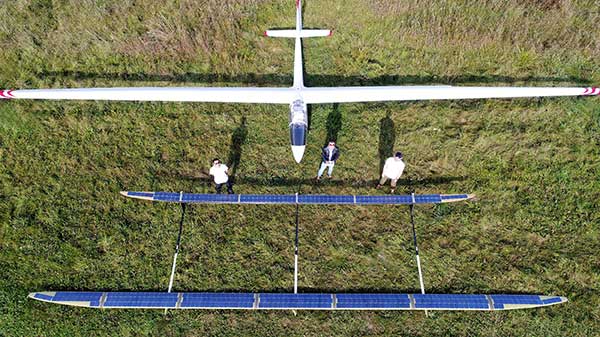
    The ApusDuo project is the second generation of UAVOS' HAPS solar airplane. (Photo: UAVOS)
    The ApusDuo project is the second generation of UAVOS’ HAPS solar airplane. (Photo: UAVOS)

    UAVOS has joined the High Altitude Platform Station (HAPS) Alliance to promote the use of high-altitude solar-powered autonomous aircraft for facilitating global research missions, communication, connectivity, intelligence, surveillance and reconnaissance from the stratosphere.

    UAVOS joined HAPS to collaborate with member companies towards accelerating the development and adoption of HAPS technology into the evolution of the high-altitude unmanned platforms market.

    UAVOS’s HAPS knowledge is based on test flights for more than 1,000 hours of flight tests at altitudes of up to 66,000 feet (20,000 meters). The ApusDuo project is the second generation of UAVOS’ HAPS solar airplane.

    HAPS platforms are autonomous, high-altitude, ultra-long endurance aircraft powered by solar energy. They are designed to boost internet connectivity worldwide, provide a long continuous monitoring of the Earth’s surface, create a network of autonomous repeaters and high-speed data signals. High-altitude unmanned platforms operate in the stratosphere, above ground infrastructure but below satellites, allowing for near ubiquitous coverage, which avoids ground clutter and significant latency issues.

    The HAPS Alliance, originally an initiative from HAPSMobile and Loon, has members from the companies across the aerospace, technology and telecom industries.

  • New HAPS Alliance to promote high-altitude vehicles

    New HAPS Alliance to promote high-altitude vehicles

    Telecom, technology and aviation industry leaders join forces to create the HAPS Alliance to connect more people, places and things by using the stratosphere

    A group of global industry leaders is forming the HAPS Alliance, an association of world-leading telecommunications, technology, aviation and aerospace companies united in promoting the use of high-altitude vehicles in the Earth’s stratosphere to eliminate the digital divide and bring connectivity to more people, places and things worldwide.

    Members who have committed to join the HAPS Alliance include

    • SoftBank Corp.’s HAPSMobile Inc.
    • Alphabet’s Loon LLC
    • AeroVironment Inc.
    • Airbus Defence and Space
    • Bharti Airtel Limited
    • China Telecom Corporation Limited
    • Deutsche Telekom AG
    • Intelsat US LLC
    • Nokia Corporation
    • SoftBank Corp.
    • Telefónica S.A.
    • Telefonaktiebolaget LM Ericsson

    The HAPS Alliance is being created so member companies can

    • collectively advocate for High Altitude Platform Station (HAPS) business development with the relevant authorities in various countries
    • build a cooperative HAPS ecosystem
    • develop common product specifications and promote the standardization of HAPS network interoperability

    All of these activities will be key to the Alliance’s aim of addressing diverse social issues and creating new value by providing telecommunications network connectivity worldwide through the utilization of high altitude vehicles.

    Polar stratospheric clouds. Photo: Paul Newman, GSFC/NASA)
    Polar stratospheric clouds. (Photo: Paul Newman, GSFC/NASA)

    The Alliance, originally an initiative from HAPSMobile and Loon, will have members from participating leading companies across the aerospace, technology and telecom industries to carry out the Alliance’s activities.

    The launch of the HAPS Alliance follows an April 2019 announcement between HAPSMobile and Loon where the companies formed a strategic alliance to advance the use of high-altitude vehicles.

    High-altitude network connectivity platforms operate in the stratosphere — above ground infrastructure but below satellites — allowing for near ubiquitous coverage that avoids ground clutter and significant latency issues.

    These advantages make such vehicles a promising solution for expanding mobile coverage to areas where connectivity is lacking — mountainous terrain, remote islands, marine regions and developing countries — as well as for IoT and 5G use-cases. The HAPS Alliance seeks to create an ecosystem to support next-generation global connectivity needed to revolutionize the world’s mobile networks.