Tag: ION GNSS+ 2019

  • Orolia launches GSG-8 GNSS/GPS simulator at ION GNSS+ 2019

    Editor’s Note: This video was originally published on November 12, 2019.

    Orolia debuted the GSG-8 advanced GNSS/GPS simulator, which is powered by Skydel simulation engine, at ION GNSS+ 2019 in Miami. Watch the video to get an overview of the GSG-8, which the company says was designed to deliver the highest standard of GNSS signal testing and sensor simulation performance in an easy-to-use platform.

    Read more about the GSG-8 here.

  • A look at Spirent Federal’s enhanced GSS9000 GNSS simulator

    At ION GNSS+ 2019, Spirent Federal Systems’ Jeff Martin and Spirent Communications’ Adam Price discuss the company’s latest product: the GSS9000 GNSS simulator series. According to the company, the simulator boasts up to 320 channels and 10 independent RF outputs.

  • Collins Aerospace taking orders for MPE-M Type II receiver

    Collins Aerospace’s Mike Shepherd discusses the company’s MPE-M Type II GPS receiver at ION GNSS+ 2019. According to the company, it is now accepting orders for the receiver, which received security certification in the spring.


    Update: On July 31, 2020, BAE Systems acquired the Collins Aerospace Military GPS business from Raytheon Technologies Corp. Collins Military GPS is now integrated into BAE Systems’ Electronic Systems sector.

  • L3Harris discusses GPS III payloads at ION GNSS+ 2019

    L3Harris’ Jason Hendrix discusses the company’s latest developments, including the delivery of its GPS III payloads, at ION GNSS+ 2019, which took place Sept. 16-20 in Miami.

  • Rohde & Schwarz demos geo-fencing WEA test solution at ION GNSS+ 2019

    Rohde & Schwarz’s Chintankumar Patel discusses the company’s test solution that supports WEA (Wireless Emergency Alerts) 3.0 with geo-fencing at ION GNSS+ 2019, which took place in Miami.

  • Aceinna discusses OpenIMU at ION GNSS+ 2019

    Mike Horton, CTO at Aceinna, gives GPS World an overview of OpenIMU, the company’s open-source inertial navigation platform, at ION GNSS+ 2019 in Miami.

  • CGSIC meeting material available for download

    CGSIC meeting material available for download

    CGSIC logo

    By Rick Hamilton, CGSIC Executive Secretariat, U.S. Coast Guard Navigation Center

    The 59th meeting of the U.S. Civil GPS Service Interface Committee was held Sept. 16-17 at the Hyatt Regency Miami hotel in Miami, Florida, in conjunction with the Institute of Navigation’s GNSS+ (ION-GNSS+) conference.

    For readers who were unable to attend, a synopsis of the meeting is provided below. The full agenda and presentations are available for download from the GPS.gov website.

    The meeting of the CGSIC is an annual event, free and open to the public, conducted to provide updates from U.S. GPS program officials and ensure effective information exchange between the U.S. government and civil GPS users.

    The two-day meeting is hosted by the U.S. Department of Transportation (DOT) and the Coast Guard Navigation Center (NAVCEN). DOT serves as the civil lead for GPS and chairs the CGSIC in this capacity. NAVCEN is assigned duties as Deputy Chair and Executive Secretariat for the CGSIC.

    Engaging sessions were conducted throughout the day of Sept. 16 for the CGSIC Timing, Surveying Mapping and Geo-Sciences, and International Information Subcommittees. The plenary session of the full committee was held on Sept. 17.

    Keynote. Diana Furchtgott-Roth, deputy assistant secretary, Office of the Assistant Secretary for Research and Technology, U.S. Department of Transportation provided the keynote for this year’s plenary session.

    She conveyed to the audience the importance of the U.S. GPS for transportation safety and numerous other civil applications and that its spectrum must be protected from harmful interference.

    However, given threats from jamming and spoofing, the U.S. is committed to leading the world in positioning, navigation and timing (PNT) and to building and using the best possible PNT solutions to maintain resiliency.

    James Platt, director at the PNT Program Management Office of the U.S. Department of Homeland Security, highlighted the need to understand cyber vulnerabilities in critical infrastructure supply-chain management.

    The meeting included many other interesting briefings related to the status of the U.S. GPS program and the use of GPS around the world, including presentations from the National Space-Based PNT Coordination Office, U.S. Air Force, State Dept., FAA, DOC and NASA.

    Presentations during the plenary session focused on the operational status of the GPS constellation and ground control system modernization, U.S. Space-Based PNT policy, GPS augmentation systems, U.S. engagement with other international GNSS providers, as well as a variety of topics related to the status and progress of ongoing GPS programs in the U.S. government.

    If you have suggestions for topics to include in upcoming CGSIC meetings, would like to present a topic, or if you found information from past meetings useful and would like to hear more, contact Hamilton via the Navigation Center “contact us” form. Be sure to select “Civil GPS Service Interface Committee (CGSIC)” from the pull-down menu.

    From a GPS operational perspective, civilian non-aviation users can submit GPS-related inquiries or report signal interference or degradation to the U.S. Coast Guard Navigation Center online or to the 24 hour watch desk at 703-313-5900.

    Civil aviation users within the United States should contact the Federal Aviation Administration for GPS user support. The GPS Operations Center at Schriever Air Force Base, Colorado, is the lead in the Department of Defense for operational issues and questions from military users of GPS.

  • A day without satellites would affect us all

    A day without satellites would affect us all

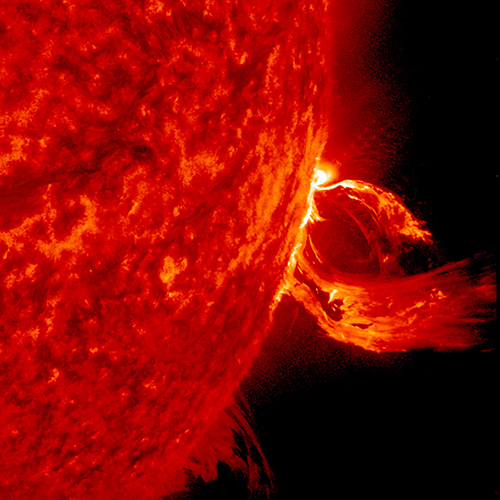
    A solar flare in 2015. (Photo: Photo: Solar Dynamics Observatory, NASA)
    A solar flare in 2015. (Photo: Photo: Solar Dynamics Observatory, NASA)

    You wake up and turn on the TV. Your usual shows aren’t airing. You flip on the radio and learn that the Paris and Tokyo stock markets have closed. Back on TV, CNN is trying to use Skype in an attempt to cover what’s happening around the world following a solar superstorm.

    In a U.S. bunker, the military has lost contact with armed drones flying over hostile areas in the Middle East. Loss of global communication satellites makes it difficult to send commands and surveillance data to soldiers, ships and aircraft, rendering them vulnerable to attack.

    Throughout the day, more challenges arise. First responders don’t have access to their location systems. Delays in ground and air traffic begin to develop. Systems that depend on GPS time stamps — ATMs, power grids, computer-data and cell-phone networks — begin to fail, and the cloud becomes unstable. The internet soon collapses.

    These events take place just a few hours into “A Day Without Satellites” as presented by Pål Brekke, solar physicist and senior advisor at the Norwegian Space Agency. Brekke spoke at the plenary session of ION GNSS+ on Sept. 17 in Miami.

    Brekke reviewed the Carrington Event of September 1859, the first documented solar superstorm. In that event, a solar coronal mass ejection (CME) hit Earth’s magnetosphere, and its effects were observed and recorded by British astronomers. The storm wrought havoc with telegraph systems.

    Today, a solar storm of this magnitude would cause widespread disruptions, blackouts and damage from extended outages of the power grid, communications networks, and of course, GNSS. The solar storm of 2012 was probably as big, but we were lucky — Earth wasn’t in the ejection path.

    Without more data, it’s difficult to predict how often such superstorms take place, but it’s a sure bet that the scenario Brekke presented will happen eventually. To prepare, agencies around the world are studying and planning for the phenomenon, including the United Nations Office for Outer Space Affairs (COPUOS), the World Meteorological Organization (WMO) and the International Civil Aviation Organization (ICAO). Space and emergency agencies in the U.S, European countries and other countries are also developing plans.

    Good to hear in the face of a threat that would undoubtedly affect us all.

  • And ION’s prestigious awards go to…

    And ION’s prestigious awards go to…

    The Institute of Navigation (ION)’s Satellite Division presented two prestigious awards Sept. 20 at the ION GNSS+ Conference in Miami.

    Peter Teunissen receives the prestigious 2019 Johannes Kepler Award from ION's Satellite Division. (Photo: ION)
    Peter Teunissen receives the prestigious 2019 Johannes Kepler Award from ION’s Satellite Division. (Photo: ION)

    Peter Teunissen was honored with the career-highlight Johannes Kepler Award. The Johannes Kepler Award recognizes and honors an individual for sustained and significant contributions to the development of satellite navigation. It is the highest honor bestowed by the ION’s Satellite Division.

    Teunissen was recognized for his influential and groundbreaking contributions to the algorithmic foundations of satellite navigation, and for sustained dedication to the global education of the next generation of navigation engineers.

    Teunissen invented the Least Squares Ambiguity Decorrelation Adjustment (LAMBDA) method, the worldwide standard for ambiguity resolution, which revolutionized high precision GNSS positioning capabilities. LAMBDA has thus become an indispensable tool that is most widely used in land, air and space navigation; positioning and attitude determination; differential and network processing; and in surveying and geodesy. He also extended the method to MC-LAMBDA, a multivariate constrained resolution method for optimal GNSS attitude determination.

    Among others, Teunissen laid the mathematical and algorithmic foundation of reliability theory, which enables a proper understanding of the quality of different integer ambiguity resolution methods and a rigorous characterization of their failure rates, which even led to the development of an optimal test for ambiguity validation.

    His findings are particularly important for multi-GNSS processing, which require a proper understanding of individual system characteristics and their respective contributions to achieve navigation solutions of the highest precision and integrity.

    Teunissen has made contributions in the field of precise point positioning, the exploitation of triple-frequency observation, and the joint use of new GNSS such as Galileo, BeiDou and QZSS. Pioneering work in this area include the early setup of multi-GNSS receiver test beds in the Asia-Pacific area; the discovery and proper handling of mixed-receiver inter-satellite-type biases, which were vital to fully exploit ambiguity resolution in the regional, BeiDou-2 system; and the first demonstrations of mixed GPS/Galileo/IRNSS/QZSS L5 processing for precise positioning applications.

    Teunissen has made significant contributions to educating future generations. He is currently a Professor of Satellite Navigation at Delft University of Technology, The Netherlands and Curtin University, Australia.

    He received his Ph.D. at Delft University of Technology in Mathematical and Physical Geodesy. He holds several honorary professorships and fellowships of numerous international organizations, including Australia’s prestigious Federation Fellowship of the Australian Research Council.

    He has published more than 300 papers, seven books, is co-editor and author of the Handbook of Global Navigation Satellite Systems, and is a member of 13 editorial boards.

    He is a regular contributor to ION and ION programs. He is a Fellow of the ION, the RIN and the Royal Netherlands Academy of Sciences.

    Advanced RAIM topic earns Diaz the Parkinson Award

    Santiago Perea Diaz receives the 2019 Bradford W. Parkinson Award from ION's Satellite Division. (Photo: ION)
    Santiago Perea Diaz receives the 2019 Bradford W. Parkinson Award from ION’s Satellite Division. (Photo: ION)

    The Bradford W. Parkinson Award recognizes an outstanding graduate student in GNSS. It is presented in honor of Parkinson for his leadership in establishing the U.S. GPS and for his work on behalf of ION’s Satellite Division.

    Santiago Perea Diaz was recognized for graduate student excellence in GNSS in his thesis, “Design of an Integrity Support Message for Offline Advanced RAIM.”

    Any graduate student who is a member of the ION and is completing a degree program with an emphasis in GNSS technology, applications, or policy is eligible for the award.

  • Microchip showcases BlueSky GNSS Firewall at ION GNSS+ 2019

    Microchip, formerly known as Microsemi, showcased its BlueSky GNSS Firewall at ION GNSS+ 2019 in Miami. Microchip’s Greg Wolff shares details about the product, which the company says provides secure, continuous timing integrity in GPS-denied environments.

  • Orolia introduces new GNSS testing and simulation portfolio

    Orolia introduces new GNSS testing and simulation portfolio

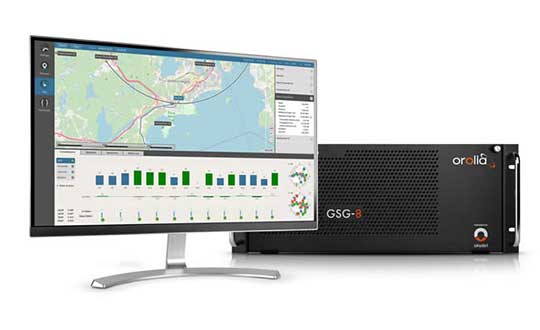
    Orolia introduced its new GPS/GNSS testing and simulation portfolio, including the new GSG-8 advanced simulator, at ION GNSS+ 2019 in Miami.

    The new portfolio offers a comprehensive array of GNSS validation technology, as well as signal and PNT data protection through jamming/spoofing detection, suppression and countermeasure solutions.

    The capabilities are built on Orolia’s legacy of resilient PNT solutions, together with two key acquisitions completed this year: Skydel Solutions and Talen-X. These companies were selected based on their demonstrated GNSS testing and simulation experience.

    GSG-8, the latest advanced simulator from Orolia, was also introduced to the global GNSS community this week at ION GNSS+. This software-defined simulation solution offers ultra-high performance and unmatched flexibility in an easy-to-use format. GSG-8 was developed to deliver the highest standard of GNSS signal testing and sensor simulation performance, in an upgradable and scalable platform.


    “With its scientific precision and advanced simulation capabilities, GSG-8 is revolutionizing the GNSS simulation industry with Orolia’s robust 1000Hz Skydel software engine and COTS software-defined radios,” said Stephane Hamel, director of testing and simulation at Orolia. “GSG-8 is designed for customers that require complex capabilities to validate product and program performance in harsh, high risk environments where failure is not an option- such as government agencies, space programs and specialized commercial programs.”

    It can be programmed to simulate operations with multiple GNSS constellations and to incorporate the use of encrypted or proprietary signals. GSG-8 can also be configured for Wavefront and Anechoic chamber simulation protocols to test anti-jam antennas and complete systems, to serve the most challenging program requirements.

  • Hemisphere GNSS launches GNSS receiver, smart antenna at Intergeo 2019

    Hemisphere GNSS launches GNSS receiver, smart antenna at Intergeo 2019

    Hemisphere GNSS has introduced its multi-frequency, multi-GNSS S621 GNSS survey smart antenna and R620 GNSS receiver at Intergeo 2019 in Stuttgart, Germany, and ION GNSS+ 2019 in Miami.

    S621 GNSS survey smart antenna

    The S621 GNSS survey smart antenna is a complete redesign of Hemisphere's previous generation version, the S321+. (Photo: Allison Barwacz)
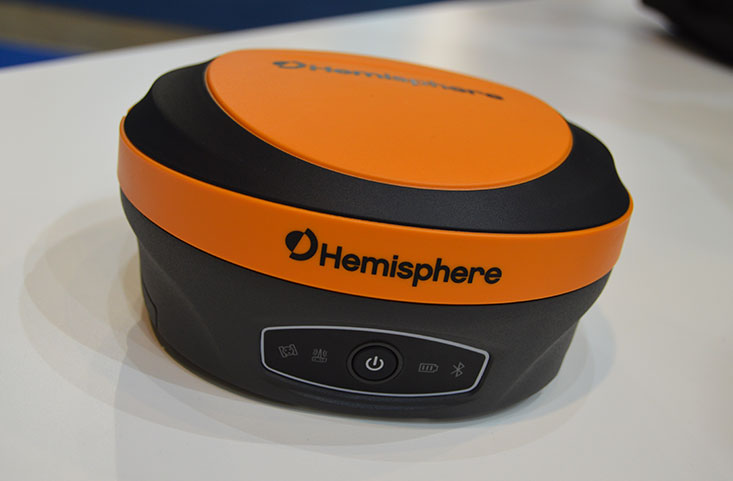
    The S621 GNSS survey smart antenna is a complete redesign of Hemisphere’s previous generation version, the S321+. (Photo: Allison Barwacz)

    The S621, powered by the company’s Phantom 40 GNSS OEM board, is a complete redesign of Hemisphere’s previous generation version, the S321+.

    According to the company, the S621 processes and supports more than 800 channels with flexible and scalable simultaneous tracking of every modern and planned GNSS constellation and signal including GPS, GLONASS, BeiDou (including Phase 3), Galileo, QZSS, IRNSS, SBAS and Atlas L-band.

    The S621 combines Hemisphere’s Athena GNSS engine and Atlas L-band correction technologies with a new WebUI. It meets IP67 requirements and is immune to magnetic interference. It is designed for use in land or marine survey, GIS, mapping, construction or other applications requiring high-performance precision and positioning, the company added.

    “The S621 represents the advanced technology, durability, and ease-of-use that our customers have come to expect,” said Miles Ware, director of marketing at Hemisphere. “By redesigning this system from the ground up with increased functionality and management capabilities, we are offering unbeatable value.”

    R620 GNSS receiver

    The R620 GNSS receiver is a complete refresh of Hemisphere's previous version, the R330. (Photo: Allison Barwacz)
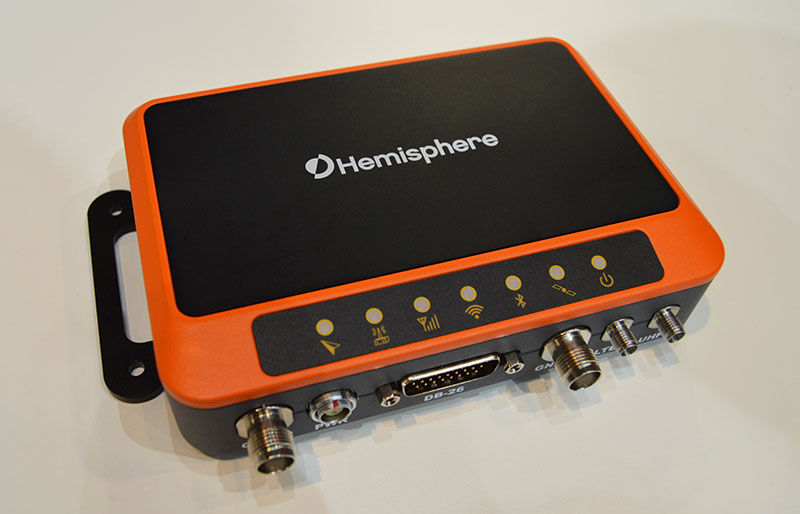
    The R620 GNSS receiver is a complete refresh of Hemisphere’s previous version, the R330. (Photo: Allison Barwacz)

    The R620 GNSS receiver, powered by the Vega series, is a complete refresh of Hemisphere’s previous version, the R330, and includes an all-new low-profile ruggedized enclosure.

    According to Hemisphere GNSS, the R620 GNSS receiver processes and supports more than 1,100 channels and offers flexible and scalable simultaneous tracking of every modern and planned GNSS constellation and signal including GPS, GLONASS, BeiDou (including Phase 3), Galileo, QZSS, IRNSS, SBAS and Atlas L-band.

    The R620 combines Hemisphere’s Athena GNSS engine and Atlas L-band correction technologies with status LEDs and a WebUI. It also comes equipped with UHF (400 MHz and 900 MHz) radio, cellular modem, Bluetooth and Wi-Fi.

    “With its all-new design and feature set, the R620 GNSS receiver is Hemisphere’s offering to what the market desires — smaller machine, lower cost and less power,” Ware said. “The receiver boasts a feature- and performance-packed combination of greater performance, improved robustness and excellent value.”