Tag: lawsuit

  • Apple sued for privacy concerns regarding Apple AirTags

    Apple sued for privacy concerns regarding Apple AirTags

    Photo: Apple
    Photo: Apple

    Two women have filed a class-action lawsuit against Apple for privacy concerns as Apple AirTags are being widely used for malicious and criminal purposes.

    Both women and their families were tracked and stalked by ex-partners using Apple AirTags hidden in their personal belongings. They are now suing Apple for negligence and privacy violations stating the company failed to protect its customers. They are both seeking damages and are hoping to prevent Apple from continuing to manufacture this product with “design flaws.”

    The location device was designed by Apple in 2021 and its intent is to be attached to such items as keys, suitcases and purses to make them trackable. However, the $29 Bluetooth-enabled AirTags can be used as a weapon by abusers, stalkers and traffickers to easily find and track their victims.

  • Bus-Crash Victims Sue TomTom, Garmin

    Bus-Crash Victims Sue TomTom, Garmin

    Garmin-truck
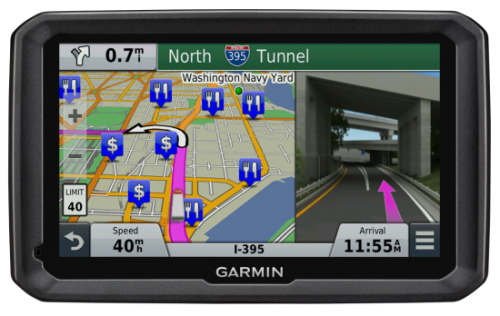
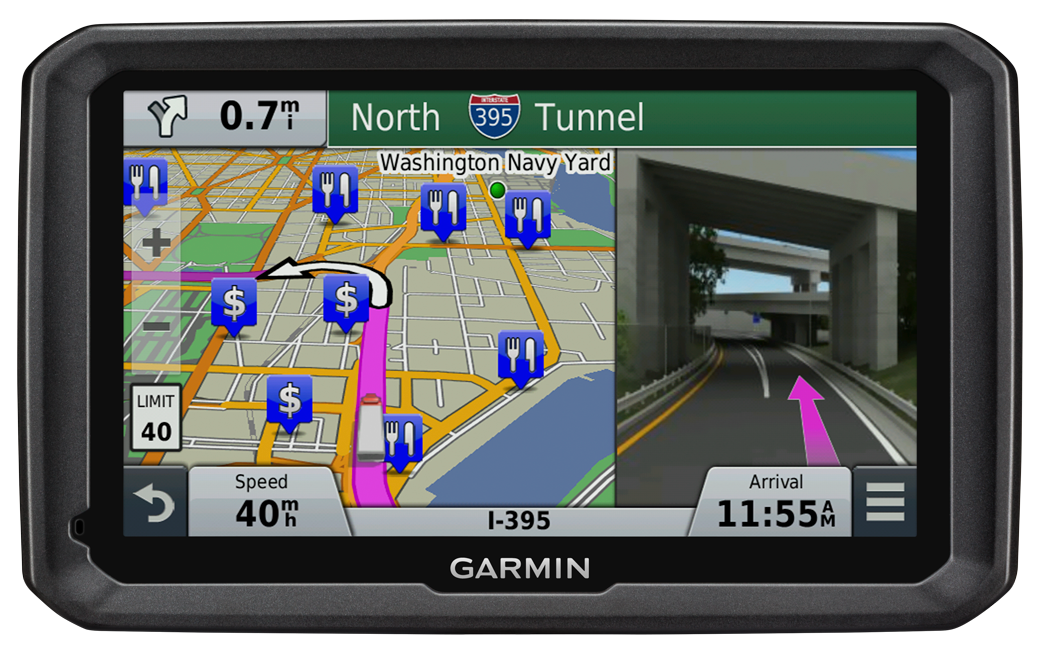
    The Garmin dezl trucking navigator.

    Lawyers for 11 Pennsylvania residents injured in 2013 when their charter bus slammed into an overpass in Boston, Mass., are suing GPS device manufacturers TomTom and Garmin, seeking more than $15 million in damages.

    The bus driver was using both a Garmin and a TomTom satnav, neither of which were intended for use by commercial vehicles, but the lawsuit filed in January claims that the GPS units were at fault for not providing road height restrictions.

    The bus driver, Samuel J. Jackson, told police he drove the 11-foot-high bus onto Soldiers Field Road, which is off-limits to vehicles more than 10 feet high, because he was “following the GPS.” At least one sign warning of this restriction was missing or damaged, and construction on the Harvard Street overpass obstructed other warning signs, the suit said.

    Passengers were injured when the bus roof crushed backwards in the crash dropping the luggage rack and television onto the heads of the passengers, the Boston Globe reports.

    Both TomTom and Garmin manufacture GPS units for professional drivers which feature information on bridge underpass height restrictions.

  • Judge Rules Against LightSquared in Claims Against GPS Firms

    A U.S. judge dismissed the bulk of two lawsuits by LightSquared and equity owner Harbinger Capital Partners, reports Reuters. The suits accused Trimble, Garmin and Deere & Co. of misleading them about interference concerns and hastening the company’s fall into bankruptcy.

    In an opinion issued Feb. 5 in Manhattan federal court, Judge Richard Berman threw out Harbinger’s lawsuit, and denied nine of 11 claims by LightSquared.

    LightSquared has been in bankruptcy since 2012, when the Federal Communications Commission revoked its license to build a planned wireless network over concerns it could interfere with GPS.

    According to Reuters:

    The lawsuits alleged that Deere, Garmin International , Trimble Navigation Ltd, and a GPS industry group led LightSquared to believe the planned network would not pose an interference risk. It wasn’t until LightSquared had pumped $4 billion into the project, the plaintiffs argued, that the GPS industry voiced their concerns.

    Judge Berman dismissed many claims from both plaintiffs, including breach of contract and civil conspiracy, leaving alive only LightSquared’s claims for negligent misrepresentation and constructive fraud.

    Because the judge did not dismiss all claims, LightSquared could still be able to probe the GPS companies’ books and records during discovery.

  • Path Social Networking App Settles FTC Charges on Privacy Infringement

    The operator of the Path social networking app has agreed to settle Federal Trade Commission charges that it deceived users by collecting personal information from their mobile device address books without their knowledge and consent. The settlement requires Path, Inc. to establish a comprehensive privacy program and to obtain independent privacy assessments every other year for the next 20 years. The company also will pay $800,000 to settle charges that it illegally collected personal information from children without their parents’ consent.

    The settlement with Path is part of the FTC’s ongoing effort to make sure companies live up to the privacy promises they make to consumers, and that kids’ personal information isn’t collected or shared online without their parents’ consent.

    “Over the years the FTC has been vigilant in responding to a long list of threats to consumer privacy, whether it is mortgage applications thrown into open trash dumpsters, kids information culled by music fan websites, or unencrypted credit card information left vulnerable to hackers,” said FTC Chairman Jon Leibowitz. “This settlement with Path shows that no matter what new technologies emerge, the agency will continue to safeguard the privacy of Americans.”

    Path operates a social networking service that allows users to keep journals about moments in their life and to share that journal with a network of up to 150 friends. Through the Path app, users can upload, store, and share photos, written thoughts, the user’s location, and the names of songs to which the user is listening.

    In its complaint, the FTC charged that the user interface in Path’s iOS app was misleading and provided consumers no meaningful choice regarding the collection of their personal information. In version 2.0 of its app for iOS, Path offered an “Add Friends” feature to help users add new connections to their networks. The feature provided users with three options: “Find friends from your contacts;” “Find friends from Facebook;” or “Invite friends to join Path by email or SMS.” However, Path automatically collected and stored personal information from the user’s mobile device address book even if the user had not selected the “Find friends from your contacts” option. For each contact in the user’s mobile device address book, Path automatically collected and stored any available first and last names, addresses, phone numbers, email addresses, Facebook and Twitter usernames, and dates of birth.

    The FTC also alleged that Path’s privacy policy deceived consumers by claiming that it automatically collected only certain user information such as IP address, operating system, browser type, address of referring site, and site activity information. In fact, version 2.0 of the Path app for iOS automatically collected and stored personal information from the user’s mobile device address book when the user first launched version 2.0 of the app and each time the user signed back into the account.

    The agency also charged that Path, which collects birth date information during user registration, violated the Children’s Online Privacy Protection Act (COPPA) Rule by collecting personal information from approximately 3,000 children under the age of 13 without first getting parents’ consent. Through its apps for both iOS and Android, as well as its website, Path enabled children to create personal journals and upload, store and share photos, written thoughts, their precise location, and the names of songs to which the child was listening. Path version 2.0 also collected personal information from a child’s address book, including full names, addresses, phone numbers, email addresses, dates of birth and other information, where available.

    The COPPA Rule requires that operators of online sites or services directed to children, or operators that have actual knowledge of child users on their sites or services, notify parents and obtain their consent before they collect, use, or disclose personal information from children under 13. Operators covered by the Rule also have to post a privacy policy that is clear, understandable, and complete.

    The FTC charged that Path violated the COPPA Rule by:

    • not spelling out its collection, use and disclosure policy for children’s personal information;
    • not providing parents with direct notice of its collection, use and disclosure policy for children’s personal information; and
    • not obtaining verifiable parental consent before collecting children’s personal information.

    In addition to the $800,000 civil penalty, Path is prohibited from making any misrepresentations about the extent to which it maintains the privacy and confidentiality of consumers’ personal information. The proposed settlement also requires Path to delete information collected from children under age 13 and bars future violations of COPPA. Path has already deleted the address book information that it collected during the time period its deceptive practices were in place.

    The FTC has also introduced Mobile App Developers: Start with Security, a business guide that encourages developers to aim for reasonable data security, evaluate the app ecosystem before development, and includes tips such as making someone responsible for data security and taking stock of the data collected and maintained.

    The commission vote to authorize the staff to refer the complaint to the Department of Justice and to approve the proposed consent decree was 5-0. The DOJ filed the complaint on behalf of the Commission in U.S. District Court for the Northern District of California on January 31, 2013.  The proposed consent decree will be filed with the same U.S. District Court today and is subject to court approval.

  • Out in Front: When the Gavel Comes Down

    By Alan Cameron

    Perhaps you don’t track suspected criminals in your spare time, nor do you design or supply a GNSS product that does so. Still, the fresh Supreme Court ruling on GPS use for this purpose reverberates for you, in ways yet unknown. The most interesting part of the court’s ruling pops up in a somewhat open-ended “what if” comment concerning future issues that at least one justice thinks the court should address.

    GPS trackers are a form of search, and police must obtain a search warrant to use them, the court unanimously ruled. This comes as a setback to government and police agencies who increasingly rely on GPS surveillance. Justice Scalia said the government’s installation of a GPS device to monitor a vehicle’s movements constitutes a search and violates the Fourth Amendment’s protection against unreasonable search and seizure.

    Justice Samuel Alito further said the court should address how expectations of privacy affect whether warrants are required for remote surveillance using electronic methods that do not require the police to install equipment, such as GPS tracking of mobile telephones. “If long-term monitoring can be accomplished without committing a technical trespass — suppose for example, that the federal government required or persuaded auto manufacturers to include a GPS tracking device in every car — the court’s theory would provide no protection,” Alito wrote.

    This, or its exact counterpart, has already occurred in cell phones: government-mandated location technology embedded in all devices, over a sliding timescale that comes to maturity, or full application, fairly soon.

    The words “no protection” in Justice Alito’s opinion appear to state that personal cell-phone records are open season to government investigators. Such has already been the case in a number of instances.

    Murkier than government use — if such a concept is conceivable — is commercial use of a consumer’s location data. In other words, privacy. This issue has been raised since GPS-enabled phones were first theorized, and since the very whisper of the first location-based service, but it has never been fully or adequately addressed by anyone in industry or government.The notion of “granting permission” to use one’s location data, in order to benefit from services thus provided, still seems unresolved to me.

    Presumably, we are all waiting around for a test case, such as that of the Jeep owner in the Supreme Court just now. With LBS poised — same as it ever was — on the brink of widespread acceptance, it might benefit everyone if such a case came sooner rather than later.

  • Let’s Hear It for the Supremes!

    GPS trackers are a form of search, and police must obtain a search warrant to use them, the U.S. Supreme Court unanimously ruled. This comes as a setback to government and police agencies who increasingly rely on GPS surveillance. Justice Scalia said the government’s installation of a GPS device to monitor a vehicle’s movements constitutes a search and violates the Fourth Amendment’s protection against unreasonable search and seizure.

    The most interesting part of the Supreme Court decision pops up in a somewhat open-ended what-if comment concerning future issues that at least one justice thinks the court should address. Consumer privacy issues remain very much alive and potentially troublesome for location-based services in the United States

    Justice Samuel Alito said the court should examine how expectations of privacy affect whether warrants are required for remote surveillance using electronic methods that do not require the police to install equipment, such as GPS tracking of mobile telephones. “If long-term monitoring can be accomplished without committing a technical trespass — suppose for example, that the federal government required or persuaded auto manufacturers to include a GPS tracking device in every car — the court’s theory would provide no protection,” Alito wrote.

    This, or its exact counterpart, has already occurred in cell phones: government-mandated location technology embedded in all devices, over a sliding timescale that comes to maturity, or full application, fairly soon.

    The Register-Guard newspaper of Eugene, Oregon, published an editorial containing the quote reprinted in the introduction to this column. The writer went on to say that “The result was a ruling that sidestepped tough questions, such as how to treat information held by cell phone companies and how to treat information gathered from devices that are installed at the factory.”

    The Register-Guard went on to state “Advances in science and technology have produced GPS devices that have unlimited potential for abuse.”

    “In the face of the very real threat of ubiquitous surveillance, Congress should complete its revamping of the federal Electronic Communications Privacy Act. Lawmakers have begun work on this task, but the legislation is not ready for passage.”

    The words “no protection” in Justice Alito’s opinion imply that personal cell-phone records are open season to government investigators. Such has already been the case in a number of instances.

    Murkier than government use — if such a concept is conceivable — is commercial use of a consumer’s location data. In other words, privacy. This issue has been raised since GPS-enabled phones were first theorized, and since the very whisper of the first location-based service, but it has never been fully or adequately addressed by anyone in industry or government. The notion of “granting permission” to use one’s location data, in order to benefit from services thus provided, still seems unresolved to me.

    Most consumers and cell-phone users do not have a clear picture of just how far the ball goes if they check a box that says “agree to terms” or otherwise signify that they are releasing their location data in some undefined form. Sure, they think they’ll just get a coupon the next time they pass near an industrial-strength coffee shop. They have no idea just how much their location data and travel patterns could be exploited by companies seeking to sell them something based on their profile. If you think robotelemarketing – the automated sales calls, often extremely deceptive in their offer, that come as you’re sitting down to dinner – are the worst form of pest, you ain’t seen nothing yet.

    The Eugene Register-Guard made this recommendation: ““In the face of the very real threat of ubiquitous surveillance, Congress should complete its revamping of the federal Electronic Communications Privacy Act. Lawmakers have begun work on this task, but the legislation is not ready for passage.”

    I am not intimately familiar with the draft of the Electronic Communications Privacy Act, but I have a feeling it does little more than scratch the surface on this issue; it probably focuses on government use of private citizens’ location data, and does not begin to consider commercial use.

    So far, we are just talking about the United States.

    Regarding GNSS use elsewhere around the world  for tracking criminals:

    In Russia and China, one can reasonably presume that the interests of the state will crush any notion of citizen rights, so that government and police use of GNSS tracking will be placed under no restriction. Europe under the European Union has fairly strong citizen protections in some areas, less so in others. Japan, Korea, Australia . . . I just don’t know.

    Regarding GNSS use elsewhere around the world for tracking ordinary citizens’ location and travel patterns for commercial — that is, sales and marketing — purposes, I must again claim ignorance regarding the established ground rules in these countries, if there are any.

    Anywhere in the world, if GNSS should be perceived as a tool of Big Brother (government) or Big Broker (industry selling and buying consumer location data), then all navigation systems acquire a big PR problem, which translates into big funding and modernization problems. That outcome, that uncertainty, would affect everyone in or associated with GNSS provision. So we all have an interest in seeing, or making, or shaping, some resolution.

    Presumably, we are all waiting around for a test case on privacy versus commercial interests. With the location-based services (LBS) market poised — same as it ever was — on the brink of widespread acceptance, it might benefit everyone if such a case came sooner rather than later. Or if the U.S. Congress tackled the issue before being required to do so by the courts.

  • Supreme Court Rules Warrant Needed for GPS Tracking

    GPS trackers are a form of search, and to use them police must have a search warrant, according to a U.S. Supreme Court ruling today. The high court issued a unanimous ruling that a search warrant is required before police slap a GPS tracker on a criminal suspect’s vehicle to monitor the suspect’s movements, reports the Associated Press.

    The decision was a defeat for the government and police agencies that increasingly rely on GPS surveillance. A GPS device installed by police on Washington, D.C., nightclub owner Antoine Jones’ Jeep helped them link him to a suburban house used to stash money and drugs. He was sentenced to life in prison before the appeals court overturned the conviction.

    Associate Justice Antonin Scalia said that the government’s installation of a GPS device, and its use to monitor the vehicle’s movements, constitutes a search. The court ruled that GPS monitoring on the Jeep violates the Fourth Amendment’s protection against unreasonable search and seizure.

    Justice Samuel Alito said the court should address how expectations of privacy affect whether warrants are required for remote surveillance using electronic methods that do not require the police to install equipment, such as GPS tracking of mobile telephones, reports AP. “If long-term monitoring can be accomplished without committing a technical trespass — suppose for example, that the federal government required or persuaded auto manufacturers to include a GPS tracking device in every car — the court’s theory would provide no protection,” Alito said.

  • SiRF and CSR to Merge

    SiRF Technology Holdings, Inc., based in San Jose, California, and CSR plc, formerly Cambridge Silicon Radio, headquartered in Cambridge, UK, will merge in a stock-for-stock transaction to create a new company, which will automatically assume a competitive/leading position in global connectivity and location markets. The companies expect the transaction to close in the second quarter of 2009.

    “Financially, strategically and commercially, this is a compelling transaction,” stated Joep van Beurden, CEO of CSR — and analysts would almost universally agree. SiRF has been under the financial microscope since troubles surfaced in Q1 2008, and speculation about an acquisition had been rife.

    Further, SiRF has been locked in a patent battle with Broadcom, the latter involved through its July 2007 acquisition of Global Locate.

    CSR has made its mark in the Bluetooth connectivity sector, combining multiple connectivity technologies, while SiRF has long pioneered GPS location with multifunction system-on-chip (SoC) location platforms for consumer handhelds and cell phones. In January 2007, CSR purchased GNSS software receiver innovator NordNav.

    For the moment, Qualcomm CDMA sits on the sidelines, but a significant and long-going market battle continues between (now) the big three in the mass market OEM GPS chip sector: Broadcom, Qualcomm, CSR — with Sony and Panasonic also quietly going about their business, primarily making GPS chips for their own brand devices, but certainly in a position to supply others, if they are not doing so already.

    Based on CSR’s and SiRF’s results for fiscal year 2008, on a pro forma basis, the combined companies would have had sales of approximately $927 million. The combination will create the single largest pure play provider of integrated connectivity and location platforms and will be one of the top 10 fabless semiconductor companies in the world, according to a joint statement by the two. Customers of the combined company include four of the top five handset manufacturers, the top five personal navigation device makers, the top two auto-telematics suppliers, and other leading auto and consumer electronics providers. CSR and SiRF will have design and customer support centers around the world.

    Under the terms of the agreement, SiRF stockholders will receive 0.741 of a CSR share for each share of SiRF common stock they own. Based on the closing stock price for CSR on February 9, this consideration would be equivalent to $2.06 of CSR stock for each SiRF share, representing total consideration of $136 million. This represents a premium to SiRF stockholders of approximately 91% over SiRF’s closing stock price on February 9. On closing of the transaction, SiRF stockholders are expected to own approximately 27% and CSR shareholders are expected to own approximately 73% of the combined company. The transaction is expected to be tax-free for SiRF stockholders.

    SiRF, listed on the NASDAQ exchange, generated revenues of $232 million in 2008, and had gross assets of $195 million as of December 27, 2008.

    CSR is listed on the London Stock Exchange. CSR’s customers include industry leaders such as Audi, Ford, LG, Motorola, NEC, Nokia, Panasonic, RIM, Samsung, Sharp, Sony, TomTo,m and Toshiba. CSR has its headquarters and offices in Cambridge, UK, and offices in Japan, Korea, Taiwan, China, India, France, Denmark, Sweden, and both Dallas and Detroit in the USA.

    According to the companies, the transaction proffers the following benefits to both the companies themselves and their stockholders:

    Combined Product Roadmap for Next-Generation Chips. The combined company will have significant R&D resources to deliver a broader portfolio of location and connectivity solutions to customers. R&D efforts will continue to support each company’s existing product lines and will also be focused on the delivery of additional multifunction radio chips, which combine CSR’s Bluetooth and other connectivity capabilities with SiRF’s GPS and GNSS technologies.

    Growing Market Opportunities and Revenue Synergies. The combined company will benefit from significantly increased scale to meet the demand for both connectivity and location services in a broad range of products spanning mobile phones, automobiles, personal computers, mobile Internet devices, digital cameras, mobile gaming, and other consumer electronics products. The companies expect to achieve significant additional revenue synergies beginning in 2010 and beyond through a combination of cross-selling opportunities, deeper penetration of existing customers, new product offerings combining complementary technologies, and access to new markets.

    Financial Synergies. The companies expect that annual cost synergies of at least $35 million in savings from gross margin improvements and reduced R&D, sales and marketing, and overhead costs can be achieved through steps that can be implemented within 60 days post completion of this transaction.

    Financial Strength and Flexibility. The combined company is expected to have a strong balance sheet and cash position. At the end of fiscal year 2008, on a pro forma basis, the combined company had $378 million in cash and no bank debt.

    Following the close of the transaction, CSR’s board of directors will be expanded to add two members of the SiRF board, interim CEO Dado Banatao and co-founder and VP of marketing Kanwar Chadha. Van Beurden will lead the combined company as CEO with the remaining leadership to be comprised of executives from both SiRF and CSR. The combined company will be headquartered in Cambridge (United Kingdom), and SiRF’s San Jose, California, headquarters will become the headquarters for CSR’s U.S. operations.

    The transaction is subject to regulatory approvals and the approval of SiRF and CSR shareholders.

    More information can be found at www.csr.com.
  • ITC Upholds Broadcom Claims, Issues Order Against SiRF

    The U.S. International Trade Commission (ITC) has issued an exclusion order against certain SiRF GPS chips and products containing those chips imported into the United States, as well as cease-and-desist orders against SiRF and four specific SiRF customers.

    This comes after the commission affirmed an ITC administrative law judge’s initial determination that SiRF infringes on three additional GPS patents held by Global Locate Inc., a wholly owned subsidiary of Broadcom. This latest ruling brings the total number of Global Locate GPS-related patents that SiRF has been found to infringe up to six.

    In 2008, an ITC administrative law judge found that SiRF infringed on all six patents asserted by Global Locate/Broadcom and subsequently recommended an import ban within in the United States; SiRF appealed the finding. The full ITC Commission subsequently upheld the administrative law judge’s finding on three patents, while holding off on a final determination on the other three pending further review. On Thursday, January 15, the commission issued both its Final Determination on those patent issues and orders regarding the appropriate form of remedy.

    “We are optimistic that the ITC orders will become effective after a 60-day statutory review period so that U.S. Customs may begin enforcement and prevent any further patent infringement,” said David Rosmann, Broadcom’s vice president for intellectual property litigation.

    The six patents at the center of the dispute are United States patents 6,417,801; 6,937,187; 6,606,346; 7,158,080; 6,704,651; and 6,651,000 — relating to extended ephemeris assistance, calculating time in GPS receivers, enhancing sensitivity in assisted GPS systems, and implementing hardware structures for parallel correlation, according to Broadcom. These patents involve several SiRF products, including SiRFstarIII and SiRFInstant devices.

    For its part, however, SiRF said that the impact of the ITC’s decision is minimal, as the products involved are legacy products. It also hinted that it could still file an appeal in federal court.

    “We are pleased that the commission followed the Federal Circuit’s Kyocera ruling, which significantly limits the impact to our customer base,” said Kanwar Chadha, founder of SiRF in a statement. “While disappointed with the commission’s ruling as it relates to its patent infringement findings regarding SiRF’s earlier products, we continue to work closely with the named customers to conform with the commission’s ruling and enable them to maintain uninterrupted product delivery to market.”

    Chadha was referring to a federal circuit court’s October 14, 2008, decision that ITC limited exclusion orders only affect parties named in an investigation involving Kyocera. Other than the four named customers in the investigation, all other SiRF customers are not affected, the company said. Those four customers have not been named publicly.

    SiRF further noted that following the 60-day presidential review period it has the option to appeal the case to the U.S. Court of Appeals for the Federal Circuit, but did not specifically say it would pursue this option. Broadcom and SiRF are already duking it out in federal district court over patent disputes; that trial is scheduled to begin in November 2010.

  • ITC to Review SiRF/Broadcom Patent Imbroglio

    The U.S. International Trade Commission (ITC) has said it will review the determination of one of its administrative law judges that previously found that SiRF Technology infringed on patents held by Broadcom subsidiary Global Locate.

    The ITC judge ruled in August that certain SiRF products, including SiRFstarIII and SiRFInstant GPS architectures, infringed upon six Global Locate/Broadcom patents; the judge later recommended to the ITC that it issue a ban on the import of related SiRF chips into the United States.

    Both SiRF and ITC staff filed appeals independently of one another seeking a review of the ruling. Now, the ITC has said it will review claims on three out of the six patents, according to SiRF.

    The commission has requested written submissions from the parties involved to address the form of remedy, if any, that should be ordered. According to the notice, if the commission contemplates some form of remedy, it must consider the effects of that remedy upon public interest, SiRF noted.

    The final ITC ruling, slated for December 2008, is further subject to a 60-day presidential review period and can then be appealed to the Federal Circuit Court of Appeals.

    SiRF, Qualcomm Play Nice

    Apparently SiRF and Qualcomm want to avoid the legal snafu in which SiRF and Broadcom are currently embroiled. SiRF also announced that it and Qualcomm have signed a mutual Patent Non-Assertion Agreement covering each party’s patent portfolio.

    “We believe that this agreement between leading innovators of A-GPS enabled location technology will help expand the market for location-enabled products, services and content, while enabling each of us to compete in the marketplace based on product merits,” said Kanwar Chadha, SiRFs founder and vice president of marketing.

    It’s been a busy week for SiRF; on Wednesday it took the wraps off its SiRFlinkIII, a single chip that combines a GPS RF front end with a Bluetooth 2.1 + EDR controller.

  • ITC Upholds Ruling in SiRF/Broadcom Patent Dispute

    The U.S. International Trade Commission (ITC) has denied the request of SiRF Technology to review its initial determination that found that Broadcom subsidiary Global Locate Inc. didn’t infringe two SiRF GPS patents.

    ITC Administrative Law Judge Paul Luckern had previously ruled that two of SiRF’s GPS patents were not infringed by Global Locate and that the asserted claims of one of the patents were invalid, following a six-day trial last March, according to Broadcom. SiRF had already dismissed two additional patents from the case before trial.

    This ITC case is separate from a case in which an ITC judge ruled earlier this month that certain SiRF Technology products, including SiRFstarIII chipsets, infringe six patents related to improving GPS processing and sensitivity held by Global Locate.

    Broadcom and SiRF have been battling on multiple fronts over patent infringement claims in federal court, the ITC, and before the U.S. Patent and Trademark Office. The August 8 ITC ruling against SiRF caused the company’s stock to take a pounding on Wall Street.

  • ITC Says SiRF Infringes Six Broadcom Patents

    A U.S. International Trade Commission (ITC) judge has ruled that certain SiRF Technology products infringe six patents related to improving GPS processing and sensitivity that are held by Global Locate Inc., a wholly owned subsidiary of Broadcom.

    The infringement findings cover a range of SiRF products, including those incorporating the SiRFstarIII and SiRFInstant GPS architectures, according to Broadcom.

    The ruling came Friday, August 8, just a day after SiRF said it had asked the U.S. Patent and Trademark Office reexamine four patents that are the subject of an infringement suit Broadcom has brought against SiRF in federal court. Furthermore, In June the ITC rejected claims by SiRF Technology that Global Locate infringed upon two of its patents, and also found that SiRF’s asserted claims on one of the patents at issue were invalid.

    The ruling Friday followed a trial earlier this year. Broadcom said it expects a final determination by the full six-person commission by early December.

    The six patents that SiRF was found to infringe are U.S. patents 6,417,801; 6,937,187; 6,606,346; 7,158,080; 6,704,651; 6,651,000 — relating to extended ephemeris assistance, calculating time in GPS receivers, enhancing sensitivity in assisted GPS systems, and implementing hardware structures for parallel correlation, according to Broadcom.