Tag: Leica

  • How machine control helps level, cut and dig in diverse environments

    How machine control helps level, cut and dig in diverse environments

    Photo: Leica Geosystems
    Photo: Leica Geosystems

    Machine control systems, which combine positioning sensors — both GNSS receivers and inertial systems — with computer displays, give operators better insight into and control over their work. Whether moving dirt on a construction site, spraying crops on a large farm, or moving cargo containers in a port, machine control increases efficiency and precision while decreasing accidents and fuel consumption.

    Machine control systems enable operators to accurately position buckets, blades and other implements on their machines without having to first survey and stake the work site, or having to constantly check their work. They give operators a clear reference between the position of the machine bucket or blade and the design surface, thereby increasing their productivity and accuracy. They also utilize labor and equipment efficiently to reduce costs and minimize wear-and-tear. Finally, by collecting data during their operations, they help teams communicate better and share models.

    Machine control, which first began to be implemented in the 1990s, is being increasingly adopted across a variety of different types of construction equipment — including graders, dozers, and, more recently, excavators. Now, beyond simply providing operators with a visual guide to the position of their buckets or blades, automated machine control moves the blade to grade by talking directly to the machine’s hydraulics, enabling new or less-skilled operators to perform like long-time professionals and increasing the speed and precision of even the most experienced operators.

    The three case studies in this cover story highlight the need for precision control of the implements on earth-moving machines, the importance of good data and the need to make the process as easy as possible for the operator.

    ComNav Technology

    Enhancing construction projects in the Maldives

    The Maldives consists of numerous coral reef islands with low soil-bearing capacity. Using heavy machinery in such an environment requires careful management of movement and precise operations while avoiding damage to local coral reef ecosystems, thus preserving marine life and the natural landscape of the islands.
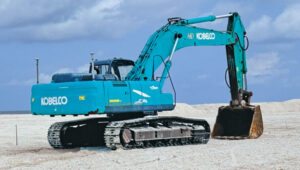
    using heavy machinery among sensitive coral reefs requires careful movement and precise operations to avoid damaging them. Photo: ComNav
    using heavy machinery among sensitive coral reefs requires careful movement and precise operations to avoid damaging them. Photo: ComNav

    As an advanced construction solution, ComNav Technology’s XE100 Guidance System for Excavator employs high-precision GNSS positioning and heading technology coupled with inertial sensors. In construction projects in the Maldives, the XE100 not only provides precise guidance for operators on land but also enables efficient and precise underwater operations in complex marine environments while minimizing ecological impact. Its excellent performance has brought significant benefits to construction projects in the Maldives.

    The Maldives’ construction environment is complex and variable, requiring precise equipment to adapt to diverse terrain. The XE100 supports multi-constellation multi-frequency GNSS, delivering centimeter-level accuracy. This ensures that, whether for leveling, slope cutting, or digging, the system delivers precise instructions for bucket operations and guarantees accurate excavator positioning, even in challenging conditions.

    ComNav technology’s Xe100 GNSS machine control system delivers centimeter-level accuracy in complex and variable environments. Photo: ComNav
    ComNav technology’s Xe100 GNSS machine control system delivers centimeter-level accuracy in complex and variable environments. Photo: ComNav

    For scenarios requiring underwater operations or mixed land and water tasks, the XE100 overcomes the traditional challenge of locating exact coordinates. The GNSS tablet’s intuitive display of coordinate points helps operators identify work areas and select appropriate excavation actions. This ensures safety, reduces technical barriers, minimizes the need for rework, and significantly enhances construction quality while maintaining high efficiency and precision.

    Construction projects in the Maldives often face challenges such as high humidity, high salinity and frequent vibrations. Each component of the XE100 is designed to withstand harsh environments with excellent durability. The system’s modular design also supports expansion to other construction machinery, enhancing flexibility and paving the way for future technological upgrades.

    As a nation abundant in marine resources and dependent on tourism, ongoing infrastructure development and maintenance are critical to the Maldives’ economy. The XE100 system improves construction accuracy, reduces operation time, ensures safety, and lowers costs, thereby accelerating project timelines.

    Leica Geosystems

    Machine control and automation for snow management

    The allure of pristine slopes and perfectly crafted terrain parks has always drawn adventurers to the mountains, but the landscape of snow management is shifting dramatically. With rising temperatures and unpredictable weather patterns, climate change poses a significant challenge to the snow sports industry. Natural snowfall is becoming less reliable, leaving resorts dependent on costly snowmaking systems that strain resources and budgets.
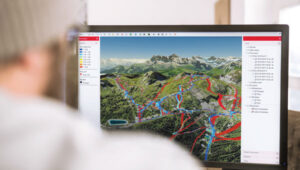
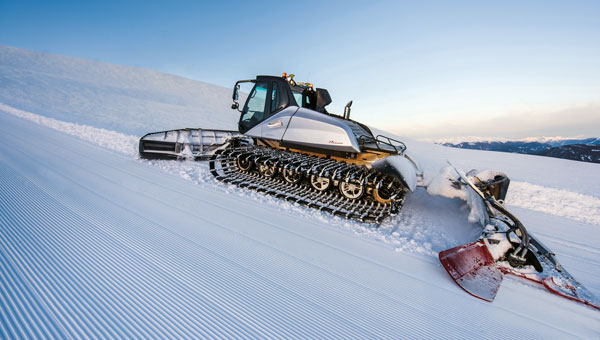
    Leica alpine office enables resorts to achieve operational goals while safeguarding the environment by precisely managing snow management and reducing waste. Photo: Leica Geosystems
    Leica Alpine Office enables resorts to achieve operational goals while safeguarding the environment by precisely managing snow management and reducing waste. Photo: Leica Geosystems

    For snowparks, these challenges are even more acute. Crafting intricate features such as halfpipes, jumps and rails requires precision and significant amounts of snow — an increasingly scarce resource. Amid these difficulties, the need for sustainability has never been more pressing.

    The tech that’s changing the game

    Leica Geosystems’ snow management solution, the Leica iCON alpine, paired with Prinoth snow groomers, is helping resorts get more out of less, making the construction of snowparks more efficient and sustainable.

    The Leica iCON alpine system leverages GNSS and advanced inclination sensors and inertial measurement units (IMUs) to measure and manage snow depth accurately. Mounted on any snow groomer, this system continuously collects data, ensuring that operators can see the exact snow depth beneath the blade and tracks — accurate to within ±3 cm. In other words, it’s like X-ray vision for your snowcat.

    the leica icon alpine, paired with Prinoth snow groomers, is helping to make the construction of snowparks more efficient and sustainable. Photo: Leica Geosystems
    The Leica Icon Alpine, paired with Prinoth snow groomers, is helping to make the construction of snowparks more efficient and sustainable. Photo: Leica Geosystems

    Need a perfect jump? Create a 3D model and import the data, which can be read on the screen inside the groomer’s cab. It even handles tricky terrain with features like avoidance zones and anchor point searches. This setup doesn’t just make slopes look good; it helps operators work smarter, not harder.

    Snow measurement for World Cup Slalom course

    For the past two years, Killington Mountain Resort in Vermont has been utilizing the Prinoth Connect Snow Measurement system powered by the Leica MC1 software.

    Killington is one of the first resorts in North America to invest in snow measurement, and it has been vital to executing the Women’s Slalom and Giant Slalom World Cup builds in 2023 and 2024. Killington has the snowmaking capability to cover the race trail, Superstar, with snow in about 100 hours. With the software, the teams can read the snow depth to +/- 3 cm, using snow measurement sensors instead of long metal probes. The software helps increase the efficiency of both snowmaking and grooming, making the build easier for the grooming operators, more straightforward for officials, and safer for the racers.
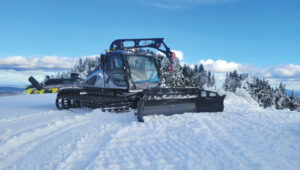
    Leica’s machine control solution has been vital to precisely executing the Women’s Slalom and Giant Slalom World Cup builds. Photo: Leica Geosystems
    Leica’s machine control solution has been vital to precisely executing the Women’s Slalom and Giant Slalom World Cup builds. Photo: Leica Geosystems

    From the snow to the dirt

    However, Leica Geosystems machine control technology is a year-round solution thanks to its versatile Leica MC1 platform, which allows the same hardware used for snow grooming to seamlessly transition into off-season applications such as summer earthworks, trail construction and road maintenance. With a single investment, resorts get a multipurpose tool that eliminates the need for separate systems, cutting costs and complexity.

    For instance, in the summer months at the Rieberalp in Davos Rinerhorn, the Leica MC1 solution powers excavation work for projects such as creating a reservoir and ensuring precise and efficient earthmoving. In the winter, the same system transitions to snow groomers, optimizing snow management on the slopes. This effortless switch between applications highlights the adaptability and value of the Leica MC1 platform, enabling ski resorts to get the maximum out of their investment while maintaining top performance year-round.

    Technology for more sustainable snowparks

    With precision snow management and reduced waste, resorts can achieve operational goals while safeguarding the environment. Adopting digital solutions such as these ensures that ski resorts and snowparks can continue to deliver world-class experiences for generations to come.

    Trimble

    Across digital dimensions on Te Ara Tupua

    Te Ara Tupua is an initiative by the New Zealand Transport Agency aimed at enhancing transport resilience while establishing a walking and cycling route between Wellington and Lower Hutt. The Te Ara Tupua Alliance includes the NZ Transport Agency and its design and construction partners: Downer NZ, HEB Construction and Tonkin + Taylor. To execute this project, the NZ Transport Agency is collaborating with Taranaki Whānui ki te Upoko o te Ika and Ngāti Toa Rangatira as iwi mana whenua. This collaboration inspired the name Te Ara Tupua, referencing the Māori creation story in which Ngake and Whātaitai, two tupua (ancient beings), formed Te Whanganui-a-Tara (Wellington harbor).

    The Ngā Ūranga ki Pito-One section of Te Ara Tupua will be built on the harbor’s edge, from Ngā Ūranga Interchange to Honiara Te Puni Reserve in Pito-One and connect with the new Pito-One to Melling section. The project will deliver a new resilient coastal edge protecting the road and rail while providing transport options and a safe route for walking and cycling between the two cities.

    The solutions involved include:

    • Trimble Marine Construction System
    • Trimble SketchUp
    • Trimble Stratus Software

    The benefits of the project include:

    • Reduced project timeline.
    • Improved safety for construction crews and the public.
    • Increased productivity.
    • Higher precision placement of embankment blocks.
    • Reduced environmental impact.
    • Real-time progress visibility for stakeholders.
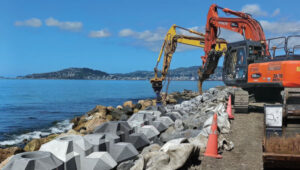
    Te Ara Tupua will deliver a new resilient coastal edge protecting the road and rail while providing new and safer transport options. Photo: Trimble
    Te Ara Tupua will deliver a new resilient coastal edge protecting the road and rail while providing new and safer transport options. Photo: Trimble

    Te Ara Tupua is currently under construction along the western coastline of Te Whanganui-a-Tara with the aim of being completed in 2026. The Pito-One to Melling section of Te Ara Tupua is the first completed section of the project and was delivered by the contractors, Fulton Hogan.

    The Pito-One to Melling section is a 3 km separated cycling route stretching from Pito-One to the Hutt River Trail near Bridge Street. The new path eventually will join the Ngā Ūranga to Pito-One section of Te Ara Tupua, which connects to the Hutt Road and Thorndon Quay.

    The construction of Ngā Ūranga to Pito-One section of Te Ara Tupua includes a 4.5 km shared path, shared path bridge, rock revetments, seawalls and landings. To protect the shared path, road and rail line against wave action, erosion and sea-level rise, an essential part of the new pathway is the construction of embankments (or revetments).

    Underwater resilience

    Te Ara Tupua is the first project where seismic performance has been considered and tested in the design elements, including the new seawall built over a large active faultline.

    Two main types of material are required for this project. Rock is being used for the revetment (the sloping rock seawall), which will protect the reclamation and the path from the sea while the remaining material is general fill. These are being sourced in Taranaki and Golden Bay with rock from Golden Bay being transported by barge, greatly reducing the number of truck movements.

    XBlocPlus units are a unique cost-effective solution for Te Ara Tupua. These blocks are poured in the shape of an ‘X,’ which interlock and stack on top of each other to create a seawall with a steeper incline.

    Using these interlocking concrete blocks reduces the seawall’s physical footprint and impact on the marine environment, enabling the project to use less material at a lower cost compared to a rock revetment.

    Through this innovation, the project team of engineers and ecologists (Te Ātiawa, Ngāti Maniapoto, Ngāti Tūwharetoa and Ngāti Apa) worked alongside lead cultural designer, Len Hetet to combine cultural and environmental design, which resulted in Te Ripowai, the unique Te Ara Tupua ecological XblocPlus unit. Te Ripowai speaks of the rippling water and connects to a Te Ātiawa whakatauki of guardianship. The guardians must keep the ripples occurring, else water becomes still and life will cease to exist. Te Riopowai includes surface patterns and textures to encourage growth of marine plants.

    The Ngā Ūranga to Pito-One pathway shoreline ultimately will have 6,663 of these blocks of varying shapes.
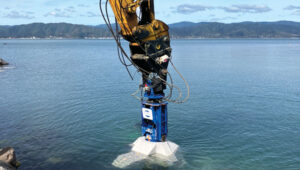
    operators of excavators with grapple attachments needed to move eight different block shapes into place with an 80 mm tolerance. Photo: Trimble
    operators of excavators with grapple attachments needed to move eight different block shapes into place with an 80 mm tolerance. Photo: Trimble

    Block placement

    Placing these blocks with precision and speed initially created some concern for the project team. Operators in excavators equipped with grapple attachments needed to move the units into place, initially about 4 m underwater, to a tolerance of about 80 mm to assure embankment strength. To further complicate the construction, there are eight different block shapes.

    It’s a task purpose-built for real-time digital twins and machine guidance, according to the Alliance. With help from SITECH, the survey team looked to its digital assets.

    First, Jan du Preez, survey manager with the Te Ara Tupua Alliance, relied on Trimble SketchUp to accurately model the individual blocks. Then, the team combined the Trimble Marine Construction (TMC) System with a digital model of the excavator. Laser scans along the shoreline provided a digital record of the existing conditions. Even the sequential placement of the blocks is planned in the digital space.

    On the job, an operator selects a designated block for placement on the screen, then uses the excavator grapple attachment to pick it up. TMC provides real-time feedback on the block’s position, rotation and tilt as the operator navigates to the appropriate position, even underwater.

    Du Preez added, “With TMC, the operators can ‘see’ where they are placing them under the water. Because they’re working in an active tidal area with most of the blocks sitting underwater, the idea was to make the process as easy as possible for the operator with highly visual markers on the screen. Every step is color coded, which allows operators to just focus on the colors, rather than trying to see underwater with the naked eye.”

    As the block is placed within the 80 mm tolerance required to interlock with the blocks above, the operator records the as-built position, and the screen shows green. The operator then releases the grapple and moves on to the next block.

    When asked about efficiency, du Preez noted, “The initial program specified placing 15 blocks per day. We are currently placing between 35 to 45 blocks per day depending on site conditions. We estimate that we’re seeing about three times the productivity compared with more conventional methodology — though I’m still not sure how we would have done this without TMC. We would have had to come up with some kind of visual marker and then perform quality checks with divers. It would have been time consuming and very costly.”

    Shared progress

    The benefits of the digital workflows to stakeholders, according to du Preez, are many, with transparency being the overarching benefit.

    Unlike a traditional contract where owner and project team are separate, in an alliance model the client is an integral part of the team. That said, while NZ Transport Agency, Waka Kotahi, et al., are involved in the everyday running of the project as part of the alliance, they also have a board. “Every time the Alliance board of directors sees our solution, they are completely blown away by what we’ve been doing and how we’re doing it,” du Preez said. They particularly like the regular drone flights that capture progress updates.

    “All survey data, models and regular flight imagery are loaded and stored in Trimble Stratus for sharing so that stakeholders always see the latest project status. The entire Alliance really appreciates this level of real-time digital visibility into the project.”

    Ngā Ūranga ki Pito-One is on track for completion in 2026. When complete, the Te Ara Tupua will deliver a safe, connected and resilient route, enabling more people to walk or bike, and connect with local paths in both Wellington and the Hutt Valley.
  • The year 2020 and the surveyor: What we learned

    The year 2020 and the surveyor: What we learned

    If there were ever a time to sit back and reflect on things that have happened in the last calendar year, the year 2020 will be the poster child for the next few generations (at least I hope so…). Because of several things that have happened worldwide in the profession of surveying, let us take this opportunity to look back on a year that was filled with new equipment, emerging technology and government interaction that will have a lasting effect on our surveying horizon.

    Look at all of these wonderful toys

    There was no shortage of introductions to new equipment for surveyors, especially in the GNSS receiver market. While combining GNSS capability with an inertial measurement unit (IMU) is not a new concept, the Big Three of Leica, Topcon and Trimble introduced new or upgraded versions of their latest receivers taking full advantage of the technology. The benefit of having the IMU integrated within the receiver is the ability to “tilt” the instrument yet having the calculated position remain at the tip of the receiver pole.

    Photo: Trimble
    Photo: Trimble

    Leica, however, takes the tilting feature to another level with an integrated camera that allows for close-range photographs to capture additional information through remote sensing software. The data extracted from the photographs can be simple points (and verified in the data collector while in the field) or point clouds that can be integrated into larger projects through the Leica office software.

    These new receivers, along with upgraded models from smaller providers, have opened the GNSS market to many more users well beyond surveying. The combination of more capability through advancing satellite constellations, more robust processors, and reduced receiver sizes have continued to drive GNSS positioning growth.

    Photo: Hexagon
    Photo: Hexagon

    Manufacturers are using these increased capabilities to promote better coverage to obtain positions under heavier canopies and less likelihood for multi-path errors. While I remain cautious about these claims of increased coverage, I also maintain that with any tool, measurements and positions must have proper and appropriate validation. However, I am impressed that the technology continues to advance with what was once seen as only applicable to the open sky.

    Not all the new technology has emerged through the GNSS receiver product lines; several less visible but valuable features have been introduced within the robotic total station lines. The manufacturers continue to push their equipment to react faster, stay locked on targets better, and provide more reliable solutions to data collection and construction layout. Data collectors continue to evolve with larger screens and more software capability, with some rivaling their desktop counterparts.

    As cellular networks grow in both size and speed, more direct connections between field and office are being made with faster response time to data transfer. Data collection can take place in the field and be analyzed by an office technician as it happens. Go another step further and add an aerial background image to the collector and/or the office computer; now each team member can confirm that the information being collected is sufficient for the project in real-time.

    Another technology that continues to advance is remote sensing, with more devices being introduced and with increased software capabilities. Besides new and upgraded offerings from the surveying-based manufacturers, other device makers are introducing products that offer remote sensing to the masses. The biggest news in this arena was the announcement from Apple that the iPhone 12 Pro and iPad Pro would come equipped with lidar sensing technology along with incredible photographic capabilities.

    While there does not seem to be specific apps developed for surveyors at press time, it is safe to say that there will be in short order. It is also a safe bet that having this capability on a mass-produced device will put pressure on the surveying and mapping equipment manufacturers to be cost-competitive on their own proprietary devices or risk losing out on market share.

    UAVs continue to be the fastest-growing segment of the surveying industry. More vehicle, sensor and software providers are coming to market to offer the surveyor a variety of choices. DJI continues to lead the way in the multi-rotor category with new products and sensors while other manufacturers are embracing the fixed-wing and vertical take-off and landing (VTOL) platform for greater range.

    Just like their automobile brethren, flight time continues to increase with discoveries of new battery compositions and weight considerations. The sensor market is expanding to include more affordable lidar units, as well as new technology in multispectral identification, gas and noxious odor detection, and much more.

    Software developers, too, continue to refine and expand the features found in their geospatial offerings with advancing technology and programming. Google Maps is the default navigation app for many smartphone users, but like anything utilizing GNSS in dense urban areas, the users find themselves bouncing all over the map.

    While surveyors recognize this as multipath, the smartphone user does not have any way to remedy this trouble. Google recognizes this issue and has been working on a programming fix to help minimize these positional errors. This is another example of how precise position determination has become a significant goal for our society, with the more correct position, the better.

    Meanwhile, in Washington D.C….

    2020 did not see any shortage of government action for the surveying and mapping community. As with many topics that come out of the nation’s capital, it should not surprise anyone that several of the items considered by the federal government and its agencies were not without controversy.

    The biggest and most controversial item continues to be the advancement of Ligado (formerly known as LightSquared) and the development of new communication technology that has been shown to interfere with the GPS transmission bands. The Federal Communications Commission (FCC), led by Chairman Ajit V. Pai, has been successful in holding off all challenges to the new technology including ones from current legislators and defense staff.

    The main argument from the FCC is the value of the system as a provider of 5G communication to a substantial portion of the country. They also make statements that safeguards are being taken to protect the GPS spectrum, yet many studies from outside parties show otherwise. The fight over this spectrum will continue into 2021, and it will be interesting to see if the new administration will see things from a different perspective.

    Several items to come out of Washington, D.C., late in the year were the blacklisting of DJI and the announcement of new UAV rules for flying over crowds and at night. With the DJI ruling, it is now illegal for government agencies to use the Chinese-based UAV maker for any activities. Based upon the significant market share of DJI, one can only wait to see how this situation plays out, and if the ban is expanded to private individuals.

    The FAA announcement on the new UAV flight rules was surprising but not unexpected. In addition to establishing flight limitations over crowds and at night, it also established a timeframe for requiring most UAVs to transmit a Remote ID during flight for determining who is flying and where they are located. Compliance with these rules will be required by the manufacturer within 18 months and by UAV pilots within 30 months.

    The National Geodetic Survey (NGS) has also been busy during 2020 preparing new datums and specifications for upcoming changes to the National Spatial Reference System (NSRS). Among those changes are the deprecation of the U.S. Survey Foot, beta testing of the latest geoid model (GEOID20), and new software tools for transforming positional information between datums. It was also announced that the release of the modernized NSRS scheduled for 2022 was being delayed.

    NGS continues to work with each state on the improved state plane coordinate systems and/or low distortion projection systems that will be implemented with the new NSRS rollout. All these efforts have been a monumental task (no pun intended) and kudos go out to NGS for getting everything this far.

    Pandemic 2020 (No, this is not a movie or a drill)

    As we covered in the May 2020 Survey Scene article, COVID-19 was unlike anything we had been exposed before. Initial reports tried to relate the virus to typical influenza and the H1N1 outbreak in 2009, but the rapid transmission and sheer volume of cases (and deaths) mostly eliminated those comparisons.

    From a technical viewpoint, the situation with COVID-19 has no bearing on GNSS operations and positional establishment. An operator of a GNSS receiver, and the business of surveying, is greatly affected by the presence of COVID-19 so it does deserve more than a brief mention in a retrospective look at the past year. This virus upended everything; from data collection and survey-related activities to computations and final drafting, the business of surveying felt the effects.

    Once the initial challenges of keeping everyone safe were addressed, it became a year-long marathon of providing surveying services to clients that did not let the pandemic hinder their progress. Field crews were under significant pressure to maintain social distancing at every turn, while office staff dealt with home Wi-Fi and lack of access to normal business conditions such as large-format printing.

    Video calls and instant messaging quickly became the norm, yet also became the scourge of dealing with the day-to-day operations of a business. The “normal” work/life balance with families, school, and social activities has disappeared and a more challenging approach has replaced that balance. Fingers are crossed that people will adhere to social distancing protocols and can get vaccinated as soon as possible so we can resume a portion of our previous lifestyles.

    However, we do have several positive things to take away from the challenges of the pandemic that will make our lives better going forward. Our reliance on geolocation became quite clear throughout the pandemic. Whether it is using it to help establish contact tracing or as simple as having a delivery service bring necessities straight to your door, almost everyone relies on geolocation for helping guide them through the “new normal.”

    We are using our smartphones to track our family members and help keep them out of harm’s way. It would be hard to imagine how much more difficult this situation would have been before cellphone and GNSS integration.

    Graphic: World Health Organization
    Graphic: World Health Organization (https://www.who.int/emergencies/diseases/novel-coronavirus-2019).

    Another leap forward that most people are not aware of is the publicizing of GIS dashboards and incredible analysis of the geolocation of people worldwide. While GIS dashboards have been in existence for many years, it is only now that the public has paid attention to the vast information available to them.

    From providing numbers of cases to graphically depicting “hotspots” across the world, these dashboards are full of useful information to help people understand the size of this pandemic, the places where mitigation is working, and where additional restrictions are being put in place to help reduce the spread of COVID-19.

    The ability to merge geolocations with physical conditions and situations into a real-time mapping solution can help reduce the spread of the virus. By combining GNSS technology with advanced computing power and data storage, the power of GIS has been brought to the front page of public agencies and news sites.

    While we still enjoy watching movies with superheroes, the true heroes during this pandemic are the frontline health workers, first responders and data analysts/programmers who bring us this timely information quickly. A hearty thank you goes out to all of them for their efforts and dedication to the cause.

    In memoriam

    Photo: GPS World staff
    Photo: GPS World staff

    The year 2020 also brought losses to every corner of the world and the surveying community was not spared. There are very few individuals we call pioneers in the surveying industry, so to include Dr. Javad Ashjaee among that group is no small feat. His contributions to the surveying profession helped turn every practitioner into a geospatial information provider.

    From his early days at Trimble pioneering the commercial-grade receiver to creating his company at Ashtech and embracing GLONASS with GPS, he continued to expand the capability of the GNSS receiver. Many surveyors today only know his name through his latest company, Javad GNSS, and the unique line of receivers and measuring devices and their distinctive green color.

    Cover photo: Ed Koziarski
    Cover photo: Ed Koziarski

    Dr. Ashjaee was a big part of the GNSS revolution, so next time you starts up their receiver to collect survey data, take a moment to thank him. It was my pleasure to meet and interview him at the 2017 Intergeo trade show in Berlin to talk about his product line. I was also able to test-drive his incredible GNSS products for a feature in GPS World magazine on using smartphones for data collectors.

    To say the man will be missed is a big understatement and I wish his family well on continuing his company and tradition of making great leaps in technology.


  • New Leica Aibot facilitates accurate, safe aerial surveys

    Leica Geosystems has released the Leica Aibot, its latest unmanned aerial vehicle (UAV) system based on DJI’s aerial platform, the M600 Pro, designed to rapidly and autonomously enable digitizing of critical infrastructure.

    Leica Geosystems’ UAV technology enables users to get a complete data set in less time with a user-friendly and innovative interface, opening new business opportunities while reducing time, costs and effort from with traditional data collection methods.

    A proprietary software suite supports the new UAV workflows. Using Leica Infinity for point cloud, digital surface model and orthophoto generation enables surveyors to process and visualize aerial data, increasing productivity and speeding data delivery. Supporting users to share data to Cylcone and Cloudworx, the integration of the UAV point cloud with terrestrial scan data enables informed decisions, while complete data sets increase project efficiency.

    Use in construction

    Throughout a construction project lifecycle of planning, designing and construction, Aibot provides easy access to critical information to perform volume calculations and monitor site progress. From creating digital terrain models to stripping and bulk earthworks and trenching to finally fine grading, paving and compaction, the solution facilitates actuals comparisons. This provides a more transparent view of site progression monitoring and volume calculations with safer operations, to keep projects on schedule.

    High-definition imagery and 3D mapping enable viewing of site mapping or progress documentation, meaning users identify gaps early with high accuracy, and save time and money at all project stages.

    Automating operations

    The new technology, developed in partnership with UAV manufacturer DJI, allows users to process and analyze millions of data points gathered from above and to visualize the data for actionable information. UAV data can be combined with existing survey technologies, such as TPS, GPS and laser scanning, for a more complete set of information.

  • Leica Geosystems offers complete imaging solution

    Leica Geosystems offers complete imaging solution

    Leica Geosystems’ BLK360 is a miniaturized black 3D imaging laser scanner. The BLK360 captures the world with full-color panoramic images overlaid on a high-accuracy point cloud.

    The one-button Leica BLK360 is easy to use, Leica said. Anyone who can operate an iPad can now capture the world around them with high-resolution 3D panoramic images.

    The Leica BLK360 imaging laser scanner is so small and light that it fits in a typical messenger bag. It features a 60-meter measurement range for full dome scans. A complete full-dome laser scan, 3D panoramic image capture and transfer to the iPad Pro takes only 3 minutes.

    Using the ReCap Pro 360 mobile app, the BLK360 streams image and point cloud data to iPad. The app filters and registers scan data in real time. After capture, ReCap 360 Pro enables for point cloud data transfer to a number of computer-aided design, building information modeling, virtual reality and augmented reality applications. The integration of BLK360 and Autodesk software streamlines the reality-capture process, opening the technology to non-surveying individuals.

  • Leica Cyclone REGISTER 360, cloud services offered for digital reality-capture market

    Lieca-Cyclone-WHexagon announced today its new Leica Cyclone REGISTER 360 laser scanning software for simpler, automated registration, and its Cyclone Cloud Services platform for secure global collaboration through an on-demand software-as-a-service model.

    Together, the new products offer users smarter ways to register, visualize and collaborate around digital reality projects, delivering solutions into the architecture, engineering and construction (AEC), plant, survey and public safety markets through the connected Leica Cyclone family.

    “Digital realities are enabling professionals and newcomers to laser scanning to shape the world around us. Whether it’s on a construction site for building documentation or in a plant environment for life cycle updates, efficiencies and productivity gains are realised with the ability to merge reality and digital data quicker and with more accuracy,” said Hexagon President and CEO Ola Rollén. “These new developments in laser scanning registration with our Cyclone software improve the user experience and overall workflow of point cloud processing.”

    Lieca-Cyclone-W2Cyclone REGISTER 360 is the a professional-grade registration software that combines automation, high performance and ease of use into one powerful package available to novices and experts alike. Simplifying and automating the entire production process, Cyclone REGISTER 360 enables users to automatically process, validate and deliver point clouds according to rigorous quality control and reporting standards.

    Cyclone Cloud offers professionals a new way to consume and deliver digital reality data through a highly scalable, intuitive and web-based platform. TruView Cloud Services is the only cloud-based digital reality visualization and collaboration platform that enables quick setup of private user communities, connecting with and making the data available anywhere in the world.

    Users can publish digital reality content in Cyclone from handheld devices and terrestrial, mobile and unmanned aerial vehicles. With open application programming interfacing, the data can be delivered in any device and operating system with connectivity for building information modeling, geographic information systems and computed-aided drafting.

  • Leica Offers Point-Cloud Workflow Tips in Webinars

    In two new webinars, Leica Geosystems expert Bill Wallace presents time-saving tips for point-cloud workflows.

    How to Cut 3D Scanning Project Time Nearly in Half

    Leica-3DscanningWorking with large scanning projects with billions of data points can be a tedious and time-consuming process, often resulting in breaking the project into manageable pieces and duplicating data sets across your organization. However, a new solution by Leica enables users to instantly load point clouds regardless of size and create CAD deliverables with increased productivity.

    In this 60-minute webinar, Wallace shows how Leica JetStream, when paired with CloudWorx, can cut project time by up to 40 percent while allowing multiple users to stream the full data set simultaneously for added efficiency.

    Covered topics include:

    • How to greatly improve data processing speed
    • How to reduce storage requirements with enhanced data management
    • How to accelerate the loading, display, and rendering of point cloud images for an application.

    Learn more here.

    How to Broaden the Reach and Impact of Your Point Clouds

    Leica-pointcloudThe free Leica TruView panoramic point-cloud viewer enables users to view, zoom in or pan over point clouds naturally and intuitively. In this 60-minute webinar, Wallace and David Langley provide a exclusive behind-the-scenes look at this point-cloud sharing tool.

    Covered topics include:

    • How to communicate more effectively through point clouds by sharing them from any browser on any device, with no plug-ins required.
    • How to use new project management tools to make a team’s performance — and clients’ interaction with the data — more efficient.
    • How to take deliverables to the next level by incorporating strategies from some of today’s most successful innovative thinkers.

    Learn more here.


  • Leica GS14 GNSS Features Hybrid Communication Technology

    Leica GS14 GNSS Features Hybrid Communication Technology

    Leica Viva GS14
    Leica Viva GS14

    Leica Geosystems, manufacturer of the Leica Viva GNSS Unlimited series and GS14 GNSS receiver, has added a new hybrid communication technology to its compact and powerful GNSS smart antenna. The latest generation Leica Viva GS14 GNSS now supports Verizon CDMA solutions along with all standard 2G/3G networks and UHF TX/RX radio in a single device, making it a professional GNSS receiver with all three communication systems built in. Users simply slide in their SIM card to experience instant connectivity for faster and easier field communications and SmartNet RTK corrections, the company said.

    The Leica Viva GS14 3.75G&UHF supports 2G GPRS, 3G HSPa+, CDMA (EV DO) and UHF TX/RX radio between 450 and 470 MHz in one compact housing. Professionals can choose whether they want to use the UHF radio to transmit or receive work, a 2G/3G cellular network, or Verizon CDMA. No external equipment is required.

    “The Leica Viva GS14 with its hybrid communication technology is the most advanced compact GNSS receiver in the market,” said Bernhard Richter, Leica Geosystems GNSS business director. “The addition of CDMA modem capability in a unique all-in-one design offers unmatched flexibility in communication choices.”

    The Leica Viva GS14 3.75G&UHF is available today throughout the United States. Ordering information and details are available from all authorized U.S. Leica Geosystems representatives and dealers.

  • Pinnacle Uses Leica System to Keep NYC High-Rise Plumb

    Pinnacle Uses Leica System to Keep NYC High-Rise Plumb

    Photo: Leica GeosystemsWhen the new Extell luxury high-rise building goes up at 217 West 57th Street in Manhattan, the vertical alignment of the core-wall structure will be crucial to success. This internal core structure will rise almost 1,500 feet above the ground and will be the reference for all other building construction, making its construction one of the most mission-critical aspects of the entire project, according to Leica Geosystems.

    Pinnacle Industries, the concrete contractor responsible for building the structure, has invested in an innovative core-wall alignment system. Consisting of advanced GNSS and robotic total station solutions, the Vertical Alignment System from Leica Geosystems will be used as each floor is constructed to ensure the overall vertical geometry of the structure. High-end training from Leica Geosystems will provide the support and knowledge transfer needed to achieve successful adoption of this innovative approach.

    The project is noteworthy for a number of reasons. With an overall roof height of 1,479 feet (1,775 feet to top of spire), the new building will dominate the Midtown skyline and will be the tallest residential building in the world. It will also mark the introduction of Nordstrom Inc. to New York City. The architect of record, Adrian Smith + Gordon Gill Architecture, is the firm behind Dubai’s Burj Khalifa, the tallest commerical building in the world.

    According to David Rutledge, director of structural monitoring for Leica Geosystems’ Monitoring Solutions business in North America, Pinnacle Industries chose the Leica Geosystems Vertical Alignment System for its ability to reliably and quickly make alignment adjustments to the forming traveler that will be used to construct each floor. The Leica GM10 GNSS instruments in particular were chosen for their ability to produce highly accurate 3D position coordinates.

    “It’s very exciting to be involved with the soon-to-be tallest residential building in the world,” Rutledge said. “Pinnacle is an industry leader in this type of construction, and we feel honored to have been selected by the team. Leica Geosystems’ solutions provide exceptionally high accuracy and outstanding performance, making them ideally suited for the high productivity demanded on projects like this. We’re thrilled to be able to play a supporting role in this significant and historic project.”


  • Leica Infinity Software Released for Nova MS50 Multistation

    A new office software program, Leica Infinity, has been launched by Leica Geosystems for easy management, visualization, processing and georeferencing of combined total station, imaging and scanning data from the Leica Nova MS50 MultiStation. Part of an extensive portfolio of software that completes the Leica Nova solution, Leica Infinity provides users with custom deliverables and helps them make informed decisions, Leica said.

    With a simple user interface, optimized data organization and dynamic data visualization, Leica Infinity gives a project overview and ensures streamlined workflows, Leica said, Scan data can be inspected, cleaned up automatically to remove outliers and re-calculated together with the total station setups. Multiple scans can be combined for the creation of information-rich surfaces.

    The instant access to raw data at all times allows users to combine and cross-check scans against processed or archived data and survey results with only a couple of clicks in order to make the right decisions. Leica Infinity offers all the tools to document and report on individual steps and final results before data can be exported for further processing to a broad choice of CAD software packages.

  • Leica Geosystems Announces Leica MissionPro Software

    Leica Geosystems Geospatial Solutions Division is pleased to announce the release of its new mission planning software, Leica MissionPro. The software provides mission planning capability for all airborne sensors including LiDAR, line and frame sensors and is fully integrated into existing Z/I Imaging and Leica Geosystems workflows.


    The company reported that in addition to the core planning functionality, Leica MissionPro includes an exciting range of new features such 3D virtual Globe View and tools for project management and evaluating missions.

    “Leica MissionPro combines the best features from Z/I Mission and Leica FPES into a comprehensive and highly productive planning software”, says Jacques Markram, Product Manager for Leica MissionPro. “Leica MissionPro represents an exciting first step in our combined product roadmap and is truly the result of synergies across the new division. Leica MissionPro simplifies planning for any type of airborne sensor mission and allows our combined customer base to further enhance their productivity.”

    According to Leica, MissionPro supports integrated multi-sensor and LiDAR planning in a true 3D mission planning environment and exports flight plans for both Z/I Inflight and Leica FCMS. In addition, Leica MissionPro provides access to Web Map Services and uses worldwide SRTM data.

    Leica MissionPro replaces Z/I Mission and Leica FPES software. A free upgrade is provided to all Leica FPES and Z/I Mission maintenance customers.

    For more information about Leica MissionPro please visit: http://www.leica-geosystems.com/missionpro