Tag: Lloyd Holm

  • What Is a Brigadier? And as a GPS User, Why Do I Care?

    What Is a Brigadier? And as a GPS User, Why Do I Care?

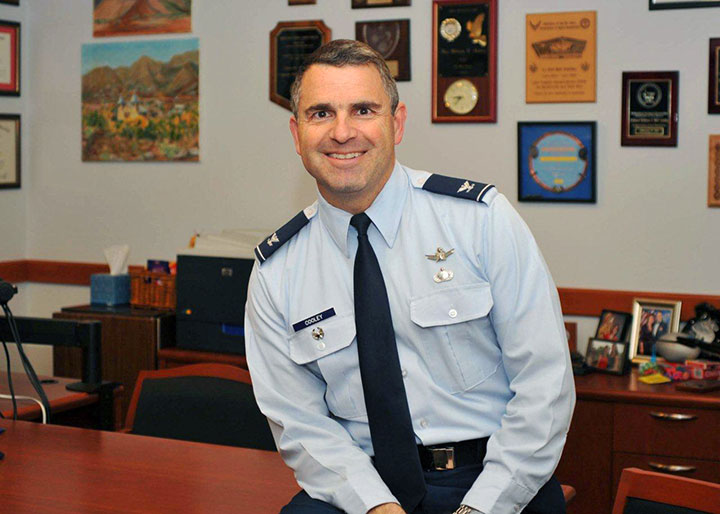
    Col. William Cooley, Director, U.S.A.F. Global Positioning Systems Directorate.
    Col. William Cooley, Director, U.S.A.F. Global Positioning Systems Directorate.

    This is the story we ran in GPS World magazine just moments after the announcement was made that Colonel William Cooley, Ph.D., director of the GPS Directorate, was nominated by President Obama to the U.S. Senate for appointment to the rank of Brigadier General in the United States Air Force (USAF).

    Colonel William Cooley, director of the Global Positioning Systems Directorate, has been nominated by President Obama to the Senate for appointment to the rank of brigadier general, United States Air Force, according to an announcement by Secretary of Defense Chuck Hagel. He is the first SPO director in many years to be nominated for general officer rank, according to Don Jewell, GPS World’s contributing editor for defense.

    Cooley is currently serving as senior materiel leader and director, Global Positioning Systems Directorate, Air Force Space Command, Los Angeles Air Force Base, California.

    “This is a great accomplishment for Bill and for the GPS community,” Jewell said. “We are all certainly very proud of him and his accomplishments and his unflagging support for the PNT community globally.”

    “This nomination is an outstanding achievement as it clearly demonstrates continued senior leadership confidence in his ability to lead the men and women in our Air Force. We have been privileged to see that for ourselves here at SMC,” said Samuel A. Greaves, Lieutenant General, USAF, Commander, Space and Missile System Center.

    Col. Cooley authored GPS World’s Directions 2015 article on the outlook for GPS in our December issue,What It Takes to Make a Gold Standard.”

    So What?

    For those of us who have spent our lives as military “brats” and/or as members of the U.S. military, announcements such as this are certainly great news, but we tend to take them in stride, as this is the way promotions to the General Officer ranks have always been announced. However, shortly after this short article appeared, I received numerous emails that, after extending congratulations to Colonel Cooley, tended to fall into specific categories:

    1. So what? Why should I care?
    2. Obviously promotions are a good thing, but why is this one so important?
    3. What is a brigadier general anyway?
    4. The Air Force does not have brigades, so how can he be a brigadier general?
    5. How many different kinds of generals are there, and where does a brigadier general place if you put them in order?

    Our editor-in-chief, Alan Cameron, had some of the same questions asked of him, so we thought we would briefly put this announcement in perspective for those of you not steeped in military history and lore. I will concentrate on the USAF, United States Air Force, as this is most pertinent to our discussion concerning Colonel Cooley. I will add links to rank charts and explanations for the other services as well. I will concentrate on the officer ranks for the purpose of this article. Plus, I will highlight Colonel Cooley’s career as an officer in order to make it more personal and easier to relate.

    If you are one of those civilians who do not understand the military hierarchy, especially the rank structure, do not feel alone. It was revealed just a few days ago that in our new Congress, only 20 senators (20%) and 89 representatives (20.5%) are veterans, according to the authoritative Vital Statistics on Congress, published by The Brookings Institution. That is down from more than 77% in both houses of Congress after WWII and more than 75% in 1975 toward the end of the Vietnam War. How times have changed.

    United States Air Force (USAF) Rank Structure

    U.S. Air Force Ranks — Enlisted and Officer, from Lowest to Highest
    Pay Grade Rank Abbreviation Classification
    E-1 Airman Basic AB Enlisted Airman
    E-2 Airman Amn Enlisted Airman
    E-3 Airman First Class A1C Enlisted Airman
    E-4 Senior Airman SrA Enlisted Airman
    E-5 Staff Sergeant SSgt Noncommissioned Officer
    E-6 Technical Sergeant TSgt Noncommissioned Officer
    E-7 Master Sergeant MSgt Noncommissioned Officer
    E-8 Senior Master Sergeant SMSgt Noncommissioned Officer
    E-9 Chief Master Sergeant CMSgt Noncommissioned Officer
    E-9 Command Chief Master Sergeant CCM Noncommissioned Officer
    E-9 Chief Master Sergeant of the Air Force CMSAF Noncommissioned Officer (Special)
    O-1 Second Lieutenant 2d Lt Commissioned Officer
    O-2 First Lieutenant 1st L Commissioned Officer
    O-3 Captain Capt Commissioned Officer
    O-4 Major Maj Field Officer
    O-5 Lieutenant Colonel Lt Co Field Officer
    O-6 Colonel Col Field Officer
    O-7 Brigadier General Brig General Officer
    O-8 Major General Maj G General Officer
    O-9 Lieutenant General Lt Ge General Officer
    O-10 General Gen General Officer
    O-10 General of the Air Force GAF General Officer


    The USAF officer rank structure is similar for all the services, except that the USAF no longer has warrant officers. Please allow me to answer upfront the most frequent question from audiences where I am asked about senior military rank: “If a major outranks a lieutenant, then why does a lieutenant general outrank a major general?” It sounds strange, but understand that the designation of lieutenant general historically, since the Middle Ages, was held by the second in command on the battlefield, who was normally subordinate to a captain general, which is a term and rank no longer in use today. Clear as mud, right? These designations have been around for hundreds of years and are really pretty simple once you take the time to learn them.

    Promotions

    If we look at Colonel Cooley‘s dates of promotion, you will see how long he spent in each grade — grades are depicted numerically 0-1 through 0-10 and ranks are spelled out. An 0-1 is a second lieutenant, etc. Colonel Cooley is currently a field grade officer, what some informally call a full-bird colonel. The insignia for a colonel is an eagle, and the grade is 0-6. Colonel Cooley has been nominated to be a senior officer, general officer (GO), an 0-7 or brigadier general (Brig Gen), which is designated by a single star. Don’t let all the nomenclature confuse you. Colonel Cooley is about to become a Brig Gen, or BG as it is sometimes referred to, and that is a feather in his cap as well as for GPS, the directorate and SMC. As Martha Stewart is fond of saying, “It’s a good thing.”

    Colonel Cooley’s Effective Dates of Promotion

    • Second Lieutenant May 19, 1988
    • First Lieutenant June 19, 1990
    • Captain June 19, 1992
    • Major Oct. 1, 1999
    • Lieutenant Colonel March 1, 2004
    • Colonel Sept. 1, 2007
    • Nomination to be a Brigadier General January 2015

    Just as in the civilian world, typically as you climb up the ladder of rank, your responsibilities increase. In the military, typically you become more of a generalist, and you are looked to more for your leadership abilities than your specific technical or educational abilities. Although it all comes together in a package, when you are promoted to the General Officer ranks. The senior leadership in the USAF considers the whole man when deciding who will lead the airmen of the future. Everyone in the USAF is an airman, in that they serve in the United States Air Force, and then they are designated by their rank.

    Colonel Cooley has been in the USAF for almost 27 years and could conceivably remain for another seven years or so. Most GOs retire at about 55 years of age. The only reason this number is nebulous is that as a general officer, you serve at the convenience of the president of the United States, and he can ask you to leave the service or retire at his pleasure, or he can ask you to remain, just as CEOs do in corporate life and careers. Except in this case, the asking or directing is being accomplished by the highest-ranking leader in our government and the U.S. military, the president of the United States fulfilling his role as the commander-in-chief of the U.S. Armed Forces.

    Colonel Cooley’s Education

    Another major factor in military life is education, although in recent years — primarily during the last 10 years we have been at war —several military leaders have tried to downplay that facet of military preparedness, which I personally think is a mistake. Those who argue for not considering education as a key element for promotion point out that leadership, especially during war time, is key, and leading and inspiring men and women is more important than academic degrees. Without a doubt, leadership qualities are important, but how does an education disqualify anyone from being a leader? It does not; just the opposite is true, because in today’s increasingly technically oriented world, I maintain that both qualities are critically important in our leaders. I would much rather follow a Harvard-educated president with a law degree from Columbia than I would an unemployed felonious house painter. This is a history test! Did you pass? Now, let’s take a look at Colonel Cooley’s rather impressive educational background.

    • 1988 Bachelor of Science, Mechanical Engineering, Rensselaer Polytechnic Institute, Troy, N.Y.
    • 1990 Master of Science, Mechanical Engineering, University of New Mexico, Albuquerque, N.M.
    • 1995 Squadron Officer School, Maxwell AFB, Ala.
    • 1997 Doctor of Philosophy, Engineering Physics, Air Force Institute of Technology, Wright-Patterson AFB, Ohio
    • 2003 Air Command and Staff College, Maxwell AFB, Ala. (Distinguished Graduate & No. 2 in class)
    • 2007 National War College, Fort Lesley J. McNair, Washington, D.C.
    • 2008 Program Managers Course, Defense Systems Management College, Fort Belvoir, Va.
    • 2009 Senior Manager Course in National Security, Elliott School of International Affairs, George Washington University, Washington, D.C.
    • 2009 Executive Program Managers Course, Defense Systems Management College, Fort Belvoir, Va.
    • 2011 USAF Enterprise Leadership Seminar, University of Virginia, Charlottesville, Va.

    I mention education here primarily because it is so critical, and it is evident that Colonel Cooley is one of those well-educated leaders who continually seek to improve themselves. All war-time education aspersions aside, it is one of the obvious reasons he has been nominated to be a general officer. Statistics show that only 0.23% of all officers will be promoted to the rank of brigadier general — roughly 1/5 of 1% — and that only 1.76% of officers in the USAF have Ph.Ds.

    Having said that, the USAF is also the most educated officer corps of all the services, with 36% having bachelor’s degrees, 49% having master’s degrees, 1.76% having Ph.D.s and 10.32% having professional degrees such as MDs and JDs (2.92% didn’t respond). If you are adding in your head, you will see this adds up to 100%, because having a college degree is a requirement to be a commissioned officer in the USAF. So you see, education does matter, and is a core concept for the entire USAF officer corps. This is not true of all services.

    Location, Location, Location

    As in corporate life, certain jobs and positions in the military prepare an individual to be a general officer. Usually these jobs are well known. Being a successful squadron, group and/or wing commander certainly prepares you to be competitive for a general officer nomination. In effect, this can mean that you command anywhere from 50 to 5,000 personnel, and how well you execute your command and accomplish your mission usually determines how competitive you will be for increased rank and responsibility.

    I mention this only because Colonel Cooley had to overcome what can only be described as a handicap as his position as wing commander of the GPS Wing, which was then redesignated as a directorate, at which time he became director of the GPS Directorate. This position, although critically important to the success of the GPS mission, has not exactly been a breeding ground for general officer nominations.Indeed, it has usually been perceived as a final or retirement assignment for most of the colonels assigned there. I can only remember four other colonels in the last 40 years, and I have known them all, that went on to become general officers. Several of the colonels have gone on to higher positions in the government as civilians, but only four prior to Bill have actually made general officer rank.

    Scrutiny

    Allow me point out what should be obvious by now. Unlike corporate America, every aspect of the senior military officer’s life is open to public scrutiny and review. They literally live in glass houses. As you have seen, where we were educated, how much money we make, when we made each promotion — to the day, and where we were assigned is open for anyone to view. The life of a senior military officer is indeed an open book, and that can be both good and bad. On the plus side, smart junior officers learn from that openness and prepare for their future accordingly. If things go wrong, however, there is no place to hide.

    Personal Life

    Now for a personal comment: I have had the pleasure of knowing and working with Colonel William Cooley, whom I affectionately refer to as Wild Bill, for several years, both at the Air Force Research Laboratory (AFRL) and the Space and Missile Systems Center (SMC) at Los Angeles Air Force Base. I can honestly say I have been impressed. He has a great sense of honor and integrity and is obviously well educated. He engenders respect from his peers and subordinates alike, because when he is engaged with you in a discussion, you have his undivided attention. He makes you feel as if you are the only person in the room and your opinion is the only one that matters. Once you realize that, it makes you want to ensure what you are saying is absolutely correct and worthwhile.

    It is a trait shared by many great leaders, and Wild Bill practices it daily. It is indeed a trait or a talent that I wish more of our leaders would/could employ. That is not to say that Bill, especially the engineer and Ph.D. part of his personality, will not question you, argue with you or disagree with you, but he will never disparage you or your opinion, and that is but one of the key traits, along with his great sense of humor, that makes Colonel Cooley a great leader. Most importantly, it engenders loyalty among his peers and subordinates alike. I hope there will be many more stars in his future.

    That’s Why!

    Now you know why Colonel Cooley being nominated to be a Brigadier General is so important, and why it is specifically important for the GPS Directorate, as it gives future directors hope, and why it is important to us as GPS users — there is now another general officer and leader that understands GPS and can defend it when necessary from all the naysayers and pseudo-political wannabe subject matter experts I wrote about last month. Colonel Cooley is the real deal. I know I sleep better at night knowing there are leaders like Brigadier General Select William (Wild Bill) Cooley standing watch. Aim high!

    What Is Don Reading?

    I won’t go into the gory details but I had major heart surgery recently and just a week or so before Christmas I was contentedly settled in my Colorado mountain home with the snow swirling outside amid sub zero temperatures. Inside the fireplace was roaring and I was comfortably ensconced in my favorite leather chair just wishing for a good book to read when what should arrive in the mail but The Elbe Resolution, the latest creation and continuing World War I and World War II saga by Dr. Lloyd Holm.

    You may remember his first book, The Ledgerbegan with the famous and recently celebrated 100th Anniversary of the Christmas Truce of WWI.


    I wrote about Dr. Holm’s wonderful first book, back in August 2013 and I have been anxiously awaiting the sequel ever since. The second volume continues the same story line in fine fashion and I can truly say that, just like the first book, I could not put it down. What a wonderful read.

    It is painstakingly accurate historically and linguistically, while the characters, many of who carry over from the first book, are all absolutely believable and captivating. The story is alternatingly heart-warming and heartbreaking as you are caught up in the drama and pathos of World War II.

    The best news is that the story continues, and now I have the opportunity to anxiously await the third volume!
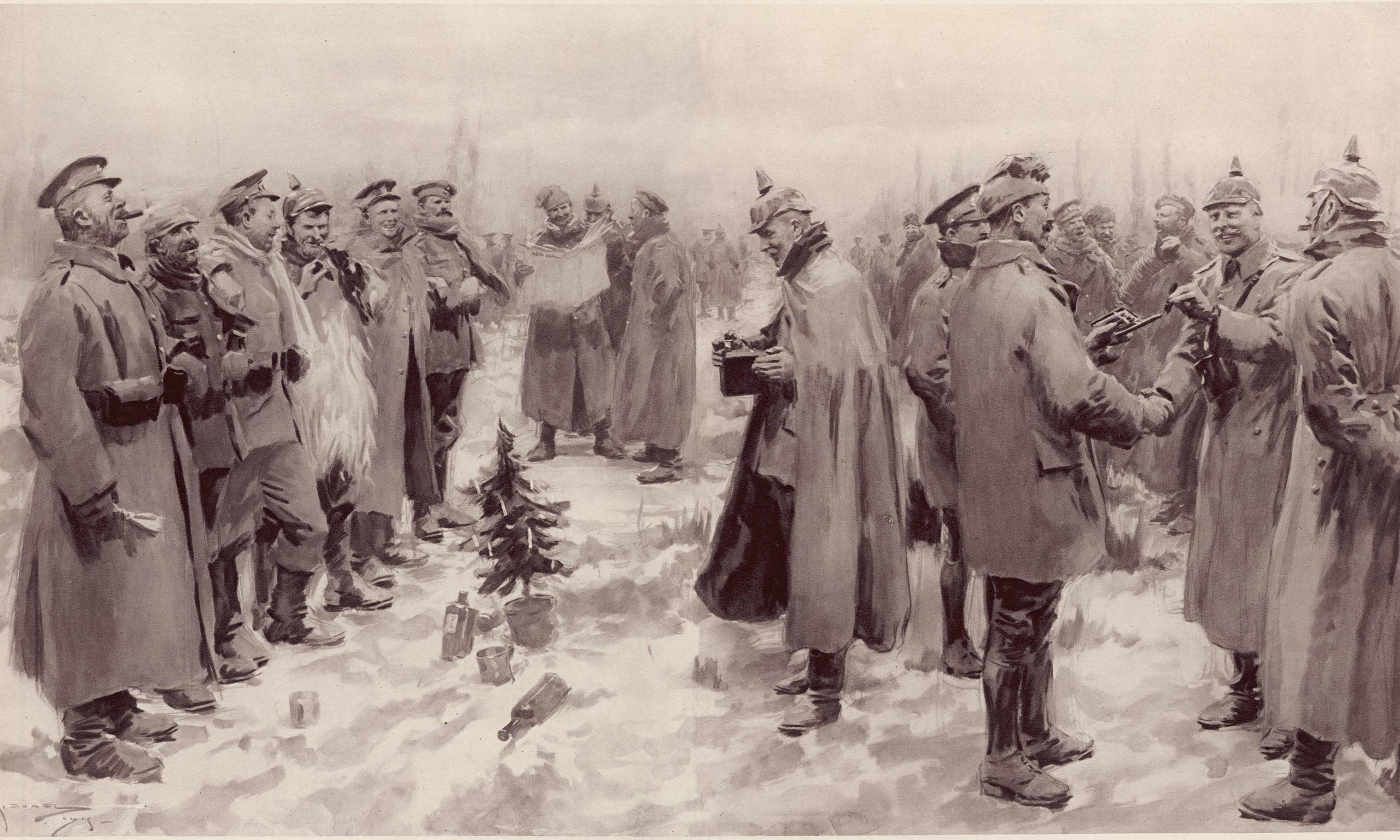
    An artist's impression from The Illustrated London News of January 9, 1915: "British and German Soldiers Arm-in-Arm Exchanging Headgear: A Christmas Truce..."
    An artist’s impression from The Illustrated London News of January 9, 1915: “British and German Soldiers Arm-in-Arm Exchanging Headgear: A Christmas Truce…” Photo: The Illustrated London News
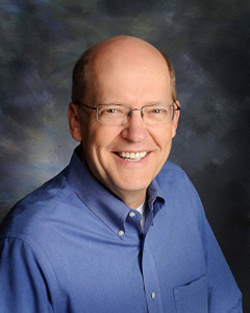
    Author Dr. Lloyd Holm.
    Author Dr. Lloyd Holm.

    Whatever you do, please find a copy of this book today and settle in for a great read. You will not be disappointed.

    And while you are reading, note how many times the primary issue that many of our soldiers, sailors and airmen faced during the two world wars was figuring out where they were and where the enemy was located. It was almost a full-time job. What they would have given for a GPS!


  • A Space Pioneer Remembered

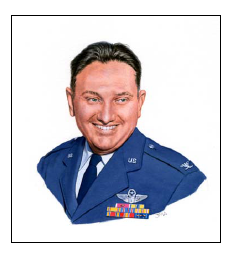
    Colonel Francis Xavier Kane
    Painting of Colonel Francis Xavier Kane (courtesy of the USAF Space and Missile Pioneers).

    Plus: The First Installment of ‘What Is Don Reading?’

    This month I planned to catch up on all those important topics that need to be written about but don’t make the cut, mainly due to space limitations — and then came the sad news of the passing of a good friend, mentor, and great Space and Missile Pioneer, Colonel Francis Xavier Kane, Ph.D., USAF Retired, born on December 12, 1918, in Philadelphia, Pennsylvania. To put this date in perspective, consider that the first successful Wright Brothers flight at Kitty Hawk occurred in 1903.

    Known simply as “Duke” to his friends and colleagues, he went to be with the Lord on July 18, 2013. He was 94 years old, and the majority of those years were filled with futuristic thoughts and writings about what we could achieve in the heavens above us, and accomplishments that support the Space Age we all live in today.

    I first met Colonel Kane in 1973, a full three years after he retired with 27 years of active duty in the USAF. Duke graduated from the U.S. Military Academy at West Point in 1943 in the middle of WWII. In those days, there was not an U.S. Air Force Academy. What would become the U.S. Air Force was then known as the Army Air Corp. The USAF did not become a separate military service until September 18, 1947, with the implementation of the eponymous National Security Act. Still, Duke found himself in an Air Force uniform, flying airplanes and instructing others how to fly. He loved flying, but as you will soon discover, he was an engineer and professor at heart. He played to his strengths.

    I never knew Duke while he was in uniform. Despite my best efforts to refer to him with proper military courtesy as Colonel Kane, he quickly remonstrated me and informed me that to his friends and colleagues he was known simply as Duke, and so “simply Duke” it has been for the last 40 years. At the end of our conversation about appropriate appellations, he added, “And no one calls me Francis-Xavier except my wife Virginia, and then I know I’m in the dog house!” (Ed: Duke and Virginia were married for 67 years).

    Duke Kane was the first to send me a wonderful handwritten letter of congratulations via snail mail back in 2007, when I penned my first column as the Defense Editor for GPS World magazine. The letter was extremely complimentary, with high praise I had certainly not yet earned, but then that was Duke — always supportive. Comments in his letter I will always treasure are “Finally, we have someone writing regularly about GPS that actually knows what he is writing about…and don’t forget, Don, I have declassified history files dating back to the early days of the 621B program and they are always at your disposal.”

    I heard regularly from Duke, several times a year at least, and it was always a note of encouragement or praise; what every journalist needs. It meant a lot to me personally that it came from Duke because, you see, Duke was a very prolific writer and thinker himself, and perhaps at times even a frustrated journalist. Some of his wonderful and insightful writing on the possible uses of the “Space Domain” as a medium for our future infrastructure are seminal and even legendary today — such as the one he wrote on terrestrial navigation using space assets, which helped spawn the aforementioned 621B program that led to the Global Positioning System. More on that later.

    Duke was a prolific writer, but rarely took credit for his futuristic ideas. While serving as an Air Force planner, Duke penned papers concerning the initial development and importance of systems analysis and applications of early computers for both terrestrial and space applications. Early on, Duke saw the need to develop a coherent planning and policy environment in the DoD (Department of Defense) to enhance the evolution of and to formally inculcate the U.S. space program, to include systems and technology planning.

    In the early 1960s, Duke wrote profusely concerning space-based missile warning, known today as the DSP or Defense Support Program and more recently as the SBIRS or Space-Based Infrared System. He wrote about manned space maneuvering vehicles, now known as the Space Shuttle, which came and went during his lifetime, as well as the detection and tracking of mobile missiles and the possibility of shooting them down with lasers. He also wrote about lasers as “blindingly effective” anti-satellite weapons, a capability and problem that modern planners and operators are still worrying about and dealing with today. He wrote about advanced ballistic missiles, which we know today as the MX or the Peacekeeper program.

    He was always ahead of his time. He wrote knowledgeably about space-based missile defense, a theme he would later revive as a member of the GPS Independent Review Team (GPS-IRT), which several of us invited him to join because in the 1960s he penned significant white papers concerning the possibility and credibility of navigation satellites, which of course we know today as the Global Positioning System. He was, in many respects, a visionary.

    Before his retirement in 1970, Duke managed to find the time to complete a master’s degree in political science and a doctorate from Georgetown University. He went on to teach courses at UCLA, the University of California at Los Angeles, the Catholic University of America, and Pepperdine College.

    Duke loved to think and write about the future. One of his favorite topics was the Global Positioning System, which in many respects sprang from the classified 621B program he supported toward the end of his Air Force career.

    Aerospace Corporation Historian Steven R. Strom, in his insightful writings and interviews with luminaries of the early U.S. space programs, with an emphasis on the history of GPS, wrote that in 1963 the Air Force Space Systems Division funded Colonel Kane to lead a classified project known as 621B. Phase one of 621B featured the engineering concept for a “space-based navigation system,” later to become known as the Global Positioning System or more formally as the GPS/NAVSTAR. According to Colonel Bradford Parkinson, Ph.D. USAF, retired — and the first GPS Program Manager/Director at what is now SMC — Project 621B had “many of the attributes that you now see in GPS. It has probably never been given its due credit.”

    Duke never forgot those early days or got over his involvement and fascination with GPS. In 1993, 23 years after his retirement from active duty, Duke founded the GPS International Association. He served on the U.S. Department of Transportation Civil GPS Service Interface Committee and authored more than 20 significant articles on GPS and other critical space-based systems.

    Finally, in 2010 Duke was inducted as an Air Force Space and Missile Pioneer — his picture and a short biography hang in the entryway of AFSPC (Air Force Space Command) Headquarters (the Hartinger building) on Peterson Air Force Base in Colorado Springs, Colorado — a well-deserved honor of which Duke was extremely but humbly proud.

    Colonel Francis Xavier “Duke” Kane — fighter pilot, flight instructor, engineer, professor, visionary and, for many, a friend and mentor who will be sorely missed.

    Now on to the Catch-up Topics…

    As my regular readers are aware, I generally take a long time to evaluate PNT and PNT-related equipment sent for me to review, and I only review about one in twenty items. For years I have reviewed and recommended OtterBox equipment for keeping iPads, iPhones and assorted PNT handhelds safe from the environment. They are indeed some of the best add-on “ruggedizers” I have ever encountered. However, a few weeks ago I called the wonderful folks at OtterBox to enquire about a rugged mounting system for PNT equipment and discovered to my dismay that they just don’t do that. Not an area of expertise for them. Fair enough, and I certainly appreciated their honesty. Then, out of the blue, I received an email from Francesca Marino at Blast Media on behalf of Rokform, a relatively new U.S. company that builds rugged mounting systems that she said were perfect for our warfighters. She even included the following advertisement/vignette:

    Made in the USA, all Rokform products are designed and engineered of CNC aircraft grade aluminum. Each accessory allows soldiers to mount their phone magnetically, or by Remote Mounting System (RMS), to dashboards of any vehicle. A member of the Navy inland search and rescue team accounts his experience with Rokform’s RokBed v3 case while on duty for helicopter rappel operations:

    “I’m active duty military, and one of our engineers bought the magnet for his [Rokform] case as I had. While standing on the quarterdeck, he accidentally dropped his phone and tried to kick it back onboard before it went in the drink. He only succeeded in kicking it overboard…only to have it catch itself on the side of the ship! Several others saw what happened and were surprised when he was able to retrieve his phone from its watery grave! I had to share that story as you had to be there to believe it.”

    Francesca asked if I would be interested in receiving a sample of a Rokform rugged smartphone or iPad case for testing.

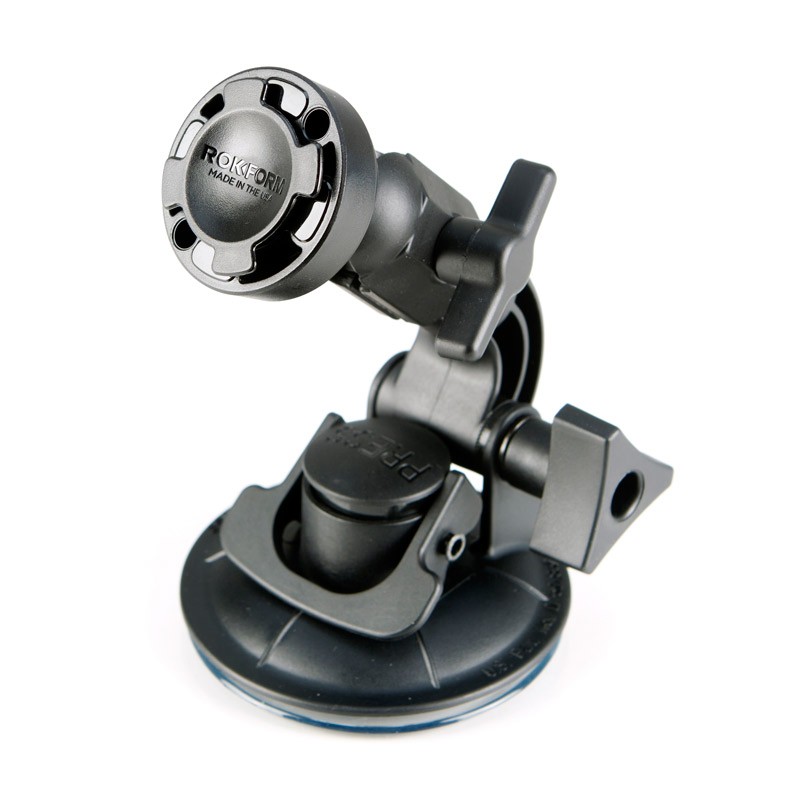
    I took Francesca up on her offer, and frankly, I am impressed with the earth-magnet mounting system on the Rokform equipment cases, and especially with the v3 mounting system (see picture). I have used the v3 for a couple of months in numerous rental cars and with both my iPhone and my iPad — it works flawlessly. It has never released involuntarily even on hot and cold surfaces, and it has never dropped my iPhone or iPad on the dash. Not something I can honestly say about any other device of this type I have tested. I also use the v3 at home on a granite counter top Sometimes just getting it unstuck is a chore, but a happy one. It simply works as advertised; it holds whatever you attach securely and effectively, and has the flexibility and maneuverability to do so in all kinds of environments. It is truly rugged, versatile and very useful. It stays where you mount it, and it is made in the USA. I highly recommend it.

    The Rokoform v3 mounting system.
    The Rokform v3 mounting system.

    Specifications:

    There are numerous hands-free options for the v3 Suction Mount. Attach the mount to any smooth, flat, non-porous surface, and adjust to your ideal viewing angle. A few of the locations I tested include a conference table, desk, car window, windscreen, mirror, and sunroof.

    Features

    • Polycarbonate and die cast zinc construction
    • 360-degree turn and rotation
    • 210-degree tilt for ideal viewing angles
    • Powerful suction pad measures 3.4 inches (86.4 mm) in diameter

    The v3 is compatible with all v3 mountable phone cases, which pretty much covers the waterfront on phone cases, and so they should have one that fits your needs.

    There is a separate attachment for your mobile devices that uses adhesive if you just don’t want to use the suction cup model — just beware that once you attach the separate small earth-magnet device, to a case or your automobile, it is not coming off. Be sure you want it there permanently. I view this as a good thing: no falling iPhone or iPads. But it is just something you need to contemplate. Of course, the v3 works with a tenacious suction cup, so there is not a permanence issue with that device. Try it.

    What Is Don Reading?

    Ever since I started penning this column and mentioning books I have read or am reading and frequently quoting from them, I have received a steady array of requests to discuss the books and recommend or review them, even if they are not primarily about GPS or PNT.

    Certainly, locating books to review is not an issue. My wife calls me a parallel reader, in that I am generally reading two, three, even four books at a time. The question is will any of them be of interest to you? Let’s find out. While we are not sure this feature will appeal to all of you, or if we can make this a regular feature due to time and space limitations, we will give it a trial run this month. Please let us know what you think and what you are reading that may be of interest to our readers, at [email protected].

    I recently had the pleasure of reading two books about wartime that cover two distinct periods of time and are actually in different genres. However both books are fascinating for very different reasons.

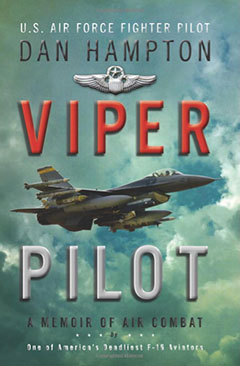
    ViperPilot-coverViper Pilot:  A Memoir of Air Combat, by Dan Hampton (USAF, Ret).

    This book is a “must-read” for air combat aficionados in that it is a seat-of-the-pants warfighter, fighter-pilot view of the air wars in Iraq, Afghanistan, and Kosovo. It is also a very candid fighter pilot’s view of how those wars were managed or not managed, as the case may be. Dan certainly pulls no punches, and if you have any romantic visions of aerial combat and how it comes about — as portrayed in movies like Twelve O’Clock High — then this book may prove to be an eye-opener.

    Be warned, it takes a chapter or two for Dan to set the hook, but if you are still engaged by chapter three, you should be good and firmly on the line. The first two chapters are more of what those of us in-the-business refer to as standard fighter-pilot rhetoric, as in “I am god’s gift to the world and am without a doubt the world’s best fighter pilot.” Indeed, the first two chapters do a good job of substantiating the old barb, “You can always tell a fighter pilot, but you can’t tell him much.” Today, to be politically correct, I guess that would have to be him or her much.

    However, in retrospect, who would want to read a book by a warfighter, especially an F16C Wild Weasel fighter pilot, who was not absolutely sure of his or her superiority? Not me. Indeed, another old barb that applies here, “There are bold pilots and old pilots but very few old bold pilots.” After you read Viper Pilot, I think you will agree than Dan Hampton, who by his own humble admission is one of the most decorated F-16 pilots in American history, is certainly the exception to the rule.

    Most importantly, Dan Hampton gets it right, technically and operationally. His frustration with incompetent ground-pounders and support personnel notwithstanding, he tells it like it is, and you quickly detect that his frustrations are probably justified and his feelings, which he freely shares without compunction, are certainly justified, at least in his view of the world.

    As far as I can decipher, and I was in that business for almost thirty years, there are no glaring errors or even small mistakes about procedure, process, or organizational charts. He tells it like it is and lets the pieces, whether blame or commendation, fall where they may. It is a great read, and one that all history, war, airplane and aerial-combat buffs will find a must read. And yes, there are numerous references to GPS and GPS-guided weapons and effects. I thoroughly enjoyed it — even though the language can at times be a bit over the top and is totally unnecessary to the storyline, but then, when you are God’s gift to fighter pilots, what do you expect?

    By the way, rumor has it Dan is in the process of writing another book. I, for one, can’t wait.

    Ledger-coverThe Ledger, by Lloyd Holm

    This wartime romantic novel by Lloyd Holm is certainly a departure from Viper Pilot. This book is romantic in nature, but in a good way, and yet is also a very true and authentic synopsis of what it was like during both WWI and WWII, which was globally known as the “War to end all Wars.”

    Lloyd Holm does a great job of setting the hook immediately. No waiting. I read it in one sitting and was disappointed only because it was over. I wanted the story to go on and on. Hint to Mr. Holm: There is certainly a sequel here if you have it in you.

    This fast paced riveting story concerns two families and their involvement with each other during both world wars. The story more or less begins with a very authentic and well-documented event, the 1914 lull in fighting due to the spontaneous and unofficial 24th of December Christmas Truce during WWI. Both Allied and German soldiers meet in “No Man’s Land” between the trenches to exchange food, stories and camaraderie. During this incredible event, the lives of two families, German and Jew, become irrevocably intertwined — the rest, as we say, is history and the storyline of The Ledger.

    This wonderful book is authentic and detail oriented. I could find no fault with the well-documented history, the unit designations, or the language, as English, French, and German words are used liberally and in the correct context.

    Whether you read this book as an historian, a romantic, or a war buff, you will find it satisfying on all accounts, and I dare you to put it down once you start. Sequel?

    Until next time, read a good book and happy navigating.