Tag: location intelligence

  • Hexagon releases machine-learning GIS tool for smart cities

    Hexagon releases machine-learning GIS tool for smart cities

    Hexagon’s Geospatial division has launched M.App Enterprise 2021, a significant update to its platform for creating geospatial and location intelligence applications. The latest release features new browser-based 3D capabilities and enhanced visual effects, plus the ability to create and configure custom applications more easily.

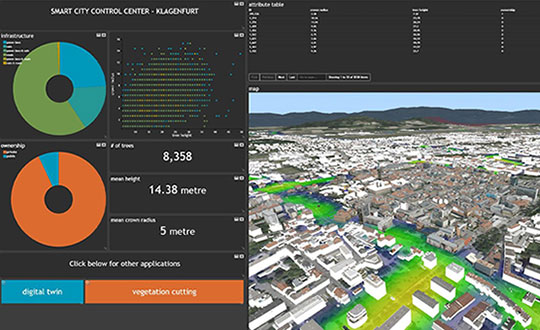
    M.App Enterprise 2021 adds complete and seamless integration with Hexagon’s LuciadRIA. Now, users can access LuciadRIA’s 3D features, including support for panoramic imagery, shading, ambient occlusion and other visualization effects, to build browser-based solutions with no development necessary.

    The latest version also features a new browser app configurator that makes it even easier to create spatio-temporal dashboards, known as Smart M.Apps. Additionally, Feature Analyzer has been expanded to allow users to add and manage multiple datasets on the fly and set up workflows. These enhancements enable more dynamic configurations, allowing field workers to be alerted quickly when action is required.

    The city of Klagenfurt, Austria — a long-time Hexagon customer — has already begun using M.App Enterprise 2021 to create a city app platform that features a detailed 3D urban landscape of the entire city.

    “This opens up endless possibilities for applications to automate several manual processes within different departments of the city,” said Günter Koren, head of the department of surveying and GIS at the city of Klagenfurt. “We believe M. App Enterprise will be an essential step in our journey to become a smarter, safer city for our 100,000 citizens.”

    The latest release contains other new features and improvements, including an overhauled style editor, a new default dark theme, options for customized theming and full support for SAP HANA databases.

    “M.App Enterprise 2021 helps organizations achieve smart monitoring of their cities, infrastructure and services by seamlessly incorporating location intelligence into enterprise systems and workflows,” said Georg Hammerer, chief technology officer of Hexagon’s Geospatial division. “With augmented visuals and dynamic configurations, this new version of M.App Enterprise can help customers easily set up powerful applications, allowing them to be more productive and efficient.”

    Screenshot: Hexagon Geospatial
    Screenshot: Hexagon Geospatial
  • Esri to provide US school data during COVID-19 pandemic

    Esri to provide US school data during COVID-19 pandemic

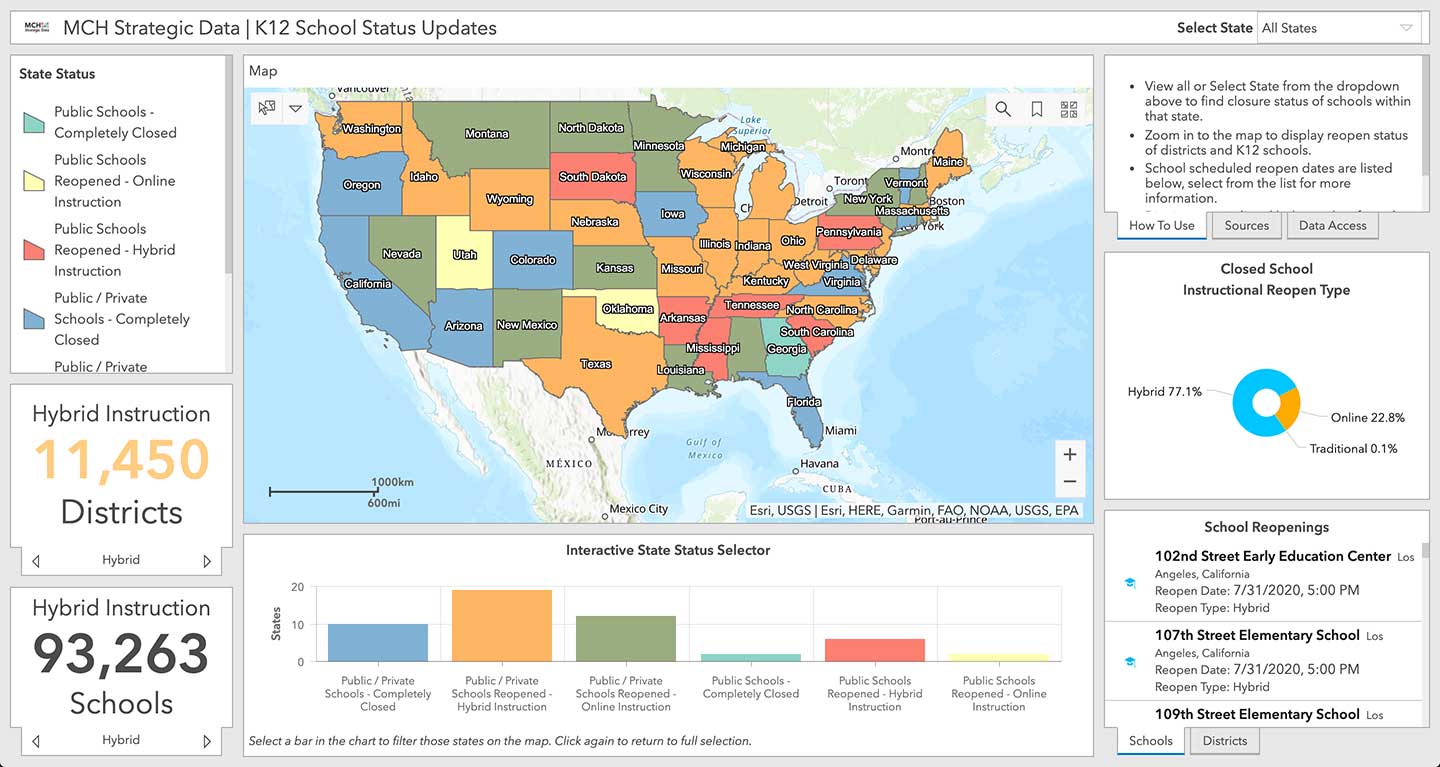
    Location intelligence company Esri will be making data layers available on U.S. school closures during the COVID-19 pandemic, through a new partnership with MCH Strategic Data.

    To help educational organizations as well as families across the nation better understand the situation in their communities, Esri and MCH have made school closure data accessible from a public dashboard.

    Information on K-12 public and private schools include whether they are closed, plans for reopening school buildings, and the type of instruction they are offering during closures due to the epidemic.

    MCH Strategic Data compiles and provides institutional information for the education, healthcare, government, and religious sectors.

    “These datasets are useful for governments, school officials, and businesses providing leadership, resources, and community programs during the COVID-19 response,” said Ryan Lanclos, Esri director of public safety solutions. “But of utmost importance, this is a source of critical information for the community. It provides transparent and useful information that can help families develop a personal plan when they are feeling their most vulnerable.”

    “Our customers depend on us to provide insight to the school market so they can respond effectively and appropriately during this challenging time,” said Kelly Holder, MCH chief information officer. “Our ability to rapidly compile and normalize changing data against our comprehensive U.S. database provides timely insight during an important time in the school planning cycle. This free map and database puts information into the hands of organizations who want to help schools and families now and in the coming months.”

    As the COVID-19 outbreak has escalated rapidly across the globe, and with municipalities struggling to respond, MCH and Esri have built out additional resources like the MCH School Status Updates to help organizations quickly visualize and understand the current situation, as well as identify potential community risk areas when schools begin to open back up, and estimate the capacity needed to respond.

    The Esri COVID-19 GIS Hub provides much of this essential data, along with case locations and social vulnerability, that communities and health organizations can use to inform their response.

    For more information on Esri’s disaster relief support, visit esri.com/disaster.

    Screenshot: Esri, USGS, MCH
    Screenshot: Esri, USGS, MCH
  • InnerSpace location platform supports public safety, COVID-19 response

    InnerSpace location platform supports public safety, COVID-19 response

    Photo: Kachura Oleg / iStock / Getty Images Plus / Getty Images
    Photo: Kachura Oleg /iStock / Getty Images Plus/ Getty Images

    Indoor location platform provides municipalities with emergency response and public safety solutions on existing Wi-Fi networks

    InnerSpace, a Toronto-based company, is offering its Wi-Fi-based indoor location intelligence platform to support all levels of government. The platform analyzes patterns and movement in public spaces using existing Wi-Fi networks.

    The platform is suitable for understanding the movement of people inside public spaces and can support emergency response strategies, social distancing programs and help smart cities implement effective security and public safety measures.

    “In response to the global COVID-19 pandemic, we have accelerated the delivery of our public safety solution inFORCE,” said James Wu, CEO, InnerSpace. “Our platform processes RSSI [received signal strength indication] data in real time and returns the industry’s most accurate location data available today. By using public Wi-Fi access points, municipalities have a way to quickly roll out new solutions at city-wide scale.”

    InnerSpace inFORCE was selected in a competitive process by the U.S. Department of Homeland Security, for its ability to use Wi-Fi to locate citizens and track emergency responders in an active shooter scenario.

    The same platform can be used in a wide variety of emergency situations such as the current COVID-19 pandemic. In addition to the company’s tracking capabilities, it’s analytics dashboard gives public safety offices an unprecedented view into how people leverage public spaces.

    “In times of emergency, it is reasonable to prioritize safety and public health to minimize the loss of human life,” said Cerys Goodall, president and COO, InnerSpace. “By providing municipalities with a system that can deliver line-of-sight into how people move in public spaces, we can inform response strategies, improve rescue efforts, and create an infrastructure to support better outcomes.”

    InnerSpace inFORCE ingests RSSI data and returns accurate anonymous indoor locations. The information can be connected directly into emergency response communications systems, building management and security systems, or analyzed by InnerSpace to identify critical patterns and trends in people’s movements.

  • Esri to provide mapping resources to WHO Member States

    Esri to provide mapping resources to WHO Member States

    Advanced geospatial technology offered to global communities during COVID-19 crisisPhoto:

    Global mapping company Esri will provide a COVID-19 Response Package for the World Health Organization (WHO) Ministries of Health and Global Outbreak Alert and Response Network (GOARN) partners.

    The package will enable these organizations to have access to Esri’s geospatial platform and tools that can be used for reporting and analysis of cases and deaths, public health and response activities at the national level, in addition to managing testing sites, community activities and impact, and much more at the local level.

    “The intent of our partnership with WHO is about providing technology and capacity building to all the national and local Ministries of Health,” said Jack Dangermond, Esri founder and president. “Having integrated geospatial data and analytics is important to a comprehensive and dynamic response to the rapidly changing situation related to COVID-19. This is particularly true in low resource countries.”

    This contribution to the global COVID-19 response will support the digital transformation of global health information systems through mapping and analytics technology. Esri’s geospatial software helps organizations understand complex and vast amounts of data by placing it in a geographic context with sophisticated analysis capabilities such as artificial intelligence (AI).

    “While our company has always supported the efforts of governments and NGO’s when facing crises, the COVID-19 pandemic is different and requires a rapid and global response,” said Dangermond. “Our work with WHO is about helping MoHs around the world in equipping and assisting communities with our technology. We strongly believe these efforts will help combat its spread.”

    Ministry of Health or GOARN partners can request their COVID-19 Response Package here.

    Software access for students

    Esri is also providing free access to its ArcGIS platform and learning resources through its Learn.ArcGIS.com website to support college and university students who no longer have access to campus computer labs during the COVID-19 outbreak.

    Students will receive access to ArcGIS Online and over 20 apps including ArcGIS Pro, along with a library of lessons to continue their learning and complete courses. Access is available globally to students ages 18 and over.

  • Peering behind the mapping curtain

    Peering behind the mapping curtain

    Photo: Mapbox
    Photo: Mapbox

    Location intelligence powers applications with data and “live maps” updated continuously.

    According to Forbes, 70 percent of telecommunications companies consider location intelligence critical to their success. The intelligence data is provided by specialists such as Google, Esri, Here and PlaceIQ.

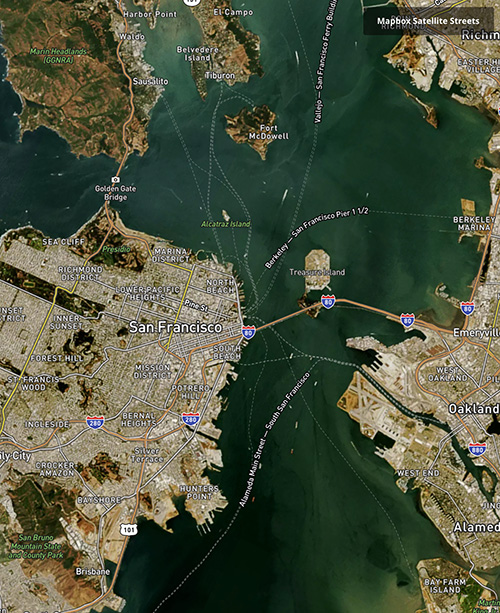
    In January, Sprint and location intelligence startup Mapbox launched precision mapping technology with the Curiosity IoT network. The 5G network’s extreme bandwidth and low latency will allow Mapbox to collect higher volumes of richer data to create “live maps.” A live map is built not from traditional data surveys months or years before, but from data collected from hundreds of millions of location-enabled sensors that feed back information about the world in real time, including high-resolution video.

    Mapbox uses artificial intelligence (AI) to turn the massive data flows into a picture of real time transit paths that can be used for precise, up-to-date routing.

    Augmented Reality view from the Mapbox Vision SDK. (Image: Mapbox)
    Augmented Reality view from the Mapbox Vision SDK. (Image: Mapbox)

    According to Mapbox CEO Eric Gundersen, maps that constantly update are essential to the internet of things (IoT). “As maps guide new smart machines on IoT networks, you remove the human in the middle that used to compensate for differences between the map and the real world,” he said. “Precision mapping services need to reflect the world as it is, at that precise moment so that those smart machines can travel safely and efficiently.“

    According to Mapbox, smart machines such as drones and autonomous delivery carts will be able to make fast location and routing decisions using its detailed, updated maps.

    Other companies that use Mapbox’s location services include IBM, Lonely Planet, Square, Tableau and The Weather Channel.

  • Esri location intelligence to integrate with SAP HANA Spatial Services

    Esri location intelligence to integrate with SAP HANA Spatial Services

    Esri’s ArcGIS software is being integrated into SAP’s latest cloud-based offering, SAP HANA spatial services, to help customers create location-aware business applications faster, according to spatial analytics company Esri.

    Based on SAP Cloud Platform, the new offering enables businesses to process location data such as complex imagery, as well as visualize and analyze their authoritative data in a geospatial context.

    The new geo-enabled solution from SAP will allow users to deliver their data through consumer-friendly maps and integrate the results into custom business applications, the company said. Customers using SAP software will also be able to create custom models that efficiently process streams of Earth observation data such as water content or soil temperatures and see this data on high-quality basemaps provided by Esri’s ArcGIS Online.

    Most business objectives — such as increasing revenue growth, reducing operational costs or improving customer service — rely on some sort of location data. Unfortunately, many executives lack an accurate and up-to-date understanding of where performance is going well and where improvements need to be made.

    This new offering from SAP, which leverages Esri technology, lets organizations extract high-value business information from satellite, drone and open data sources and then easily discover and share location-based insights.

    “As an SAP global technology partner, we are very excited about this offering, as it demonstrates that SAP and Esri products work better together,” said Chris Cappelli, director of strategic business development at Esri. “Users of SAP HANA spatial services can now achieve native integration of spatial and enterprise data across all business processes. By putting the power of location information into the hands of key stakeholders, businesses can make better-informed decisions with their own data.”

    The integration follows SAP’s announcement on Jan. 24 that Esri supports SAP HANA as an enterprise geodatabase with the release of ArcGIS 10.6 and ArcGIS Pro 2.1.

    Esri and SAP customers can benefit from enhanced performance and scalability as well as full integration of both enterprise and spatial data. Both Esri and SAP continue to deliver new innovations that help lower total cost of ownership and administration costs brought on by the tight integration of IT and geospatial landscapes, Esri said.

    Esri will showcase its new integration of location intelligence technology with SAP HANA spatial services at SAPPHIRE NOW and ASUG Annual Conference in booth #1239.

  • Esri tech to help power UN’s new global data hub

    Esri and the United Nations Statistics Division (UNSD) are working with a number of member states to utilize a data hub that will allow countries to measure, monitor and report on sustainable development goals (SDGs) in a geographic context.

    This new hub, called the Federated System for the SDGs, is based on Esri’s ArcGIS platform and will use location intelligence to make it easier for countries to collect, analyze, and share the data required to monitor progress toward the SDGs.

    The SDGs are a set of global goals that include such objectives as poverty eradication, access to safe water, clean oceans, eliminating hunger, gender equality, climate action, peace and justice, education and other important areas on the U.N. agenda.

    The Federated System explores new pathways for facilitating dataflows and action through data hubs. It then supports and informs data-driven decision-making by making the data open, usable, interoperable and visual.

    Based on the early success, UNSD and Esri are working to advance the initial research exercise to support broader adoption by other member states and organizations in 2018.

    “The Federated System for the SDGs leverages enabling technologies and capabilities to strengthen the ability of the national and global statistical systems to manage and share data and good practices for the SDGs,” said Gregg Scott, inter-regional advisor, UNSD Global Geospatial Information Management. “This has already provided the opportunity for National Statistical Offices to condition and structure data so that it can be portrayed in a geographic context and provide more insights and enable us to look at dependencies and interdependencies across SDG indicators.”

    First introduced as a research project, participation was by invitation only and consisted of six countries: Ireland, Mexico, the Philippines, Qatar, South Africa and Senegal. These countries helped define the requirements and deployment of a web mapping and data management platform that would eventually become the hub.

    The Federated System was announced in Mexico City, Mexico, by Esri founder and president Jack Dangermond.

    “The key challenge to collaboration between nations is a common digital context,” said Dangermond. “Data hubs provide this context with location intelligence and use organizations’ core data to engage stakeholders, communicate policy, inform the public, and measure progress.”

    Participants of the UN forum in Mexico City issued a declaration on the importance of geospatial technology’s role in implementing the SDGs. Using Esri’s capabilities to enable access, collaboration, analyticsand powerful maps provides visualization and awareness that supplies the critical information needed to ensure each country meets its commitment to these goals.

    Most importantly, the Federated System allows collaboration across countries and makes it possible to measure the success of global SDG initiatives for the first time.

    For more information on how Esri supports the UN and SDG requirements, visit go.esri.com/Sustain_Dev.

  • Esri's advanced analytics designed to increase retail sales

    Esri is partnering with GISinc to analyze customer behavior to help retailers increase sales.

    Esri will integrate itsspatial analytics platform with GISinc’s indoor mapping capabilities to analyze data collected by sensor-enabled overhead smart lighting systems and from opt-in mobile data from customer phones. The solution will enable retailers to track behaviors, using information including customer locations inside the store and items selected for purchase. The store can then tap into such data to improve customer assistance and position merchandise in the places most likely to attract purchases.

    “Analyzing customer choices and mapping go hand in hand,” said Sonny Beech, Internet of Things (IoT) business development manager at GISinc. “Why a person bought something where they did is an example of spatial data. Using ArcGIS analytics, we can enable retailers to make more strategic decisions about where to place merchandise and in-store marketing materials.”

    With more than two-thirds of consumers using smartphones while shopping in brick-and-mortar stores, retailers have to deliver more relevant experiences by becoming more precise in how they interact with shoppers. In-store location technologies provide opportunities for retailers to increase touch points in the aisle and on the shelf by delivering messaging and services in real time based on a customer’s location in the store.

    Studies show that the spatial customer behavior analysis Esri provides can boost the probability of purchase by up to 70 percent and increase basket size by up to 60 percent for smartphone-enabled shoppers, Esri said.

    “Esri enables retailers to access vast amounts of customer information while allowing the customers themselves to take advantage of advanced analytics,” said Gary Sankary, retail industry manager at Esri. “With the widespread use of smartphones during in-store shopping, indoor mapping provides businesses with a tool to understand shopper behavior and improve sales accordingly.”

    Indoor-mapping initiatives and smart lighting systems, like other IoT implementations, have become more affordable and accessible — in fact, much of the technology can be integrated directly into the infrastructure of a brick-and-mortar store. Customers benefit by downloading mobile apps and opting in to shared-data environments that make the shopping experience more efficient and enjoyable.

  • CartoDB acquires Nutiteq to bring location intelligence to mobile devices

    CartoDB is acquiring Nutiteq, a mobile mapping software development company with more than 15 million unique installations of its software development kit (SDK).

    CartoDB is a location intelligence, data analysis and visualization company. Nutiteq’s clients include SeatGeek, LonelyPlanet, iRobot and Accenture, among others.

    The acquisition will allow CartoDB to offer a cross-platform mobile mapping SDK, with a core rendering engine that complements its geo-analytics capabilities. The offline mapping and routing capabilities, along with an ability to work with a number of different sources of data, will enable enterprise customers to implement core location intelligence apps from a one-stop solution.

    “We believe there is a big opportunity to rethink how we interact with location data on mobile devices. Most geospatial innovation has been pushed to the consumer space. Now enterprises will be able to make use of location intelligence on mobile devices with CartoDB,” said Javier de la Torre, CEO of CartoDB.

    Nutiteq’s current SDK offering, including on-device analytics and vector rendering, will be augmented with CartoDB’s cloud location analytics and self-service products. This will provide a complete solution for companies building external facing apps or productivity tools on mobile.

    “We’re thrilled for the potential to unlock massive value for location intelligence in virtually every industry,” said Jaak Laineste, CEO of Nutiteq. “It’s no surprise that people are moving from laptops to smartphones, and it’s safe to say that enterprises will be quick to follow.”

    Laineste will lead the mobile division for CartoDB. The entire Nutiteq team will join CartoDB, with an office opening in Estonia, where Nutiteq is currently headquartered.

  • Location Intelligence Platform Aims at Local Marketing

    Local ID has closed a $1.9 million seed round of funding led by Crosscut Ventures. Local ID is a local intelligence platform that provides multi-unit brands with the data, tools and process needed to maximize their local marketing efforts, according to the company.

    Other investors in the round included Technicolor, TenOneTen, Baroda Ventures, Double M Partners, Tallwave, Wavemaker Partners and Queens Bridge Venture Partners. 

    Founded by a team with more than 60 years of collective retail experience, Local ID is a cloud-based platform that provides brands with visibility into each store’s trade area. For example, Local ID:

    • surfaces local events that present timely and contextual marketing opportunities;
    • identifies competitive intrusions;
    • provides proactive preparation for weather events; and
    • incorporates a wealth of other data on the hundreds of local marketing opportunities taking place each day within a store’s trade area.

    With brick and mortar representing 94 percent of the $4.5 trillion retail sales market, according to eMarketer, Local ID gives multi-unit brands an edge in capturing a larger share of this vast but extremely competitive market, the company said.

    “Local ID is the first local intelligence platform designed to solve at-scale local store marketing for large brick and mortar brands,” said Alex Nocifera, Founder & CEO of Local ID. “Our dynamic, enterprise platform will increase same store sales and traffic for our customers by systemizing the way they plan, execute and track their local marketing activities. This funding, along with the extensive outreach we’ve done over the last year with large brands, has validated the timeliness of our solution to solve brands’ decentralized, inefficient inability to execute and measure local marketing at scale. Overall, I could not be more excited about our team, the early market signals and the product we are taking to the market.”

    Local ID is a single-source solution that will centralize all local store marketing programs, institutionalize market-specific knowledge and systemize best practices across the enterprise. The platform leverages Esri mapping software, integrates multiple data streams and then custom curates brand opportunities for every store in the system. The core pillars include:

     Store Profiles A dynamic database of every store in a brand’s system providing visibility into every location and activity

    People Profiles Details, activities and insights of all employees engaged in local marketing at any level

    Relevant Opportunities Custom curated, brand relevant opportunities in each market

    Marketing Activities   An innovative and engaging task management tool for tracking and systemizing local marketing activities

    The company will use the new funding to invest in product development, research and acquiring key talent. Nocifera previously served as founder and CEO of both Ripple TV and Circle Street, two venture-backed start-ups focused on helping big brands solve complex local challenges. Ripple TV was acquired by TargetCast Networks (now part of Brite Media Group). Circle Street was acquired by Valassis, the largest local advertising company for promotional media to retail and CPG brands.

    “Local ID has the opportunity to be the Salesforce.com of the trillion dollar local marketing space by solving the conundrum large, multi-unit brands face in executing successful local store strategies at the enterprise level,” said Brian Garrett, co-founder and managing director of Crosscut Ventures. “It’s a massive, untapped market and one that the Local ID team, with deep experience in RetailTech, is perfectly situated to address.” 

  • W3C, OGC to Integrate Spatial Data on the Web

    The World Wide Web Consortium (W3C) and the Open Geospatial Consortium (OGC) are collaborating to improve interoperability and integration of spatial data on the Web. Spatial data — describing geographic locations on the Earth and natural and constructed features — enriches location-based consumer services, online maps, journalism, scientific research, government administration, the Internet of Things, and many other applications. In the United States alone, geospatial data and services are estimated to generate $1.6 trillion annually.

    “Location, as well as providing context to much of today’s online information, is vital to the emerging field of connected devices,” said Ed Parsons, Geospatial Technologist at Google. “Through this collaboration we hope to make the understanding of geospatial knowledge a fundamental component of the Web.”

    Spatial data is integral to many of our human endeavors and so there is a high value in making it easier to integrate that data into Web based datasets and services. For example, one can use a GIS system to find the nearest restaurant, but today it is difficult to associate that restaurant with reviewer comments available on the Web in a scalable way. Likewise, concepts used widely on the Web such as “the United Kingdom” do not match the geographic concepts defined in a GIS system, meaning Web developers are missing out on valuable information available in GIS systems. Bridging GIS systems and the Web will create a network effect that enriches both worlds.

    “Location plays a vital role for BBC Online, not least in our remit to provide timely information for Weather, Travel and Local News,” said Chris Henden, service owner for location services at BBC Future Media. “It matters across the service, from maps showing places of note in World War One, to detailed context for breaking news. We source data from various third parties, then transform, curate, and make it available to our front-end services. There is a perceptible gap between the specialised world of geographic data, and that of the Web. Bridging that gap can take significant, repeated effort, and is not always successful or possible. Therefore this collaboration between the OGC and W3C is more than welcome.”

    More than 100 participants discussed these challenges at the March 2014 Workshop on Linking Geospatial Data, co-organized by OGC and W3C in partnership with the UK Government Linked Data Working Group, Google, and Ordnance Survey (the UK mapping agency). Stories ranging from management of data in response to the Fukushima nuclear plant accident to the use of spatial data to create new services from spatial and historical data in the Netherlands illustrated a diverse set of integration benefits and challenges.

    Informed by the conclusions from that workshop, the collaboration announced today will enable publishers of spatial data, providers of services that consume the data, and application developers to establish common practices and reduce the cost of integrating spatial data on the Web. Through the collaboration, the geospatial and Web communities will document use cases and requirements, develop best practices for publishing spatial data on the Web, and advance some existing technologies to W3C Recommendations and OGC standards.

    “Through this collaboration we will ensure that governments and research labs will have a way to open up their spatial data to be used transparently by scientists, industry, and citizens alike,” said Kerry Taylor, principal research scientist at Australia’s CSIRO.

    “With growing demand for weather data services delivered via the Web, this joint effort will ensure the progress of practical and usable standards for the integration and communication of location related data,” added Richard Carne, chief digital officer at the MetOffice.

    Participants will evaluate the use of Linked Data for managing the complex evolution and integration of spatial data. The Linked Data approach enables people to produce data independently, and to then easily integrate heterogeneous data from diverse sources.

    “We have used Linked Data — including early work on W3C’s Semantic Sensor Network ontology and OGC’s GeoSPARQL — to monitor and manage ground water levels affecting vulnerable underground archaeological sites,” said Linda van den Brink of Geonovum, the Dutch government geospatial standards body. “We demonstrated that when you have a way to easily express location in Linked Data, you can combine geo-information with other data and discover new information without much effort.”

    For this collaboration, W3C and OGC have each launched a Spatial Data on the Web Working Group (W3C homeOGC home). The groups, both chaired by Ed Parsons and Kerry Taylor, will coordinate closely and publish deliverables jointly.

    For W3C, this work is supported in part by the SmartOpenData project.
  • Pitney Bowes, INRIX Join on Location Intelligence for Traffic

    Pitney Bowes Inc. has entered into a multi-year partnership with INRIX, Inc., provider of traffic information and driver services, to deliver advanced location intelligence solutions through the company’s traffic intelligence platform.

    By integrating location capabilities with traffic analysis, INRIX and Pitney Bowes will enhance the driving experience of today’s connected drivers, the companies said. By delivering this information through INRIX’s mobile app, users are empowered to make better location-based decisions in real-time.

    “Pitney Bowes’ location intelligence solutions can add compelling new capabilities to the existing products of mobile-oriented companies such as INRIX,” said James Buckley, Senior Vice President and General Manager, Location Intelligence, Pitney Bowes. “Our products help unearth non-obvious relationships between specific locations to improve the customer experience and drive loyalty.”

    INRIX has designed a leading traffic intelligence platform that uses smart data and advanced analytics to solve transportation issues worldwide. The company uses a unique approach called “smart crowd-sourcing” that analyzes real-time traffic speed and incident data from a wide variety of public and private traffic sources ranging from road sensors and up-to-the-minute traffic speeds and community reports crowd-sourced from millions of vehicles and mobile devices throughout the day. Whether through an in-car or smartphone navigation application, a local newscast or the company’s INRIX Traffic app, INRIX offers up-to-the-minute traffic information and other driver services to help more than 150 million drivers save time, fuel and money.

    Pitney Bowes Location Intelligence solutions merge organizational data with location data to provide users with the capability to make more informed decisions. For INRIX, this technology compiles and correlates addresses with coordinates from a mobile device to establish real-time location or a desired destination. Combining that with other data such as specific traffic flow, demographics and behavior patterns, users can uncover key points of interest by accessing Pitney Bowes advanced location search. For example, if a consumer is planning to visit a popular department store in a specific region, the technology makes it possible to suggest a relevant restaurant recommendation for lunch, based on the data that is collected about user preferences, convenience, proximity and projected traffic patterns.

    “INRIX had a number of compelling reasons to partner with Pitney Bowes,” said Scott Sedlik, Vice President, Product Planning and Market Development for INRIX. “Our customers are looking to make real-time decisions using location data, and Pitney Bowes has the most comprehensive suite of offerings to fulfill that need. Other key reasons for teaming include a strong customer focus and alignment with our own strategic goals and approach.”