Tag: lunar exploration

  • Research Roundup: Lunar GNSS applications

    Research Roundup: Lunar GNSS applications

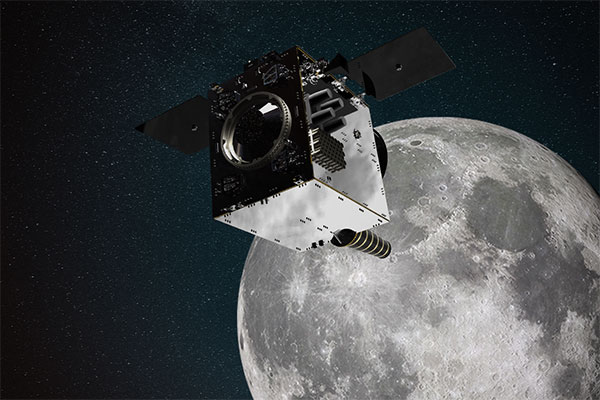
    Artist's rendering of the Lunar Pathfinder. (Image: SSTL)
    Artist’s impression of the Lunar Pathfinder satellite built by Surrey Satellite Technology Ltd. (SSTL) that will provide communications and navigation services for the Moon.

    NASA and its international partners are planning a return to our natural satellite. The following three papers — presented at the Institute of Navigation (ION) GNSS+ conference Sept. 20–24, 2021 — discuss the role of GNSS in lunar exploration. The full papers are available at www.ion.org/publications/browse.cfm.

    Using GPS for Time Transfer

    NASA and the European Space Agency have conceptualized the initial framework for a GPS-like constellation for the Moon, which will ensure uninterrupted navigation and communication services for future lunar missions. The authors designed a smallsat-based Lunar Navigation Satellite System (LNSS) with time-transfer from Earth-GPS to alleviate the size, weight and power (SWaP) and timing stability requirements of the onboard clocks. A timing filter corrects the lower grade clock when Earth-GPS signals are available and propagates these clock estimates forward in time when no Earth-GPS signals are available. The authors analyzed their proposed time-transfer technique using high-fidelity simulations of an LNSS satellite with an onboard chip-scale atomic clock for three cases of elliptical lunar frozen orbits.

    Bhamidipati, Sriramya, Mina, Tara, Gao, Grace, “Design Considerations of a Lunar Navigation Satellite System with Time-Transfer from Earth-GPS,” https://doi.org/10.33012/2021.18021

    GNSS Nav for Moon Missions

    The authors show the potential of autonomous GNSS signal-based navigation for a set of Moon scenarios. This technology could be a game changer for the future of lunar exploration, representing an extremely low cost and effective alternative for Moon navigation. Results show that not only autonomous GNSS navigation for lunar orbiters is possible, but it also delivers good navigation performance. In fact, navigation with root-mean-square (RMS) errors on the order of 50–100 meters were obtained for scenarios of high interest, such as for the planned Lunar Pathfinder and near-rectilinear halo orbit of the Lunar Gateway space station around the Moon.

    Mangialardo, Marco, Jurado, María Manzano, Hagan, David, Giordano, Pietro, Ventura-Traveset, Javier, “The full Potential of an Autonomous GNSS Signalbased Navigation System for Moon Missions,” https://doi.org/10.33012/2021.18040

    Finding the best lunar orbit

    A continuous and reliable lunar positioning and timing system, such as a GNSS-like constellation, is considered essential infrastructure for lunar exploration. The authors focus on halo orbits with the aim of defining an optimal halo constellation for supporting and delivering a navigation service on the Moon. This paper shows the performance of a GNSS-like constellation deployed in Halo orbits around Earth-Moon L1 and L2 collinear libration points. Different phases have been considered, from a minimum number of satellites able to provide a local PNT service on the South Pole (Initial Operational Capability), to a final, extended constellation able to cover the whole lunar surface (Final Operational Capability).

    Musacchio, Daniele, Iess, Luciano, Carosi, Mattia, Capolicchio, Jacopo, Eleuteri, Massimo, Stallo, Cosimo, Di Lauro, Carmine, “Design of Earth Moon Halo Orbits for a Global Lunar PNT Service,” https://doi.org/10.33012/2021.18020

  • Spirent Federal to support NASA for GNSS testing

    Spirent Federal to support NASA for GNSS testing

    Photo: Elen11/iStock / Getty Images Plus/Getty Images
    Photo: Elen11/iStock / Getty Images Plus/Getty Images

    NASA has selected Spirent Federal Systems for testing GNSS for lunar exploration.

    The U.S. Space-Based Positioning, Navigation and Timing (PNT) Policy tasked the NASA Administrator to develop and provide requirements for the use of GPS and its augmentations to support civil space systems. NASA is exploring the viability and enhancement of GPS and GNSS signals in the Space Service Volume and beyond to support operational U.S. missions and civil space systems. Spirent GNSS solutions and expertise will support testing of the GNSS receivers intended to be deployed in the upcoming lunar exploration, the company said.

    “For over two decades, NASA and other space users have selected us to provide leading-edge test and development solutions for missions ranging from short suborbital flights to weeks-long orbits beyond geosynchronous altitudes,” said Ellen Hall, president at Spirent Federal Systems. “Working collaboratively with our customers enables us to meet their demanding test and development needs with the trusted solutions for which Spirent is known.”

  • Russia plans to place positioning satellites around the Moon

    Russia plans to place positioning satellites around the Moon

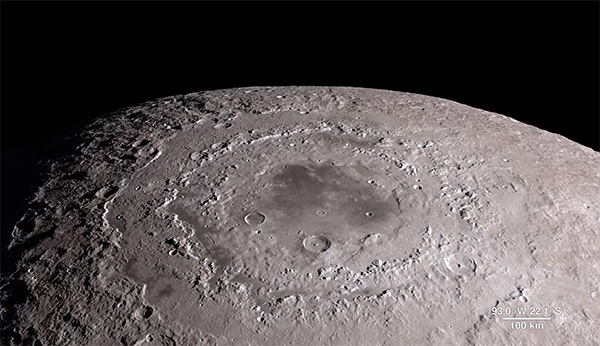
    The Orientale Basin in a 4K NASA video of the lunar surface using observations from the Lunar Reconnaissance Orbiter. (Photo: NASA)
    The Orientale Basin in a 4K NASA video of the lunar surface using observations from the Lunar Reconnaissance Orbiter. (Photo: NASA)

    Russian positioning satellites could circle the Moon by 2040.

    In a draft document describing Russia’s program for lunar exploration, plans include deployment of navigational and communications satellite groupings in lunar orbit.

    The document, adopted at a Nov. 28 joint meeting of Roscosmos and Academy of Sciences officials, was obtained by Russian news agency Sputnik, which described it here.

    According to the document, the tasks described for 2025-2030 include “the delivery to the Moon of a series of spacecraft for orbital research and the establishment of a global communications and positioning system.”

    The concept envisions the deployment of a lunar satellite navigation constellation between 2036 and 2040.

    Russia’s Earthly navigation constellation is GLONASS.

    A Roscomos press release Nov. 28 says a moon base is the agency’s top priority. “The interest of mankind to the moon is associated primarily with the fact that unique regions with favorable conditions for the construction of lunar bases were discovered on the satellite. The implementation of the lunar program will be held in several stages until 2040.”

    Russia will reportedly implement its new strategy in three phases: the launch of an orbital station, a manned mission to the surface, and the eventual construction of a permanent base.