Tag: Martin UAV

  • Northrop Grumman and Martin UAV conduct successful flight test for future tactical unmanned aircraft

    Northrop Grumman and Martin UAV conduct successful flight test for future tactical unmanned aircraft

    Northrop Grumman and Martin UAV (a Shield AI company) have completed successful flight testing of a V-BAT unmanned aircraft system (UAS) with new features including GPS-denied navigation and target designation capabilities.

    The enhanced V-BAT’s flexible vertical take-off and landing (VTOL) capability is based on a platform deployed to address the U.S. Army’s Future Tactical Unmanned Aircraft System (FTUAS) mission. For FTUAS, the U.S. Army is seeking a rapidly deployable, GPS-denied navigation-capable, expeditionary VTOL system capable of persistent aerial reconnaissance for U.S. Army brigade combat teams, special forces, and Ranger battalions.

    The offering is based on Martin’s UAV V-BAT UAS. According to Northrop Grumman, it is compact, lightweight, simple to operate, and can be set up, launched and recovered by a two-soldier team in confined environments. The V-BAT also is designed with sufficient payload capacity to carry a range of interchangeable payloads, including electro-optical/infrared (EO/IR), synthetic aperture radar (SAR), and electronic warfare (EW) payloads, depending on mission-specific requirements. Additionally, Shield AI’s recent acquisition of Martin UAV will enable rapid development of GPS-denied and autonomy capabilities for V-BAT through the future porting of Shield AI’s autonomy stack, Hivemind, onto V-BAT.
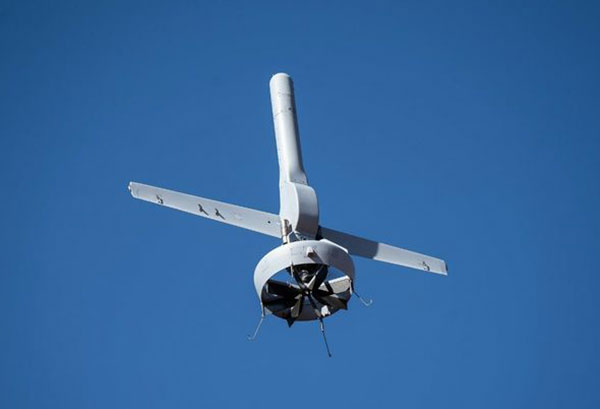
    Northrop Grumman and Martin UAV conduct flight testing of Martin UAV’s V-BAT aircraft for the US Army’s Future Tactical Unmanned Aircraft System effort in Camp Grafton, North Dakota. (Photo: Northrop Grumman)
    Northrop Grumman and Martin UAV conduct flight testing of Martin UAV’s V-BAT aircraft for the U.S. Army’s Future Tactical Unmanned Aircraft System effort in Camp Grafton, North Dakota. (Photo: Northrop Grumman)
  • Cellphone towers in the sky? Fenix thinks so

    A drone that weighs less than 50 pounds can provide fully functional 4G cellphone service.
    A drone that weighs less than 50 pounds can provide fully functional 4G cellphone service.

    Virginia-based Fenix Group has partnered with Martin UAV, a Texas-based manufacturer of rugged utility drones, to launch an under-55-pound drone capable of providing fully functional 4G cellphone service.

    While Fenix Group plans to issue its first production units to the U.S. Department of Defense and first responders, it anticipates demand from telecommunications providers, oil and gas companies, and crisis response units worldwide.

    It also could mean connectivity in remote parts of the world.

    In addition to providing a coverage area on the ground, the payload is also able to stream encrypted video from the drone’s camera system to anyone on the network. In the future, soldiers, search and rescue teams, and first responders will have access to drone video from their phones.

    The Fenix team also enabled Internet access so that command centers could access the feed from anywhere in the world.