
Tag: medical transportation

  • ViaLite GPS links ensure reliable emergency support

    ViaLite GPS links ensure reliable emergency support

    Photo: monkeybusinessimages/iStock/Getty Images Plus/Getty ImagesPhoto:
    Photo: monkeybusinessimages/iStock/Getty Images Plus/Getty Images

    Femtocell cellular base stations used by Global Medical Response (GMR) in their Dallas, Texas, offices are receiving high-accuracy GPS location and timing signals from RF-over-fiber links from ViaLite Communications.

    The GPS signals help GMR provide emergency quality medical care at a moment’s notice, primarily in the areas of emergency and patient relocation services in the United States and around the world.

    The Local Integrated GPS Splitter. (Photo: ViaLite)
    The Local Integrated GPS Splitter. (Photo: ViaLite)

    The highly reliable system consists of a ViaLite GPS Link that sends the GPS and timing signals from the rooftop antenna down an optical fiber to a Local Integrated GPS splitter situated in the building. The splitter then distributes the timing data to multiple femtocells.

    “The efficiency of ViaLite’s signal distribution techniques is second to none, and in this emergency support application, when action at a moment’s notice can be vital, our equipment’s reliability and performance are crucial,” explained Craig Somach, ViaLite sales director.
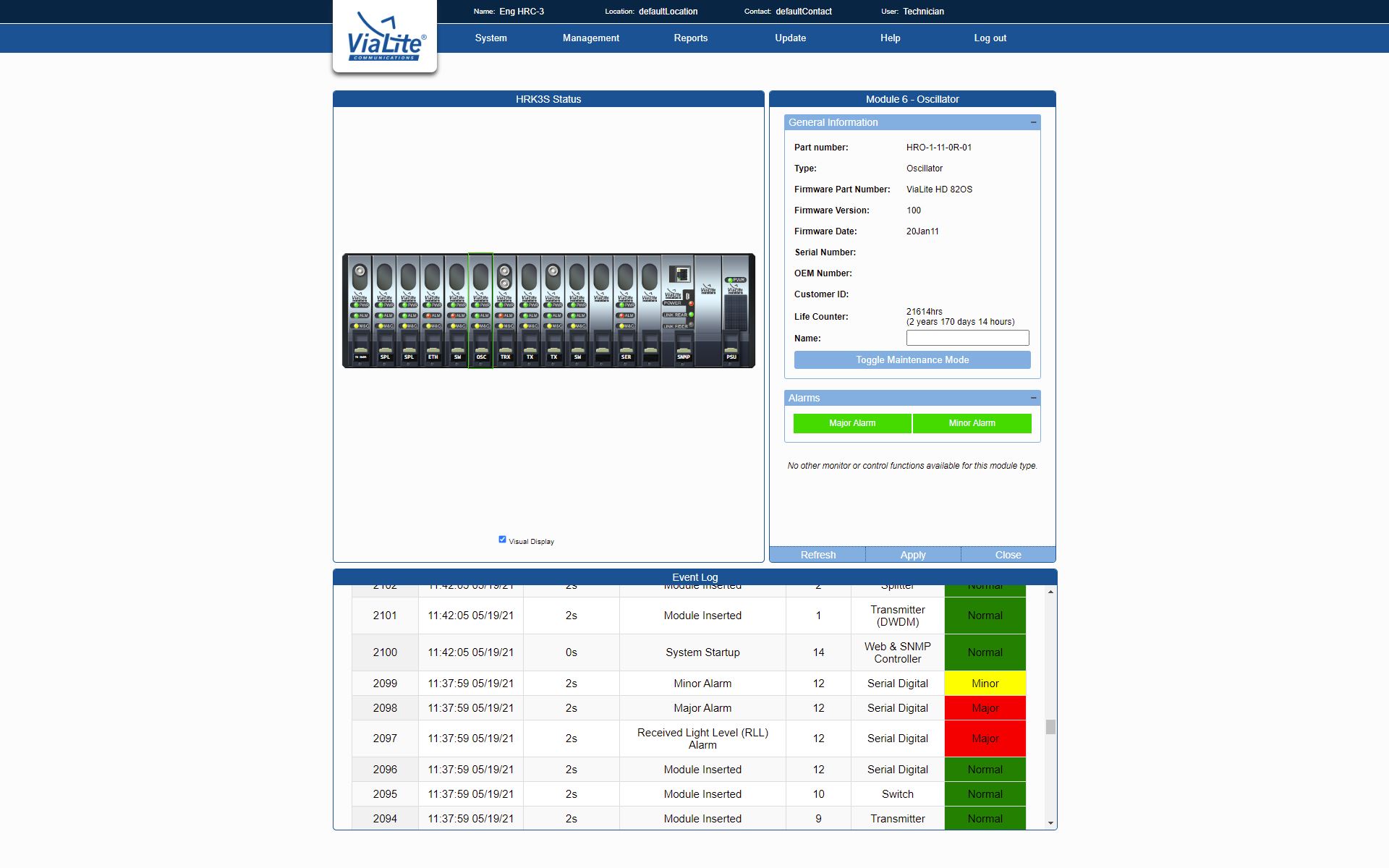
    A monitoring and control module is built into the GPS splitter. (Photo: ViaLite)
    A monitoring and control module is built into the GPS splitter. (Photo: ViaLite)

    Use of the high-tech splitter, which features a built-in monitoring and control module, also eliminates the need to install multiple antennas on the rooftop, avoiding the appearance of an antenna farm.

    “As a first-time customer, we found the deployment was as smooth and simple as ViaLite had promised,” said Dan Cottom, senior manager of communication systems at GMR. “The GPS distribution is working great.”
  • Avy launches response network for VTOL fixed-wing drones

    Avy launches response network for VTOL fixed-wing drones

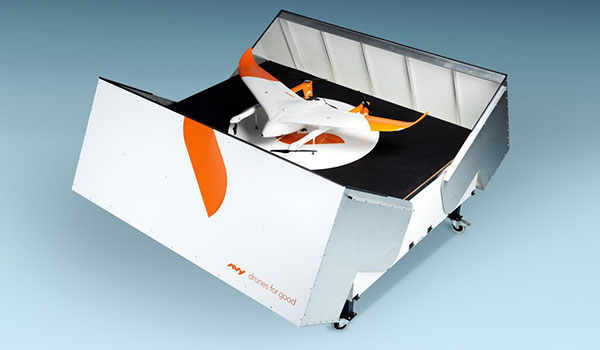
    The Avy Aera departs from its docking station within minutes, shortening response times and reducing costs for first responders. (Photo: Avy)
    The Avy Aera departs from its docking station within minutes, shortening response times and reducing costs for first responders. (Photo: Avy)

    Dutch company Avy has launched its Drone Response Network, combining docking stations with autonomous aircraft that have vertical take-off and landing (VTOL) capabilities.

    The network offers drone coverage in a certain area, enabling instant deployment to support medical deliveries or emergency services during critical incidents.

    First flights are expected to take place in the first quarter of 2022.

    The network uses the Avy Aera autonomous drone that can carry up to 3 kg of medical goods over a distance of 100 km. It can operate year round, in rain and winds up to 45 kph, and is designed to meet the latest European Union drone regulations and United Nation requirements for aerial transport of medical goods.

    For medical delivery, the drone is equipped with Aera’s Medkit, which has a four-liter capacity and is fitted with sensors for immediate assessment. Medical products remain cooled at 2-6 degrees for at least 100 minutes in an ambient temperature of up to 40° C.

    The Avy Drone Response network is suitable for both urban and rural areas, delivering medicines, blood products, vaccines and other medical applications safer and twice as fast as road transportation, and is more environmentally friendly. It is expected to make a substantial contribution to achieving the goal of connecting hospitals and laboratories by air by 2023.

    The Avy Aera can also be integrated with a high zoom RGB and thermal camera system and used to quickly detect wildfires, spot people in distress at sea, monitor oil spills and assess the situation on the ground.

  • 2J Antennas launches GNSS, 5GNR and WiFi-6E combination 9-in-1 antennas

    2J Antennas launches GNSS, 5GNR and WiFi-6E combination 9-in-1 antennas

    Photo: 2J Antennas
    Photo: 2J Antennas

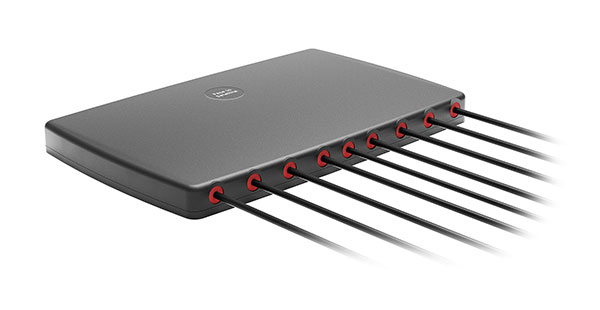
    2J Antennas has introduced the Stellar series, antennas designed for a large suite of devices with a focus on GNSS, sub-6 GHz, 5G NR, 4G LTE, 3G, 2G and WiFi-6E technologies.

    The Stellar Series is suitable for law enforcement, medical transportation, fire rescue and other applications where mission-critical communication is a requirement. The antennas are designed to reliably provide real-time connectivity in a small size.

    This series includes single or up to 9-in-1 configuration choices within the range of 617 MHz to 7125 MHz frequency bands.

    The patent-pending technology reduces the antenna footprint by 55% while implementing a new double trifilar design and longitudinal resonances for MIMO/ARRAY configurations that traditionally have more complex size restrictions (such as B71 band/600 MHz).

    Each antenna configuration uses symmetrical or asymmetrical resonators for negative sections of the antenna, resulting in maximum performance at low and mid frequencies. The Stellar series offers magnetic and adhesive mounting choices, making them suitable for temporary installations.

    For permanent installation, 2J Antennas also offers the screw mount option in its roof series. The low-profile and lightweight housing introduces a new design that offers a more cost-effective solution for suppliers and distributors.

    “We are excited to reinvent antenna designs to meet the fast-growing global markets and offer antenna solutions with the highest quality while reducing antenna sizes as much as possible,” said Ruben Cuadras, director of engineering. “We are proud to continue to bring antenna solutions to customers that require small device integration, reliability and new designs.”