Tag: Michael Huerta

  • FAA establishing advisory committee on UAV integration

    Speaking today at Xponential, the AUVSI annual conference in New Orleans, FAA Administrator Michael Huerta announced the agency is establishing a broad-based advisory committee that will provide advice on key unmanned aircraft integration issues. He also announced plans to make it easier for students to fly unmanned aircraft as part of their coursework.

    Huerta said the drone advisory committee is an outgrowth of the successful stakeholder-based UAS registration task force and the MicroUAS aviation rule-making committee.

    Those panels were set up for a single purpose and for limited duration. In contrast, the drone advisory committee is intended to be a long-lasting group. It will help identify and prioritize integration challenges and improvements, and create broad support for an overall integration strategy.

    “Input from stakeholders is critical to our ability to achieve that perfect balance between integration and safety,” Huerta said. “We know that our policies and overall regulation of this segment of aviation will be more successful if we have the backing of a strong, diverse coalition.”

    Huerta said he has asked Intel CEO Brian Krzanich to chair the group.

    Student UAS operation

    Huerta also announced the FAA will start allowing students to operate UAS for educational and research purposes today.

    As a result, schools and students will no longer need a Section 333 exemption or any other authorization to fly provided they follow the rules for model aircraft. Faculty will be able to use drones in connection with helping their students with their courses.

    “Schools and universities are incubators for tomorrow’s great ideas, and we think this is going to be a significant shot in the arm for innovation,” Huerta said.
  • FAA unveils UAS rule, begins drone registry Dec. 21

    FAA unveils UAS rule, begins drone registry Dec. 21

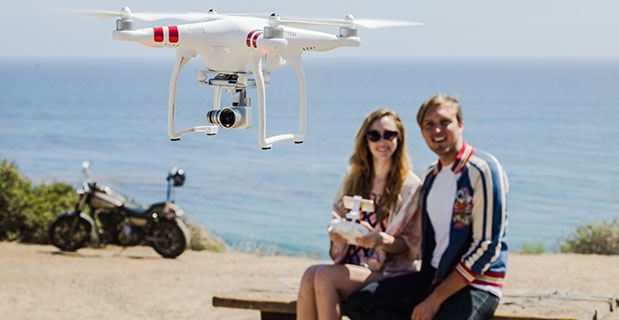
    The Federal Aviation Administration announced on Dec. 14 an official rule and registration process for hobbyists who own small unmanned aircraft weighing more than 0.55 pounds and less than 55 pounds, including payloads such as on-board cameras.

    The online registration system does not yet support registration of small UAS used for any purpose other than hobby or recreation — for example, using an unmanned aircraft in connection with a business. The FAA is developing enhancements that will allow such online registrations by spring of 2016.

    The registration procedure is a statutory requirement that applies to all hobby aircraft. Under this rule, any owner of a small UAS who has previously operated an unmanned aircraft exclusively as a model aircraft prior to Dec. 21, 2015, must register no later than Feb. 19, 2016. Owners of any other UAS purchased for use as a model aircraft after Dec. 21, 2015, must register before the first flight outdoors.

    The Registration Task Force delivered recommendations to FAA Administrator Michael Huerta and Transportation Secretary Anthony Foxx on Nov. 21. The rule incorporates many of the task force recommendations, the FAA says.

    “Make no mistake: unmanned aircraft enthusiast are aviators, and with that title comes a great deal of responsibility,” Foxx said in the announcement. “Registration gives us an opportunity to work with these users to operate their unmanned aircraft safely. I’m excited to welcome these new aviators into the culture of safety and responsibility that defines American innovation.”

    Owners may register through a web-based system or paper-based process. There is a $5 registration fee, but the FAA is offering a full rebate for those who register before Jan. 20, 2016.

    Under the rule, each aircraft must be marked with a unique number, although not necessarily the serial number. The goal is to help authorities track down an owner if a drone collides with another aircraft, flies too high or encroaches on an airport.

    Registrants will need to provide their name, home address and email address. Upon completion of the registration process, the web application will generate a Certificate of Aircraft Registration/Proof of Ownership that will include a unique identification number for the UAS owner, which must be marked on the aircraft.

    Owners using the model aircraft for hobby or recreation will only have to register once and may use the same identification number for all of their model UAS. The registration is valid for three years.

    “We expect hundreds of thousands of model unmanned aircraft will be purchased this holiday season,” Huerta said. “Registration gives us the opportunity to educate these new airspace users before they fly so they know the airspace rules and understand they are accountable to the public for flying responsibly.”