Tag: modernization

  • APNT/Space team aims to advance navigation capabilities

    APNT/Space team aims to advance navigation capabilities

    APNT/Space modernization gives U.S. Army a clearer view of multi-domain battlefield
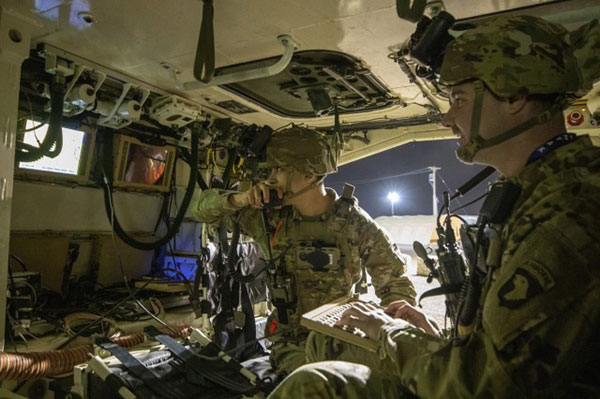
    U.S. Army soldiers experiment with new assured PNTT/space equipment during the 2021 PNT Assessment Exercise at White Sands Missile Range, New Mexico. (Photo: U.S. Army/Austin Thomas, Army Futures Command)
    U.S. Army soldiers experiment with new assured PNTT/space equipment during the 2021 PNT Assessment Exercise at White Sands Missile Range, New Mexico. (Photo: U.S. Army/Austin Thomas, Army Futures Command)

    News from U.S. Army Futures Command

    The Assured Positioning, Navigation and Timing/Space Cross-Functional Team — APNT/Space CFT — takes a multi-dimensional approach to understanding and preparing for future warfare.

    The team — based at Redstone Arsenal, Alabama — is dedicated to advancing the Army’s tactical and navigational capabilities and ensuring tomorrow’s soldiers  have the modern situational tools they need to maneuver with the utmost accuracy, safety and skill.

    The CFT is making significant progress toward this goal by leveraging iterative developments, remaining open to new technologies and committing to continuously evolving PNT equipment and systems to meet changing threats and needs.

    “Our cross-functional team will continue to assess and strengthen the future of our operational environments, emerging threats and technologies to ensure our Army is prepared for 2030 and beyond. We will continue to support the requirement development and delivery of trusted solutions to the soldier,” said Michael C. Monteleone III, director of the APNT/Space CFT, reiterating the team’s focus on nimbly and steadfastly enabling the success of future warfighters.

    According to Army planners, the likelihood of future operations spanning diverse domains — air, land, sea, space, cyberspace and the electromagnetic spectrum — means soldiers will need more flexible and far-ranging resources to inform their movements and operations.

    To facilitate this, the APNT/Space CFT conducts rigorous field experimentation and prototype assessment and drafts detailed requirements for state-of-the-art materiel solutions, which the Army can then further develop and employ to improve information gathering and data precision without disrupting or adding extra burden to soldier operations.

    Experimentation for APNT/Space happens on the ground and in the air, including along the electromagnetic spectrum — sometimes referred to as the “invisible battlefield” — and in the low Earth orbit of space.

    Within these frequently interwoven domains, the APNT/Space CFT investigates alternative GPS capabilities and other navigation resources already in use, while also evaluating how to best integrate new anti-jamming functions, electronic support, inertial navigation systems and vision-based navigation platforms.

    The CFT coordinates regularly with industry, joint partners and other government agencies to identify and explore solutions that are modular, scalable and an excellent fit for multiple platforms, as well as the upgrades and adjustments that occur to equipment and systems over time.

    Modern PNT tools being developed and fielded include mounted, dismounted and alternative navigation systems, situational awareness devices, and next-generation sensors that allow for optimum flexibility and performance against threats.

    Within the realm of space, the CFT is shaping a strategy to provide survivable, responsive and resilient intelligence, surveillance and reconnaissance and communications capabilities in low Earth orbit, complete with the ability to share information rapidly and securely with tactical commanders on the ground.

    The team’s experts are also focused on understanding and preparing for the future of navigation warfare, or NAVWAR, which will require sophisticated offensive and defensive systems to produce tactical advantages and enable overmatch. To encourage synchronization of efforts on this front, the CFT is working closely with Army partners to draft an overarching NAVWAR strategy that aligns with U.S. Department of Defense NAVWAR plans but is also tailored to unique Army needs.

    By studying and preparing for multi-domain operations and experimenting with the newest technologies available, the APNT/Space CFT is playing an integral role in helping the Army to equip soldiers with more mobile, scalable and interoperable navigation devices, in turn strengthening the agility of the future force.
  • Surveyors: Who are they?

    Surveyors: Who are they?

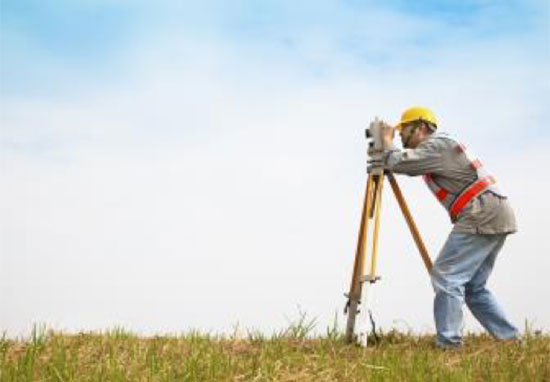
    Photo: U.S. Bureau of Labor Statistics
    Photo: U.S. Bureau of Labor Statistics

    The average age of surveyors in the United States is nearly that of retirement. Can new technology attract a new generation to the profession?

    “We do not fully understand the trend in the United States,” said Simon Peng, ComNav Technology, “but in China we find that modern survey technology — such as UAV/lidar mapping and total stations — make field work simple. New trends such as computer imaging, point clouds and building information models (BIM) attract young surveying engineers.”

    Using the equipment in the field is becoming increasingly easier, said Bernhard Richter, Leica Geosystems. “Our goal is that operating the field equipment should not be more difficult than playing with your smartphone. That means that you don’t need the super expert in the field so much anymore.” However, he argued, “someone who studied surveying should now be more the data manager, have the expertise to put the data in geospatial relation, and know in which reference frame he is operating.”

    For example, that person needs to know about orthometric and ellipsoidal heights, especially for engineering projects between countries that might have different height codes. “Anybody who has an interest to geolocate an object can capture the data and upload it to the cloud environment,” Richter said. “Then there are the data managers. Certainly, they need to know the physical limits of surveying technology, and they need to manage the complexity of modeling Earth. They need to become data managers to really put data to work.”

    “The anticipated number of new professionals is not necessarily replacing all the surveyors who are expected to retire over the next 10 years,” said Boris Skopljak, Trimble. To tackle this challenge Trimble is using a two-pronged approach: attracting younger workers by raising awareness of surveying as a future career and modernization of the profession. For the first prong, Skopljak cited “phenomenal programs out there, such as Get Kids into Survey.” He pointed out that many Trimble employees are part of those education programs, “promoting inclusion of not just a younger generation, but also of women and minority groups that are heavily underrepresented in our industry today.”

    For the second prong, “Digital data capture workflows present opportunities. A very common interview question we ask these days is ‘Do you play video games?’ Generally, those young professionals who are gamers thrive in the 3D environment. The technology aligns well with the interests of younger folks.”

    Additionally, a growing number of educational institutions are evolving their curriculums to meet these needs, said Skopljak. Trimble is establishing Trimble Technology Labs in selected academic institutions around the world that are helping students access the latest technology and the best modern engineering practices. Boosting productivity also helps compensate for the declining number of surveyors, because it reduces the number of people needed to get the job done. “As the technology becomes easier to digest and operate and more focused on the workflows, it also becomes easier for companies to standardize it and attract talent,” Skopljak said.

    One of the biggest threats to the survey profession, according to Huff, is that it “let bits and pieces of traditional surveys fall off to the wayside.” Geographic information systems (GIS) use the same positioning technology, he pointed out. “Fifty years ago, that was more of a function of the surveyor than it was necessarily the GIS profession. In many ways, while the surveyor is aging — the licensed cadastral surveyors certainly are aging — there is a new generation of folks coming through who are leveraging the new technology, such as drones and mobile mapping systems.”

    This new generation, Huff argued, will achieve the same accuracies as the previous one partly because it’s getting easier to do so. “We definitely have more of a generation of digital users that can leverage the technology to do things where even my mentors performed many calculations by hand, on the fly, from plain tables in their logbooks with sine, cosine and tangent in them. Now, I think that technology and 3D immersive technology, which hinges on GPS location, attracts a younger crowd to certain facets of the profession.”

    François Freulon, Septentrio, agreed that new technologies now available “can be easily adopted by new generations in the profession,” yet added that “quality surveying requires a good formation and experience in the field.” Therefore, he argued, “surveying education systems will need to adapt their programs and incorporate newer techniques such as new positioning modes and corrections.

    Surely RTK remains as the main accuracy technique, but this could change quickly in the coming years as correction services bring better performance and regional coverage.”

  • Solar Burst Impacts GPS

    On December 6, 2006, the sun emitted a burst of radio energy that impacted the performance of GPS receivers all over the sunlit side of the Earth. That the sun produces radio emissions is not surprising. What is surprising is that on this day they were extremely powerful. The sun continuously emits energy across a broad region of the radio spectrum. The flux density of these emissions is normally fairly low and contributes imperceptibly to the background radio noise collected by GPS receiver antennas.

    However, when a solar flare occurs, it is often accompanied by very powerful bursts of radio energy. Although they are more numerous near the peak of the solar sunspot cycle when the sun is more disturbed, solar flares and their associated strong radio bursts can occur at anytime – including near the current sunspot minimum. Still, the December 6 solar radio burst came as a surprise. It was one of the largest on record and had an impact on all GPS receivers on the sunlit side of the Earth, including most of North America, South America, and the Pacific Ocean. The added noise significantly reduced carrier-to-noise-densities (C/N0 – a measure of the strength of received signals) at both the L1 and L2 frequencies by as much as 15 dB-Hz. This resulted in receivers losing lock on some satellites for many minutes, particularly those at low elevation angles with low C/N0 values before the burst’s arrival. Those receivers closer to the sub-solar point were typically affected more than those further away as more or the burst energy was picked up by the receiver antennas.

    Nevertheless, it appears that a lot of single-frequency receivers continued to provide navigation solutions with as few as four satellites — and even three in 2D mode — and the noise burst went unnoticed by most users of such receivers. However, many dual-frequency receivers used for high-accuracy applications including those at reference stations suffered significant signal losses, particularly at the L2 frequency. As well, military receivers in some sectors lost the ability to navigate. A “widespread loss of GPS” in the Four Corners region of New Mexico and Colorado was reported by military authorities. Several aircraft reported losing lock on GPS signals with the number of tracked satellites dropping from 7-9 to 1 or even none!

    Alessandro Cerruti, a graduate student at Cornell University, is among a group of scientists and engineers studying the effects of this and other solar radio bursts on the operation of GPS receivers. He has examined the data provided by the receivers in the International GNSS Service (IGS) network on the sunlit side of the Earth. The number of stations providing data at both frequencies on at least four satellites dropped from more than 120 to below 60 during the burst. The timing of the drop-outs coincides with the power of the burst which is shown in the lower panel.

    The burst power was recorded at the Owens Valley Solar Array (OVSA) in California’s high desert. Operated by the New Jersey Institute of Technology’s Center for Solar-Terrestrial Research, OVSA records solar radio emissions at over a range of frequencies and polarizations including right-hand circular polarization (RHCP) at 1.6 GHz, very near the GPS L1 frequency. As the plot shows, noise power exceed one million solar flux units at the peaks of the burst, making this burst one of the largest on record.

    Alessandro Cerruti has also looked at data from the Wide Area Augmentation System (WAAS) which is very robust and although WAAS continued to operate throughout the period of the burst, signals at the WAAS reference stations suffered significant degradations as elsewhere. The C/N0 values for PRN 4 as recorded at the Houston reference station on both the L1 and L2 frequency for a quiet day and on December 6. The drop in C/N0 values during the burst is very dramatic.

    Mitigation. What can be done, if anything, to mitigate the effects of solar radio bursts? As the bursts are broadband noise, it is difficult for a receiver to discriminate them from GPS signals. Some antenna designs, such as choke rings, attenuate signals arriving at low elevation angles, so if the sun is low in the sky at the time of a burst, receivers with such antennas will be less impacted than those with conventional antenna designs. And as a receiver loses track primarily on satellites at low elevation angles, having more satellites at higher elevation angles will also help. So receivers operating with a mixed constellation of GPS and GLONASS or GPS and Galileo satellites should be better able to weather a solar radio burst than those operating with GPS alone. Similarly, a larger GPS constellation by itself would help.

    Modernization. Stronger transmitted signals from future GPS satellites might allow receivers to continue tracking even low-angle satellites during a large burst. Newer signal formats, which could be tracked at lower C/N0 values, would also help receivers to contend with the sun’s outbursts. Even current receiver technology developed for anti-jamming protection and for indoor GPS use would allow receivers to track to much lower C/N0 values and perhaps sail through even very strong solar radio bursts.

    As we approach the peak of the next sunspot cycle in 2012, we can expect more solar radio bursts. Some forecasts peg the next peak at 30–50 percent stronger than the last one as measured by the fraction of the sun’s visible hemisphere with sunspot activity. Will future solar radio bursts have as dramatic an effect as the burst of December 6, 2006? Time will tell.

     — Richard Langley