Tag: module

  • STMicroelectronics GNSS module targets mass-market navigation

    STMicroelectronics GNSS module targets mass-market navigation

    Image: STMicroelectronics
    Image: STMicroelectronics

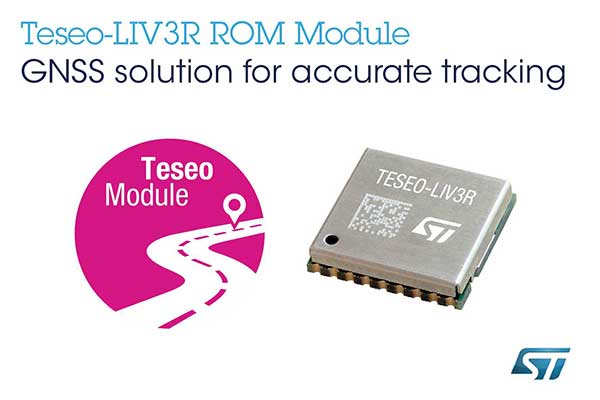
    STMicroelectronics has grown its GNSS product offering with the Teseo-LIV3R ROM-based module. The module provides ST’s full GNSS algorithm capability for cost-conscious tracking and navigation devices.

    ST’s new GNSS module provides odometer functionality with three trip counters and reached-distance alert, along with geofencing capabilities with up to eight configurable circles and crossing-circles alarm. Support for real-time assisted GNSS with free server access ensures uninterrupted positioning data for dependable navigation.

    Simultaneous tracking of GPS, GLONASS, BeiDou and QZSS constellations, with satellite-based augmentation system (S-BAS) and Radio Technical Commission for Maritime Services (RTCM) V3.1 differential positioning ensures excellent accuracy to within 1.5 meters (50% circular error probability, CEP).

    Tracking sensitivity of -163 dBm and time-to-first-fix faster than one second ensure high performance for demanding applications. The module is easy to use and responds to proprietary National Marine Electronics Association (NMEA) commands.

    With scalable power consumption according to accuracy, average current, and frequency of fixes, a sub-15µA standby mode with RTC backup, and support for multiple low-power modes, Teseo-LIV3R is an ideal choice for battery-sensitive applications. The low-power modes include continuous-fix with adaptive and power-saving cycled modes, periodic-fix with GPS only, and fix-on-demand with the device in permanent standby.

    To simplify and accelerate new-product development, the module is FCC certified and is supported by the STM32 Open Development Environment. STM32 applications for advanced geolocation, smart tracking, and server-assisted GNSS are available, while the EVB-LIV3x evaluation board and X-NUCLEO-GNSS1A1 expansion board provide a head-start with hardware. The Teseo Suite PC tool helps easily configure settings and fine-tune performance. Developers can also join the ST GNSS community to share information and increase their understanding of the field.

    The Teseo-LIV3R is in volume production. The 9.7mm x 10.1mm LCC18 module is priced from $7.3 for orders of 1,000 pieces.

  • Telit releases category 11 LTE full mini PCIe card

    Telit has launched the LM940, a global Full PCI Express Mini Card (mPCIe) module for the router and gateway industry supporting LTE Advanced Category 11 (Cat 11) with speeds of up to 600 Mbps.

    The internet of things (IoT) module is available with various mobile network operator approvals in the fourth quarter of 2017, the company said.

    The module includes quad-constellation integrated GNSS and is in an mPCIe form factor to support Cat 11 with the Snapdragon X12 LTE modem. The industrial-grade LM940 delivers significant flexibility and a competitive edge to original equipment manufacturers (OEM) looking to quickly deploy next generation products.

    Today, customers of router and gateway OEMs demand additional bandwidth and near instant network response times as applications like high definition video streaming with digital signage, commercial and enterprise failover needs and pop-up stores are becoming increasingly sophisticated.

    “This industrial-grade module from Telit supporting LTE Cat 11 with global coverage will be very attractive for equipment manufacturers looking to deploy the latest solutions now, especially in the router and gateway market supporting high-bandwidth dependent applications like digital signage,” said Sam Lucero, senior principal analyst for IHS Markit, a global information provider. “As detailed in our June 2016 report on the industrial cellular IoT gateways market, IHS Markit anticipates gateway shipments will rise from nearly two million shipped in 2016 to more than six million shipped in 2021. The value of these industrial cellular IoT gateways shipped in 2021 will slightly exceed USD $1.6 billion.“

    “Telit extends its leadership again by delivering customers the latest releases in LTE Advanced technology that they can take to market today,” said Manish Watwani, vice president of global product marketing for Telit. “The LM940 is the only global product for the router and gateway segment that allows OEMs to immediately leverage the 3x carrier aggregation and the higher order modulation of the 256 QAM capabilities currently available amongst most mobile operator networks. Combined with an exceptional power efficiency platform, this is by far the ideal solution to enable commercial and enterprise applications in the router industry, such as branch office connectivity, LTE failover, digital signage, kiosks, pop-up stores, vehicle routers, construction sites and more.”

    “The Snapdragon X12 LTE modem with LTE Advanced technologies providing peak download speeds of 600 Mbps, defines a new level of service for emerging applications,” says Gautam Sheoran, director of product management for Qualcomm Technologies, Inc. “We are pleased with our ongoing collaboration with Telit to bring technologies that enable emerging applications like 4K video, virtual reality and cognitive computing to the global market.“

    Additional technical features include:

    • LTE Category 11 LTE Cat. 11 DL / Cat. 5 UL Rel.10
    • 3x Carrier Aggregation leverages extended capabilities of the network for increased coverage and bandwidth
    • Up to 600 Mbps DL w/3x Carrier Aggregation and 256 QAM
    • Up to 75 Mbps UL w/ 64QAM
    • HSPA+ Rel. 8
    • Quad-constellation integrated GNSS
    • Popular mPCIe form factor (50.95 x 30 x 2.8 mm)
    • Temperature range: -40 to 85° C
    • Linux and Windows driver support
  • uAvionix demonstrates dime-sized ADS-B for high-traffic drone operations

    uAvionix demonstrates dime-sized ADS-B for high-traffic drone operations

    uAvionix Corporation, an unmanned aircraft system (UAS) avionics provider, has developed and is testing a tiny ADS-B transceiver for UAVs.

    Weighing less than 1 gram, a dime-sized ADS-B prototype module for drones with transmission power between 0.01-0.25 Watts could provide visibility to any aircraft equipped with ADS-B “IN” avionics from 1 to 10 miles away, and is small enough to integrate directly into professional and consumer-level drones.

    uAvionix is working with the Federal Aviation Administration (FAA) and other partners under a Cooperative Research and Development Agreement (CRADA) to test the unit, along with other uAvionix products.

    uAvionix Ping ADS-B transceiver.
    uAvionix Ping ADS-B transceiver. Photo: uAvionix 

    A recent study published in January 2017 by The MITRE Corporation’s Center for Advanced Aviation System Development (CAASD) imagined a future of high-traffic densities of drones operating with ADS-B onboard, and then sought to understand the implications of that.

    The study suggests that there is a nominal transmission power output between 0.01 and 0.1 Watts that when coupled with limited drone traffic densities can result in a compatible operation with the system as a whole.

    “We developed this product to show the world the art of the possible,” said Paul Beard, CEO of uAvionix. “We can’t yet sell this device because the standards that were developed for ADS-B did not take into account the value of air-to-air ADS-B communications between small drones or between small drones and manned aircraft. It’s literally not legal to transmit at these low power outputs. We aim to lead the discussion and development of those standards, and will work with any regulatory body to do so.”

  • Telit autonomous nav module uses internal sensors, GNSS

    Telit autonomous nav module uses internal sensors, GNSS

    Telit has announced the commercial availability of the SL869-3DR, a GNSS module for global use that leverages information from internal gyros, accelerometers and a barometric pressure sensor to perform dead-reckoning navigation for application areas such as track and trace and in-vehicle systems.

    The module delivers accurate position data either directly from its multi-constellation receiver or from a fully autonomous dead-reckoning system, requiring no connections to external devices or components other than an antenna for satellite signal reception and power.

    The module allows integrators to design zero-installation, in-vehicle navigation and tracking devices for fleets and other commercial or consumer applications that operate perched on the dashboard, connected only to vehicle power.

    Photo: TelitThe SL869-3DR is a flash-memory based module capable of tracking three constellations simultaneously. The module integrates an array of micro electromechanical systems (MEMS) designed to provide it seven degrees of freedom. The innovative design of the internal sensor array in conjunction with the Telit MEMS-only Dead Reckoning (MoDR) software and intellectual property, deliver the host device unparalleled portable, turnkey dead-reckoning performance.

    The Telit MoDR solution ensures that reliable position, velocity and time information is constantly available to the host application even when GNSS coverage is compromised, without the need for connection to the vehicle for wheel-ticks for speed or reverse-gear data. Its standard footprint lets navigation and tracking system integrators reuse existing device designs, eliminating complexity from external sensors and other apparatus, getting to market quickly with updated designs or product innovation.

    “A significant number of the millions of commercial vehicles and fleets on the roads today are still operating with no or unreliable navigation systems because installation costs to connect the device to vehicle sensors are too high and require very specialized skills,” said Felix Marchal, executive vice president of GNSS and Short Range Wireless. “With the SL869-3DR we overcome that barrier because it enables devices that you simply connect to vehicle power and go. Up until now, ‘power-and-go’ navigation systems have largely relied on open-sky visibility, which is not typically where most commercial fleets operate. They are moving through tunnels, urban canyons and other environments where these systems cannot produce a position solution. Reliable MEMS-only dead reckoning, or MoDR as we call it, relies on very complex mathematical modeling and expert design of the sensor array. Developers must therefore, thoroughly scrutinize performance of the different products in the market. I am delighted that the SL869-3DR has outperformed competing products in its class across a wide range of test cases.”

    The SL869-3DR is designed to support GPS, QZSS, GLONASS, Beidou and is Galileo ready. Telit MoDR technology boosts position accuracy in areas with adverse satellite reception conditions like urban canyons, overhead foliage, tunnels and parking garages. It integrates an embedded array of sensors including accelerometers, gyroscopes and a barometer (pressure sensor).

    An antenna ON, antenna sense (open / short circuit) feature, allows the host application to inform the user of problems with the connection to the external antenna. An additional LNA delivers better sensitivity in harsh environments, better enabling devices with integrated antennas. The module also features fast calibration and is pin-to-pin compatible with the SL869, SL869-V3 and SL869-ADR.

    Below is a video where performance the autonomous SL869-3DR MoDR is compared with the SL869-ADR automotive navigation module connected to vehicle sensors (wheel ticks and reverse signal).

    https://youtu.be/H9V0tIM8CDw

  • u-blox brings ARM mbed OS 5 to low-energy IoT modules

    u-blox brings ARM mbed OS 5 to low-energy IoT modules

    u-blox has announced ARM mbed OS 5 support for the ODIN-W2 wireless Internet of Things (IoT) gateway module and the NINA-B1 Bluetooth low energy module.

    The ARM mbed OS 5 incorporates a real-time operating system (RTOS) in the core of the operating system. This open environment provides all the features needed to rapidly deploy and develop connected IoT products based on an ARM Cortex-M microcontroller, including security, connectivity and drivers for sensors and I/O devices. On existing u-blox ODIN-W2 and NINA-B1 hardware, customers can now rapidly develop wireless IoT applications making it easier to cut costs, development time and footprint, the company.

    ublox-iot-ub066At ARM TechCon, held Oct. 26-27 in Santa Clara, California, u-blox will showcase the NINA-B1 and ODIN-W2 in a powerful and responsive IoT sensor-to-gateway-to-cloud scenario. In the live demonstration, the ODIN-W2 will read sensor data via Bluetooth low energy technology from NINA-B1-equipped sensors, and simultaneously stream it via Wi-Fi to an IBM cloud server, allowing for real-time data visualization and analysis.

    “The unique combination of u-blox’s ODIN-W2 and NINA-B1 with ARM mbed OS 5 creates the best performing complete IoT architecture solution for applications from sensor data collection to flexible intelligent gateway processing and cloud connectivity, with full support for customer code — all based on the most proven embedded application platform,” said Hakan Svegerud, head of Product Strategy, Short Range Radio, at u-blox.

    The already certified ODIN-W2, NINA-B1 and wireless stacks are designed for typical embedded applications, which require a small footprint implementation with responsive, high-performance hardware and an open CPU architecture. Usage scenarios include IoT, and medical and industrial applications, that use multiple sensors and/or smart gateways linked by Wi-Fi and Bluetooth. ODIN-W2’s 1-MB of flash memory offers ample space for all the customer software required to create a powerful gateway.

    The ARM mbed development environment, with its extensive tools and libraries, gives embedded application designers and developers full access to each u-blox module’s ARM Cortex-M4 based microcontroller. This allows them to avoid the need for an external host CPU — not only saving bill of materials costs and development resources, but also keeping the board footprint to an absolute minimum.

    In addition to providing a consistent development process across multiple products, this environment allows an extremely broad range of sensor and actuator-based IoT designs to be implemented on a single, compact, certified wireless module. Moreover, the u-blox open standard approach ensures ease of IoT connectivity, while still accelerating type approval certification by controlling access to the wireless stacks. All of these advantages combine to reduce time to market to a minimum.

  • u-blox Releases Improved Sub-Meter GPS Positioning Module NEO-7P

    u-blox Releases Improved Sub-Meter GPS Positioning Module NEO-7P

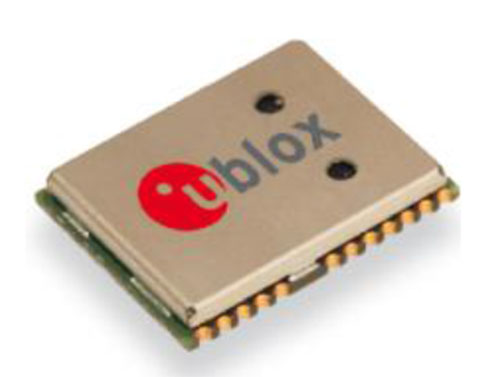
    NEO-7P
    The NEO-7P sub-meter GPS positioning module with Precise Point Positioning (PPP) and Differential GPS.

    Swiss-based u‑blox has introduced the NEO-7P, an improved, low-power, compact, high-precision GPS module. While remaining backwards compatible with its predecessor NEO-6P, the new module achieves standalone sub-meter precision based on single-frequency precise point positioning (PPP) technology.

    Fully autonomous sub-meter performance can be realized for most outdoor applications within coverage of Satellite Based Augmentation Systems (SBAS) throughout North America (WAAS), Europe (EGNOS), and Japan (MSAS).

    In areas where SBAS is unavailable, the NEO-7P achieves high-accuracy based on Differential GPS (DGPS) positioning as an alternative to PPP. DGPS uses RTCM correction messages (correctional data defined by the Radio Technical Commission for Maritime Services) from a local reference station or aiding network to cancel out measurement error introduced by atmospheric distortion and variances in satellite orbits and clocks.

    “The NEO-7P addresses many requirements for precise positioning used in surveying, mapping, marine, and clear-sky recreational applications,” said Thomas Nigg, VP product marketing at u-blox. “The solution delivers sub-meter positioning performance based on two techniques at a fraction of the cost of other high precision solutions. The solution is compact, requires no external base station, and uses a single frequency receiver.”

    The device comes in u-blox’ compact NEO Leadless Chip Carrier (LCC) module form factor. A UART, USB and I2C interface provide flexible connections to a host processor. It can also communicate directly with u‑blox’ SARA 2G, LISA 3G and TOBY LTE cellular modules.

    The NEO-7P also provides complete GPS satellite raw data allowing further accuracy improvement based on post processing by an external host. Internal Flash memory allows simple firmware upgrades. The NEO-7P also supports Russian GLONASS Japanese QZSS positioning standards.

    The module is suitable for vehicle, industrial and consumer applications.

    Detailed information about the NEO-7P can be found on the u-blox website.


  • u-blox Launches GLONASS/GPS/QZSS Positioning Module

    u-blox, the Swiss positioning and wireless module and chip company, announces an all-in-one satellite positioning receiver module, the LEA-6N. The low-power, cost-effective module delivers fast, high-accuracy positioning, u-blox said. It is targeted at industrial telematics applications in Russia such as vehicle tracking, mobile resource management and the ERA-GLONASS emergency call system.

    The module works with GPS, Russian GLONASS, and Japanese QZSS satellite positioning systems. It also supports all civilian Satellite-Based Augmentation Systems (SBAS).

    “The LEA-6N module delivers clear new benefits for our industrial customers in terms of global support of all available satellite positioning systems, easy to mount LCC form factor, low power consumption and cost effectiveness” said Thomas Nigg, VP Product Marketing at u-blox, “LEA-6N will also support our CellLocateTM hybrid indoor positioning system; when used together with our wireless modules, the location of valuable assets or people can be determined anywhere, indoors and outside.”

    Samples of LEA-6N are available mid-April 2012, with evaluation kit EVK-6N and mass production in June 2012. For more information, contact the u-blox office nearest you, or visit with company representatives at Machine to Machine 2012 stand E21 April 3-5 in Paris.