Tag: MPE-M

  • The transition to M-code begins

    The transition to M-code begins

    BAE Systems has produced more than one and a half million military GPS receivers. The company is transitioning receiver designs to use the modernized military code (M-code) signal for added resiliency in RF-challenged environments. We asked Luke Bishop, director and product line engineering lead for the company’s Navigation & Sensor Systems, a few questions.
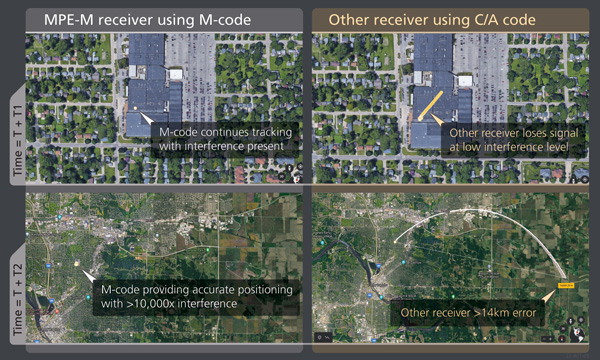
    BAE Systems’ MPE-M provide the benefit of M-Code operation in a challenged RF environment. Image: BAE Systems
    BAE Systems’ MPE-M provides the benefit of M-Code operation in a challenged RF environment. Image: BAE Systems

    Why transition to M-code?

    There are three key reasons for users to transition to M-code as supported by Military GPS User Equipment (MGUE). First, MGUE provide U.S. forces and our allies with enhanced PNT capabilities while improving resistance to threats, such as accidental and intentional jamming. Compared to the current P(Y)-code signal specs, M-code signals are stronger. Second, MGUE provides improved resistance to spoofing. Third, MGUE is field programmable, enabling updates to accommodate future enhancements to the GPS enterprise, such as regional military protection (RMP).

    Which user equipment is transitioning to M-code?

    Successful MGUE Inc 1 prototype development is being leveraged into a full portfolio of weapons, ground and aviation/maritime M-code GPS receivers. Our first production M-code receiver, MPE-M, achieved production deliveries in CY2021, with more than 1,000 delivered. Additional M-code GPS form factors are under development.

    We are also underway with the Foreign Military Sales (FMS) M-code program with MPE-M.

    How is the transition to M-code proceeding?

    As indicated by the January 2021 GAO report (GAO-21-145), M-code-capable user equipment is in the initial stages of Department of Defense (DOD) fielding for select weapon systems. Also noted by the GAO report, the DOD has conducted bulk purchases of the Increment 1 ASICs [application-specific integrated circuits] to ensure that “sufficient supplies of [them] are on hand for future integration into M-code card …based on estimated need through 2028.” We are at the beginning of M-code (MGUE). Time and the market will tell what ultimately happens.

    Which of your receivers operate with an anti-jam (AJ) antenna?

    BAE Systems’ receivers support both stand-alone AJ and integrated AJ. Receivers with integrated AJ include the NavFire-M, NavStorm-M and SABR-M receivers supporting high-dynamic weapons applications. Receivers directly supporting external AJ via a digital beamforming interface include the MPE-M and AMR. Our external AJ DIGAR offering provides exceptional performance for many stakeholders.

    Do you use advanced signal simulation equipment?

    We integrate Spirent Federal and other signal simulators in both our test and development environments, where modeled RF signals are coordinated with other sensor measurements and host vehicle messages for high-fidelity hardware-in-the-loop test cases. Our engineers create hundreds of test cases and scripted test procedures to exercise our products under all required conditions. These simulations allow us to run thousands of trials to qualify and validate performance of our products in extreme scenarios.
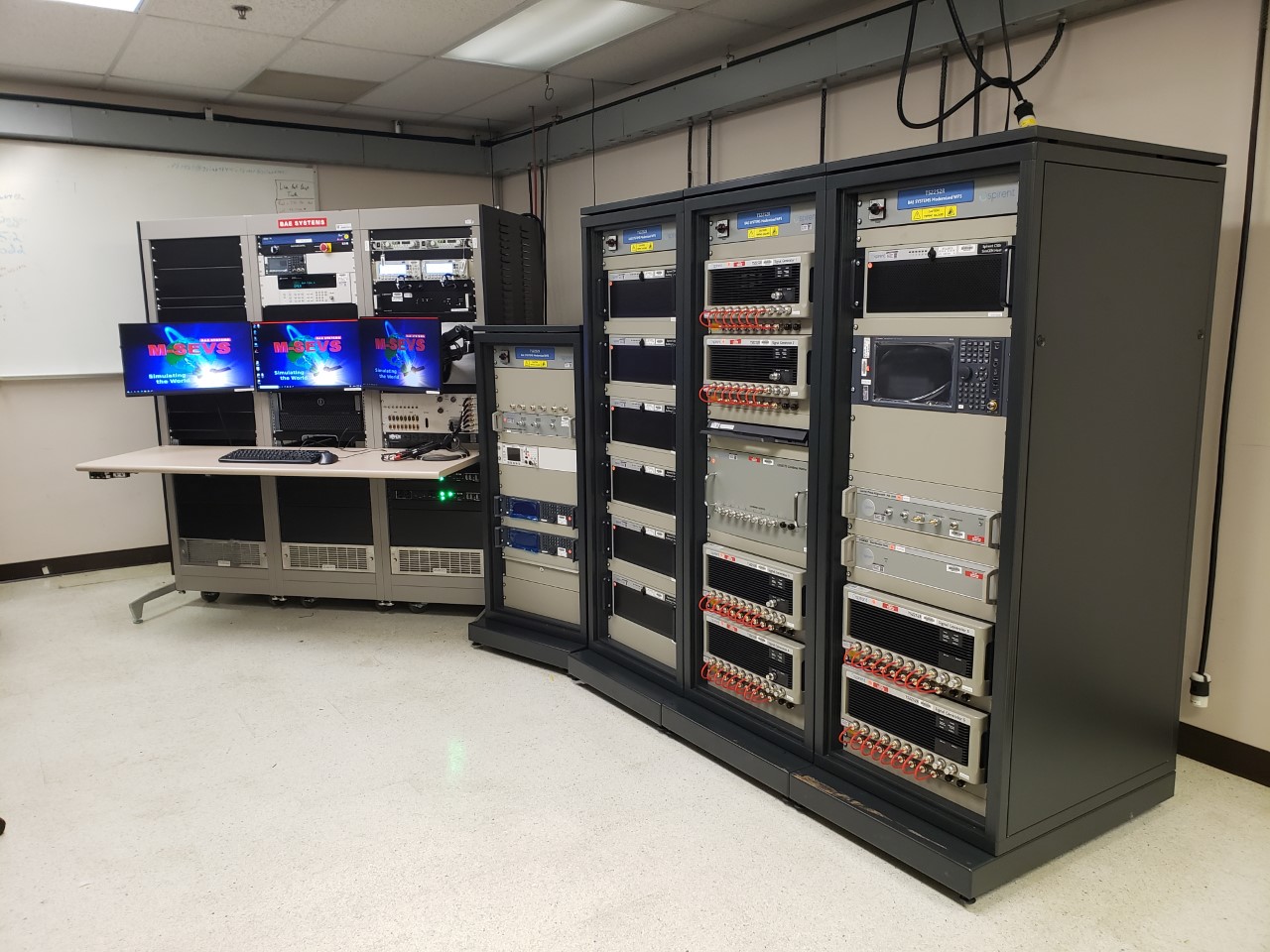

    Photo:
    BAE Systems’ hardware-in-the-loop simulation environments build upon Spirent Federal signal generators to test products under extreme dynamic and threat environments. (Photo: Spirent Federal)
  • BAE Systems receives $325M for M-code GPS modules

    BAE Systems receives $325M for M-code GPS modules

    BAE Systems Inc. has received a $325.5 million contract from the Defense Logistics Agency for advanced military code (M-code) GPS modules that will provide reliable and secure positioning, navigation and timing data with anti-jamming and anti-spoofing capabilities.

    The modules will help warfighters conduct operations in contested electronic warfare environments.

    “Our state-of-the-art GPS technology works with the advanced military M-code signal to provide reliable information to the warfighters who depend on it,” said Greg Wild, director of Navigation and Sensor Systems at BAE Systems. “This contract will ensure the availability of M-code module inventory to build advanced, next-generation GPS receivers.”

    Under the multi-year contract, BAE Systems will deliver Modernized GPS User Equipment (MGUE) Increment 1 Common GPS Modules (CGMs) compatible with the advanced M-code signal to support the U.S. Department of Defense and international allies through 2030.

    BAE Systems will manufacture the modules, manage their inventory on behalf of the Defense Logistics Agency, and use them to build military-grade GPS receivers for ground and precision-guided munitions.

    BAE Systems’ portfolio of M-code GPS receivers provides flexible, efficient, and reliable navigation and guidance solutions for airborne systems, precision munitions, handheld receivers, and embedded applications.

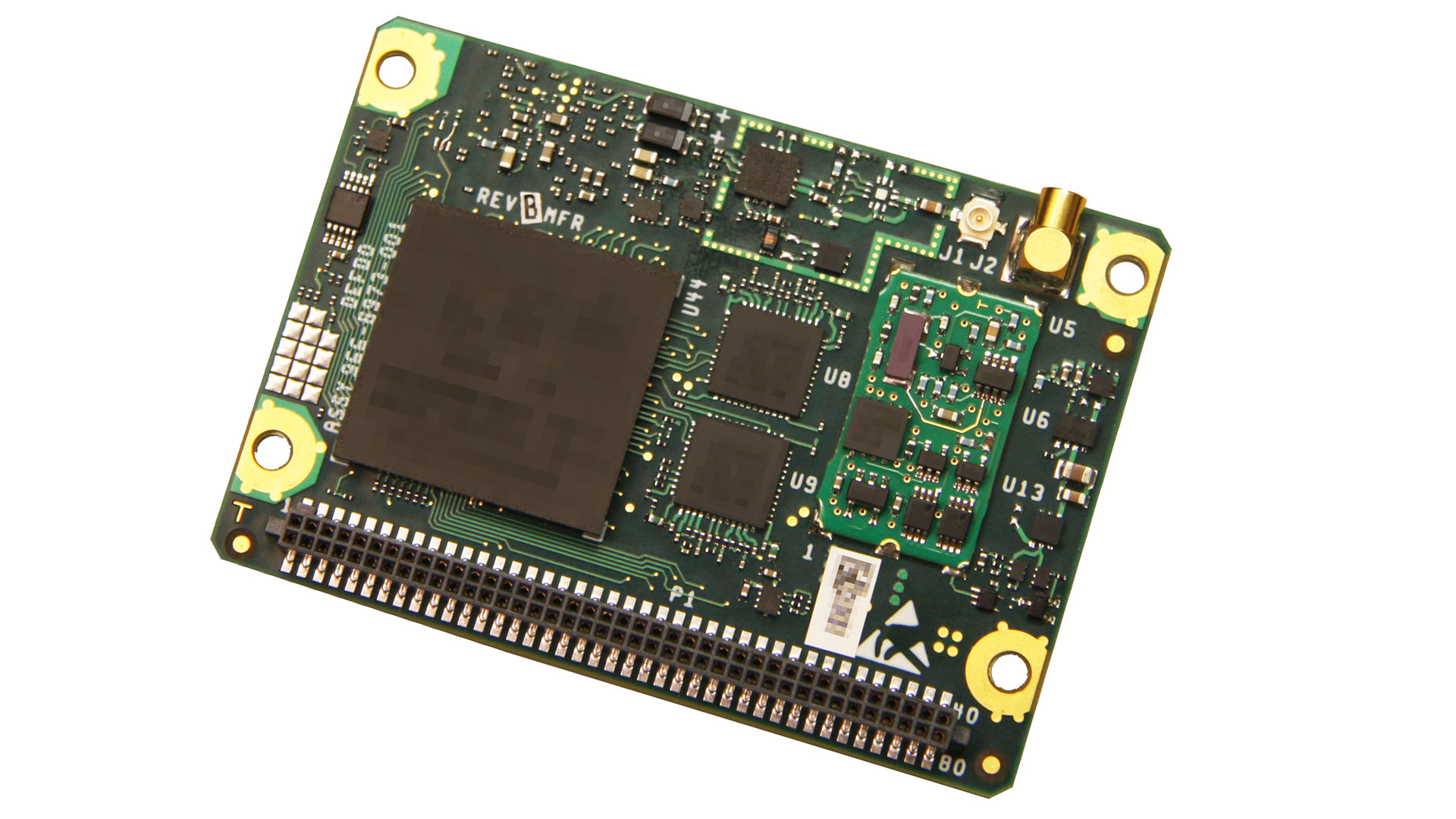
    The company’s Miniature Precision Lightweight GPS Receiver Engine – M-Code (MPE-M) — the smallest M-code solution on the market — and the NavStrike-M GPS receiver for precision-guided munitions are both available today. Additional receivers from the company’s military GPS family are in development for transition to M-code.

    Photo: BAE Systems
    Photo: BAE Systems
  • Collins taking orders for miniature M-code GPS receiver

    Collins taking orders for miniature M-code GPS receiver

    Photo: Collins Aerospace
    Photo: Collins Aerospace

    Collins Aerospace Systems, a unit of United Technologies Corp., has begun taking orders for its latest-generation Miniature PLGR Engine – M-Code (MPE-M) GPS receiver set for 2020 production deliveries.

    According to independent testing, the MPE-M is the lowest size, weight and power (SWaP) small Type II form factor ground receiver available and incorporates the company’s recently certified Common GPS Module (CGM).

    As a drop-in replacement for the thousands of customers using Collins’ Miniature PLGR Engine-SAASM (MPE-S) GPS receiver, the new MPE-M technology provides ten-times stronger anti-jamming capabilities for the direct acquisition of GPS signals than its predecessor.

    The MPE-M is capable of receiving the current military Y-Code GPS signal along with the newer Military Code (M-Code) signal. For all GPS signals, the MPE-M provides warfighters improved security and assured positioning, and it satisfies the U.S. government’s requirement for all military GPS equipment to be M-code-capable.

    “The MPE-M is ideal for lightweight, ground-based applications such as radios, blue force trackers, targeting devices, vehicle LRUs and small unmanned aircraft,” said Troy Brunk, vice president and general manager, Communication, Navigation and Electronic Warfare Systems for Collins Aerospace. “The implementation of M-code will provide our warfighters with increased mission effectiveness and safety due to the improved reliability of the signal.”

    Collins Aerospace is currently the only military GPS receiver provider that manufactures its products in house, assuring control over quality and delivery schedules. The MPE-M’s security certification also makes the receiver eligible for export to U.S. allies through the Foreign Military Sales (FMS) program.

    See also The promises of M-code and quantum.