Tag: nanosecond timing

  • Huber+Suhner Syncro family simplifies optical timing integration

    Huber+Suhner Syncro family simplifies optical timing integration

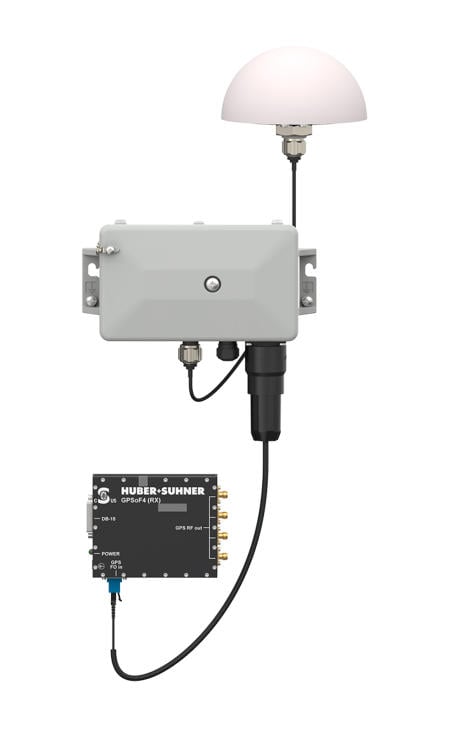
    Huber+Suhner is offering the Syncro family for nanosecond-accurate time synchronization — essential for global trade, stock exchanges, mobile communications, navigation and geodesy. With Syncro, data center operators requiring precise time synchronization can integrate optical timing into existing fiber architectures, enhancing performance and reducing costs.

    The Syncro family is an integrated, modular timing and GNSS distribution portfolio designed for rapid deployment and reliable performance by extending transmission distances, reducing the number of required GNSS antennas and eliminating many limitations of coaxial cabling.

    Syncro is available in three customizable product sets so customers can select the right balance of power, monitoring and redundancy for their operations. The Syncro Max provides full PoF capability and signal expansion, monitoring and redundancy for the most demanding deployments. Syncro Eco delivers the signal expansion and monitoring features of the Max without PoF for customers that do not require remote powering. Simpler applications that do not require PoF or redundancy can use the Syncro Mini, which still maintains monitoring and signal expansion capabilities.
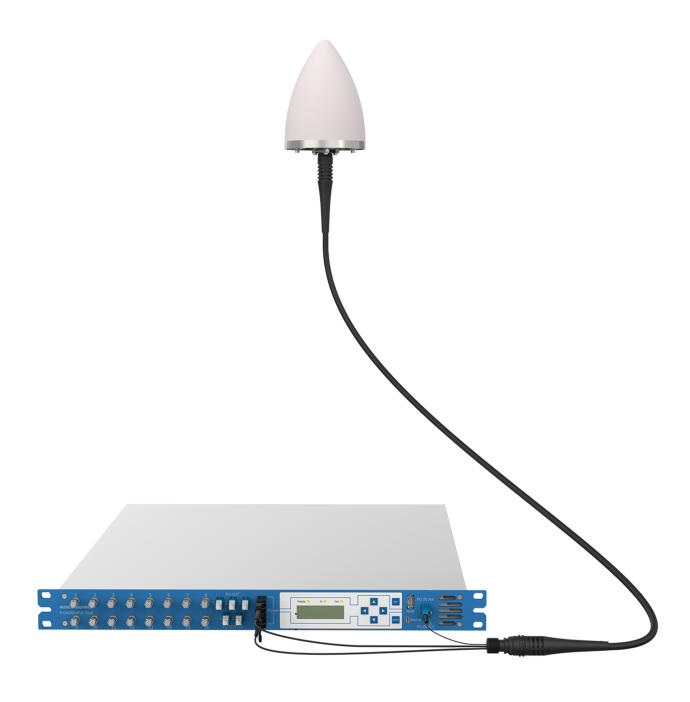
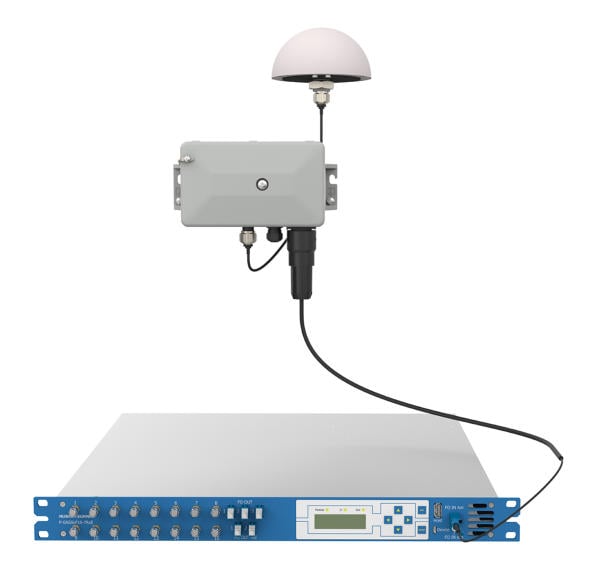
    GNSS provides the reference time used across modern networks and critical infrastructure. GNSS signals originate from satellites carrying atomic clocks, with the extreme stability of those clocks acting as the basis for international timekeeping and enabling nanosecond synchronization when distributed correctly.

    Building on previous GNSS and power-over-fiber (PoF) offerings, Syncro delivers secure, precise timing synchronization over fiber, while preserving nanosecond accuracy across an operator’s network. PoF is a key advantage of the Syncro approach as optical fiber carries both the GNSS timing signal and required energy to remote antenna assemblies, allowing rooftop or remote antennas to be powered without separate electrical wiring. Crucially, Syncro integrates seamlessly into an operator’s existing fiber network, reusing optical infrastructure to deliver both signal and safe, centrally managed power to remote GNSS antenna locations.

    By moving timing distribution onto fiber, Syncro eliminates many installation constraints and reduces planning overhead. The plug-and-play design removes the transmission distance limits of coaxial cabling, reduces the need for reinforced ducting and extensive grounding to protect against lightning surges, and allows longer secure transmission between antennas and receivers.

  • Furuno’s most advanced global timing module, supporting L1 and L5 GNSS signals

    Furuno’s most advanced global timing module, supporting L1 and L5 GNSS signals

    Image: Furuno Electric
    Image: Furuno Electric

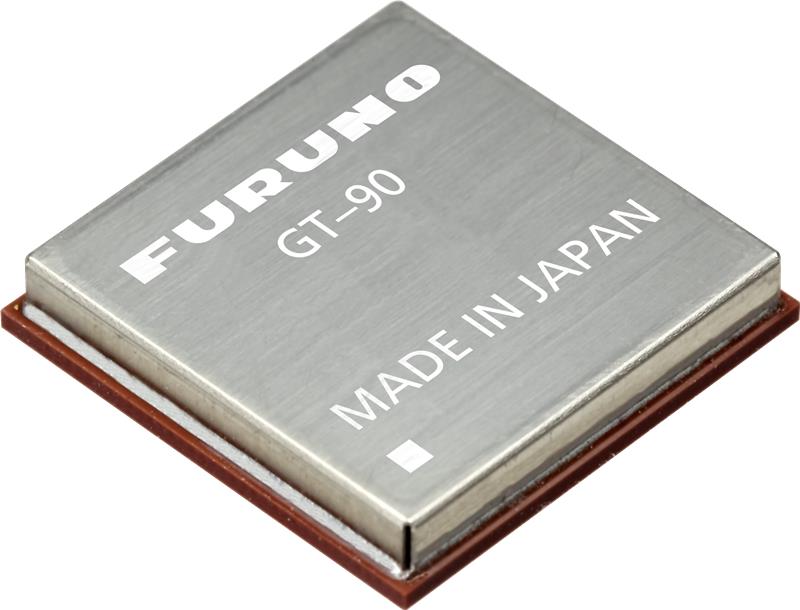
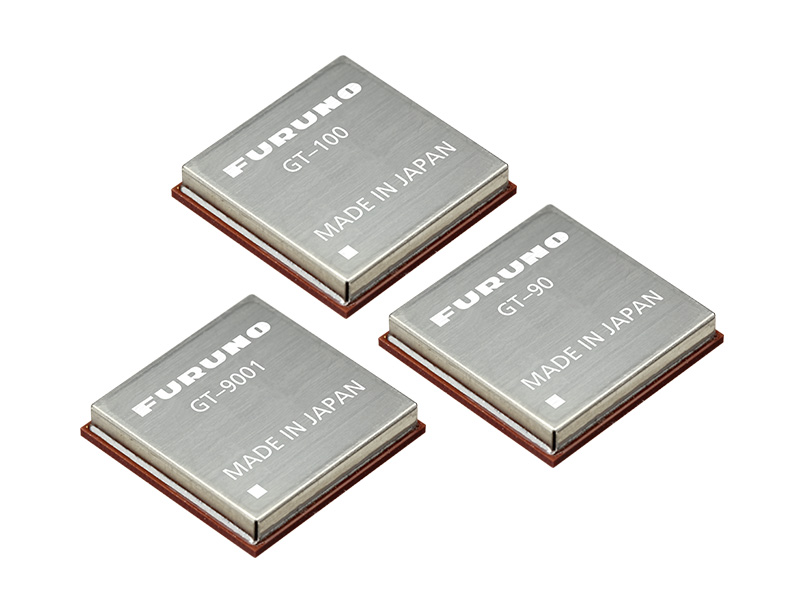
    Furuno Electric has announced a new global timing solution, GT-100, compatible with all GNSS constellations. The GT-100 realizes the world’s highest robustness and standard of time accuracy and stability. Interruption of GNSS satellite signals is a major concern for critical infrastructure systems. The GT-100 features advanced multipath mitigation, anti-jamming and anti-spoofing as well as short-term holdover, ensuring superior performance even if only L1 or only L5 are jammed. 

    The module delivers best-in-class nanosecond precision for 5G wireless systems, radio communications systems, smart power grids and grand master clocks. 

    Along with the GT-100, our GT-9001 and GT-90 achieve a level of time stability of 4.5ns (1σ) and offer superior features and performance.

    Image: Furuno Electric
    Image: Furuno Electric

    Image: Furuno Electric
    Image: Furuno Electric

  • Facebook chooses u‑blox timing to speed up data centers

    Facebook chooses u‑blox timing to speed up data centers

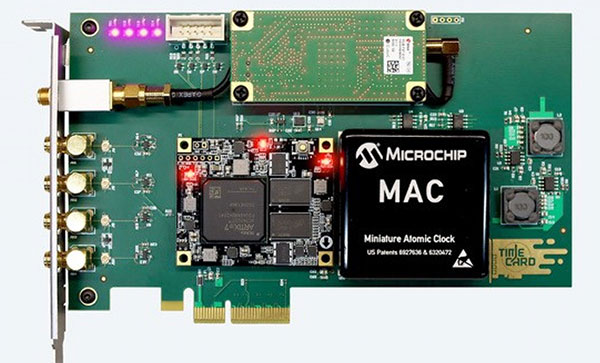
    Facebook has open-sourced the design of its time card, which features the ultra-precise u‑blox ZED-F9T timing module, providing easy access to nanosecond-level timing

    Photo: u-blox
    Photo: u-blox

    Facebook has chosen the u‑blox ZED-F9T GNSS receiver module for timekeeping, according to u-blox. By improving the synchronization of networked computers, Facebook’s time card can significantly speed up the performance of its data centers and distributed databases.

    By open-sourcing their designs, Facebook has bolstered the adoption of highly accurate timing solutions based on u‑blox technology. These solutions can be adopted by other industries requiring nanosecond-level timing, such as 5G cellular networks or smart power grids.

    Facebook set out to create a precise timing solution that reduces the computational overhead required when synchronizing the timing between different computers in a network, u-blox said. The social media company used a u‑blox ZED-F9T multi-band GNSS receiver to sync up its solution with the highly accurate GNSS atomic clocks. To bridge possible gaps in GNSS coverage and keep clock drift to a minimum, the time card contains a backup timing source: a miniaturized atomic clock continuously synchronized with GNSS time.

    To maximize the impact of the solution, Facebook decided to open-source the design of its time card, which fits onto a PCIe form factor. Anyone with experience working with microelectronics can turn any PC built on an x86 architecture and featuring a network interface controller into a nanosecond-level-accurate timing and synchronization solution, u-blox said.

    Easy access to nanosecond-level timing accuracy — based on the u‑blox RCB-F9T timing board, which hosts the u‑blox ZED-F9T GNSS receiver — opens new avenues in industry segments that rely on highly synchronized signals, such as 5G network base stations that require tighter synchronization than those of previous generations, u-blox said.

    As power-distribution networks become more complex to accommodate a growing share of decentralized renewable energy, they are becoming more reliant on reliable and accurate timing solutions. Data centers and computer networks will be able to modernize infrastructure management to speed up performance and reduce latencies.

    Facebook has shared the GitHub repository including the specs, the schematics, the mechanics, the bill of material, and the source code in partnership with the Open Compute Project (OCP) under the Time Appliance Project (TAP).