Tag: natural gas

  • Inspector Gadget: Drones could solve gas-leak detection issue

    A methane leak at a Southern California Gas (SoCalGas) storage facility has shone a spotlight on how unmanned aerial vehicles can be used to inspect utilities. The massive three-month leak — temporarily plugged on Feb. 12 — chased thousands of Los Angeles residents from their homes.

    At least 2 percent of natural gas is wasted through methane leaks at production sites, according to the U.S. Department of Energy (DOE).

    UAVs are already being used for some electrical grid and pipeline inspections, mostly in pilot programs, but their potential for hands-off long-distance monitoring is just starting to be realized.

    Along with criminal charges, SoCalGas is facing regulatory mandates to improve air-quality monitoring at its facilities. Nationally, the DOE’s Advanced Research Project Agency-Energy is funding a program to accurately locate and measure methane emissions associated with natural gas production.

    Source: GPS World Staff
    Bridger’s proposed leak detector uses lidar in combination with range and gas absorption measurements. (Illustration: Bridger Photonics)

    The program has given one company, Bridger Photonics, a $2 million grant to develop a leak detector. Bridger plans to build a mobile methane sensing system capable of surveying a 10 x 10 meter well platform in just over five minutes with precision that exceeds existing technologies used for large-scale monitoring.

    Bridger’s detector useslaser beams to generate 3D images that show the distance and concentration of a gas leak, even showing the types and concentration of the hydrocarbons.

    Mounted on a UAV, the sensor would give inspectors access to complicated or obscured infrastructures at processing plants, drilling rigs and pipelines. The sensor could also be mounted on a vehicle.

    Bridger’s goal is for its devices to be able to service up to 85 sites, and cost $1,400 to $2,220 a year to operate per wellsite. Bridger plans to field test its technology this year and make it available commercially in 2017.


    Bridger’s imager

    Bridger’s gas imager is a point-scanning lidar sensor that performs simultaneous range and gas absorption measurements, according to Mike Thorpe, chief technology officer of Bridger Photonics. The measurements are combined to derive high-accuracy estimates of the gas concentration.

    The measurement beam is scanned around the scene to create 3D topographic images of hard targets overlaid with 2D maps of the gas concentration.

    The datasets will be geo-registered using GPS and inertial measurements.

    The prototype sensor will have the following performance specs:

    • 1 kpps measurement rate
    • 3-100 m range
    • 1 cm down-range resolution
    • 2 cm cross-range resolution
    • <3 ppm-m methane detection sensitivity for distances < 30 m
    • <15 ppm-m methane detection sensitivity for distances < 100 m


    Bridger also is developing measurement approaches and algorithms to enable automatic leak detection and leak rate estimation.
  • FOIF GNSS Receivers Aid with Australian Pipeline Survey

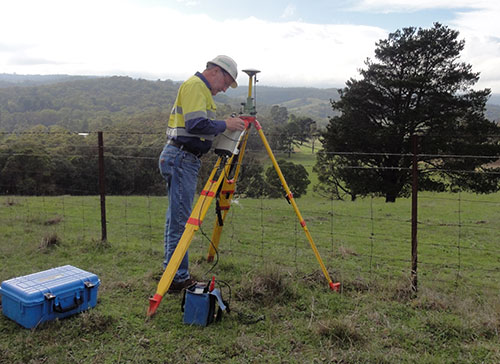
    Photo: FOIF GNSS Receivers

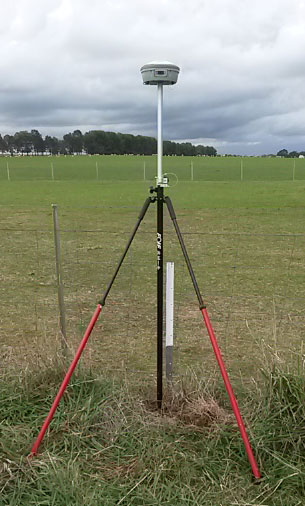
    Three years ago, engineering survey company G & C Sadlier Design was engaged to perform a route selection and centerline pegging survey for a gas pipeline duplication between Somerton in Victoria and Young in New South Wales, Australia. To accomplish the work, G & C Sadlier Design turned to FOIF GNSS receivers.

    So far, about 225 kilometers have been surveyed and constructed, with 306 kilometers still to be surveyed, designed and built, according to surveyor Greg Sadlier. The current focus is a 100-kilometer section in Victoria and a 70-kilometer section in New South Wales. Recently completed are two linear static control surveys over 80 kilometers in Northern Victoria and 70 kilometers at the end of the project near Young in New South Wales.

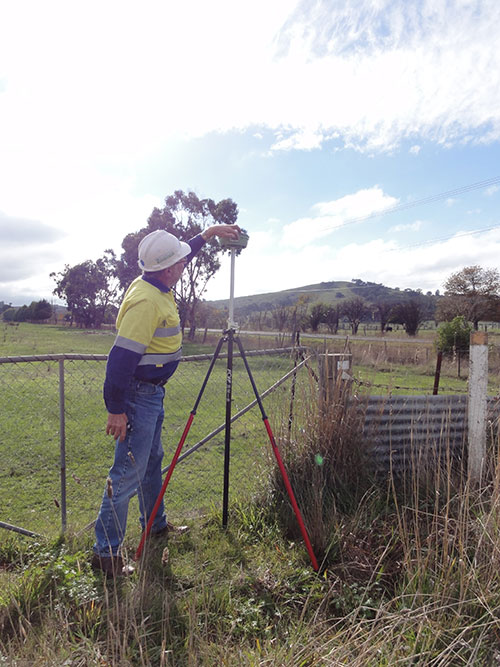
    Photo: FOIF GNSS Receivers

    “These surveys have been done using a FOIF F60 Base GNSS receiver and two FOIF A30 Rover receivers. (Two one-man survey crews are used),” Sadlier said. The procedure is to set up the F60 base over a point with known coordinates and elevation, approximately in the center of the alignment to be surveyed.

    The base was set first, to record 1-second data to the datacard over the duration of the survey. One surveyor started the base, and surveyed forward to the end of the alignment, and the other rover crew started at the beginning of the alignment and surveyed towards the base. The rovers were also set to record 1 second data to the datacard.

    “The control points were 0.75-m steel star pickets driven flush with the ground surface, and witnessed with a galvanized 1.5-m steel star picket,” Sadlier explained. “Each rover point was surveyed for 20 minutes plus 1 minute per kilometer of the distance to the base. That is, a point that is 35 Km from the base will be occupied for 55 minutes or 3300 epochs. With the control points at easy accessed positions, usually roads crossing the alignment, at intervals of about 8 kilometres mean that the survey of 80 Km is completed in one day.

    Photo: FOIF GNSS Receivers “We have found the FOIF GNSS receivers are very easy to use, and the epoch readout on screen is very reassuring that the data is being stored, and easily confirms that the correct amount has been stored. The data is easily downloaded from the card and converted to Rinex format with FOIF RnxTransform. The data was post processed by a third party.”

    The control survey results were adjusted (Helmert adjustment) onto check Permanent Marks at both ends. “This made a rotation of 0°00’00.001” and a shift of 0.007 meters E and 0.005 meter N. An elevation difference of .035 meters was manually adjusted out over the 80 kilometers,” Sadlier said.

    “We are now using the control survey while surveying the route selection and features survey,” Sadlier said. “We have two RTK base locations at the 25-kilometer mark and 52-kilometer marks, and using our VHF radio solution have coverage over the entire job with a 10-kilometer overlap in the center.

    “We have found that RTK observed control readings of 180 epochs return residuals of less than 010 meters for both coordinate and elevation for all the static control points. Very impressive results considering the length of the survey,” Sadlier said.

    The engineering firm has yet to process the New South Wales data, but expects the same or better, Sadlier said, as the overall length is a little less and the surveyed control points were in more open country with less tree cover.