Tag: navigation system

  • Researchers develop 10-cm accuracy navigation system

    Researchers develop 10-cm accuracy navigation system

    Researchers at Delft University of Technology, Vrije Universiteit Amsterdam and VSL have developed an alternative positioning system that is more robust and accurate than GPS, especially in urban settings.

    The aim of the project — SuperGPS — was to develop an alternative positioning system that makes use of the mobile telecommunication network instead of satellites and that has better accuracy than GPS.

    The working prototype that demonstrated this new mobile network infrastructure achieved an accuracy of 10 centimeters.

    The new technology is important for the implementation of a range of location-based applications, including automated vehicles, quantum communication and next-generation mobile communication systems.

    Much of our vital infrastructure relies on GNSS. Yet systems that rely on satellites have limitations and vulnerabilities. For instance, their radio signals are weak when received on Earth, making accurate positioning no longer possible if the radio signals are reflected or blocked by buildings.

    “We realized that with a few cutting-edge innovations, the telecommunication network could be transformed into a very accurate alternative positioning system that is independent of GPS,” said Jeroen Koelemeij of Vrije Universiteit Amsterdam. “We have succeeded and have successfully developed a system that can provide connectivity just like existing mobile and Wi-Fi networks do, as well as accurate positioning and time distribution like GPS.”

    Photo: Delft University of Technology
    Illustration: TU Delft / Stephan Timmers

    One innovation is to connect the mobile network to a very accurate atomic clock so that it can broadcast perfectly timed messages for positioning, just like GPS satellites do with the help of the atomic clocks they carry on board. These connections are made through the existing fiber-optic network.

    “With these techniques, we can turn the network into a nationwide distributed atomic clock — with many new applications such as very accurate positioning through mobile networks,” said Erik Dierikx, VSL. “With the hybrid optical-wireless system that we have demonstrated now, in principle anyone can have wireless access to the national time produced at VSL. It basically forms an extremely accurate radio clock that is good to one billionth of a second.”

    The system also employs radio signals with a bandwidth much larger than commonly used. “Buildings reflect radio signals, which can confuse navigation devices. The large bandwidth of our system helps sorting out these confusing signal reflections, and enables higher positioning accuracy,” explained Gerard Janssen of Delft University of Technology. “At the same time, bandwidth within the radio spectrum is scarce and therefore expensive. We circumvent this by using a number of related small bandwidth radio signals spread over a large virtual bandwidth. This has the advantage that only a small fraction of the virtual bandwidth is actually used and the signals can be very similar to those of mobile phones.”

    The results of the peer-reviewed research have been published in Nature.

    Photo: TU Delft / Frank Auperlé
    Photo: TU Delft / Frank Auperlé
  • 3GPP approves NaVIC for global commercial use

    3GPP approves NaVIC for global commercial use

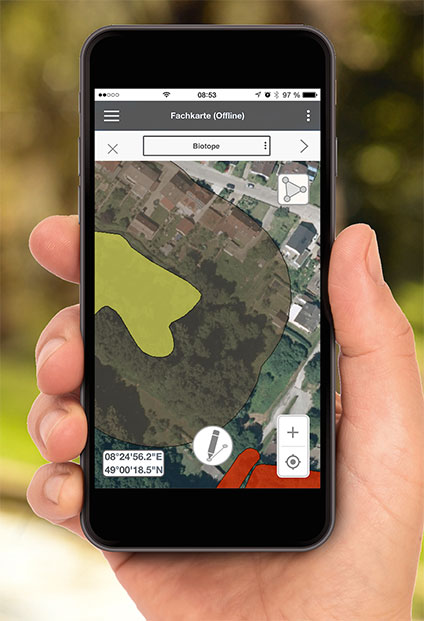
    Disy Informationssysteme GmbH, www.gis2go.com
    Photo: Gis2Go

    Global mobile wireless standards body 3GPP has given its approval to the regional navigation system created by the Indian Space Research Organization (ISRO), known as NaVIC, reports The Times of India.

    The approval was given for the system’s use in Rel-16 LTE and Rel-17 5G NR specifications, paving the way for wider commercial adoption of NaVIC and allowing it to be integrated with 4G, 5G and internet of things technology (IoT).

    Once these specifications are adopted by Telecommunications Standards Development Society, India (TSDSI), IoT devices in India can make a switch from GPS to NaVIC.

    Electronics companies can start designing and building integrated circuits and mass manufacture other products created to be compatible with NaVIC.

  • Robotic Research provides navigation system for GPS-denied areas

    Robotic Research provides navigation system for GPS-denied areas

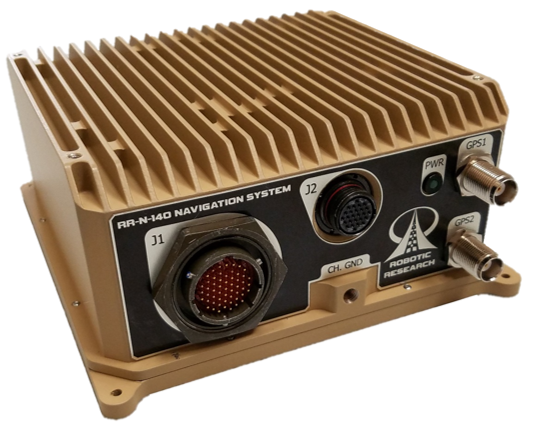
    Photo: Robotic Research
    Photo: Robotic Research

    Robotic Research will showcase its RR-N-140 navigation system at Booth #407 at AUVSI Xponential 2019, which takes place April 29-May 2 in Chicago.

    The system provides accurate, absolute and relative 3D (six-degrees-of-freedom, or 6 DOF) localization information for ground vehicles of all sizes.

    The device delivers exceptional localization performance in GPS‐denied or compromised areas. It is designed specifically for use on unmanned ground vehicles and is heavily customizable to incorporate a wide variety of sensor inputs into the navigation solution.

    Robotic Research develops and deploys autonomous vehicle innovations for both commercial and government customers.

    Features of the RR-N-140 include:

    • Accurate, real-time navigation/localization solution for wheeled or tracked ground vehicles
    • Adaptable for use on surface vessels
    • Exceptional localization performance in GPS-denied or compromised areas
    • Dual antenna GNSS for zero-speed heading detection and redundancy
    • Rugged IP67 Construction designed to meet shock and vibration environments typical of military vehicles
    • Up to 4X configurable vehicle speed / encoder inputs
    • Configurable GNSS and IMU options allow tailored solutions for all levels of performance
    • Customizable to directly interface with and process a variety of sensor inputs (e.g. LADAR, Stereo and Monocular Cameras, Ultra-Wideband Ranging Radios)
    • Easy integration with the Robotic Research Warfighter Localization family of systems (WarLoc)
    • Web interface for user-level diagnostics and configuration
    • Ethernet, CANbus, and RS-232 Serial Data Interfaces
    • Independent Ethernet ports for separation of navigation solution and sensor processing data
    • Robust Built-in-test (BIT) error reporting during runtime
    • Redundant IMU and GNSS options available for fault-tolerance
    • NTP Server and GPS PPS signals for time synchronization
    • Low SWAP
    • 7.2”L x 6.4” W x 2.9” H
    • 4.0 lbs
    • 22W at 9.5-36 VDC