Tag: New York

  • Autonomous vehicle testing program to launch in New York City

    Autonomous vehicle testing program to launch in New York City

    Photo: Waymo
    Photo: Waymo

    Mayor Eric Adams and the New York City Department of Transportation (DOT) Commissioner Ydanis Rodriguez have introduced a new permit program designed to oversee the testing of autonomous vehicles in New York City. The program is part of the city’s initiative to ensure the safe and responsible exploration of autonomous vehicles. With safety as the primary concern, the program mandates that a trained driver must be present behind the wheel of any autonomous vehicle being tested, ready to take control at any moment.

    The permit application process requires companies to demonstrate preparedness for testing in New York’s challenging urban environment through detailed plans for technology deployment and safety. This includes showcasing prior testing experience, technological capabilities and comprehensive safety plans detailing how the technology will be safely operated on city streets.

    Companies interested in participating in the program must follow industry best practices for the recruitment and training of safety drivers, obtain approval from the New York State Department of Motor Vehicles, and coordinate closely with the city’s emergency services. They must also comply with cybersecurity best practices and provide detailed reports on the automation level and safety performance of their autonomous vehicles and technology.

  • Shark-monitoring UAVs patrol New York beaches

    Shark-monitoring UAVs patrol New York beaches

    Image: mingis/iStock / Getty Images Plus/Getty Images
    Image: mingis/iStock / Getty Images Plus/Getty Images

    Off the coast of Long Island, New York, UAVs are sweeping the ocean patrolling for any danger that may lurk below the water. This follows a recent increase in shark encounters for beachgoers, reported USA Today.

    According to George Gorman, the state’s park director in Long Island, there have been five shark bites reported this year as shark season is just beginning.

    On July 6, the sighting of a 10-foot shark prompted officials to keep people out of the water at Robert Moses State Park. This is the same Long Island beach that delayed its opening on July 4, after a UAV spotted a school of 50 sand sharks off the coast.

    Even if the injuries have not been serious, Gorman and others are concerned by the spike in shark sightings and encounters.

    The UAVs conduct three sweeps a day on popular Long Island beaches — once before opening, sometime midday, and a final round before the end of the day.

    Cary Epstein, a lifeguard supervisor who pilots UAVs at Jones Beach, explained how UAVs provide additional viewpoints to lifeguards on the beach.

    “When you’re up in an elevated lifeguard station or a lifeguard stand, you can see up and you can see out, but you can’t see straight down,” Epstein said. “When we do have sharks that are eating on these fish, it’s very, very clear to us. You could see it, no questions asked.”

    Additional state funding has been provided for more advanced UAVs to spot sharks.
    New York Governor, Kathy Hochul, recently announced a new program that will provide $1 million toward purchasing 60 new shark-monitoring UAVs. The new devices will build on the enhanced shark safety measures at Long Island state park beaches — including more trained staff, new jet skis, and more buffer zones between swimming areas and fishing areas.

  • NSGIC issues guidance for states to strengthen address data programs

    NSGIC issues guidance for states to strengthen address data programs

    Guidance issued for states to strengthen address data programs complete and accurate data necessary for emergency response, other government services
    Cover: NSGIC reportA report issued by the National States Geographic Information Council (NSGIC) targets a key dataset for state governments. “Best Practices for State Geospatial Maturity: Addresses” is available now.

    “Addresses are created by local address authorities in city, county, and tribal agencies,” explained NSGIC Executive Director Molly Schar. “The data support delivery of services like utilities and emergency response, so getting it right is absolutely critical. NSGIC advocates the process of rolling up local address point records to the state to aggregate and then to the national level to save lives, reduce costs, avoid duplication, increase revenues, improve service and foster efficient and effective government.”

    The roll-up process is at the heart of an effort led by the U.S. Department of Transportation and supported by NSGIC to develop a National Address Database. Only 23 states have provided statewide address data to the national database, with five states providing partial data, and three states in the queue.

    For this publication, NSGIC tapped state geospatial information officers in Kansas, Massachusetts, Minnesota, New Mexico, New York, Utah and Vermont to identify key factors to the successful organization and coordination necessary to create and maintain strong address programs. These honor roll states scored in the top of the country in the area of address data in NSGIC’s 2019 Geospatial Maturity Assessment (GMA).

    NSGIC recently finalized an interactive GMA geospatial web map application with dashboards customized for each data theme allows users to take a deeper dive into the 2019 results, interacting with individual state and collective national results to bring to life the visual patterns and trends in the data.

    Geospatial data dashboards have become much more familiar to the public in recent months as most states and municipalities have adopted the interactive platforms to transparently display coronavirus information.

    Launched in 2009 to document geospatial development practices and uses, the GMA has provided a biennial snapshot of each state’s geospatial maturity. Inspired by the National Spatial Data Infrastructure theme grading undertaken by the Coalition of Geospatial Organizations (of which NSGIC is a founding member), an entirely new process was developed for the 2019 GMA.

    Nine-grade “report cards” were produced for individual state spatial data infrastructures and state geospatial coordination, in addition to overall theme and topical analysis.

    Over the next 18 months, additional focused guidance will be issued in the areas of overall statewide coordination and the key datasets for next generation 9-1-1, transportation, parcels, hydrography, elevation, and orthoimagery.

    “Collaboration, transparency, and increased efficiency in government are hallmarks of mature state GIS programs,” Schar said. “Through the Geospatial Maturity Assessment research and products, NSGIC is helping states set goals, identify opportunities for collaboration, shine a light on areas requiring attention, and build resources.”


  • GPS tracking shows critical truck deliveries continue despite COVID-19

    GPS tracking shows critical truck deliveries continue despite COVID-19

    Photo: RichLegg/E+/Getty Images
    Photo: RichLegg/E+/Getty Images

    The American Transportation Research Institute released data showing that trucks are continuing to move — in many cases faster than usual — to respond to the demands placed on the industry by the COVID-19 pandemic.

    “ATRI’s real-time GPS data comes from more than a million trucks, allowing us to analyze freight flows, and so far in March, what we are seeing is an unprecedented level of truck movement,” said ATRI President and COO Rebecca Brewster. “Not only are trucks continuing to move, but they are doing so at speeds well in excess of normal traffic patterns.”

    For example, according to ATRI’s data, at the intersection of I-85 and I-285 in Atlanta, known locally as Spaghetti Junction, afternoon rush hour truck speeds are typically less than 15 MPH due to congestion. Last week, truck speeds averaged 53 MPH.

    “Spaghetti Junction is typical of what we’ve seen across the country, especially in areas hit hard by the virus and subject to quarantines and lockdowns,” Brewster said. “As other traffic dissipates, trucks continue to move, delivering much-needed relief supplies to markets, hospitals, gas stations and other essential businesses.”

    Among the hardest hit states, New York, California and Illinois, the data is showing similar changes.

    • In New York, along I-495 in Queens, the afternoon rush hour typically sees average truck speeds of 16 MPH. Speeds have now more than doubled, averaging 38 MPH, still below the posted speed limit but certainly an improvement.
    • In Los Angeles, at the intersection of I-710 and I-105, truck speeds during highly congested morning rush hours are normally less than 25 MPH between the hours of 6 and 8 a.m. Truck speeds are now averaging 53 MPH in the morning as Californians stay home but truck deliveries increase.
    • At the Byrne Interchange in Chicago, where I-290 intersects with I-90/I-94, morning truck speeds are now averaging 43 MPH, more than twice the typical morning rush hour speed of 20 MPH.

    According to ATRI’s analysis, the results can be explained by several COVID-19 related factors:

    1. The dramatic reduction in commuter traffic allows trucks to operate at higher speeds, particularly during traditional rush hours.
    2. Continuous 24/7 truck operations generate higher average truck speeds across nearly all hours of the day.

    ATRI’s analysis used truck GPS data from more than a million heavy-duty trucks and the locations examined included some of the nation’s top truck choke points.

    “Normally, ATRI’s bottleneck data is used to show us where the problems are on our highway system,” said American Trucking Associations President and CEO Chris Spear, “but during this period of extreme uncertainty, the data is showing us where the solution is — in the back of America’s trucks as professional drivers continue to quickly and safely deliver life-sustaining medical supplies, food, fuel and other essentials to Americans when they need it most.”

    ATRI is the trucking industry’s 501c3 not-for-profit research organization. It is engaged in critical research relating to freight transportation’s essential role in maintaining a safe, secure and efficient transportation system.

  • Fallout from GPS rollover includes NOAA, Samsung, NYC, Boeing

    Fallout from GPS rollover includes NOAA, Samsung, NYC, Boeing

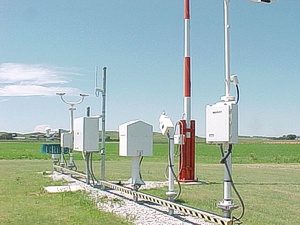
    The GPS Week Number Rollover, which took place April 6, has caused several automated NOAA stations to go offline.

    Some of the outages could last until November.

    Photo: NOAA
    Photo: NOAA

    According to the EOS website, 19 National Oceanic and Atmospheric Administration (NOAA) coastal and marine automated stations were not updated to mitigate the issue, and those stations are out of commission until workers can service them on location.

    In Alaska, five of the stations in and around Cook Inlet are down.

    The New York Times is reporting that at 7:59 p.m. EDT on Saturday, the New York City Wireless Network went dark, interrupting functions such as the collection and transmission of information from some Police Department license plate readers, Department of Transportation traffic-light programming, and communications at remote work sites for the sanitation and parks departments.

    The city is now working overtime to bring affected systems back online, reports StateScoop.

    Some users of Samsung smartphones and tablets are also reporting issues.

    Previously, GPS World reported on rollover issue for the Australian Bureau of Meteorology’s (BOM) weather balloons, as well as Boeing aircraft. Read more about the Boeing issue here.


  • FAA tests FBI drone detection system at JFK

    FAA tests FBI drone detection system at JFK

    The United States Federal Aviation Administration (FAA) and its government partners are expanding research on ways to detect “rogue” drones around airports. Together, they are evaluating drone detection technology at John F. Kennedy International Airport (JFK) in New York.

    Over the last two years, the FAA has received numerous reports from pilots and residents about unmanned aircraft systems — UAS, or “drones” — around some of the nation’s busiest airports, including JFK.

    “We face many difficult challenges as we integrate rapidly evolving UAS technology into our complex and highly regulated airspace,” said Marke “Hoot” Gibson, FAA senior advisor on UAS integration. “This effort at JFK reflects everyone’s commitment to safety.”

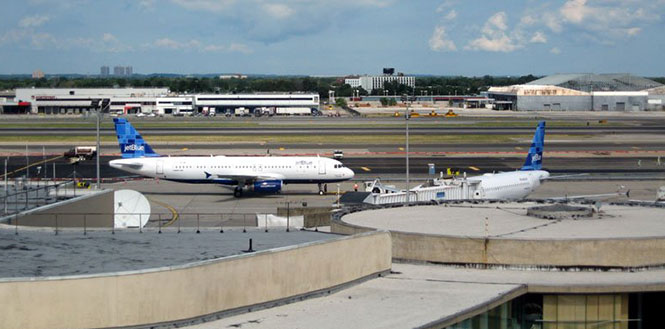
    Terminal 6 at JFK Airport. (Photo: New York Photo Gallery)
    Terminal 6 at JFK Airport. (Photo: New York Photo Gallery)

    Beginning May 2, the FAA conducted evaluations at JFK to study the effectiveness of a Federal Bureau of Investigation (FBI) UAS detection system in a commercial airport environment.  Five different rotorcraft and fixed-wing UAS participated in the evaluations, and about 40 separate tests took place.

    The JFK evaluation involved extensive government inter-agency collaboration, and cooperation from industry and academia. The tests expanded on research performed earlier this year at Atlantic City International Airport.

    In addition to the FAA and the FBI, the agencies combining forces in this research included the Department of Homeland Security (DHS), Department of Justice, Queens District Attorney’s Office and the Port Authority of New York and New Jersey. DHS and the FBI want to identify unauthorized UAS operators for law enforcement purposes, and the FAA’s mission is to provide a safe and efficient airport environment for both manned and unmanned air traffic.

    “We applaud the FBI and FAA for their efforts to detect and track unmanned aerial systems (UAS),” said Thomas Bosco, Port Authority aviation director.  “We look forward to supporting continued U.S. government efforts to identify and deploy countermeasures to neutralize the threat posed by rogue UASs.”

    The team evaluating the FBI’s detection system also included contributions from one of the six FAA-designated UAS test sites. The Griffiss International Airport test site in Rome, New York, provided expertise in planning the individual tests as well as the flight commander for the tests and two of the UAS used.

    The FY 2016 Appropriations law mandates that the FAA continue research into detection of UAS in airport environments. The agency is continuing to formulate an inter-agency strategy to evaluate detection systems in a variety of airport environments.