Tag: Nokia

  • YellowScan, Nokia partner for 5G lidar mapping

    YellowScan, Nokia partner for 5G lidar mapping

    Photo: YellowScan
    Photo: YellowScan

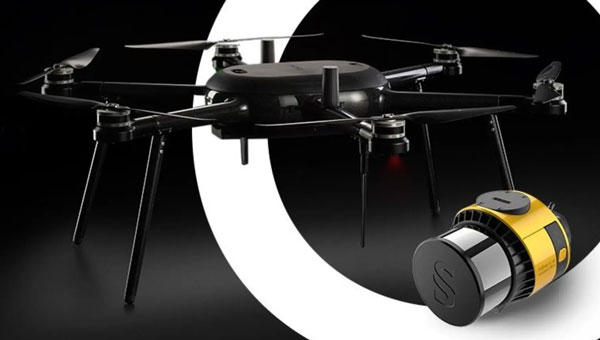
    YellowScan and Nokia have entered a strategic partnership to integrate YellowScan’s Surveyor Ultra lidar scanner into Nokia’s UAV solutions.

    The partnership focuses on automating 5G-based lidar scanning for various applications in sectors where precision, efficiency and safety are critical, such as telecommunications tower inspections, utility maintenance and mining operations.

    YellowScan’s Surveyor Ultra, integrated with Nokia’s drone-in-a-box solution, enables real-time streaming of lidar data over 5G networks. It also allows for automated, high-resolution scans and the creation of precise digital twins.

    The collaboration seeks to improve safety by reducing the need for manual inspections in hazardous environments. Automated UAV inspections, powered by 5G connectivity, serve as the foundation for consistent data quality and allow for remote operations, even beyond visual line of sight (BVLOS).

  • GNSS repeater company enables public safety connectivity

    Cloudstreet and Roger-GPS have successfully delivered a demonstration of the ability to enable any 4G/LTE network to support mission-critical connectivity for public safety.

    Cloudstreet calls itself a “network slicing company.” Network slicing allows multiple virtual networks to be created on top of a common shared physical infrastructure. Roger-GPS, a Nokia spin-off, is a GNSS repeater company.

    The two Finland-based companies presented the live proof-of-concept before a gathering of 50 public safety organizations participating in the Critical Communications Broadband Group’s plenary session hosted by Nokia at the Critical Communications Finland Conference on Oct. 27.

    The demonstration marks a watershed in critical communications proving the ability to support life-critical connectivity for public safety through “local control“ functionality, Cloudstreet said.

    Building toward this proof-of-concept, Cloudstreet has been working closely with the U.S. government’s Public Safety Communications Research (PSCR) group overseeing FirstNet, a critical communications initiative in partnership with AT&T established following the tragedy and communications system failures of Sept. 11, 2001.

    Looking for a solution to the limitations of TETRA-style dedicated networks for public safety PSRC and Cloudstreet drew up a blueprint for local control functionality as an essential component of next-generation critical communications networks.

    Enabled by Cloudstreet’s Application-Aware Network Slicing platform, Local Control in the mobile network context provides public safety and critical communications operatives the ability to secure guaranteed, fail-safe connectivity to meet the demands of any data or communications applications required in the field.

    Coupled with Roger-GPS’s government-grade GNSS repeater, it allows signal base synchronization across limitless base stations, providing end-to-end QoS-adjusted mobile radio throughput for essential life-saving public safety applications.

    “We’re pleased to unveil this solution that is sure to become a critical platform for future public safety networks,” said Mika Skarp, founder and CTO of Cloudstreet. “The importance of delivering local control functionality for critical communications cannot be overstated. Leveraging our dynamic application-aware network slicing platform along with key radio signal support and synchronization gives public safety operatives the guaranteed service levels they need to meet their life-saving mandates. Together with our partners and a wave of innovative product developers, applications like real-time body camera video capture and situation analysis over unified commercial mobile networks suddenly become a reality, and these are but the tip of the iceberg. We’re proud to be playing our part in making this possible.”

  • SAP offers connected vehicles technology with Concur, Hertz, Nokia and Mojio

    SAP SE demonstrated new technology to make life easier for drivers and rental car users through an Internet of Things (IoT) collaboration with Concur Technologies, Hertz and Nokia.

    The announcement was made at Mobile World Congress, being held Feb. 27–March 2 in Barcelona, Spain.

    Also, Mojio — a connected vehicle platform and app provider for Deutsche Telekom and T-Mobile USA — has joined SAP Vehicles Network and will provide parking and fueling through its app in the United States and Europe.

    A part of the SAP Leonardo portfolio, the SAP Vehicles Network solution creates an intelligent, automated experience — from car rental to parking and fueling location and payment, to integrated navigation and expense management for business travelers.

    SAP-vehicle-network

    SAP Vehicles Network, built on SAP Cloud Platform, enables participating network companies to provide mobility services to drivers and passengers. By standardizing the business processes, SAP Vehicles Network enables integration and collaboration to facilitate new revenue streams and business opportunities for network members.

    Through the network, member companies can offer secure, convenient services — independent of devices or vehicles — such as parking, fueling and location-based food services, tailored for the business traveler or the individual consumer.

    The new collaboration showcased at Mobile World Congress draws on the strengths of each participating vendor:

    • Concur, Hertz, SAP and other members of the Nokia-founded IoT Community, a worldwide ecosystem of companies collaborating on the development of innovative IoT solutions, drove the development of the connected rental car experience.
    • Nokia provided its Intelligent Management Platform for All Connected Things (IMPACT) to securely control and manage devices and sensors in the vehicle, including the personalization of driver settings and entertainment systems, as well as the automatic configuration of in-vehicle communications without Bluetooth paring, which ensures data privacy for drivers. The Nokia IMPACT IoT Platform works in conjunction with payment systems in SAP Vehicles Network for parking and fueling authorization to create a seamless and driver-optimized experience.
    • Hertz, one of the world’s leading rental car companies, is developing new products and services for its next 100 years of meeting customers’ needs. By exploring the use of connected-car technology in collaboration with leading technology and travel players such as SAP, Nokia and Concur, Hertz is evaluating the opportunity to integrate travel and itinerary planning, along with in-car personalization, through its customer apps as part of an elevated car-rental experience.

    https://youtu.be/CmMoPUgEXS8

    With the connected car prototype, business travelers can automate route guidance through Concur TripLink integration with other Concur solutions in addition to accessing seamless trip reporting capabilities for all travel-related expenses, including parking and fueling transactions. All in-trip payment transactions can be reported in Concur Expense in real time and be ready for the traveler to submit by the time the trip is complete.

    Mojio’s cloud integration with SAP Vehicles Network takes the guesswork out of parking, enabling drivers to plan and reserve a parking spot based on calendar events or search, as well as to find and pay for a spot in real time based on the connected vehicle’s location. A “tap” inside Mojio’s app toggles between personal and business, allowing for automated expense reporting to Concur solutions. Together, Mojio and SAP plan to bring automated parking and fueling services to a growing base of connected drivers around the world.

    SAP Vehicles Network makes any car smart and transactional by providing drivers with cashless access to on- and off-street parking and connected fueling stations. It minimizes unnecessary drive time and fuel expenditures and helps reduce traffic and emissions caused by drivers searching for open spaces.

    “With leading partners like Hertz and Nokia and new customers like Mojio, SAP is delivering new levels of value for businesses and end consumers based on SAP Cloud Platform, SAP Leonardo and tight integration with Concur solutions,” said Tanja Rueckert, executive vice president, IoT and Digital Supply Chain, SAP. “SAP Vehicles Network puts the end consumer in the driver’s seat by transforming the vehicle into the ultimate digital wallet and making car rental into a seamless, intelligent experience.”

    For more information on SAP Vehicles Network, including videos, see here. For video on collaboration with Hertz, see here, and Mojio, see here.

  • Driverless Conference sparks autonomous car development analysis

    Driverless Conference sparks autonomous car development analysis

    driverless-logo-no-tagGPS and GNSS have changed the world. Of that there can be no doubt. But in terms of sheer change, both qualitative and quantitative — we ain’t seen nothing yet.

    We now witness the creation of an industry. This will be very disruptive. We’ve had change instituted by GNSS; we know what that looks like. We haven’t yet seen a true revolution.This is something entirely new, and there are many things about which we don’t yet have a clue .

    What happens to that great American institution, the private car? The relationship between the individual and its four-wheeled extension?

    And on the industrial side, do automakers disappear as OEMs — do they become Tier 1 suppliers to Google, Uber and Lyft?

    Because of the massive impact of this particular rollout of GNSS-enabled capabilities, I am devoting this issue of the GNSS Design & Test e-newsletter to it, even though it is not in itself a system in space. It is the most radical transformation of life on Earth we have seen, driven by our systems in space.

    The following are notes jotted during the Driverless Conference,  March 23 in San Francisco.

    “In the early 90s, when I was part of a government ride-sharing initiative, we used to talk about these new portable devices bringing data communication into … wherever we go. Now they’re here, and they’re well established. Very soon, this is going to change things, and enable many of the things we’ve only talked and dreamed about so far.” Thus spoke Steve Wollenberg of Automatiks, opening the conference.

    “We’re at the confluence of great technological developments. We’re seeing great acceleration of all of them.”

    Virtually all  the speakers, all these driverless enthusiasts, really love cars. Some  own up to collecting them, having multiples in their home garage(s). A bit wistfully, Wollenberg foresaw the new control technology taking over public roadways. “In ten years, racetracks may be the only place where you’re allowed to drive your own vehicle.”

    Ride Share. “Four years is the entire lifetime of the ridesharing industry,” said Emily Castor of Lyft, who by virtue of her tenure there for that period, can be termed an industry veteran.

    “We’ve seen a full-about turn in the regulatory environment. We see ride-sharing as the stepping stone to a world in which people no longer drive vehicles. Getting an autonomous vehicle on demand through a shared network will be much easier and cheaper than owning a private vehicle.”

    Lyft talked with General Motors last year, and found a shared vision of shared use.

    Amitai Bin-Nun from Securing America’s Future Energy (SAFE), a non-partisan advocacy organization with business leadership, introduced his organization’s broad mission: reducing U.S. petroleum dependence. Instability in parts of the world is fueled by  petroleum dependence.

    “This is a hard process. It takes a long time to overturn an established system.” A key obstacle is the lack of compelling new consumer experience, currently. Using connected and autonomous vehicles in a ride-sharing network is an opportunity to get this new experience, and drive the transformative process. Re-order the transportation system.

    Mariel Devisa of Travelers Insurance announced that Travelers has launched a ride-share insurance product, live now in 16 states.

    In two fairly conservative industries — automotive and insurance — with long-established partners and practices, the efforts to move and change are, frankly, surprising and faster than anticipated, according to moderator Wollenberg. “It’s a fun time.”

    Freight and Fleets. Steve Boyd of Peloton made the case that trucking fleets can serve a critical role in pushing the technology forward, because some segments of the transportation industry move faster than others. Getting state approvals without having to go federal is the route  pursued now, in terms of full-scale roadtesting of autonomous driving. That will enable early adoption heading into commercial pathways: freight-truck platooning and drafting. Volvo, Intel, Nokia, Denso, UPS and a number of other companies are closely involved.

    Boyd announced a set of fleet trials this year, starting in Texas, “a very truck-friendly state.” Legislative approval for trials has passed or is pending in several other states, as many as a dozen. Prospective customers are already lined up in the freight space.

    In Europe, an April 6 EU Platooning Challenge will take place in Rotterdam. The Netherlands is leading the EU in the current cycle to approve truck platooning by early 2018.

    There’s “a platooning gap” developing between the U.S. and Europe, according to Boyd. Silicon Valley may lead on the technology, but if this is not matched by activity on the regulatory side, it will lose out to other areas that aggressively pursue approvals as well as technology.

    Traditionally, the automotive and trucking OEM industries have been very competitive, but now they are seeing the necessity to collaborate to push the policy side forward. This is happening in the insurance industry, too. Competition will certainly still be there, but to enable vehicle-to-vehicle communication a broad measure of collaboration will be necessary.

    Photo: Google

    The road environment today is very imperfect, with many thousands of fatalities and countless more serious injuries. Trucks drive too close together. Highway safety needs innovation and regulatory change in order to improve.

    The Long Vision. An autonomous car can’t count on the ability of the driver to retake control of the vehicle in 5 or 10 seconds. So the vehicle needs to be able to take care of itself — fully. Therefore, an evolutionary approach to installing autonomous capabilities may not work.

    Some initiatives, however, continue to bring services into the vehicle one by one, gradually. How engaged will the driver be, and in what timeframe? There’s debate, and a shift in thinking may currently be underway.

    Traditionally, a 5- to 7-year product cycle in automotive starts when new features are introduced in upmarket vehicles. Examples: adaptive cruise control (to follow the car in front of you at a set distance), lane-keeping assistance. Gradually, these new features are installed in lower price-point models until they become standard throughout the line. With multiple products and product cycles, it will thus take multiple decades. 220 million vehicles are owned by households. An integrative approach to autonomy will take a long, long time.

    There is a rising tide for autonomy may take a different approach: autonomy first, that is, full autonomy will take over the vehicle — and as many vehicles as possible.

    (Something that no one has mentioned but I can’t help thinking: Given the longstanding and extremely virulent controversy in this country over private gun ownership… What does this bode for something shaping up as a massive social, structural change, not just a new technological wrinkle?  What is more American than a gun? A car.

    If you thought the Internet, or smartphones, or for heavensakes even GPS/GNSS have radically altered the world — again, we ain’t seen nothin’ yet.)
  • German automakers complete HERE acquisition

    Kevin Dennehy
    Kevin Dennehy

    In what was 2015’s largest location-industry deal, three German luxury auto manufacturers completed the purchase of HERE. But that wasn’t the only recent acquisition as location-based services provider TeleCommunication Systems, or TCS, was bought by Comtech Telecommunication Corp. Both deals indicate the growing, and continued growth, of location services going forward into 2016.

    Three German automakers are now in the location business following the finalization of a $2.8 billion deal to buy Nokia’s HERE digital mapping company last week. Audi, BMW and Daimler are now equal owners of HERE following quick regulatory approval.

    While some say there was much Nokia-driven hype about who was bidding on HERE, including Uber and Baidu, ultimately others breathed a sigh of relief that automotive companies, not Google, bought the digital mapping pioneer.

    The deal, which was originally announced in early August, shows the continued value of accurate maps to the automotive industry as it transitions for connected to autonomous vehicles. In addition, the number of big suitors interested in HERE shows the rise in the potential and real market for location-based services in both smartphones and connected vehicles.

    Many of the early suitors balked at HERE’s early price tag, estimated to be more than $4 billion. Uber, which some felt would be a good match for HERE because of their autonomous vehicle intentions, decided to go in another direction, buying mapping company deCarta.

    While it’s too early to analyze the consequences of the deal, some analysts say it will be interesting to see if the new owners keep the mapping giant neutral to not alienate future clients.

    It remains to be seen whether its competitor, TomTom, which also has been talked about as an acquisition target, should stay as an independent company or form its own consortium.

    Nokia purchased HERE, the former Navteq, for $8 billion in 2007. The sale of HERE is part of Nokia’s transformation as it completes its $16.6 billion acquisition of Alcatel-Lucent, which is expected to close early next year.

    In another big deal since our last column, Annapolis, Md.-based TeleCommunication Systems was acquired by Comtech Telecommunication Corp. for $430.8 million deal. The deal is expected to close in March 2016.

    TCS was one of the first companies to do it all in the consumer location space, buying entities in automotive navigation and also making inroads in the fleet management and indoor positioning/9-1-1 space. The company most recently was developing location technology for mobile, or m-health markets.

    Cyber Security Big Connected Vehicle Concern in 2015

    As we review the past year, one of the biggest connected vehicle trends in 2015 was when cyber security became real for the automakers, said Jon Allen, Booz Allen Commercial Solutions principal.

    “Just as automakers are increasingly demonstrating the power of automation, their momentum is challenged by researchers showing they really can hack into vehicles. While there are engineering challenges ahead to realize the full potential of autonomy, the priority in automotive is to protect the trust of customers and regulators as autonomous capabilities are further developed,” he said. “That puts cyber at the top of the agenda.”

    2016, OEMs will need to further embrace a security mindset, Allen said. “These [cyber risk] issues are solved by designing, engineering and testing your vehicle to meet defined standards. But cyber risk has an outside variable you can’t control: cyber threat actors. This means you’re not just engineering a solution — you’re fighting an adversary,” he said.

    Allen said that automakers need to identify a single leader to champion vehicle cyber security, supporting them up with an integrated, cross-functional team. “That includes experts from safety, privacy, IT, legal, engineering, manufacturing, customer service and supply chain,” he said.

    Autonomous vehicles tout a safety record that far surpasses today’s cars, but a cyber incident has potential to reverse that claim, Allen said. The “doomsday” scenario is attacking multiple vehicles over the air to “brick” multiple platforms, but this may be an unlikely near-term scenario, he said.

    “The near-term attacks will be motivated by money. That’s why many of the largest hacks were designed to exploit personal and financial information,” Allen said.

    At a Colorado Space Roundup meeting in Denver last week, Thad Allen, former Coast Guard commandant and now executive vice president at Booz Allen Hamilton, said that there won’t be a “cyber Pearl Harbor” as the government and civilian entities should have had plenty of warning it was coming. Allen, who was in Denver working on the GPS Operational Control System, or OCX, also said that it would be catastrophic if the GPS infrastructure was compromised.

    “If someone does something to disrupt GPS, it will affect everyone,” said Allen, who oversaw the Hurricane Katrina and Deepwater Horizon oil spill operations.

    Indoor Positioning’s Big Story in 2015: Consumer Appliances?

    While there were several significant tests and infrastructure rollouts, at least one analyst says the rise of indoor positioning in consumer appliances was huge. Bruce Krulwich, Grizzly Analytics founder, said that such companies as Move ‘n See are putting location chips into electronic devices.

    Move ‘n See also has a camera robot, called Pixio, which follows a person moving around a sports field or other indoor site. “What’s huge about this is not the product itself — it’s hard to tell whether it will appeal to the masses or only a niche market–but I believe that it’s the first in a new trend of electronic products that enhance their capabilities by incorporating indoor location technology,” he said.

    In other location news:

    • CalAmp Corp. said it made a $113 million offer for LoJack Corp., which is a pioneer in car theft-recovery using location technology. According to published reports, CalAmp has made three cash offers for Lojack in the past 14 months. LoJack’s car recovery systems use location technology, which seems to be a great fit for CalAmp, which offers fleet tracking software.

    It’s been a good run. After eight-and-a-half years, this is my last Wireless LBS Insider column. Many thanks to Alan Cameron and Tracy Cozzens, both seasoned journalists, who steered me on the right course over the years. I will be at CES in a freelance role next month and will continue to operate my autonomous vehicle conference, Driverless.

  • Phones Allow Surreptitious Geo-Tracking

    Phones Allow Surreptitious Geo-Tracking

    Janice Partyka
    Janice Partyka

    Not everyone wants to be located. Consumers think they have the ability to turn off the tracking ability of their phones. But can they? More about that later. In other news, there are good reasons why Nokia’s HERE mapping is still on the selling block. And blind people are using a no-tech version of a widely used location positioning method that doesn’t need canes.

    The controls that phone makers have devised to enable consumers to opt out of being located have a big hole. Android-based phones are giving app makers free access to phone data that can be used to surreptitiously geolocate devices. The data comes from an unlikely source: power consumption, and no consent is needed.

    The technique, called PowerSpy, was developed by researchers at Stanford and Rafael, Israel’s defense research group, and gathers a phone’s power usage history. Simplistically, the location of the phone is tracked by using the phone’s battery consumption to determine the distance of a phone to a cell tower. The further the distance, or the greater the obstacles blocking the tower, the more power is consumed by the battery. The researchers say they can take into account phone usage battery drain and filter out the noise created by focusing on long-term trends.

    At its current level of development, the PowerSpy method requires the snoop to have driven a route (war driving) to identify its power consumption pattern. With tests conducted in San Francisco, the method worked with 90 percent accuracy to identify a correct route from seven choices. The team is working on using the data to detect unknown routes that have not been previewed.

    How would the hypothetical stalker, crook or unethical mobile advertiser get access to this data? They would entice a person to download an app. The smoke screen app might be a game or a productivity app that is quietly slurping up the power consumption data.

    Here Today, Not Gone Tomorrow? Wouldn’t you think that Nokia would by now have clinched a deal to sell the mapping division? Given its mapping debacle, Apple was on the top of everyone’s list as a buyer, but apparently the company didn’t even participate in the bidding, and instead is committed to further development of its self-built mapping database. Contenders — Facebook, Baidu, Tencent and Uber — seem to have dropped out of the competition. Left is a consortium of German automakers — BMW, Daimler and Volkswagen — who feel that they should get a better deal with no other buyers in sight. It is a double-edged sword, as they also worry that if the highly accurate maps are acquired by tech firms, the car makers will lose a competitive advantage in the fight for supremacy of the automated vehicle. High-precision mapping is critical to the success of the auto OEMs.

    Who Will Win Connected Vehicles? Follow the Money. Investors who want a piece of the connected vehicle action are placing bets on the tech companies, not the auto OEMs. Many blue chip and small companies are seeing healthy gains in price. Sensor chip makers, car infotainment and telecom companies are some of the winners. With the surge of connectivity required in the Internet of Things, networking technology will also do well.

    E911 Innovations. While regulations are in place for eventually requiring technology to automatically identify the location of indoor E911 calls, dispatchers don’t yet have that capability. Callers can be inside a large complex, like a dormitory or hotel, and if they are unable to speak or identify their location, response is hampered. Smart911 from Rave Mobile Safety is sending dispatchers floor plans of buildings to help in rescue efforts. The maps are automatically sent with the 911 call and have already been credited with quicker responses.

    Quick Business News. Uber acquired Microsoft’s geo-imagery team and assets, known at BIT (Bing Imagery Technologies), which is based in Boulder. Microsoft didn’t need this technology as it had already outsourced Bing Maps technology to Nokia HERE. Telecommunication Systems (TCS) purchased location-based technology and intellectual property from Loctronix. The purchase will further TCS in developing indoor-location technologies. Denmark has become the first country to use real-time traffic data across a national network. Denmark will use GPS probe data managed by INRIX for congestion management. The Internet of Things relies on multitudes of sensors and a new start-up, Sense360, has built a platform to manage that data.

    No-Tech Location Technology. Daniel Kish was a particularly helpful kid who made deliveries for his mom to homes outside of his neighborhood. What is unusual is that Kish is blind and uses echolocation to “see” the space around him. He clicks his tongue to ascertain the unique echoes of his surroundings, starting by identifying areas of high or low density, such as tall buildings, squat houses or open space. And in a version of drive testing, blind users like Kish first walk a neighborhood with a sighted guide and remember the signature echoes. Whether it is solely by ear or with a big computer algorithm like PowerSpy, pattern mapping can be effective.


  • Nokia Selling HERE, Indoor Location Intensifies

    Janice Partyka
    Janice Partyka

    It has been an interesting month for developments in location. Nokia is looking for a buyer for HERE, the mapping and navigation business that once set the industry gold standard. While carriers are planning how they will comply with new FCC mandates for locating indoor E911 calls, the commercial indoor location market has moved beyond “emerging” and is well underway. It is a confusing ecosystem for buyers of indoor location solutions. And there is yet another mega-entry into the connected vehicle market, Alibaba and China’s SAIC Motor.

    With the likely merger of Nokia and Alcatel-Lucent, Nokia has started looking for a buyer for its digital map and LBS division. The mapping industry has changed dramatically since Nokia purchased the mapping leader Navteq in 2007. Google has become a mapping juggernaut, and less accurate free maps have become serviceable for many types of uses. In fall 2014, Nokia took a EUR1.2-billion impairment charge on HERE’s book value and now estimates the fair value for HERE at EUR2 billion. Possible buyers include Google, Microsoft, Apple and Uber, all companies with deep pockets and hardy appetites.

    Indoor Location Market Is Messy. The indoor location market is pulling away from the station, as technology is ready and there are applications and use cases primed to get started. Unfortunately, the market is chaotic, teaming with companies offering solutions with various levels of accuracy, infrastructure requirements and cost. An ideal indoor location technology would provide at least 3-meter accuracy, be cost effective and fully universal, working anywhere on all devices. It doesn’t exist, but the competing technologies, all with trade-offs, will find applications that fit. For instance, the precision required in locating an apartment in the case of an E911 emergency call differs greatly from the pinpoint accuracy need by an app that directs a shopper to Lucky Charms cereal on an aisle crowded with boxes.

    One Size Doesn’t Fit All. There is more to an indoor location technology than accuracy. “Accuracy is important, but so is universality, the ability to work everywhere and in all phones. So is cost, in terms of the investment required from a site deploying the technology,” asserts Bruce Krulwich of Grizzly Analytics. “Universal technologies can win in the market even if they’re less accurate, and technologies with cheaper infrastructure can win even if they’re less accurate than those with expensive infrastructure. High-end systems can deliver sub-meter accuracy to those willing to pay for it.” Grizzly Analytics just completed a comprehensive report on the indoor location market.

    Test First. Each of the numerous companies vying for the indoor location market makes claims regarding accuracy, availability/coverage, latency and battery usage. Judicious companies that invest in indoor location systems would be wise to test the claims of vendors. “Making a fair comparison among different indoor location offerings is complex, and nuances in how the testing is performed need to be controlled to ensure an apple-to-apple comparison,” asserted Khaled Dessouky of ComVerity. “It is important to use an unbiased methodology that relates to your use cases.” Dessouky managed the neutral test bed for the FCC’s Communications Security, Reliability and Interoperability Council (CSRIC) for indoor E911 calls.

    Quuppa. An interesting highly accurate offering comes from Quuppa, a Finnish company with a bunch of high caliber researchers spun off from Nokia. Like some others, they are using Bluetooth Low Energy (BLE) beacons, but add angle of arrival (AOA) algorithms that pump up the precision, which they self-report to be 30 centimeters to 1 meter. With this performance, Quuppa has been used in sports to track hockey pucks and athletes’ movements during game play for coaching, player load monitoring and infotainment that can be broadcast during the game. The use of this type of high-precision location in health care settings is compelling. Patient flow management, security and critical asset tracking can be improved with precise positioning technology. Quuppa is a system that likely wouldn’t be used in apps that locate a coffee shop at a mall, but for uses that demand high performance and can spare some expense, it is compelling.

    And Yet Another Mega Entry. The number of companies vying for a piece of the connected-car market keeps expanding and getting more international. E-commerce giant Alibaba and SAIC Motor, China’s popular car maker, together set up a $160 million fund to develop “car on the Internet.” Alibaba will be leveraging its communications, entertainment, map and cloud-computing services. The company joins a group that includes Google, Apple, Baidu and Uber in challenging auto makers.

  • Financial Results for Nokia HERE Show Growth

    Nokia has released its financial results for the fourth quarter and the full year 2013, which show growth for its HERE division, formerly known as Navteq.

    In the fourth quarter 2013, HERE had sales of new vehicle licenses of 3.2 million units, compared to 2.4 million units in the fourth quarter 2012 and 2.6 million units in the third quarter 2013. On a year-on-year basis, unit sales to vehicle customers increased primarily due to higher vehicle sales and higher consumer uptake of in-vehicle navigation.

    Sales to vehicle customers represented well over 50% of external HERE net sales in the fourth quarter of 2013, as well as in the fourth quarter of 2012 and the third quarter of 2013.

    The automotive success was partially offset by lower sales to personal navigation device (PND) customers. External sales for PNDs went up 10 percent, from €204 million in the fourth quarter of 2012 to €225 in the fourth quarter of 2013.

    HERE total sales decreased from €278 million to €254 million (10 percent), which Nokia said is because of the fast decline of internal sales (such as navigation and maps found in Nokia devices). Sales were €74 million at the end of 2012, compared to only €29 million for the end of 2013.

  • Nokia’s Mapping Business Has Options, Issues

    Kevin Dennehy
    Kevin Dennehy

    In the wake of Microsoft’s recent purchase of Nokia’s mobile phone business, the Nokia unit formerly known as Navteq, and now know as HERE, has opportunities, but also a hard-to-guess future. At least one industry analyst believes that Navteq/HERE was not included in the Microsoft deal because it was too expensive.

    “While much ado has been made of the Nokia/Microsoft deal in the press, I was interested in why Mr. Softy did not acquire Navteq/HERE with the other assets of interest. There are several possibilities to explain this omission,” said Mike Dobson, TeleMapics president.  “First, it could be the case that Nokia did not want to sell Navteq/HERE. Second, it is possible that Microsoft had no interest in acquiring its current map database supplier. Third, maybe the price for Navteq/HERE was too high. My vote is for number three.”

    Dobson said that Nokia clearly would like to sell HERE, as it does not fit with the company’s profile, growth strategies, or competencies, on a going-forward basis.  “Just as Navteq was not a good fit for Nokia in 2007, it is now a less comfortable fit for the reconstituted company, which is being focused on network infrastructure services,” he said.  “Conversely, I suspect Microsoft was ambivalent about a deal that included [Navteq/HERE].”                           Under the proposed Nokia/Microsoft deal, Nokia’s mapping assets are to be licensed for a four-year term by Microsoft, which gives them time to firm up their future strategy for spatial data.  Note that the price of the license for the mapping products was not part of the $7.1 billion transaction, Dobson said.

    “Why was Mr. Softy gun shy? First, I suspect that Microsoft concluded that owning a mapping company was not core to any of Microsoft’s current initiatives, including its bumbling approach to location and connected car services,” Dobson said.  “Next, Microsoft has enough problems competing with companies in its distribution chain, without adding another business that would serve to complicate its relationship with manufacturers and resellers. Of course, all of these objections could have been overcome if the price was right, it wasn’t, but that does not mean it won’t be in the future.”

    Where Does Navteq Go from HERE?

    Dobson says Navteq, Nokia and HERE are in a world of pain. “While the ‘new’ Nokia will have the ability to fund all of the development to enhance the Navteq database that it has deferred over the past five years, I think it is unlikely to do so. Nokia does not appear to understand the fundamentals of the location market, the automotive navigation market, or the connected car market,” Dobson said.  “Perhaps most importantly, they have lagged Google in evolving their map compilation process into a modern, synergistic, information sourcing engine. The Navteq approach to crowdsourcing hinders their potential speed to market with updated map information and has allowed Google to reach parity with Navteq in some areas, while exceeding it in quality in other markets.”

    The future battleground in the location markets will devolve into a scarp for ownership of the last mile, Dobson said.  “The type of thinking that believes that the ‘last mile’ is all about road geometry, simply does not understand the problem. People want to know that the map will support their journey to a destination, but they are focused on the destination and the various opportunities that it presents,” he said.  “For example, the mobile phone has promoted an egocentric view of the world focused on ‘what’s around me?’  Providing the spatial detail of the total environment that surrounds the user is key to winning the last mile battle and I do not see Nokia having the assets to participate in this market.”

    Nokia announced that HERE, at the recent Frankfurt Motor Show, partnered with Mercedes Benz, Continental Corporation and Magneti Marelli to offer connected products and services beyond navigation.  Nokia believes that connecting the car to the cloud is one of the biggest opportunities for the automotive industry.

    “Whether the concept of the connected car offers Nokia a lifeline is unclear. Connectivity may suck the spatial data out of the car and into phone based systems,” Dobson said.  “Others would argue that smart cars will require a detailed, highly accurate database of spatial information to manage the safety systems in the automobile of the future.  I’m not wise enough to predict the future, but I think the Nokia is going to have a rocky road with Navteq/HERE.”

    Dobson said that it is interesting that Microsoft has loaned Nokia 1.5 billion Euros in three tranches of convertible bonds.  “The bonds will be redeemed and netted against the deal proceeds, although the loan is not conditional on the deal closing, nor is Nokia obligated to exercise its option,” he said.  “However, it would appear that Mr. Softy and Nokia are not quite through with each other:  if Nokia exercises these options, Microsoft will become a shareholder in Nokia.”

  • Nokia Unveils Its Connected Car Platform

    HERE, a Nokia business, has announced a complete Connected Driving offer, which will help car makers and in-vehicle technology suppliers connect the car and the driver to the cloud. The offering includes HERE Auto, HERE Auto Cloud, and HERE Auto Companion. In addition, HERE has radically improved its Traffic product, HERE Traffic, by building a new system to process data even faster and more accurately than before, Nokia said. The HERE Connected Driving offering will be demonstrated at the International Motor Show in Frankfurt, Germany, starting on September 10.


    Webinar: The Connected Vehicle

    All major international car-makers are installing telematics units, sending a signal that wireless information and connectivity is here to stay in the vehicle, and location will be a big part of the growth. To learn more about the rapid changes in the connected vehicle field, tune in to our September 19 webinar, hosted by Wireless LBS editor Janice Partyka. Registration is free.


    Technology is rapidly transforming driving, with connectivity bringing the outside world to the car and the sensor revolution creating new possibilities for the automobile industry, Nokia sai,d. People today demand that cars become integrated into their ecosystem of connected devices with the same level of innovation they see in their personal devices.

    HERE Connected Driving offers a full range of automotive products and services that builds on our high-quality and fresh map to go beyond navigation. The customizable offering is a fully flexible framework that allows automakers to differentiate the driving experience. It will help them solve the problems that drivers face every day such as synching routes and other personal information across their car and devices and finding the right parking spot or closest gas station.

    HERE Auto is the first embedded in-car navigation experience that delivers the right map at the right moment with and without a data connection. Drivers can get turn by turn voice guided navigation in 95 countries and 2D, 3D and satellite map views including street level imagery. In the future, car makers will be able to easily extend the HERE Auto experience using a software development kit (SDK) to create entertainment and other applications, such as in the areas of music and social networking. HERE Auto is already integrated in Continental’s next-generation Open Infotainment Platform. HERE is also working with partners such as Magneti Marelli and others to bring HERE Auto to the market in the coming months.

    HERE Auto Cloud provides drivers with always-on access to several dynamic services such as real-time traffic updates, helping drivers avoid congested areas, road closures or blockages that occur en route. Drivers can also get recommendations on places to eat, parking spots, information on where to charge an electric vehicle or where to find the most inexpensive fuel.

    HERE Auto Companion, a customizable mobile and web application, keeps drivers connected outside of the car allowing them to synchronize their favorite places and routes across their devices so that they won’t need to re-enter their route when they get in the driver’s seat. Car makers can tap assets from the existing HERE suite such as walking navigation, public transit routes and even indoor venue maps to build custom mobile applications. Drivers could use the app to remotely find their car with their device using LiveSight augmented reality technology and check the car’s vital stats such as fuel levels and tire pressure.

    HERE Traffic has been radically improved by “Halo,” our new engine that processes data quickly and accurately. Every month we’re collecting ever greater numbers of high-quality data, such as probe points and sensor information to deliver real-time information such as weather, traffic congestion, road construction and other factors that affect a drive. With our new Traffic product drivers get improved travel time estimates, so they can better plan their routes and quickly re-route on the go.

    “By 2016, the majority of consumers in mature markets will consider in-vehicle web-based data access a key criterion in their automotive purchase,” said Thilo Koslowski, VP of Automotive at Gartner. “Successful connected vehicle solutions will add value to the connected driver’s digital lifestyle and enable integrated cross-device experiences relevant for people everyday.”

    For more information about HERE Auto, visit Nokia’s blog.

  • Google’s $1.1 Billion Purchase of Waze Under FTC Scrutiny

    Google’s $1.1 Billion Purchase of Waze Under FTC Scrutiny

    Kevin Dennehy
    Kevin Dennehy

    In a year of ho-hum location deals, or the lack of any, the recent Google purchase of Waze for more than $1 billion is a big one. In fact, readers of GPS World magazine’s LBS Insider would have to go back to the summer of 2007, when TomTom purchased Tele Atlas and Nokia bought Navteq, to find an industry acquisition as big as this one.

    The Federal Trade Commission is reviewing Google’s $1.1 billion acquisition of Israel-based mapping startup Waze, according to published reports.  The big issue is that while Waze’s revenue was too low to trigger automatic review by the FTC, it may have hundreds of millions of users worldwide.

    The fact that Google’s acquisition of Waze has caught the FTC’s attention is not unusual, said Mike Dobson, TeleMapics president, who authors a location industry blog at www.telemapics.com. “Google, in an attempt to speed the acquisition, declared that the assets of Waze based in the United States are worth less than the $70.9 million that requires an antitrust review. Google maintains, and I agree, that the majority of the [intellectual property] for which they were willing to pay $1 billion was created in Israel, where it is currently located, and in that location it continues to be revised and enhanced,” he said.

    One of the supposed reasons, which were publicized in media reports, is that the deal with Facebook fell through because the social media giant wanted to relocate the Waze development activities to the U.S. and the Israel-based company declined.

    Google’s purchase of Waze ends months of rumors and stops other suitors, including Facebook, Apple and Microsoft, from moving in on the mapping startup. Google has said that its mapping technology will be incorporated into Waze.

    The Waze deal may strengthen Google, but won’t be the deciding factor on whether it has an unfair advantage in the [location] market, said Marc Prioleau, president of Prioleau Advisors. “They will have that regardless of Waze. I am not sure the criteria for the FTC, but I think Waze is just a spark to trigger a look at Google’s mapping position overall,” he said. “The FTC will have a hard time making the case that Google dominates the industry when Google can point to market share for Apple Maps, Nokia/Here [through its own sites as well as Bing, Amazon, Facebook and others] and even MapQuest, which stubbornly hangs on to a high market share with the over-50 demographic.”

    When it comes down to it, it is all about money. “It appears that the FTC’s preliminary interest in the Google acquisition of Waze is in determining if the U.S.-based assets are worth more than $70.9 million, and whether or not Google’s position regarding the Waze IP being located in Israel is justified,” Dobson said. “Many would argue that a considerable portion of the value of the Waze IP affects consumers in the United States, resides on cell phones of users in the United States, and has a functional impact in the United States beyond the $70.9 million that Google is claiming. Functional impact is a difficult issue, but since Waze generates little income, Google is probably in a good position here.”

    Dobson said that other pundits are commenting that the problem here is that Noam Bardin, Waze CEO, described Google as its only competition during a recent press conference. “Oh, how unusual, someone selling their company trying to increase the value of the company,” he said. “Has everyone forgotten about Nokia and TomTom? Does anyone really think they are incapable of competing with Google, Waze or the combination of both companies?”

    Google Made Strategic Decision Not to Buy Tele Atlas and Navteq                          

    Dobson said that, more troubling for the FTC and other antitrust interests, is this:  If Google wanted to monopolize the mapping world, why did it not choose to bid (or counterbid) when Navteq and Tele Atlas were sold in 2007?

    “I think the answer to this question is quite plain. Google did not participate in either acquisition because it had tried both companies’ data and found that the content quality and spatial coverage was not quite what Google had set as goals when developing its strategy for mapping. Instead, Google built its own ‘map machine’ and has managed to out-innovate either of these companies over the last several years,” Dobson said. “In addition, both Nokia and TomTom have fallen on hard times, not because of Google’s success, but because both companies overpaid for the assets they acquired, just before a worldwide economic downturn. Reduced budgets (for research and compilation) at TomTom and Nokia have had a lot to do with Google’s success in the mapping world.”

    The big deal in Google’s interest in Waze lies in the success that the mapping startup has had in capturing traffic information, as well as how it has attracted a large user community willing to contribute traffic data, Dobson said.

    “I doubt that Google will find that the map coverage provided by Waze has data they have not already mapped and mapped more exhaustively than Waze. However, it is somewhat camp to be an ‘anybody but Google’ fan boy and I suspect conspiracy theories about the acquisition will abound,” Dobson said. “I doubt that the FTC will find anything actionable. If Google were to announce next week that it was acquiring Inrix, I suspect that the FTC might have a real case with real antitrust issues.”

    While Waze hasn’t generated much revenue, its real-time maps and traffic information are valuable. This value was magnified last year when Apple tried to replace Google Maps on the iPhone with a not-so-good alternative.

    Analysts are looking around at what other companies are out there as potential acquisition targets — particularly as the smartphone industry becomes even more competitive. The apps on the smartphones will need to be distinguishable, particularly the mapping systems and capability, say several analysts.

    One company that stands out as a potential acquisition target is TomTom, which is the last independent provider of digital maps, now that Navteq was gobbled up by Nokia.

    Send all of your LBS stories to [email protected].

  • Verve Mobile Ad Company Secures Funding from Nokia, Qualcomm

    Location-powered mobile advertising company Verve Mobile announced today it has closed its Series C financing led by Nokia Growth Partners, a global growth stage venture firm focused on mobile technology, services and media with participation from new investor Qualcomm Incorporated, acting through its venture investment group, Qualcomm Ventures (QCOM), and Series B lead investor BlueRun Ventures.

    The capital will be used to further develop and expand Verve’s proprietary mobile location-based advertising and publishing products and to grow its marketing and sales capabilities.

    “Verve’s focus is combining big data, location-based services (LBS) and ad technologies to make mobile advertising work better for advertisers and publishers,” said Tom MacIsaac, Verve Mobile CEO.  “Nokia and Qualcomm are global leaders in mobile technology innovation and have important insights, assets, initiatives and relationships that can help Verve maintain its lead in location powered mobile advertising.”

    John Gardner of Nokia Growth Partners has joined Verve’s Board in connection with the financing, and Quinn Li of Qualcomm Ventures has become a Board Observer.

    Verve Mobile’s customers are national-brand advertisers who want to engage consumers on their mobile devices with location-aware, data-driven and highly targeted marketing, the company said. Verve has offices in New York, Washington D.C. and San Diego, California.