Tag: NXP Semiconductors N.V.

  • HoverGames competition uses NXP tech to fight pandemics

    HoverGames competition uses NXP tech to fight pandemics

    The robotics competition challenges participants to leverage NXP’s portfolio for small autonomous vehicles in support of fighting pandemics.

    NXP Semiconductors N.V. is hosting a challenge on using drones and rovers for pandemics such as COVID-19.

    HoverGames Challenge 2: Help Drones Help Others is the second installment of NXP’s challenge-based, interactive coding competition. It encourages developers to create drone and rover solutions for frontline support during pandemics.
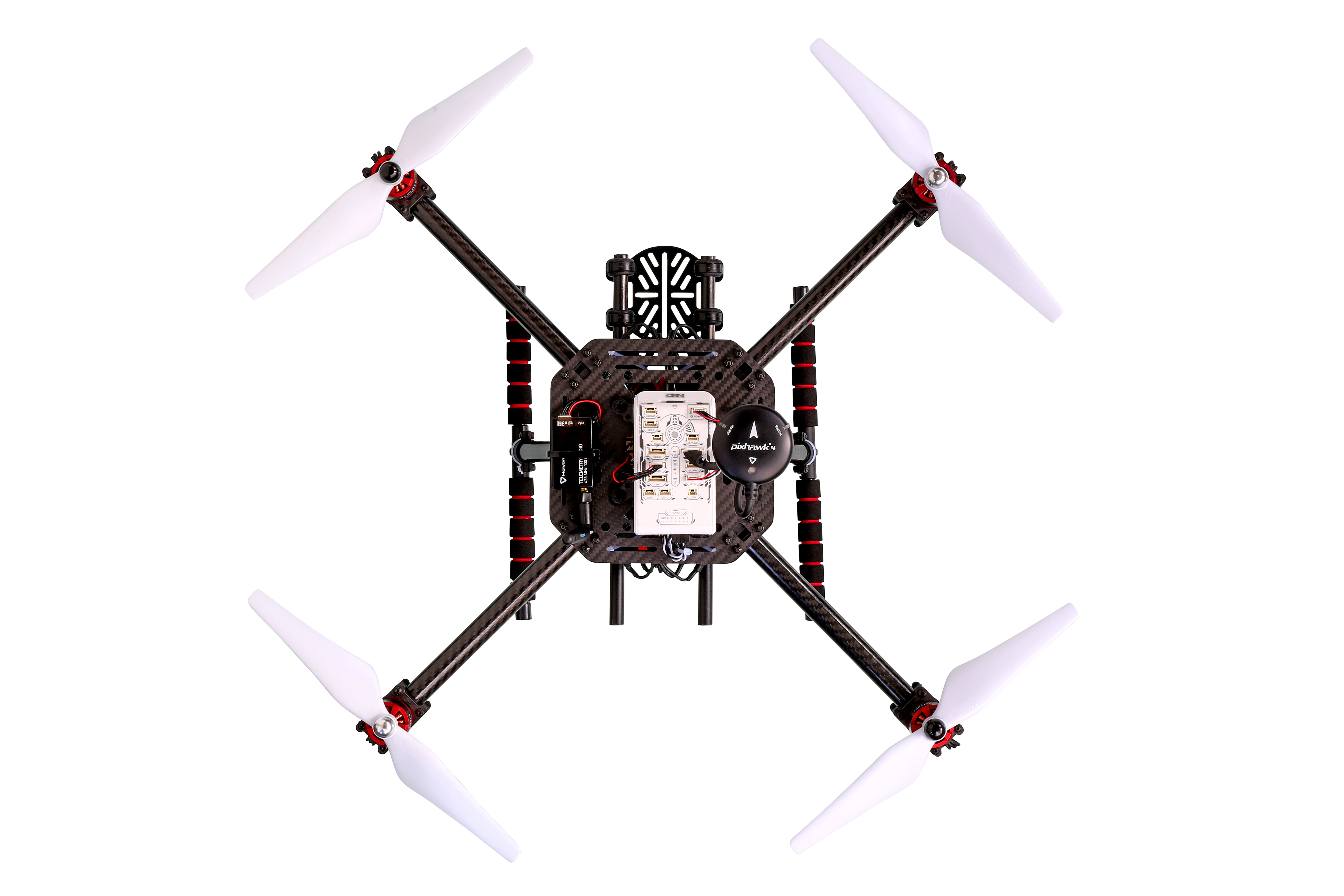
    A carbon-fiber quadcopter frame is included in the developer's kit. (Photo: NXP)
    A carbon-fiber quadcopter frame is included in the developer’s kit. (Photo: NXP)

    Participants will leverage NXP’s broad portfolio of automotive, industrial and IoT technologies for system control, networking, security and motor control to create solutions that can make a difference in pandemic response.

    The first HoverGames took place in the summer of 2019, and was centered around firefighter response. Read about it here.

    The collateral effects of pandemics leave citizens with difficult challenges to overcome. A lack of mobility, social isolation and lack of access to goods and services can be physically and psychologically devastating.

    HoverGames Challenge 2 will inspire participants to develop pioneering ways to use drones to help healthcare and frontline workers overcome these barriers. The competition encourages contestants to consider the full scope of the difficulties facing society during a pandemic, apply new learning, and work cooperatively through the development of open-source code and community-tested projects to create solutions that help society prepare for future challenges.

    Deadline for application is July 31. The competition closes Nov. 30, and winners will be announced in December.

    Drone Developer Kit. The hardware and software of this year’s developer kit remains open, flexible and modular. The flight management unit (RDDRONE-FMUK44FMU) includes professional, automotive and industrial-grade components enabled by the PX4 flight stack. PX4 is a large commercially deployed open source flight stack and supports contemporary airframe architectures including vertical-takeoff-and-landing (VTOL) aircraft, multicopter and rover profile.

    The kit also includes a strong, rigid, lightweight carbon-fiber quadcopter frame with platform, mounting rails, landing gear, motor controllers, motors and props as well as telemetry radio and remote-control radio.

    This year’s kit will contain a bonus extension component, the NavQ, an i.MX8M Mini Vision development board.

    Projects and lessons learned are transferable to real-world enterprise and commercial applications thanks to Auterion, the company that builds the enterprise distribution of PX4 for the commercial drone market.

    “The current pandemic has exposed our vulnerability to disease and the general structural breakdown that can occur during a crisis,” said Iain Galloway, drone program lead, Systems Innovation, NXP. “But we don’t have to feel powerless in its wake. We can harness technology to make a difference. We invite you to leverage a complete functional system of hardware and software for drone and rover development and to share your creative solutions.”

  • NXP partners with Columbus Smart City Challenge

    NXP Semiconductors N.V. has announced the next phase in its Smart City collaboration with Columbus, Ohio, the winner of the 2016 U.S. Department of Transportation’s $40 million Smart City Challenge.

    NXP will contribute key technologies for smart and safe mobility to the Smart Columbus Experience Center.

    Smart Center. On June 30, the City of Columbus celebrated the opening of its Smart Columbus Experience Center. The center allows visitors to see how new mobility options, such as connected, autonomous, shared and electric vehicles, will help make Columbus a more connected community.

    Hands-on educational experiences and technology demonstrations aim to show visitors how technology and innovation in transportation can grow the local economy and create ladders of opportunity for central Ohio residents.

    Visitors to the Smart Columbus Experience Center will learn how Vehicle to Everything (V2X) Technology allows cars to communicate with each other as well as with intelligent traffic infrastructure to keep mobility safe and efficient. (Image: NXP USA)
    Visitors to the Smart Columbus Experience Center will learn how Vehicle to Everything (V2X) Technology allows cars to communicate with each other as well as with intelligent traffic infrastructure to keep mobility safe and efficient. (Image: NXP USA)

    Cohda Wireless. As part of the Smart Columbus Experience Center initiative, NXP and Cohda Wireless will deploy a connected vehicle environment through the center’s electric vehicle test drive area so drivers can experience this future technology in person.

    NXP has also donated an electric motorcycle with an accompanying drone that alerts the driver to dangers or delays ahead.

    Key smart city technologies

    As part of its commitment to Columbus, NXP will continue to contribute key mobility technologies to the Smart Columbus Experience Center, including:

    • NXP’s RoadLINK V2X technology allows cars to communicate with each other as well as with intelligent traffic infrastructures. The IEEE802.11p Dedicated Short Range Communications (DSRC) standard allows cars to securely connect to each other as well as to infrastructure. DSRC technology is the only ADAS sensor that can look around the corner and offers lowest latency in the communication.
    • Smart Card IC technology that enhances transportation for all citizens by supporting secure and convenient public transportation ticketing and payment systems, including contactless transit fare solutions.
    • Highly secure NXP Radio Frequency Identification (RFID) solutions designed to promote public safety and convenience. Smart City applications for this NXP technology include vehicle window stickers that enhance driver convenience and reduce municipal costs by eliminating the need for stop-and-pay stations in public parking spaces.
    NXP eBike and Drone demo at the new Smart Columbus Experience Center shows how drones could send real-time video of a traffic incident to a city emergency vehicle. (Image: NXP USA)
    NXP eBike and Drone demo at the new Smart Columbus Experience Center shows how drones could send real-time video of a traffic incident to a city emergency vehicle. (Image: NXP USA)

    Concept of Operations released

    Smart Columbus, the smart city initiative from the City of Columbus, in July released the Concept of Operations for its Connected Vehicle Environment (CVE) pilot.

    The Concept of Operations outlines in detail how the CVE pilot will be implemented over the next two years. The pilot will involve:

    • 113 road side units (RSUs) that will be installed at intersections with stoplights
    • up to 1,800 on-board units (OBUs) that will be installed on participating private, emergency transit and freight vehicles, and
    • 12 vehicle-to-vehicle or vehicle-to-infrastructure applications that will be deployed, according to the document.

    Goals of the CVE pilot include improvements of:

    • vehicle operator safety
    • intersection safety
    • school zone safety
    • reliability of transit vehicle schedule adherence
    • emergency vehicle response times
    • traffic management capabilities.

    Smart city demonstrations. Visitors to the Smart Columbus Experience Center can try out electric automobiles. A fleet of six electric vehicles will be on display and is available for test drives through a connected vehicle environment provided by NXP and Cohda Wireless.

    Vehicles on display or available for test drives include:

    • a BMW i3 provided by BMW
    • a Chevrolet Bolt provided by Dave Gill Chevrolet
    • a Honda Clarity provided by Honda
    • a Mercedes-Benz GLE 55e provided by Daimler
    • a Nissan LEAF provided by Nissan North America
    • a Toyota Prius Prime provided by Toyota.

    An electric motorcycle provided by NXP and a Ford Ojo electric scooter are also on display.