Tag: NXP Semiconductors

  • Honeywell and NXP partner to accelerate autonomous flight

    Honeywell and NXP partner to accelerate autonomous flight

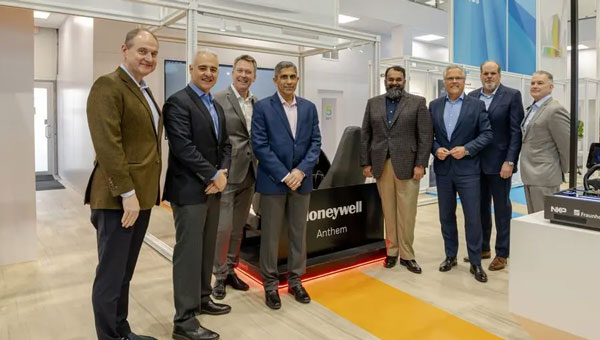
    Honeywell and NXP Semiconductors have expanded their partnership to advance aviation technology and autonomous flight capabilities. This collaboration merges Honeywell’s aerospace expertise and Anthem avionics system with NXP’s high-performance computing architecture to develop AI-driven aerospace technologies.

    The partnership aims to enhance operational efficiency in flight planning and management while facilitating smoother transitions to new chipsets and technologies. The companies will focus on developing next-generation cockpit displays with improved visual clarity and system efficiency. They are also working on simplifying migrations to newer avionics technologies and extending the lifecycles of critical aviation systems, according to Honeywell and NXP.

    NXP’s domain-based architecture, which includes high-compute capabilities, integrated cybersecurity and functional safety, will be adapted for aviation applications on Honeywell Anthem, the industry’s first cloud-connected cockpit system. This builds upon the companies’ collaboration in building management, fire safety and security products.

    For aerospace applications, Honeywell will utilize various NXP processors, including the i.MX 8 applications processors and S32N super-integration processors. These processors will enable Honeywell Anthem to deliver faster data processing for real-time AI-driven insights, potentially enhancing safety and optimizing performance both in flight and on the ground.

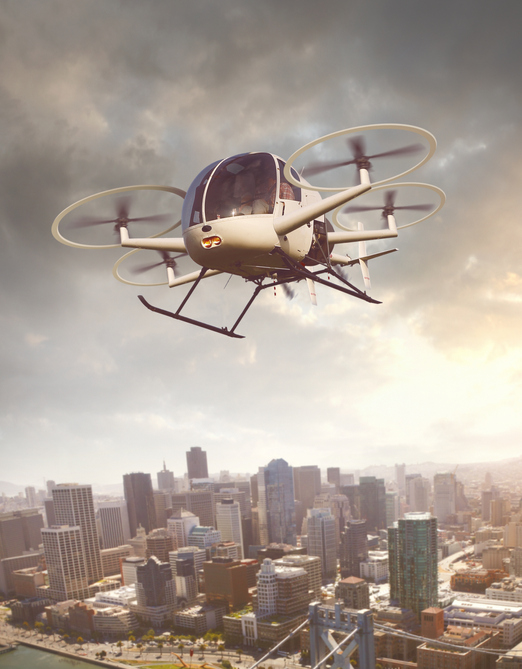
    Vertical Aerospace, a leader in electric vertical take-off and landing aircraft development, is set to be an early adopter of this collaborative technology, incorporating it into its piloted VX4 prototype aircraft.

  • NXP and Auterion join on hardware/software integration for drones

    NXP and Auterion join on hardware/software integration for drones

    NXP and Auterion join forces to enable next-generation secure drone fleets with automotive certified solutions, high-reliability networking, and a scalable and open software platform.

    Photo: narvikk/ iStock / Getty Images Plus/Getty Images
    Photo: narvikk/ iStock / Getty Images Plus/Getty Images

    On July 6 at the PX4 Developer Summit 2020, NXP Semiconductors and Auterion announced a collaboration to develop integrated hardware and software solutions for the unmanned aerial systems industry.

    Working together, the companies aim to develop highly reliable and advanced hardware and software solutions deployable in an unmanned aerial vehicle.

    With the development of regulations and the increasing number of autonomous systems in the field, the requirement for components and software that are certifiable and the ability to deploy intelligence on the edge is becoming more and more important.

    NXP provides semiconductor components and expertise leading to certifiable electronics solutions, including computational horsepower, secure element for encryption and authentication, and high reliability automotive networking.

    Auterion is offering the hardware reference design and Auterion Enterprise PX4, the software for the flight controller and the mission computer to make drone fleets safe and fully integrated into workflows. Auterion is the largest contributor to PX4 and builds its software platform on open standards, ensuring that enterprises have access to a managed and tested distribution of the open source technology.

    The partnership addresses the needs of the unmanned aerial vehicles industry for compatible hardware and software solutions that will help drone manufactures bring state-of-the-art products to market. The aim is to ensure that manufacturers have a streamlined path to certification and are connected to existing workflows.

    “This partnership will enable the mobile robotics community with the components meeting quality specifications needed to ensure functional safety and security in drones and rovers based on reliable long life industrial and automotive parts and reference designs,” said Iain Galloway, Drone Program Lead, Systems Innovation, NXP. “We have been participating in the open source PX4 community for several years now and with this close relationship with Auterion, and Auterion Enterprise PX4, we are excited to work together to ensure these vehicles are prepared to meet current and future regulations and standards governing modular safe drone architectures.”

    “Safety is the number one priority in commercial drone operations. NXP’s leading position as a semiconductor provider for safety-critical automotive applications is the perfect pairing for Auterion’s enterprise-grade drone software platform,” said Lorenz Meier, co-founder and CEO, Auterion. “Together, we will be able to provide integrated hardware and software solutions to the drone industry that combine high-performance compute with safety-first engineering.”

    NXP and Auterion will collaborate on the core hardware and software components of an autonomous system, this includes, but is not limited to, the following topics:

    Developing the next generation Auterion Skynode avionics module reference design, based on the latest Pixhawk autopilot Reference Standards and on the NXP i.MX 8M Mini as a companion computer, and on future components in this family.

    • Integrating navigation modules incorporating NXP Ultra-Wideband (UWB), automotive MCU, NFC and authentication for precision landing applications.
    • Developing Battery Management System (BMS) solutions based on the latest Pixhawk Smart Battery Standards.
    • Developing Automotive CAN and CAN-FD node solutions supporting popular software protocols such as UAVCAN and MRCAN for mobile robotics peripherals.
    • Collaborate in the data cybersecurity and drone regulatory space to help shape and meet future regulations.

    Both parties will continue to support the PX4 open source community and upstream PX4 development, in an effort to enable the whole industry.

  • VW Golf launches in Europe with NXP’s secure V2X technology

    VW Golf launches in Europe with NXP’s secure V2X technology

    Volkswagen and NXP to Deliver Safety to European Roads with Rollout of Communicating Car Technology

    NXP Semiconductors N.V., a provider of automotive semiconductors, has rolled out its RoadLINK V2X (vehicle to everything) communication solution in the new Volkswagen Golf.

    The recently released eighth-generation Golf is the first volume European car model equipped with V2X, offering a major boost to the deployment of the technology on European roads and beyond.

    Life-saving tech. The technology can prevent accidents by having cars communicate with each other, independent of car brands and without the support of cellular infrastructure.

    “Road safety forms the core of VW’s commitment to its customers. As a high-volume manufacturer we aim to be a pioneer in this space,” said Johannes Neft, head of Vehicle Body Development for the Volkswagen brand. “The introduction of V2X, together with traffic infrastructure providers and other vehicle manufacturers, is a major milestone in this direction. Volkswagen includes this technology, which doesn’t involve any user fees, as a standard feature to accelerate V2X penetration in Europe.”

    “Volkswagen has taken a bold step to seize the road safety initiative through the implementation of V2X,” said Torsten Lehman, senior vice president and general manager of Driver Assistance and Infotainment at NXP. “After proving our technology in more than one million test days globally, we are pleased that our RoadLINK technology, developed in cooperation with Cohda Wireless, was chosen to enable new levels of safety in Europe’s most popular car model, the new Golf.”

    NXP and Volkswagen have closely collaborated for high reliability and performance, as well as for standardization of V2X communication that addresses cybersecurity and privacy protection.

    V2X in Europe. Wi-Fi-based V2X is a mature technology that has been tested for more than 10 years. Today, 1,000 kilometers (km) of European roads are equipped with V2X technology based on Wi-Fi with 5,000 km planned through the end of 2019.

    Its research and development, testing and standardization has occurred within a strong global ecosystem of suppliers and car manufacturers to ensure reliability in diverse road and traffic conditions.

    Wi-Fi therefore forms the basis of the European standard that has been chosen for vehicle-to-vehicle and vehicle-to-infrastructure communication, according to NXP. An additional benefit is its availability independent of paid cellular services. Other developing cellular-based technologies can be added complementary to Wi-Fi-based V2X.

    Migration to autonomous. V2X communication is set to become a critical part of advanced driving assistance systems (ADAS) and the migration to autonomous cars that communicate with each other and with traffic infrastructure.

    The benefit of Wi-Fi-based V2X is its robust, low latency, real-time communication regardless of any car brands.

    • It enables awareness and communication between cars, road infrastructure like traffic lights or street signs, and other road users such as cyclists and pedestrians.
    • It is a technology that is collaborative, allowing it to “tap into” surrounding sensor data from mutually equipped cars to warn of hazards and prevent accidents.
    • V2X is a technology that complements other ADAS sensing technologies such as radar, lidar and cameras.
    • It helps vehicles to “see” more than a mile ahead and around corners to provide early warning of obstacles, hazards and road conditions.
    • It has the ability to “see” through objects, delivering more information than that obtained through line of sight only.
    • Its sensing capabilities are unaffected by poor weather conditions.

    Photo: Volkswagen
    Photo: Volkswagen

  • NXP partners with Columbus Smart City Challenge

    NXP Semiconductors N.V. has announced the next phase in its Smart City collaboration with Columbus, Ohio, the winner of the 2016 U.S. Department of Transportation’s $40 million Smart City Challenge.

    NXP will contribute key technologies for smart and safe mobility to the Smart Columbus Experience Center.

    Smart Center. On June 30, the City of Columbus celebrated the opening of its Smart Columbus Experience Center. The center allows visitors to see how new mobility options, such as connected, autonomous, shared and electric vehicles, will help make Columbus a more connected community.

    Hands-on educational experiences and technology demonstrations aim to show visitors how technology and innovation in transportation can grow the local economy and create ladders of opportunity for central Ohio residents.

    Visitors to the Smart Columbus Experience Center will learn how Vehicle to Everything (V2X) Technology allows cars to communicate with each other as well as with intelligent traffic infrastructure to keep mobility safe and efficient. (Image: NXP USA)
    Visitors to the Smart Columbus Experience Center will learn how Vehicle to Everything (V2X) Technology allows cars to communicate with each other as well as with intelligent traffic infrastructure to keep mobility safe and efficient. (Image: NXP USA)

    Cohda Wireless. As part of the Smart Columbus Experience Center initiative, NXP and Cohda Wireless will deploy a connected vehicle environment through the center’s electric vehicle test drive area so drivers can experience this future technology in person.

    NXP has also donated an electric motorcycle with an accompanying drone that alerts the driver to dangers or delays ahead.

    Key smart city technologies

    As part of its commitment to Columbus, NXP will continue to contribute key mobility technologies to the Smart Columbus Experience Center, including:

    • NXP’s RoadLINK V2X technology allows cars to communicate with each other as well as with intelligent traffic infrastructures. The IEEE802.11p Dedicated Short Range Communications (DSRC) standard allows cars to securely connect to each other as well as to infrastructure. DSRC technology is the only ADAS sensor that can look around the corner and offers lowest latency in the communication.
    • Smart Card IC technology that enhances transportation for all citizens by supporting secure and convenient public transportation ticketing and payment systems, including contactless transit fare solutions.
    • Highly secure NXP Radio Frequency Identification (RFID) solutions designed to promote public safety and convenience. Smart City applications for this NXP technology include vehicle window stickers that enhance driver convenience and reduce municipal costs by eliminating the need for stop-and-pay stations in public parking spaces.

    NXP eBike and Drone demo at the new Smart Columbus Experience Center shows how drones could send real-time video of a traffic incident to a city emergency vehicle. (Image: NXP USA)
    NXP eBike and Drone demo at the new Smart Columbus Experience Center shows how drones could send real-time video of a traffic incident to a city emergency vehicle. (Image: NXP USA)

    Concept of Operations released

    Smart Columbus, the smart city initiative from the City of Columbus, in July released the Concept of Operations for its Connected Vehicle Environment (CVE) pilot.

    The Concept of Operations outlines in detail how the CVE pilot will be implemented over the next two years. The pilot will involve:

    • 113 road side units (RSUs) that will be installed at intersections with stoplights
    • up to 1,800 on-board units (OBUs) that will be installed on participating private, emergency transit and freight vehicles, and
    • 12 vehicle-to-vehicle or vehicle-to-infrastructure applications that will be deployed, according to the document.

    Goals of the CVE pilot include improvements of:

    • vehicle operator safety
    • intersection safety
    • school zone safety
    • reliability of transit vehicle schedule adherence
    • emergency vehicle response times
    • traffic management capabilities.

    Smart city demonstrations. Visitors to the Smart Columbus Experience Center can try out electric automobiles. A fleet of six electric vehicles will be on display and is available for test drives through a connected vehicle environment provided by NXP and Cohda Wireless.

    Vehicles on display or available for test drives include:

    • a BMW i3 provided by BMW
    • a Chevrolet Bolt provided by Dave Gill Chevrolet
    • a Honda Clarity provided by Honda
    • a Mercedes-Benz GLE 55e provided by Daimler
    • a Nissan LEAF provided by Nissan North America
    • a Toyota Prius Prime provided by Toyota.

    An electric motorcycle provided by NXP and a Ford Ojo electric scooter are also on display.

  • u‑blox, Commsignia and NXP collaborate to drive V2X

    V2X companies u‑blox, Commsignia and NXP Semiconductors announced a strategic collaboration to address the rapidly growing demand for reliable vehicle‑to‑vehicle (V2V) and vehicle‑to‑infrastructure (V2I) technology.

    The adoption of V2X technology in North America and European markets equips new vehicles with the ability to securely and anonymously share information with other similarly equipped vehicles, infrastructure and even pedestrians within a radius of up to 1 km.

    IEEE 802.11p V2X technology is the only proven and production ready technology today that can reliably see around corners, the companies said. V2X information will augment the awareness of drivers to improve safety, reduce congestion and emissions, thereby delivering real savings and benefits to all road users today and in the future for self-driving autonomous vehicles.

    This collaboration builds on the strengths of all three companies to deliver substantial time-to-market advantages and benefits to automotive customers, with future-proof solutions that optimize investments and mitigate risks.

    Automotive manufacturers are looking for ways to bring V2X to market now, ramping up to 100 percent implementation in new cars within the next five years. This collaboration between three of the market leaders will accelerate the adoption of V2X technology thanks to the availability of fully integrated hardware and software solutions in a fully‑fledged and secure (US DOT SCMS compliant) V2X system.

    https://youtu.be/fyGDrtVbUOY

    “This collaboration focuses on delivering production-ready Vehicle‑to‑Vehicle (V2V) and Vehicle‑to‑Infrastructure (V2I) systems like our V2X communication module,” said Costas Meimetis, director of product strategy, u-blox. “We are already present in the market through our THEO module family, this collaboration will strengthen our position and allow u‑blox to innovate faster, bringing new solutions to market starting. Our expertise and this collaboration means we are uniquely positioned to meet the increasing demand from automotive manufacturers, who must meet new legislation in key markets.”

    “NXP’s status as a Dedicated Short‑Range Communication (DSRC) V2X technology leader, is a key reason u‑blox chose NXP’s RoadLINK solution, a complete automotive-grade 2 +105C ambient, V2X system solution with best‑in‑class performance to power their V2X module,” said Rob Hoeben, senior director, V2X segment. V2X is the only ADAS technology that operates in real-time, lowest latency and sees around corners, facilitating self-driving autonomous vehicles.

    V2X, IEEE 802.11p-based, is complementary to 5G versions of V2X and both technologies are expected to co-exist for the foreseeable future. NXP has participated in several V2X demos and trials, including truck platooning, achieving short separation distances between trucks.

    NXP’s RoadLINK solution, which is now in production with a major North American OEM, will help ensure the u-blox module can deliver accurate and reliable communications to and from a vehicle.

    “Commsignia leads the market with the best end‑to‑end V2X software suite for connecting cars and smart city infrastructure,” said Jozsef Kovacs, CEO of Commsignia. “Combined with the NXP RoadLINK chipset and u‑blox module, automotive manufacturers can benefit from the enhanced performance of a secure and fully integrated solution to implement V2X technology in new vehicle designs, so taking the next step towards improving the safety and efficiency of our roads.”

    u-blox, Commsignia and NXP, will be demonstrating live how this collaboration is enabling life-saving V2V applications at the TU-Automotive Detroit Conference and Expo June 7‑8. The demo entitled “Fast track to safe & secure V2X” will show the following use cases:

    • Blind Spot Warning (BSW)
    • Emergency Electronic Brake Light (EEBL)
    • Co-operative Forward Collision Warning (FCW)
    • Lane Change Assist (LCA)
    • Left/Right Turn Assist (LRTA)
    • Control Loss Vehicle Warning (CLW)
    • Intersection Movement Assist (IMA)
  • TU-Automotive Announces Connected Car Award Finalists

    TU-Automotive has announced finalists in several categories for its 2015 awards. Finalists in the Best Connected Car System Integrator category include chipmakers Qualcomm and u-blox, among others. Nominees in other categories include TomTom, NXP SemiconductorsTelogis and Geotab.

    The finalists represent excellence, innovation and leadership in the connected car industry, TU-Automotive said.

    More than 400 entries were submitted. The winners will be revealed at the TU-Automotive Awards Ceremony on June 2 in Detroit. Here is the full list of finalists:

    Car Maker of the Year 2015

    • Audi
    • BMW of North America, LLC
    • Ford Motor Company
    • Qoros auto
    • Toyota Motor Sales
    • Volvo Car Group

    Commercial Vehicle Maker of the Year

    • Mack Trucks
    • Scania CV AB
    • Volvo AB

    Telematics Service Provider of the Year

    • Airbiquity
    • Ericsson
    • General Motors
    • Jasper
    • Nuance Communications, Inc.
    • Total Traffic and Weather Network
    • Xtime

    Commercial Telematics Service Provider of the Year

    • Inthinc Technology Solutions Inc.
    • Openmatics
    • Teletrac Inc
    • Telogis

    Best Connected Car System Integrator

    • Atos
    • AutonomouStuff LLC
    • HERE, a Nokia company
    • Car Connectivity Consortium
    • Covisint
    • Dash Labs
    • Elektrobit (EB) Automotive
    • Luxoft
    • Movimento
    • Parkopedia
    • Qualcomm Technologies, Inc.
    • Symphony Teleca Corp.
    • u-blox AG
    • Uievolution, Inc.

    Best Commercial Vehicle System Integrator

    • Eyeris
    • Geotab
    • KPIT Technologies Ltd.
    • Navistar
    • Spireon, Inc.
    • Symphony Teleca Corp.
    • TomTom Telematics

    Best Insurance Telematics Product

    • Allstate Insurance Company
    • AXA & MyDrive Solution
    • Codan Insurance (RSA) & The Floow
    • Direct Auto Insurance & DriveFactor
    • Industrielle Alliance, Assurance auto et habitation inc. & Baseline Telematics
    • Progressive Insurance & zubie inc
    • RightTrack® by Liberty Mutual & Octo Telematics North America
    • Suncorp Group & Wunelli, a LexisNexis Company

    Best Telematics Product or Launch in an Emerging Market

    • CarIQ Technologies Private Limited.
    • Discovery Insure
    • iTrans Technologies Pvt Ltd
    • Omnicomm
    • Qoros Auto
    • TATA Motors Ltd, India
    • TechMahindra
    • TOWER Insurance (in partnership w/ DriveFactor Inc.)

    Best Safety or ADAS Solution

    • Argus Cyber Security
    • BrightWay Vision
    • Delphi Automotive PLC
    • Elektrobit (EB) Automotive
    • Eyeris
    • General Motors
    • NXP Semiconductors
    • TomTom
    • Valeo Wiper Systems

    Best Mobility Solution Industry Newcomer

    • Carma
    • County of Santa Clara Roads & Airports Department
    • Dash Labs
    • Hyundai Blue Link Smartwatch app
    • Local Motion
    • moovel GmbH
    • parku – The Parking App
    • QNX Software Systems

    Industry Newcomer

    • ATG Risk Solutions
    • CarKnow LLC
    • CloudCar
    • Dealer-FX
    • Eyeris
    • gestigon
    • MobiWize
    • Nebula Systems Ltd
    • Rivet Radio, Inc.
    • TowerSec

    TU-Automotive Influencer of the Year

    • Andrew Poliak, Global Director Business Development – Automotive, QNX Software Systems
    • Dominikus Hierl, Chief Executive Officer, Telit Automotive Solutions
    • Erica Klampfl, PhD, Future Mobility Manager, Ford Research & Advanced Engineering
    • Jeff Owens, Chief Technology Officer & Executive Vice President, Delphi
    • Matt Jones, Senior Technical Specialist – Infotainment, Jaguar Land Rover
    • Paul Drysch, Global Director – Connected Car, Jasper
    • Paul Stacy, Founding Director of Wunelli, a LexisNexis Company
    • Ricky Hudi, Head of Electrics/Electronics, Audi AG
  • Another GPS Chip Merger: NXP to Acquire GloNav

    European chip maker NXP Semiconductors plans to acquire U.S.-based fabless GPS chip maker GloNav Inc., the companies announced today.

    NXP will purchase the company for $85 million in cash plus up to $25 million more, contingent upon GloNav reaching certain revenue and product development milestones over the next two years. The transaction will give NXP immediate access to GloNav’s GPS products and technology, including its single-chip and 90nm design capability, the company said. It expects the deal to close in Q1 2008.

    “This is the second major acquisition that we have made this year to strengthen our Mobile and Personal Business Unit that quickly adds complementary technologies to our existing portfolio and meets our customers’ demands for innovative products,” said Frans van Houten, NXP CEO. “We are a leader in cellular system solutions. Combining GloNav’s GPS expertise with NXP’s FM Radio, Bluetooth, USB and NFC leadership, enables us to offer a broader connectivity suite to the mobile phone market.

    “We already turned the cell phone into a multimedia wallet,” he continued. “It’s only natural that we also want to use our mobile phones to navigate and to find local goods and services. GPS integration allows us to create these and many more interesting and dynamic features, continuously enriching the cell phone in our pocket.”

    GloNav has approximately 50 employees and contractors at locations in the United States, United Kingdom, Ireland and Taiwan. It will join NXP’s Mobile and Personal Business Unit.

    With the merger pending, GloNav investor Ceva Inc. said that it will divest its ownership stake in the company. European private equity firm Atlantic Bridge Venture created GloNav in 2006 through the divestment of Ceva’s GPS technology and product lines and a merger with California-based RFDomus Inc. Ceva’s ownership in GloNav is 19.9 percent on a fully diluted basis.

    The value of Ceva’s shareholding in GloNav, based on its ownership percentage and the acquisition purchase price, is approximately $17 million, more than four times the recorded value of approximately $4 million for the GloNav investment as accounted in in Ceva’s financial statements. “Today’s announcement that NXP Semiconductors is to acquire GloNav is great news for Ceva and in line with the company’s strategy to focus on its strength as a leading silicon intellectual property SIP provider for DSP cores, multimedia, Bluetooth and SATA products.” said Gideon Wertheizer, Ceva CEO.

    NXP’s acquisition of GloNav caps a busy year of high-profile acquisitions in the GPS sector of the semiconductor industry. A week ago wireless chip and chipset provider Atheros Communications Inc. announced plans to acquire GPS tech supplier u-Nav Microelectronics in a $54 million deal. Prior to that, SiRF Technology acquired Centrality Communications while Broadcom acquired Global Locate.