The NYPD will soon improve its crime-fighting efforts with the Drone as First Responder (DFR) pilot program. Announced by New York Police Department (NYPD) Deputy Commissioner of Operations Kaz Daughtry, the program will deploy UAVs in response to specific 911 calls for serious crimes in progress, such as shootings, robberies, and missing persons.
UAVs will launch from five precincts: the 48th Precinct in the Bronx, the 67th, 71st and 75th Precincts in Brooklyn, and Central Park, New York. The UAVs will provide real-time video and telemetry to officers to enhance situational awareness and safety.
“The information provided by DFR will be shared with responding officers. It will enhance officers’ situational awareness as they arrive on scene, promote officer safety, and help us deploy resources more effectively,” Daughtry said.
The NYPD uses 85 UAVs for various tasks, including monitoring major events and inspecting structural stability after accidents. Despite a 400% increase in UAV use last year, Daughtry emphasized they cannot be used for “warrantless surveillance” or “traffic enforcement.”
According to the NYPD, these UAVs will be deployed in response to 911 calls for service within the next few months. The program will start with four precincts in Brooklyn and the Bronx, chosen “based on recent crime trends.”
“Seen & Heard” is a monthly feature of GPS World magazine, traveling the world to capture interesting and unusual news stories involving the GNSS/PNT industry.
From paradise to panic… Or not
Tourists at the Honokohau Small Boat Harbor in Kailua-Kona, Hawaii, drove their car into the harbor after following directions on a mobile map application, and were surprised when the car filled with water, reported Insider and the Washington Post. A witness to the incident took a video showing two women in a Dodge Caravan driving “confidently” into the harbor. The witness also stated that the women were not panicked and were smiling as the car tipped forward into the water. The driver and passenger eventually climbed out of the car and were not injured in the incident. An information specialist for the Hawaii Department of Transportation stated that mobile mapping applications are inaccurate and tourists should always be aware of their surroundings.
Image: Lorado/E+/Getty Images
Apple tags to the rescue again
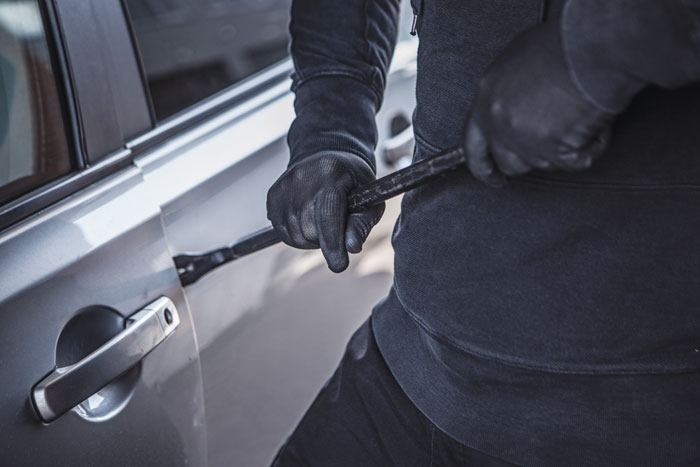
New York City will give out free Apple AirTags to residents in an effort to stunt an increasing number of car thefts, reported the New York Post. A local nonprofit donated 500 AirTags to the city to be handed out to residents, especially those in New York Police Department’s (NYPD) 43rd Precinct in The Bronx. NYPD encourages drivers to purchase the device if they are not able to receive one from the city. An equitable distribution plan is being designed by the Crime Prevention Unit of NYPD’s Community Affairs Bureau. The city will also be fundraising to purchase more AirTags or similar devices.
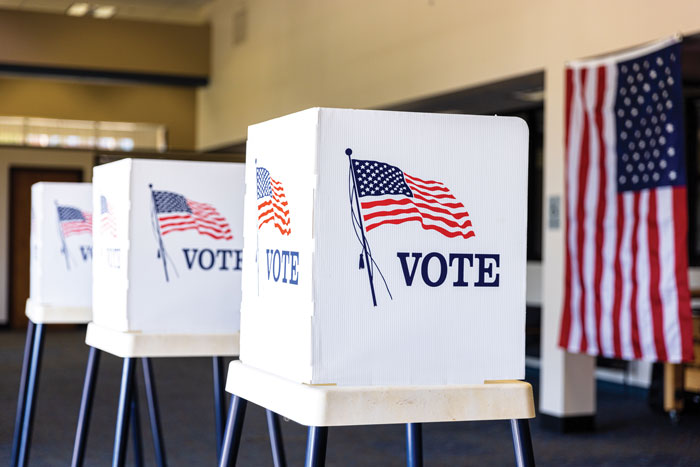
The Ottawa County Clerk’s office in West Olive, Michigan, is using location data to track vital election data around the county in real time, reported KATV News Channel 7. Once the election machine scans the results of a ballot, the data is uploaded to a flash drive and sealed with a tabulator. Then, a bipartisan group of election workers places the flash drive in a sealed container with a GPS receiver and a radio transmitter that communicates the container’s location in real time to the county clerk’s office. Ottawa County Clerk, Justin Roebuck, believes the receivers add an extra layer of security and will instill faith in voters that nobody is tampering with their ballots.
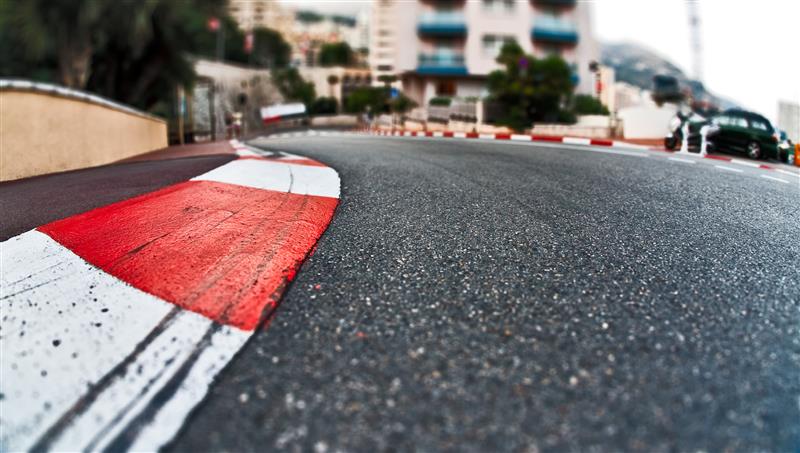
GPS plays a quiet, but integral role in Formula 1 (F1) racing. In a sport where split-second reactions are vital, GPS helps drivers and their teams improve race to race and navigate tracks safely. The importance of live location data was seen in the opening practice session at the 2023 Australian Grand Prix FP1. A red flag was flown due to loss of location data triggered by a glitch in the distribution of live tire information. This caused several near-misses on the track because drivers no longer received traffic advisory calls from their teams, reported Autosport. It took more than nine minutes to restore the real-time location data.
Who better to know about connections than a GIS professional whose very job is discovering them? Weaving a thread through time from decades ago isn’t a typical geospatial connection, but this one is, and it is connected by a person.
Let’s reflect on who we are as a profession and how we, the geospatial community, has made the world a better place.
Let’s also take a moment to learn about one of the leaders who led the way and what he had to overcome to help us appreciate who and what we are. It is an oft-repeated refrain: “Those who do not know the past are condemned to repeat it”, and, my personal favorite, “The future flows through us becoming the past so that we remember it and do not repeat it.”
Jack Maple. (Photo: Newsday Photo, 1986 / Bruce Gilbert)
In 1961, the trend in crime began climbing. Many people lived in fear, especially in big cities. New York captured many of the nation’s headlines in a long, tragic list of brutal, horrible crimes. Hope was bleak. It was expected to get worse. But, it didn’t. The fever had broken. It peaked in 1991. The crime spree lasted 30 years.
By contrast, the Vietnam War lasted 20 years. The total number of troops serving on active duty during Vietnam was 9.1 million troops and 58,318 lost their lives in combat, yet fewer people died on the streets of America during the same period. In fact, on average, during the 30-year crime wave, every 22 days the number of victims of violent crime in the United States equaled the total number of soldiers killed in Vietnam. America was a battlefield and ground zero was New York City.
What happened in 1991? What stemmed the tide? That year, a new type of hero emerged, a crime fighter, unlike any before.
It began at ground zero, in the most dangerous areas of New York City — the subways, referred to as the “caves.” Thugs, rapists, murders and thieves roamed the depths. Police could do little. They were outnumbered and operated under strict rules. It was preferable to be a regular police officer, above ground, dealing with routine crimes, even the murders, rather than be a transit cop covering a beat in the dark, rough, unforgiving underworld of the subway. Only four types of people dwelled there: criminals, victims, transit cops, and those who got away.
Sometimes, transit cops or criminals were the victims. Transit cops were difficult to recruit, but New York needed more of them. This provided an opportunity for those with few other choices. Sometimes, those who have no other options are the ones who make the most of an opportunity. They work the hardest because it is their only way out. Success lies with the willing — those incendiary hearts waiting to be ignited by a challenge that gives them purpose. Life is too often fraught with peril and strife. It is vision and the courage to pursue them that manifests dreams into reality.
This new hero didn’t fit the caricature. He was short, balding, overweight and lacked a high school diploma. He was street smart, cocky, unpolished and would rather fight than prove his point. He didn’t come from a privileged background. He just had his wits. He knew right from wrong and had the courage to stand his ground. He took on the criminal element lurking in the subterranean worlds. He worked hard, earning his GED at night. It served him better that way like a badge of honor, the hard way being its own reward.
His name was Jack Maple, the crime fighter, and he understood the streets in ways others didn’t. He knew, like a hunter knows, to find the deer trails. Animals are creatures of habit. They prefer to stay where they know the area, the smells, the rhythms, the sounds, where the food is, and where to run for cover. Criminals measure their risks too. They prefer familiar places. They are territorial and keen to their surroundings. Jack knew if you look for their patterns, you’ll find them. He covered his walls with subway maps, placing pins where and when the crimes happened.
The criminal’s habits and behaviors began taking shape. With this knowledge, Jack had become the hunter. Knowledge is power, but real power is action, and Jack took it. He would not have become the hero otherwise. He staked out their patterns of place and time, setting traps and luring them in with their weaknesses.
One by one, and group by group, he reclaimed New York’s subways. Crime dropped by 69% over the next five years. Putting that in perspective, two of every three victims were spared. Unfortunately, 629 people were still murdered in New York City, but it was a drastic departure from the peak of 1,946 just five years before, meaning 1,317 men, women and children did not suffer a violent crime that year or any other year thereafter.
The values of crime are most often represented as a 1:100,000 scale ration; however, this chart shows three different categories, each represented by a different order of magnitude. (Data from Disastercenter.com)
Rudy Giuliani, then mayor of New York, recognized the value of what Maple had developed. Maple called his maps the Charts of the Future. His colleagues called it wallpaper. The mayor called it amazing and gave Jack Maple his full support, praising him by saying, “One of the truly great innovators in law enforcement, who helped make New York City the safest large city in America.” Maple was promoted to Deputy Police Commissioner of Crime Control Strategies.
Maple founded CompStat, Computerized Statistics, calling it his electronic pin maps to support his four precepts: accurate and timely intelligence, rapid deployment of forces, effective tactics, and relentless follow-through.
New York’s CompStat program for the NYPD.
CompStat changed policing to a data-driven business. GIS professionals will recognize CompStat as a geographic information system, and Jack as a self-trained geospatial developer and analyst. Geospatial science was still a very niche technology at the time.
Jack Maple’s success continued to grow. Two men, William Bratton and John Timoney, both police commissioners and senior to Maple in the police hierarchy, became evangelists of Maple’s CompStat, spreading it to other cities throughout the world, and through those two men, predictive policing and crime mapping evolved.
Maple, Bratton and Timoney became independent consultants helping cities worldwide establish their own CompStat programs.
His success did not end there. Based on his experiences fighting criminals on the streets and fighting change in the antiquated police system, he wrote the book, The Crime Fighter: How You Can Make Your Community Crime Free. The book is an excellent read and readily available online. He also co-wrote the TV series The District, based on his exploits in the book.
If you haven’t seen the series, the show is worth watching. Season 1, Episode 3, shows a 1990s projector screen with a large GIS display and the city’s police chiefs being held to account for telling their district’s crime stories in accordance with the map.
Jack Maple was a modern-day rags to riches story and a pioneer of the GIS profession. When he passed away in 2001, he had become a beloved character in New York. When he died, each of the major New York City publications covered the story of his life crediting him for reducing crime and giving the citizens back their city. The CompStat room at 1 Police Plaza CompStat, New York, was renamed after him in tribute. Craig Horowitz, writer for New York Magazine, penned a worthy tribute.
CompStat would be further developed with more advanced crime mapping and crime analysis methods, predictive analytics, environmental criminology and geographic profiling. Kim Rossmo coined the term geographic profiling, based on his patented Rossmo Formula, which is a form of predictive analytics that takes location, time, social behavior and the psychology of criminals into account and turns it into a mathematical equation that can be fed into a GIS. This narrows down the probable location of a suspect, allowing investigators and police to better focus their resources.
Geographic profiling was used during the D.C. sniper case. The Rossmo Formula was featured on the TV series Numb3rs. I hope to write a future article on Dr. Rossmo complete with interviews.
The trend in crime has continued decreasing ever since the peak in 1991. Crime in New York City has now dropped back to 1940s levels as of 2017 and continues to decline.
The power to change the world lies with those fervent, intrepid souls — the unrelenting dreamers, who seek a better world and through innovation, creativity and courage, and manifest it into reality.
It is a great time to be in the geospatial profession. The United States leads the world in geospatial science. Take heart, because opportunities abound in this industry. I hope you become a hero in the field, and someday I have the opportunity to write about you.



 His success did not end there. Based on his experiences fighting criminals on the streets and fighting change in the antiquated police system, he wrote the book,