Tag: oil spill

  • NV5 Geospatial marks 65 years serving Alaska with geospatial projects

    NV5 Geospatial marks 65 years serving Alaska with geospatial projects

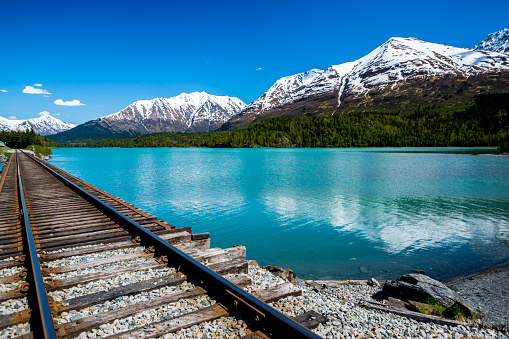
    Photo: A&J Fotos/E+/Getty Images
    Photo: A&J Fotos/E+/Getty Images

    Work supports climate change research, the 2020 Juneau landslide, and effects of the Exxon-Valdez oil spill

    NV5 Geospatial marks its 65th year helping Alaska solve environmental and geospatial challenges, with new hydrospatial projects with the National Oceanic and Atmospheric Administration (NOAA), U.S. Geological Survey (USGS), Alaska Railroad Corporation, Alaska Department of Natural Resources, U.S. Fish and Wildlife Service and the U.S. Department of Agriculture.

    “As climate change intensifies, so do the challenges that Alaska and its citizens face,” said Adam McCullough, NV5 Geospatial’s Alaska program manager. “From mapping the coastlines, to collecting lidar and imagery data to better understand geohazards and landslide risks, to mapping rivers, lakes and other surface water features, we are involved in critical projects across the state. We are proud to work side by side with national, state and local governments and agencies, as well as private corporations to facilitate climate-change informed decision making over the state’s valuable, unique resources.”

    The following six projects provide a sampling of the work in which NV5 Geospatial has participated across the state:

    • Revillagigedo Topobathymetric Lidar and Imagery Mapping – NV5 Geospatial is working alongside state and federal partners on a multi-year program to map Alaska’s 66,000 miles of complex coastline. This work is part of a larger national shoreline mapping project being undertaken by NOAA to gather baseline data to update nautical charts, manage coastal resources, and define U.S. territorial limits.

    The data collected also can support maritime trade and transportation, as well as wave and wind energy site selection. The data supports coastal resiliency efforts that include modeling sea-level change, storm surge, coastal flooding and pollution trajectories, as well as analysis and monitoring of critical habitats, developing land and marine GIS base layers.

    • The Alaska Railroad Corporation (AARC) Lidar Acquisition for Geohazards – AARC engaged Michael Baker and NV5 Geospatial to collect high-resolution topographic lidar and imagery data for analysis of geohazards, hydrology, engineering and landscape ecology across portions of its vast rail network in Alaska. NV5 leveraged its advanced combined low-altitude sensor solution (CLASS) mounted to a helicopter to simultaneously collect lidar, ortho-imagery and oblique images along the rail line that enables researchers to evaluate landslide and hydrological risks in areas of concern.
    • USGS 3DEP Juneau Landslide Lidar Study – In the aftermath of unprecedented rain events in Southeast Alaska in December 2020, the City and Borough of Juneau, along with Alaska Electrical Light & Power, partnered with the USGS to acquire and process 3DEP-compliant airborne topographic lidar data covering the Juneau landslide impact area. The USGS contracted NV5 Geospatial to perform the lidar survey that included acquiring extremely accurate lidar to USGS’s highest quality level specification.

    The lidar data will support planning and landslide assessment to enable the reinforcement of critical infrastructure resources in the area. Project stakeholders are able to use this data along with existing lidar collected by NV5 Geospatial in 2013 to study how the landscape is changing in precise detail.

    • Alaska 3D Hydrography Program (3DHP) – The USGS, in partnership with state, local, and tribal governments and others, has embarked on a multi-year effort to enhance the mapping of rivers, lakes and other surface water features for the entire state of Alaska. Supporting that initiative, NV5 Geospatial has been repeatedly contracted by USGS to develop improved hydrography, covering 62,934 square miles to date.

    NV5 Geospatial is leveraging the recently completed statewide interferometric synthetic aperture radar (IfSAR) coverage as the elevation data source to define drainages, impoundments and other hydrographic features in greater detail and accuracy. Once completed, the enhanced map data will be used to inform navigable waterways; conduct flood analysis; and delineate wetlands, fish habitat, recreational opportunities, coastal resiliency and more.

    • Exxon-Valdez Oil Spill, National Wetlands Inventory and National Hydrography Dataset – The U.S. Fish and Wildlife Service is leveraging grant funds to map wetlands and hydrography for areas affected by the 1989 Exxon Valdez oil spill. These areas include Kodiak Island, Afognak Island and the shorelines of Shelikof Strait in Alaska. Wetlands data are used by natural resource managers to promote the understanding, conservation and restoration of wetlands, while the hydrographic data supports scientific studies, cartography and natural-resource management associated with inland surface water features.
    • U.S. Department of Agriculture Aerial Orthoimagery Term Contract – NV5 Geospatial was awarded a large multi-year term contract to support aerial orthoimagery in Alaska. The contract has been used to acquire tens of thousands of square miles of high-resolution orthoimagery covering some of the nation’s largest national forests including Tongass and Chugach, as well as agricultural lands significant to the Natural Resource Conservation Service. These areas are in areas with some of the most challenging weather and terrain anywhere in North America and require aircraft on persistent standby to take advantage of the brief windows of opportunity to collect high-quality imagery.
  • OGC announces oil spill response recommended practice

    Oil-spill

    A new recommended practice has been issued for GIS and mapping professionals responding to an oil spill.

    The document — the final report of a joint project — guides professionals in using GIS technology and geospatial information to form a “common operating picture” for a spill response, so various organizations can deal with it effectively.

    According to the report, the 2010 Deepwater Horizon spill in the Gulf of Mexico showed the need for a coordinated response based on timely geographic data.

    The International Association of Oil & Gas Producers (IOGP) through the Geomatics Committee and IPIECA (the global oil and gas industry association for environmental and social issues) issued the recommended practice in cooperation with the Open Geospatial Consortium (OGC) and Resource Data.

    Officially named the OGC IOGP/IPIECA Recommended Practice for a Common Operating Picture for Oil Spill Response, the document is the final report of the IOGP/IPIECA Joint Industry Project to produce a recommended practice for GIS/mapping in support of oil spill response and for the use of GIS technology and geospatial information in forming a Common Operating Picture (COP) for management of the response.

    “The report lays the groundwork for coordinated activities by multiple stakeholders that need to come together quickly to respond to a spill,” said Rob Cox, Technical Director, IPIECA. “Having the report endorsed as an OGC Best Practice gives it the authority it needs to act as a focal point in support of that coordination.”

    As stated in the report:

    “Responding to an oil spill requires access to and understanding of many types of information. Effective, coordinated operations for the response are based on a shared, common picture of the situation. Interoperability provides shared situational awareness of the crisis and the response activities. What is needed is a common picture of reality for different organizations that have different views of the spill so that they all can deal with it collectively.

    “Recent oil spills have provided lessons learned and recommendations on forming a Common Operating Picture for oil spill response. Through a joint project, industry is responding to the call, moving from recommendations to reusable best practices supported by open standards that can be deployed quickly in any region of the globe.

    “This architecture report is part of the IOGP and IPIECA Oil Spill Response – Joint Industry Project (IOGP–IPIECA OSR-JIP) to produce a recommended practice for GIS/mapping in support of oil spill response and for the use of GIS technology and geospatial information in forming a Common Operating Picture to support management of the response.”

    About the players

    The Open Geospatial Consortium (OGC) is an international consortium of more than 515 companies, government agencies, research organizations, and universities participating in a consensus process to develop publicly available geospatial standards. OGC standards support interoperable solutions that “geo-enable” the Web, wireless and location-based services, and mainstream IT. OGC standards empower technology developers to make geospatial information and services accessible and useful with any application that needs to be geospatially enabled.

    The International Association of Oil & Gas producers (IOGP) is a unique global forum in which members identify and share best practices to achieve improvements in every aspect of health, safety, the environment, security, social responsibility, engineering and operations. IOGP encompasses most of the world’s leading publicly-traded, private and state-owned oil & gas companies, industry associations and major upstream service companies. IOGP members produce more than half the world’s oil and about one third of its gas.

    IPIECA is the global oil and gas industry association for environmental and social issues. IPIECA was formed in 1974 following the launch of the United Nations Environment Programme (UNEP). IPIECA is the only global association involving both the upstream and downstream oil and gas industry on environmental and social issues. IPIECA’s membership covers over half of the world’s oil production. IPIECA is the industry’s principal channel of communication with the United Nations. When IPIECA was set up in 1974 the acronym stood for the International Petroleum Industry Environmental Conservation Association. In 2009, recognizing that this no longer accurately reflected the breadth and scope of the association’s work, IPIECA stopped using the full title. The association is now known as IPIECA, the global oil and gas industry association for environmental and social issues.

    Resource Data, Inc. (RDI) has been supporting the oil & gas industry with information technology for spill response since 1989. RDI brings unparalleled experience to oil spill response, leading the geographic information system (GIS) and database teams for the Exxon-Valdez spill and more recently the GIS response team in the Macondo/Deepwater Horizon spill. RDI has developed numerous spill response data systems, participated in multiple drills, and developed risk analysis systems for major pipeline networks. Our depth and breadth of expertise in spill preparedness and response uniquely positions RDI to assist in the development of a Common Operating Picture for the oil and gas industry.