Tag: Ola Rollén

  • Paolo Guglielmini to be appointed new president and CEO for Hexagon

    Paolo Guglielmini to be appointed new president and CEO for Hexagon

    Ola Rollén to be proposed as chairman of the board

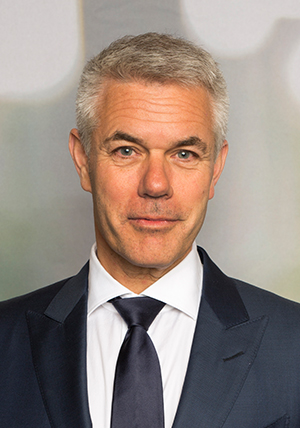
    Paolo Guglielmini, Hexagon
    Paolo Guglielmini, Hexagon

    Hexagon AB has announced that Paolo Guglielmini will succeed Ola Rollén as president and CEO of Hexagon AB, effective Dec. 31.

    Gun Nilsson has decided to step down as CEO for Hexagon’s principal shareholder MSAB on Oct. 1 and leave her position as chairman of Hexagon AB at the Annual General Meeting  (AGM) 2023. MSAB, in consultation with Hexagon’s nomination committee, will propose Ola Rollén as new chairman of the board at the AGM 2023.

    Guglielmini, currently Hexagon’s chief operating officer (COO) and president of Hexagon’s Manufacturing Intelligence (MI) division, has served in key roles since joining Hexagon in 2010, from strategy and business development to M&A and general management. He has been instrumental in expanding MI’s focus towards software-centric quality data solutions, and with his team driving the business towards all-time-high performance in 2021. Before joining Hexagon, Guglielmini held positions at CERN, the European Organization for Nuclear Research in Switzerland and Accenture. He holds a master of science in engineering and master of business administration from IMD.

    ”I’m happy that we have found an internal solution for my succession, which will bring long-term stability and continuity, but at the same time needed rejuvenation as we prepare this amazing company for the next big leap strategically,” Rollén said. “I have preoccupied myself with the well-being of Hexagon 24/7 for the last 22 years, and it’s a true privilege to be able to continue to follow the company’s successful development as chairman.”

    “I’m honored by the opportunity to build upon the legacy that Ola and our team have created over the past two decades, and excited to lead Hexagon into the future,” Guglielmini said. “We are very well positioned to capitalize on the vast opportunities ahead, combining software, sensors and autonomous technologies to create sustainable value for our stakeholders.”

    At the same time, the following organizational changes will be made:

    Josh (Joshua) Weiss, currently COO of Hexagon Geosystems, will succeed Guglielmini as president for Hexagon Manufacturing Intelligence, effective July 1. Weiss has served in multiple leadership roles since joining Hexagon in 2015, from his most recent role to the president of Geosystems’ mining and heavy construction businesses. Weiss will report to Hexagon’s president and CEO and be a part of the Executive Management Team.

    Michael Ritter, currently president of Hexagon Autonomy & Positioning, will assume a new senior role overseeing Hexagon’s Autonomy & Positioning, Mining and Agriculture divisions, effective immediately. In this role, Ritter will be responsible for leading the strategy of the businesses, to accelerate synergies and strengthening the solutions portfolio for Hexagon’s customers. Ritter will continue reporting to Hexagon’s president and CEO and be a part of the executive management team.

    Maria Luthström, currently head of Sustainability and Investor Relations for Hexagon, will succeed Ritter as president of Hexagon Autonomy & Positioning, effective Oct. 1. Luthström joined Hexagon in 2015 and has been instrumental in expanding the company’s strategy and environmental, social and governance agenda, strengthening Hexagon’s culture and increasing shareholder value. Luthström will report to Michael Ritter.


  • Hexagon announces senior management changes

    Hexagon announces senior management changes

    Logo: HexagonHexagon AB has made the following organizational changes, effective immediately:

    Paolo Guglielmini, currently president of the Hexagon’s Manufacturing Intelligence (MI) division, has been appointed chief operating officer (COO) for Hexagon AB.

    In his new role, Guglielmini will support Hexagon President and CEO Ola Rollén to develop and implement Hexagon’s strategy, as well as overseeing the operations of the company’s divisions. Guglielmini will retain his current role as President for the MI division until a successor has been appointed.

    Guglielmini has been leading MI since January 2020, and has served in key roles since joining Hexagon in 2010, from strategy and business development to M&A and general management. He has been instrumental in expanding MI’s focus towards software-centric quality data solutions, and with his team driving the business towards all-time-high performance in 2021.

    Prior to joining Hexagon, Paolo held positions at CERN, the European Organization for Nuclear Research in Switzerland, and Accenture. He holds a Master of Science in Engineering and Master of Business Administration from IMD.

    Norbert Hanke, currently Hexagon’s COO, has been appointed executive vice president (EVP) and will continue leading Hexagon Ventures, HR, IT, the India R&D and Sales organizations and other related tasks.

    Both Guglielmini and Hanke will continue to report directly to Rollén and remain members of Hexagon’s executive management team.

  • Hexagon makes organizational changes to focus on digital reality

    Hexagon makes organizational changes to focus on digital reality

    Hexagon AB, a global leader in digital-reality solutions, has announced the following organizational changes to meet the fast-growing demand for real-time digital worlds.

    Juergen Dold, employed with Hexagon since 1995 and most recently serving in a strategic leadership role across Hexagon’s Geosystems, Geospatial and Safety & Infrastructure divisions, will assume the role of executive vice president to lead key enterprise-wide initiatives.

    Dold will oversee Hexagon’s focus on the content and platforms necessary to power and operate Smart Digital Reality applications and experiences that empower growth within Hexagon’s existing markets and offer rapid expansion into new market segments.


    “Bringing together data sets of all types and formats where you can build, store and share digitalized objects and environments is our sweet spot.”


    “Driving company strategy and growth in the metaverse ecosystem — the new digital reality that is emerging in both the professional and consumer markets — is key to Hexagon’s future,” said Hexagon President and CEO Ola Rollén. “Bringing together data sets of all types and formats where you can build, store and share digitalized objects and environments is our sweet spot.”

    Dold’s focus will include advancing and expanding the market penetration of Hexagon’s HxDR ecosystem, which includes the HxDR digital reality platform and related business models. The platform allows the convergence and visualization of almost any geospatial or reality-capture data or file format for improved collaboration and decision making.

    Artificial-intelligence-driven photogrammetry and point-cloud meshing of terrestrial and aerial data enables a geo “supermesh,” essentially creating the visual foundation for any smart digital reality. Such realities can be put to industry use, analyzing and interpreting infinite data inputs from the real or digital world to solve business problems.

    The data can also be leveraged in the metaverse, described by many as the “quasi successor state” of the internet that focuses on social interaction.

    Image: Thinkhubstudio/iStock/Getty Images Plus
    Image: Thinkhubstudio/iStock/Getty Images Plus

    “The metaverse isn’t a single place, but many digital-reality spaces and experiences that companies like Hexagon are working to make more accessible and immersive,” Rollén said. “Through virtual, mixed or augmented reality functionalities, we can provide a higher sense of presence and engagement.

    “Additionally, by providing a connected space built from crowdsourced or professionally captured data, we can improve collaboration and productivity, especially for remote users and teams.

    “The digital worlds and objects can be used in everything from filmmaking, gaming and tourism applications to architecture, real estate, land or utilities management, city services and more.”

    Dold will continue to report directly to Rollén as a member of Hexagon’s executive management team.

    Thomas Harring, president of Hexagon’s Geosystems division, and Steven Cost, president of Hexagon’s Safety, Infrastructure and Geospatial division, will join the Hexagon executive management team, reporting directly to Rollén.

    Harring will also assume responsibilities for Hexagon’s Architecture, Engineering and Construction (AEC) business. This includes the software AEC business, which comprises the HxGN Smart Build portfolio previously managed under the PPM division and reported under IES, as well as Hexagon’s complementary sensor-software reality-capture and visualization solutions, such as the award-winning BLK line, already managed by the Geosystems division and reported under GES.

    Hexagon’s financial reporting structure consisting of IES and GES will remain the same.

  • Hexagon expands AR capabilities with Immersal acquisition

    Hexagon expands AR capabilities with Immersal acquisition

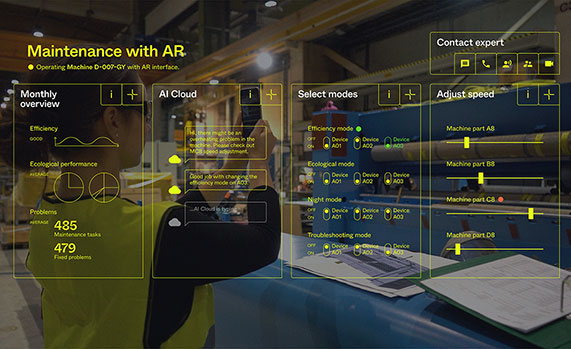
    Hexagon AB has acquired Immersal Oy, an innovator of spatial mapping and visual positioning solutions for producing augmented reality (AR) applications.

    AR applications enhance real-world experiences by augmenting a user’s visual perception with the display of digital content in the physical world.

    AR’s ability to weave context-specific, 3D information into physical spaces provides endless opportunities to save time, improve performance and reduce costs across a wide range of industries and applications — from surveying, construction, public safety and manufacturing to maintenance, training and navigation applications.

    An immersive experience can help boost task efficiency, improve safety protocols, optimize workflows and increase collaboration.

    The Immersal SDK (software development kit) allows developers to merge and “anchor” digital content to real-world objects – with precise accuracy to their actual location in the physical space — by enabling a user’s mobile device to locate and orient itself in the surrounding physical world using machine-readable maps.

    The maps, which are used for visual positioning, are constructed from image data supported by various mapping devices (including mobile phones) and hosted in the Immersal Cloud Service.

    “Hexagon has long been a leader in delivering smart digital realities that combine inputs from reality capture sensors with advanced visualisation software and tools to enable remote, location-based intelligence. This acquisition puts the power of these insights into the hands of those on-site, enhancing their field of view with superimposed digital information, meaning they can literally do more with what they see,” said Hexagon President and CEO Ola Rollén. “For example, direct access to information about an asset — while working with that asset — including step-by-step instructions on how to repair it, can streamline maintenance tasks while reducing material waste and re-work.”

    Immersal has years of experience developing AI and machine learning-based spatial anchor technology, which “anchors” virtual objects or models for viewing on different devices in the same position and orientation. This unlocks a wide variety of location-based solutions and services — from consumer-oriented augmented reality applications in gaming and media and entertainment to digital twin solutions on an enterprise scale.

    Immersal’s technology can map large spaces — both indoors and outdoors — and works both offline on-device and online using the Cloud Service.

    Founded in 2015 and headquartered in Helsinki, Finland, Immersal will operate as part of Hexagon’s Geosystems division. The acquisition has no significant impact on Hexagon’s earnings.

    Image: Hexagon
    Image: Hexagon
  • New HxGN Connect enables seamless, citywide collaboration

    New HxGN Connect enables seamless, citywide collaboration

    Hexagon AB has launched HxGN Connect, a software-as-a-service (SaaS) workspace for citywide collaboration enabling government agencies and other organizations to share data and coordinate action for ad-hoc, routine and emergency situations.

    Hosted in Microsoft Azure, HxGN Connect provides a networked workspace and unified view of information within and between entities. Participants can actively collaborate and securely share data as events unfold, overcoming technical and political barriers that result in missed opportunities, conflicting actions, errors and delays.

    With HxGN Connect, organizations can move beyond basic cooperation to true collaboration, where all participants gain mutual value. HxGN Connect is easily implemented and scaled — whether between multiple departments in a single agency or multiple organizations across cities and regions.

    “The future of smart cities lies in connected data communities that enable users to work with people and information irrespective of organizational and geographical affiliations or technology limitations,” said Hexagon President and CEO Ola Rollén. “HxGN Connect reimagines collaboration, breaking down barriers and bridging gaps between vertical sectors, organizational types and operational functions, which means safer cities, more effective services and happier residents.”

    HxGN Connect brings a city’s public safety, transportation, utilities and other related organizations together seamlessly. While users can visualize people, places and activities, and send messages and assign tasks to each other, all participants retain full ownership and control of their own data (nothing is stored in a central repository).

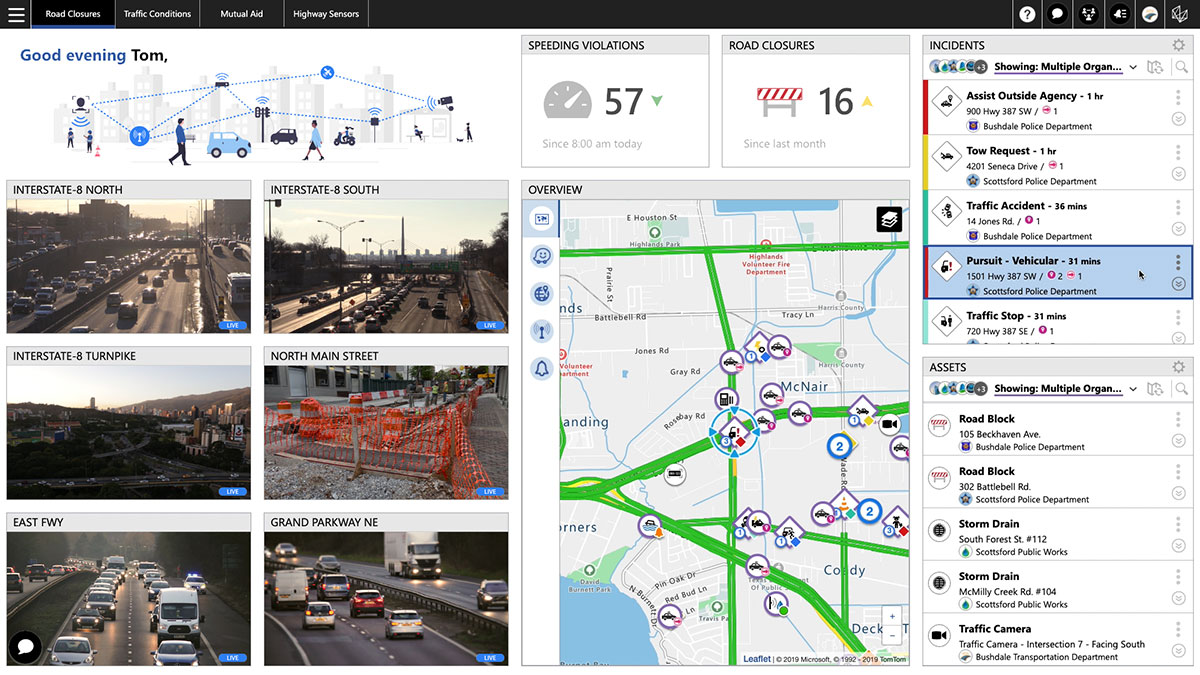
    The HxGN Connect dashboard. (Screenshot: Hexagon AG)
    The HxGN Connect dashboard. (Screenshot: Hexagon AG)
  • Hexagon acquires CADLM for smart manufacturing, digital twins

    Hexagon acquires CADLM for smart manufacturing, digital twins

    Logo: HexagonHexagon AB has acquired CADLM SAS, a company focused on computer-aided engineering (CAE) with artificial intelligence (AI) and machine learning. These technologies enable simulation in product-development processes and lifecycles.

    Founded in 1989, France-based CADLM develops computational design and optimization methods for industrial products and processes. Since 2014, CADLM has been developing AI and machine learning solutions. Its ODYSSEE software platform applies AI and machine learning to real-world sensor data and physics-based simulation data to produce accurate, predictive models of a product at efficient computing power levels.

    The combination enables faster, more efficient simulations of dynamic, multi-physics phenomena — such as automotive crash and safety — that fully characterize and understand real-world product behavior. This insight enables engineers to explore the design more extensively and interactively, and improve next-generation products without prohibitive computing cost or time.

    Ola Rollén, CEO, Hexagon
    Ola Rollén, CEO, Hexagon

    Use of the digital twin beyond the early design phase enables manufacturers to leverage image recognition, predictive simulation and fault prediction to address challenges such as downtime, throughput, quality and flexibility throughout the manufacturing process.

    “The convergence of CAE with advances in data management, AI, machine-learning and an increasingly connected manufacturing lifecycle is transforming the industry’s ability to address increasingly complex design challenges with rapid innovation and increased productivity,” said Hexagon President and CEO Ola Rollén. “CADLM’s AI knowledge and technology further strengthen our smart manufacturing solutions portfolio, putting data to work beyond the early design phase to improve product design innovation, manufacturing productivity, product quality and environmental sustainability through reductions in material waste.”

    CADLM will operate as part of Hexagon’s Manufacturing Intelligence division. The acquisition has no significant impact on Hexagon’s earnings. Completion of the transaction (closing) is subject to normal closing conditions.

  • Hexagon acquires Tacticaware for 3D security surveillance capabilities

    Hexagon acquires Tacticaware for 3D security surveillance capabilities

    Logo: HexagonHexagon AB has acquired Tacticaware, which provides lidar-based 3D surveillance software to monitor and protect critical infrastructure and buildings.

    Tacticaware’s flagship solution, Accur8vision, is a volumetric detection security system offering 3D surveillance. Unlike conventional systems that typically only monitor perimeters, Accur8vision delivers situational awareness of an intruder’s exact location, size, speed and movement trajectory — all of which can be visualized within a 3D digital reality of the area under surveillance, Tacticaware said.

    “Hexagon has long been a leader in sensor and 3D visualization technology,” said Hexagon President and CEO Ola Rollén. “Our award-winning 3D surveillance solution, Leica BLK247, fuses lidar, video and thermal imaging with edge computing and intelligent algorithms to instantly detect and report physical changes within an environment. Together with the BLK247 and HxGN OnCall, our comprehensive portfolio of next-generation public safety solutions, Hexagon can now offer those working to make our world a safer place a fully integrated end-to-end security surveillance solution for 24-hour, full visibility of critical infrastructure and spaces to call-taking, dispatch, incident planning and response and more.”

  • Hexagon showcases smart cities portfolio at Intergeo 2019

    Hexagon showcases smart cities portfolio at Intergeo 2019

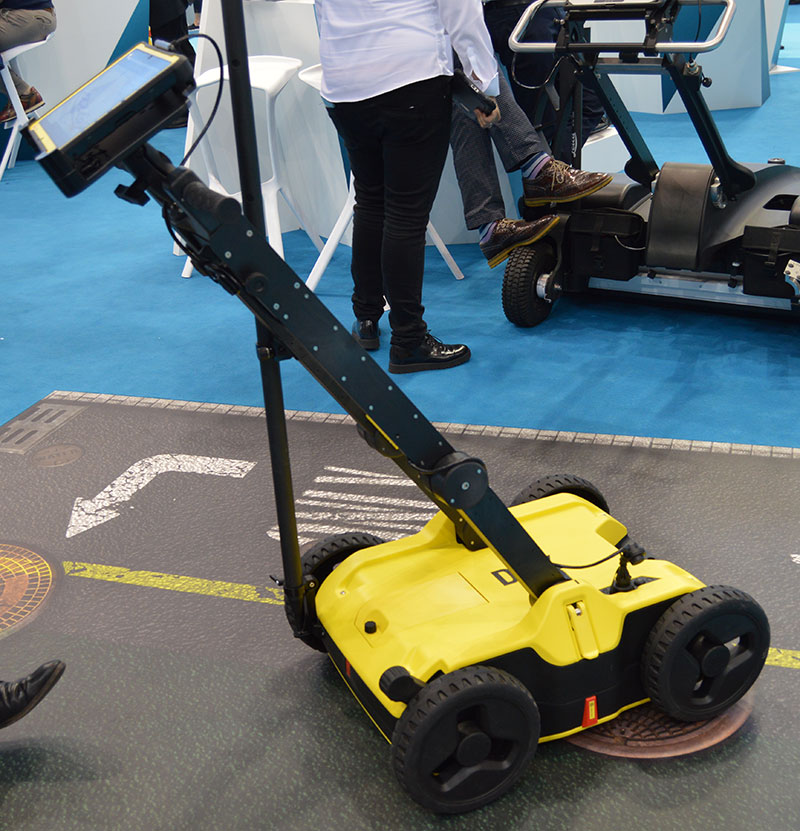
    Hexagon showcased the Leica DSX utility detection solution at Intergeo 2019. (Photo: Allison Barwacz)
    Hexagon showcased the Leica DSX utility detection solution at Intergeo 2019. (Photo: Allison Barwacz)

    Hexagon AB presented its Smart Buildings & Infrastructure and Smart Cities & Nations portfolios at Intergeo 2019, which took place Sept. 17-19 in Stuttgart, Germany.

    At the show, the company exhibited a number of its solutions designed to help manage the life of a building — from initial land surveying, through design, build, maintenance, renovation and demolition — and optimize the completion of infrastructure projects. These solutions include the Leica DSX utility detection solution, the BricsCAD building design software and HxGN SmartBuild.

    Reality capture solutions showcased at Intergeo 2019 include Hexagon’s Leica BLK2GO mobile reality capture solution, the HxGN Content Program, and the Hexagon Smart M.Apps and Luciad portfolios.

    “The ultimate form of data leverage is when tasks and processes become autonomous, which is the goal of our smart solutions portfolios,” said Ola Rollén, president and CEO at Hexagon. “We help customers leverage the data within their workflows to achieve the greatest efficiency, productivity and quality outcomes possible. When we collectively achieve these outcomes at scale, not only can we sustain growth for our businesses, but also this finite planet we all share…fewer resources, less waste, less pollution.”

  • Hexagon products expand reality capture options

    Hexagon products expand reality capture options

    The Leica BLK2GO. (Photo: Hexagon)
    The Leica BLK2GO. (Photo: Hexagon)

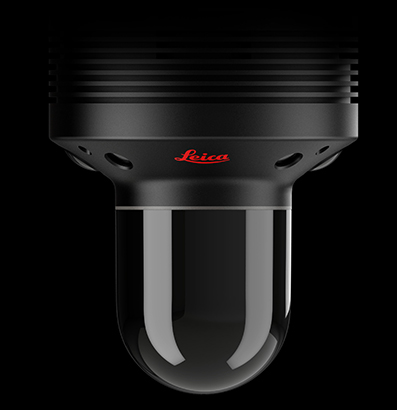
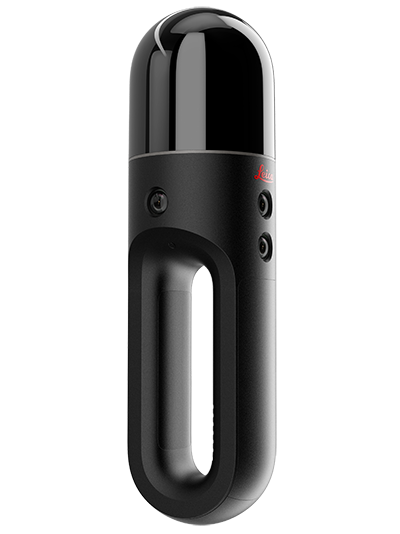
    Hexagon AB has introduced two new additions to its Leica BLK series. The Leica BLK2GO is a small, portable, integrated handheld-imaging scanner, and the Leica BLK247 is a 3D laser-scanning sensor for security surveillance providing continuous, 24/7 situational awareness.

    “Extending the BLK series continues Hexagon’s 20-year focus on revolutionising reality capture,” said Ola Rollén, Hexagon president and CEO. “These sensors are not only ground-breaking for their technical capabilities, but also for their practicality. The Leica BLK2GO can be taken anywhere, and the Leica BLK247 never sleeps.”

    Leica BLK2GO. The Leica BLK2GO introduces mobility for scanning complex indoor environments. The handheld-imaging laser scanner combines visualisation, lidar, and edge-computing technologies to scan in 3D while in motion, allowing users to be more agile and efficient in capturing objects and spaces.

    The BLK2GO has a wide range of applications from adaptive reuse projects in the architecture and design industries to location scouting, pre-visualisation, and VFX workflows for media and entertainment.

    The Leica BLK247. (Photo: Hexagon)
    The Leica BLK247. (Photo: Hexagon)

    Leica BLK247. The Leica BLK247 is designed for continuous 3D reality capture, extending capabilities for safety and security applications. The sensor provides real-time situational awareness through edge computing and LiDAR-enabled change-detection technology.

    Using artificial intelligence, the BLK247 can tell the difference between still and moving objects — such as a person walking who leaves a suitcase behind — and identify security threats to provide real-time alerts for both expected and unexpected changes.

    The BLK247 greatly enhances situational awareness within restricted or high-security spaces, as it eliminates the need for people to constantly monitor walls of security screens or smart building dashboards.

    The Leica BLK2GO and Leica BLK247 are among the many innovative solutions showcased this week at HxGN LIVE 2019, Hexagon’s annual digital technology conference.

  • Hexagon acquires Thermopylae for 5D visualization

    Hexagon AB has signed an agreement to acquire Thermopylae Sciences and Technology, a software provider primarily focused on the U.S. government and defense market that specializes in geospatial applications, mobile frameworks and cloud computing for enhanced location intelligence.

    Thermopylae has developed advanced visualization solutions to support tactical edge mapping in support of mission critical operations. Built upon the Google technology stack, its defense and intelligence solutions are targeted at addressing the challenges involved in working with critical problem sets in secure or classified government environments.

    In addition, its portfolio is applicable to a host of markets in the private sector, including real estate, finance, insurance, retail and media, with customers ranging from startups to Fortune 50 companies.

    “Thermopylae’s software and domain expertise nicely augment our ability to deliver the visual location intelligence necessary for enabling autonomous connected ecosystems,” said Hexagon President and CEO Ola Rollén. “Ultimately, the addition of Thermopylae will enrich the 5D experience delivered through our Hexagon Smart M.App and Luciad portfolios — both of which enable smart digital realities with 3D, 4D (real-time sensor feed integration) and 5D (dynamic analytics) capabilities. Not only does the acquisition provide an avenue for international market adoption of Thermopylae’s technologies but also an additional avenue for Hexagon to accelerate adoption of our 5D visualization capabilities in U.S. government agencies.”

    Headquartered in Arlington, Virginia, Thermopylae will operate as a part of Hexagon’s Geospatial division, which is reported under the Geospatial Enterprise Solutions segment. Sales in 2017 amounted to $20 million.

    Completion of the transaction (closing) is subject to customary regulatory approvals, including a voluntary filing to the Committee on Foreign Investment in the United States (CFIUS).

  • Hexagon to showcase reality capture hardware, integrated software at Intergeo 2018

    Hexagon to showcase reality capture hardware, integrated software at Intergeo 2018

    Logo: HexagonHexagon AB will showcase its portfolio of reality capture hardware and integrated software at Intergeo 2018, hall 12.1, booth D.023.

    According to the company, it will also offer hands-on demonstrations for reality capture devices, airborne sensors and UAVs, measurement technology, cloud computing, artificial intelligence applications and more.

    “Intergeo is a premiere event for showcasing Hexagon’s vision of enabling smart digital realities that ultimately create autonomous connected ecosystems for digital transformation,” said Ola Rollén, president and CEO of Hexagon. “The increasing role of autonomous technology is vital to enabling unaided decisions that draw and act on information from multiple sources simultaneously and become smarter over time. This is our focus and we are once again honored to share our ACE ideas and progress around smart cities, BIM, Geospatial 4.0 and other highly relevant topics to be discussed at the event.”


    A number of Hexagon executives also will be speaking during the show, including Mladen Stojic, president of Hexagon’s Geospatial Division, who will be discuss the potential of 5D location intelligence; Maximilian Weber, senior vice president of Hexagon’s Safety and Infrastructure Division, who will discuss the potential of “the Internet of People” within a smart city; Juergen Mayer, laser scanning business director for Hexagon’s Geosystems Division, who will present the latest development in edge computing technology; Michael Dorman, global director at Multivista (part of Hexagon), who will look at how today’s construction leaders are reducing design, construction, marketing and operating expenses throughout a project’s lifecycle with digital solutions; Valentin Fuchs, UAV product manager, and Anne Pitkaenen, UAV marketing manager for Hexagon’s Geosystems Division, who will provide insights into the latest developments of the Leica Aibot.

  • Hexagon releases 3D laser scanner with in-field pre-registration


    Hexagon AB has launched the Leica RTC360, a laser scanner equipped with edge computing technology to enable fast and accurate creation of 3D models in the field. The Leica RTC360 is one of many innovations showcased at HxGN Live 2018, the company’s annual digital technology conference.

    According to Hexagon, the Leica RTC360 combines high-performance laser scanning, edge computing and mobile app technologies to pre-register captured scans quickly and accurately. With the push of a button, two million points per second of high dynamic range imagery can be captured to create a full-dome scan in under two minutes, Hexagon added.

    In addition, the laser scanner features a visual inertial system that automatically tracks movements between setup positions. The scans captured by the Leica RTC360 can be combined and pre-registered on a mobile device, where they can be viewed and augmented with information tags.

    “We designed the Leica RTC360 for maximum productivity. For construction professionals, plant operators, public safety officials and other professionals who face complex projects with tight constraints, it provides a better way to digitally capture the reality of their sites — and process and visualize that data for faster, immediate decision making,” said Ola Rollén, Hexagon president and CEO. “What these professionals do on site every day is challenging, and we aim to continue to make their work quicker, easier and more accurate.”

    Hexagon AB provides digital solutions that create autonomous connected ecosystems, a state where data is connected seamlessly through the convergence of the physical world with the digital, and intelligence is built-in to all processes.