Tag: PCTEL

  • Launchpad: GNSS antennas, gyroscopes, lidars

    Launchpad: GNSS antennas, gyroscopes, lidars

    A roundup of recent products in the GNSS and inertial positioning industry from the June 2020 issue of GPS World magazine.


    OEM

    GPS Tester

    Compact antenna testing for mobile deployments
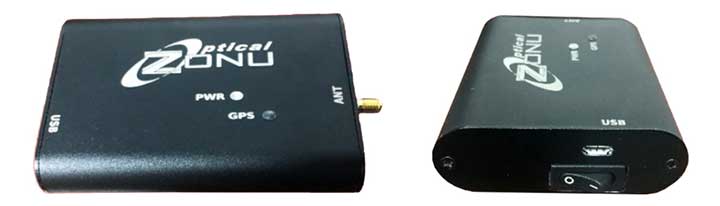
    Photo: Zonu
    Photo: Zonu

    The ZonuSkyShot is designed for quick testing during the critical installation phase of an antenna at a new site build or small-cell integration. The compact tester is designed for integrating a Zeno GPS solution, but works as a neutral testing device. SkyShot is a compact GPS receiver that detects the presence of a GPS signal, indicated on the top-panel LED. The receiver can be accessed via the USB port on the base unit, allowing the user to see the available satellites by using the app provided with the system and available at the Optical Zonu website. The receiver can simultaneously track up to 16 satellites while searching for new ones. Because of this, a problem can be found and mitigated when a GPS antenna is installed, rather than when hardware is being integrated further down the line. Close-out of projects can be indicated with screenshots of satellite visibility via the micro-USB port to a laptop.

    Optical Zonu, opticalzonu.com

    Police antenna

    Seamless installation on leading 2020 police sport utility vehicles

    Photo: PCTEL
    Photo: PCTEL

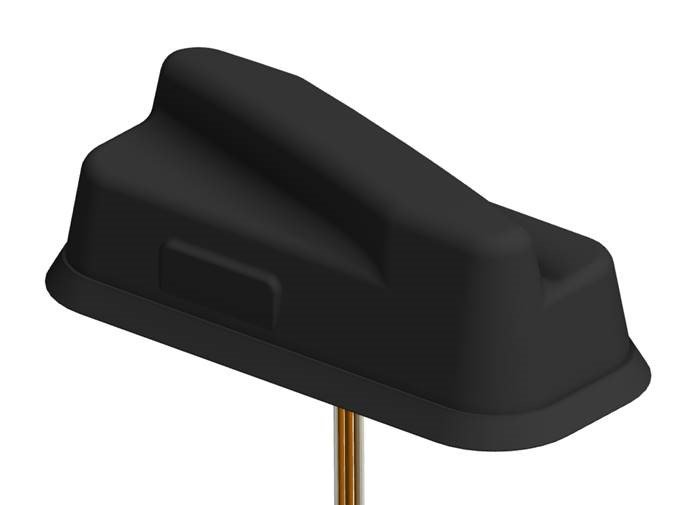
    The Trooper TRP-20INT antenna platform supports the high-speed requirements of complex RF communication systems used for critical communications in FirstNet public safety and intelligent transportation systems. The antennas feature two 5G elements compatible with cellular routers supporting 600-MHz to 6-GHz frequencies. PCTEL’s proprietary high-rejection multi-GNSS technology is included for high-precision tracking and asset management.

    PCTEL, pctel.com

    Anti-jam unit

    Mitigates RF interference

    Photo: Quantum Reversal
    Photo: Quantum Reversal

    The QR-100 L1/L2 GPS anti-jamming unit mitigates RF interference or jamming signals using a spatial domain of an antenna array reception pattern. Three passive antennas of the customer’s choice can be connected to the QR-100 unit using built-in SMA connectors. The unit default configuration (no jamming signal present) has a 120-degree phase gradient between antenna elements to maximize the reception of GPS right-hand circularly polarized (RHCP) signals. This feature allows the unit to be connected to either RHCP-type antennas or linearly polarized antennas. The default configuration of the unit is designed to connect to passive GPS antennas.

    Quantum Reversal, quantumreversal.com

    Gyroscopes

    Two and three Axis for use in harsh environments.
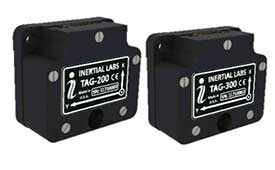
    Photo: Inertial Labs
    Photo: Inertial Labs

    Inertial Labs’ TAG-200 two-axis and TAG-300 three-axis gyroscopes are developed for electro-optical systems, gimbals, line-of-sight, and pan-and-tilt platforms for stabilization and pointing applications. TAG-200 and TAG-300 use advanced-performance, tactical-grade MEMS sensitive elements to accomplish complex tasks requiring accurate stabilization of assorted platforms. The gyroscopes, designed for use in harsh environments, can withstand extreme shock and vibration in accordance with MIL-STD-810 ground mobile use. They are fully digitized, include built-in test functions and have no moving parts. The gyroscopes include low noise, low latency, wide bandwidth, high data rate, low bias drift, low VRE, high MTBF and are ITAR-free. They are factory calibrated over the operational temperature range and are quality assurance and quality compliance tested and supplied with individual calibration and acceptance test certificates.

    Inertial Labs, inertiallabs.com


    SURVEYING & MAPPING

    Grade Control

    Version 2 of software adds features

    Photo: Trimble
    Photo: Trimble

    Earthworks Grade Control Platform version 2.0 features improvements to enable faster return on investment, increase productivity and decrease training time for operators. Horizontal Steering Control for dozers automatically controls the machine to follow any horizontal alignment such as a back of a curb, breakline, roadway centerline or bottom of slope, without operator assistance. Augmented reality for excavators enables users to understand 3D models, cut/fill information, slope data and other bench points and reference points on the in-cab display in context, without the need to interpret complex 2D plans or stakes. A new mastless motor grader configuration gives operators an improved range of blade motion, allowing for machine control in applications where it previously was not possible. Integrated Trimble Loadrite Payload Management displays grade control and accurate payload data on one screen, increasing mass haul productivity and efficiency by preventing underloading, and improving safety by avoiding overloading. Trimble Earthworks is also now available for compact grading attachments with dual GNSS, single GNSS and total station guidance options. The Earthworks Assistant App provides access to Earthworks learning material and documentation, allowing for a shorter learning curve and less downtime for operators.

    Trimble, trimble.com

    Tilt function

    New feature for automatic excavator

    Photo: Topcon
    Photo: Topcon

    The addition of advanced tilt and rotation functionality allows Automatic Excavator operators to easily swivel or tilt the bucket with automatic boom control for faster and more efficient excavation. If excavator operators are in situations such as at the top of the slope, grading a long incline and not totally perpendicularly lined up, the added feature makes it easier to position the cutting edge of the bucket to the surface. Operators can excavate more quickly, moving the excavator fewer times with less wear and tear on the chassis. It is also beneficial when navigating around manholes, trenches and tight spaces.

    Topcon, topcon.com


    TRANSPORTATION

    Lidar sensors

    For L3/L4 autonomous driving
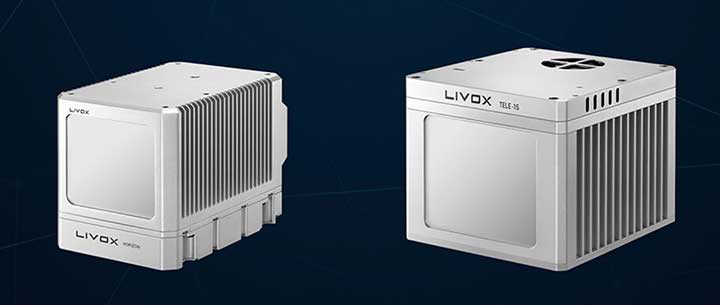
    Photo: Livox
    Photo: Livox

    The Horizon is a high-performance lidar sensor built for Level 3 and Level 4 autonomous driving. It has a long-distance detection range of up to 260 meters, high-density point clouds, and is so small it can be embedded easily into vehicles. The Tele-15 has achieved a reliable detection range of up to 500 meters, offering improved safety for high-speed autonomous vehicles. Both the Horizon and Tele-15 high-performance lidar sensors feature a new scanning method that offers improved sensing performance at a low cost.

    Livox Technology, www.livoxtech.com

    INS module

    1.3°/hr automotive IMU sensor
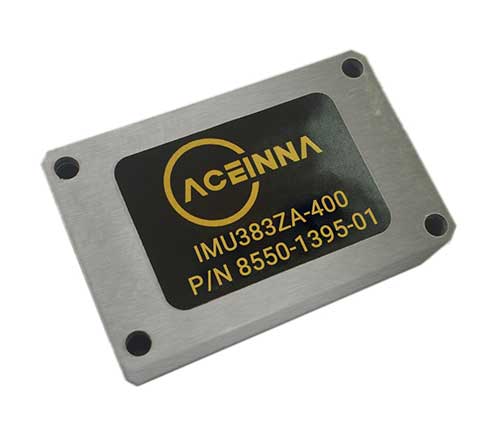
    Photo: Aceinna
    Photo: Aceinna

    The IMU383ZA is a high-accuracy, triple-redundant inertial measurement unit (IMU) for guidance and navigation solutions in autonomous machines and vehicles. It integrates triple-redundant, 3-axis micro-electromechanical system (MEMS) accelerometer and gyroscope sensors. The IMU383ZA is pin-compatible with the IMU381ZA and offers high performance of 1.3 deg/hr, 0.08 deg/root-hr. The miniature module is factory-calibrated over the –40° C to +85° C industrial temperature range to provide consistent performance through extreme operating environments for a wide variety of applications.

    Aceinna, aceinna.com

  • PCTEL unveils public-safety antenna platform for police

    PCTEL unveils public-safety antenna platform for police

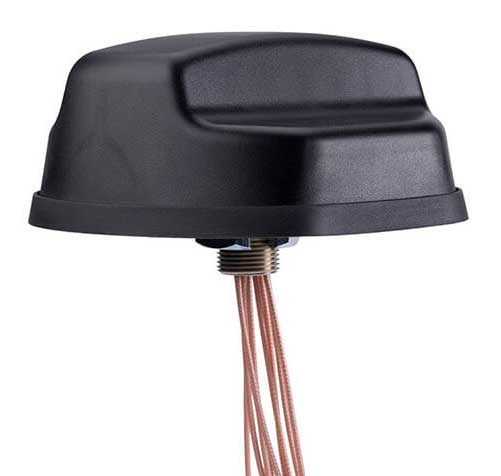
    PCTEL has launched its  Trooper TRP-20INT platform, featuring models with a purpose-designed footprint to allow seamless installation on the leading 2020 police sports utility vehicles.

    Photo: PCTEL
    Photo: PCTEL

    The Trooper TRP-20INT antenna platform supports the high-speed requirements of complex RF communication systems used for critical communications in FirstNet public safety and intelligent transportation systems (ITS).

    These antennas feature two 5G elements compatible with leading cellular routers supporting 600-MHz to 6-GHz frequencies. In addition, PCTEL’s proprietary high-rejection multi-GNSS technology is included for high-precision tracking and asset management.

    “In order to meet the communication demands of law enforcement, our Trooper TRP-20INT platform was specifically designed for installation on the raised ridges of police vehicle roofs. This method makes installation easier and optimizes RF performance,” said Rishi Bharadwaj, PCTEL’s chief operating officer.

    “PCTEL brings strong RF and mechanical design capabilities to develop high-performance antenna systems for deployments in harsh environments in mission critical applications,” added Bharadwaj.

    PCTEL also announced its new and improved PCTWSLMR-2 full-spectrum LMR mobile antenna, designed to support the leading OEM multi-band land mobile radios that enable interoperability among emergency management and response personnel. The new antenna incorporates a strong and ultra-flexible spring structure designed for maximum impact shock absorption, providing solid installation integrity even in low overhead-clearance situations.

    PCTEL will showcase its new antenna platforms at IWCE, Aug. 24-28, at the Las Vegas Convention Center, Las Vegas, Nevada, booth 1215. Contact PCTEL for more details on product specifications and availability.

  • PCTEL terminates share repurchase program

    PCTEL terminates share repurchase program

    Logo: PCTEL

    PCTEL has terminated its previously announced share repurchase program. The board of directors does not intend to modify the company’s dividend policy, PCTEL said.

    “Given the uncertainty surrounding the COVID-19 virus and its impact on economic and market conditions, the board determined that it is prudent to terminate the share repurchase program,” said David Neumann, CEO of PCTEL. “Maintaining our strong balance sheet will allow PCTEL flexibility to address the unique and evolving challenges presented by the COVID-19 situation.”

    In addition, PCTEL also terminated a plan pursuant to Rule 10b5-1 under the Securities Exchange Act of 1934, as amended, that was in place to facilitate market repurchases.

    According to PCTEL, under the now-terminated repurchase program, it repurchased approximately 375,000 shares of common stock for an aggregate purchase price of approximately $2 million. Following these repurchases, it had approximately 18.5 million shares of common stock outstanding, the company said.

    PCTEL is a provider of wireless technology, including industrial IoT devices, antenna systems, and test and measurement solutions.

  • PCTEL unveils GNSS L1/L2/L5 combo antenna at RSSI

    PCTEL unveils GNSS L1/L2/L5 combo antenna at RSSI

    Photo: PCTEL
    Photo: PCTEL

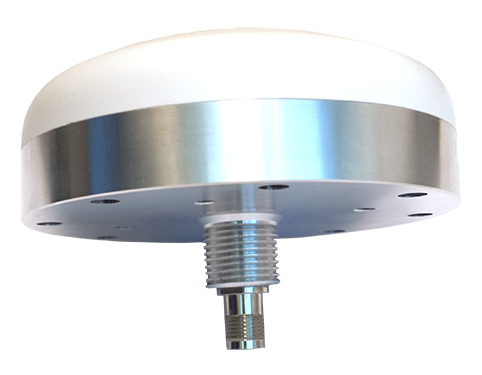
    PCTEL Inc. has released an antenna that combines precision multi-constellation GNSS with high-performance LTE, sub-6 GHz 5G, Bluetooth and Wi-Fi connectivity.

    The Coach II antenna with GNSS L1/L2/L5 is designed to provide greater precision and reliability for advanced rail communications systems, enabling everything from next-generation positive train control (PTC) to passenger Wi-Fi.

    “Precise timing and tracking information is critical not just for rail, but for a variety of fleet, public safety, and industrial IoT [internet of things] applications,” said Rishi Bharadwaj, PCTEL’s chief operating officer. “PCTEL’s antenna technology enables our customers to deploy new technologies with confidence,” added Bharadwaj.

    The new antenna features:

    • Global multi-GNSS compatibility: 1150-290 MHz (GPS L2/L5; Galileo E5A/E5B/E6; GLONASS L2/L3; BEIDOU B2/B3); 1500-615 MHz (GPS L1; Galileo E1; GLONASS L1; BEIDOU B1/B1-2)
    • Dual-port 4G LTE / sub-6 GHz 5G NR
    • 802.11ac Wi-Fi / Bluetooth connectivity
    • AAR compliant for railway applications
    • IP67-rated design

    PCTEL is displaying its Coach II antenna with GNSS L1/L2/L5 on Sept. 22-24 at RSSI C&S Exhibition in Minneapolis, Minn. It is available to order now for shipment in early November using part #GL125-DLTEMIMO.

  • Launchpad: OEM simulator, IMU, antennas

    Launchpad: OEM simulator, IMU, antennas

    A roundup of recent products in the GNSS and inertial positioning industry from the March 2019 issue of GPS World magazine.

    MEMS INS/GPS

    Update improves heading performance and reduces jitter

    Photo: Systron Donner
    Photo: Systron Donner

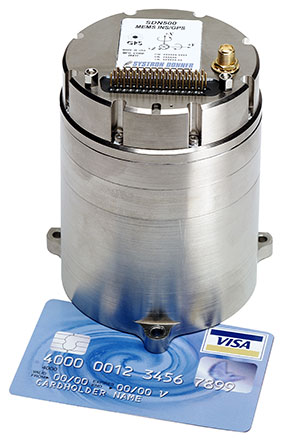
    The SDN500 digital quartz micro-electro-mechanical systems (MEMS) GPS inertial navigation system (GPS/INS) has been updated. Model SDN500-xE provides a newer generation JF2 (C/A) code GPS receiver and tightly couples the 1 PPS GPS signal to the SDI505 IMU synch pulse to improve heading performance and reduce jitter after long periods of operation without dynamic inputs. The 25-inch-square SDN500 provides for maximum packaging flexibility in dense systems and delivers accuracies to within 1.0 mrad in attitude, 0.1 m/s in velocity and 3.9 meters spherical error probability (SEP). It offers tactical-grade performance, integrating SDI’s latest quartz gyros capable of 0.5°/hr. bias in-run stability and low angular random walk (ARW, 0.02°/√ hr), quartz accelerometers delivering 0.5 milli-g in-run bias stability and low velocity random walk (VRW, 80 µg/√ Hz), plus high-speed digital signal into a tightly coupled GPS/INS for tactical navigation and geo-location applications.

    Systron Donner Inertial, www.systron.com

    A-GNSS antenna testing

    Testing location accuracy performance of mobile devices

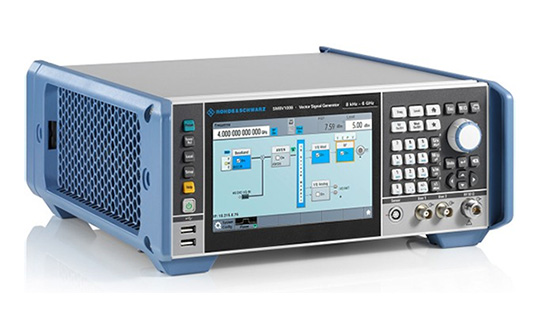
    The R&S SMBV100B vector signal generator simulates GNSS and MBS signals. (Photo: Rohde & Schwarz)
    Photo: Rohde & Schwarz

    To create test concepts for over-the-air (OTA) antenna measurements, Rohde & Schwarz and Bluetest have integrated the R&S LBS Server, a software component running on the R&S CMW500 wideband radio communication tester, and the Bluetest over-the-air (OTA) test solution for A-GNSS systems based on Bluetest’s RTS65 reverberation chamber and Bluetest’s Flow measurement software. The R&S LBS Server controls the Rohde & Schwarz base-station simulator R&S CMW500 for LTE, WCDMA and GSM, and uses the R&S SMBV100B vector signal generator for simulation of GNSS and metropolitan beacon systems (MBS) signals. An upgrade for 5G will be available soon. The R&S LBS Server is an essential part of the R&S TS8991 OTA Performance Test System.

    Rohde & Schwarz, rohde-schwarz.com
    Bluetest, bluetest.se

    Fog-based IMU

    Brings Navsight technology to the most demanding environments

    Photo: SBG Systems
    Photo: SBG Systems

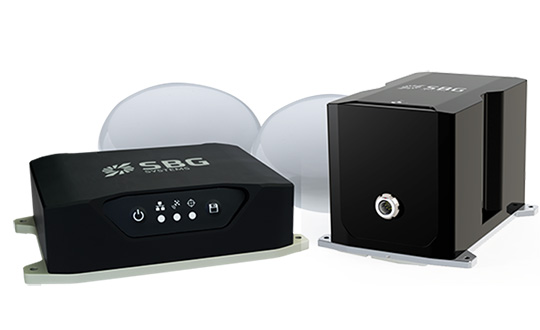
    The Horizon IMU adds a third choice to SBG System’s Navsight Land/Air Solution. It is a FOG-based high-performance inertial measurement unit (IMU) designed for highly demanding surveying applications such as high-altitude data collection or mobile mapping in dense areas such as urban canyons. The Horizon IMU joins the Ekinox and Apogee IMUs as options for Navsight. The different levels of accuracy enable the solution to meet various application requirements and can be connected to various external equipment such as odometer, lidar and more. The Horizon IMU allows customers to use Navsight in high-altitude and highly dense areas, as well as where only a single antenna can be used. It is based on closed-loop FOG technology that enables ultra-low bias and noise levels. The Navsight solution can be installed in a plane or car — the sensor alignment and lever arms are automatically estimated and validated. The Navsight unit also integrates LED indicators for satellite availability, real-time kinematic (RTK) corrections and power. Qinertia post-processing software provides access to offline RTK corrections from more than 7,000 base stations in 164 countries.

    SBG Systems, www.sbg-systems.com

    Dual-band antenna

    For mobile and fixed deployments

    Photo: PCTEL
    Photo: PCTEL

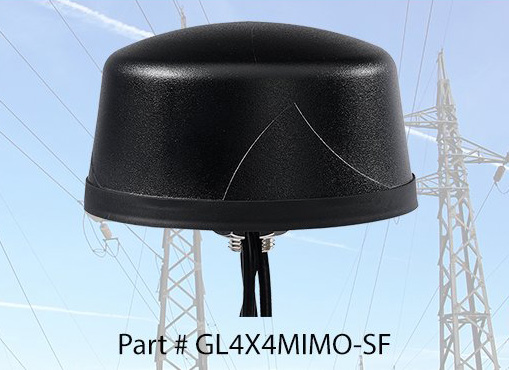
    The Coach 4×4 Wi-Fi/DSRC GNSS multi-band antenna enables smart grids, mobile workforce communications, and advanced automation technologies. The dual-band 802.11ac/p MIMO antenna helps boost data rates and reliability for utility networks, intelligent transportation systems and other industrial internet of things (IoT) applications. The low-profile antenna features four-port 2.4/5-GHz coverage along with PCTEL’s high-rejection GPS/GLONASS technology for network timing and tracking in a single IP67-rated housing.

    PCTEL, www.pctel.com

  • PCTEL introduces Coach Wi-Fi/GNSS multi-band antenna for IoT

    PCTEL introduces Coach Wi-Fi/GNSS multi-band antenna for IoT

    Photo: PCTEL
    Photo: PCTEL

    PCTEL Inc. released at DistribuTECH a new dual-band 802.11ac/p MIMO antenna that helps boost data rates and reliability for utility networks, intelligent transportation systems and other industrial IoT (IIoT) applications, according to the company.

    PCTEL’s Coach 4×4 Wi-Fi/DSRC GNSS multi-band antenna is designed for both mobile and fixed deployments, enabling smart grids, mobile workforce communications, and advanced automation technologies across a variety of industries.

    The antenna also supports Dedicated Short Range Communications (DSRC), a common interoperable safety standard for vehicles.

    “PCTEL’s latest antenna will enable the future of the IIoT,” said Rishi Bharadwaj, PCTEL COO. “For example, advanced smart grids utilizing Coach antennas could reduce outages and efficiently manage alternative energy sources.

    “Coach antennas also provide mobile connectivity for applications such as DSRC, which has the potential to revolutionize road safety. Those are just some of the possibilities. PCTEL’s advanced RF design and environmental testing capabilities enable us to deliver superior 4×4 MIMO performance and exceptional durability for the most demanding applications,” added Bharadwaj.

    This new low-profile antenna features four-port 2.4/5-GHz coverage along with PCTEL’s unique high rejection GPS/GLONASS technology for network timing and tracking, all in a single IP67-rated housing.

    It supports a variety of wireless technologies, including broadband mesh networks, 802.11ac Wi-Fi and 802.11p DSRC Wireless Access in Vehicular Networks (WAVE) standards for direct vehicle-to-vehicle (V2V) and vehicle-to-infrastructure (V2I) communications.

    This is the latest in PCTEL’s Coach antenna series. Coach antennas have been deployed in a variety of mobile and IIoT applications around the world. Their UV-stable design facilitates maximum installation flexibility without antenna orientation restrictions, the company said.

    PCTEL is displaying its Coach4x4 Wi-Fi/DSRC GNSS multi-band antenna Feb. 5-7 at DistribuTECH, booth 11750, in New Orleans. It is available now to order using part #GL4X4MIMO-SF.

  • PCTEL showcases 4×4 LTE multi-GNSS antennas at InnoTrans

    PCTEL showcases 4×4 LTE multi-GNSS antennas at InnoTrans

    PCTEL Inc. will demonstrate its next generation of multi-band, multi-network 4G LTE antennas at InnoTrans 2018 for the transit and rail industries, which takes place Sept. 18-21 in Berlin.

    PCTEL’s new Trooper II and Coach II dual-carrier antenna platforms are designed to meet the requirements of increasingly complex RF communication systems in transportation applications.

    The Trooper II antenna. (Photo: PCTEL)
    The Trooper II antenna. (Photo: PCTEL)

    Both Trooper II and Coach II antennas feature four 4G LTE antenna elements, and four 802.11ac Wi-Fi MIMO elements compatible with the world’s leading multi-network cellular routers.

    The antennas support carrier aggregation for high-speed data transmissions in dense RF environments, such as transit depots and rail stations.

    They also incorporate PCTEL’s proprietary high-rejection multi-GNSS technology for high precision tracking and asset management. Both platforms are housed in attractive low-profile housings and can be easily installed on all types of mass transit vehicles, or even fixed surfaces, the company said.

    “PCTEL has a strong portfolio of products for rail and mass transit applications,” said Rishi Bharadwaj, PCTEL’s COO. “Our products have been qualified and deployed by major railroad equipment manufacturers and operators for over a decade. We are excited to showcase our industry-leading technology and capabilities at InnoTrans.

    “High-performance antennas play a crucial role in the implementation of wireless technologies to improve safety and operational efficiency,” Bharadwaj said. “PCTEL’s innovative MIMO antenna technology also enables transit operators to deliver a better passenger experience through more reliable high-speed internet access.”

  • PCTEL announces Trooper II antenna for public safety

    PCTEL announces Trooper II antenna for public safety

    PCTEL Inc. has announced the next generation of its Trooper antenna, the company’s flagship multi-band platform for public safety fleets.

    The new Trooper II provides optimal wireless communications performance through the antenna’s 4-port 4G LTE connections and 4×4 802.11ac Wi-Fi MIMO capability, the company said. It also incorporates PCTEL’s newest high rejection multi-GNSS technology for high precision tracking and asset management.

    The Trooper II antenna. (Photo: PCTEL)
    The Trooper II antenna. (Photo: PCTEL)

    “The Trooper II antenna enhances PCTEL’s successful Trooper platform, with expanded multi-band RF and GNSS capability in a robust, aerodynamic housing,” said Rishi Bharadwaj, senior vice president and general manager of PCTEL’s Connected Solutions group. “Its slender new design with a single cable exit accommodates installation restrictions often encountered on modern public safety vehicles.”

    “Our Trooper antennas have been broadly deployed on public safety fleets, notably in support of  the leading FirstNet public safety broadband network systems. The Trooper II is also ideal for many Industrial IoT deployments,” Bharadwaj added.

    The rugged Trooper II (part #GL9X1AX-TRB) features PCTEL’s new proprietary high rejection multi-band technology, which supports GPS L1, GLONASS and Galileo for high precision tracking.

    In addition to public safety applications, the antenna is suitable for tracking and communications support for industrial internet of things (IoT) and other fleet management applications, including farming tractors for precision agriculture, utility service fleets and railway positive train control systems.

    PCTEL will display the Trooper II antenna Aug. 6-7 at APCO 2018, Booth 1719, along with its portfolio of antennas for the public safety industry and grid testing solution for in-building public safety networks.

    The Trooper II antenna is available for pre-order now. First shipments are expected in early fall.

  • PCTEL launches multi-GNSS L1/L2/L5 antennas for precision navigation

    PCTEL launches multi-GNSS L1/L2/L5 antennas for precision navigation

    PCTEL Inc. has launched a new series of multi-GNSS L1/L2/L5 antennas for precision navigation and timing.

    According to the company, the antennas combine aerospace-level precision with global satellite compatibility, in a highly durable package. They enable critical applications including vehicular automation, 5G network timing synchronization and Positive Train Control (PTC) systems.

    The company made the announcement at the RSSI C&S Exhibition (Railway Systems Suppliers Inc.) being held this week in Omaha, Nebraska.

    PCTEL’s multi-GNSS L1/L2/L5 antennas increase the accuracy of timing and location information by providing simultaneous access to multiple GNSS signals across multiple frequency bands. The antennas support all relevant GPS, GLONASS, BeiDou and Galileo frequencies with excellent multipath mitigation and high out-of-band rejection for greater signal clarity, the company said. Their robust AAR and IP67-compliant design makes them suitable for years of use on railways and in other harsh real-world environments.

    “Precision navigation is crucial for the next generation of autonomous vehicle technologies, which could drive major improvements in safety and efficiency across a wide variety of industries,” said Rishi Bharadwaj, senior vice president and general manager of PCTEL’s Connected Solutions group. “PCTEL’s new antennas make precision navigation accessible for large-scale deployments in rail, public safety, agricultural and commercial fleets. They also enable commercial deployments of 5G networks, which have higher accuracy requirements for network timing.”

    Earlier this month, PCTEL released its 900-MHz MIMO Yagi antennas with dual polarization., designed for use with MIMO or diversity radios in advanced supervisory control and data acquisition (SCADA) systems and other industrial internet of things applications. PCTEL’s dual polarized antenna technology improves data throughput and reliability on both licensed and unlicensed spectrum.

    PCTEL is displaying its new multi-GNSS antennas along with other antenna solutions for the rail industry, May 22-23 at the RSSI C&S Exhibition, booth #1109. The new antennas will be available for purchase in mid-July.

  • PCTEL launches multi-band LTE/Wi-Fi/GNSS antenna with sub-inch profile

    PCTEL launches multi-band LTE/Wi-Fi/GNSS antenna with sub-inch profile

    PCTEL Inc. is offering a new multi-band LTE/Wi-Fi/GNSS antenna with a sub-inch profile. The antenna combines PCTEL’s high rejection multi-GNSS technology for precision timing and location tracking with high performance multi-band data connectivity.

    The antenna is also rugged and easy to install, making it suitable for covert public safety operations, precision agriculture and the industrial Internet of Things (IoT).

    “Complex, high performance antennas are critical for modern public safety communications, as well as for commercial applications such as mobile asset management,” said Rishi Bharadwaj, senior vice president and general manager of PCTEL’s Connected Solutions group. “However, vehicles and autonomous systems have limited space for antenna installation. PCTEL’s sub-inch antenna addresses these space limitations while delivering high performance multi-band coverage. PCTEL also offers external and embedded antenna system design services for customers with more severe antenna size constraints or other specialized requirements.”

    Within its ruggedized ultra-low profile housing, PCTEL’s new antenna supports multi-band LTE MIMO and dual-band 2.4/5 GHz Wi-Fi for data connectivity, as well as GPS, GLONASS, BeiDou and Galileo GNSS satellite technologies.

    All GNSS elements feature PCTEL’s proprietary high rejection technology to ensure reliable satellite connectivity in the presence of LTE signals or other interference. The antenna has been fully tested for use in extreme environments and on heavy agricultural equipment.

    PCTEL will display its new multi-band LTE/Wi-Fi/GNSS antenna along with other antenna solutions for public safety communications at APCO 2017 in Denver Aug. 14-15, in booth #1943. The antenna can be ordered using part number GNSMB-COV beginning Aug. 15.

  • PCTEL launches new member of GNSS antenna portfolio

    PCTEL SkyCompass Dual MIMO LTE AntennaPCTEL Inc. has launched a new antenna for high-speed rail, fleet and other transportation modes. The new SkyCompass Dual multiple input, multiple output (MIMO) Long Term Evolution (LTE) antenna is designed for high data-rate applications such as direct video feeds and broadband connectivity for commuters.

    The SkyCompass series comprises six new configurable antenna platforms, including single-band and multiband GNSS options that address the majority of rail and fleet management installation needs. The antenna features new ultra-ruggedized design and housing, outstanding electrical efficiency performance, high isolation between elements and pattern consistency.

    In addition, as wireless routers adopt MIMO, the antenna’s inherent MIMO capabilities protect a network’s investment in cellular and — more specifically — LTE installations.

    “MIMO and efficiency with optimized patterns enable high throughput in performance critical mobile applications for public safety, fleet and rail markets,” said Rishi Bharadwaj, vice president and general manager of PCTEL’s Connected Solutions. “PCTEL’s innovations continue to deliver high performance antennas in robust, easy-to-install housings.”

    The series is currently available to select OEM customers and will be generally available at the end of January 2016.

  • PCTEL Launches High Rejection GNSS Antenna Portfolio Using SkyLink Technology

    PCTEL Inc. has launched a new GNSS multi-satellite antenna portfolio for mobile and base-station timing applications. PCTEL’s new SkyLink antenna technology features out-of-band rejection characteristics that provide exceptional GPS/Galileo and GLONASS L1 support and performance in heavy RF traffic environments for fixed and mobile timing and asset tracking applications.

    The new portfolio consists of two product lines:

    • SkyCompass for fleet management and asset tracking applications
    • SkyStamp base-station antennas for timing and synchronization of 4G LTE cellular networks.

    SkyCompass comprises six new configurable antenna platforms, including single-band or multiband GNSS options that address the majority of fleet management installation needs. SkyStamp offers two timing reference and synchronization antenna models that provide maximum mitigation of the effects from nearby LTE interference sources.

    “Over the last decade, PCTEL has been the industry’s technology leader in high rejection GPS products. These antennas are deployed worldwide by OEM customers in aviation, defense, and fleet management public safety projects,” said Rishi Bharadwaj, vice president and general manager of PCTEL’s Connected Solutions. “True to our commitment to support global communications and evolving requirements, PCTEL’s SkyLink technology provides global multi-satellite GNSS coverage and precision tracking by rejecting RF noise or interference that can negatively affect communications in performance critical situations.”

    SkyCompass and SkyStamp antennas will be available for shipment in November.