Tag: pipelines

  • How precise point positioning became a survey crew favorite

    How precise point positioning became a survey crew favorite

    A positioning service energizes large pipeline surveying projects, saves time, and becomes a field crew favorite

    For projects spanning large areas, a large engineering and construction firm discovered that a precise point positioning (PPP) service — Trimble’s CenterPoint RTX — could solve the challenge of receiving high-precision GNSS in remote areas.

    Atwell Group LLC is a national consulting, engineering and construction services firm with 33 offices throughout the country and more than 1,000 team members. The company delivers a broad range of strategic and creative solutions to clients in three core markets: oil and gas, power and energy, and real estate and land development.

    Atwell provides comprehensive turnkey services, including land and right-of-way support, engineering, land surveying, environmental compliance and permitting, and project and program management.
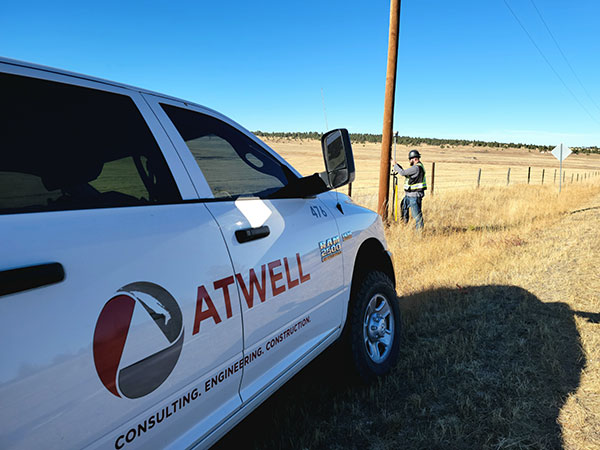
    Photo: Trimble
    Photo: Trimble

    Pipeline construction

    Atwell’s introduction to PPP and Trimble’s CenterPoint RTX took place during two large-scale linear pipeline projects within remote areas. Atwell has substantial experience with projects of this scale, but the remoteness of some of the projects’ sections was proving to be a challenge. While they could expect to rely on base or network correction methods for most projects, Atwell needed to seek other correction alternatives — and up their efficiency for the long-corridor projects.

    With the CenterPoint RTX service at hand, Atwell performed construction staking and as-built surveys for a 50-mile pipeline. The project spanned a five-month period, with an hour or more of time saved each day using the service.

    Crews noticed an additional benefit: rapid response time. On any given day, there could be project managers, right-of-way agents, or inspectors on site, asking for additional survey data.

    “Inspectors and others started to notice how fast our crews could jump from one place to another and get the shots they requested, without having to do any base setups,” said Jason Jung, project manager with Atwell.


    “The speed at which our crews can get up and running with RTX is awesome.” — Jason Jung, 3D laser scanning projects manager, Atwell


    Because of the range limits of base radios, the crews might have to do multiple setups of a conventional real-time kinematic (RTK) base each day. RTX removed this hindrance, saving the crews time by not having to use temporary RTK bases, which entails driving to base reference points, setup and teardown, and downtime from malfunctioning equipment and battery issues.

    “RTX completely freed us from the time and hassle of base setups,” Jung said. “You turn it on, and it’s ready to go before you’ve had time to take a sip of coffee. And once our crews got used to it and gained confidence in the results, they have really loved this solution.”
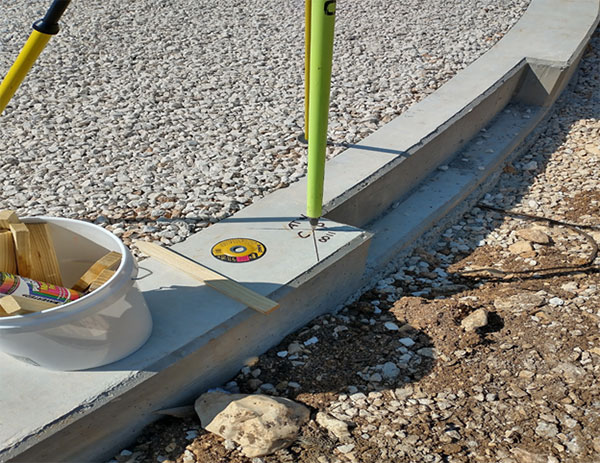
    Photo: Trimble
    Photo: Trimble

    Scanning a pipeline

    Atwell recently used CenterPoint RTX on a 135-mile large-diameter pipeline project that included 19 facilities along the route. Atwell provided as-built services related to the facilities using a Trimble X7 scanner.

    The data captured was used to generate spatially correct site models that included the material traceability necessary to comply with Pipeline and Hazardous Materials Safety Administration (PHMSA) regulations. Crews used RTX to georeference point clouds from the scanner to provide the accuracy needed to comply with industry regulations. Each site was referenced with permanent monuments or scribes that tied into the master control system.

    Crews also used the RTX service to establish hard checkpoints to meet Atwell’s strenuous quality-control requirements for ground targets, such as those used in UAS control work. To do the daily “in and out” check shots, they used the free BenchMap app to locate nearby survey control marks from the National Geodetic Survey database. Most checks were sub-0.08’.

    The time saved in not having to change base positions, as well as setup and breakdown, were significant time savers along this lengthy project. The precisely registered scans helped speed up PHMSA required inspections and audits, and construction change management field operations.

    A crew favorite

    Atwell’s crews use Trimble R10 receivers and Trimble Access running on TSC7 controllers, but Jung noted that they have recently upgraded to some R12i GNSS receivers, “and they are already earning their keep.” He expects to realize even more benefits from RTX coupled with the advanced multi-constellation capabilities of the Trimble ProPoint RTK engine in the R12i.

    RTX has not only become a crew favorite, it is fast becoming a go-to solution for many Atwell projects.

  • Sonardyne delivers subsea navigation to McDermott pipelay vessel

    Sonardyne delivers subsea navigation to McDermott pipelay vessel

    Sonardyne Inc. has supplied acoustically aided inertial navigation technology to McDermott International for its Lay Vessel 108 (LV 108). McDermott is an offshore engineering, procurement, construction and installation company.

    The Ranger 2 Pro DP-INS system, the highest specification available from Sonardyne, is being used to support touchdown monitoring surveys of submarine cables, umbilicals and pipelines and as an independent position reference for the LV 108’s Kongsberg dynamic positioning (DP) system.

    McDermott's Lay Vessel 108.
    McDermott’s Lay Vessel 108. Photo: McDermott

    McDermott’s LV 108 entered service in 2015 and is on contract in the Ichthys field, Western Australia. Designed as a fast-transit, dynamically positioned (DP 2) vessel for subsea constructions support across a wide variety of water depths, the LV 108 has 21,528 square feet of deck space and can accommodate a crew of 129.

    Dynamically positioned construction and installation vessels such as the LV 108, conventionally rely on ultra-short baseline (USBL) acoustics and the GNSS as their primary sources of position reference data.

    However, a vessel’s station-keeping capability can be compromised in the event the USBL is affected by thruster aeration and noise and the GNSS signal is simultaneously interrupted. The latter is particularly common around equatorial regions and during periods of high solar radiation.

    Sonardyne’s Ranger 2 Pro DP-INS system addresses this operational vulnerability. It aids vessel positioning by exploiting the long-term accuracy of Sonardyne’s Wideband 2 acoustic signal technology with high-integrity, high-update-rate inertial measurements. The resulting navigation output has the ability to ride-through short-term acoustic disruptions and is completely independent from GNSS.

    In addition to the system’s deep-water positioning performance and safety benefits, DP-INS has been proven to deliver valuable time and cost savings for vessel owners. It does not need a full seabed array of transponders to be installed and calibrated before subsea operations can commence. For most subsea tasks, positioning specifications can be met with only one or two transponders deployed on the seabed.

    Additionally, as the system needs only occasional aiding from the acoustics, transponder battery life is substantially increased and the need to task a remotely operated underwater vehicle (ROV) to deploy and recover transponders for servicing is reduced.

    The equipment supplied to McDermott for the LV 108 included Sonardyne’s INS sensor co-located with the company’s sixth-generation (6G) HPT acoustic transceiver. This hardware was installed on one of the vessel’s two Kongsberg through-hull deployment machines and interfaced directly with the vessel’s DP system, also supplied by Kongsberg.

  • LandWorks upgrades Web AutoMapper service with USLandGrid

    LandWorks Inc., a developer of innovative land management solutions, has improved its Web AutoMapper online service that translates land legal descriptions into GIS-ready map polygons.

    The updated Web AutoMapper features a new interface that is easier to use, including a job detail webpage that lets users review and edit polygons before purchase. Clients can now have their property polygons mapped against USLandGrid’s national land base, with the option of buying land grid townships containing the mapped property.

    “These changes make the Web AutoMapper even easier and more cost effective to use,” said LandWorks President Jerry Bramwell. “Anyone with a need to create land maps can do so in just a few minutes at minimal cost.”

    For about 20 percent of the cost of manual mapping, Web AutoMapper has simplified land records mapping in the oil and gas, renewable energy, mining, banking, utility, pipeline, state/local government, telecommunications, transportation, water and real estate sectors. The cost to map a legal parcel description with Web AutoMapper is $2 per polygon with the USLandGrid offered at $7 per PLSS Township.

    “The USLandGrid data provides the tie between a legal description and the geography of that parcel of land,” said USLandGrid Vice President of Sales Anthony Ford. “Producing polygons this way allows you to get your land positions on a map for critical analysis using the GIS.”

    “LandWorks selected USLandGrid for inclusion in Web AutoMapper because it is the best basemap available for any industry or profession to use in mapping property legal descriptions,” said Bramwell. “An important benefit of the USLandGrid is that its data layers are continuously updated as more accurate survey data becomes available.”

    landworks_webautomapper-o

    LandWorks first introduced Web AutoMapper in 2013 as an inexpensive, fast and easy method of processing many types of standard property descriptions and converting them into digital map polygons. Legal descriptions that would take days or weeks to map manually can be processed in minutes with this online software-as-a-service application.

    A customer simply logs onto Web AutoMapper and creates an account. The user then submits an Excel spreadsheet containing one or hundreds of legal descriptions in Jeffersonian Township/Range or Texas Survey/Abstract formats. Within seconds, Web AutoMapper provides an onscreen report detailing which polygons can be generated, which cannot, and shows an overview of the mapped polygons aligned to the USLandGrid.

    If the customer decides to proceed, a credit card is provided. For customers who don’t already own the Grid, they have the option of buying it by the township along with their mapped polygons.

    Web AutoMapper generates a zip file of the purchased polygons and USLandGrid townships either in Esri shapefile or file geodatabase format in NAD 83 or 27 for direct download into Esri ArcGIS software as well as other popular mapping systems, such as IHS Petra, IHS Kingdom and LMKR GeoGraphix.

    As a cloud-based application, Web AutoMapper brings the full power of the standalone LandWorks AutoMapper software to every level of digital map user via the Internet. Introduced in 2002, the onsite AutoMapper package is purchased by an organization and sits behind their firewall as a production-grade GIS mapping tool. The software is used extensively by organizations that own or lease many land rights and must keep their property records up to date, such as local governments, energy companies and natural resource management entities.

  • Geospatial Corporation prepared to meet new federal buried pipeline requirement

    Geospatial Corporporation announces the long-awaited passage of the PIPES Act of 2016. The bill, recently signed into law by President Obama, empowers the Pipeline Hazardous Material Safety Administration (PHMSA) to require various certifications, data management, testing and mapping of all types of the more than 3 million miles of buried energy pipelines across the USA.

    “The PIPES ACT impacts all segments of the industry, including gathering systems, transmission and distributions systems,” said Mark Smith, Chairman and CEO of Geospatial Corporation. “The Oil and Gas markets are a major part of our current and future business, and recently we have clients giving serious attention to accuracy and completeness of their asset mapping in anticipation of the new regulations. ”

    As a Google Maps Technology Partner, Geospatial Corporation is positioned to provide management capabilities, technology, software and data management processes to owners of critical underground infrastructure located across the United States in compliance with the new legislation.

  • Bentley Systems offers new sewer and stormwater products


    StormCAD from within OpenRoads.
    StormCAD from within OpenRoads.

    Bentley Systems’ latest infrastructure products are now available. They include SewerGEMS, SewerCAD, StormCAD and CivilStorm V8i (SELECTseries 5) products for the analysis and design of wastewater and stormwater systems. All of the V8i (SELECTseries 5) sewer and stormwater products can be used as stand-alone products, or be run on CAD and GIS platforms.

    They can also now be used from within the V8i (SELECTseries 4) versions of OpenRoads-based products — combining 3D design and hydraulic analysis capabilities in the same platform. The resulting comprehensive civil solution eliminates the need for extra import/export steps or file conversions, Bentley Systems said.

    “The integration of Bentley’s OpenRoads civil design functionality with the advanced capabilities of Bentley’s storm and sewer analysis products will be a huge benefit to productivity and quality for our highway drainage design workflows,” said Chris Haines, senior civil engineer and PAR-BIM technical lead, Drainage and Utilities, Parsons.

    Terrain model elevations on profiles.
    Terrain model elevations on profiles.

    “With these new releases, the automated hydraulic design functionality of our sewer and storm products can be effortlessly combined with the 3D physical design and terrain modeling capabilities of Bentley’s other civil products,” said Gregg Herrin, Bentley Systems director of product management, hydraulics and hydrology. “From an information mobility standpoint, this has a direct and substantial positive impact on roadway, site and municipal work where hydraulic engineering is just one part of a much larger project.”

    Bentley’s SewerGEMS, SewerCAD, StormCAD and CivilStorm V8i (SELECTseries 5) products provide the following capabilities:

    • Ground elevations from terrain models may be used during automated design runs to consider “cover” along a pipe’s length, improving decision making related to system design.
    • Terrain model elevations can also now be added to profiles, improving the resulting visualization and the user’s understanding of the physical network.
    • New low-impact development (LID) elements are now available, making it easier to model a wider range of controls for stormwater management.
    • With the new lateral link element, engineers can include lateral pipes in their hydraulic analysis without creating “fake” elements where the laterals connect to the main pipe.
    • Easy access to the Bentley Communities professional networking site is embedded within the applications, facilitating communications between users and Bentley’s hydraulic modeling experts.

    Users of any of these SELECTseries 5 releases now benefit from the products’ support of MicroStation V8i (SELECTseries 3), OpenRoads V8i (SELECTseries 4), AutoCAD 2015 and 2016, and ArcGIS 10.2 and 10.3 (SewerGEMS only), giving them the ability to model from within the latest MicroStation, OpenRoads, AutoCAD or ArcGIS version.

  • Companies Team on UAS Imagery for Pipelines, Electric

    Flightline Geographics and Tablerock Land Survey have partnered to provide industry-leading premium 3D aerial imagery from Unmanned Aerial Systems (UAS) for pipeline and electric transmission projects across North America. The announcement was made at the International Right of Way Association annual conference and trade show.

    FlightlineGeo is a GIS company that has been involved in professional UAS since 2012 and is able to provide base mapping and 3D terrain modeling through the use of drones for energy corridors and other areas of interest. Resolution and delivery times are far better than traditional manned sources and costs are significantly lower. “GIS is a technology that depends upon up-to-date content and UAS is now a cost-effective way to provide aerial visual intelligence for GIS, in the form of stunning 3D Imagery. All delivered in days, not months,” said FlightlineGeo Founder and CEO Devon Humphrey.

    Tablerock provides complete survey, right-of-way, and project management/inspection services for projects of all sizes. “One of the challenges we have faced has been obtaining current aerial imagery and topographic information that meets industry needs for project design and GIS within the United States. On most projects, our clients are limited to whatever current satellite imagery is available on the Internet, but it is often dated and of low quality. Content from FlightlineGeo changes all that,” said Andrew Darlington, President of Tablerock Land Survey.

    FlightlineGeo is an ESRI Partner Network Company based in the Austin, Texas, area, and Tablerock Land Survey is based in Denver, Colo.


  • LandWorks Adds Digital Parcel Polygon Data to Online Offerings

    LandWorks, Inc., a developer land management solutions, has added individual parcel polygons to its cloud-based offering of GIS-ready map products. Clients can now search, purchase and download digital parcel data sets with related attributes directly from the LandWorks website — in orders as small as a single parcel — at a cost of $2 per parcel.

    LandWorks developed the online parcel purchase application for industries and professions that need up-to-date surface land ownership information in their GIS. Some of the sectors already taking advantage of LandWorks’ online offerings include utilities, oil and gas, pipelines, real estate, banking, departments of transportation, renewable energy and mining.

    “The main benefits of buying parcel data from the LandWorks website are affordability and instant access,” said LandWorks President Jerry Bramwell. “Until now, digital map users had to order parcel polygon products by the county and then wait two to three weeks for delivery.”

    On the LandWorks website, there is no minimum or maximum purchase limit. The customer simply logs onto the parcel data page and searches for the desired parcel or parcels. The user may graphically select the desired parcels by searching and clicking on a map display or by uploading a spreadsheet containing the county tax parcel ID numbers.

    “The online database accessed through the LandWorks website contains parcel data for most of the United States,” said Bramwell. “This data comes from county assessor files or is manually digitized from paper plats and is updated quarterly.”

    The LandWorks site keeps track of desired parcels during the search process. When the user is ready, the website reports the number of parcels that have been selected and their total cost calculated at $2 per parcel. The user can add or delete parcels as desired. The user then decides to purchase the parcel polygons in either NAD 27 or NAD 83 map datum. Prior to purchase, the site gives the user the option of receiving the digital data sets in Esri shapefile or file geodatabase format. Each parcel polygon is delivered with key attributes — parcel number, parcel address, owner name/address, and official legal description.

    The digital parcel polygons come ready for download directly into Esri ArcGIS software as well as other popular mapping systems such as IHS Petra, IHS Kingdom and LMKR GeoGraphix.

  • Trimble Offers Pipeline Construction Software for Oil and Gas

    The Trimble Access Pipelines launcher.
    The Trimble Access Pipelines launcher.

    Trimble announced today an addition to its Trimble Access family of field software applications: Trimble Access Pipelines. Designed for surveyors involved in oil and gas pipeline installation, Trimble Access Pipelines addresses challenges encountered by pipeline surveyors by automating common pipeline survey tasks. The software solution saves time by simplifying attribute and inventory collection and integrating all the data into one easy-to-use data collection workflow.

    The announcement was made today at InterGeo 2014, the world’s largest conference on geodesy, geoinformatics and land management.

    Trimble Access Pipelines, a new addition to the ever-increasing suite of applications available for Trimble Access field software, offers a streamlined workflow for pipe inventory collection and validation, weld mapping and as-built measurements. The software significantly reduces project time and redundancies by collecting pipe attribute data, recording the relationship between welds and pipes, and electronically linking the joint attributes to measured welds. Using the application, pipeline surveyors can capture the necessary data so construction can proceed without costly delays.

    Trimble-Access-Pipeline-Screen-W

    The complete end-to-end solution is enabled when combining the power of Trimble Access Pipelines and Trimble Business Center. Trimble Access Pipelines can quickly generate customized reports for the tally and weld map data or the surveyed pipeline directly on the controller. All field data can be seamlessly transferred into Trimble Business Center to produce rich, complete deliverables including as-built plots using the Trimble Business Center Advanced Drafting module.

    “One of the most time consuming challenges pipeline surveyors face is the collection of pipe attribution detail and recording the information with weld positions,” said Benoit Mallen, business area manager of Oil and Gas for Trimble’s Geospatial Division.”With Trimble Access Pipelines, we have leveraged Trimble’s strength in positioning technology and combined it with a workflow-specific application to create a streamlined solution that can meet the needs of geospatial professionals working in the oil and gas industry.”

    Trimble Access Pipelines and Trimble Business Center Software version 3.30 are available now through Trimble’s Geospatial Distribution Channel.

    A free trial of the Trimble Access Pipelines application as well as other available modules for Trimble Access are available to all existing Trimble Access users, and can be activated and installed using the Trimble Access Installation Manager. For more information on Trimble Field software, visit www.trimble.com/Survey/Field-Software.

  • Geospatial Corp. Unveils Latest Version of Cloud-Based GeoUnderground

    Geospatial Corporation has unveiled the company’s newest version of GeoUnderground, its proprietary cloud-based GIS platform custom designed around the Google Maps API and Google Maps Engine.

    “The economic and social benefit gained through accurately locating, mapping and managing the world’s underground infrastructure assets in a systematic fashion is huge,” said Mark A. Smith, Geospatial CEO. “To accomplish this, Geospatial has developed a comprehensive suite of technologies capable of gathering accurate 3D positional data on most underground or underwater pipelines. The combination of these data acquisition technologies with our cloud-based GeoUnderground GIS platform provides our clients with a total solution to their underground asset management needs.”

    Geospatial Corporation utilizes integrated technologies to determine the accurate location and position of underground pipelines, conduits and other underground infrastructure data, allowing Geospatial to create accurate three-dimensional digital maps and models of underground infrastructure.

    The company manages the infrastructure data on its cloud-based GIS portal called GeoUnderground, its proprietary GIS platform custom designed around the Google Maps API and Google Maps Engine.

    .