“Seen & Heard” is a monthly feature of GPS World magazine, traveling the world to capture interesting and unusual news stories involving the GNSS/PNT industry.
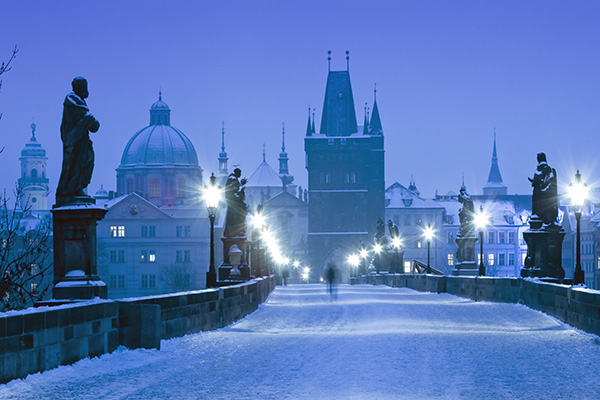
The city of Prague started testing a system of GNSS repeaters to prevent the loss of satellite signal in the city’s tunnels. The system, which should make life easier for drivers who rely on car navigation technology, is being tested in Prague’s Blanka tunnel. If it proves successful, the municipality wants to install the devices in other strategic locations around the city, especially at intersections as well as tunnel entries and exits.
Photo: A. Ellis/USGS
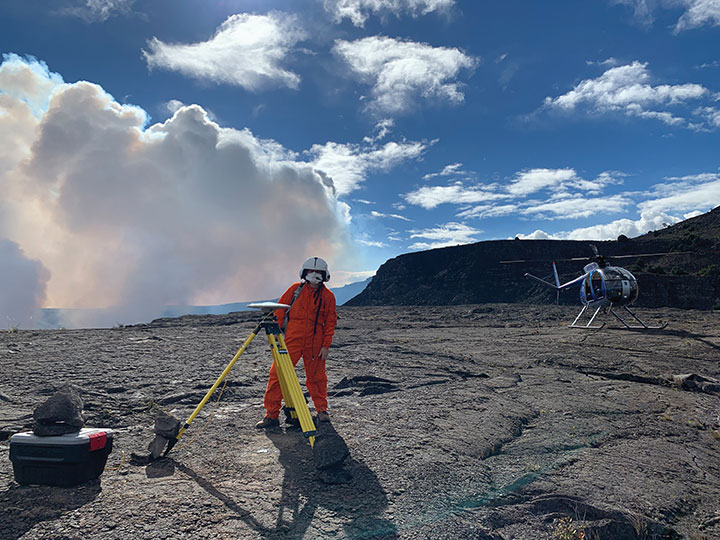
On the hot spot
While permanent monitoring receivers are scattered about Hawaii’s active volcano sites, additional GPS receivers are being deployed during the ongoing eruption of Kilauea. In this photo taken Dec. 21, 2020, a Hawaiian Volcano Observatory geophysicist deploys receivers on the caldera floor in Hawai‘i Volcanoes National Park to measure changes in ground motion. The gas plume from the summit eruption within Halema‘uma‘u crater is visible in the background.
Photo: Ishaqbini Community Conservancy
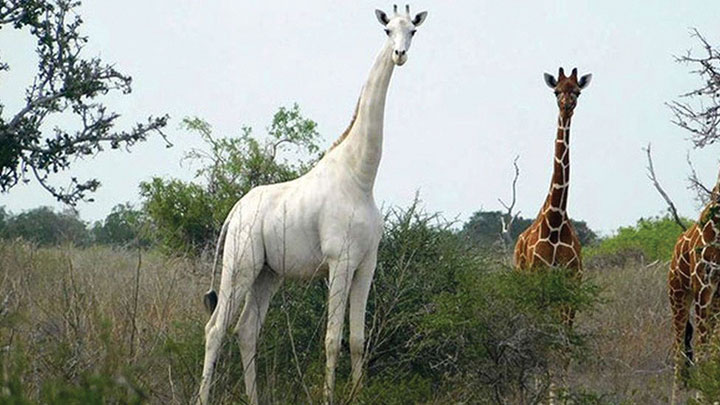
Last but not least
The last white giraffe known in existence now sports a GPS tracker, reports BBC News. The male giraffe has a rare genetic trait called leucism that causes the unusual color. The giraffe was tranquilized in November and the tracker placed on one of its horns. Tracking will help protect it from poachers as it grazes in Kenya’s savannah near the Somalia border. The white giraffe is alone after a female and her calf were killed by poachers in March 2020, according to Ishaqbini Hirola Community Conservancy.
Photo: British Antarctic Survey/ESA
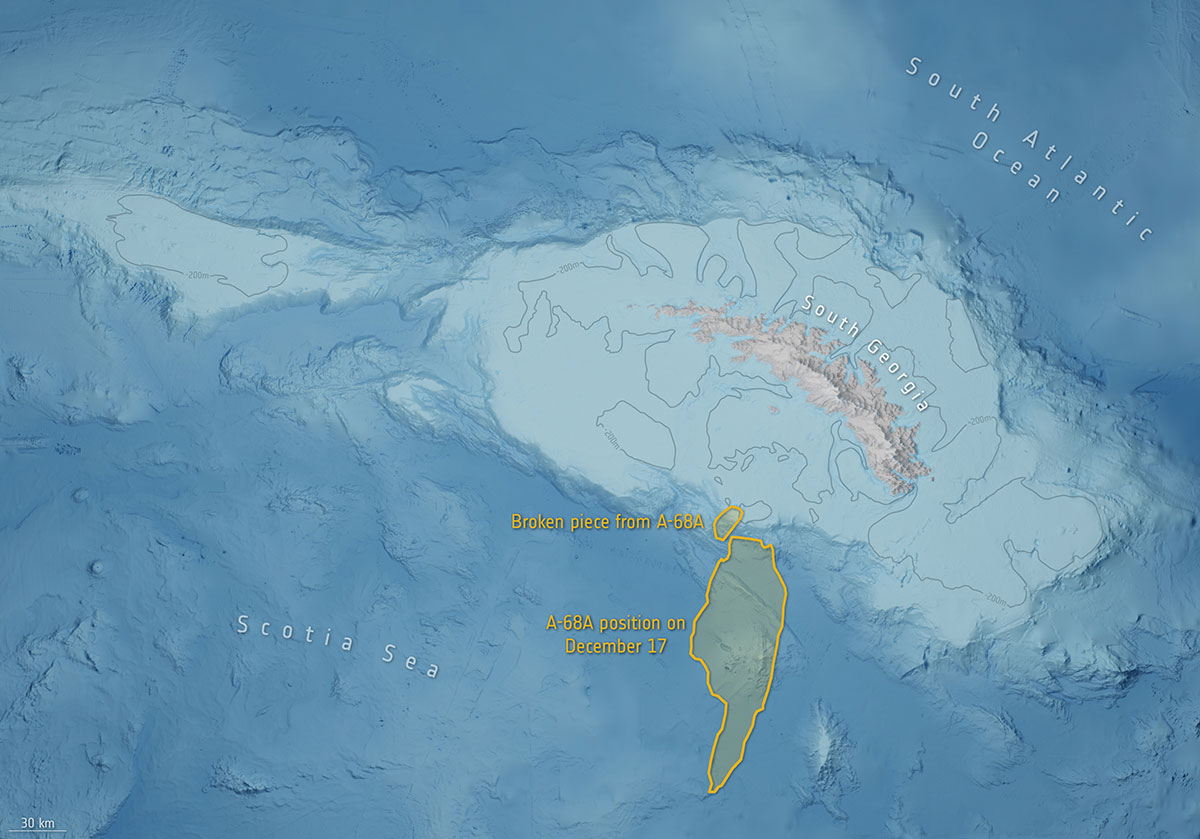
The biggest loser
In July 2017, an iceberg more than twice the size of Luxembourg broke off Antarctica’s Larsen C ice shelf and began traveling the Southern Ocean. Looming in its path is South Georgia Island, home to numerous species of wildlife threatened by the massive iceberg, designated A-68A. Europe’s Copernicus Sentinel satellites observed pieces breaking off of A-68A in December, each large enough to receive its own designation.
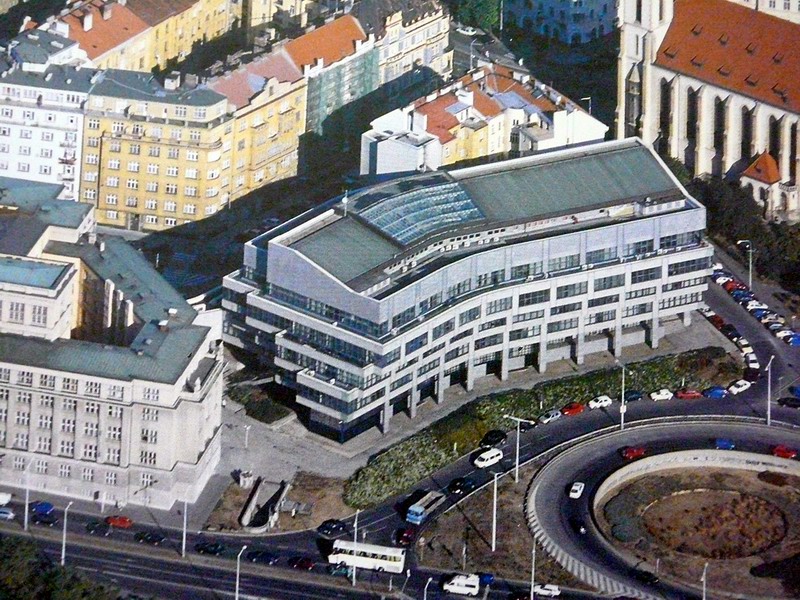
The European GNSS Agency (GSA) in Prague, Czech Republic, has brought financial benefits to the country over the past five years — 1 billion crowns, according to a report by Czech Radio. The GSA is the only European-wide government agency sited in the country.
The GSA moved from Brussels, Belgium, to Prague in 2012.
The Prague agency – employing around 200 – deals with the programs that will turn the satellite network and signals into applications can be used by companies and the public at large.
One of the main benefits for the Czech Republic of having the headquarters in Prague is that the country is now on the doorstep for many Czech companies. The number of Czech firms are now receiving research and development funds linked to navigation services has increased ten-fold, with 44 Czech companies directly active in the navigation sector.
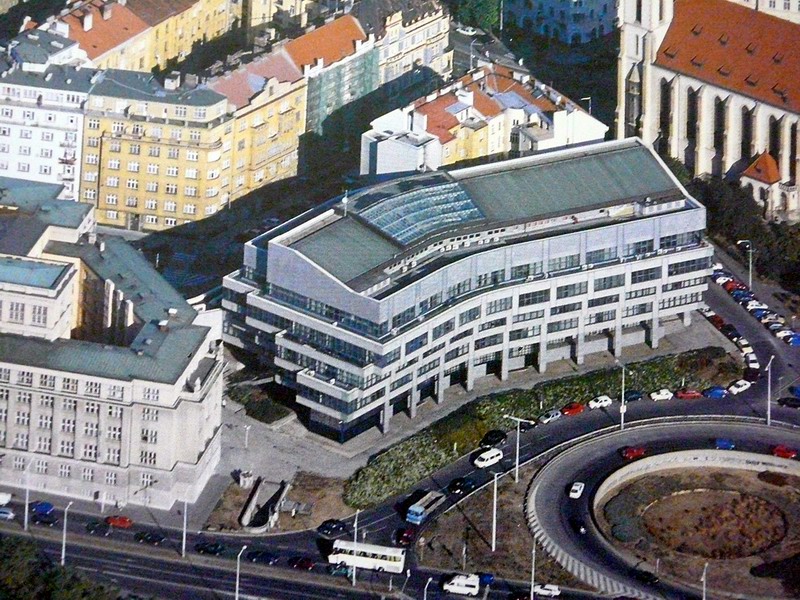
Prague is now the headquarters of the European GNSS Agency (GSA).
A holiday card from a colleague in Europe calls to mind GNSS’s headlong course into the future, coupled with that most backward-reflective of human preoccupations, history.
The European GNSS Agency (GSA), whence originated this card, moved from Brussels to Prague in September 2012, in a nod to the pan-European nature of the European Union (EU) generally and its GNSSs, Galileo and EGNOS, in particular. No EU agency headquarters had been sited in Eastern Europe, and it was deemed that some soon must do. Prague made a strong bid for the GSA.
A political, cultural, and economic center of central Europe under its current name since the year 908, it has a settlement history dating back to 1306 BC. Good King Wenceslaus, who looked out upon the snow round about, deep and crisp and even, and about whom we sang festively this past season, ruled from Prague around 935, subsequently rose to sainthood, and is the patron saint of Bohemia, the Czech homeland.
The GSA has a rather variegated mission: it “manages public interests related to European GNSS programmes.” This includes everything from marketing to security — in a sense, everything satnav-related that scientists and engineers do not do. Its list of tasks and responsibilities includes 12 subheads and 61 bulleted points.
Carlo des Dorides, GSA executive director, noted upon opening the new headquarters in 2012 that Prague derives from the Slavic word praga, for threshold. “I think this is appropriate for the GSA and Galileo, as it represents the beginning of a key step for both.” EC vice-president Antonio Tajani added, “Galileo is important not only for space policy and science, but for the services and jobs that it brings.”
Thus the many GSA staffers labor to wring full advantage for modern economies from the space-based radio signal generators, amid the cobblestone streets and ancient monuments of one of the best-preserved ancient European cities, a UNESCO Cultural Heritage site.
While busily plunging into the future, we cannot escape our past.
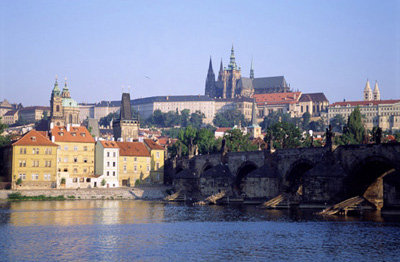
View of the Czech Republic’s capital Prague from the Vltava River.
The Fourth International Galileo Colloqium, taking place in Prague, Czech Republic, December 4-6, will bring together leading members of the European scientific community and their international partners. They will propose ways of increasing Galileo’s scientific uses to those in charge of operating and developing the system, and to contribute to future satellite navigation development based on scientific approaches.
As Galileo takes shape, as well as offering precision navigation and timing services around the world it is also shaping up to become a promising tool for science, according to the European Space Agency. The satellites orbiting Earth and the signals that will increasingly rain down upon it are useful new yardsticks for the measurement of our planet — from the supposedly solid Earth to its land surface and oceans, and the atmosphere surrounding it.
A differential-grade satnav receiver kept at the same point for a long time reveals very slight geological movements, down to centimetre scale. This is the basis of existing GPS networks, set to be bolstered by Galileo.
Combining orbital velocities with nanosecond-accuracy atomic clocks, Galileo should also allow for the study of fundamental physics questions — how space and matter behave at very high speed within very short timeframes.
The colloquium will address four main areas of research:
Applications of the system for weather studies, measurement of Earth and its dynamic behaviour over time, geophysics and space physics, oceanography, land surface and ecosystem studies. Receivers on the ground, in aircraft or on satellites can employ either direct or reflected signals, perturbed signals or radio occultation, where signal refraction or delay can be employed to deduce characteristics of the atmosphere.
Developments in physics applicable to future global satellite navigation systems, particularly in testing fundamental laws in astronomy and quantum communication, and the potential of relativistic positioning systems.
Aspects of metrology — the science of measurement — such as reference frames, onboard and ground-based atomic clocks as well as precise orbit determination.
ignal propagation through the atmosphere, including tropospheric and ionospheric corrections and the means to model and reduce unwanted reflected-signal multipaths and interference.
Hosted at the Czech Republic’s Ministry of Transport, Prague is an appropriate venue for such discussions, having played a major role in the history of physics.
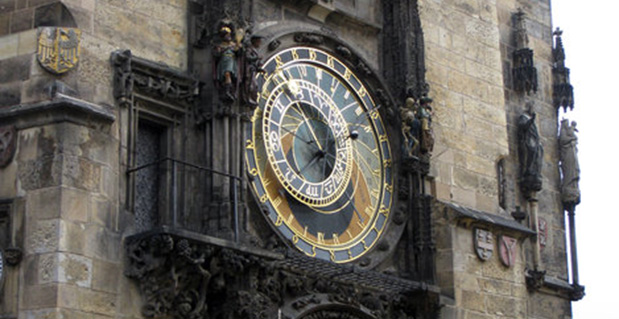
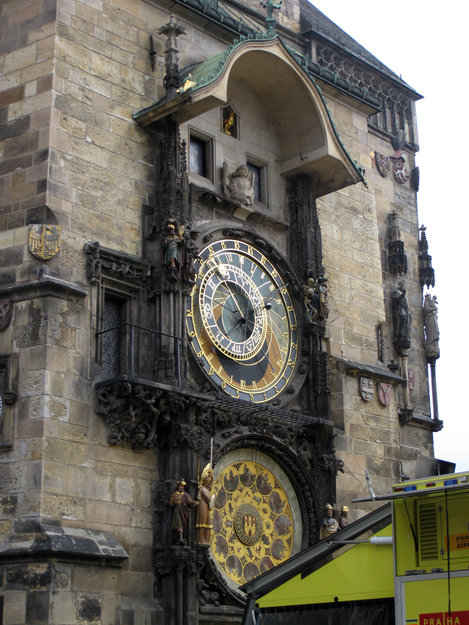
Located in a square near the centre of the Czech capital, the Prague Astronomical Clock was among the world’s most accurate timepieces in medieval times. It was put in place back in 1410, incorporating various astronomical and religious details, and is still working to this day.
The city’s Prague Astronomical Clock was among the world’s most accurate timepieces in medieval times, while 16th-century astronomers Tycho Brahe and Johannes Kepler collaborated here, on the ways to discovering the laws of planetary motion. The 19th-century physicist Christian Doppler formulated what became known as the Doppler Effect while teaching in Prague.
In 1911 Albert Einstein became professor of theoretical physics at the Prague German University, a few years before developing his general theory of relativity.
Today, general relativity has had to be taken of account of by Galileo designers, because Earth’s curvature of spacetime and satellite motion means orbiting clocks tick faster than their equivalent clocks on the ground on the order of tens of microseconds — enough to induce kilometre-scale positioning errors if left uncorrected.
On September 6, the European GNSS Agency (GSA) inaugurated its new premises in Prague, Czech Republic, in the presence of Commission Vice-President Antonio Tajani, in charge of Industry and Enterprise, and Minister of Transport Pavel Dobeš. Previously headquartered provisionally in Brussels, the headquarters of the Galileo program moved its seat to Prague over this summer, as had been agreed by the EU heads of state and government on December 10, 2010.
Galileo is expected to be partly operational by the end of 2014.
Tajani said two satellites will be launched in October, and beginning in 2013 four more Galileo satellites will be launched every six months until the network of 30 is completed in 2020.
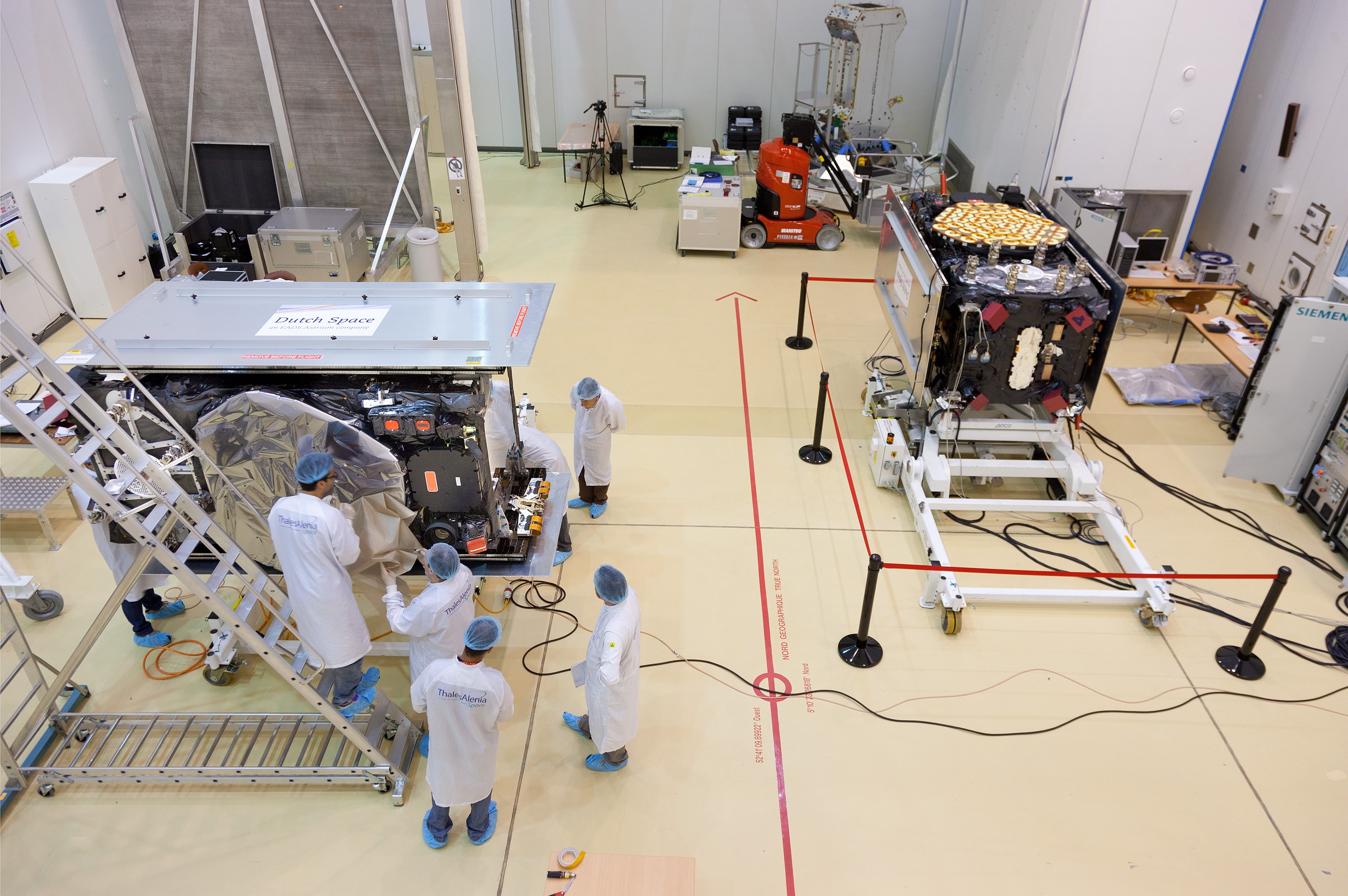
Galileo In-Orbit Validation satellites Flight Model 3 and 4 being worked on at the Guiana Space Centre on 27 August 2012. Multi-layer insulation is being applied to FM3. (Credits: Astrium/Raoul Kieffer)
GSA ensures security of satellites and prepares ground for new GNSS products. The agency is responsible for a number of implementation tasks for the European Satellite Navigation programmes Galileo and EGNOS (European Geostationary Navigation Overlay Service), which are managed by the European Commission. Its two main tasks are:
Security (security accreditation of satellites, launchers, and sites, and the operation of the Galileo Security Monitoring Centre), and
Market Development for the European satellite navigation systems (for example, see MEMO/12/601, New products and services possible using Internet access to satellite navigation data).
Additionally, the GSA has been assigned other tasks by the commission by delegation, for instance promoting GNSS applications and services, supporting the development of a Public Regulated Service (PRS) and preparing the exploitation of the GNSS systems.
Security of Galileo Programme. The GSA’s security accreditation activities are of key importance for the satellite launches. After a successful first launch of two satellites on October 21, 2011, the “In-Orbit Validation” phase will be accomplished with a second launch of two satellites on October 10, 2012. From 2013 on, the deployment of the satellite infrastructure will continue faster, with several launches per year until the full constellation of 30 satellites (which includes six in-orbit spares) is reached before the end of the decade.
Future role of theGSA. A commission proposal for revising the GNSS Regulation, which is now before Parliament and Council, foresees that operational responsibility for the GNSS Programmes will be gradually transferred from the European Commission to the GSA over the next multi-annual financial framework (2014-2020). This process will start with EGNOS in 2014, and already a number of preparatory tasks have been allocated to the GSA, including the procurement for the future operations of EGNOS.
To carry out these new functions, the GSA’s staff is expected to increase over the coming years from about 60 today to more than 180 by the end of next financial framework in 2020.
The Budget. The GSA has an annual budget of about €12,750 million (2012). In addition, it manages the budget for activities that are entrusted to it under delegation from the European Commission. These amount to €34.4 million for exploitation activities.
According to the commission’s calculations, a total budget of € 7000 million is necessary to complete the deployment phase of the Galileo programmes and finance the exploitation phase of the GNSS programmes over the 2014-2020 period. The commission’s proposal for a new GNSS Regulation foresees that the GSA will manage the budget necessary to operate EGNOS and Galileo and ensure service provision. This budget will be assigned under a delegation agreement signed with the commission, a mechanism foreseen under the European Union’s Financial Regulation. Under this arrangement, the commission would remain responsible for the overall political supervision of the GNSS Programmes. However, the GSA would ensure the exploitation of the GNSS systems with the appropriate level of autonomy and authority.
The Structure of the GSA. The GSA today is composed of a security department, a market development department, and an organizational entity charged with preparing the GSA’s future responsibilities in the management of the GNSS Programmes. In addition to a number of horizontal departments that ensure the agency’s functioning, the Galileo Security Monitoring Centre is an organizational component of the GSA.