Tag: real estate

  • Orbital Witness wins Airbus’ Global Earth Observation Challenge

    Airbus has named Orbital Witness the winner of its Global Earth Observation Challenge.

    Orbital Witness will receive a voucher worth €50,000 for the acquisition of satellite data and will benefit from both technical and business coaching.

    The competition encourages startups to innovate and develop new applications primarily based on Airbus’ satellite data. The winning British startup Orbital Witness proposes to use satellite imagery to provide a new perspective for legal due diligence in real estate.

    Launched on May 30, the goal of the four-month challenge was to create added value for new businesses focusing on themes identified as important topics for the global population, ranging from forestry and agriculture to smart cities and maritime.

    More than 130 projects from five continents were entered for the competition, among which 23 startups were pre-selected based on their originality and relevance as well as their technical and commercial feasibility.

    These “semi-finalists” entered a subsequent round to further develop the proposals — this ended with a second selection phase in which the six finalists were chosen.

    During the final, held Oct. 20 at the Airbus PlayLab in Toulouse, the six finalists presented their projects in front of representatives of different Airbus departments, including strategy, innovation, and marketing and sales.

    The other finalists were:

    • 23insights (the Netherlands), which tracks and predicts the human footprint in forests.
    • Ozius (Australia), which creates new landscape intelligence by fusing a variety of remote-sensing data to identify where the environmental risks and opportunities occurred in the past, where they are today, and project where they will occur in the future.
    • Ursa Space Systems Inc. (U.S.), which utilizes radar satellite data to deliver global and unbiased economic intelligence to energy and financial enterprises, providing reliable information about areas of the world that are traditionally opaque.
    • Qirate (Italy), which enhances position appeal for boosting business locations and helps people find their ideal place to live by rating the quality of life.
    • Kermap (France), which uses satellite imagery to support the ecological transition of cities.

    The runner-up projects also received satellite data vouchers: €20,000 for 23insights, €15,000 for Ozius, €10, 000 for Ursa and €5,000 for Qirate and Kermap.

  • FAA: Commercial drone use to take flight

    FAA: Commercial drone use to take flight

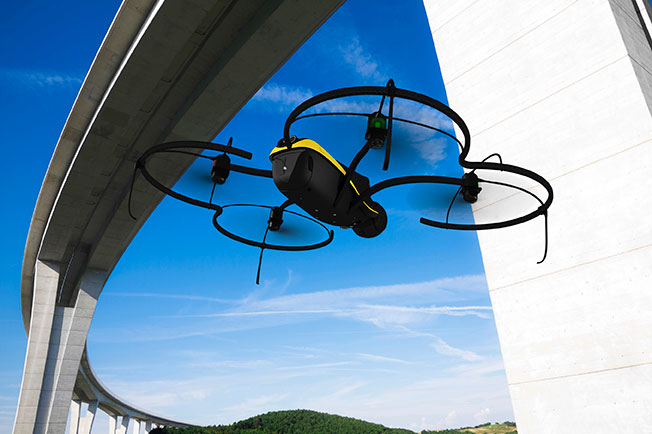
    Today, the Federal Aviation Administration (FAA) has finalized the first operational rules for routine commercial use of small unmanned aircraft systems (UAS), opening pathways towards fully integrating UAS into the nation’s airspace.

    These new regulations work to harness new innovations safely, to spur job growth, advance critical scientific research and save lives, the FAA said in a press release.

    “We are part of a new era in aviation, and the potential for unmanned aircraft will make it safer and easier to do certain jobs, gather information, and deploy disaster relief,” said U.S. Transportation Secretary Anthony Foxx. “We look forward to working with the aviation community to support innovation, while maintaining our standards as the safest and most complex airspace in the world.”

    According to industry estimates, the rule could generate more than $82 billion for the U.S. economy and create more than 100,000 new jobs over the next 10 years.

    The new rule, which takes effect in late August, offers safety regulations for unmanned aircraft drones weighing less than 55 pounds that are conducting non-hobbyist operations.

    The rule’s provisions are designed to minimize risks to other aircraft and people and property on the ground. The regulations require pilots to keep an unmanned aircraft within visual line of sight. Operations are allowed during daylight and during twilight if the drone has anti-collision lights. The new regulations also address height and speed restrictions and other operational limits, such as prohibiting flights over unprotected people on the ground who aren’t directly participating in the UAS operation.

    The FAA is offering a process to waive some restrictions if an operator proves the proposed flight will be conducted safely under a waiver. The FAA will make an online portal available to apply for these waivers in the months ahead.

    “With this new rule, we are taking a careful and deliberate approach that balances the need to deploy this new technology with the FAA’s mission to protect public safety,” said FAA Administrator Michael Huerta. “But this is just our first step. We’re already working on additional rules that will expand the range of operations.”

    Under the final rule, the person actually flying a drone must be at least 16 years old and have a remote pilot certificate with a small UAS rating, or be directly supervised by someone with such a certificate. To qualify for a remote pilot certificate, an individual must either pass an initial aeronautical knowledge test at an FAA-approved knowledge testing center or have an existing non-student Part 61 pilot certificate. If qualifying under the latter provision, a pilot must have completed a flight review in the previous 24 months and must take a UAS online training course provided by the FAA. The TSA will conduct a security background check of all remote pilot applications prior to issuance of a certificate.

    Operators are responsible for ensuring a drone is safe before flying, but the FAA is not requiring small UAS to comply with current agency airworthiness standards or aircraft certification. Instead, the remote pilot will simply have to perform a preflight visual and operational check of the small UAS to ensure that safety-pertinent systems are functioning property.  This includes checking the communications link between the control station and the UAS.

    Although the new rule does not specifically deal with privacy issues in the use of drones, and the FAA does not regulate how UAS gather data on people or property, the FAA is acting to address privacy considerations in this area. The FAA strongly encourages all UAS pilots to check local and state laws before gathering information through remote sensing technology or photography.

    As part of a privacy education campaign, the agency will provide all drone users with recommended privacy guidelines as part of the UAS registration process and through the FAA’s B4UFly mobile app. The FAA also will educate all commercial drone pilots on privacy during their pilot certification process; and will issue new guidance to local and state governments on drone privacy issues. The FAA’s effort builds on the privacy “best practices” the National Telecommunications and Information Administration published last month as the result of a year-long outreach initiative with privacy advocates and industry.

    Part 107 will not apply to model aircraft.  Model aircraft operators must continue to satisfy all the criteria specified in Section 336 of Public Law 112-95 (which will now be codified in Part 101), including the stipulation they be operated only for hobby or recreational purposes.

    Visit the FAA website for more information on the FAA and UAS.

    Reaction

    Brian Wynne, president and CEO of the Association for Unmanned Vehicle Systems International (AUVSI), issued the following statement:

    “Today’s release of the final small UAS rule by the FAA is a critical milestone in the integration process, and a long-awaited victory for American businesses and innovators. It establishes a clear regulatory framework and helps to reduce many barriers to civil and commercial operations, allowing anyone who follows the rules to fly in the national airspace.

    “Accelerating civil and commercial UAS operations will not only help businesses harness tremendous potential of UAS, it will also help unlock the economic impact and job creation potential of the technology. Once UAS are fully integrated into the national airspace and become more widely used, the industry will continue to grow as a job creator and generate significant economic impact.

    “Our economic report projects that the expansion of UAS technology will create more than 100,000 jobs and generate more than $82 billion to the economy in the first decade following integration. Whether it’s aiding search and rescue missions, advancing scientific research, responding to natural disasters, or helping farmers care for their crops, UAS are capable of saving time, saving money and most importantly, saving lives.

    “The final rule allows for many uses of small UAS and a streamlined waiver process to expand applications. We are looking forward to additional rulemaking which has already begun with AUVSI’s support, to enable more complex operations. We need to make sure we are doing all we can to support the UAS industry’s growth and development; otherwise we risk stunting a still-nascent industry and restricting the many beneficial uses of this technology.”

    National Association of Realtors (NAR) President Tom Salomone called the rules a win for the industry.

    “We’ve worked hard to strike a responsible balance that protects the safety and privacy of individuals, while also ensuring Realtors can put drones to good use,” said Salomone, broker-owner of Real Estate II Inc. in Coral Springs, Florida. “That effort just took another big step forward. The rules unveiled today will help more real estate professionals take flight, making the efficiency and innovation that drones have to offer available to a much broader base of operators.”

    The FAA’s announcement marks a long-fought victory for Realtors. Since early 2014, NAR has worked with the FAA and industry partners to integrate drones into the national airspace for commercial use. NAR wrote to the FAA on numerous occasions to weigh in on the final Small UAS Rule, and testified before Congress to support the use of drones in real estate.

    Despite eliminating the requirement that operators hold a pilot’s license, anyone looking to fly drones commercially will still have to comply with strict requirements designed to protect people on the ground.

    Drones are useful in a number of real estate-related applications, including marketing properties, assisting with appraisals, facilitating insurance claims and overseeing utility work. While many real estate professionals with pilot’s licenses have already put drones to use in these arenas, the new rules are expected to open the door for additional operators to do the same.

    Despite the significant progress made in the FAA’s final rule, NAR’s work on this issue will continue. NAR is calling for eased restrictions on a “micro” category of drones; drones in this category weigh less than four pounds and present a much smaller safety risk than certain drones in the under-55 pound category covered by the rule released today.

    NAR also believes there is an ongoing need for a drone strategy that allows for “beyond visual line-of-sight” flights, or those where the operator cannot physically see the drone throughout the entire operation. These flights are particularly important for aerial photography across large buildings or tracts of land.

    Salomone praised the FAA for their efforts in crafting the rule.

    “Getting here wasn’t easy, and the FAA is to be commended for listening to the concerns of real estate professionals throughout the rulemaking process,” he said. “We’re entering a new stage of drone use in real estate, and no doubt there will be additional questions and challenges ahead. NAR will continue educating its members on issues important to the safe, responsible use of drones so they can grow their business and better serve their clients.”

    The National Association of Realtors, “The Voice for Real Estate,” is America’s largest trade association, representing more than 1.1 million members involved in all aspects of the residential and commercial real estate industries.
  • Foreclosure Inventory Falls 29 Percent in June 2015

    Corelogic-doreclosures-Fig3

    CoreLogic reports that the national foreclosure inventory fell 28.9 percent year over year in June 2015 to approximately 472,000 homes, or 1.2 percent of all homes with a mortgage. This marks 44 consecutive months of year-over-year declines (see Figure 1).

    Also in June 2015, the 12-month sum of completed foreclosures decreased 17.9 percent, to 526,000, since June 2014. The seriously delinquent inventory fell to 1.3 million loans, a 23.3 percent year-over-year decline.

    There were 48 states that posted year-over-year declines in the foreclosure inventory, and 32 of those states had decreases of more than 20 percent. The five states with the largest year-over-year drop in the foreclosure inventory were Florida (-47.7 percent), Connecticut (-36.9 percent), Michigan (-36.5 percent), Idaho (-35.4 percent) and Maryland (-34.4 percent). Only the District of Columbia (+18.1 percent), Massachusetts (+17.8 percent) and Wyoming (+4.1 percent) experienced year-over-year increases in the foreclosure inventory.

    Figure 2 shows that judicial foreclosure states1 continued to have higher foreclosure rates in June 2015 than non-judicial states, averaging 2.1 percent and 0.6 percent, respectively. The foreclosure rate for judicial states peaked in February 2012 at 5.4 percent, while non-judicial states peaked at 2.5 percent in January 2011. As of June 2015, 42 percent of outstanding mortgages were in judicial states, but 71 percent of total loans in foreclosure were in those states.

    Corelogic-foreclosures-Fig2

  • ALTA Systems Provides Alternative to Powered UAVs

    ALTA is a smart balloon which flies without fuel or a pilot to up to 400 feet and is FAA compliant. It is held by a tether and transmits images and other data to any screen. ALTA services public safety, news agencies, agriculture, construction, real estate, travel and tourism.

  • New ARCHIBUS Release Streamlined for GIS

    ARCHIBUS, Inc., has announced the latest release of its ARCHIBUS software suite. Designed to streamline work processes through enhanced mobile apps, GIS, and building information modeling (BIM), now real estate, facilities, and asset management professionals will find in ARCHIBUS an intuitive business intelligence platform that will help reduce their total cost of ownership by connecting real estate, facilities, and asset management information with their corporate business organization and systems.

    New productivity-enhancing capabilities of ARCHIBUS cover a wide range of organizational needs including the introduction of new features for the Mobile Framework Apps, the addition of GIS capabilities for geo-referencing everything from equipment to buildings, and integration of facilities information with BIM data for end-to-end, intelligent building lifecycle management. Capital project lifecycle management is streamlined with the new project management console that correlates and presents all information on a single screen.

    In this product release, ARCHIBUS has simplified integration with other EAM and ERP systems via ARCHIBUS connectors that enable data sharing with Microsoft, Oracle, Sage, SAP, UFIDA, and other enterprise or point systems. Industry standard transfer formats, such as OSCRE, COBie, and buildingSmart IFC are also used.

    New productivity-enhancing capabilities of ARCHIBUS cover a wide range of organizational needs including the introduction of new features for the Mobile Framework Apps, the addition of GIS capabilities for geo-referencing everything from equipment to buildings, and integration of facilities information with BIM data for end-to-end, intelligent building lifecycle management. Capital project lifecycle management is streamlined with the new project management console that correlates and presents all information on a single screen.

    A new generation of workplace services offers self-service requests for repairs, reserving meeting rooms, along with booking support services from practically anywhere in the world. The new product release of ARCHIBUS enables users to achieve their organization’s objectives by providing business intelligence to real estate, facilities, and asset management information for immediate tactical actions and strategic, enterprise-wide decision-making.

    “We are excited to bring this new release of ARCHIBUS to the marketplace. It is positioned to deliver to organizations worldwide greater operational efficiency and customer responsiveness through our expanding suite and the capabilities of our product offerings, management consoles, EAM and ERP integration, as well as many other enhancements and innovations,” said ARCHIBUS, Inc. President and CEO Bruce K. Forbes. “’Simplicity through Intelligence’ is a critical element for the success of ubiqitous infrastructure and facilities management solutions.”


  • LandWorks Adds Digital Parcel Polygon Data to Online Offerings

    LandWorks, Inc., a developer land management solutions, has added individual parcel polygons to its cloud-based offering of GIS-ready map products. Clients can now search, purchase and download digital parcel data sets with related attributes directly from the LandWorks website — in orders as small as a single parcel — at a cost of $2 per parcel.

    LandWorks developed the online parcel purchase application for industries and professions that need up-to-date surface land ownership information in their GIS. Some of the sectors already taking advantage of LandWorks’ online offerings include utilities, oil and gas, pipelines, real estate, banking, departments of transportation, renewable energy and mining.

    “The main benefits of buying parcel data from the LandWorks website are affordability and instant access,” said LandWorks President Jerry Bramwell. “Until now, digital map users had to order parcel polygon products by the county and then wait two to three weeks for delivery.”

    On the LandWorks website, there is no minimum or maximum purchase limit. The customer simply logs onto the parcel data page and searches for the desired parcel or parcels. The user may graphically select the desired parcels by searching and clicking on a map display or by uploading a spreadsheet containing the county tax parcel ID numbers.

    “The online database accessed through the LandWorks website contains parcel data for most of the United States,” said Bramwell. “This data comes from county assessor files or is manually digitized from paper plats and is updated quarterly.”

    The LandWorks site keeps track of desired parcels during the search process. When the user is ready, the website reports the number of parcels that have been selected and their total cost calculated at $2 per parcel. The user can add or delete parcels as desired. The user then decides to purchase the parcel polygons in either NAD 27 or NAD 83 map datum. Prior to purchase, the site gives the user the option of receiving the digital data sets in Esri shapefile or file geodatabase format. Each parcel polygon is delivered with key attributes — parcel number, parcel address, owner name/address, and official legal description.

    The digital parcel polygons come ready for download directly into Esri ArcGIS software as well as other popular mapping systems such as IHS Petra, IHS Kingdom and LMKR GeoGraphix.

  • LandWorks Adds Linear Project Routing to Online Property Mapping Service

    LandWorks Inc., a developer of land-management solutions, has added linear project mapping capabilities to its online Web AutoMapper service, which converts land legal descriptions into GIS-ready map polygons. Web AutoMapper clients can now download digital parcel polygons with ownership information for every property crossed by a linear right-of-way project.

    The linear mapping capability in Web AutoMapper facilitates the planning of any linear infrastructure development project – pipelines by energy companies, electric transmission lines by utilities, roads and highways by departments of transportation, and buried fiber networks by telecommunication companies.

    “Web AutoMapper makes it faster and less expensive to map a proposed right-of-way or corridor project,” said LandWorks President Jerry Bramwell. “In minutes, project planners can download all of the digital parcel and land ownership information needed to select the safest and least costly route.”

    To use the service, the client logs onto Web AutoMapper and creates an account. The user then uploads a shapefile of the proposed linear project route from their GIS or mapping software. Web AutoMapper prompts them to enter start and end points for the route. Customers are also given the option of having their route mapped with or without a buffer on either side.

    Within minutes, Web AutoMapper overlays the route onto the nation-wide tax parcel grid developed by Digital Map Products of Irvine, California. Web AutoMapper then provides an onscreen map showing every property crossed by the route or within the user-selected buffer around the route. Paying with credit card or a customer account, the customer downloads the Digital Map Products parcels for only those properties affected by the proposed route. The parcel polygons are delivered in either shapefiles or as a file geodatabase for seamless ingest into the GIS or other mapping software.

    Also included in the Web AutoMapper deliverable is a Line List Report identifying every property crossing in order from the starting to end points of the proposed route. Both the parcel polygons and Line List Report contain important attributes for each property, such as landowner and address details, obtained from county tax records.

    “The linear mapping capability in Web AutoMapper serves as an easy-to-use cost-estimating tool for major infrastructure development projects,” said Bramwell. “The planner receives all of the land ownership information that will be needed to acquire rights-of-way for the project.”

    In many cases, the ownership information in the parcel file will help planners identify certain types of properties — such as hospitals or schools — where rights-of-way may be impractical or simply too costly to acquire, said Bramwell. This allows the planners to look for less expensive alternatives while the project is still in its early phases.

    Some linear projects require the developer to notify land owners within a certain distance of the proposed route. The buffering option in Web AutoMapper enables the planners to easily obtain land ownership information for properties within the regulated proximity to the line.

    LandWorks introduced Web AutoMapper in 2013 as a fast and easy method of processing many types of standard property descriptions and converting them into digital map polygons. The cloud-based application is used extensively by organizations that must manage large tracts of land and keep property records up to date for activities related to oil and gas, renewable energy, mining, banking, utility, pipeline, state/local government, transportation, telecommunications, water and real estate sectors.

  • Alta Systems Balloon: Oblique Imagery Capture with a Light Footprint

    Alta balloon.
    Alta balloon.

    Three weeks ago, GPS World / Geospatial Solutions held a webinar highlighting new technologies for imagery and data capture. The webinar had four presenters: Paul Smith of CycloMedia, Ted Ralston with Soft Power Solutions, Peter VanAmburgh from IIF Data, and John Ciampa CEO of Alta. You can view a YouTube video of the session. Because webinar time is limited, we couldn’t cover the technologies in detail, so I’m covering some of the technologies one column at a time.

    In February, I devoted my column to CycloMedia, so you may want to review that material if you want more detail. This month I want to delve into the Alta balloon system that was presented by John Ciampa, the CEO of Alta. John was the original patent holder of Pictometry, the revolutionary high resolution geo-referenced metric oblique imagery system. He and Steve Schultz took the concept from theory to a practical functioning system that has been an industry standard for over 10 years.

    John continues his research, dividing his time between the Rochester Institute of Technology (RIT) and Florida International University (FIU) while also working with the National Science Foundation (NSF). Although Pictometry was very successful, he also understood the limitations and cost of a manned aircraft as a capture system, especially for disaster response. Pictometry was a very capable system, but John felt that what was needed was a system that had a “lighter footprint” figuratively and literally. John took his knowledge and experience, and combined it with the latest developments in micro-miniaturized technology, to develop a system that was elegant in its simplicity and usefulness.

    The Platform

    Simply put, the Alta balloon is a steerable oblique geo-referenced camera system attached to a weather balloon. By using a balloon, John solved several problems associated with manned aircraft — cost, image quality, and accessibility. A balloon is cheaper than an aircraft, doesn’t require a licensed pilot, is more easily deployable, and can “fly” at lower altitudes.

    Even a small aircraft is expensive, and requires a trained pilot and complex support logistics. A small used aircraft can run $50,000 to several hundred thousand dollars. Additionally, most high-end aerial imagery systems generally require expensive FAA-approved modifications of the airframe. This adds cost, and limits the aircraft that can be used. Equipped with Pictometry cameras and electronics, a total aircraft capture system can easily cost $300,000 and up.

    A significant factor during disaster response events is transportability and support. Past experience has shown that it can be very difficult to transport and operate even small aircraft in disaster regions, especially if the damage is widespread.  Fuel and ground support in disaster sites can also be a serious limitation. By comparison, a balloon system can be carried in a suitcase, shipped quickly, and set up in less than an hour.  Since the cost is in the range of several thousand dollars, multiple systems are practical and can be deployed in numerous remote locations. Equally impressive is that operators can be trained in less than an hour.

    But don’t get the impression that Alta is as simple as strapping a digital camera to a balloon. Achieving the image quality, accuracy and dynamic performance of the Alta system requires a very sophisticated package, including the balloon, controls, communications and sensors. The balloon system is actually two balloons, one within the other, an outer balloon and inner lift gas balloon. The outer balloon provides some external protection while presenting a consistent profile. The inner balloon provides the lift and is filled with either hydrogen or helium.

    The altitude is remotely controlled by venting lift gas to descend or by dumping water ballast to ascend.  An onboard computer and sensors can also maintain altitude autonomously. When the balloon is brought down, a tethered weight drops to several feet under the balloon. The weight contacts the ground first and “anchors” the balloon and payload for retrieval. This keeps the balloon and payload off the ground, and also makes it easier to spot.

    There are several modes of operation that are determined by the operator prior to launch:

    • “Path Mode”: The balloon is released, ascending to the programmed altitude, then drifting with the wind currents before descending back to the ground.
    • “Patch Mode – single tether”: Used to launch and retrieve the balloon. The balloon ascends to altitude, and its position is downwind based on the strength of the wind acting on both the balloon and tether.
    Patch mode with single tether.
    Patch mode with single tether.
    • “Patch Mode – multiple tethers”: Very precisely controls the location of the balloon over a limited area. This is very similar to the overhead cameras used in televised football games but in reverse, since the balloon wants to fly up.
    Patch mode with multiple tethers.
    Patch mode with multiple tethers.

    The system can also be equipped with a parachute for emergency landings, a solar trickle charger for extended missions, and even a quadcopter that can steer the balloon to specific target areas. The lift capability of the balloon permits significantly longer duration flights than a quadcopter alone. A detailed operator’s manual is available for review at the Alta website — look for the Operators Manual.

    The Payload

    The modular payload is complex, but also lightweight and compact thanks to the latest developments in miniaturization. It consists of a precision GPS unit, inertial measurement/navigation unit (IMU), an onboard computer, environmental sensors, Wi-Fi communications, and an aimable high-resolution camera on a stabilized gimbal. The camera can be RGB, night vision or even multi-spectral. The imagery is downloaded as captured and delivered almost real-time.

    Modular payload.
    Modular payload.

    The Output

    Because the balloon floats at low altitudes, image resolution is an impressive “game changer.” Here is just one example comparing a 4-inch pixel Pictometry/Bing image taken from 3,000 feet to a 1-centimeter pixel Alta image of the same location taken from several hundred feet.

    Bing (left) and Alta images of stadium seats, compared.
    Bing (left) and Alta images of stadium seats, compared.

    Similar to Pictometry, the system uses GPS and IMUs to very accurately determine the camera location and attitude. That information, linked via algorithms to the captured imagery, results in imagery that is geo-referenced, measurable and available with full metadata, including the time of capture.  I can’t over emphasize how important this is. Having instant access to imagery is nice, but having that imagery already geo-referenced means that the imagery can be quickly and easily imported into a GIS and overlaid with legacy GIS data for instant analytics.

    The system has been used for many mundane applications such a real estate, agriculture, construction/engineering and event planning. More critical applications include crime-scene monitoring, surveillance and disaster response. Recently, in response to a South Florida Mall shooting, police launched an Alta balloon to view the crime-scene location. The imagery was instantly and continuously sent to police station computers and mobile devices of responders en route to the mall for pre-planning of their response. Viewing rooftops and walkways for victims and perpetrators, a near real-time operational picture was provided to police before putting themselves and others in harm’s way.

    Actual image from an ALTA Balloon used in SWAT team maneuvers. Dolphin Mall Sweetwater Florida, May 14, 2014, 6:05 a.m
    Actual image from an Alta balloon used in SWAT team maneuvers.

    Dolphin Mall Sweetwater Florida, May 14, 2014, 6:05 a.m.

    The Potential

    I’m especially excited about the potential lifesaving use of Alta balloons. On numerous occasions I was involved in emergency response actions, and the dominant overarching need was high-quality imagery that could be combined with legacy data and imagery as close to real-time as possible. This system answers that need, and at a low cost. I could envision several Alta systems in every county nationwide ready to deploy on a moment’s notice. I believe that these units would be especially valuable for disaster response in second- and third-world countries. Dozens of Alta systems and trained operators could be delivered on short notice to major disaster sites, providing almost real-time common operational pictures for first responders. The added advantage is the very light need for logistics and support.

    Military applications could be equally important. The silence of balloons coupled with a small visibility profile, including almost total invisibility at night, makes them ideal for reconnaissance and surveillance.  The relatively low cost of the platforms also permits them to be expendable. In a tethered mode, the persistent “eye in the sky” could serve as a deterrent, or at a minimum make hostile activity more complicated for the perpetrators as they try to hide activities from the balloon.  The “light” logistics and fast operator learning curve are just added benefits.

    A key question raised during the webinar was FAA control. John indicated that the FAA does not consider the Alta balloons in a tethered mode subject to their control, and is currently reviewing it in a drift mode.  John further amplified that the very low altitude of operation and dual control of descent should also exempt the drifter from FAA involvement. Alta could provide a significant advantage where UAS operations are restricted or not practical.

    In a recent book, “Smaller Faster Lighter Denser Cheaper” by Robert Bryce, reviewed in the Wall Street Journal, the author argues that a similar dynamic, making less do more, drives virtually every technological change that has created the modern world, from cars and airplanes to advanced medicine, strategic metals and the iCloud. Alta balloons are certainly a good example.

    I was an early proponent of Pictometry because, unlike abstract GIS data and ortho imagery, the metric oblique imagery was easily understood by non-GIS users. I saw many examples where it saved lives because police and firefighters were able to form and exploit a common operational picture quickly. Alta has me equally excited because it brings that same capability to users with a much simpler system that delivers almost real-time imagery at a cost anyone can afford. This technology is going to help a lot of people.

  • Alta Systems Balloon: Oblique Imagery Capture with a Light Footprint

    Alta balloon.
    Alta balloon.

    Three weeks ago, GPS World / Geospatial Solutions held a webinar highlighting new technologies for imagery and data capture. The webinar had four presenters: Paul Smith of CycloMedia, Ted Ralston with Soft Power Solutions, Peter VanAmburgh from IIF Data, and John Ciampa CEO of Alta. You can view a YouTube video of the session. Because webinar time is limited, we couldn’t cover the technologies in detail, so I’m covering some of the technologies one column at a time.

    In February, I devoted my column to CycloMedia, so you may want to review that material if you want more detail. This month I want to delve into the Alta balloon system that was presented by John Ciampa, the CEO of Alta. John was the original patent holder of Pictometry, the revolutionary high resolution geo-referenced metric oblique imagery system. He and Steve Schultz took the concept from theory to a practical functioning system that has been an industry standard for over 10 years.

    John continues his research, dividing his time between the Rochester Institute of Technology (RIT) and Florida International University (FIU) while also working with the National Science Foundation (NSF). Although Pictometry was very successful, he also understood the limitations and cost of a manned aircraft as a capture system, especially for disaster response. Pictometry was a very capable system, but John felt that what was needed was a system that had a “lighter footprint” figuratively and literally. John took his knowledge and experience, and combined it with the latest developments in micro-miniaturized technology, to develop a system that was elegant in its simplicity and usefulness.

    The Platform

    Simply put, the Alta balloon is a steerable oblique geo-referenced camera system attached to a weather balloon. By using a balloon, John solved several problems associated with manned aircraft — cost, image quality, and accessibility. A balloon is cheaper than an aircraft, doesn’t require a licensed pilot, is more easily deployable, and can “fly” at lower altitudes.

    Even a small aircraft is expensive, and requires a trained pilot and complex support logistics. A small used aircraft can run $50,000 to several hundred thousand dollars. Additionally, most high-end aerial imagery systems generally require expensive FAA-approved modifications of the airframe. This adds cost, and limits the aircraft that can be used. Equipped with Pictometry cameras and electronics, a total aircraft capture system can easily cost $300,000 and up.

    A significant factor during disaster response events is transportability and support. Past experience has shown that it can be very difficult to transport and operate even small aircraft in disaster regions, especially if the damage is widespread.  Fuel and ground support in disaster sites can also be a serious limitation. By comparison, a balloon system can be carried in a suitcase, shipped quickly, and set up in less than an hour.  Since the cost is in the range of several thousand dollars, multiple systems are practical and can be deployed in numerous remote locations. Equally impressive is that operators can be trained in less than an hour.

    But don’t get the impression that Alta is as simple as strapping a digital camera to a balloon. Achieving the image quality, accuracy and dynamic performance of the Alta system requires a very sophisticated package, including the balloon, controls, communications and sensors. The balloon system is actually two balloons, one within the other, an outer balloon and inner lift gas balloon. The outer balloon provides some external protection while presenting a consistent profile. The inner balloon provides the lift and is filled with either hydrogen or helium.

    The altitude is remotely controlled by venting lift gas to descend or by dumping water ballast to ascend.  An onboard computer and sensors can also maintain altitude autonomously. When the balloon is brought down, a tethered weight drops to several feet under the balloon. The weight contacts the ground first and “anchors” the balloon and payload for retrieval. This keeps the balloon and payload off the ground, and also makes it easier to spot.

    There are several modes of operation that are determined by the operator prior to launch:

    • “Path Mode”: The balloon is released, ascending to the programmed altitude, then drifting with the wind currents before descending back to the ground.
    • “Patch Mode – single tether”: Used to launch and retrieve the balloon. The balloon ascends to altitude, and its position is downwind based on the strength of the wind acting on both the balloon and tether.
    Patch mode with single tether.
    Patch mode with single tether.
    • “Patch Mode – multiple tethers”: Very precisely controls the location of the balloon over a limited area. This is very similar to the overhead cameras used in televised football games but in reverse, since the balloon wants to fly up.
    Patch mode with multiple tethers.
    Patch mode with multiple tethers.

    The system can also be equipped with a parachute for emergency landings, a solar trickle charger for extended missions, and even a quadcopter that can steer the balloon to specific target areas. The lift capability of the balloon permits significantly longer duration flights than a quadcopter alone. A detailed operator’s manual is available for review at the Alta website — look for the Operators Manual.

    The Payload

    The modular payload is complex, but also lightweight and compact thanks to the latest developments in miniaturization. It consists of a precision GPS unit, inertial measurement/navigation unit (IMU), an onboard computer, environmental sensors, Wi-Fi communications, and an aimable high-resolution camera on a stabilized gimbal. The camera can be RGB, night vision or even multi-spectral. The imagery is downloaded as captured and delivered almost real-time.

    Modular payload.
    Modular payload.

    The Output

    Because the balloon floats at low altitudes, image resolution is an impressive “game changer.” Here is just one example comparing a 4-inch pixel Pictometry/Bing image taken from 3,000 feet to a 1-centimeter pixel Alta image of the same location taken from several hundred feet.

    Bing (left) and Alta images of stadium seats, compared.
    Bing (left) and Alta images of stadium seats, compared.

    Similar to Pictometry, the system uses GPS and IMUs to very accurately determine the camera location and attitude. That information, linked via algorithms to the captured imagery, results in imagery that is geo-referenced, measurable and available with full metadata, including the time of capture.  I can’t over emphasize how important this is. Having instant access to imagery is nice, but having that imagery already geo-referenced means that the imagery can be quickly and easily imported into a GIS and overlaid with legacy GIS data for instant analytics.

    The system has been used for many mundane applications such a real estate, agriculture, construction/engineering and event planning. More critical applications include crime-scene monitoring, surveillance and disaster response. Recently, in response to a South Florida Mall shooting, police launched an Alta balloon to view the crime-scene location. The imagery was instantly and continuously sent to police station computers and mobile devices of responders en route to the mall for pre-planning of their response. Viewing rooftops and walkways for victims and perpetrators, a near real-time operational picture was provided to police before putting themselves and others in harm’s way.

    Actual image from an ALTA Balloon used in SWAT team maneuvers. Dolphin Mall Sweetwater Florida, May 14, 2014, 6:05 a.m
    Actual image from an Alta balloon used in SWAT team maneuvers.

    Dolphin Mall Sweetwater Florida, May 14, 2014, 6:05 a.m.

    The Potential

    I’m especially excited about the potential lifesaving use of Alta balloons. On numerous occasions I was involved in emergency response actions, and the dominant overarching need was high-quality imagery that could be combined with legacy data and imagery as close to real-time as possible. This system answers that need, and at a low cost. I could envision several Alta systems in every county nationwide ready to deploy on a moment’s notice. I believe that these units would be especially valuable for disaster response in second- and third-world countries. Dozens of Alta systems and trained operators could be delivered on short notice to major disaster sites, providing almost real-time common operational pictures for first responders. The added advantage is the very light need for logistics and support.

    Military applications could be equally important. The silence of balloons coupled with a small visibility profile, including almost total invisibility at night, makes them ideal for reconnaissance and surveillance.  The relatively low cost of the platforms also permits them to be expendable. In a tethered mode, the persistent “eye in the sky” could serve as a deterrent, or at a minimum make hostile activity more complicated for the perpetrators as they try to hide activities from the balloon.  The “light” logistics and fast operator learning curve are just added benefits.

    A key question raised during the webinar was FAA control. John indicated that the FAA does not consider the Alta balloons in a tethered mode subject to their control, and is currently reviewing it in a drift mode.  John further amplified that the very low altitude of operation and dual control of descent should also exempt the drifter from FAA involvement. Alta could provide a significant advantage where UAS operations are restricted or not practical.

    In a recent book, “Smaller Faster Lighter Denser Cheaper” by Robert Bryce, reviewed in the Wall Street Journal, the author argues that a similar dynamic, making less do more, drives virtually every technological change that has created the modern world, from cars and airplanes to advanced medicine, strategic metals and the iCloud. Alta balloons are certainly a good example.

    I was an early proponent of Pictometry because, unlike abstract GIS data and ortho imagery, the metric oblique imagery was easily understood by non-GIS users. I saw many examples where it saved lives because police and firefighters were able to form and exploit a common operational picture quickly. Alta has me equally excited because it brings that same capability to users with a much simpler system that delivers almost real-time imagery at a cost anyone can afford. This technology is going to help a lot of people.

  • CoreLogic Maps 63,000 Completed Foreclosures in May

    CoreLogic released its National Foreclosure Report for May, which provides monthly data on completed foreclosures and the overall foreclosure inventory. According to the report, there were 63,000 completed foreclosures in the U.S. in May 2012 compared to 77,000 in May 2011 and 62,000* in April 2012.

    According to the announcement, since the financial crisis began in September 2008, there have been approximately 3.6 million completed foreclosures across the country. Completed foreclosures are an indication of the total number of homes actually lost to foreclosure.

    Approximately 1.4 million homes, or 3.4 percent of all homes with a mortgage, were in the national foreclosure inventory as of May 2012 compared to 1.5 million, or 3.5 percent, in May 2011 and 1.4 million, or 3.4 percent, in April 2012. The foreclosure inventory is the share of all mortgaged homes in some stage of the foreclosure process.

    “There were more than 819,000 completed foreclosures over the past year, or an average of 2,440 completed foreclosures every day over the last 12 months,” said Mark Fleming, chief economist for CoreLogic. “Although the level of completed foreclosures remains high, it is down 27 percent from a peak of 1.1 million in all of 2010.”

    “Though the national foreclosure inventory levels remain steady, around 1.4 million homes, there have been dramatic shifts at the state level,” said Anand Nallathambi, president and CEO of CoreLogic. “Nevada, Arizona and Michigan, for example, each experienced at least a 20-percent decline in the foreclosure inventory from a year ago. While foreclosure inventories in most states are declining, the foreclosure inventory is still rising in many judicial states, such as Hawaii, New York and Connecticut.”

    Highlights as of May 2012

    The five states with the highest number of completed foreclosures for the 12 months ending in May 2012 were: California (133,000), Florida (92,000), Michigan (60,000), Texas (58,000) and Georgia (57,000). These five states account for 48.8 percent of all completed foreclosures nationally.

    The five states with the lowest number of completed foreclosures for the 12 months ending in May 2012 were: South Dakota (48), District of Columbia (74), North Dakota (547), West Virginia (620) and Hawaii (623).

    The five states with the highest foreclosure inventory as a percentage of all mortgaged homes were: Florida (11.9 percent), New Jersey (6.6 percent), Illinois (5.3 percent), New York (5.0 percent) and Nevada (4.9 percent).

    The five states with the lowest foreclosure inventory were: Wyoming (0.7 percent), Alaska (0.8 percent), North Dakota (0.8 percent), Nebraska (1.0 percent) and South Dakota (1.3 percent).

    *April data was revised. Revisions are standard, and to ensure accuracy CoreLogic incorporates newly released data to provide updated results.

    To download a copy of the National Foreclosure Report, please visit www.corelogic.com/ForeclosureReport-May2012.

    Methodology

    The data in this report represents foreclosure activity reported through May 2012.

    This report separates state data into judicial vs. non-judicial foreclosure state categories. In judicial foreclosure states, lenders must provide evidence to the courts of delinquency in order to move a borrower into foreclosure, while in non-judicial foreclosure states lenders can issue notices of default directly to the borrower without court intervention. This is an important distinction since judicial states as a rule have longer foreclosure timelines thus affecting foreclosure statistics.

    A completed foreclosure occurs when a property is auctioned and results in the purchase of the home at auction by either a third party, such as an investor, or by the lender.  If the home is purchased by the lender, it is moved into the lender’s Real Estate Owned (REO) inventory.  In “foreclosure by advertisement” states, a redemption period begins after the auction and runs for a statutory period, e.g., six months.  During that period the borrower may regain the foreclosed home by paying all amounts due as calculated under the statute.  For purposes of this Foreclosure Report, because so few homes are actually redeemed following an auction, it is assumed that the foreclosure process ends in “foreclosure by advertisement” states at the completion of the auction. 

    The foreclosure inventory represents the number and share of mortgaged homes that have been placed into the process of foreclosure by the mortgage servicer.  Mortgage servicers start the foreclosure process when the mortgage reaches a specific level of serious delinquency as dictated by the investor for the mortgage loan.  Serious delinquency is typically defined as 90, 120, or 150 days delinquent (sometimes more), in foreclosure or in REO. Once a foreclosure is “started,” and absent the borrower paying all amounts necessary to halt the foreclosure, the home remains in foreclosure until the completed foreclosure results in the sale to a third party at auction or the home enters the lender’s REO inventory. The data in this report accounts for only first liens against a property and does not include secondary liens. The foreclosure inventory is measured only against homes that have an outstanding mortgage. Homes with no mortgage liens can never be in foreclosure and are therefore excluded from the analysis. Approximately one-third of homes nationally are owned outright and do not have a mortgage. CoreLogic has approximately 85 percent coverage of U.S. foreclosure data.

    1The number of mortgages per completed foreclosure nationally is calculated by dividing the number of homes with a mortgage by the number of completed foreclosures in the month. By State and CBSA, it’s calculated by dividing the number of homes with a mortgage in each area by the sum of completed foreclosures for the prior 12 months. The slight difference in the calculation between national and state and CBSA helps to account for data volatility.

  • CMTINC.com Announces a Real Estate App for iOS

    CMTINC.com Announced the Release of Deed Calls, Area, Perimeter App for iOS (iPad, iPhone, iTouch), enabling real-estate agents, property financing officers, title officers, attorneys, construction contractors, and anyone working with real property to quickly convert angles and distance data into a boundary map. 


    According to the announcement, the app will label the resultant deed plot and display the completed figure, its area and perimeter, as well as the closure error. There is an Auto-close option to automatically close the figure. The users may generate a PDF report containing the map drawing and the deed calls data. They may also save the Deed Calls data file and send it to other users via email. 
     
    If the users wish to pin the deed plot to a geographic location, they may specify the actual coordinates of the initial node. For devices equipped with GPS, this app provides the ability to pick the GPS position as the point of beginning. In these cases, the app can display the deed plot on top of a Google Earth map.
     
    The Deed Calls – Area – Perimeter app is available from the App Store by clicking here