Tag: RFID

  • Fathom enters tech alliance with beacon maker Gimbal

    Fathom, a Bluetooth real-time location system (RTLS) asset tracking company, has signed an agreement with Gimbal, a manufacturer for enterprise-grade mobile engagement and location intelligence.

    The partnership presents customers with the combined strengths of each company: Gimbal’s reliable beacons and over-the-air security and Fathom’s high-accuracy indoor location platform, the companies said in a joint press release.

    The agreement includes joint marketing and sales referrals to common prospective enterprise customers. It also enables Fathom to distribute Gimbal beacons and leverage Gimbal Secure Mode functionality.

    “With Fathom to monitor and locate their beacons, both existing and new Gimbal deployments will enjoy the best each company offers,” said Fathom CEO Guylain Roy-MacHabée. “We are building a partner ecosystem with the best global beacon vendors and we are proud to work with Gimbal. Fathom’s asset tracking customers can now purchase Gimbal beacons directly from us, including the popular coin-sized Gimbal S10 — an ideal form factor that enables exciting and secure asset tracking scenarios.”

    Fathom offers next-generation indoor location technology, utilizing Bluetooth to enhance asset tracking systems. Fathom complements asset tracking systems by providing greater coverage than RFID, greater accuracy than Wi-Fi and at a lower cost than other real-time location systems like ultra-wideband (UWB).

    “Fathom’s location expertise and ability to accurately locate beacons indoors without the need for a mobile app is a natural fit for the asset tracking market,” said Brian Dunphy, general manager for Gimbal’s enterprise business. “We are delighted to be working with Fathom to expand the reach of each other’s products in the marketplace.”

    Gimbal harnesses the power of location and proximity to drive value and create personalized experiences for customers, using location-specific events, geofences and beacons to access deep data analytics via a sophisticated location management platform.


  • Prince’s death highlights 911 location issues

    By Tracy Cozzens
    Managing Editor

    Prince-signPrince’s death on April 21 highlights a fatal flaw in the United States’ antiquated 911 emergency system. When you call from cell phone, 911 doesn’t automatically know where you are. 911 often can’t determine the location of an emergency, even when the call for help comes from a GPS-equipped smartphone. Often the 911 operator can only zero in the nearest cell tower, which can be several miles away or in the next county.

    In the transcript of the 911 call from Prince’s house comes this exchange:

    911 operator: OK, what’s the address?

    Caller: We’re at Prince’s house.

    911 operator: OK, does anybody know the address? OK, your cell phone’s not going to tell me where you’re at, so I need you to find me an address … OK, have you found an address yet?

    Caller: Yeah, um, I’m so sorry, I’m so sorry. (The caller is heard asking others if they know the address.)

    911 operator: Is there any mail around that you could look at?

    While a quicker response may not have saved Prince’s life, some experts estimate that cutting 911 response by one minute could save one person every hour every day nationwide.

    The FCC and the four largest cellphone carriers say they’re doing their best to address the problem. One possible solution is LaaSer, a technology suite that runs in the cloud. LaaSer updates your precise location at the exact same time that the call to 911 is being made, so that the answering operator is immediately presented with your information.

    With Laaser, any mobile device delivers accurate location information about the caller to 911 operators immediately. It does this using existing infrastructure, so carriers, handset manufacturers and 911 call centers wouldn’t have to change their systems to receive the benefits.

    Unlike current 911 mobile phone technology, LaaSer takes advantage of all of the location information already available in smartphones, including GPS, Wi-Fi, Bluetooth, near-field communications (NFC)/RFID, compass, accelerometer, barometer and more.

    Our lives may depend on it.

  • Meitrack Offers GPS Tracker for 3G Networks

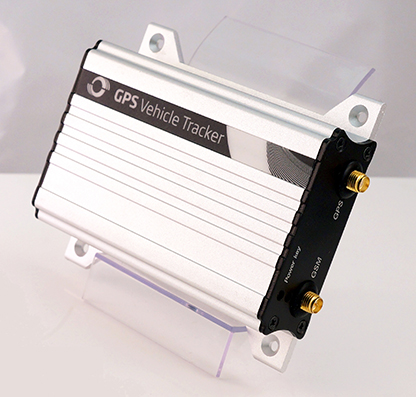
    Meitrack-T1-VEHICLE-TRACKER-WGPS tracking manufacturer Meitrack Group is introducing a tracker that runs on 3G networks. GPS trackers have been running on 2G networks, but soon many wireless carriers will discontinue the outdated 2G technology. Meitrack said it is hard at work making the transition to make all of its current trackers work on the 3G network standard.

    The first model released is the T333 GPS tracker, which offers real-time tracking, history reports, assisted GPS tracking, geofence creation, and an S.O.S. panic button. The tracker can be installed in vehicles ranging from everyday family cars, to construction and commercial trucks.

    The strong outer aluminum casing effectively secures the internal components from exposure to the elements and heat. At 190 grams, the T333 is lightweight and small enough to be securely installed in areas of minimal space, the company said. Meitrack has installed the u-Blox 7 GPS module, upgrading the processing speed and sensitivity. Not only does the T333 GPS tracker run on 3G networks, but it can also run on 2G as a backup if a 3G network is not available.

    The T333 also comes equipped with digital and analog inputs that transform the GPS tracker into a central hub where other accessories can be simultaneously attached and synced. These accessories include fuel sensors, RFID card readers, handset phones, cameras, and even LCDs and LEDs displays.

  • Geoforce Releases Tiny Industrial GPS Tracking Device

    Geoforce, Inc., an international provider of asset management solutions for the oil and gas industry, has announced the widespread commercial availability of the GT0, a tiny industrial GPS asset-tracking device. The device is designed to track and remotely monitor assets too challenging for other GPS devices, the company said.

    “Geoforce is constantly trying to gauge what our customers will need next,” said James MacLean III, Geoforce’s president and CEO. “What we’ve been hearing out there is this: smaller, easier and whenever possible — more affordable. We’ve purpose-built this device to try and meet those needs without dropping the quality-level our customers deserve.”

    The GT0 has a powerful omni-directional antenna, allowing for placement in almost any orientation on an asset. The tracking device is engineered with RFID and GPS technology for location and identification, as well as QR coding for mobile scanning of product information. Its compact size allows the tag to fit on equipment where previous larger and bulkier asset-tracking devices could not be implemented. It is an IP67 device (weatherproof) and has an optional metal bezel for added protection. It has an expected five to seven year battery life, making it a simple-to-deploy “slap and track” device.

    More than 300 companies currently use Geoforce’s solutions to manage 100,000 assets across six continents. The GT0 was previously offered in limited release to several service and rental companies beginning in January of this year.

  • Trimble Adds Ultra High-Frequency RFID to Juno T41 Rugged Handhelds

    Trimble Adds Ultra High-Frequency RFID to Juno T41 Rugged Handhelds

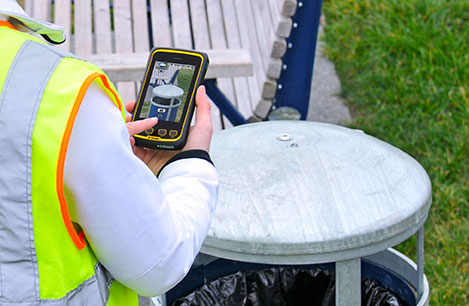
    Juno-T41_Local-Govt_asset-W

    Trimble has introduced the Juno T41 rugged handheld computer with integrated Ultra-High Frequency RFID capabilities. In addition to high-speed 1D/2D barcode imaging technology, smartphone capability and enhanced, real-time 1-2 meter GPS accuracy, the Juno T41 series now offers new models that provide more functionality and configuration choices for data collection and mobile workforce management, Trimble said.

    “Often the RFID tag is specifically used because the item being tracked is in difficult or harsh environments where a barcode won’t survive,” said Jim Sheldon, general manager of Trimble’s Mobile Computing Solutions Division. “The rugged design of this handheld computer is an ideal solution for reading RFID in outdoor and extreme situations.”

    The RFID capability can be combined with Enhanced GPS and/or smartphone connectivity so customers can choose a specific handheld model that meets their needs.

    The Juno T41 R will automatically recognize tags across a variety of frequencies and work with any size or style of RFID tag that is designed for customized solutions. UHF RFID is an increasingly commonplace technology using the 860 to 960 MHz frequency range.

    Using the latest EPCglobal Gen 2 RFID technology from Trimble’s ThingMagic Division, the device uses two different antenna ranges to read or recognize the unique identification of an asset anywhere in the world.

    • FCC Certified (North America): 902-928 MHz bands
    • ETSI Certified (EU): 865.6-867.6 MHz bands
    • ACMA Certified (AU/NZ): 920-926 MHz bands

    Trimble Juno T41 RFID handheld computers feature a 1-GHz processor and 512-MB RAM and 32-GB onboard storage with either Android 4.1 or Microsoft WEHH 6.5 operating systems. Other standard features include an 8-MP integrated camera, multi-touch capacitive 4.3-inch sunlight-readable display, all-day battery life and 2-4 meter GPS accuracy capability. Other features include:

    • Rapid-read, high-accuracy performance on multiple tags with multiple orientations, even in crowded conditions.
    • Consistent read-range over 3.5 meters for 5 cm2 (2″) UHF tags in unobstructed space.
    • Integrated antenna with the ability to transmit up to +30 dBm (1 Watt) power for demanding applications.
    • >Configurable performance settings and use-case parameters in the pre-loaded Trimble SearchLight application.
    • Software Development Kit to customize all settings including read-range, power-consumption and other features.

    The Juno T41 models are built to meet military-grade standards of ruggedness for drops, temperature, altitude, humidity extremes, vibration, chemical exposure and shock with either an IP65 or IP68 rating for water and dust.

  • ORBCOMM, Savi Announce Strategic LBS Partnership

    ORBCOMM Inc., and Savi Technology have announced a strategic relationship to provide advanced location-based monitoring solutions to government and commercial markets.

    ORBCOMM is a global provider of machine-to-machine (M2M) solutions, and Savi Technology is a provider of sensor-based analytics and radio-frequency identification (RFID) solutions.

    ORBCOMM and Savi have submitted a proposal in response to the U.S. Army RFID IV project, which will provide both ISO18000-7 RFID tags and a suite of satellite solutions for military logistics support. ORBCOMM’s GlobalTrak division has been a leading player in providing military Enhanced-In-Transit-Visibility (EITV) solutions to the government market since 2008, and Savi has been a market leader in military RFID solutions, enabling it to offer vast market experience with the right blend of technology platforms for this proposal.

    “The combination of ORBCOMM’s satellite expertise and broad network service portfolio with Savi’s state-of-the-art RFID technology offers a full spectrum of innovative monitoring solutions to our collective market base with focus on our government and international customers,” said Marc Eisenberg, Chief Executive Officer of ORBCOMM. “Although RFID and satellite tracking have traditionally been divergent technologies, the synergy of these solutions within a common operating environment creates a seamless transition from infrastructure to wireless-based location services for tracking and monitoring high-value assets.”

    “By bringing two market leaders with highly complementary technologies together, we have created a best-of-breed solution for our customers in both government and commercial markets,” said Bill Clark, chief executive officer of Savi Technology. “This relationship will support Savi’s operational analytics capabilities by providing additional ways to collect critical data and deliver timely and reliable operational intelligence to our customers. We look forward to partnering with ORBCOMM on RFID IV and other global opportunities in the near future.”

  • GreenRoad Adds RFID, Introduces Smartphone Interface with Facebook

    GreenRoad, a driver performance management company, has announced new features including RFID-based driver identification; real-time email alerts; and an enhanced interface for GreenRoad Smartphone Edition.

    GreenRoad’s new RFID feature automates driver association with trips by detecting when a driver boards a vehicle, eliminating the need for drivers to log on with a Dallas key.

    One customer, Big Bus Tours, operator of open-top sightseeing tours, has starting using RFID in its fleet of open top tour buses in London, Washington, D.C., and San Francisco, with Dubai and Abu Dhabi soon to follow. Gerry Price, group commercial director, said, “GreenRoad has enhanced driver performance and cut risk in our bus fleet across the world, as well as improving the customer experience for thousands of sightseers. Now with RFID it is even easier for our drivers to use GreenRoad.”

    GreenRoad Smartphone Edition has been enhanced with Facebook integration that allows drivers to share their achievements with friends. GreenRoad Smartphone Edition, code named “Asimov,” uses smartphone native functionality, including GPS and built-in accelerometers, to eliminate the need for a professionally installed telematics device in the vehicle.

    A new version of GreenRoad Central, the software at the heart of the GreenRoad service, includes real-time alerts for exception events, including high-risk events in all driver behavior categories as well as speed violations. In addition to receiving email alerts in real-time, managers can view their alerts on a To Do list through GreenRoad Central.

  • Trimble Expands Functionality of ThingMagic RFID Readers

    Trimble announced the availability of a number of new capabilities for its ThingMagic Mercury 6e (M6e) embedded UHF RFID module and Mercury 6 (M6) finished UHF RFID reader. Available through a firmware upgrade, the added functionality helps users develop and deploy reliable, high-performance RFID-enabled solutions for a broad range of traditional and innovative applications. Trimble also introduced a redesign of its Universal Reader Assistant, a graphical user interface developed to simplify the use and deployment of ThingMagic RFID readers.

    According to the announcement, this upgrade delivers significant enhancements including an increase in tag read rate of up to 75 percent and greater data acquisition rates with every tag read. Several application-specific features designed to read RFID tags in diverse and challenging conditions have also been introduced, including:

    • A new “fast search” tag reading mode
    • The ability to obtain up to 128 bytes of data with every tag read
    • ISO 18000-6B performance enhancements
    • Support for IDS Micro SL900A Gen2 Class 3 Sensor Tags

    Driven by increased demand for RFID-enabled solutions in the transportation, supply chain, retail and healthcare markets, Trimble reports these new features offer several application specific improvements:

    The ThingMagic M6e embedded module now includes a ‘fast search’ algorithm which forces tags to respond rapidly and repeatedly for optimal read performance across diverse use cases. This feature supports applications such as tolling, vehicle management and race timing where fast moving tags need to be distinguished from each other with a high degree of accuracy. Operational up to 200 kilometers per hour, ‘fast search’ supports both Gen2 and ISO 18000-6B tags.

    Superior receive sensitivity, higher tag read rates, and better adaptation to changing tag populations enhance the ability of the ThingMagic M6e and M6 readers to read RFID tags in varied environments and on more items. For example, in a retail supply chain, manufacturers can track high volumes of items on densely packed pallets across multiple distribution points and retailers can inventory tagged items rapidly and with predictable accuracy. In addition, the ability to read more data from every tag supports emerging retail uses such as anti-counterfeiting, brand protection and other security-sensitive applications, without impacting the performance of tag inventory or tag encoding activities.

    This upgrade also adds support for the full cool-Log command set for IDS SL900A sensor tags, addressing increased demand for temperature and state monitoring within utilities, food/cold-chain, healthcare and other markets. The IDS 900A is an EPC global Class 3 tag IC which can be operated in either semi-passive or passive mode.

    “This release represents a significant step in optimizing our portfolio of high-performance embedded RFID modules and finished RFID readers for use across industries,” said Tom Grant, general manager of Trimble’s ThingMagic Division. “Superior performance and versatility continue to be primary differentiators for our products. Equally important are advancements in ease of use which are fundamental to the growth of RFID-enabled solutions and driving better business results across a growing number of connected enterprise applications.”

    With a key goal of driving the barriers for deploying RFID technology as low as possible, this update improves the out-of-the-box experience for solution developers and end users of ThingMagic M6 readers. An improved Web interface includes a reorganization of configuration and management screens, new performance tuning settings, and enhanced tag data access and displays. Enhancements also include zero configuration support for automating network connectivity, Web-based device discovery and management and advanced testing capabilities.

    Trimble reports that a redesign of the ThingMagic Universal Reader Assistant is also available. Supported by all ThingMagic readers, this utility is used to initialize readers and perform common tasks, including selecting application specific performance settings. With a focus on ease-of-use, this redesign meets the needs of an expanding customer base by reducing complexity for novice users while permitting low-level control for advanced users.

  • Trimble Adds RFID to its AllTrak Asset and Tool Management System

    Trimble introduced a new version of its Trimble AllTrak Asset and Tool Management System that includes an RFID scanner for its Trimble Nomad outdoor rugged handheld computer running the Microsoft Windows Mobile operating system. With RFID capabilities, the AllTrak System allows building construction contractors to more easily track and manage their jobsite assets and tools. In addition, the system increases return on investment by improving asset utilization and monitoring equipment to avoid losses.

    According to the announcement, using the Trimble Nomad with the new RFID scanner, contractors can perform a variety of functions such as asset check-in, check-out, transfers and inventory validation much faster than traditional bar code scanning by interfacing with small passive RFID tags fixed to the assets. With an effective range of 3 to 4 feet, RFID technology does not require line of sight for the tag to be read, making it an ideal technology for reading the tags of multiple assets that are in a pickup, service truck or tool crib. Users can also attach the ThingMagic USB RFID Reader to a desktop or laptop when a portable solution is not required.

    Trimble reports that by utilizing the popular RFID tag protocols “UHF EPC Gen2” or “ISO18000-6C”, the new Trimble AllTrak System is specifically designed for general contractors, as well as concrete, steel, mechanical, electrical, plumbing and site prep subcontractors who use tools with embedded or attached RFID tags that support these protocols. Trimble AllTrak distributors can also provide RFID tags that can be attached to assets.

    “With the acquisition of ThingMagic, we were able to bring their experience in RFID technology to existing platforms within the Trimble Building Construction portfolio of hardware and software solutions,” said Pat Bohle, general manager of Trimble’s Building Construction Division. “We chose the Trimble AllTrak System as the first product in the portfolio due to the logical affinity of delivering increased productivity to the process of tracking the physical whereabouts of tools and jobsite assets.”

    Trimble AllTrak with RFID support is available now through Trimble’s Authorized Distributors of layout solutions for MEP and Structures contractors.

  • Trimble Announces New RFID Accessory for Nomad Handheld

    Trimble announced a new UHF RFID Reader accessory for its Nomad rugged handheld computer. 

    The Trimble ThingMagic Reader supports reading and writing of EPC Global Gen2 tags which are commonly used for asset and inventory management. The UHF RFID Reader accessory is designed to withstand drops, vibration, humidity, extreme temperatures and immersion, making it ideal for challenging environments.

    Nomad RFID Reader

    "The Nomad has been a very successful rugged mobile platform, supplying field workers with a robust tool for data capture and navigation," said Jim Sheldon, general manager of Trimble's Mobile Computing Solutions Division. "The RFID Reader further extends the Nomad's capabilities and offers enterprise management more options in its use."

    "Similar to the widespread integration of GPS into today's positioning solutions, we believe RFID is a natural complement to many asset management applications and Trimble solutions," said Tom Grant, general manager of Trimble's ThingMagic Division. "Integrating high-performance RFID technology into high-value products like the Nomad delivers a strong platform for next generation productivity applications."

    The UHF RFID Reader is available in two variations: one for use in Europe, and the other for use in the U.S., Canada and most of South America. The Reader is based on the best-in-class ThingMagic M5e Compact UHF RFID module, and includes device drivers and a Software Development Kit to enable systems integrators to add RFID capabilities to their mobile applications.

  • Where’s the Beef? If I’m an Investor, Where Do I Place My Money in the Geospatial Industry?

    If I’m an investor, where do I invest my money in the geospatial industry? In other words, where’s the most upside in the geospatial industry over the next few years? GIS software? GIS data? GIS Services? Satellite imagery?

    If you recall, a few weeks ago I published a list of geospatial trends that was released by the United Nations Committee of Experts on Global Geospatial Information Management. I think the list of trends paints a pretty accurate picture of where things are headed in the geospatial space.

    Open source software/data, cloud computing, location-based services, geospatial services, geo data, sensors, government leadership, and location privacy are all trending upwards. There’s money to be made in all of these areas (and more). Geospatial technology growth, even throughout the global economic downturn, has been solid. In the worst case, growth has been flat for short periods of time, but mostly 10+% annual growth rate has been realized consistently over the past 10 years. It’s not smoking hot growth, but it’s been pretty stable with some specific areas of high growth (GPS navigation and other LBS).

    No matter which way you look at it, the common denominator across all trends in the geospatial industry is geospatial data. It is the fuel that feeds the geospatial engine. Metaphorically, you can install bigger pistons, a more efficient exhaust system, turbochargers, a blower, even nitrous oxide to your geospatial engine (software), but without high-quality fuel to run the engine, those are useless features.

    There’s a fair amount of geospatial fuel (data) available now. Street maps and points of interest for vehicle navigation have largely been developed. Airborne and satellite imagery are available, at varying levels of quality, all over the world. But we’ve only seen the tip of the iceberg.

    How do we make more fuel?

    Sensors are the geospatial future that will fuel the growth in all things geospatial, especially location-based services.

    People have been speculating about the huge potential of location-based services for many years. The lack of geo data has been locking the LBS horse in its stall.

    Sensors are the refineries that manufacture the fuel. What’s different from five years ago is that data refineries are growing exponentially. Whereas there was a limited number of data refineries a few years ago, all of us are becoming data refineries, and we are producing more accurate and feature-rich data than before.

    Since the geospatial industry started, there’s been a limited number of sensors producing a limited amount of data that’s of mediocre quality. For outdoor sensors, remote sensing (airborne and satellite imagery) and GPS are two affordable and efficient sensors that have contributed widely to developing the outdoor geo data world. For collecting indoor geo data, there’s not much in terms of affordable and efficient sensors.

    But that’s changing, and that’s where there’s a lot of upside. Behind the change is the world of mobile devices (mobile phones, tablets, and gaming devices). Over the next few years, you’re going to see mobile devices producing a tremendous amount of rich geo data, much more than today. Yes, today’s crowd-sourcing produces some level of geo data, but it’s not very good largely because it’s inaccurate and therefore has limited utility. However, if you look at the research and development (R&D) resources being spent on developing a wide variety of geo sensors (higher precision GPS, inertial navigation, accelerometers, RFID) to integrate them inside mobile phones, tablets and gaming devices (Nintendo, PlayStation, etc.), you can see the picture is going to look much different in the next few years. Each person carrying a mobile phone will be a geo-data refinery producing highly accurate, feature-rich data which they can choose to share (or not) with the rest of us via OpenStreetMap or similiar data warehouse.

    For geospatial professionals, the picture looks even better. The proliferation of sensors in consumer apps (gaming, mobile phones, tablets) will drive down the price of mobile devices capable of collecting high-quality geo data for geospatial professionals. With the price of such devices becoming very affordable, the number of high-quality geo data “refineries” will grow exponentially.
    Thanks, and see you next week.
    Follow me on Twitter at http://twitter.com/GPSGIS_Eric
  • Solar Activity and RFID Technology

    Updated: Friday, April 9 11:00am US Pacific. I added more specific information regarding signing up for Space Weather Prediction Center email alerts. See below.


    It’s time to touch on the solar activity subject again, as there was an event earlier this week and rumors began to fly. The mainstream press jumped on a story back in January when the first solar flare of Solar Cycle 24 occurred. Of course, journalists were writing about worst-case scenarios in the event of extreme solar events that could cause power grids to fail, GPS to stop working, etc.

    While that is true, it’s a real stretch and the typical “sky is falling” reporting. In reality, the solar flare back in January had no effect on GPS operations. In fact, it would take an event 10-20 times stronger than last January’s to begin to notice any effect on GPS operations. Earlier this week (Monday 0800 GMT), the first geomagnetic storm of Solar Cycle 24 occurred.

    Geomagnetic storms are the ones that will give GPS users problems, although this one didn’t because it was relatively minor. The last geomagnetic storm strong enough to noticeably affect GPS users occurred in December 2006. During such an event, it might interrupt your GPS receiver for 10-15 minutes. Most users would not notice or they might attribute it to a local system malfunction. By the time they investigate and reset the system, the event would have passed and the user is back in operation. It would be barely noticeable, if at all.

    According to Joe Kunches of the NOAA Space Weather Prediction Center, a geomagnetic storm is a global event (as opposed to a regional event) that is caused by a highly energized solar wind that is fast and embedded with a strong magnetic field. In the following chart, you can see how this week’s event illustrates this.

    Source: NOAA Space Weather Prediction Center

    In the above chart, the top panel illustrates how the magnetic field becomes much more turbulent starting at 0700 GMT. The fourth panel on the chart denotes the solar wind speed, which ramped up to approximately 2,000,000 mph (3,218,688 kph) at its peak.


    Extreme geomagnetic storms = Dynamic TEC = GPS interruptions

    There needs to be very turbulent solar wind that disturbs the Earth’s geomagnetic field in order for GPS operations to be affected. For those of you who are familiar with the Total Electron Count (TEC), a dynamic TEC density in the ionosphere is what really messes up GPS operations. If the TEC is stable, the ionospheric models work fine and we get really good GPS performance like we’ve seen in the past few years in between solar cycles.

    GPS L1 users are affected most by a dynamic TEC density in the ionosphere. These are users of WAAS, DGPS, and commercial L1 correction services like OmniSTAR VBS (not their XP or HP service). During the extreme geomagnetic event in October 2003, published simulations (Yousuf, Skone, Coster, University of Calgary, ION NTM 2005) that illustrated the WAAS maximum horizontal error (95th percentile) blew out to 25 meters while single baseline DGPS maximum horizontal error (95th percentile) blew out to 18 meters. This extreme event lasted for several days.

    This doesn’t mean you’re going to have major problems in the future if you are using WAAS (or another SBAS) or DGPS, but just that high-performance GPS L1 receivers are the most susceptible to extreme solar events. In the case of the December 2006 event, SBAS and DGPS users might have experienced 10-15 minutes of unusual behavior depending on their locations. According to Kunches, high latitude geographic regions (60+ degrees latitude) and the region within 10 degrees of the geomagnetic equator (as opposed to the geographic equator) are affected the most by geomagnetic storms.

    GPS L1/L2 receivers are less susceptible to extreme solar events because they can actively model the affects of the ionosphere, but they are not immune. Extreme events such as in October 2003 can cause a loss of phase lock, especially on L2 with GPS receivers that utilize codeless/semicodeless techniques, which are virtually all of the dual-frequency GPS receivers on the market today. The L2 signal-to-noise (SNR) ratio on L2 is quite a bit lower due to the codeless/semicodeless technique so it is more susceptible.

    GPS L1/L2 receivers using L2C will be less affected (assuming a sufficient number of GPS satellites are broadcasting L2C) due to a stronger SNR.


    Not the time to panic

    The reason I wrote this article is to share what I’ve learned about the effects of solar storms on GPS operations from speaking with a number of different scientists. This isn’t meant to be a warning of impending doom for GPS users or anything or that sort. Extreme events typically occur near the solar peak and then again during the decline of the cycle. The peak is estimated to occur around May 2013, so the typical extreme events affecting GPS would likely occur in 2013, 2014, and 2015. It’s too early to start worrying much about it now.

    However, as Solar Cycle 24 ramps up, we’ll see more and more geomagnetic storm activity. If you’re a high-performance GPS user (meter or sub-meter level GPS L1 and GPS L1/L2), I think it’s a good idea to monitor space weather now. Fortunately, the NOAA Space Weather Prediction Center (where Kunches works) provides a service that will notify you of unusual space weather by e-mail. You can sign up to receive e-mail alerts at http://www.swpc.noaa.gov

    Following are detailed instructions for signing up for alerts:

    -Goto the Space Weather Prediction Center website.

    -Click on Email products (under the Support Services menu on the left)

    -Create an account if you don’t have one already (it’s free).

    -Click on Subscribe

    You don’t want to subscribe to everything. Here are the ones specific for GPS operations:

    -Advisories/Space Weather Bulletin

    -Geomagnetic Storm Products/(sign up for both Alerts and Warnings for K6, K7, K8, K9 events.

    -For high latitude (55 degrees and higher) users, also sign up for Alerts and Warnings for K4 and K5 events.


    Following are some good reference links regarding the Solar Cycle and TEC:

    GPS World article in January 2010 (scroll to end of article)

    GPS World article in October 2009 (follow-up to other October 2009 article)

    GPS World article in October 2009

    GPS World article in May 2003

    Latest NOAA prediction on Solar Cycle 24

    Solar Cycle 24 page

    Real-time TEC plot from the Jet Propulsion Lab

    Wikipedia description of the Ionosphere

    Wikipedia description of the Total Electron Content (TEC)


    RF ID (Radio frequency Identification) in Survey Monuments

    If you haven’t been followi
    ng my Geospatial Solutions Weekly newsletter (sign up here for free), you might want to sign up and read the article I wrote on how RF ID is going to be a technology very much used by surveyors in the future. You can read the article by clicking here.


    Webinar later this month (April 22, 10 a.m. Pacific time, 6 p.m. GMT): GPS, GLONASS, and SBAS Constellation Updates

    There’s been a lot of infrastructure changes with GPS, GLONASS, and SBAS in the past six months. We’ve already got several hundred people registered for this webinar. It’s going to be a good one. Here are some of the questions I’ve received already and will be addressing:

    1. When and where will the new FAA WAAS GPS Satellite cover?
    2. Will the accuracy of hand-held units be increased with these latest changes?
    3. What developments will make GPS & GLONASS work better together? In terms of RTK accuracy.

    There have been some questions as to whether you can receive continuing education credit (PDH, CEUs, etc.) by attending the webinar. Please e-mail me directly with these requests and I will do my best to accomodate.


    See you next time.

    Follow me on Twitter at http://twitter.com/GPSGIS_Eric