The Royal Institute of Navigation (RIN) Maritime Working Group is investigating GNSS jamming and spoofing in the maritime sector, starting with a survey. The survey is “aimed at anyone in the maritime sector who has experienced GNSS interference and who can provide us with further information on the impact that it is having,” the group stated.
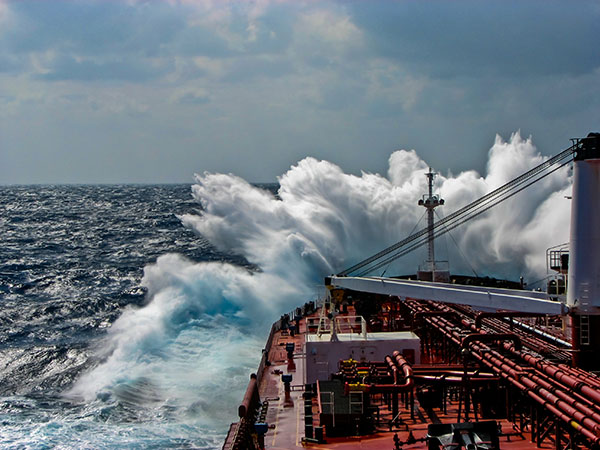
Interference have been pervasive for years now in areas such as the Baltic Sea and the Black Sea. In the Strait of Hormuz alone, almost 1,000 ships per day experience GNSS interference, impacting crew safety and the security of their cargo. Collisions and groundings are a very real threat, with the Frontier Eagle and MSC Antonia accidents being the most recent examples.
The RIN will be producing a report similar to the September 2024 OPSGROUP report that focused on GPS spoofing in the aviation sector.
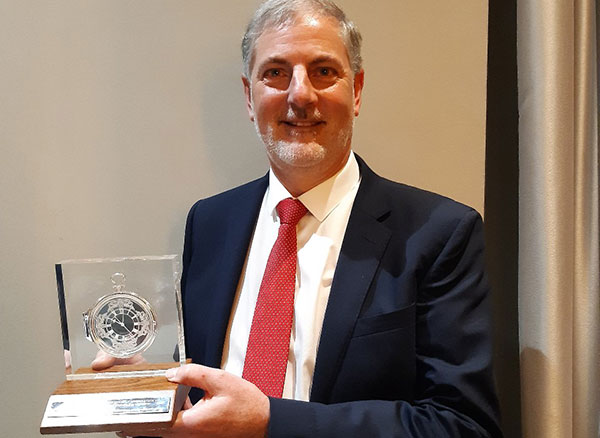
Terry Moore is the first British academic to take home the John Harrison Award for outstanding contributions to navigation.
Terry Moore
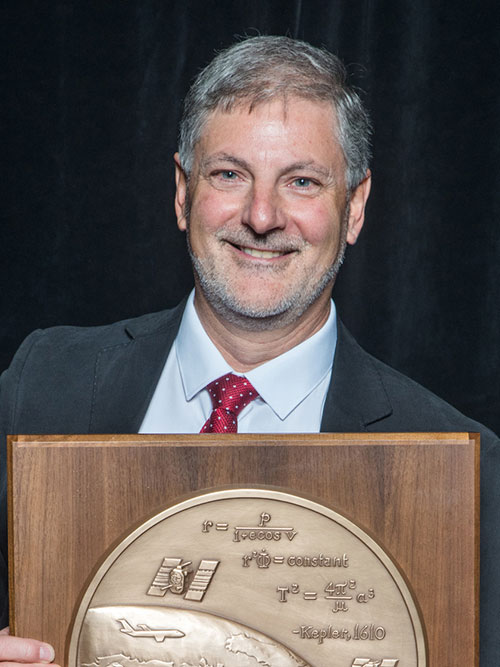
Terry Moore, a positioning and navigation expert at the University of Nottingham and longtime GPS World Editorial Advisory Board member and author, has become the first British academic to win a prestigious international award in the field.
Terry Moore is an Emeritus Professor and former director of the Nottingham Geospatial Institute at the University’s Faculty of Engineering.
The International Association of Institutes of Navigation (IAIN) awarded Moore with its John Harrison Award for outstanding contributions to navigation. The award ceremony took place during a special session of the Navigation 2021 Conference in Edinburgh, which took place Nov. 16-18.
HRH The Princess Royal (Princess Anne) attended via Zoom to present the award, and had a one-to-one conversation with Professor Moore.
The John Harrison award is a premier global award in the navigation field and Professor Moore is its first British winner.
“It’s a great honor to be recognized by the global navigation community, and I feel quite humbled,” Moore said. “John Harrison was a simple country carpenter in the 18th century who solved the major problem of measuring longitude at sea, through his remarkable marine chronometers. Despite his genius, he struggled for acceptance by the scientific establishment, and it took many years until he received the recognition (and financial reward) he deserved. It is sad that over 200 years later we are still fighting for improved equality, diversity and inclusion throughout scientific disciplines. I am absolutely delighted to receive the award in his name.”
A professor of satellite navigation for 20 years at the university, Moore’s association with Nottingham goes back to his undergraduate degree starting in 1979. During his distinguished career, all of it spent at Nottingham, he has taken a leading role in national and European initiatives aimed at integrating academic research and teaching activities in GNSS. He has also interacted closely with industry throughout that time.
He was the founding director of GRACE — the GNSS Research and Applications Centre of Excellence — which was jointly funded by the University and the East Midlands Development Agency and has now been extended to cover all geospatial applications as the Geospatial Research and Applications Centre of Excellence.
Moore has overseen numerous research projects funded by industry, research councils, the European Space Agency and the European Commission, and has supervised almost 40 successful PhD students.
He is a Chartered Engineer, a Fellow and the Immediate Past President of the Royal Institute of Navigation (RIN) and also a Fellow and a Member of Council of the Institute of Navigation (ION) in the United States. He was recently elected as the Chair of the European Group of Institutes of Navigation (EUGIN), and is an Honorary Member of IAIN. In 2013 he was awarded the RIN Harold Spencer-Jones Gold Medal. He received RIN’s J E D Williams Medal and the ION Johannes Kepler Award, both in 2017.
Professor Moore is a member of the U.S. National Space-Based Positioning, Navigation and Timing (PNT) Advisory Board and is a Member of the European Space Agency (ESA) GNSS Science Advisory Committee. He was an expert contributing to the UK Government Blackett Review on GNSS Vulnerability and has worked extensively on the UK’s PNT Strategy.
He is a Fellow of the Chartered Institution of Civil Engineering Surveyors, a Fellow of the Royal Astronomical Society, and an Associate Fellow of the Remote Sensing and Photogrammetry Society, and is a Member of the Editorial Advisory Council of The Journal of Navigation.
“Many congratulations to Terry on this outstanding achievement,” said Stuart Marsh, director of the NGI. “It is fantastic to see our former director, who has spent so many years of his career in our faculty, serving in many different capacities, receive such a high honor.”
The Royal Institute of Navigation (RIN) has issued a call for papers for the Navigation 2021 conference.
The conference, which as of now will be held virtually Nov. 15-18, 2021, will bring together experts from industry, research institutions, government agencies and investors whose primary goal is to work together for a more navigable world, RIN said. Conference themes will include PNT systems and technology, robust PNT, PNT applications, animal and human navigation, and navigation in society.
The November 2021 event will unite two established conferences: the International Navigation Conference and the European Navigation Conference.
RIN is accepting papers in the following categories:
Peer-reviewed: Abstracts and, if accepted, papers will be peer reviewed and published to be indexed and searchable. Presentations will be invited in a parallel technical session at the conference.
Presentation: Abstracts will be reviewed and, if accepted, submitters will be invited to present their work in a parallel session at the conference.
Poster: Abstracts will be reviewed and, if accepted, posters will be displayed in the exhibition hall. RIN plans to encourage delegate interaction through poster presentations during the networking sessions.
The best peer-reviewed papers will be invited to submit for consideration to be published in the Journal of Navigation, RIN added.
Navigation 2021 will take place as a virtual conference. According to RIN, it will review the situation in 2021 and if possible run an in-person element to compliment the conference.
The 1,174 page set of reports are comprehensive and document the first phase of what is intended as a multi-phase effort.
Graphic: RIN and RNTF
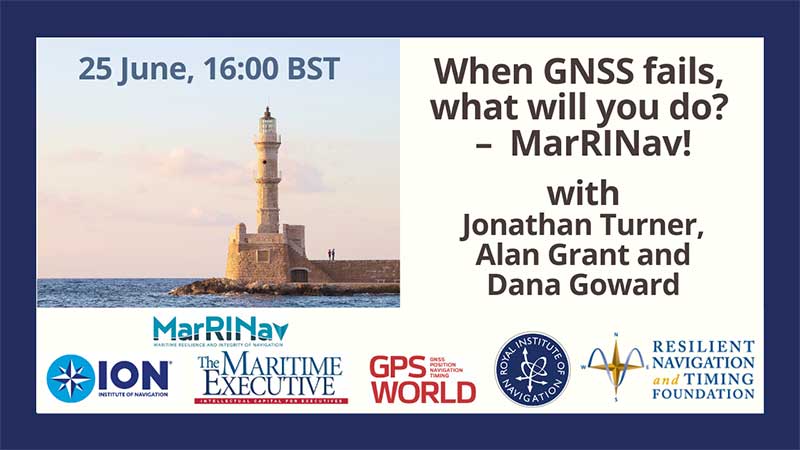
The webinar will present how maritime positioning requirements were systematically developed; an assessment of current and future positioning systems to deliver the required performance and integrity; rigorous gap analysis, showing where performance falls short, as well as options to solve these issues; and a roadmap of steps needed to take — and by whom — toward maritime resilient positioning.
Webinar speakers will include Jonathan Turner of the MarRINav project team, Alan Grant of the Royal Institute of Navigation and Dana Goward of the Resilient Navigation and Timing Foundation.
“Diverse teams bring diverse ideas to the table, and that’s the best way to progress.”
So said Professor Sheila Rowan, the UK government’s chief scientific advisor to Scotland, opening the Royal Institute of Navigation’s 2019 International Navigation Conference. Professor Rowan’s comments set the scene perfectly. Success in navigation is no longer about just getting a fix, or even an accurate fix. To succeed as a system or application provider, diversity and collaboration are key, whether it be multiple disciplines and the skills that go with them, or a mix of ages, beliefs and backgrounds. So, what were some key messages to emerge from four days of working together?
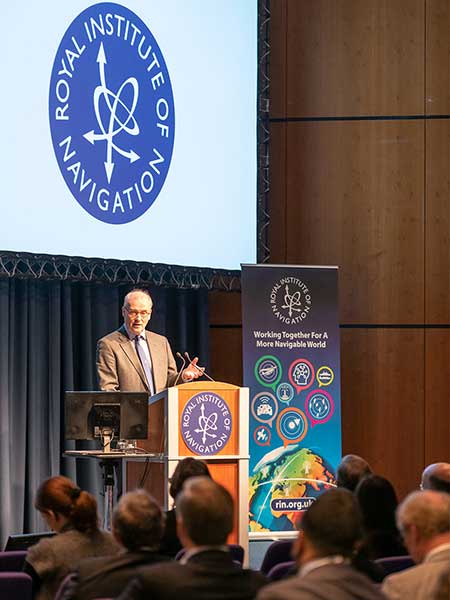
John Pottle opens the 2019 International Navigation Conference sponsored by the Royal Institute of Navigation (RIN). (Photo: RIN)
More practical help for non-experts wanting to improve resilience in positioning, navigation and timing (PNT) is needed. The top request from delegates at the pre-conference short course was for more detailed and specific information on threats to PNT. Of particular interest were how to measure the impacts and test the merits of various mitigation approaches. In other words: how to assess risk? How to decide what steps to take?
User acceptance and regulatory/legal structures for driverless vehicles are greater challenges than the positioning and communications technology. In the UK and across Europe, projects are under way to evaluate good practices for so-called “beyond line of sight” drone flights. For driverless cars, while huge strides have been taken to enable secure and resilient absolute and relative positioning, much remains to be done. Practical issues were highlighted, such as over-cautious vehicles and a tendency for driverless cars to make occupants feel more travel sick. So work needs to be done to avoid a stressfully slow and sickly experience.
Skills and knowledge are changing — and education/training needs to, too. A major developed-world problem is that the experts with experience who have seen generation after generation of technology evolution are now in their later careers or retired. Because of the wealth of knowledge vested in these individuals — we can all think of some, I’m sure — organizations have tended to over-rely on them. A key theme of the conference closing plenary was that the community wants to do more to collaborate — that word again — to define training needs and figure out how to deliver the skills that are needed today and tomorrow.
The next couple of years bring fewer, bigger navigation conferences in Europe. The European Navigation Conference (ENC) 2020 takes place in Dresden, May 11–14, organized by the German Institute of Navigation, DGON. ENC2021 will be combined with the triennial global congress of the International Association of Institutes of Navigation (IAIN), Nov. 15–18, 2021, in Edinburgh, organized by the Royal Institute of Navigation.
Please save the dates — joining these events is rewarding and stimulating as we work together toward a more navigable world.
John Pottle is director of the Royal Institute of Navigation.
The Royal Institute of Navigation: International Navigation Conference will take place Nov. 18-21 at the Edinburgh International Conference Centre in Edinburgh, U.K.
Navigation and Societal Benefits: From Animals to Autonomy
The International Navigation Conference (INC) offers a unique format, with keynotes morning and afternoon each day, to set the scene for the more in-depth session papers.
Resilient position and precise time are enabling the modern world. INC enables sharing of knowledge and experience to maximize the potential and positive impact of the industry.
Plus:
Pre-INC Training Seminar: Securing Positioning and Timing
On Monday, Nov. 18, RIN is offering a one-day short course to build understanding of satellite navigation vulnerabilities and threats, plus steps to toughen and augment systems.
At INC, technology, system and application experts meet with cognitive neuroscientists, human factors, legal, ethical and regulatory experts. Participants feed insights from RIN’s world-leading animal navigation forum and conference, offering insights, perspective and contacts to improve attendees impact and effectiveness.
INC creates value by bringing disciplines together to share knowledge, perspectives and insights. The RIN strives to make INC an enriching experience for all delegates, with a program designed to include plenty of time for networking, including social events on Monday, Tuesday and Wednesday evenings.
RIN aims for each delegate to leave INC with new insights, ideas and contacts.
Session Themes
Autonomy and Innovations in Robotics
Animal Navigation
Resilient PNT
Neuroscience and Cognition
Human Factors and Wayfinding
Innovation: Integrated Sensors and Indoor Navigation
Innovation: Artificial Intelligence
Innovative Navigation Solutions
User Sector Updates: CNI and Maritime
Scottish-led Innovation in Positioning, Navigation and Timing
Drone Regulation and Protection
UK Space and GNSS
For more information, including the programme and keynote speakers, visit the event website.
John Pottle, director of the Royal Institute of Navigation, announced the release of the organization’s Resilient PNT Portal.
“It’s widely understood that satellite navigation has vulnerabilities,” Pottle said. “What is less well understood is how to assess risks and what steps to take to achieve a robust solution, appropriate to the application.
“This resource portal for resilient positioning, navigation and timing brings together key information — background context, risk assessment approaches, data on actual reported events, and guidance on mitigation strategies. The various standards and best practices notes for different sectors have also been included.”
The portal, available at https://rin.org.uk/page/ResilientPNT, has sections devoted to vulnerabilities and impacts, risk assessment, disruptions and reported problems, guidelines and standards, and general guidance.
“Our aim is to enable improved knowledge and thereby build expertise and understanding, in line with the Royal Institute of Navigation’s core objectives,” Pottle said.
The page includes a feedback form to make suggestions or ask questions. Users can also use the form to register for email updates as new information is added.
“We have ideas to improve and add to this resource through 2019 — for example, we are currently working on a white paper discussing various practical steps to mitigate common vulnerabilities,” Pottle said.
He added that the organization welcomes feedback and that there is a feedback link on the website.
The conference, sponsored by the Royal Institute of Navigation (RIN), is a premier forum for the presentation of research and advances in navigation. The theme of INC2018 is Navigation Challenges and Societal Benefits.”
According to RIN, INC2018 will offer a unique format of multiple keynotes throughout the three days. The sessions and themes will address key navigation topics, including cognition in navigation; human factors in navigation systems; connected autonomous vehicles; innovations in accuracy and indoor navigation, innovations in resilient positioning, navigation and timing; mapping, imaging and augmented reality; and progress in quantum.
This year’s INC will also feature a one-day symposium covering topics related to cognitive navigation. According to RIN, cognitive navigation is distinguished from other kinds of navigation methods/technology by the dependence on some type of representation of the to-be-navigated space. The goal of the symposium is to bring academics and industry experts together to facilitate the development of our understanding of and design for cognitive navigators, so that buildings and technology can work in a seamless way with human psychology.
The 2018 International Navigation Conference (INC), which will take place Nov. 12-15 at the Mercure Bristol Grand Hotel in Bristol, United Kingdom, will focus on navigation challenges and societal benefits.
According to event organizers, the keynote speakers at the event will focus on developments in resilient positioning, navigation and timing (PNT) innovations; PNT for connected autonomy; human factors and cognition in navigation; mapping and imaging; and progress in quantum technology.
In addition, sessions and themes at INC 2018 will address key navigation topics topics from technical, regulatory, ethical, cognitive and human perspectives.
The International Navigation Conference, sponsored by the Royal Institute of Navigation (RIN), is a premier forum for the presentation of research and advances in navigation.
The 2018 conference — the RIN’s fourth — will take place Nov. 12-15 in Bristol, England, United Kingdom.
INC2018 brings together industry, academia and governments from around the world. The theme for INC2018 is “Navigation Challenges and Societal Benefits.”
Spirent Communications plc’s Positioning Technology Unit, a company that provides solutions for improving positioning, navigation and timing (PNT) system performance, was yesterday presented with the Royal Institute of Navigation (RIN) Duke of Edinburgh Navigation Award for Technical Achievement.
The award was presented at the Institute’s Annual Meeting, held at the Royal Geographical Society in London Jul.y 21, by the Institute’s Patron, His Royal Highness The Duke of Edinburgh. It was received by Eric Hutchinson, Spirent’s chief executive officer.
Eric Hutchinson, Spirent CEO, (left) receives the RIN Duke of Edinburgh Navigation Award for Technical Achievement from the Institute’s Patron, His Royal Highness The Duke of Edinburgh (right). Looking on is the President of the RIN, Captain James Taylor.
Spirent was selected for this year’s award to recognize its leading role in the evolution of global navigation satellite systems (GNSS) since 1985, and joins the European Space Agency, the UK National Air Traffic Services (NATS), the Russian GLONASS system, and others who have previously received the award.
“We are extremely honoured to have been recognized by the Institute in this way,” said Martin Foulger, general manager of Spirent’s Positioning Technology Unit. “Spirent has been at the forefront of GPS and other GNSS development for 30 years, so to join the other winners of this award is a great acknowledgement of the technical innovation and commercial success driven by the Spirent team in Paignton.”
His Royal Highness The Duke of Edinburgh (right) congratulates Eric Hutchinson, Spirent’s Chief Executive Officer (left), after receiving the Royal Institute of Navigation (RIN) Duke of Edinburgh Navigation Award for Technical Achievement.
Peter Chapman-Andrews, Director of the Royal Institute of Navigation, commented: “Spirent is a well-known and well-respected leader in PNT testing. This wholly-deserved award is the Institute’s way of recognizing Spirent’s significant contribution over many years towards helping the world evaluate and improve performance of navigation and timing receivers, systems and applications.”
Spirent delivers navigation and positioning test equipment and services to governmental agencies, major manufacturers, integrators, test facilities and space agencies worldwide. Spirent’s portfolio has recently been updated with new technology that includes innovations not seen elsewhere, including the most flexible simulation systems covering the full range of GNSS signals and the world’s smallest hi-fidelity, portable PNT record and playback system. Spirent has recently opened three services labs, in UK, USA and China, to further support positioning and timing development and innovation.
Terry Moore, satellite navigation professor at The University of Nottingham, has been honored with the J E D Williams Medal for his contributions to the Royal Institute of Navigation (RIN), in particular his leading role in staging its major conferences.
Moore is a longtime member of GPS World’s Editorial Advisory Board.
His Royal Highness, The Prince Philip, Duke of Edinburgh, who is patron of the Royal Institute of Navigation, will present the award to Professor Moore at the RIN Annual General Meeting on July 19 at the Royal Geographical Society in London.
“I am really surprised and delighted,” said Moore, director of the University’s Nottingham Geospatial Institute, on the news of his award. “I have been proud to serve the RIN for many years, and it is a great honor for my small contributions to be recognized in this way.”
According to the university, Moore has now received more honors from RIN in its near 70-year history than anyone else.
In 2013, Moore earned the Harold Spencer-Jones Gold Medal — the highest honor the RIN bestows — for outstanding contributions to navigation. He was also one of the youngest recipients of the esteemed award.
Moore has also won the Richey Medal for best paper to be published each year in the Journal of Navigation in 1999 and again in 2008.
In 2013, Moore was awarded Fellowship of the U.S. Institute of Navigation (ION) for his outstanding leadership of the navigation community, the establishment of GRACE (GNSS Research and Applications Centre of Excellence), the establishment of the Nottingham Geospatial Institute (NGI) and sustained contributions to the advancement of navigation and GNSS. He was the third Briton to receive ION Fellowship.
With a long and distinguished career devoted to teaching and research, Moore started at The University of Nottingham with a B.Sc. in civil engineering followed by a Ph.D. in space geodesy. He is now a leading researcher on positioning and navigation technologies and their numerous and varied applications.
He was promoted to the UK’s first chair of Satellite Navigation in 2001; he has completed numerous research projects funded by industry, research councils, the European Space Agency and the European Commission, and has supervised more than 25 Ph.D. students.
He has authored, or been a leading contributor to, more than 200 technical research papers published in top journals. This is in addition to being a major supporter of national and international GNSS conferences and both national and international professional and scientific bodies.
Moore is a Fellow of the Chartered Institution of Civil Engineering Surveyors, the Royal Astronomical Society and an Associate Fellow of the Remote Sensing and Photogrammetry Society.
Moore is a longstanding Fellow of the RIN, and currently its vice president.
The RIN is a learned society with charitable status formed in 1947. Its aims are to unite all those with an interest in any aspect of navigation in one unique body, to further the development of navigation in every sphere, and to increase public awareness of the art and science of navigation.