
Tag: Robert Cardillo

  • Resilient PNT is critical, industry experts say

    Resilient PNT is critical, industry experts say

    As PNT becomes critical to more economic activities, any disruption in availability, reliability, resilience and integrity would weaken the critical infrastructure that sustains national security, business operations and public safety, according to experts speaking at the Geospatial World Forum.

    This growing dependency on PNT services — and the potentially high economic cost of vulnerabilities — underscores how vital GPS and GNSS systems are to the global economy and national security of countries worldwide, the experts said. Resilient PNT systems are necessary to combat GPS/GNSS outages.
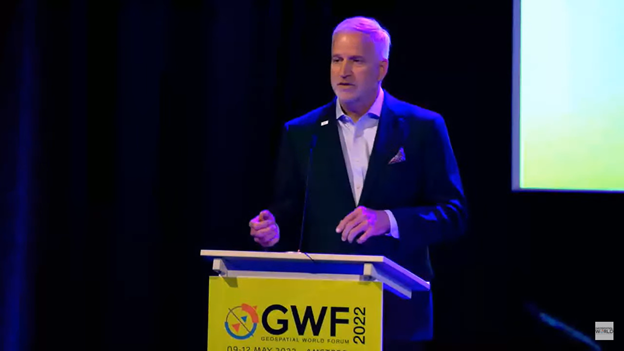
    Robert Cardillo (Photo: GWF)
    Robert Cardillo (Photo: GWF)

    Building resilience into these systems will require multiple technologies ranging from network time-transfer services to terrestrial wireless infrastructure and low-Earth-orbit (LEO) satellites.

    The Geospatial World Forum opened in Amsterdam on May 10. The second plenary of the day focused on the value of PNT in the global economy. Geospatial World is a global think tank working towards raising awareness around the use of geospatial data and technologies among governments and policymakers, businesses, and the public at large.

    Robert Cardillo, president of The Cardillo Group and former director of the U.S. National Geospatial Intelligence Agency (NGA), headed the panel of experts.

    “Our existence on this planet has been shaped by our individual and collective awareness of place and our confidence to be able to move securely and efficiently from one place to another, all within that common framework of position, navigation and timing, or PNT,” he said.

    “The smartphone is a wonderful example of how far PNT has been integrated into our lives,” said Trimble founder Charlie Trimble. He laid down three basic phases involved in leading PNT to its place in the world economy.

    “The path from the dawn of space age to the smartphone was anything but obvious or straightforward,” Trimble said. “First, Sputnik led to the global navigation systems. Second, the Shuttle disaster led us to the realization that the satellite system was an information utility. And now, the integration of PNT into the mobile and immobile internet is changing our world.”

    From left: Charlie Trimble, Martin Sweeting, Rodrigo da Costa and Gillian Smith. (Photo: GWF)
    From left: Charlie Trimble, Martin Sweeting, Rodrigo da Costa and Gillian Smith. (Photo: GWF)

    “Our first contract was with ESA (European Space Agency) to look at the feasibility of using a navigation and timing satellite using small-satellite techniques, which in 1985 was considered a wacky idea,” recounted Martin Sweeting, executive chairman of Surrey Satellite Technology Ltd. “At ESA, we have embarked on a project called Hydro GNSS, which uses Surrey’s GNSS reflectometry to address several climate related issues, be it water detection or biomass, etc. This doesn’t stop here; we are looking at the lunar economy. PNT has indeed a very bright future, not just on Earth but also looking through this decade into the use of PNT on the lunar surface.”
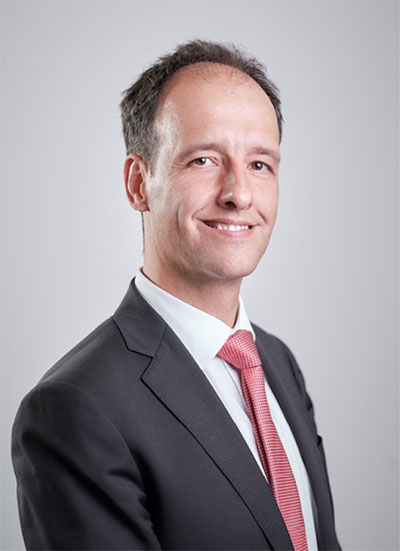
    Rodrigo da Costa, executive director of the European GNSS Agency. (Photo: GSA)
    Rodrigo da Costa

    “New things are happening, particularly in the area of governmental satellite communications, space situational awareness and others, which are benefitting citizens every day,” said Rodrigo da Costa, executive director, EU Agency for the Space Programme (EUSPA). “Galileo, EGNOS (European Geostationary Navigation Overlay Service), Copernicus and GOVSATCOM programs are key areas of EU space activities. All these programs are massive investments and in the end, the result comes from their utilization in the different areas of our economy and daily life.”

    “Just in the United States alone, GPS is approaching USD 1 trillion in terms of economic impact and is doubling every 2-3 years. But it is a single point of failure. This highlights the need for resilient PNT,” said Gillian Smith, vice president of marketing, NextNav. “We believe that our needs have evolved beyond technology that was really created in the ’60s. We need increased accuracy and availability in the urban environments in particular.

    “I think many of you have experienced it if you’ve tried to use it in any major city,” Smith said. “That blue dot is going to bounce off of buildings and not be very accurate. We need indoor tracking and mapping. We need altitude data so that you know what floor you’re on when you’re thinking about accurate location. We also need to increase resilience and redundancy. That’s going to give us all increased security as well.”

    The Value of GPS

    GPS jamming and interference is a grave issue that has come under the spotlight particularly since the Russian invasion of Ukraine, according to Geospatial World.

    In 2019, a Washington, D.C., think tank documented more than 10,000 cases of GPS interference (jamming and spoofing) in the previous five years from Russia. By 2021, these had become increasingly sophisticated. In a peculiar case, the crew onboard NATO ships in Odessa saw their position being given as Crimea.

    In the past six months, even before the war on Ukraine began, there were reports of GPS jamming in and around that region. In March, the EU Aviation Safety Agency had issued warnings of GNSS spoofing and jamming for flights over Europe, in particular around countries neighboring Ukraine and Russia.

    Globally, the economic impact of GPS/GNSS disruption is difficult to state. The potential economic consequences of failing to sufficiently protect sources of PNT are enormous, with estimates ranging from millions to billions of dollars depending on the type, length, severity and geographic scope of the disruption.

    Furthermore, the impact of a GPS/GNSS outage extends beyond basic economics and could result in risk to life. Emergency services, distress beacons and telecommunications networks all rely on PNT services — any disruption could cause serious consequences.

    A 2019 report sponsored by the National Institute of Standards and Technology estimated that the loss of GPS would cost the U.S. economy USD 1 billion a day.

    A 2017 study in the United Kingdom estimated a five-day GNSS disruption would lead to an economic impact of GBP 5.2 billion (USD 7.2 billion), with road, maritime and emergency service impacts accounting for 88 percent of the cost.
  • Enview unveils 3D AI as a web application, Enview Explore

    Enview unveils 3D AI as a web application, Enview Explore

    Screenshot: Enview
    Screenshot: Enview

    Application empowers users with expert visualization and analysis of lidar

    Enview, a pioneer in the scalable processing of 3D geospatial data, has launched Enview Explore, a powerful web application that leverages artificial intelligence (AI) and cloud computing to automatically process 3D data at a high speed and scale.

    Also, Robert Cardillo, former director of the National Geospatial-Intelligence Agency (NGA), has joined the company’s board of directors. Following an oversubscribed round of funding in May, the company continues to experience growth and momentum in the market.

    Enview’s technology has been deployed on thousands of square miles worldwide to protect vital infrastructure and support mission-critical operations. Its unique method for classifying 3D data using neural networks and deep learning techniques reduces time to action by focusing on finding meaningful insights in 3D data.

    Previously offered as custom services for organizations such as Pacific Gas & Electric and the United States Air Force, this groundbreaking technology is now available for the first time as an easy-to-use, self-service web application.

    Screenshot: Enview
    Screenshot: Enview

    “Enview has built the world’s most scalable AI platform for transforming 3D point clouds into insight and action,” said San Gunawardana, Ph.D., co-founder and CEO of Enview. “We are solving one of the hardest problems in machine perception, and applying it to some of the most grounded and impactful challenges facing society. It is our goal to empower people with the confidence to perceive and navigate a rapidly changing world; Enview Explore is the natural next step in this journey and our team is excited to place this groundbreaking capability directly into the hands of operational end-users.”

    Key benefits of Enview Explore include:

    The power of 3D data. Three-dimensional unstructured data, such as lidar, contains incredible detail but is painfully slow to analyze manually. Enview solves this problem by combining its novel AI with the power of cloud computing to automate 3D classification and segmentation, giving users scalability that can support even nation-sized datasets.

    High speed. While current methods can take weeks or more to process data, Enview provides actionable insights in minutes. Enview Explore utilizes a new and innovative approach that applies AI to 3D data, yielding significantly faster results than traditional lidar software.

    Total data control. Enview Explore removes the need for outsourcing lidar to a third party by giving users the ability to perform classification, segmentation, terrain modeling, change detection, feature extraction, and intuitive visualization directly inside the application.

    Screenshot: Enview
    Screenshot: Enview

    “With this release, we wanted to show the world that you don’t need to be a professional to get expert analysis from lidar,” said Anthony Calamito, VP of Products for Enview. “Lidar and other 3D data hold tremendous value and provide unparalleled insight over 2D data sources. While unlocking that value traditionally has required an in-depth understanding of specialty software, Enview Explore lets anyone create meaningful insight from 3D data with just a few clicks.“

    The company also announced that Robert Cardillo has joined its Board of Directors. Cardillo served as the sixth director of the NGA from 2014 through 2019. In that position, he led the NGA under the authorities of the secretary of defense and director of National Intelligence to transform the agency’s future value proposition through innovative partnerships with the growing commercial geospatial industry.

    “Mapping the world in 3D opens new possibilities for national security and mission-critical infrastructure, including some of the most important challenges facing our nation today,” said Cardillo. “Enview has completely changed the game when it comes to what’s possible with lidar visualization and analysis, making unstructured data accessible and easy to use: in other words, creating coherence out of chaos. With a shared purpose and commitment, I look forward to working with the Enview team toward the future the world demands and our customers deserve.”

  • Art Kalinski Reports from GEOINT 2015

    GEOINT-2015

    Editor’s Note:This week, Geointelligence Insider’s Art Kalinski reports from GEOINT 2015, being held in Washington, D.C., June 22-25.

    GEOINT 2015 is not your daddy’s geospatial conference. If there is a common theme to this convention, it’s the problem of too much data and not enough analysts, so there are many exhibitors addressing the issue with automated systems that merge the “man and machine,” taking advantage of the best capabilities of each.

    Introduction

     NGA Director Robert Cardillo on the Agency’s Strategy

    NGA Director Robert Cardillo discusses the agency’s new strategy at GEOINT 2015. Cardillo became the sixth director of the National Geospatial-Intelligence Agency in October 2014.

    A Demonstration of Esri’s ArcGIS Full Motion Video Add-In

    Geointelligence Insider’s Art Kalinski talks with Craig Cleveland, Esri solution engineer, about the ability to geo-register full motion video inside an ArcMap.

    Thad Allen Discusses eLoran at GEOINT 2015

    In this interview Admiral Thad Allen, former commandant of the U.S. Coast Guard, discusses PNT alternatives to GPS for navigation, including eLoran and the activation June 19 of a signal on an eLoran tower in preparation for a timing signal trial.

    Allan is an executive vice president at Booz Allen Hamilton, and a leader in the firm’s Departments of Justice and Homeland Security business in the civil market. In 2010, President Obama selected him to serve as the National Incident Commander for the unified response to the Deepwater Horizon oil spill in the Gulf of Mexico.

    Geoweb 3D Demonstration at GEOINT 2015

    Vincent Autieri, vice president and CEO of Geoweb 3D, explains the company’s 3D mapping engine.

    CACI Predictive Tool Using Social Media Discussed at GEOINT 2015

    Andrew Doyle, engineering senior manager of CACI, describes the EMBERS system, which uses social media to predict socially significant events such as protests or disease outbreaks.

  • Clapper, Cardillo to Speak at GEOINT 2015

    NGA Director Robert Cardillo.
    NGA Director Robert Cardillo.

    Top national security officials and authors will be delivering keynote addresses at the GEOINT 2015 Symposium, sponsored by the United States Geospatial Intelligence Foundation (USGIF).

    USGIF’s GEOINT Symposium is the largest intelligence event in the U.S., uniting the defense, intelligence, and homeland security communities for a week of knowledge sharing, discussion, training and education, technology demonstrations, business opportunities and networking. The GEOINT 2015 Symposium will be held June 22-25 at the Walter E. Washington Convention Center in Washington, D.C.

    Confirmed keynotes for GEOINT 2015 include:

    • Robert Cardillo, director of the National Geospatial-Intelligence Agency, became the sixth NGA Director in October 2014. He leads the agency under the authorities of the Secretary of Defense and ODNI. He was previously the first Deputy Director for Intelligence Integration at ODNI, working alongside Clapper.
    • James R. Clapper, director of National Intelligence, was sworn in as the fourth Director of National Intelligence (DNI) in August 2010. As DNI, Clapper leads the Intelligence Community and serves as the principal intelligence advisor to the president.
    • Robert D. Kaplan is a bestselling author of 15 books on foreign affairs and travel. He is currently a senior fellow at the Center for a New American Security and a contributing editor at The Atlantic. One of his most well-known books is “The Revenge of Geography: What the Map Tells Us About Coming Conflicts and the Battle Against Fate.”
    • Marcel Lettre was recently named Acting Under Secretary of Defense for Intelligence, serving as the principal intelligence advisor to the Secretary of Defense. He previously served as Principal Deputy Under Secretary of Defense for Intelligence.
    • Michael D. Lumpkin is the Assistant Secretary of Defense for Special Operations and Low-Intensity Conflict. He has more than 20 years of active duty military service as a U.S. Navy SEAL as well as significant experience in the private sector.
    • Gen. Stan McChrystal, a retired four-star general, was commander of the U.S. and International Security Assistance Forces in Afghanistan as well as former commander of the Joint Special Operations Command. He is also co-founder of the McChrystal Group and recently published the book “Team of Teams: New Rules of Engagement for a Complex World.
    • Adam Schiff represents California’s 28th Congressional District and is the ranking member of the House Permanent Select Committee on Intelligence. He is also a member of the Benghazi Select Committee.

    Kaplan and McChrystal’s books will be on sale throughout the week at GEOINT 2015. Both authors will sign copies of their books directly following their respective keynote addresses.

    Both Cardillo and Clapper have spoken at past GEOINT Symposia, while this is Kaplan, Lettre, Lumpkin, McChrystal and Schiff’s first speaking engagement with USGIF. Visit GEOINTv.com to view videos from the GEOINT 2013* Symposium, including keynote addresses by Clapper and Cardillo.

    More keynotes are expected to be announced in the coming weeks. To learn more about GEOINT 2015, view the agenda, or to register for the event, visit geoint2015.com.