Tag: Ronan Quinlan

  • Swift Navigation and Taoglas partner on precision GNSS solutions

    Swift Navigation and Taoglas partner on precision GNSS solutions

    Partnership to bring integrated precision GNSS solutions to automotive and industrial customers

    Swift Navigation, a San Francisco-based GNSS firm, and Taoglas, a provider of internet of things (IoT) solutions, have announced a strategic partnership to integrate their technologies to deliver pre-tested, low-risk, high-precision GNSS solutions to a broad customer base.
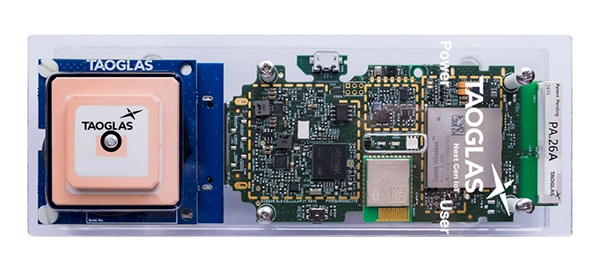
    The Taoglas EDGE RTK Starter Kit has high-precision GNSS with U.S. 4G/3G cellular connectivity. (Photo: Taoglas)
    The Taoglas EDGE RTK Starter Kit has high-precision GNSS with U.S. 4G/3G cellular connectivity. (Photo: Taoglas)

    The partnership will provide positioning solutions for automotive, micromobility, delivery, robotic and industrial customers. Specifically, the Taoglas EDGE Locate IoT platform and EDGE RTK Starter Kit now come pre-integrated with Swift’s Skylark precise positioning service.

    Bringing pre-integrated, high-accuracy positioning products to these industries in an easy-to-implement solution will greatly improve the accuracy of the positioning data delivered, the companies state.

    Together, Swift and Taoglas deliver high-precision GNSS solutions to customers around the globe by utilizing Taoglas’ IoT platforms and Swift’s Skylark seamless, cloud-based corrections — available in advanced SSR (state space representation) or industry-standard formats. The pre-integration allows customers to bypass module-level validation, integration and engineering efforts with an out-of-the-box solution.

    “Swift Navigation is excited to begin this partnership with Taoglas and align our visions of making accurate positioning easily accessible across industries,” said Swift CEO Timothy Harris. “We look forward to offering our products as an integrated solution to make it easier for customers across the globe to benefit from affordable and accurate positioning.”

    “We are delighted to be partnering with Swift Navigation to enable companies to overcome the challenges of delivering their high-precision positioning-based IoT solutions.,” said Ronan Quinlan, co-founder and joint CEO of Taoglas. “Our worldwide team of design, development, test and manufacturing engineers is dedicated to delivering IoT software and hardware solutions on time, the first time, for leading technology enterprises.”

    Additional products will soon be available from Swift, Taoglas and their channel partners. Customers have the ability to pre-order now by contacting [email protected] or [email protected].
  • New Taoglas antennas aimed at robotics, autonomous vehicles

    New Taoglas antennas aimed at robotics, autonomous vehicles

    Taoglas has unveiled active, multiband GNSS antennas engineered for applications that require critical high-accuracy positioning and timing, including autonomous driving and precision agriculture. Both the MagmaX2 AA.200 and Colosseum X XAHP.50 add to Taoglas’ high-precision GNSS range.

    “Safety standards for autonomous vehicles (UAVs, robotics and vehicles) and precision agriculture is an ever evolving arena,” said Ronan Quinlan, co-CEO and founder of Taoglas. “However, it’s increasingly apparent that high-precision positional accuracy is critical for both. At Taoglas we’re continuously innovating our GNSS antennas to deliver the very best precise location capabilities, but in more lightweight, compact structures, compared to larger counterparts already on the market. We look at the impact the antenna has on the actual positioning performance of your system, not just the antenna itself.”

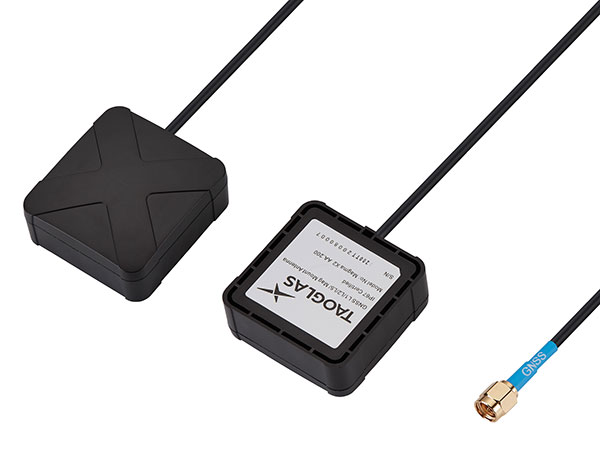
    The MagmaX2 AA.200. (Photo: Taoglas)
    The MagmaX2 AA.200. (Photo: Taoglas)

    The MagmaX2 AA.200 is designed for space and weight constrained applications, such as robotic lawnmowers, Quinlan said. Embedded antenna versions are also available.

    The AA.200 is a low-profile active multiband GNSS magnetic mount antenna for use across most major constellations including GPS (L1/L2/L5), GLONASS (G1/G2/G5), Galileo(E1/E5a/E5b) and BeiDou(B1/B2). It exhibits excellent gain and good radiation pattern stability leading to a reliable GPS fix in areas of weaker signal strength.

    Positional accuracy better than 60 cm (DRMS) is achievable, even without RTK corrections services. Accurate positioning down to 1.4 cm has been demonstrated with today’s multiband GNSS receivers and RTK services in the field.

    The Colosseum X XAHP.50 antenna. (Photo: Taoglas)
    The Colosseum X XAHP.50 antenna. (Photo: Taoglas)

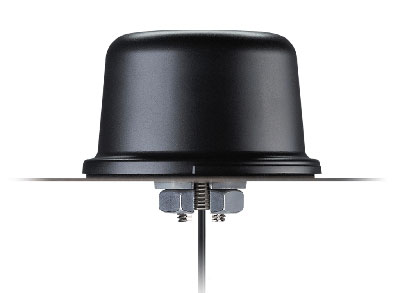
    The Colosseum X XAHP.50 is a geodetic-quality small-dome antenna suitable for a vehicle roof mount or pole mount. “Every element and aspect of the antenna performance has been optimized during the design of this antenna,” Quinlan said. “This includes many deep interlocking rf parameters for true accurate centimeter-level positioning, compared to legacy meter-only level systems. Phase center variation, group delay, multipath rejection, axial ratio over angle all become critical considerations and performance targets.”

    The XAHP.50 is engineered to operate with incredibly high precision capabilities on the full GNSS spectrum. Sub meter positional accuracy better than 55cm (DRMS) is achievable, even without the use of RTK correctional services. This allows the user to achieve higher location accuracy, as well as stability of position tracking in urban environments.

    The XAHP.50 has excellent performance across the full bandwidth of the antenna and its design has an even gain across the hemisphere giving excellent, broad axial ratio which in turn makes it resilient to multipath rejection and excellent phase centre stability. Accurate positioning down to 1.4 cm has been demonstrated with today’s multiband GNSS receivers and RTK services in the field.

    Antenna Development

    “In the design phase we simulate using electromagnetic analysis software and tweak every parameter,” Quinlan said. “Once we are happy with the results, we build our prototypes and test in scientifically controlled chamber and test environments validated by the European Space Agency, with repeatable GNSS signals.

    “We then move onto field testing in open-sky conditions and in non-line of sight environments to verify real-world performance with today’s state-of-the-art receiver systems from such leading companies as u-blox and Septentrio.

    What’s more, every single antenna coming off our production line goes through strict in-line sensitivity testing to ensure consistent validated performance. We take our commitment to quality and safety very seriously in the coming age of autonomous operation,” Quinlan concluded.

  • Taoglas launches rugged antennas for automotive, drone markets

    Taoglas launches rugged antennas for automotive, drone markets

    Taoglas, a provider of IoT and automotive antenna and RF solutions, has introduced its patent-pending Terrablast range of antennas.

    The Taoglas Terrablast antenna line is designed for UAVs and transportation. (Photo: Taoglas)

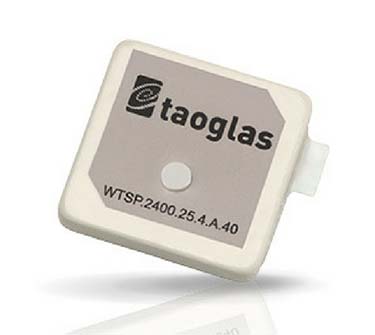
    The polymer-based patch antennas are 30 percent lighter than their ceramic counterparts and extremely resistant to fracture upon impact. Terrablast antennas are designed for the automotive and unmanned aerial vehicle (UAV) markets, where impacts are possible but antenna performance cannot be compromised.

    Unlike traditional patch antennas, which are ceramic, Terrablast uses a new class of Taoglas polymer dielectric material composed of glass-reinforced epoxy laminate. The addition of the polymer to the blend makes the antenna extremely lightweight, yet impact resistant, the company said.

    The Terrablast antennas are designed to withstand drops, falls and impacts, and are designed for applications such as UAVs, where the antenna’s mechanical robustness following potential impact is critical.

    The Terrablast patch antennas are also typically 30-35 percent lighter than traditional patches. In drone applications, where weight over battery life is critical — each gram reduced enhances battery life.

    “Taoglas is leading the charge in material science advancement for the antenna industry, and our new Terrablast antennas are the latest innovation we’re introducing to the market,” said Ronan Quinlan, co-CEO and co-founder of Taoglas. “A variety of industries and applications, especially the automotive and drone markets, will benefit from Terrablast’s high-performance capabilities in a lightweight, impact-resistant form factor.”

    The first antennas in the Terrablast range are a 25-mm embedded 2.4 GHz patch antenna and a 35-mm embedded GPS patch antenna. The circular polarized design of the 2.4-GHz patch ensures maximum performance for constantly moving mobile applications where the orientation to the transmitter or receiver frequently changes. The antenna weighs 5.6 grams compared to an equivalent ceramic patch of 8.5 grams, providing a weight-saving substitute for ceramic patches in UAV applications.

    The 35-mm GPS/GLONASS/BeiDou patch antenna has extremely high efficiency of more than 70 percent across all bands, improving time to first fix. At 10 grams, the 3.5-mm-thick patch is 5.5 grams lighter than typical ceramic GNSS patches.

    All Terrablast antennas undergo rigorous temperature, vibration and impact tests, exceed the highest ISO 16750 standards, and are manufactured in Taoglas’ purpose-built facilities in Taiwan and the United States.

  • Taoglas launches ultra-wideband antennas for indoor positioning

    Taoglas launches ultra-wideband antennas for indoor positioning

    Taoglas has launched a range of small-form-factor ultra-wideband (UWB) antennas specifically designed to enable centimeter-level positioning and angle-of-arrival applications.

    The FXUWB10, UWC.01 and UWCCP.01 ultra-wideband antennas by Taoglas.

    Applications include asset tracking, follow-me drones, healthcare monitoring, smart home services and other applications that demand high-performance indoor localization capabilities, the company said.

    The antennas offer high efficiencies across a wide spectrum of frequency bands, from 3 GHz to 10 GHz.

    Indoor wireless positioning has long been hampered by technologies that were not designed for this purpose, such as Bluetooth, Wi-Fi and assisted GPS.

    Taoglas will be exhibiting in Booth 614 at Mobile World Congress Americas, Sept. 12-14, in San Francisco.

    Ultra-Wideband. UWB is a low-power digital wireless technology that offers significant increases in location precision and range while transmitting large amounts of digital data short distances over a wide spectrum of frequency bands. UWB’s low-power requirements offer increased battery life of sensors and tags, leading to reduction in overall operational costs.

    Taoglas’ range of UWB antennas, designed in Taoglas’ Munich, Germany, engineering center, features both state-of-the-art flexible embedded UWB antennas and UWB embedded SMT chip antennas. According to the company, the flexible FXUWB range of antennas were developed utilizing a “peel and stick” assembly process, attaching securely to non-metal surfaces via 3M adhesive with a flexible micro-coaxial cable mounting.

    The UWB chip antennas are designed to be surface mounted directly onto a printed circuit board (PCB). Both series of antennas help designers future-proof devices, keeping costs low while covering all common UWB commercial bands.

    “Today’s emerging applications require very precise indoor localization of assets, objects and people,” said Ronan Quinlan, co-CEO for Taoglas. “UWB can work as a type of ‘indoor GPS’ to help solve the precision dilemma for indoor applications, bringing much greater levels of precision than current technologies. We optimize complex antenna performance parameters such as the Group Delay, Polarization and Fidelity Factor. Taoglas’ first-to-market line of UWB antennas are designed to help our customers capitalize on this need for real-time precision localization.”

    Autonomous Antenna. One antenna that Taoglas co-developed exclusively with DecaWave is the UWCCP.01 circularly polarized chip antenna, a mass-market antenna specifically designed to enable a new generation of autonomous applications.

    The DecaWave DW1000 chip.

    The UWB antennas were designed for use with the DecaWave DW1000 chip and are also compatible with any other UWB sensor modules on the market, the company added. Since its launch in December 2013, more than 3.5 million units of the DW1000 have shipped across multiple industries.

    From real-time location of people and assets in factories, hospitals and mines, to automotive keyless entry systems, to drones, connected home and sports, the accurate location and secure communications capability of the DW1000 has already taken numerous applications to new heights.

    “Antennas play a key role in our customers’ applications. Performance is a given for customers but the capability to adapt to the constraints of the applications — size, shape, electronics environment — is equally important as end products get smaller and smaller,” said Ciaran Connell, CEO and co-founder, DecaWave. “DecaWave is really pleased to partner with Taoglas, as their expertise is not only in delivering high-performance, off-the-shelf antennas, but also to provide customization services that will be highly beneficial to our customers.”